Introduction
Despite its critical role in assessing cardiac health, Left Ventricular Ejection Fraction (LVEF) often goes unrecognized in clinical practice. By measuring the percentage of blood ejected from the left ventricle with each heartbeat, LVEF provides essential insights into heart function and overall well-being. But what if LVEF appears normal yet conceals significant health concerns? This article explores the complexities of LVEF, including its normal values, measurement techniques, and implications for patient care in Canada.
Define Left Ventricular Ejection Fraction (LVEF)
Left Ventricular Ejection Fraction (LVEF) is a critical measure in assessing heart health, yet many healthcare professionals may overlook its complexities. LVEF quantifies the percentage of blood the left ventricle pumps out with each heartbeat. It is calculated by dividing the stroke volume - the amount of blood ejected during contraction - by the end-diastolic volume, which is the total blood in the ventricle before contraction. An LVEF normal is typically between 50% and 70%. This means that during each heartbeat, 50% to 70% of the blood in the left ventricle is ejected into the aorta, distributing oxygen-rich blood throughout the body. Comprehending left ventricular ejection fraction is essential, as misinterpretation can lead to inadequate patient care and identifying issues like cardiac insufficiency and cardiomyopathy.
Present data suggests that:
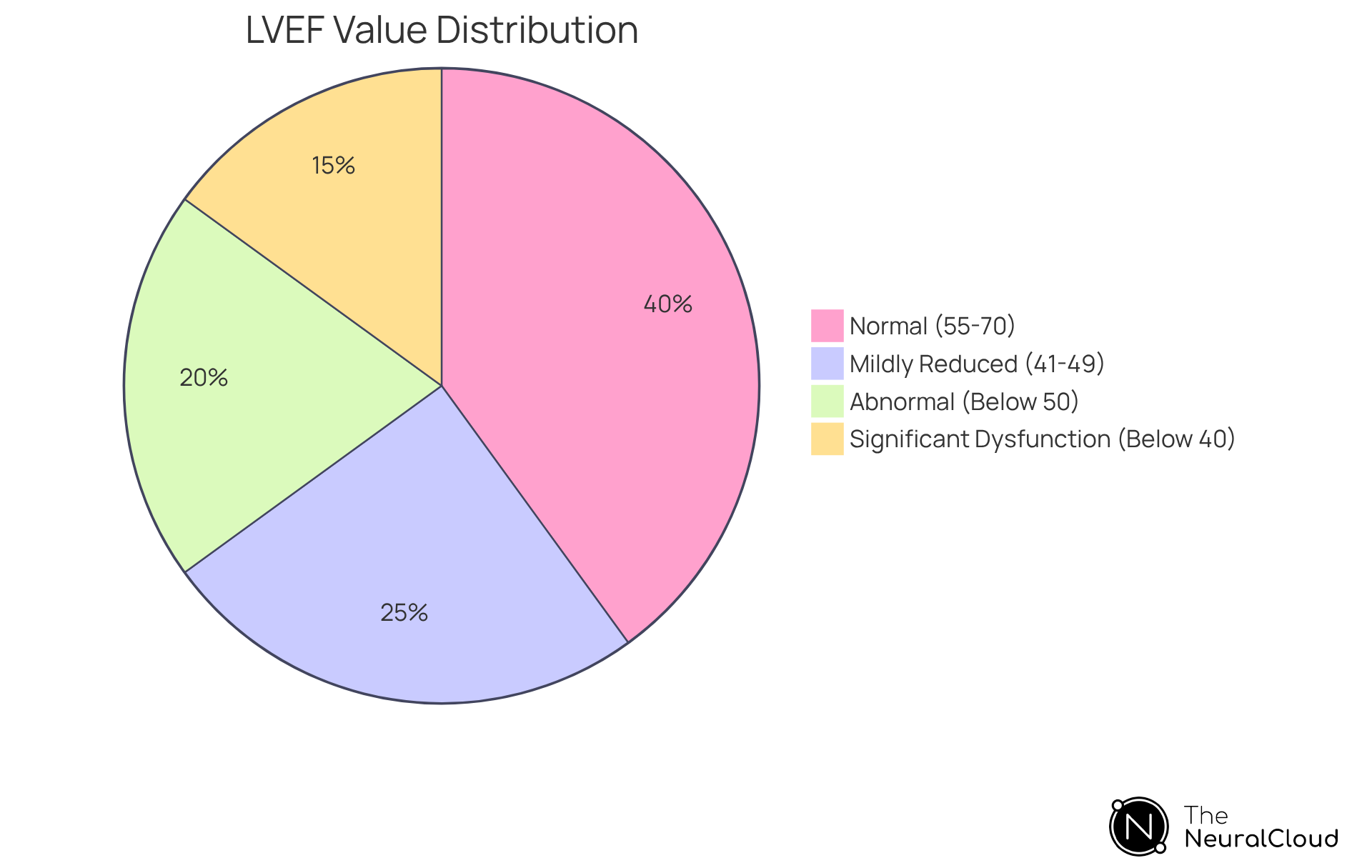
- An ejection fraction below 40% typically indicates cardiac dysfunction or cardiomyopathy.
- An ejection fraction between 41% and 49% is regarded as mildly diminished.
Significantly, even with an LVEF normal, cardiac function may still be impaired, especially in instances of Heart Failure with Preserved Ejection Fraction (HFpEF), where the muscle contracts normally but does not relax sufficiently. This underscores the need for thorough cardiac assessments that go beyond just ejection fraction.
In Canadian cardiology, various measurement techniques are employed to evaluate left ventricular ejection fraction, including:
- Echocardiograms
- Cardiac catheterization
- Cardiac MRI
These methods offer essential insights into cardiac function, allowing healthcare professionals to make informed choices regarding patient care. For example, a study on cardiac failure with reduced ejection fraction (HFrEF) emphasizes that an EF measurement below 40% requires additional medical evaluation and intervention, highlighting the significance of precise left ventricular ejection fraction assessment in clinical practice.

Explain the Importance of LVEF in Cardiac Health
Left Ventricular Ejection Fraction (LVEF) is a critical metric in cardiology, reflecting the heart's pumping efficiency and overall health. An LVEF normal indicates effective blood supply to the body, which is essential for maintaining organ health. Conversely, a lowered ejection fraction can signify severe circulatory issues, such as heart failure, where the heart's ability to pump blood is compromised.
Regular assessment of left ventricular ejection fraction is crucial. It helps identify cardiovascular conditions, guides treatment approaches, and evaluates the effectiveness of therapies. For instance, those with a left ventricular ejection fraction below 40% face a significantly higher risk of serious cardiovascular events, underscoring the importance of regular evaluation for proactive heart management.
Recent updates in cardiac insufficiency guidelines show how important it is to track trends in left ventricular ejection fraction, promoting a dynamic understanding of cardiovascular health that goes beyond fixed measurements. This is particularly important in Canada, where cardiac issues are projected to rise by about 46% between 2012 and 2030, necessitating a greater focus on left ventricular ejection fraction as a vital measure in patient care.
Expert insights, including those from John Teerlink, emphasize the limitations of fixed classifications of heart failure based on left ventricular ejection fraction. They indicate that focusing on ejection fraction trajectories allows for more informed treatment decisions and personalized care.

Outline Normal Ranges and Variations of LVEF
Understanding left ventricular ejection fraction values is essential for accurate cardiac assessments. LVEF normal values typically range from 55% to 70%, influenced by factors such as age, gender, and personal health conditions. In Canada, studies suggest that the lower threshold of LVEF normal is approximately 53% for women and 52% for men. Values below 50% usually indicate abnormal function, and those below 40% often point to significant cardiac dysfunction. Values between 41% and 49% are categorized as mildly reduced.
It's important to note that left ventricular ejection fraction can differ based on imaging techniques and patient characteristics. For instance, a meta-analysis of healthy adults found a pooled mean LVEF of 62.8%, with women averaging 63.7% and men at 61.9%. Additionally, heart failure with preserved ejection fraction (HFpEF) accounts for roughly half of all heart failure cases, with prevalence climbing significantly after age 60.
Recognizing these variations can lead to timely interventions and improved patient outcomes. Understanding these normal ranges, including LVEF normal, is crucial for early detection of cardiac issues and informing effective treatment strategies, especially in diverse Canadian populations.
Describe Methods for Measuring LVEF
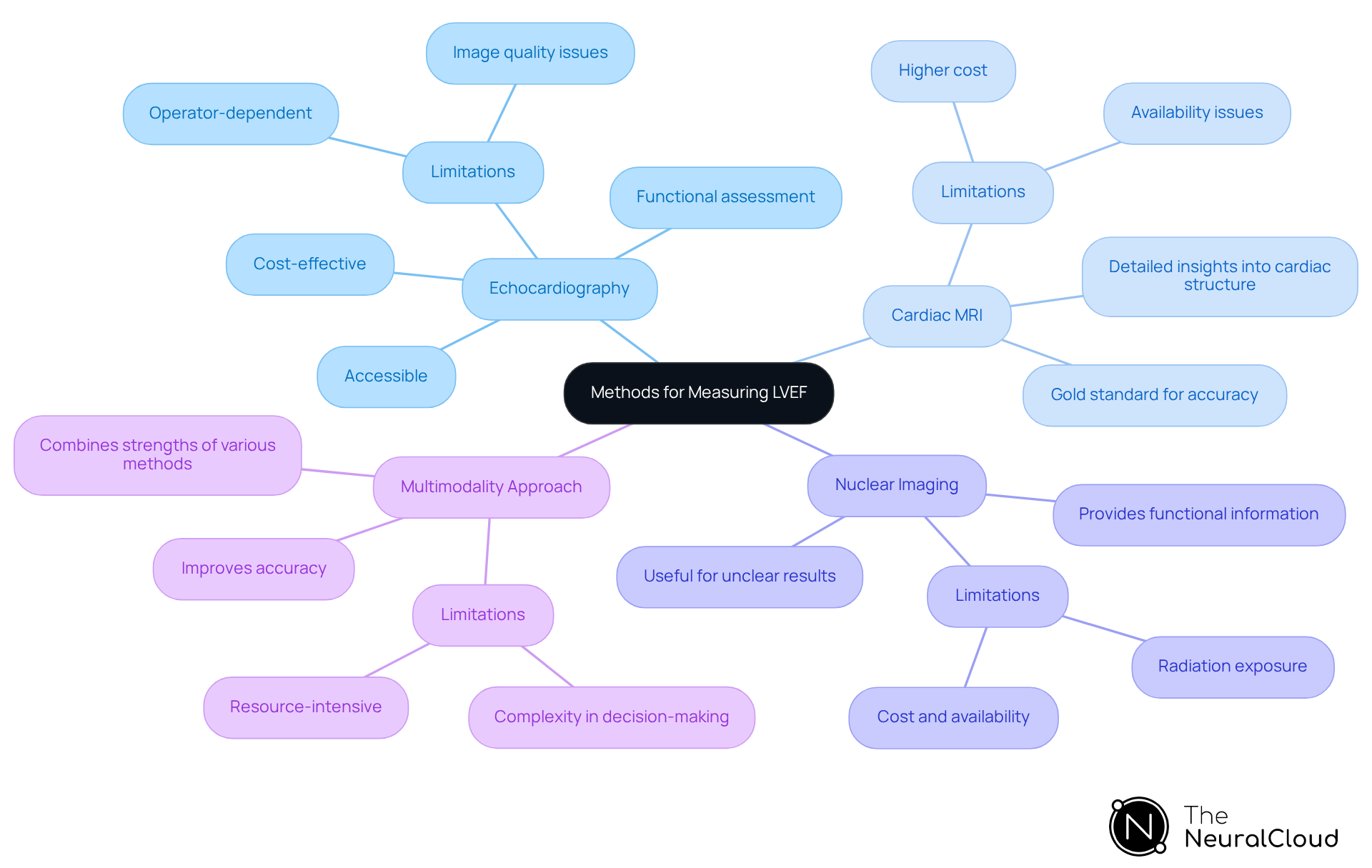
Assessing left ventricular ejection fraction presents challenges that require careful consideration of various imaging methods. Left ventricular ejection fraction can be evaluated using several imaging techniques, each offering distinct benefits and drawbacks. The most common method is echocardiography, which uses sound waves to create images of the heart, allowing for functional assessment. It's popular because it's accessible and cost-effective, which is why you'll often see it in clinical settings. On the other hand, cardiac magnetic resonance imaging (MRI) is regarded as the gold standard for measuring left ventricular ejection fraction due to its exceptional accuracy and reproducibility. It provides detailed insights into cardiac structure and function, making it invaluable for complex cases.
Nuclear imaging methods, such as radionuclide angiography, also play a role in evaluating left ventricular ejection fraction, particularly when other methods yield unclear results. Each imaging modality contributes valuable information regarding heart function, but selecting the right technique can be complex, influenced by patient characteristics and clinical context. Recent advancements in imaging technologies have further improved the precision of left ventricular ejection fraction measurements, enhancing clinical decision-making. For instance, a multimodality imaging approach is recommended when accuracy concerns arise, ensuring that healthcare providers can make informed decisions based on reliable data.
Understanding these methods is crucial for healthcare professionals to ensure precise assessment and effective management of cardiac health. Significantly, a left ventricular ejection fraction threshold of 35% or lower is essential for contemplating implantable cardioverter-defibrillator (ICD) therapy, emphasizing the importance of evaluating whether the LVEF is normal in clinical decision-making. As Pirbhat Shams highlights, precise assessment of LVEF normal informs treatment choices, tracks disease advancement, and establishes eligibility for advanced therapies like implantable devices. Furthermore, monitoring for LVEF normal is essential for patients receiving cardiotoxic chemotherapy, underscoring the need for integrating these assessments into healthcare systems. Ultimately, accurate left ventricular ejection fraction evaluation is vital for optimizing patient care and treatment strategies.
Conclusion
Evaluating cardiac health hinges on understanding Left Ventricular Ejection Fraction (LVEF), a critical measure of the heart's pumping efficiency. An LVEF normal range, typically between 50% and 70%, reflects optimal heart function. Deviations from this range can lead to serious health concerns. Recognizing LVEF's significance aids in diagnosing heart failure and highlights the need for comprehensive cardiac assessments beyond just numbers.
Throughout this article, we've explored various aspects of LVEF, including its definition, normal ranges, and the implications of abnormal values. The importance of regular monitoring and diverse measurement techniques, such as echocardiograms and cardiac MRIs, has been emphasized as crucial for informed clinical decision-making. Additionally, understanding LVEF variations influenced by factors like age and gender is essential, particularly within the Canadian healthcare context.
With the increasing prevalence of cardiac issues in Canada, healthcare professionals must prioritize LVEF assessments in their practice. By doing so, they can enhance patient care, facilitate timely interventions, and ultimately improve outcomes for individuals at risk of cardiovascular diseases. Prioritizing LVEF assessments can lead to transformative improvements in patient outcomes and overall heart health.
Frequently Asked Questions
What is Left Ventricular Ejection Fraction (LVEF)?
Left Ventricular Ejection Fraction (LVEF) is a measure of heart health that quantifies the percentage of blood the left ventricle pumps out with each heartbeat. It is calculated by dividing the stroke volume by the end-diastolic volume.
What is considered a normal LVEF range?
A normal LVEF is typically between 50% and 70%, indicating that during each heartbeat, 50% to 70% of the blood in the left ventricle is ejected into the aorta.
Why is understanding LVEF important?
Understanding LVEF is crucial because misinterpretation can lead to inadequate patient care and difficulties in identifying conditions such as cardiac insufficiency and cardiomyopathy.
What do different LVEF values indicate?
An LVEF below 40% typically indicates cardiac dysfunction or cardiomyopathy, while an LVEF between 41% and 49% is regarded as mildly diminished.
Can cardiac function be impaired even with a normal LVEF?
Yes, cardiac function can still be impaired even with a normal LVEF, particularly in cases of Heart Failure with Preserved Ejection Fraction (HFpEF), where the heart muscle contracts normally but does not relax sufficiently.
What measurement techniques are used to evaluate LVEF in Canadian cardiology?
In Canadian cardiology, various techniques are used to evaluate LVEF, including echocardiograms, cardiac catheterization, and cardiac MRI.
Why is precise LVEF assessment significant in clinical practice?
Precise LVEF assessment is significant because it informs healthcare professionals about cardiac function, guiding them in making informed choices regarding patient care, especially in cases like cardiac failure with reduced ejection fraction (HFrEF), where an EF measurement below 40% requires further medical evaluation and intervention.
List of Sources
- Define Left Ventricular Ejection Fraction (LVEF)
- New Joint Scientific Statement on Ejection Fraction Released by Leading Heart Failure Organisations (https://escardio.org/news/press/press-releases/new-joint-scientific-statement-on-ejection-fraction-released-by-leading-heart-failure-organisations)
- Ejection fraction: An important heart test-Ejection fraction: What does it measure? (https://mayoclinic.org/tests-procedures/ekg/expert-answers/ejection-fraction/faq-20058286)
- Ejection Fraction Heart Failure Measurement (https://heart.org/en/health-topics/heart-failure/diagnosing-heart-failure/ejection-fraction-heart-failure-measurement)
- Explain the Importance of LVEF in Cardiac Health
- New Joint Scientific Statement on Ejection Fraction Released by Leading Heart Failure Organisations (https://escardio.org/news/press/press-releases/new-joint-scientific-statement-on-ejection-fraction-released-by-leading-heart-failure-organisations)
- Heart Failure Guidelines Introduce New Classifications: ESC 2026 (https://emjreviews.com/cardiology/news/heart-failure-guidelines-introduce-new-classifications-esc-2026)
- Global Public Health Burden of Heart Failure: An Updated Review - PMC (https://pmc.ncbi.nlm.nih.gov/articles/PMC10398425)
- New Joint Scientific Statement on Ejection Fraction Released by Leading Heart Failure Organizations | HFSA (https://hfsa.org/new-joint-scientific-statement-ejection-fraction-released-leading-heart-failure-organizations)
- Global experts update heart failure definition to improve prevention, diagnosis and care (https://newsroom.heart.org/news/global-experts-update-heart-failure-definition-to-improve-prevention-diagnosis-and-care)
- Outline Normal Ranges and Variations of LVEF
- New Joint Scientific Statement on Ejection Fraction Released by Leading Heart Failure Organisations (https://escardio.org/news/press/press-releases/new-joint-scientific-statement-on-ejection-fraction-released-by-leading-heart-failure-organisations)
- (PDF) What is a normal left ventricular ejection fraction in healthy adults? A meta-analysis of population-based echocardiographic studies (https://researchgate.net/publication/400013630_What_is_a_normal_left_ventricular_ejection_fraction_in_healthy_adults_A_meta-analysis_of_population-based_echocardiographic_studies)
- Normal Ejection Fraction by Age Chart: Free PDF Download (https://pabau.com/templates/normal-ejection-fraction-by-age-chart)
- Describe Methods for Measuring LVEF
- New app uses smartphone to measure LVEF (https://auntminnie.com/clinical-news/mri/article/15618246/new-app-uses-smartphone-to-measure-lvef)
- Left Ventricular Ejection Fraction - StatPearls - NCBI Bookshelf (https://ncbi.nlm.nih.gov/sites/books/NBK459131)
- Echocardiography versus Cardiac MRI for Measurement of Left Ventricular Ejection Fraction in Individuals with Cancer and Suspected Cardiotoxicity | Radiology: Cardiothoracic Imaging (https://pubs.rsna.org/doi/10.1148/ryct.230048)