Introduction
Right atrial enlargement (RAE) is more than a clinical term; it acts as a crucial warning sign of underlying cardiac issues that can lead to serious health complications. When the heart's right atrium expands, it often indicates increased pressure and volume due to various conditions, such as pulmonary hypertension and heart valve disorders. Understanding the implications of RAE is vital for healthcare professionals. Timely diagnosis and intervention can significantly improve patient outcomes. However, the challenge remains: how can clinicians effectively identify and manage this condition amid the complexities of cardiac health?
Define Right Atrial Enlargement
Enlargement of the heart's chamber, specifically the atrium, is marked by an abnormal increase in size. Right atrial enlargement can stem from various cardiac issues, such as elevated blood volume or pressure within the right atrium. Clinically, right atrial enlargement (RAE) is primarily identified through electrocardiogram (ECG) findings. Notably, it is characterized by a P pulmonale in the inferior leads (II, III, and AVF) and an increased amplitude in lead V1. Recent studies show that RAE is relatively common and has significant implications for patient management.
Individuals with RAE face a heightened risk for complications, including hospitalization for heart failure and stroke. It is crucial to understand what right atrial enlargement is, as it often indicates underlying heart conditions that require further evaluation and intervention. Cardiologists stress the importance of recognizing these ECG patterns; this can lead to earlier diagnosis and more effective treatment strategies.
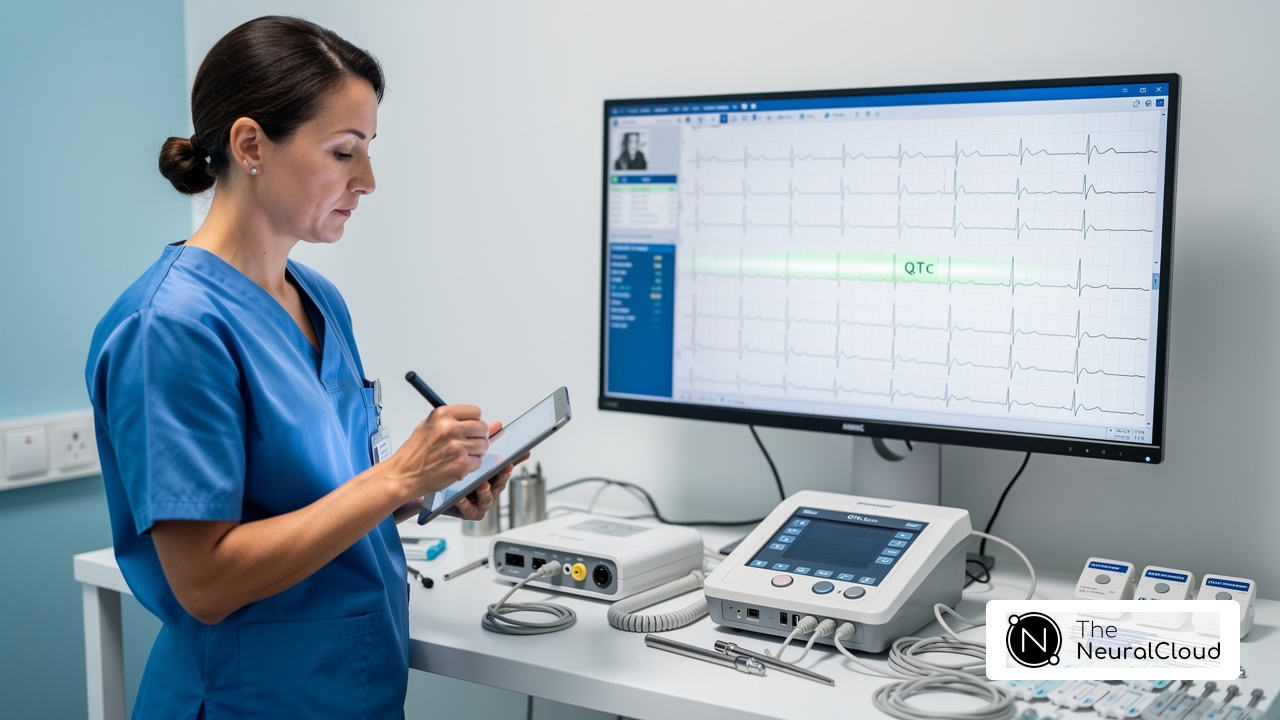
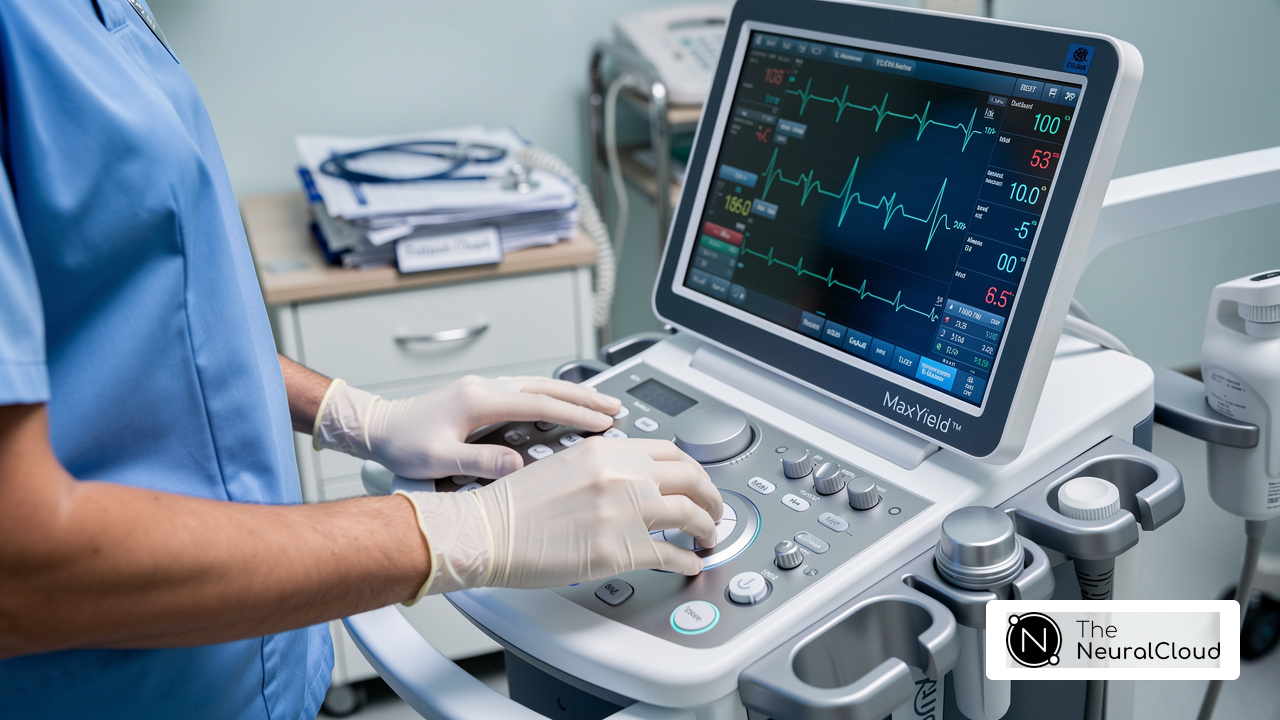
The solution from Neural Cloud Solutions addresses the challenges of ECG interpretation. This advanced technology employs sophisticated algorithms and wave recognition algorithms to accurately isolate and label critical data, even in recordings with high levels of noise and artifact.
Features of MaxYield™:
- Sophisticated algorithms
- Wave recognition algorithms
- Rapid analysis of ECG signals
Advantages for Healthcare Professionals:
- Transforms noisy recordings into detailed insights
- Supports confident clinical decisions
- Enhances the efficiency of patient care
By improving the clarity of ECG data, MaxYield™ directly tackles the challenges posed by RAE. This enables healthcare providers to make informed decisions that can lead to better patient outcomes.

Explain the Importance of Right Atrial Enlargement
What is right atrial enlargement, also referred to as right heart enlargement (RAE), serves as a crucial indicator of various cardiovascular conditions, such as pulmonary hypertension, heart valve disorders, and atrial fibrillation. Its presence indicates increased strain on the heart, potentially leading to severe complications like heart failure, arrhythmias, and a higher risk of mortality, which makes one wonder what is right atrial enlargement. Research shows that right atrial enlargement (RAE) is independently associated with adverse outcomes, such as heart failure and stroke, highlighting its significance in risk stratification for patients with non-valvular cardiac fibrillation. For example, a study involving 254 patients found that right atrial enlargement (RAE) significantly increased the risk of hospitalization and death, highlighting the need for careful monitoring and management of this condition.
Understanding right atrial enlargement is crucial, as early detection and intervention can greatly enhance patient outcomes, making it essential for healthcare providers to identify and address this condition promptly. The platform from Neural Cloud Solutions offers advanced features that improve the efficiency of cardiac monitoring. By automating processes and enhancing data clarity, it allows healthcare professionals to concentrate on critical decision-making. The platform's AI technology transforms noisy ECG recordings into clear waveforms, effectively tackling challenges such as physiological variability and signal artifacts.
Features of MaxYield™:
- Automates ECG labeling
- Reduces operational costs
- Enhances clarity of ECG recordings
Advantages for Healthcare Professionals:
- Focus on critical decision-making
- Improved outcomes for patients with cardiac issues
- Efficient management of ECG data
In summary, leveraging the MaxYield™ platform not only streamlines cardiac monitoring but also significantly improves the outcomes for patients, addressing the pressing challenges faced in the field.

Identify Causes of Right Atrial Enlargement
Enlargement of the chamber can arise from various underlying conditions, each contributing to right atrial enlargement. Understanding these causes is crucial for diagnosis of what is right atrial enlargement (RAE). Here are some key contributors:
- Elevated pressure in the pulmonary arteries significantly contributes to right atrial overload, often leading to RAE. Research indicates that pulmonary hypertension is a common factor in understanding what is RAE, with a notable relationship between the severity of pulmonary issues and atrial size. At a median follow-up of 47.1 months, 30% of patients experienced one or more composite endpoints, with stroke being the most common event at 16%.
- Conditions such as tricuspid regurgitation or stenosis can result in blood backing up into the atrium on the right side of the heart, causing it to enlarge. This backflow increases the volume load on the right atrium, necessitating careful monitoring and management.
- Structural abnormalities present at birth, including atrial septal defects, can lead to RAE. These defects permit unusual blood flow patterns, contributing to the enlargement of the atrium over time. Lung diseases, such as chronic obstructive pulmonary disease (COPD), can increase pressure in the right heart, which raises the question of what is RAE. The relationship between lung health and cardiac function underscores the importance of integrated care approaches.
- Atrial fibrillation can cause the right atrium to enlarge due to increased volume load. The presence of heart failure often complicates the clinical picture, making it essential to address both the arrhythmia and its underlying causes. Notably, enlargement of the chamber on the right side in patients with nonvalvular fibrillation is more strongly linked to clinical events than enlargement of the chamber on the left side.
Early intervention can significantly improve patient outcomes. As Gaurav Arora, MD, notes, while RAE on ECG has a low overall predictive value for true RAE, specific patient characteristics may enhance diagnostic accuracy.

List Symptoms of Right Atrial Enlargement
Symptoms of heart conditions can vary significantly based on the underlying cause and severity of the condition. Recognizing these symptoms is crucial for early diagnosis. Commonly reported symptoms include:
- Palpitations: Patients often describe experiencing a rapid or fluttering sensation in the chest. This symptom is prevalent, especially during periods of stress or physical activity. Notably, many individuals with right atrial enlargement may remain asymptomatic, as Rachael Zimlich, BSN, RN, observes that numerous individuals might be unaware of their condition.
- Shortness of breath: Difficulty breathing, particularly during exertion or when lying flat, is frequently reported. This can indicate the heart's compromised ability to manage blood flow effectively.
- Chest pain: Some individuals may experience discomfort or pain in the chest area, which can be alarming and often prompts further investigation.
- Fatigue: A widespread feeling of tiredness or exhaustion is common among individuals with enlarged heart chambers, affecting daily activities and overall quality of life.
- Swelling: Edema, particularly in the legs or abdomen, may occur due to fluid retention, signaling potential heart failure or other complications.
Studies indicate that approximately 48% of those with congenital or idiopathic cases do not exhibit noticeable symptoms. Treatment options for addressing right atrial enlargement include medications and lifestyle modifications, such as quitting smoking and maintaining a healthy diet. Early diagnosis is essential to identify the root cause of the condition, as timely intervention can prevent complications. Understanding the symptoms is crucial, as these can serve as warning signs of underlying cardiac issues that require medical attention.

Discuss Diagnosis of Right Atrial Enlargement
To understand what is right atrial enlargement, diagnosing it involves a multifaceted approach that combines clinical evaluation with various diagnostic tests. The primary tool for identifying right atrial enlargement (RAE) is the electrocardiogram, which evaluates specific criteria including P wave morphology in leads II, III, and aVF. Recent studies have highlighted the effectiveness of combined ECG criteria, such as a tall P wave and an R/S ratio exceeding 1 in lead V1. These criteria have shown increased sensitivity and accuracy in diagnosing RAE compared to traditional methods.
Neural Cloud Solutions' technology significantly enhances this diagnostic process. It analyzes ECG data and provides real-time feedback. MaxYield™ maps ECG signals through noise, isolating and labeling key features in every heartbeat. This capability is crucial for identifying cardiac events. The technology can rapidly analyze 200,000 heartbeats in less than 5 minutes, allowing healthcare professionals to efficiently interpret ECG data and make informed clinical decisions.
Echocardiography plays a crucial role in confirming right atrial enlargement by providing detailed images of the heart. This imaging method enables direct observation of structural irregularities and measurement of chamber dimensions. It frequently correlates with ECG results, improving diagnostic assurance.
Chest X-rays may reveal an enlarged cardiac silhouette, which can indicate right atrial enlargement. However, for precise measurements, advanced imaging techniques are employed. These techniques offer high-resolution images that facilitate accurate assessment of atrial size and identification of any underlying structural issues.
Accurate diagnosis of RAE is essential for determining appropriate management and treatment strategies. With the integration of advanced ECG criteria and imaging technologies, alongside the capabilities of MaxYield™, healthcare professionals can improve diagnostic accuracy. This ultimately leads to improved patient outcomes.

Conclusion
Right atrial enlargement (RAE) is a crucial indicator of various cardiovascular conditions, emphasizing the importance of awareness and timely intervention. This enlargement often signifies increased pressure or volume in the right atrium, which can lead to severe complications like heart failure and stroke if not addressed promptly. For healthcare providers, understanding RAE is vital, as early detection can significantly enhance patient outcomes and treatment strategies.
The article discusses the causes of right atrial enlargement, including:
- Pulmonary hypertension
- Tricuspid valve disorders
- Congenital heart defects
- Atrial fibrillation
Each of these conditions places strain on the heart, making careful monitoring and management essential. Symptoms such as palpitations, shortness of breath, and fatigue are critical for diagnosis. Advanced diagnostic tools, like the MaxYield™ platform, improve the accuracy and efficiency of ECG analysis, ultimately leading to better patient care.
Recognizing the implications of right atrial enlargement goes beyond individual patient management; it highlights the significance of comprehensive cardiovascular health. By prioritizing the detection and treatment of RAE, healthcare professionals can effectively reduce risks associated with this condition. The integration of advanced technologies and a solid understanding of RAE empowers clinicians to deliver optimal care and improve outcomes for patients facing cardiovascular challenges.
Frequently Asked Questions
What is right atrial enlargement (RAE)?
Right atrial enlargement (RAE) is the abnormal increase in size of the right atrium of the heart, often resulting from various cardiac issues such as elevated blood volume or pressure within the atrium.
How is right atrial enlargement identified?
RAE is primarily identified through electrocardiogram (ECG) findings, characterized by a peaked P wave (P pulmonale) in the inferior leads (II, III, and AVF) and increased amplitude in lead V1.
What are the clinical implications of right atrial enlargement?
Individuals with RAE face a heightened risk for adverse clinical outcomes, including hospitalization for heart failure and stroke, indicating the need for further evaluation and intervention.
Why is it important to recognize right atrial enlargement on ECG?
Timely identification of RAE can lead to improved patient outcomes and more effective treatment strategies, as it often indicates underlying heart conditions.
What technology helps in the analysis of ECG related to right atrial enlargement?
The MaxYield™ platform from Neural Cloud Solutions aids in ECG analysis by employing sophisticated noise filtering and wave recognition algorithms to accurately isolate and label critical data.
What are the features of the MaxYield™ platform?
The features include sophisticated noise filtering, wave recognition algorithms, and rapid analysis of ECG signals.
What advantages does the MaxYield™ platform offer to healthcare professionals?
It transforms noisy recordings into detailed insights, supports confident clinical decisions, and enhances the efficiency of ECG analysis.
What cardiovascular conditions are associated with right atrial enlargement?
RAE serves as an indicator of various conditions such as pulmonary hypertension, heart valve disorders, and atrial fibrillation, indicating increased strain on the heart.
How does right atrial enlargement affect patient risk?
RAE is independently associated with adverse clinical outcomes, including increased risk of hospitalization for heart failure and stroke, highlighting its importance in risk stratification.
What is the role of early detection and intervention for right atrial enlargement?
Early detection and intervention for RAE can significantly enhance patient outcomes, making it essential for healthcare providers to identify and address this condition promptly.
List of Sources
- Define Right Atrial Enlargement
- Frontiers | Impact of right atrial enlargement on clinical outcome in patients with atrial fibrillation (https://frontiersin.org/journals/cardiovascular-medicine/articles/10.3389/fcvm.2022.989012/full)
- Right Atrial Enlargement Is Linked to Outcomes in Atrial Fibrillation | Managed Healthcare Executive (https://managedhealthcareexecutive.com/view/right-atrial-enlargement-is-linked-to-outcomes-in-atrial-fibrillation)
- Right Atrial Enlargement on ECG in Previously Healthy Patients | UPMC Physician Resources (https://upmcphysicianresources.com/news/070924-rae)
- Client Challenge (https://nature.com/articles/s41598-021-01968-y)
- Explain the Importance of Right Atrial Enlargement
- Checking your browser - reCAPTCHA (https://pmc.ncbi.nlm.nih.gov/articles/PMC9537634)
- Right Atrial Enlargement on ECG in Previously Healthy Patients | UPMC Physician Resources (https://upmcphysicianresources.com/news/070924-rae)
- auntminnie.com (https://auntminnie.com/clinical-news/mri/article/15753363/higher-ventricular-and-atrial-heart-volumes-boost-cardiac-disease-risk)
- pubmed.ncbi.nlm.nih.gov (https://pubmed.ncbi.nlm.nih.gov/36211539)
- Right Atrial Enlargement Is Linked to Outcomes in Atrial Fibrillation | Managed Healthcare Executive (https://managedhealthcareexecutive.com/view/right-atrial-enlargement-is-linked-to-outcomes-in-atrial-fibrillation)
- Identify Causes of Right Atrial Enlargement
- Right Atrial Enlargement on ECG in Previously Healthy Patients | UPMC Physician Resources (https://upmcphysicianresources.com/news/070924-rae)
- Right Atrial Enlargement (RAE): Causes and Treatment (https://my.clevelandclinic.org/health/symptoms/23576-right-atrial-enlargement)
- Right Atrial Enlargement Is Linked to Outcomes in Atrial Fibrillation | Managed Healthcare Executive (https://managedhealthcareexecutive.com/view/right-atrial-enlargement-is-linked-to-outcomes-in-atrial-fibrillation)
- pulmonaryhypertensionnews.com (https://pulmonaryhypertensionnews.com/news/men-women-pah-differences-right-heart-size-study)
- health.ucdavis.edu (https://health.ucdavis.edu/news/headlines/study-finds-new-treatment-for-pulmonary-hypertension-holds-promise/2023/08)
- List Symptoms of Right Atrial Enlargement
- verywellhealth.com (https://verywellhealth.com/right-atrial-enlargement-5189051)
- Right Atrial Enlargement Is Linked to Outcomes in Atrial Fibrillation | Managed Healthcare Executive (https://managedhealthcareexecutive.com/view/right-atrial-enlargement-is-linked-to-outcomes-in-atrial-fibrillation)
- Right Atrial Enlargement on ECG in Previously Healthy Patients | UPMC Physician Resources (https://upmcphysicianresources.com/news/070924-rae)
- Discuss Diagnosis of Right Atrial Enlargement
- Right Atrial Enlargement on ECG in Previously Healthy Patients | UPMC Physician Resources (https://upmcphysicianresources.com/news/070924-rae)
- researchgate.net (https://researchgate.net/publication/335141053_The_Accuracy_of_Combined_Electrocardiogram_Criteria_to_Diagnose_Right_Atrial_Enlargement_in_Adults_With_Uncorrected_Secundum_Atrial_Septal_Defect)
- Right atrial enlargement - Causes, Diagnosis and Treatment (https://apollohospitals.com/symptoms/right-atrial-enlargement)
- pmc.ncbi.nlm.nih.gov (https://pmc.ncbi.nlm.nih.gov/articles/PMC6693022)
- Checking your browser - reCAPTCHA (https://pmc.ncbi.nlm.nih.gov/articles/PMC2244611)