Introduction
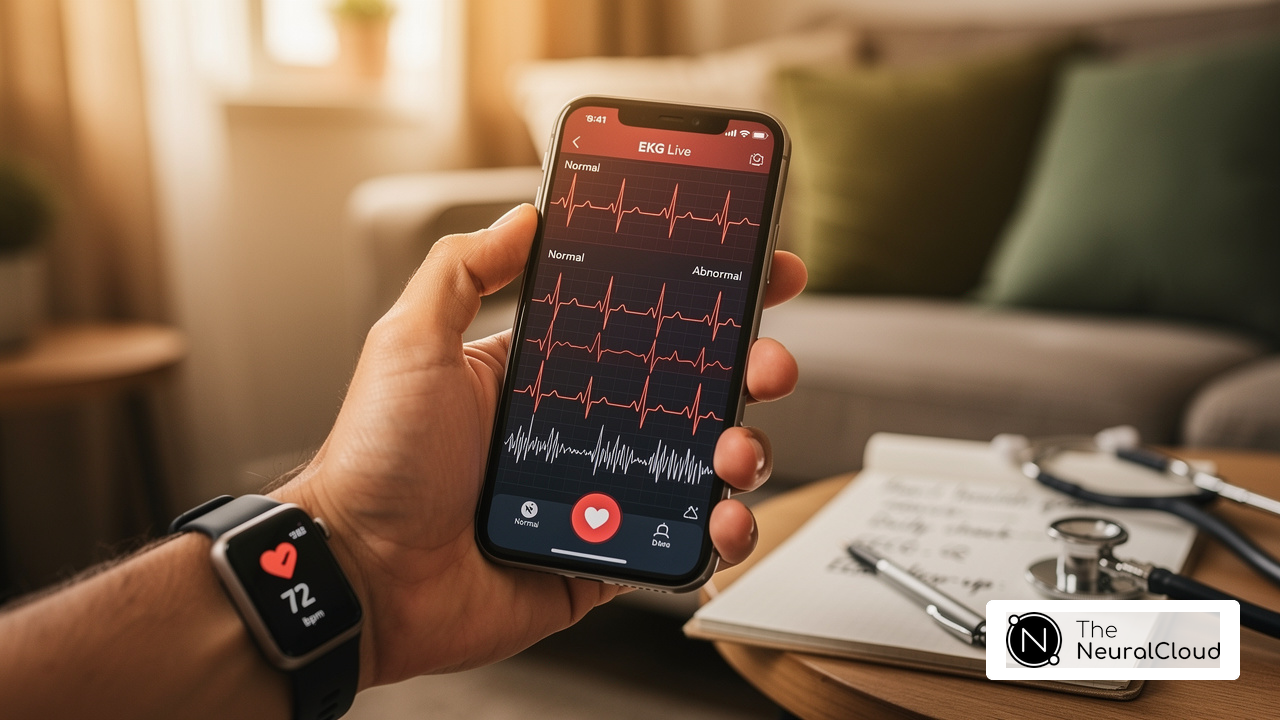
At-home Holter monitors are transforming cardiac care by providing remarkable convenience and efficiency for patients and healthcare providers alike. These advanced devices enable continuous monitoring, allowing individuals to manage their heart health from the comfort of their homes. As the need for remote cardiac monitoring increases, it raises an important question: how can health tech developers leverage these innovative technologies to improve patient outcomes and streamline healthcare processes?
The features of at-home Holter monitors include real-time data collection and user-friendly interfaces, which facilitate easy access to vital health information. This empowers patients to stay informed about their heart health, fostering a proactive approach to wellness. Additionally, healthcare providers benefit from the ability to monitor patients remotely, reducing the need for frequent in-office visits and enhancing overall efficiency in care delivery.
In summary, the integration of at-home Holter monitors into cardiac care not only addresses the challenges of traditional monitoring methods but also presents significant advantages for both patients and healthcare professionals. By embracing these technologies, the healthcare industry can move towards a more patient-centered approach, ultimately leading to better health outcomes.
MaxYield™ by Neural Cloud Solutions: Automated ECG Analysis for Enhanced Clarity
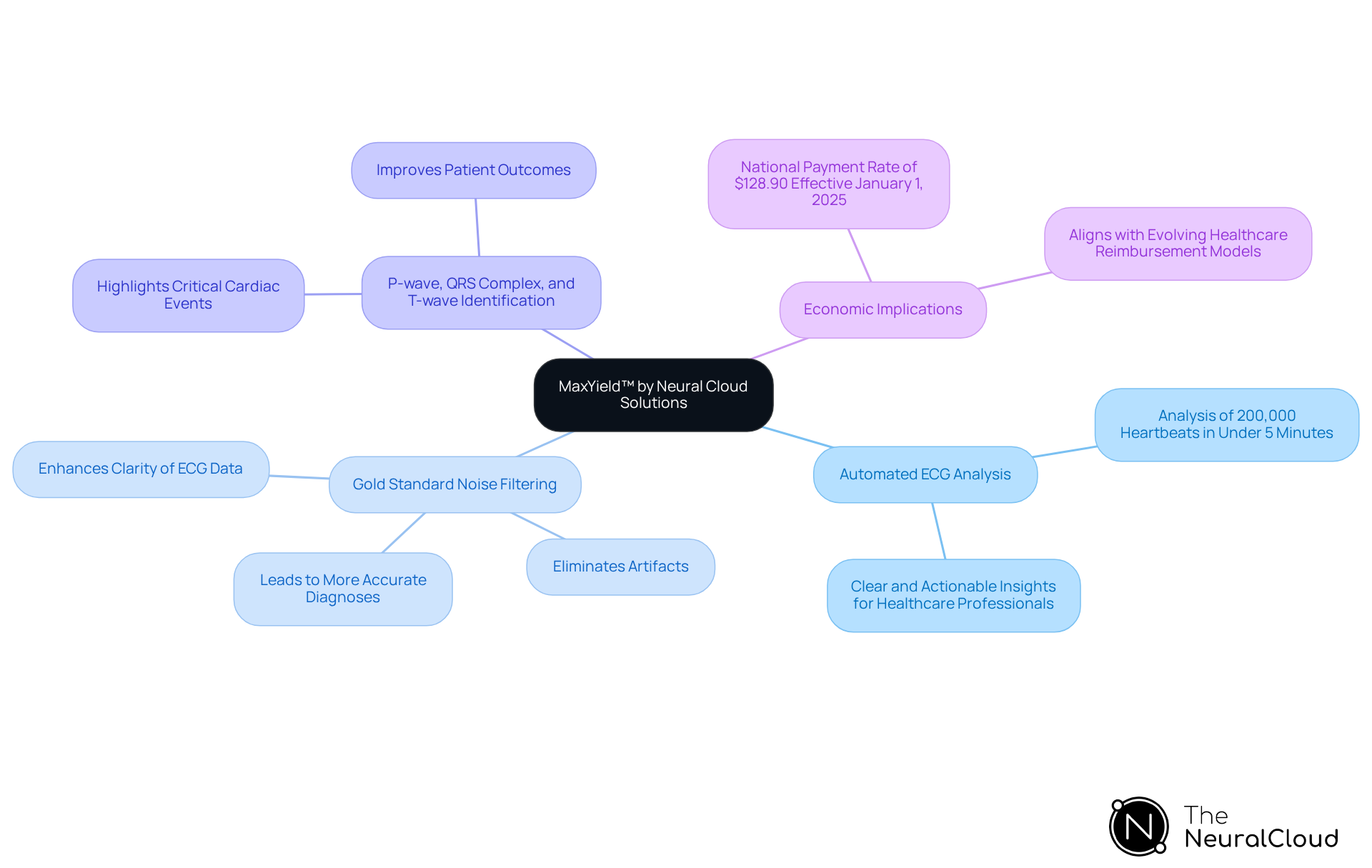
ECG analysis presents several challenges, particularly in terms of accuracy and efficiency. Neural Cloud Solutions addresses these issues with its innovative technology, which revolutionizes ECG analysis through advanced algorithms. This technology enables rapid analysis, allowing for the analysis of over 200,000 heartbeats in under five minutes. As a result, healthcare professionals receive critical insights that can significantly improve patient care.
One of the standout features of MaxYield™ is its advanced processing capabilities, which eliminates artifacts and enhances the clarity of ECG data. This improvement leads to more accurate diagnoses and better patient outcomes. The platform is especially beneficial for healthcare providers, ensuring that data collected from various devices is processed efficiently. Additionally, MaxYield™ highlights P-wave, QRS complex, and T-wave onsets and offsets, further aiding in the identification of critical cardiac events.
Dr. Robert Herman, Chief Medical Officer at Powerful Medical, emphasizes the importance of this technology, stating, "This innovation can reduce diagnostic gaps, especially at the first medical contact, streamlining access to care." Recent discoveries showcased at TCT 2025 further highlight advancements in cardiac monitoring, underscoring the significance of integrating such technologies into modern medical practices.
Moreover, the national payment rate for AI-enabled ECG analysis, effective January 1, 2025, reflects the growing recognition of its value. This makes it a crucial consideration for health tech developers, as the integration of AI in ECG analysis not only enhances clinical outcomes but also aligns with evolving healthcare reimbursement models.
Convenience of At-Home Monitoring: Simplifying Cardiac Care
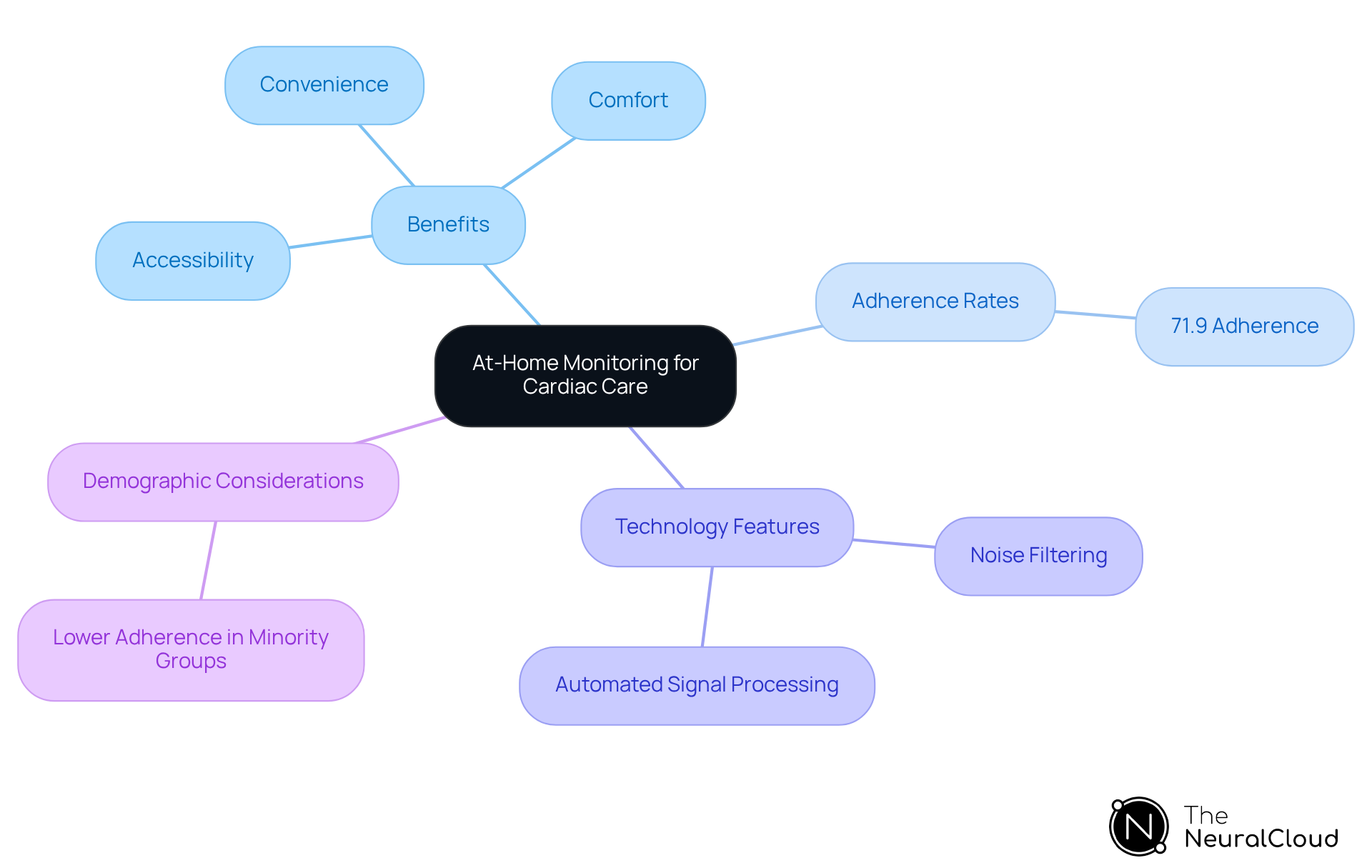
At home monitors provide significant advantages for individuals, allowing for monitoring without the need for frequent visits to medical facilities. This ease of use encourages adherence to oversight protocols, leading to better health outcomes. With devices designed for comfort during daily activities, individuals can continue their routines while ensuring consistent heart health monitoring. The technology provides convenience that is especially beneficial for those with busy lifestyles or mobility challenges, making healthcare more accessible.
According to the Heart Rhythm Society, this approach (Class 1, Level of Evidence A) facilitates earlier detection of clinically actionable events. Studies show that adherence rates among patients using remote tracking technologies can reach up to 71.9%, highlighting the critical role of efficient data capture and analysis in improving patient compliance.
The 'Neural Cloud Solutions' technology illustrates how advanced monitoring can enhance patient care. Key features include:
These features streamline workflows for medical professionals. This system allows for the processing of more data in less time while ensuring clarity and precision in the captured signals. For example, healthcare providers can automate the labeling of ECG data, significantly cutting down on the time required for manual analysis.
However, it is important to note that some patients experience lower odds of complete adherence. This underscores the necessity for ongoing support. The UbiqVue Holter system, combined with MaxYield™, offers an effective approach to health management that empowers individuals and enhances health management.
Cost-Effectiveness: Reducing Healthcare Expenses with At-Home Monitors
At-home monitors significantly reduce medical expenses by minimizing the need for hospital visits and inpatient observation. The technology allows for remote monitoring, which decreases emergency room visits and hospital admissions, ultimately lowering costs. For example, research shows that home observation for acute heart patients can save over $3,000 per patient compared to traditional hospital care.
The device from Neural Cloud Solutions employs advanced features, such as advanced noise filtering and highlighting of P, QRS, and T Waves, to automate ECG analysis. This automation not only enhances efficiency but also reduces errors associated with manual processing. As a result, the system becomes a valuable tool, contributing to a more sustainable healthcare system.
Additionally, the integration of a data wall and communication platform is crucial for ensuring a seamless flow of information. This approach further boosts the effectiveness of the monitoring system, making it a practical solution for both patients and healthcare professionals.

Continuous Monitoring: Capturing Irregularities in Real-Time
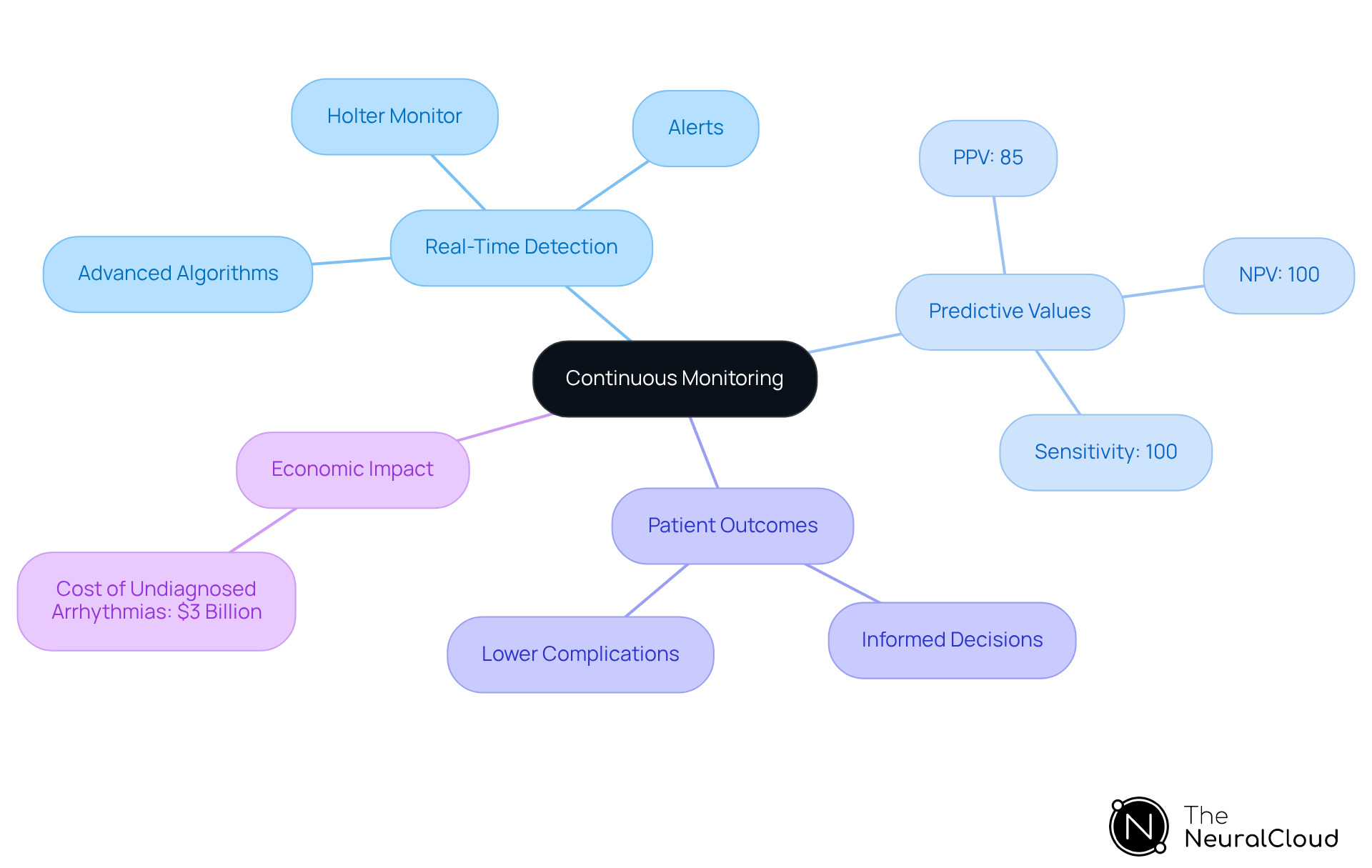
Continuous monitoring with an at home holter monitor allows for real-time detection of irregularities, such as arrhythmias. This capability is crucial for patient safety, enabling healthcare providers to respond swiftly to any concerning changes in a person's heart rhythm. By utilizing advanced algorithms, like those found in the MaxYield system, these devices can send alerts for significant events, ensuring individuals receive timely care when it matters most.
The integration of technology not only boosts patient outcomes but also empowers healthcare providers to make informed decisions. This ultimately enhances care quality and lowers the risk of serious complications. Additionally, the monitoring system aids in reducing costs and improving operational efficiency by streamlining processes, which leads to quicker analysis and less time spent on noise filtering and annotation.
Notably, studies show that the positive predictive value (PPV) for detecting arrhythmias is 85%, while the negative predictive value (NPV) is an impressive 100%. Furthermore, the overall sensitivity of smartwatches for detecting these arrhythmias has been reported at 100%, underscoring the effectiveness of continuous monitoring solutions.
Recent research published between 2017 and 2021 highlights the prevalence of undiagnosed arrhythmias, costing the U.S. medical system around $3 billion annually. This context reinforces the need for advanced monitoring technologies like the Holter monitor, which not only enhance diagnostic capabilities but also significantly increase throughput.
Seamless Data Sharing: Enhancing Communication with Healthcare Providers
tackle significant challenges in healthcare by enabling effective communication. This promotes collaboration, essential for patient care.
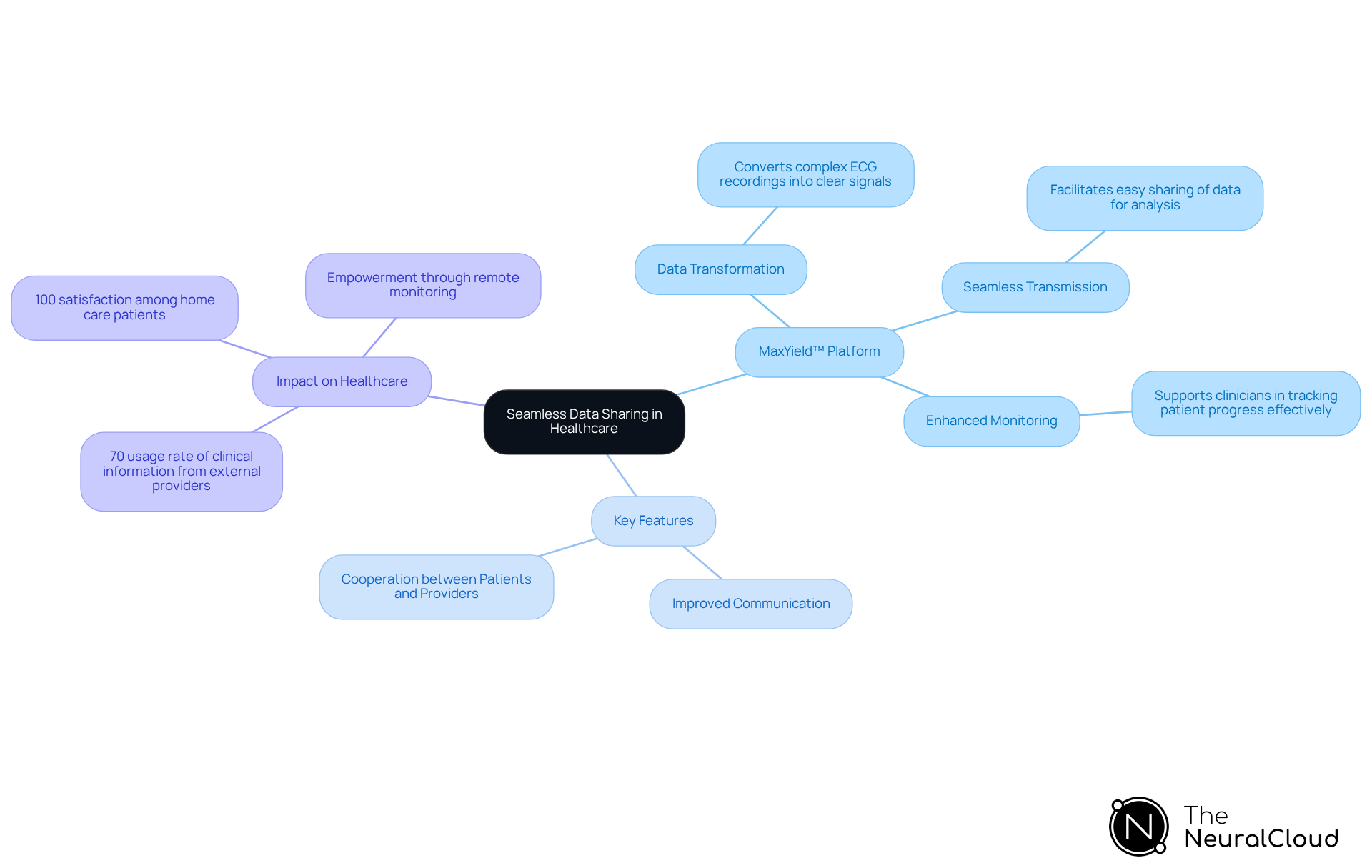
The MaxYield™ platform exemplifies innovation in this space. It transforms lengthy and noisy ECG recordings into clean, crisp signals, allowing for seamless transmission of ECG data. This advanced AI technology enhances clinicians' ability to monitor patient progress and make informed decisions, ultimately leading to better care and outcomes.
Key features of MaxYield™ include:
- Data Transformation: Converts complex ECG recordings into clear signals.
- Seamless Transmission: Facilitates easy sharing of data for analysis.
- Clinical Support: Supports clinicians in tracking patient progress effectively.
These features translate into significant advantages for healthcare professionals. Notably, hospitals engaging in telehealth report a 70% usage rate of clinical information from external providers, yet only 42% of clinicians often utilize this information, indicating a gap in practical application. Additionally, satisfaction surveys reveal that 100% of individuals on the home care pathway were pleased with their treatment, underscoring the positive impact of at-home oversight on user experience.
Expert opinions, including insights from Dr. Stephen Agboola, emphasize that extending remote monitoring programs can empower individuals. This enhances their self-management capabilities and improves health outcomes. As healthcare continues to evolve, the integration of technology, supported by innovative solutions like MaxYield™, will play a pivotal role in enhancing communication within the healthcare system.
Comfort and Flexibility: Improving Patient Compliance and Accuracy
provide comfort and flexibility, addressing significant challenges in adherence to treatment. Designed to be lightweight and unobtrusive, these devices allow individuals to engage in their daily activities without discomfort. This not only encourages compliance with health protocols but also leads to more accurate monitoring.
Research indicates that when users feel comfortable with their devices, adherence rates improve significantly; studies show that nearly 90% of individuals have utilized monitoring technology in the past year. By focusing on comfort and flexibility, developers can create effective solutions, such as an at-home Holter monitor, that enhance adherence to protocols and ultimately improve health outcomes.

Patient Education: Empowering Individuals with Heart Health Insights
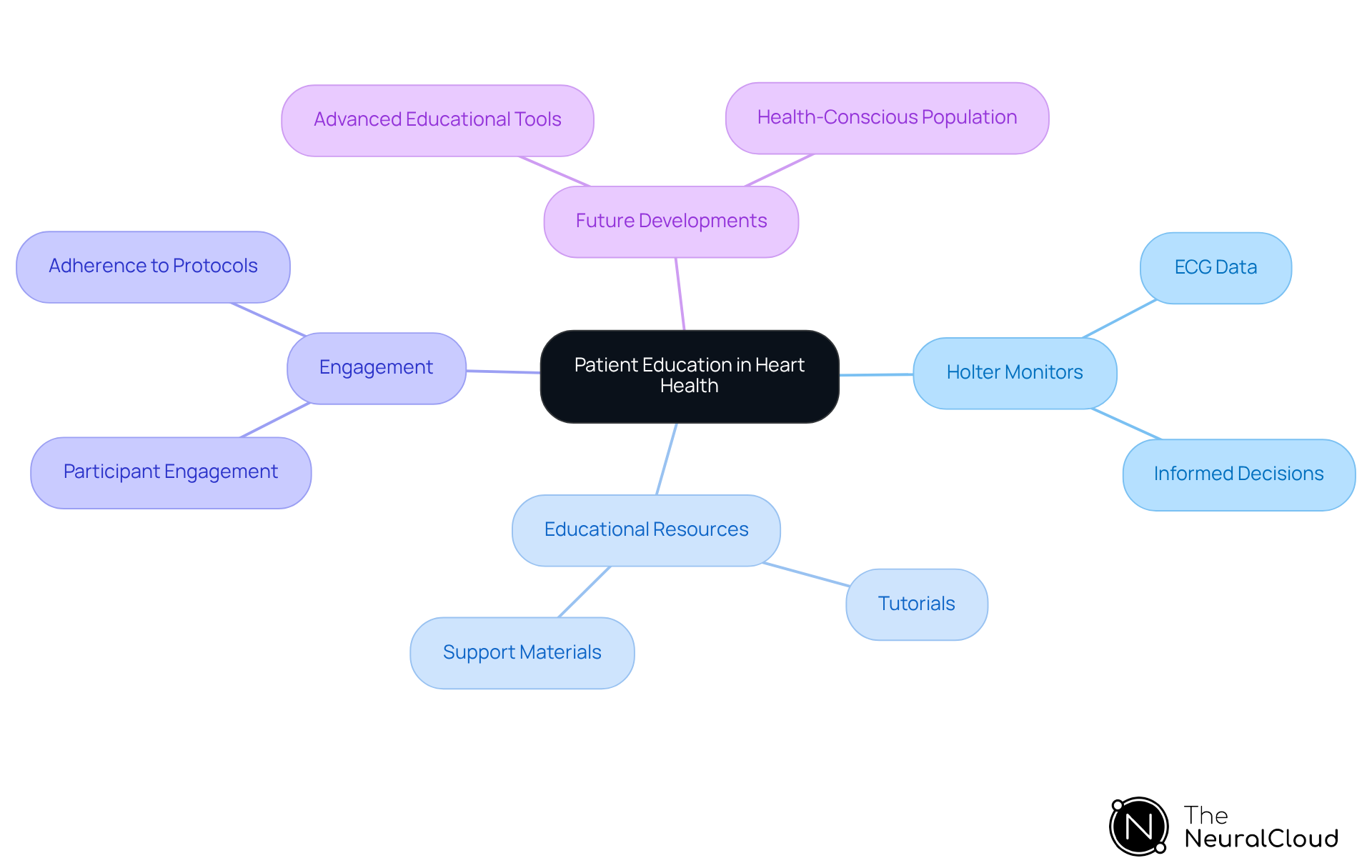
At-home monitors are essential in empowering individuals to take charge of their health. These devices provide users with clear data, enabling them to make informed decisions about their care and treatment options. The inclusion of educational resources, such as tutorials and support materials, significantly boosts participant engagement, which is essential for adhering to observation protocols. This proactive approach not only empowers individuals but also leads to better outcomes, as research shows that informed individuals are more likely to follow prescribed guidelines.
Looking ahead to 2025, the integration of advanced technology will further enhance individuals' ability to interpret their data. This development is expected to cultivate a more informed and health-conscious population. Experts agree that when individuals possess knowledge about their conditions, they are better equipped to manage their health, ultimately improving their care and health results. By fostering this understanding, at-home monitors serve not just as monitoring devices but also as essential tools in the journey toward better health.
Early Detection: Identifying Heart Conditions Before They Escalate
At home monitors are essential for the early detection of heart conditions, enabling interventions that can prevent serious complications. These devices provide continuous monitoring, allowing for the swift identification of irregularities that may indicate underlying issues, such as atrial fibrillation or other arrhythmias. Early detection is crucial; it empowers healthcare providers to implement treatments before conditions worsen, ultimately saving lives.
Research shows that extended monitoring, like a Holter monitor, significantly increases the detection rate of cardiac issues. Studies indicate that approximately 10-15% of cases are identified with this method, compared to nearly 2% with standard 24-hour recordings. This proactive approach enhances the quality of care and reduces the risk of adverse events, highlighting the critical role of technology in cardiology.
Experts emphasize that continuous monitoring is vital for preventing complications and ensuring patients receive necessary care before their conditions deteriorate. By leveraging an at home Holter monitor, healthcare professionals can provide better management of heart health, ultimately leading to improved patient safety and well-being.
Advanced Technology: Enhancing Accuracy and Reducing Noise Interference
ECG analysis often faces challenges due to noise interference. At-home monitors that feature advanced technology, such as the MaxYield™ system, effectively address these issues. By utilizing algorithms, such as those found in Neural Cloud Solutions' offerings, these devices filter out unwanted noise, ensuring that healthcare providers receive clear and accurate data.
The system boasts advanced signal processing and wave recognition capabilities, including the highlighting of P, QRS, and T waves. This technology enables rapid analysis, allowing for the analysis of up to 200,000 heartbeats in less than five minutes. Such improved signal clarity empowers healthcare professionals to make informed decisions based on precise ECG data, ultimately enhancing patient outcomes.
Moreover, the automation of repetitive tasks within the MaxYield™ system significantly boosts efficiency. As technology continues to evolve, the potential for even greater precision in observation using an at-home Holter monitor will expand, driven by innovative solutions like MaxYield™. This not only improves diagnostic accuracy but also enhances the overall patient care experience.
Support for Chronic Disease Management: Aiding Patients with Existing Conditions
The Holter monitor plays a vital role in managing chronic diseases. They provide ongoing surveillance that allows healthcare providers to monitor changes in an individual's cardiac health over time. This capability facilitates timely interventions, which are essential for effective treatment. By empowering individuals to actively participate in their health tracking, these devices significantly enhance their quality of life and lead to better outcomes.
Studies show that continuous observation can reduce hospital readmission rates by up to 76%, highlighting its effectiveness in chronic care management. As the demand for remote monitoring increases, projections suggest that over 71 million Americans will utilize such services by 2025. This trend underscores the importance of technology in supporting individuals with existing heart conditions.
Integrating wearable technology with Neural Cloud Solutions' platform improves ECG analysis efficiency by automating the labeling process. This innovation not only reduces operational costs but also enhances data accuracy. The system addresses challenges such as noise interference and signal artifacts, facilitating the discovery of new digital biomarkers. As a result, individuals experience improved health outcomes.
Health tech developers can leverage these advancements to enhance their solutions and improve patient care. The platform offers several key features:
- Automation: Streamlines the ECG analysis process, saving time and resources.
- Accuracy: Reduces errors associated with manual labeling, leading to more reliable results.
- Discovery of Digital Biomarkers: Supports the identification of new health indicators, improving patient monitoring.
By utilizing the platform, healthcare professionals can provide better care for their patients, ultimately leading to improved health outcomes.
Conclusion
At-home Holter monitors mark a significant leap forward in cardiac care, bringing numerous benefits that enhance patient health and streamline medical practices. These devices enable continuous monitoring and real-time data analysis, empowering individuals to take charge of their heart health while offering healthcare professionals critical insights for timely interventions. The integration of technologies like Neural Cloud Solutions' MaxYield™ platform further amplifies these advantages, ensuring that ECG data is accurate, clear, and actionable.
Key insights from the article emphasize:
- The convenience of remote monitoring
- The cost-effectiveness of at-home devices
- The importance of patient education
Continuous monitoring not only facilitates early detection of irregularities but also supports chronic disease management, ultimately leading to improved health outcomes. The focus on comfort, flexibility, and seamless data sharing enhances patient compliance, reinforcing the essential role of technology in modern healthcare.
As the healthcare landscape evolves, embracing at-home Holter monitors and advanced ECG analysis technologies will be crucial. By prioritizing patient empowerment and leveraging innovative solutions, health tech developers can significantly improve cardiac care delivery, reduce healthcare costs, and foster a more informed patient population. The future of cardiac monitoring lies in these advancements, and their impact on patient health cannot be overstated.
Frequently Asked Questions
What is MaxYield™ by Neural Cloud Solutions?
MaxYield™ is an innovative platform that automates ECG analysis using advanced AI algorithms, allowing healthcare professionals to analyze over 200,000 heartbeats in under five minutes and receive clear, actionable insights to improve patient care.
How does MaxYield™ enhance ECG analysis?
MaxYield™ enhances ECG analysis through gold standard noise filtering, which eliminates artifacts and improves the clarity of ECG data, leading to more accurate diagnoses and better patient outcomes.
What features does MaxYield™ offer for ECG analysis?
Key features of MaxYield™ include automated signal processing, noise filtering, and the ability to highlight P-wave, QRS complex, and T-wave onsets and offsets, aiding in the identification of critical cardiac events.
What benefits do at-home Holter monitors provide?
At-home Holter monitors allow for cardiac assessment without frequent medical visits, encouraging adherence to oversight protocols and improving health outcomes, especially for individuals with busy lifestyles or mobility challenges.
How does remote observation impact patient compliance?
Remote observation is highly recommended as it facilitates earlier detection of clinically actionable events, with studies showing adherence rates among patients using remote tracking technologies reaching up to 71.9%.
What is the economic impact of at-home Holter monitors?
At-home Holter monitors significantly reduce healthcare expenses by minimizing hospital visits and inpatient observation, potentially saving over $3,000 per patient compared to traditional hospital care.
How does the MaxYield™ platform contribute to cost-effectiveness in healthcare?
The MaxYield™ platform automates ECG analysis, reducing labor costs associated with manual processing and enhancing efficiency, making at-home Holter monitors a financially viable option for healthcare providers.
What is the significance of the national payment rate for AI-enabled ECG analysis?
Effective January 1, 2025, the national payment rate for AI-enabled ECG analysis reflects the economic implications of adopting such technologies, underscoring their importance in enhancing clinical outcomes and aligning with evolving healthcare reimbursement models.
What challenges exist regarding patient adherence with at-home monitoring?
Certain demographic groups, such as Black or African American and Hispanic or Latino individuals, experience lower odds of complete adherence, highlighting the need for targeted interventions to improve compliance in these populations.
List of Sources
- MaxYield™ by Neural Cloud Solutions: Automated ECG Analysis for Enhanced Clarity
- New Data Show Viz.ai’s AI-Enabled ECG Screening Increases Detection and Accelerates Diagnosis of Hypertrophic Cardiomyopathy (https://viz.ai/news/new-data-show-viz-ais-ai-enabled-ecg-screening-increases-detection)
- AI-Based ECG Analysis Significantly Improves STEMI Detection, Reduces False Activations - American College of Cardiology (https://acc.org/latest-in-cardiology/articles/2025/10/24/16/56/tues-554pm-ai-tct-2025)
- New study finds AI model improves heart attack detection (https://health.ucdavis.edu/news/headlines/new-study-finds-ai-model-improves-heart-attack-detection/2025/11)
- Queen of Hearts AI Hits 92% STEMI Accuracy (https://powerfulmedical.com/blog/pmcardio-reports-positive-rct-results-and-late-breaking-clinical-science-for-stemi-detection)
- AI-ECG Finds STEMI Faster, Cuts False-Positive Cath Lab Activations (https://tctmd.com/news/ai-ecg-finds-stemi-faster-cuts-false-positive-cath-lab-activations)
- Convenience of At-Home Monitoring: Simplifying Cardiac Care
- bbc.com (https://bbc.com/news/articles/c7vr9n70rgeo)
- lifesignals.com (https://lifesignals.com/hrs-2025-the-rise-of-wearable-holter-devices-and-the-future-of-cardiac-monitoring)
- 27 Remote Patient Monitoring Statistics Every Practice Should Know (https://blog.prevounce.com/27-remote-patient-monitoring-statistics-every-practice-should-know)
- pmc.ncbi.nlm.nih.gov (https://pmc.ncbi.nlm.nih.gov/articles/PMC12664735)
- frontiersin.org (https://frontiersin.org/journals/digital-health/articles/10.3389/fdgth.2024.1437134/full)
- Cost-Effectiveness: Reducing Healthcare Expenses with At-Home Monitors
- remetrichealth.com (https://remetrichealth.com/remote-patient-monitoring-a-key-to-reducing-healthcare-costs-and-boosting-efficiency)
- cardiovascularbusiness.com (https://cardiovascularbusiness.com/topics/patient-care/monitoring-acute-heart-patients-home-linked-considerable-cost-savings)
- pmc.ncbi.nlm.nih.gov (https://pmc.ncbi.nlm.nih.gov/articles/PMC11145532)
- healthcareitnews.com (https://healthcareitnews.com/news/home-early-warning-heart-failure-wearable-can-save-lives-and-money)
- Continuous Monitoring: Capturing Irregularities in Real-Time
- pmc.ncbi.nlm.nih.gov (https://pmc.ncbi.nlm.nih.gov/articles/PMC8433941)
- biotricity.com (https://biotricity.com/2024/10/28/why-early-detection-of-arrhythmia-is-critical-how-biotricitys-cardiac-solutions-help)
- scinternalmedicine.com (https://scinternalmedicine.com/2025/01/10/how-wearing-a-heart-monitor-can-save-your-life)
- New Study Show Implantable Cardiac Monitors Significantly Improve Care Pathways for Patients with Atrial Fibrillation - HRS (https://hrsonline.org/news/icm-improves-afib-patient-management)
- irhythm2024rd.q4web.com (https://irhythm2024rd.q4web.com/news/news-details/2025/iRhythm-Unveils-New-Real-World-Data-at-ACC-25-Demonstrating-the-Benefits-of--Zio-Long-Term-Continuous-Monitoring-for-Arrhythmia-Detection/default.aspx)
- Seamless Data Sharing: Enhancing Communication with Healthcare Providers
- 30 Quotes About the Future of Healthcare: Expert Takes (https://deliberatedirections.com/quotes-future-of-healthcare)
- klara.com (https://klara.com/blog/12-best-quotes-on-the-future-of-healthcare)
- qualityincare.org (https://qualityincare.org/case_studies/herceptin_at_home_a_shared_care_model_delivering_patient_choice_and_efficiency)
- Interoperable Exchange of Patient Health Information Among U.S. Hospitals: 2023 (https://healthit.gov/data/data-briefs/interoperable-exchange-patient-health-information-among-us-hospitals-2023)
- 10 Inspiring Patient Experience Quotes | Relias (https://relias.com/blog/patient-experience-quotes)
- Comfort and Flexibility: Improving Patient Compliance and Accuracy
- The Convenience and Accuracy of a Wireless 30-Day Heart Monitor - Biotricity (https://biotricity.com/2025/03/13/the-convenience-and-accuracy-of-a-wireless-30-day-heart-monitor)
- coachcare.com (https://coachcare.com/2023/04/27/14-surprising-statistics-about-remote-patient-monitoring.html)
- 7 Remote Patient Monitoring Stats You Need to Know - Joerns Healthcare (https://joerns.com/health-outcomes/remote-patient-monitoring-statistics)
- Patient Education: Empowering Individuals with Heart Health Insights
- ajconline.org (https://ajconline.org/article/S0002-9149(08)01715-3/fulltext)
- New study finds AI model improves heart attack detection (https://health.ucdavis.edu/news/headlines/new-study-finds-ai-model-improves-heart-attack-detection/2025/11)
- Heart Association highlights 2025’s major research findings (https://heart.org/en/around-the-aha/heart-association-highlights-2025s-major-research-findings)
- pmc.ncbi.nlm.nih.gov (https://pmc.ncbi.nlm.nih.gov/articles/PMC9847535)
- crestline.com (https://crestline.com/c/slogans-for-american-heart-month)
- Early Detection: Identifying Heart Conditions Before They Escalate
- nature.com (https://nature.com/articles/s41598-021-04285-6)
- pmc.ncbi.nlm.nih.gov (https://pmc.ncbi.nlm.nih.gov/articles/PMC11300264)
- Memorable Cardiology Quotes | TheKnowHow Blog (https://theknowhow.ae/memorable-cardiology-quotes-heart)
- Heart Health Cardiology Quotes: Memorable Wisdom | TheKnowHow Blog (https://theknowhow.ae/memorable-cardiology-quotes-heath)
- Remote Monitoring in Heart Failure: Revolutionizing Patient Management and Outcomes (https://uscjournal.com/articles/remote-monitoring-heart-failure-revolutionizing-patient-management-and-outcomes?language_content_entity=en)
- Advanced Technology: Enhancing Accuracy and Reducing Noise Interference
- New study finds AI model improves heart attack detection (https://health.ucdavis.edu/news/headlines/new-study-finds-ai-model-improves-heart-attack-detection/2025/11)
- Queen of Hearts AI Hits 92% STEMI Accuracy (https://powerfulmedical.com/blog/pmcardio-reports-positive-rct-results-and-late-breaking-clinical-science-for-stemi-detection)
- Artificial Intelligence–Assisted ECG Interpretation versus Conventional Reporting in Predicting Arrhythmias in Acute Coronary Syndrome: A Diagnostic Accuracy Study (https://healthcare-bulletin.co.uk/article/artificial-intelligence-assisted-ecg-interpretation-versus-conventional-reporting-in-predicting-arrhythmias-in-acute-coronary-syndrome-a-diagnostic-accuracy-study-4252)
- pmc.ncbi.nlm.nih.gov (https://pmc.ncbi.nlm.nih.gov/articles/PMC12594034)
- Study Shows Promising Results for ECG Technology (https://dicardiology.com/content/study-shows-promising-results-ecg-technology)
- Support for Chronic Disease Management: Aiding Patients with Existing Conditions
- 27 Remote Patient Monitoring Statistics Every Practice Should Know (https://blog.prevounce.com/27-remote-patient-monitoring-statistics-every-practice-should-know)
- intuitionlabs.ai (https://intuitionlabs.ai/articles/remote-patient-monitoring-united-states-2025-landscape)
- 10 Inspiring Patient Experience Quotes | Relias (https://relias.com/blog/patient-experience-quotes)
- investors.irhythmtech.com (https://investors.irhythmtech.com/news/news-details/2025/iRhythm-Technologies-Announces-Publication-of-Large-Scale-Studyin-Heart-Rhythm-and-New-Data-Presented-at-AHA-Scientific-Sessions-2025/default.aspx)
- irhythm2024rd.q4web.com (https://irhythm2024rd.q4web.com/news/news-details/2025/iRhythm-Presents-New-Real-World-Data-on-Ambulatory-Cardiac-Monitoring-at-HRS-2025-Reinforcing-Clinical-Superiority-of-Zio-Long-Term-Continuous-Monitoring/default.aspx)