Introduction
Mastering the art of EKG interpretation is not just a skill; it’s a vital necessity in modern healthcare. Accurate cardiac assessments can significantly impact patient outcomes. As the demand for proficient EKG analysis continues to rise, understanding fundamental terminology and concepts becomes crucial for healthcare professionals. However, many face challenges in identifying key waveforms and intervals amidst the complexities of EKG strips.
How can one bridge the gap between theoretical knowledge and practical application? This is essential to ensure precise and timely cardiac evaluations. By addressing these challenges, healthcare professionals can enhance their skills and improve patient care.
Understand Basic EKG Terminology and Concepts
To effectively master EKG interpretation, it’s essential to understand several key terms:
- EKG: This diagnostic test records the heart's electrical activity over time, offering insights into heart function. With the integration of wearable technology and data analysis, interpretation becomes more efficient. Automation reduces operational costs, making it easier for healthcare professionals to interpret results.
- P wave: Representing atrial depolarization, this wave signals the contraction of the atria. Understanding the P wave is crucial for grasping the overall EKG. The system enhances the clarity of these readings, aiding healthcare professionals in their interpretations.
- QRS complex: This complex reflects ventricular depolarization, indicating the electrical impulse that triggers the ventricles to contract. It’s a critical component of EKG analysis. The automated annotations provided by the system allow technicians to manage these cases more swiftly without compromising quality.
- T wave: This signal indicates ventricular repolarization, marking the recovery phase of the ventricles after contraction. It’s vital for assessing heart health. The reliably clear signals from the system boost productivity and precision in interpreting these frequencies.
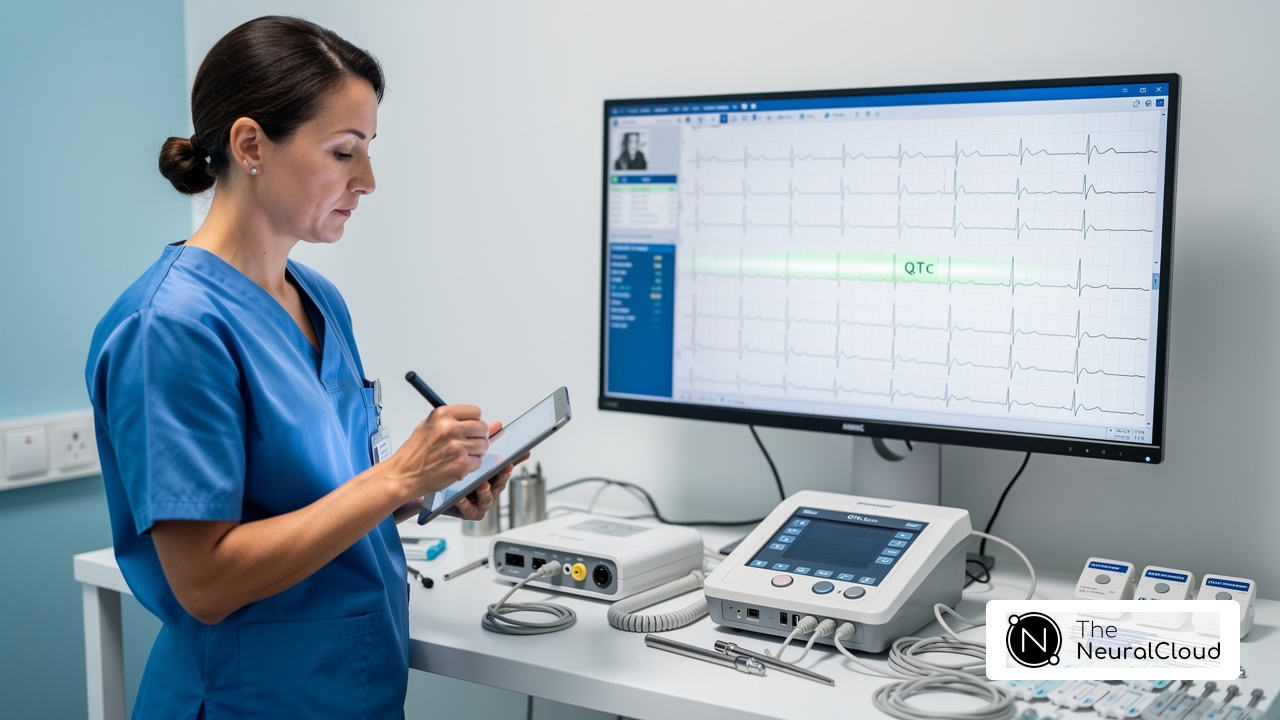
- Intervals: These are time periods between waves, such as the PR interval and the QT interval (from the start of the Q wave to the end of the T wave). They are important for evaluating the heart's electrical timing. By utilizing this innovative solution, healthcare professionals can significantly reduce the time spent on noise filtering and annotating, maximizing their efficiency.
A recent study revealed that 66% of healthcare professionals are now familiar with EKG terminology, highlighting its significance in clinical practice (American Medical Association, 2024). Understanding these terms not only enhances your ability to learn to read EKGs but also lays a solid foundation for further learning and application in real-world scenarios, such as identifying arrhythmias or assessing cardiac events. As the diagnostic electrocardiograph market is projected to expand significantly by 2031, mastering EKG concepts becomes increasingly relevant.

Learn to Identify Key EKG Waveforms and Intervals
To learn to read EKGs, it is essential to understand basic concepts. Advanced tools like software can significantly enhance this process.
Challenges in EKG interpretation: Healthcare professionals often face difficulties in quickly and accurately identifying waveforms. Recent studies show that it typically takes an average of 10-15 seconds to identify these waveforms accurately. This delay can impact patient assessment and management.
Features:
- P Wave: Look for a small upward deflection preceding the QRS complex, indicating atrial contraction. This waveform is crucial for assessing atrial activity.
- QRS Complex: Typically the tallest spike on the EKG, the QRS complex represents ventricular depolarization. Measure its width; a normal QRS duration is less than 0.12 seconds, vital for diagnosing conduction abnormalities.
- T Phase: Following the QRS complex, the T phase is a modest upward deflection representing ventricular repolarization. Its morphology can provide insights into cardiac health.
- PR Interval: Measure from the beginning of the P crest to the start of the QRS complex. A normal PR interval ranges from 0.12 to 0.20 seconds, indicating proper conduction through the atrioventricular node.
- QT Interval: Measure from the start of the QRS complex to the end of the T wave. The QT interval should generally be less than 0.44 seconds, as prolonged intervals can indicate potential arrhythmias.
Advantages of advanced software: The system maps ECG signals through noise, isolating and labeling these key features in every heartbeat. This helps healthcare professionals improve accuracy. With advanced software, the process is streamlined, allowing for analysis of 200,000 heartbeats in less than 5 minutes. Practicing with sample EKG strips can help you learn to read EKGs and improve proficiency in waveform identification, which is essential for effective patient assessment and management.

Apply Tips for Overcoming Common EKG Interpretation Challenges
While interpreting EKGs can present various challenges, you can enhance your skills effectively if you learn to approach the task with the right strategies. Here are some expert tips to help you navigate common difficulties:
- Avoid Over-Reliance on Computer Interpretations: Always verify the computer's analysis. Studies indicate that errors can occur, leading to potential misdiagnoses. Clinicians should remain vigilant, as the final assessment often requires a physician's oversight. The process improves by providing clearer signals, allowing for more accurate interpretations.
- Practice Regularly: Familiarity breeds confidence. The more EKGs you analyze, the better you will become at identifying and recognizing different patterns and anomalies. This is crucial, given that nearly 200 million EKGs are recorded annually worldwide. Practice enhances learning, which helps users gain insights from each case.
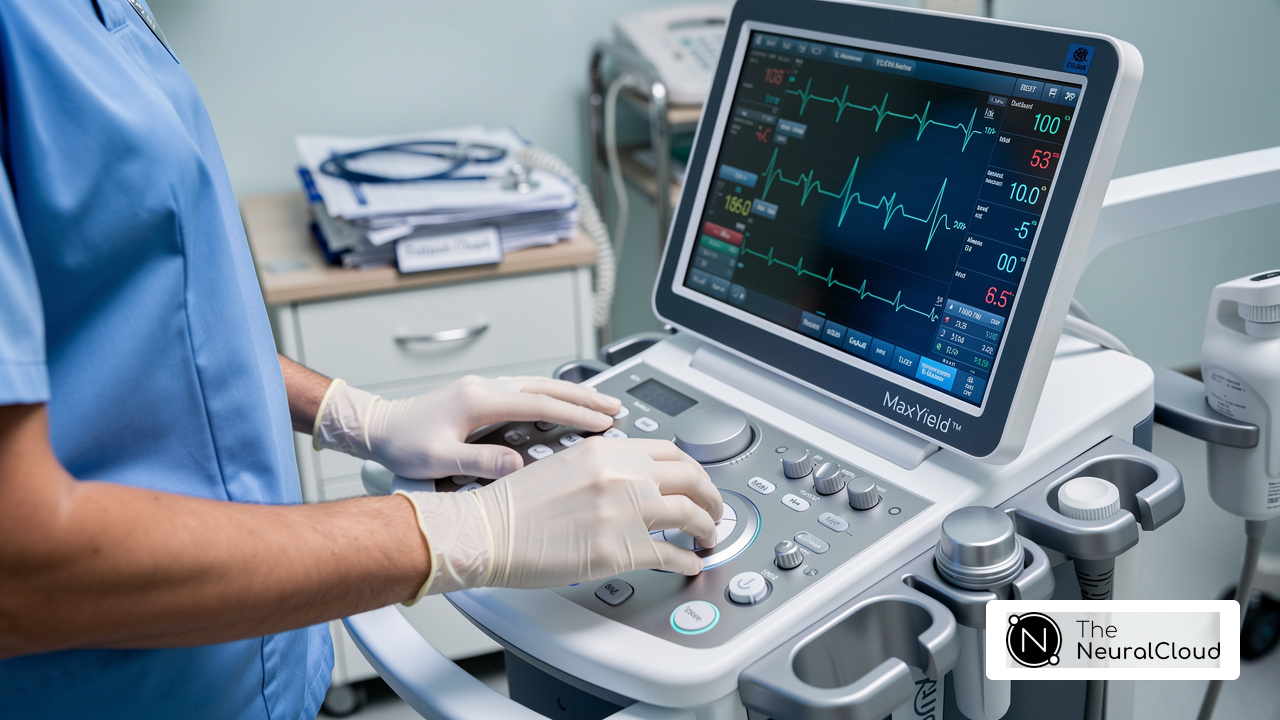
- Use a Systematic Approach: Implement a consistent method for evaluation. Start by assessing the rate, rhythm, and intervals systematically to ensure a thorough evaluation. This approach is supported by MaxYield™, which clearly delineates waveforms, allowing for more straightforward assessments.
- Seek Feedback: Collaborate with colleagues or mentors to discuss your insights. This peer review process can provide valuable perspectives and help refine your skills. Utilizing MaxYield™ can facilitate discussions by providing clearer data for review.
- Stay Updated: EKG interpretation guidelines are continually evolving. Consistently examine recent literature and engage in workshops to stay updated on best practices and innovations in technology. This is achieved by converting extensive and noisy ECG recordings into clear, sharp signals.
By applying these strategies, you can enhance your understanding and improve your skills while ensuring high-quality patient care. This addresses the growing burden of data and patient expectations on clinicians. Additionally, to maintain ECG literacy amidst technological advancements, particularly with tools like MaxYield™ that leverage cutting-edge AI technology for clarity and speed in ambulatory ECG waveform analysis.

Utilize Resources and Tools for Enhanced Learning
Enhance Your Learning with Effective Resources and Tools
Online Courses: Platforms like ECG Academy and Medmastery provide courses aimed at improving EKG interpretation skills. These courses cover essential concepts and techniques, making them invaluable for learners who want to advance at any level.
YouTube Channels: Educational channels such as Geeky Medics and Ninja Nerd offer tutorials. These resources simplify complex EKG concepts, helping individuals understand more easily and making them more accessible.
Flashcards: Tools like Quizlet allow you to create and study flashcards that reinforce key terms and definitions related to EKG analysis. This method facilitates quick recall and mastery of the material, enhancing retention.
Books: Reference texts, including "Conquering the ECG," provide comprehensive information. These resources are invaluable for both beginners and experienced practitioners who are eager to expand their knowledge and deepen their understanding.
Practice Apps: Interactive learning apps like EKGDX present scenarios for practice, enabling users to apply their knowledge in a simulated environment. The app enhances this experience by integrating advanced features, resulting in clearer ECG signals for analysis.
Engaging with these diverse resources will not only solidify your understanding of EKG interpretation but also boost your confidence in applying these skills in clinical settings.

Conclusion
Mastering EKG interpretation is essential for healthcare professionals, directly influencing patient assessment and management. However, many face challenges in accurately reading EKGs due to the complexity of waveforms and intervals. This is where the MaxYield™ platform comes into play, offering advanced tools that simplify the learning process. By providing clear explanations and interactive resources, MaxYield™ enhances understanding and application of EKG concepts in real-world scenarios.
The platform features a comprehensive library of educational materials, including diagrams and infographics that visually represent key concepts like the P wave, QRS complex, and T wave. These resources not only clarify the significance of each waveform in cardiac function but also help users overcome common pitfalls in EKG interpretation. For instance, it encourages practitioners to avoid over-reliance on computer analyses, emphasizing the importance of regular practice to build confidence and proficiency.
Moreover, MaxYield™ supports learners at every level by offering a variety of resources such as online courses, educational videos, and interactive apps. These tools are designed to cater to both technical and non-technical audiences, ensuring that everyone can enhance their EKG skills effectively. Engaging with these resources not only deepens knowledge but also prepares healthcare professionals to meet the evolving demands of the healthcare landscape.
Ultimately, the ability to read EKGs is crucial for delivering quality patient care. As technology advances, embracing platforms like MaxYield™ will ensure that healthcare professionals remain proficient and confident in their EKG interpretation skills. By integrating these learning tools into their practice, individuals can significantly improve patient outcomes, making a meaningful impact in their field.
Frequently Asked Questions
What is an electrocardiogram (EKG/ECG)?
An electrocardiogram (EKG/ECG) is a diagnostic test that records the heart's electrical activity over time, providing insights into cardiac function. Advances in wearable technology and Neural Cloud Solutions have made ECG analysis more efficient, with automated labeling reducing operational costs.
What does the P wave represent in an EKG?
The P wave represents atrial depolarization, signaling the contraction of the atria. Understanding the P wave is crucial for interpreting the heart's rhythm.
What is the significance of the QRS complex in an EKG?
The QRS complex reflects ventricular depolarization, indicating the electrical impulse that triggers the ventricles to contract. It is a critical component of EKG analysis.
What does the T wave indicate in an EKG?
The T wave indicates ventricular repolarization, marking the recovery phase of the ventricles after contraction. It is vital for assessing heart health.
What are intervals in EKG terminology?
Intervals are time periods between waves on an EKG, such as the PR interval (from the start of the P wave to the start of the QRS complex) and the QT interval (from the start of the QRS complex to the end of the T wave). They are important for evaluating the heart's electrical timing.
How has familiarity with EKG terminology changed among healthcare professionals?
A recent study revealed that 66% of healthcare professionals are now familiar with EKG terminology, highlighting its significance in clinical practice.
Why is mastering EKG concepts important for healthcare professionals?
Mastering EKG concepts enhances the ability to read EKGs and lays a solid foundation for identifying arrhythmias or assessing cardiac events. It is increasingly relevant as the diagnostic electrocardiograph market is projected to expand significantly by 2031.
List of Sources
- Understand Basic EKG Terminology and Concepts
- Cardiology Innovations 2026: AI, CRISPR & Heart Health (https://topdoctormagazine.com/chronic-care/cardiology-innovations-2026)
- finance.yahoo.com (https://finance.yahoo.com/news/diagnostic-electrocardiograph-research-report-2026-102200074.html)
- AI-ECG Momentum and Rising Competition Reshape Diagnostic Cardiology in 2026 (https://signifyresearch.net/insights/diagnostic-cardiology-market-bouncing-into-2026)
- mountsinai.org (https://mountsinai.org/about/newsroom/2026/ai-powered-ecg-could-help-guide-lifelong-heart-monitoring-for-patients-with-repaired-tetralogy-of-fallot)
- gurufocus.com (https://gurufocus.com/news/8704375/heartbeam-beat-advances-with-fda-clearance-for-ecg-technology)
- Learn to Identify Key EKG Waveforms and Intervals
- Normal Electrocardiography (ECG) Intervals: Normal Electrocardiography Intervals (https://emedicine.medscape.com/article/2172196-overview)
- michiganmedicine.org (https://michiganmedicine.org/health-lab/ai-model-helps-diagnose-often-undetected-heart-disease-simple-ekg)
- jmir.org (https://jmir.org/2026/1/e81116)
- New AI approach set to revolutionize ECG data interpretation in heart disease diagnosis (https://news-medical.net/news/20250219/New-AI-approach-set-to-revolutionize-ECG-data-interpretation-in-heart-disease-diagnosis.aspx)
- Apply Tips for Overcoming Common EKG Interpretation Challenges
- mdpi.com (https://mdpi.com/2673-3846/2/4/39)
- cveducation.mayo.edu (https://cveducation.mayo.edu/store/challenges-in-clinical-cardiology-a-case-based-update)
- finance.yahoo.com (https://finance.yahoo.com/news/diagnostic-electrocardiograph-research-report-2026-102200074.html)
- clinicalview.gehealthcare.com (https://clinicalview.gehealthcare.com/webinar/challenges-and-solutions-using-ecgs-management-cardiovascular-patients)
- asahq.org (https://asahq.org/meetings/calendar/2026/09/ekg-interpretation-seminar-20260919)
- Utilize Resources and Tools for Enhanced Learning
- cce.upmc.com (https://cce.upmc.com/content/12-lead-ekg-interpretation-march-12-2026)
- learningcenter.aacvpr.org (https://learningcenter.aacvpr.org/products/2026-ecg-webinar-series-from-fundamentals-to-advanced-interpretation-bundle)
- pmc.ncbi.nlm.nih.gov (https://pmc.ncbi.nlm.nih.gov/articles/PMC11948722)
- asahq.org (https://asahq.org/meetings/calendar/2026/09/ekg-interpretation-seminar-20260919)