Introduction
Frontal ST-Elevation Myocardial Infarction (STEMI) poses a significant challenge in cardiology, primarily due to a blockage in the left anterior descending artery, which can result in serious complications. Recognizing the unique characteristics of an anterior STEMI EKG is crucial for healthcare professionals. Timely identification and intervention can significantly enhance patient outcomes. However, the complexity of ECG readings, combined with the high stakes involved, raises an important question: how can clinicians accurately diagnose and manage this life-threatening condition?
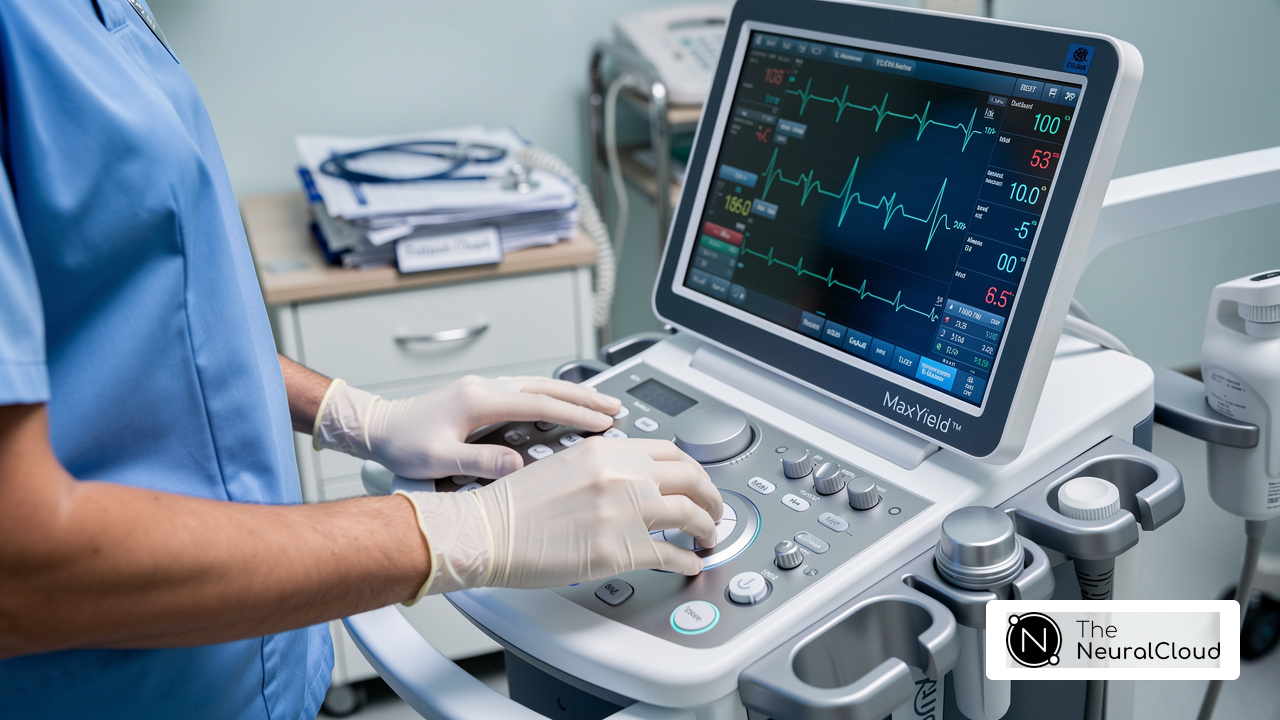
To address these challenges, the MaxYield™ platform offers advanced features designed to improve ECG analysis. By streamlining the interpretation process, it allows clinicians to focus on critical decision-making. The platform enhances the accuracy of readings, reducing the risk of misdiagnosis. Furthermore, it provides real-time feedback, enabling healthcare professionals to respond swiftly to changes in a patient's condition.
The advantages of using MaxYield™ are clear. Clinicians benefit from improved diagnostic confidence, which translates to better patient care. The platform's user-friendly interface ensures that both technical and non-technical users can navigate it effectively. Additionally, the integration of visual aids, such as diagrams and infographics, enhances understanding of complex information, making it easier to convey critical insights to the healthcare team.
Define Anterior STEMI: Key Concepts and Importance
Frontal ST-Elevation Myocardial Infarction arises from a blockage in the left anterior descending (LAD) artery, crucial for supplying blood to the heart's front wall. This condition is characterized by an anterior stemi ekg, which shows ST-segment elevation in the precordial leads (V1-V4). The significance of anterior stemi ekg is profound, as it correlates with higher morbidity and mortality rates compared to other types of myocardial infarction. Recent studies emphasize that timely diagnosis and intervention can significantly improve outcomes for patients. For instance, the STEMI-DTU study highlighted that those with an anterior stemi ekg face an elevated risk of complications, underscoring the need for prompt intervention. Additionally, a comprehensive 5-year follow-up of heart attack patients revealed a mortality rate of 21%, with key predictors including older age, lower body mass index, and in-hospital complications. These insights stress the importance for healthcare providers to be adept at recognizing anterior stemi ekg and understanding its implications for effective patient management.
Integrating Neural Cloud Solutions' MaxYield™ platform can greatly enhance ECG analysis by addressing common challenges. The platform employs advanced noise filtering and distinct wave recognition capabilities, which are essential for accurate readings. MaxYield™ efficiently identifies and labels critical data, even amidst high noise levels and artifacts, facilitating the rapid isolation of ECG waves affected by baseline wander, movement, and muscle artifact. This technology tackles the issues of physiological variability and signal artifacts, thereby improving the efficiency of ECG analysis.
The benefits of using MaxYield™ for healthcare professionals are substantial. By streamlining the ECG analysis process, the platform allows for quicker and more accurate diagnoses, ultimately leading to better patient outcomes. With its ability to filter out noise and enhance signal clarity, MaxYield™ empowers healthcare providers to make informed decisions swiftly. This not only aids in timely interventions but also enhances overall patient care, making it an invaluable tool in the management of myocardial infarctions.

Identify Anterior STEMI ECG Features: Key Waveforms and Patterns
The ECG characteristics indicative of front wall myocardial infarction are crucial for timely diagnosis and treatment. Key features include:
- ST-Segment Elevation: This defining characteristic of Anterior STEMI is typically seen in leads V1 to V4. The elevation signifies heart muscle injury due to ischemia, requiring immediate clinical attention.
- Q Waves: As the infarction progresses, pathological Q waves may emerge in the same leads, indicating necrosis of heart tissue. Their presence serves as a vital indicator for clinicians assessing the extent of heart tissue damage. Reciprocal changes such as ST-segment depression may be observed in inferior leads (II, III, aVF), providing additional diagnostic insights that can help confirm the diagnosis of an anterior STEMI EKG.
- T-Wave Inversions: Following the acute phase, T-wave inversions may develop in the affected leads, suggesting ongoing ischemia or myocardial damage. This change is pivotal for monitoring recovery and treatment response.
Recognizing these features is essential for healthcare professionals, as timely identification can significantly impact patient outcomes. Recent studies indicate that AI-based ECG interpretation can improve the accuracy of detecting these critical waveforms, achieving sensitivity rates of 92% compared to 71% for traditional methods. This advancement underscores the importance of integrating innovative technologies into clinical practice to enhance diagnostic accuracy and patient management.

Conduct Diagnostic Testing for Anterior STEMI: Procedures and Best Practices
To diagnose Anterior STEMI, several key procedures should be conducted:
- 12-Lead ECG: This is the primary diagnostic tool. It should be performed promptly upon the patient's arrival, especially if they present with chest pain or other signs of a heart attack.
- Cardiac Biomarkers: Blood tests for cardiac enzymes, particularly troponin, are essential for confirming heart tissue damage. Elevated troponin levels indicate myocardial infarction, providing critical information for diagnosis.
- Echocardiography: This imaging technique assesses cardiac function and wall motion abnormalities. It offers additional insights into the extent of the infarction, aiding in treatment planning.
- Coronary Angiography: If a front wall myocardial infarction is confirmed, urgent coronary angiography is often performed. This procedure identifies the location and severity of the blockage, guiding further treatment decisions.
By adhering to these best practices, healthcare providers can accurately diagnose the specific type of heart attack with the help of an anterior stemi ekg and initiate appropriate interventions swiftly.

Manage Anterior STEMI: Treatment Strategies and Clinical Guidelines
The management of anterior STEMI EKG involves several key strategies that are crucial for effective patient care.
Reperfusion Therapy is the primary focus, aiming to restore blood flow to the affected area of the heart. This can be achieved through:
- Percutaneous Coronary Intervention (PCI): This is the preferred method, ideally performed within 90 minutes of first medical contact.
- Fibrinolytic Therapy: If PCI is unavailable, thrombolytics may be administered to dissolve the clot, ideally within the first few hours of symptom onset.
Antiplatelet Therapy is essential, with dual antiplatelet therapy (aspirin and a P2Y12 inhibitor) recommended to prevent further clot formation.
Beta-Blockers should be initiated within 24 hours to help reduce myocardial oxygen demand and improve patient outcomes.
Statins play a vital role as well; high-intensity statin therapy should be started to manage cholesterol levels and stabilize atherosclerotic plaques.
Lastly, Monitoring and Supportive Care are critical during the acute phase. Continuous cardiac monitoring and supportive care, including pain management and addressing complications, are essential.
Following these guidelines can significantly enhance the management of anterior STEMI EKG, which leads to improved patient outcomes.

Conclusion
Understanding Anterior STEMI is crucial for healthcare professionals, as it poses a significant health challenge with serious implications for patient outcomes. Recognizing the unique ECG characteristics and implementing timely diagnostic and treatment strategies can significantly reduce the risk of complications. This tutorial emphasizes the importance of mastering the identification and management of Anterior STEMI to enhance patient care and improve survival rates.
Key insights from this discussion include critical features of Anterior STEMI on ECG, such as:
- ST-segment elevation in leads V1 to V4
- The emergence of Q waves
- T-wave inversions
The MaxYield™ platform from Neural Cloud Solutions enhances ECG analysis accuracy, facilitating quicker and more effective diagnoses. By integrating advanced technologies, healthcare professionals can improve their diagnostic capabilities, leading to better clinical outcomes. Adhering to established protocols for diagnostic testing and treatment is essential, highlighting the necessity for healthcare providers to stay informed and prepared.
The significance of Anterior STEMI in cardiology cannot be overstated. It serves as a reminder of the vital role that early detection and intervention play in managing myocardial infarctions. By prioritizing education, leveraging innovative diagnostic tools, and following evidence-based clinical guidelines, healthcare professionals can profoundly impact the lives of patients facing this critical condition. Embracing these practices not only improves individual patient outcomes but also contributes to the overall advancement of cardiac care in the medical community.
Frequently Asked Questions
What is Anterior STEMI?
Anterior STEMI, or Frontal ST-Elevation Myocardial Infarction, occurs due to a blockage in the left anterior descending (LAD) artery, which is essential for supplying blood to the front wall of the heart.
How is Anterior STEMI identified on an ECG?
Anterior STEMI is characterized by an anterior STEMI ECG, which shows ST-segment elevation in the precordial leads V1 to V4.
Why is the significance of Anterior STEMI ECG important?
The significance of Anterior STEMI ECG is critical as it correlates with higher morbidity and mortality rates compared to other types of myocardial infarction, highlighting the need for timely diagnosis and intervention.
What do recent studies indicate about the risks associated with Anterior STEMI?
Recent studies, such as the STEMI-DTU study, indicate that patients with Anterior STEMI face an elevated risk of complications, emphasizing the necessity for prompt medical intervention.
What were the findings of the 5-year follow-up of heart attack patients?
A comprehensive 5-year follow-up revealed a mortality rate of 21% among heart attack patients, with key predictors of mortality including older age, lower body mass index, and in-hospital complications.
How can healthcare providers improve their management of Anterior STEMI?
Healthcare providers can improve their management of Anterior STEMI by being adept at recognizing Anterior STEMI ECG and understanding its implications for effective patient care.
What is the MaxYield™ platform and how does it enhance ECG analysis?
The MaxYield™ platform from Neural Cloud Solutions enhances ECG analysis by employing advanced noise filtering and distinct wave recognition capabilities, which are essential for accurate readings.
What are the benefits of using MaxYield™ for healthcare professionals?
The benefits of using MaxYield™ include quicker and more accurate diagnoses, improved patient outcomes, and enhanced overall patient care by streamlining the ECG analysis process and allowing for timely interventions.
List of Sources
- Define Anterior STEMI: Key Concepts and Importance
- thecardiologyadvisor.com (https://thecardiologyadvisor.com/news/2011-to-2022-saw-increase-in-stemi-mortality-in-young-adults)
- pmc.ncbi.nlm.nih.gov (https://pmc.ncbi.nlm.nih.gov/articles/PMC12646341)
- pcronline.com (https://pcronline.com/News/Congress-coverages/ACC/2026/STEMI-Door-to-Unload-primary-LV-unloading-in-anterior-STEMI-without-shock)
- Mechanical Circulatory Support Doesn’t Reduce Infarct Size in STEMI (https://tctmd.com/news/mechanical-circulatory-support-doesnt-reduce-infarct-size-stemi)
- Identify Anterior STEMI ECG Features: Key Waveforms and Patterns
- AI outperforms conventional diagnosis for certain types of heart attacks (https://escardio.org/news/press/press-releases/acvc-press)
- AI-based ECG interpretation outperforms standard diagnosis of occlusive myocardial infarction (https://news-medical.net/news/20260323/AI-based-ECG-interpretation-outperforms-standard-diagnosis-of-occlusive-myocardial-infarction.aspx)
- AI-ECG Finds STEMI Faster, Cuts False-Positive Cath Lab Activations (https://tctmd.com/news/ai-ecg-finds-stemi-faster-cuts-false-positive-cath-lab-activations)
- AI ECG Better Detects Severe Heart Attacks in Emergency Setting - American College of Cardiology (https://acc.org/about-acc/press-releases/2025/10/28/18/55/ai-ecg-better-detects-severe-heart-attacks-in-emergency-setting)
- New study finds AI model improves heart attack detection (https://health.ucdavis.edu/news/headlines/new-study-finds-ai-model-improves-heart-attack-detection/2025/11)