Introduction
Heart failure is a complex clinical syndrome that presents significant challenges to healthcare systems around the globe, and its prevalence continues to rise. Understanding the nuances of heart failure classification, particularly the critical role of ejection fraction (EF), is essential for effective management and improved patient outcomes. As medical professionals navigate the intricacies of treatment strategies, a key question emerges: how can a deeper comprehension of EF classifications enhance clinical decision-making and ultimately save lives?
By grasping the various EF classifications, healthcare providers can tailor treatment plans more effectively, leading to better patient care. This understanding not only aids in identifying the severity of heart failure but also informs the selection of appropriate therapies. As we delve deeper into the implications of EF in clinical practice, it becomes clear that enhancing our knowledge in this area can significantly impact patient outcomes.
Define Heart Failure and Ejection Fraction
Heart failure, or heart failure (HF), is a clinical syndrome where the heart cannot pump enough blood to meet the body's metabolic demands. This condition can stem from various underlying issues, such as:
- coronary artery disease
- hypertension
- cardiomyopathy
A key measure in evaluating heart failure is the ejection fraction (EF), which indicates the percentage of blood ejected by the left ventricle with each heartbeat. Normal EF values typically range from 55% to 70%.
In cases of heart failure, the classification can be categorized as:
- preserved ejection fraction (HFpEF)
Each classification significantly impacts both patient management and prognostic outcomes. Recent studies reveal that individuals with heart failure face a notably higher risk of readmission and mortality compared to those with preserved ejection fraction. This highlights the critical importance of ejection fraction in clinical practice.
Furthermore, evolving definitions of heart failure emphasize the need for a dynamic understanding of EF trajectories. This understanding can better inform treatment decisions and patient care.

Explore Heart Failure Classification Systems
Heart dysfunction classification plays a crucial role in managing individuals effectively, with the classification system serving as a foundational element in this process. The NYHA system categorizes individuals into four classes based on their physical limitations:
- Class I indicates no symptoms
- Class II denotes mild symptoms
- Class III reflects marked limitations
- Class IV signifies symptoms at rest
This classification assists in tailoring treatment plans and monitoring disease progression effectively.
In addition to the NYHA classification, the American College of Cardiology/American Heart Association (ACC/AHA) classification further refines the understanding of heart failure. It distinguishes between the categories, including heart failure with reduced ejection fraction (HFrEF), mildly reduced ejection fraction (HFmrEF), and preserved ejection fraction (HFpEF). This dual classification system, which encompasses various heart failure types, is essential for understanding the underlying pathophysiology and guiding therapeutic interventions.
Recent studies have highlighted the limitations of the NYHA classification, particularly its weak correlation with cardiopulmonary exercise tests, which can lead to misclassification of individuals' functional capacity. For example, a secondary analysis of the PARADIGM-HF trial revealed that while higher NT-proBNP levels correlate with worse prognoses, individuals in NYHA Class I with elevated NT-proBNP levels exhibited higher event rates than those with lower levels across all classes. This finding underscores the importance of considering additional biomarkers alongside functional classifications to improve diagnosis and treatment efficacy.
The application of the NYHA classification in clinical settings has shown promise, with interdisciplinary teams utilizing it to improve therapy and track outcomes. Hospitals have integrated the classification into electronic health records (EHRs), facilitating seamless data flow and enhancing care coordination. Insights from specialists emphasize the significance of these categories in guiding clinical decisions and improving patient education, ultimately leading to better health outcomes in heart failure patients.
Moreover, the lifetime risk of developing heart failure has increased to 24%, highlighting the need for effective management strategies. The economic burden could reach $858 billion by 2050, underscoring the economic implications of this condition and the necessity for precise classification systems. Additionally, patient engagement is vital, as higher engagement levels are associated with lower hospitalizations and mortality. This emphasizes the importance for health tech developers to focus on enhancing healthcare delivery and patient outcomes. Furthermore, addressing racial disparities in cardiac mortality rates is essential for tailoring interventions and improving overall management.

Analyze the Role of Ejection Fraction in Clinical Practice
serves as a crucial metric in diagnosing and managing cardiac dysfunction. It helps clinicians categorize the condition using symptoms and severity. For patients with heart failure with reduced ejection fraction (HFrEF), which is defined as an EF of less than 40%, diuretics and beta-blockers are commonly prescribed. These medications aim to improve heart function and reduce mortality rates. In contrast, patients with preserved ejection fraction (HFpEF), which is characterized by an EF of 50% or higher, typically require management strategies that focus on controlling comorbidities, such as hypertension and diabetes, rather than directly improving heart function.
Ejection fraction is vital, as it offers valuable insights into disease progression and treatment effectiveness. Recent guidelines emphasize the importance of regular assessments to inform clinical decisions and improve patient outcomes. For instance, the American College of Cardiology has updated its consensus pathways to include recommendations for regular EF assessments, particularly for individuals with varying symptoms or those undergoing changes in therapy.
Real-world examples illustrate how ejection fraction influences treatment strategies. In a clinical setting, a patient with an EF of 35% may begin guideline-directed medical therapy (GDMT) aimed at enhancing heart function. Meanwhile, another patient with an EF of 55% may focus on lifestyle modifications and managing related conditions. This tailored approach underscores the significance of personalized care, ensuring that patients receive the most appropriate and effective care.

Integrate Advanced ECG Analysis for Accurate Ejection Fraction Measurement
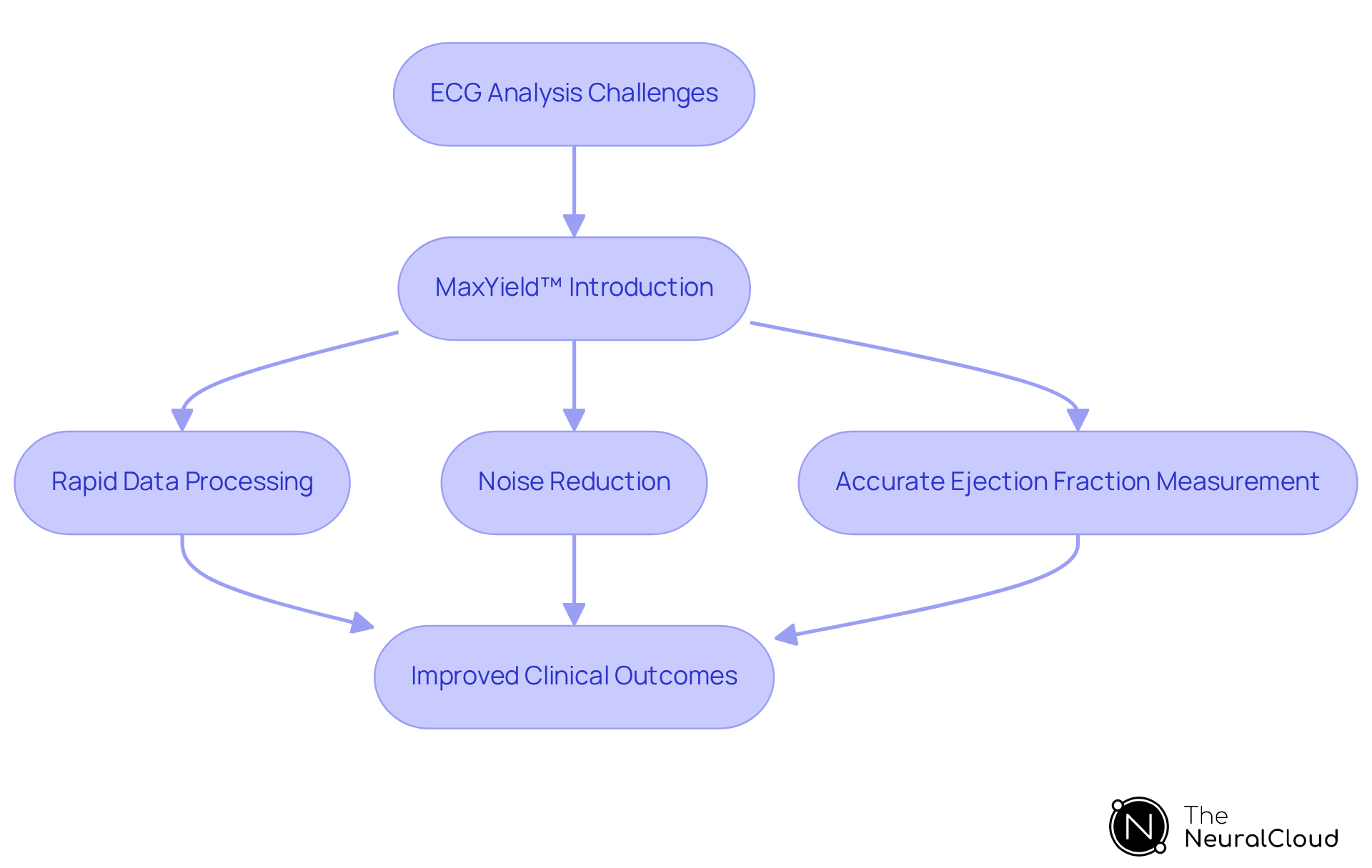
often faces challenges, particularly in achieving precise ejection fraction measurements. Advanced technologies like Neural Cloud Solutions' platform address these issues effectively.
The platform utilizes innovative AI algorithms to process ECG data rapidly and reliably. This platform identifies features that are essential for accurate analysis. Notably, it is device-agnostic, meaning it can capture ECG recordings from any 1-lead or 3-lead device. It can enhance diagnostic accuracy, streamline workflows.
The advantages of using advanced ECG analysis are significant. By automating processes, rather than manual data processing, this shift ultimately leads to better clinical outcomes. Additionally, with its advanced capabilities, it revolutionizes patient monitoring, providing clinicians with actionable insights.
Conclusion
Understanding heart failure and the critical role of ejection fraction (EF) is essential for effective management and treatment of this complex condition. Accurate classification of heart failure, particularly through the lens of ejection fraction, informs therapeutic strategies and significantly impacts patient outcomes. By distinguishing between reduced and preserved ejection fractions, healthcare providers can tailor interventions to meet the specific needs of each patient, enhancing overall care.
Key insights highlight the necessity of adopting comprehensive classification systems like the New York Heart Association (NYHA) and the American College of Cardiology/American Heart Association (ACC/AHA) frameworks. These systems facilitate a deeper understanding of heart failure's nuances, allowing for more personalized treatment plans. Furthermore, the integration of advanced ECG technologies, such as Neural Cloud Solutions' MaxYield™, improves diagnostic accuracy and clinical efficiency, ultimately leading to better patient management.
Given the increasing prevalence of heart failure and its associated economic burden, healthcare professionals must stay informed about the latest classification systems and measurement techniques. Emphasizing the importance of ejection fraction in heart failure management aids in risk stratification and fosters a proactive approach to patient care. As the landscape of heart failure treatment evolves, embracing these insights will be crucial in improving outcomes and advancing the field of cardiology.
Frequently Asked Questions
What is heart failure (HF)?
Heart failure is a clinical syndrome where the heart cannot pump enough blood to meet the body's metabolic demands, often due to underlying issues such as coronary artery disease, hypertension, or cardiomyopathy.
What is ejection fraction (EF)?
Ejection fraction is a key measure in evaluating cardiac function, indicating the percentage of blood ejected by the left ventricle with each heartbeat. Normal EF values typically range from 55% to 70%.
How is ejection fraction categorized in heart failure?
Ejection fraction in heart failure can be categorized as reduced (HFrEF) or preserved (HFpEF), which significantly impacts treatment strategies and prognostic outcomes.
What are the risks associated with reduced ejection fraction (HFrEF)?
Individuals with reduced ejection fraction face a notably higher risk of readmission and mortality compared to those with preserved ejection fraction.
Why is accurate measurement of ejection fraction important?
Accurate measurement of ejection fraction is critical in clinical practice as it informs treatment decisions and enhances patient care.
How is the understanding of ejection fraction evolving in relation to cardiac dysfunction?
Evolving definitions of cardiac dysfunction emphasize the need for a dynamic understanding of ejection fraction trajectories to better inform treatment decisions and enhance care for patients.
List of Sources
- Define Heart Failure and Ejection Fraction
- Clinical trial offers first-of-its-kind heart failure treatment (https://health.ucdavis.edu/news/headlines/clinical-trial-offers-first-of-its-kind-heart-failure-treatment/2026/02)
- Cardiology Experts Warn of Growing Heart Failure Epidemic and Soaring Costs in New HF Stats 2025 Report | HFSA (https://hfsa.org/cardiology-experts-warn-growing-heart-failure-epidemic-and-soaring-costs-new-hf-stats-2025-report)
- medicalxpress.com (https://medicalxpress.com/news/2026-02-high-readmission-death-heart-failure.html)
- New Joint Scientific Statement on Ejection Fraction Released by Leading Heart Failure Organisations (https://escardio.org/news/press/press-releases/new-joint-scientific-statement-on-ejection-fraction-released-by-leading-heart-failure-organisations)
- Heart Failure Management: Current Approaches and Future Directions (https://thecardiologyadvisor.com/features/heart-failure-management-2026)
- Explore Heart Failure Classification Systems
- ajconline.org (https://ajconline.org/article/S0002-9149(08)01715-3/fulltext)
- Heart Failure Society of America (HFSA) Scientific Statement: Update on Device Based Therapies in Heart Failure (https://hfsa.org/hf-stats-2025-heart-failure-epidemiology-and-outcomes-statistics)
- Clinical trial offers first-of-its-kind heart failure treatment (https://health.ucdavis.edu/news/headlines/clinical-trial-offers-first-of-its-kind-heart-failure-treatment/2026/02)
- New Scientific Statement Guides Clinicians on How to Integrate Digital Health Tools Into Heart Failure Care | HFSA (https://hfsa.org/new-scientific-statement-guides-clinicians-how-integrate-digital-health-tools-heart-failure-care)
- 2minutemedicine.com (https://2minutemedicine.com/new-york-heart-association-classification-may-be-an-incomplete-predictor-of-adverse-cardiovascular-outcomes)
- Analyze the Role of Ejection Fraction in Clinical Practice
- Heart Failure Management: Current Approaches and Future Directions (https://thecardiologyadvisor.com/features/heart-failure-management-2026)
- New Joint Scientific Statement on Ejection Fraction Released by Leading Heart Failure Organisations (https://escardio.org/news/press/press-releases/new-joint-scientific-statement-on-ejection-fraction-released-by-leading-heart-failure-organisations)
- parade.com (https://parade.com/1187612/michelle-parkerton/quotes-about-heart-disease)
- Checking your browser - reCAPTCHA (https://pmc.ncbi.nlm.nih.gov/articles/PMC10864030)
- Integrate Advanced ECG Analysis for Accurate Ejection Fraction Measurement
- AccurKardia wins FDA clearance for next-generation ECG analysis system | Medical Economics (https://medicaleconomics.com/view/accurkardia-wins-fda-clearance-for-next-generation-ecg-analysis-system)
- beckershospitalreview.com (https://beckershospitalreview.com/healthcare-information-technology/ai/10-best-quotes-on-ai-from-beckers-ceo-cfo-roundtable)
- Overheard this week: 6 notable quotes on healthcare AI (https://healthexec.com/topics/patient-care/overheard-week-6-notable-quotes-healthcare-ai)
- linkedin.com (https://linkedin.com/posts/ai-grand-rounds_my-favorite-ai-in-healthcare-quotes-activity-7275811766381527040-osDD)
- The diagnostic accuracy of artificial intelligence enhanced electrocardiography for the detection of cardiac dysfunction (https://explorationpub.com/Journals/ec/Article/101293)