Introduction
The QRS complex is a crucial marker of cardiac health, reflecting the electrical activity of the heart's ventricles. For healthcare professionals, grasping its intricacies is essential, as variations in its duration can indicate serious issues like bundle branch blocks or myocardial infarction. However, interpreting these signals accurately can be challenging due to the noise and artifacts that often obscure ECG readings.
This is where advanced technologies, such as the MaxYield™ platform, come into play. The platform enhances clarity and reliability in QRS analysis by employing sophisticated algorithms that filter out noise and improve signal quality. By providing clearer ECG readings, MaxYield™ allows healthcare professionals to make more informed decisions regarding patient care.
The features of the MaxYield™ platform include:
- Real-time data processing
- Advanced artifact reduction
- User-friendly interfaces
These capabilities not only streamline the analysis process but also reduce the likelihood of misinterpretation. As a result, healthcare providers can focus more on patient outcomes rather than grappling with unclear data.
In summary, the MaxYield™ platform significantly improves ECG analysis, offering healthcare professionals a reliable tool that enhances diagnostic accuracy and ultimately leads to better patient care.
Define the QRS Complex and Its Importance in ECG Analysis
The QRS complex is a fundamental element of the electrocardiogram (ECG), representing the electrical activity of the ventricles. It comprises three distinct waves:
- The Q wave, which is the initial negative deflection;
- The R wave, the first positive deflection;
- The S wave, which follows as a negative deflection after the R wave.
Evaluating the QRS complex is critical when assessing the duration and morphology of the complex. The typical range for normal QRS duration is from 70 to 100 milliseconds, which is considered a normal finding. Deviations from this range can indicate significant cardiac issues. For instance, a prolonged QRS interval exceeding 100 milliseconds, known as a prolonged QRS complex, may suggest bundle branch blocks or hyperkalemia, while a shortened QRS complex can indicate myocardial infarction.
Recent studies have shown that abnormalities in the QRS complex, such as QRS widening, are prevalent in various cardiac conditions, including left ventricular hypertrophy and ventricular tachycardia. Understanding these variations is essential for clinicians, as they provide critical insights and guide informed decision-making in patient care.
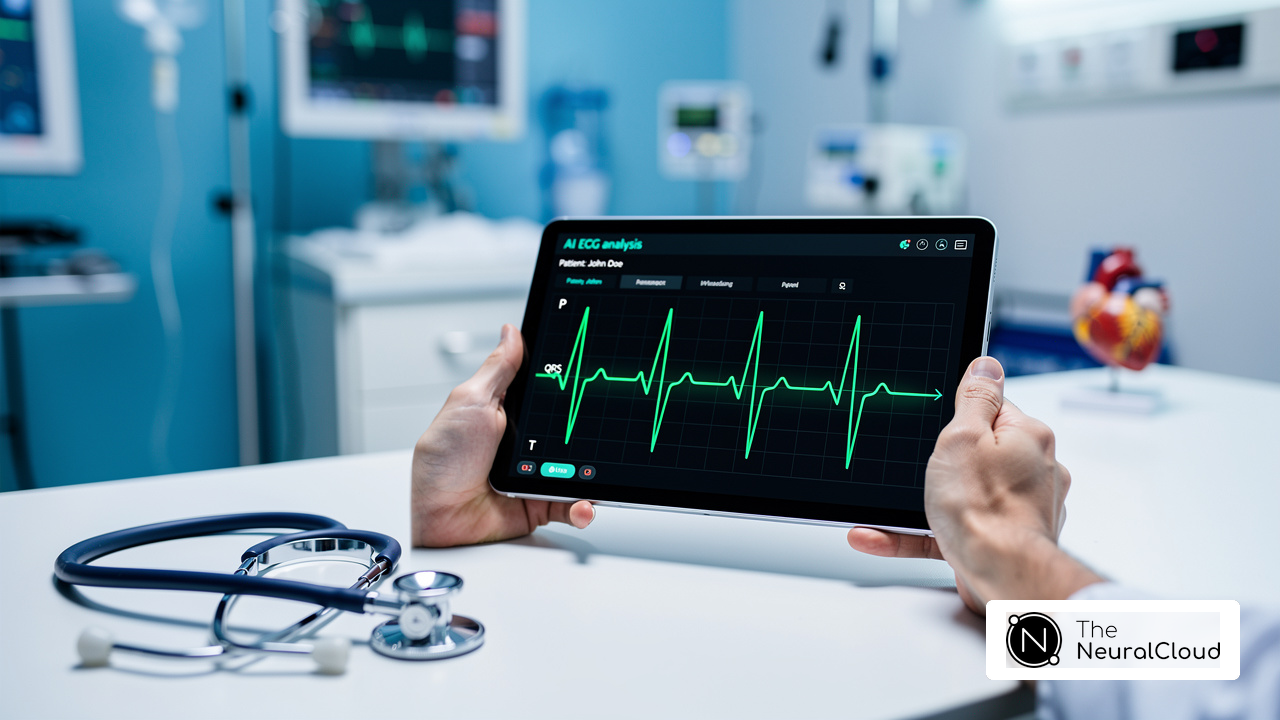
The advanced analysis tool enhances this evaluation by utilizing sophisticated noise filtering and wave identification methods. By rapidly isolating and labeling key features in every heartbeat, this system transforms noisy recordings into detailed insights. This enables health tech developers to automate labeling and improve workflow efficiency.
This innovative approach addresses traditional challenges in ECG analysis, such as signal interference. Ultimately, it supports confident clinical decisions. Case studies further illustrate the importance of monitoring QRS intervals, as these can reveal underlying health issues that require immediate attention.

Explore Causes and Clinical Implications of Prolonged QRS Intervals
A QRS interval, defined as exceeding 100 milliseconds, can arise from various underlying conditions, including:
- Bundle branch block: These occur when there’s a delay in electrical conduction through one of the bundle branches, leading to a wider QRS complex.
- Hypertrophy: The thickening of heart muscle alters conduction pathways, resulting in a long QRS.
- Myocardial infarction: Damage to the heart muscle disrupts normal electrical conduction, causing alterations in the QRS complex.
Clinically, a long QRS interval is associated with an increased risk of adverse outcomes, such as heart failure and sudden cardiac death. For example, studies show that patients with a QRS duration of 120 milliseconds or more face nearly double the mortality risk. This highlights the need for vigilant monitoring of patients, as they are crucial for guiding treatment decisions and assessing risk in patients. Additionally, the presence of long QRS may signal significant underlying conditions, warranting further evaluation for arrhythmias and potential advanced therapies like implantable devices.
The MaxYield™ system enhances this monitoring process by employing advanced algorithms and distinct wave recognition capabilities. It rapidly isolates ECG waves from recordings affected by baseline wander, movement, and muscle artifacts, salvaging previously obscured sections of lengthy Holter, 1-Lead, and patch monitor recordings. This capability is particularly vital in the context of arrhythmias, where precise evaluation can lead to better patient management and outcomes. The ongoing learning framework ensures that its precision and effectiveness improve over time, addressing challenges in ECG evaluation and enabling health tech developers to refine their solutions for enhanced clinical outcomes. Understanding the features of the MaxYield™ system, along with the implications of prolonged QRS intervals, is essential for improving patient management and outcomes.

Utilize Advanced Tools for Accurate QRS Interval Analysis
To achieve precise analysis of QRS intervals, healthcare professionals encounter several challenges, including the need for accurate detection. Advanced tools have emerged to address these issues effectively:
- MaxYield™: This AI-driven platform automates the detection and analysis of QRS complexes, delivering beat-by-beat insights and significantly reducing analysis time to under five minutes for over 200,000 heartbeats. By enhancing the clarity of ECG signals, clinicians can confidently identify critical cardiac events. Notably, MaxYield™ has decreased false positive activation rates by over four times, with 431 activations (41.7%) identified as false positives due to STEMI mimics. MaxYield™ transforms lengthy and noisy ECG recordings into clean, crisp signals, revolutionizing how healthcare professionals conduct ECG evaluations.
- ECG Wave-Maker: This tool employs sophisticated algorithms to analyze ECG data, facilitating accurate identification of QRS intervals while minimizing the impact of noise and artifacts.
Real-Time ECG Detection Software, including tools like MATLAB and LabChart, offers real-time detection of long QRS intervals, enabling prompt assessment and feedback during patient monitoring. AI enhances early intervention through accurate analysis, which is crucial for timely treatment.
Incorporating these advanced tools into clinical practice not only enhances diagnostic capabilities but also significantly improves patient outcomes. For instance, AI-driven ECG evaluation has shown a reduction in diagnostic errors, underscoring the importance of integrating such technologies into standard cardiac care. As Francis Pryor noted, "AI enhances early intervention through accurate analysis." Additionally, user manuals provide detailed guidance on the practical application of these tools, ensuring healthcare professionals can maximize their effectiveness in clinical settings.

Overcome Challenges in ECG Analysis: Addressing Noise and Artifacts
ECG analysis faces significant challenges due to noise, which can obscure true cardiac signals. Common sources of interference include:
- Motion Artifacts: These arise from patient movement and can distort ECG readings. Strategies are essential to minimize these effects.
- Electrical Interference: External electrical sources may introduce noise into the ECG signal. Utilizing high-quality equipment and ensuring proper grounding can help mitigate this issue.
- Baseline Wander: This occurs due to respiratory movements or poor electrode contact. Implementing filtering techniques, such as high-pass filters, can effectively remove this artifact.
Neural Cloud Solutions' technology addresses these challenges with cutting-edge AI technology that clarifies the ECG signals. It employs innovative tools, enhancing workflow efficiency and accuracy in ECG interpretation. This aligns with best practices, ensuring that healthcare professionals can rely on precise data for their assessments.
Recent studies indicate that up to 33% of ECG interpretations contain significant errors, underscoring the urgent need to tackle inaccuracies in ECG evaluation. Expert Alex Perkins emphasizes that tailored noise filtering significantly improves the accuracy of key cardiac measurements, with noise-profile filtering achieving a mean QT interval difference of only 2.50 ms. The HeartKey Rhythm suite, which has received recognition, exemplifies advancements in ECG technology that enhance signal clarity and improve diagnostic confidence.
By understanding these challenges and employing effective strategies, including the capabilities of Neural Cloud Solutions' MaxYield™, healthcare professionals can enhance the reliability of their ECG analyses. This leads to more accurate diagnoses and ultimately better patient outcomes.

Conclusion
Understanding the QRS complex is crucial for assessing cardiac health, especially when identifying prolonged QRS intervals that may indicate serious underlying conditions. Accurate ECG interpretation is essential, and advanced tools like the MaxYield™ platform significantly enhance the clarity and reliability of ECG readings. By grasping the complexities of the QRS complex and its implications for patient care, healthcare professionals can make informed decisions regarding diagnosis and treatment.
Key insights include various causes of prolonged QRS intervals, such as:
- Bundle branch blocks
- Myocardial infarction
Along with the associated risks like:
- Heart failure
- Sudden cardiac death
Additionally, the challenges posed by noise and artifacts in ECG analysis highlight the need for effective filtering techniques and advanced technologies. These innovations not only improve diagnostic accuracy but also contribute to better patient outcomes.
Integrating advanced tools and methodologies into clinical practice is essential for overcoming ECG analysis challenges. By prioritizing accurate assessment of QRS intervals and addressing factors that lead to measurement errors, healthcare professionals can enhance their diagnostic capabilities and improve patient care quality. Embracing advancements in technology and understanding their applications can lead to significant improvements in managing cardiac health.
Frequently Asked Questions
What is the QRS complex in an ECG?
The QRS complex is a fundamental element of the electrocardiogram (ECG) that represents the electrical depolarization of the ventricles. It consists of three distinct waves: the Q wave (initial negative deflection), the R wave (first positive deflection), and the S wave (negative deflection following the R wave).
Why is the QRS complex important in assessing cardiac health?
The QRS complex is crucial for evaluating cardiac health as its duration and morphology can indicate significant cardiac issues. Abnormalities in the QRS complex can reveal underlying health problems that require immediate attention.
What is the normal range for QRS duration?
The typical range for normal QRS duration is from 70 to 100 milliseconds. A prolonged QRS duration exceeding 100 milliseconds is considered long QRS and may suggest conditions such as bundle branch blocks or hyperkalemia.
What cardiac conditions are associated with abnormalities in the QRS complex?
Abnormalities in the QRS complex, such as long QRS, are prevalent in various cardiac conditions, including left ventricular hypertrophy and ventricular tachycardia.
How does the MaxYield™ platform enhance ECG analysis?
The MaxYield™ platform enhances ECG analysis by utilizing sophisticated noise filtering and wave identification methods, allowing for rapid isolation and labeling of key features in every heartbeat. This transforms noisy recordings into detailed insights and improves workflow efficiency for health tech developers.
What challenges in ECG analysis does the MaxYield™ platform address?
The MaxYield™ platform addresses traditional challenges in ECG analysis, such as physiological variability and signal artifacts, thereby supporting confident clinical decisions.
Why is monitoring long QRS characteristics important?
Monitoring long QRS characteristics is important because they can reveal underlying health issues that require immediate attention, providing vital insights into the heart's electrical activity.
List of Sources
- Define the QRS Complex and Its Importance in ECG Analysis
- byjus.com (https://byjus.com/neet/what-does-qrs-complex-represent-in-ecg)
- QRS Interval (https://litfl.com/qrs-interval-ecg-library)
- Clinical Implications of QRS Duration in Patients Hospitalized With Worsening Heart Failure and Reduced Left Ventricular Ejection Fraction (https://jamanetwork.com/journals/jama/fullarticle/182060)
- QRS complex - Wikipedia (https://en.wikipedia.org/wiki/QRS_complex)
- wisdomlib.org (https://wisdomlib.org/concept/qrs-complex)
- Explore Causes and Clinical Implications of Prolonged QRS Intervals
- ECG Case Studies | Interpretation & Answers | Geeky Medics (https://geekymedics.com/ecg-case-studies)
- pmc.ncbi.nlm.nih.gov (https://pmc.ncbi.nlm.nih.gov/articles/PMC1955023)
- pmc.ncbi.nlm.nih.gov (https://pmc.ncbi.nlm.nih.gov/articles/PMC3769218)
- Utilize Advanced Tools for Accurate QRS Interval Analysis
- sciencedirect.com (https://sciencedirect.com/science/article/pii/S1936879825026007)
- healthexec.com (https://healthexec.com/topics/artificial-intelligence/overheard-week-notable-quotes-healthcare-ai)
- ramaonhealthcare.com (https://ramaonhealthcare.com/9-notable-quotes-from-1-big-day-at-an-epicenter-of-ai-in-healthcare)
- Checking your browser - reCAPTCHA (https://pmc.ncbi.nlm.nih.gov/articles/PMC12419789)
- iworx.com (https://iworx.com/case-studies-ecg-decoding-and-analysis)
- Overcome Challenges in ECG Analysis: Addressing Noise and Artifacts
- ECG Noise Filtering Improves Clinical Accuracy (https://emjreviews.com/interventional-cardiology/news/ecg-noise-filtering-improves-clinical-accuracy)
- diagnosticimaging.com (https://diagnosticimaging.com/view/fda-new-electrocardiogram-suite-algorithms-and-analytics)
- heartkey.io (https://heartkey.io/resources/case-study-enhancing-the-efficiency-and-accuracy-of-ecg-interpretation-through-digital-denoising-with-heartkey)
- Guide to Understanding ECG Artifact | ACLS Training Blog (https://aclsmedicaltraining.com/blog/guide-to-understanding-ecg-artifact)