Introduction
Understanding the nuances of U wave changes in electrocardiograms (ECGs) is crucial for accurate diagnosis, particularly in cases of hyperkalemia. These subtle fluctuations can offer vital insights into a patient's cardiac health, uncovering underlying issues that might otherwise remain undetected. However, recognizing these patterns can be challenging due to the multitude of potential ECG abnormalities.
Clinicians face the task of effectively discerning the significance of U wave alterations in hyperkalemia. By honing in on these changes, healthcare professionals can enhance diagnostic accuracy and ultimately improve patient outcomes. This understanding not only aids in identifying hyperkalemia but also contributes to a more comprehensive assessment of cardiac health.
Clarify U Wave Physiology in ECG Analysis
The U wave represents a small deflection that follows the T wave on an electrocardiogram, typically indicating the recovery phase of the heart. This oscillation is generally smaller than one-third the amplitude of the preceding T wave and usually aligns in the same direction. Understanding the U wave is crucial for clinicians, as it can reveal important insights into various cardiac conditions. Although the U wave may not always be visible, its presence can indicate underlying physiological processes.
Notable U wave abnormalities are often linked to electrolyte imbalances, especially hypokalemia, which can result in serious heart rhythm disorders. Conversely, the U wave may suggest other heart-related issues, such as ischemic heart disease or left ventricular hypertrophy. Recognizing these patterns is vital for accurate ECG interpretation and informed clinical decision-making.
Recent observations highlight that U wave changes, though infrequently seen, can provide essential insights into heart health. This underscores the importance of further exploration into their clinical significance, as understanding these signals can enhance diagnosis and improve patient outcomes.
Examine ECG Changes Induced by Hyperkalemia
Hyperkalemia, characterized by elevated serum potassium levels exceeding 5.0 mEq/L, leads to significant changes that can critically impact cardiac function. One of the earliest and most notable changes is the appearance of U waves, which may evolve into a sine wave pattern as potassium levels rise, particularly when they exceed 9.0 mmol/L. In severe cases, the QRS complex can widen, and T waves may merge with the QRS complexes, complicating diagnosis. Additionally, as hyperkalemia progresses, prolonged PR intervals and flattening of the P wave are commonly observed.
These changes not only indicate hyperkalemia but also serve as crucial markers for differentiating it from other cardiac conditions, such as acute myocardial infarction. Research indicates that approximately 70% of individuals with hyperkalemia exhibit peaked T wave patterns, underscoring the importance of rapid identification by medical professionals. Misinterpretation of these changes can lead to delays in critical interventions during acute situations, highlighting the necessity for heightened diagnostic vigilance.
In emergency medicine, the real-world applications of this knowledge are clear. Timely recognition of hyperkalemia through ECG analysis can prevent life-threatening arrhythmias. The technology from Neural Cloud Solutions enhances this process by providing advanced noise filtering and distinct signal recognition. This technology allows healthcare professionals to isolate ECG signals from recordings that may contain significant noise and artifacts, ensuring that critical conditions, such as severe hyperkalemia (typically potassium level ≥ 6.5 mEq/L), are accurately detected.
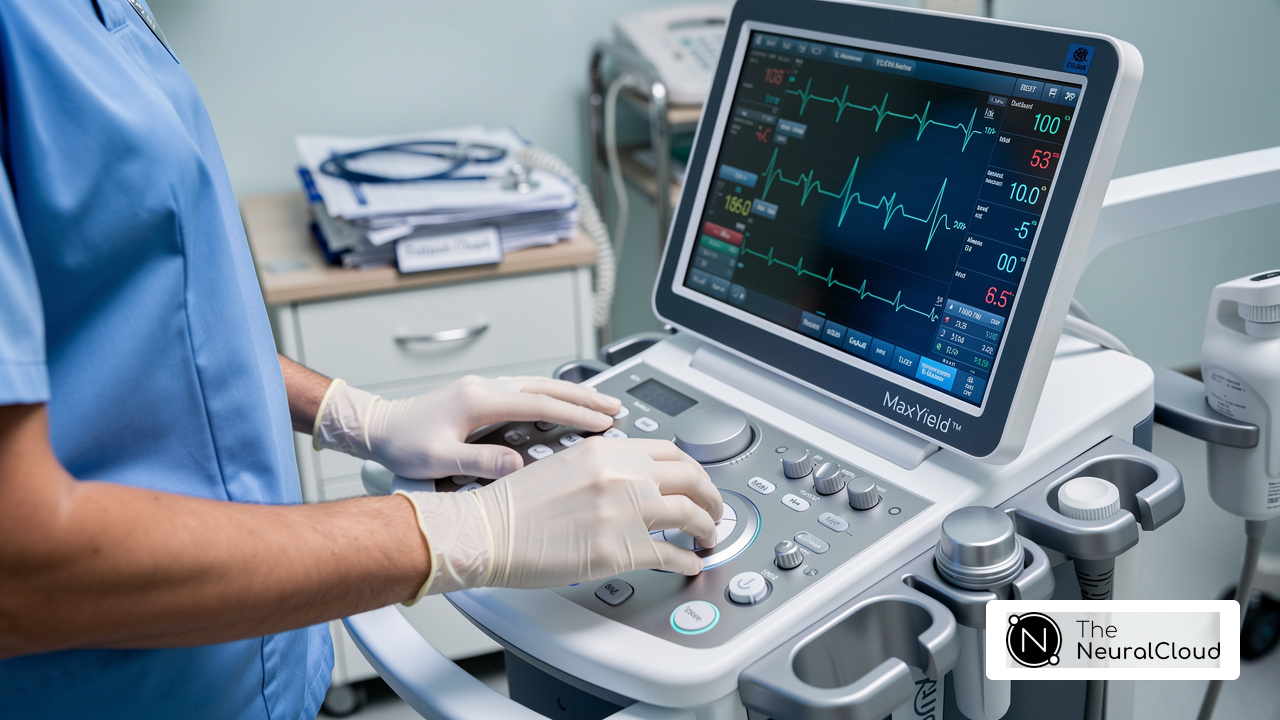
Moreover, MaxYield™ enables the recovery of previously obscured sections of lengthy recordings, enhancing the overall diagnostic accuracy. Understanding the nuances of U wave ECG changes in hyperkalemia is vital for patient care, ultimately improving the management of at-risk patients. By leveraging the features of MaxYield™, healthcare professionals can enhance their ECG analysis, ensuring timely and accurate interventions.
Implement Diagnostic Strategies for U Wave Abnormalities
To effectively diagnose U wave abnormalities, clinicians should adopt a systematic approach when interpreting ECGs, particularly for conditions like hyperkalemia. Evaluating the amplitude and morphology of the U wave in relation to the T signal is essential. A change in U wave morphology may indicate underlying pathology, such as myocardial ischemia or electrolyte imbalances. Additionally, considering the patient's clinical history and any accompanying symptoms can provide context for the observed ECG changes.
The software from Neural Cloud Solutions offers tools that significantly enhance the precision of U wave component interpretation. Key features include:
- Waveform Detection: User manuals provide step-by-step instructions on detecting and labeling waveforms, ensuring efficient use of the platform's capabilities.
- Case Studies: Case studies demonstrate how MaxYield™ has improved diagnostic accuracy in real-world settings, showcasing its adaptability and efficiency.
The advantages of utilizing MaxYield™ are clear. Clinicians benefit from consistent training and access to the latest research, which help them stay skilled at identifying and addressing U wave abnormalities. By integrating these advanced tools into their practice, healthcare professionals can enhance their diagnostic capabilities and improve patient outcomes.

Leverage Advanced Technologies for Enhanced ECG Analysis
has long faced challenges, particularly in accurately detecting and interpreting waveforms. The integration of advanced technologies, especially artificial intelligence and machine learning (ML), has emerged as a solution to these issues. Platforms like Neural Cloud Solutions are at the forefront of this transformation, utilizing sophisticated algorithms to automate the detection and analysis of ECG waveforms, including U waves.
The platform offers several key features that enhance ECG analysis:
- Feature Detection: Rapidly labels P, QRS, and T Wave onsets, offsets, and time-series intervals.
- Data Management: Provides beat-by-beat tabulation in CSV format for seamless integration into existing workflows.
- Processing Power: Efficiently processes extensive datasets, reducing the workload on medical professionals.
These features translate into significant advantages for patient care. By utilizing advanced technologies, clinicians can improve their diagnostic accuracy, particularly in recognizing subtle changes linked to conditions such as hyperkalemia. The platform's algorithms ensure ongoing improvements, adapting to new data and refining accuracy over time.
However, integrating AI into clinical workflows does present challenges. Clinicians require training to effectively use these tools, and data privacy concerns must be addressed. Despite these hurdles, adopting innovations like AI streamlines clinical workflows, enabling providers to deliver more precise and timely care to their patients.
In conclusion, the adoption of advanced technologies is crucial for improving patient outcomes and optimizing resource allocation in healthcare settings. By embracing these tools, healthcare professionals can enhance their diagnostic processes and ultimately provide better care.

Conclusion
Understanding the complexities of U wave changes in hyperkalemia is vital for improving diagnostic accuracy in clinical practice. The U wave, often overlooked, is essential for uncovering underlying cardiac conditions. By recognizing its physiological significance and the changes it undergoes during hyperkalemia, healthcare professionals can make informed decisions that enhance patient outcomes.
This article presented key insights into the physiological characteristics of the U wave, the significant ECG changes linked to hyperkalemia, and the diagnostic strategies required for accurate interpretation. Notably, the MaxYield™ platform exemplifies how advanced technologies can enhance ECG analysis. This platform utilizes artificial intelligence to streamline the detection of subtle changes that may indicate serious electrolyte disturbances.
The importance of identifying U wave abnormalities cannot be overstated. By leveraging advanced diagnostic tools and staying updated on the latest ECG analysis developments, healthcare providers can improve their ability to recognize hyperkalemia and its implications. This proactive approach not only enhances patient care but also deepens the understanding of cardiovascular health, paving the way for timely and effective interventions.
Frequently Asked Questions
What does the U wave represent in ECG analysis?
The U wave represents a small deflection that follows the T wave on an electrocardiogram (ECG), typically indicating the repolarization of the Purkinje fibers.
How does the amplitude of the U wave compare to the T wave?
The U wave is generally smaller than one-third the amplitude of the preceding T wave and usually aligns in the same direction.
Why is understanding the U wave important for clinicians?
Understanding the U wave is crucial for clinicians as it can reveal important insights into various heart conditions and underlying physiological processes.
What conditions can the presence of U waves indicate?
The presence of U waves can indicate underlying physiological processes and may be linked to electrolyte disturbances, particularly hypokalemia, which can lead to serious heart rhythm disorders.
What does the absence or reversal of U waves suggest?
The absence or reversal of U waves may suggest other heart-related issues, such as ischemic heart disease or left ventricular hypertrophy.
How can recognizing U wave patterns impact ECG interpretation?
Recognizing U wave patterns is vital for accurate ECG interpretation and informed clinical decision-making, enhancing diagnostic accuracy and improving patient outcomes.
Are U waves commonly observed in ECGs?
U waves are infrequently seen, but their patterns can provide essential insights into heart health, highlighting the need for further exploration into their clinical significance.
List of Sources
- Clarify U Wave Physiology in ECG Analysis
- nottingham.ac.uk (https://nottingham.ac.uk/nursing/practice/resources/cardiology/function/u_wave.php)
- sunfox.in (https://sunfox.in/blogs/u-wave-in-ecg?srsltid=AfmBOoro1TP7GJCljgXF53wqQfVGyzCw2bLueh0Evtqq89QN9EjN9BST)
- litfl.com (https://litfl.com/u-wave-ecg-library)
- Examine ECG Changes Induced by Hyperkalemia
- Hyperkalemia ECG Changes: Peaked T Waves (https://powerfulmedical.com/blog/hyperkalemia-ecg-critical-changes)
- Hyperkalaemia (https://litfl.com/hyperkalaemia-ecg-library)
- Hyperkalemia ECG Review (https://healio.com/cardiology/learn-the-heart/ecg-review/ecg-topic-reviews-and-criteria/hyperkalemia-review)
- Implement Diagnostic Strategies for U Wave Abnormalities
- litfl.com (https://litfl.com/u-wave-ecg-library)
- Performance of an artificial intelligence-powered smartphone application in the UK clinical settings: ECG automation compared to healthcare professionals - PMC (https://pmc.ncbi.nlm.nih.gov/articles/PMC12532542)
- pmc.ncbi.nlm.nih.gov (https://pmc.ncbi.nlm.nih.gov/articles/PMC6932608)
- ecgweekly.com (https://ecgweekly.com/weekly-workout/a-decade-of-ecg-gems-counting-down-the-top-10-cases)
- reliasacademy.com (https://reliasacademy.com/rls/store/courses/ecg-interpretation-case-studies/_/A-product-c1481430)
- Leverage Advanced Technologies for Enhanced ECG Analysis
- sciencedirect.com (https://sciencedirect.com/science/article/pii/S1936879825026007)
- AI-based ECG interpretation outperforms standard diagnosis of occlusive myocardial infarction (https://news-medical.net/news/20260323/AI-based-ECG-interpretation-outperforms-standard-diagnosis-of-occlusive-myocardial-infarction.aspx)
- Checking your browser - reCAPTCHA (https://pmc.ncbi.nlm.nih.gov/articles/PMC12419789)