Introduction
Understanding the complexities of ECG peaked T waves is crucial for healthcare professionals. These subtle yet significant indicators can provide vital insights into a patient’s cardiac health. By exploring the characteristics, causes, and implications of these T wave patterns, clinicians can sharpen their diagnostic skills and enhance patient outcomes. However, accurately interpreting these waves can be challenging due to the intricacies of various cardiac conditions.
What are the key features that differentiate normal T waves from those that may indicate potentially life-threatening issues? Recognizing these distinctions is essential for effective ECG analysis and patient care.
Define T Waves in ECG: Characteristics and Importance
T deflections in the ECG represent the repolarization of the ventricles in the heart, occurring after the QRS complex and are commonly seen as T waves. Typically, T deflections are positive in most leads, signaling the heart's return to its resting state post-contraction. Key characteristics of T waves include their shape, amplitude, and duration. Common T shapes are smooth, rounded, and asymmetrical, with an amplitude generally less than 10 mm in precordial electrodes and under 5 mm in limb electrodes. Deviations from these norms can indicate serious heart issues. For instance, exceeding 10 mm in height in chest electrodes may suggest acute myocardial infarction, while T waves deeper than 1.0 mm can indicate life-threatening conditions such as acute coronary ischemia or pulmonary embolism.
Clinical case studies underscore the importance of T waves in diagnosing cardiac problems. Monitoring T wave characteristics can lead to early detection of electrolyte imbalances and timely treatment, potentially preventing severe cardiac events. Understanding T waves, particularly their implications, is crucial for healthcare professionals, as it aids in ECG interpretation and enhances patient outcomes.
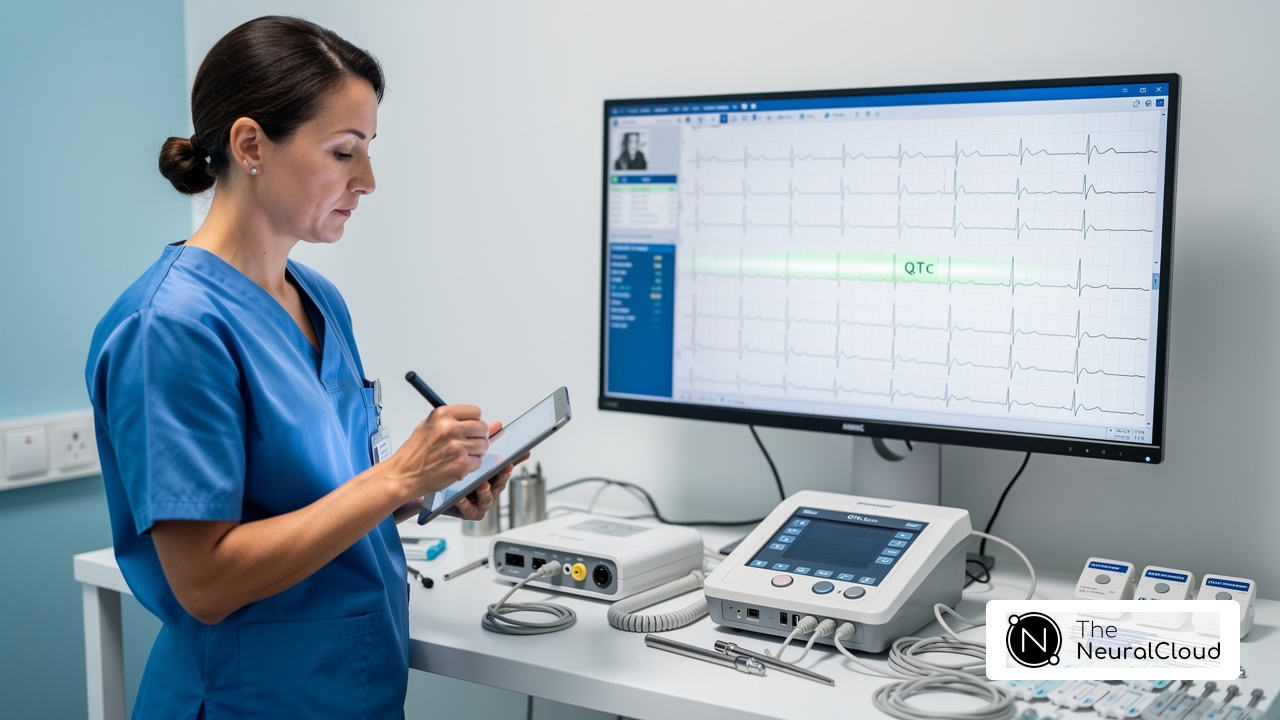
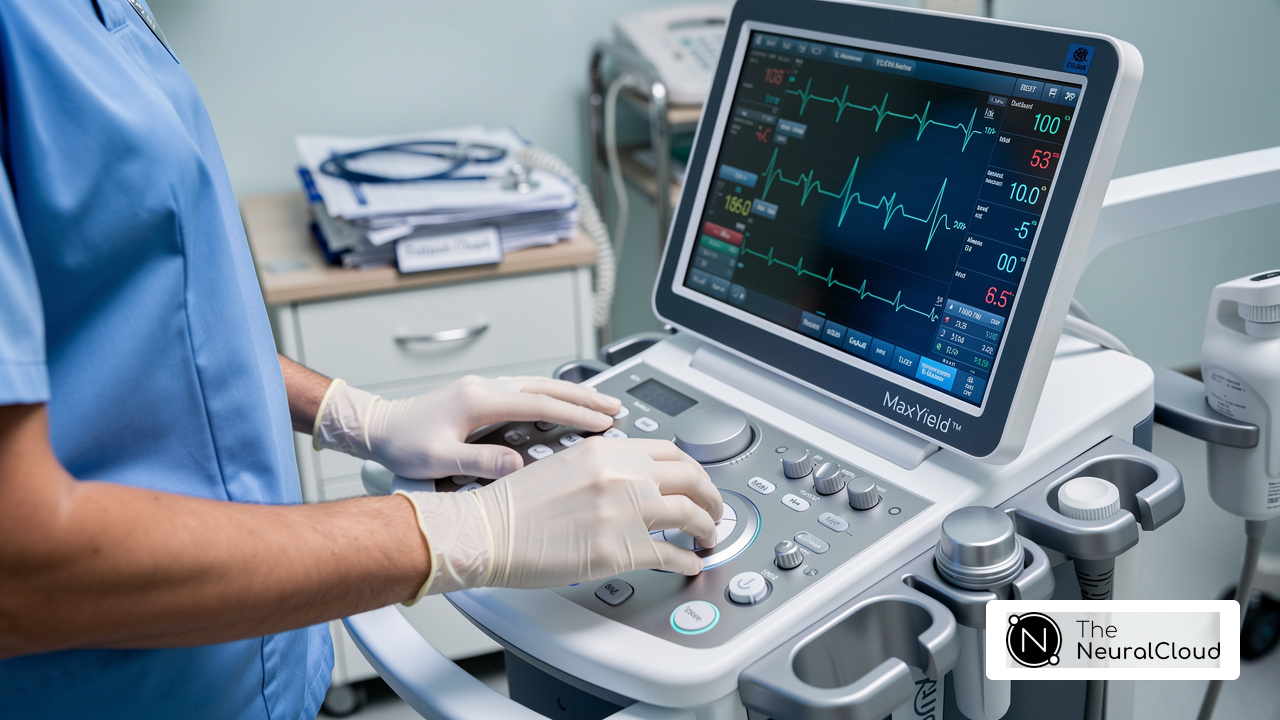
The software from Neural Cloud Solutions significantly improves ECG analysis by automating the process. It quickly isolates and labels T waves, even in noisy recordings. With advanced processing and signal recognition capabilities, MaxYield™ enhances clinical decision-making, allowing healthcare professionals to concentrate on critical insights.
Key features of the software include:
- Automation: Streamlines the identification of T waves.
- Clarity: Improves signal clarity in challenging recordings.
- Enhanced diagnostic accuracy: Supports better clinical decisions.
As Dr. Scott Siegal notes, 'Learning how to interpret T waves on an ECG is just one part of ECG interpretation, but it’s a critical skill that healthcare providers must master.' By leveraging the software, healthcare professionals can enhance their ECG interpretation skills, ultimately leading to improved patient care.
Identify Peaked T Waves: Clinical Features and Implications
Peaked T wave forms are notable for their tall, narrow, and symmetrical appearance, often resembling a tent shape. These distinct characteristics serve as critical indicators of hyperkalemia, a condition that can lead to serious heart complications if not promptly addressed. In an ECG, elevated T wave shapes typically manifest across multiple leads, particularly those associated with the affected area of the heart. Their presence holds clinical significance, as it may necessitate immediate interventions, such as evaluating potassium levels and initiating appropriate treatments.
For instance, in cases of mild hyperkalemia, ECG changes are often the first noticeable changes. In contrast, severe hyperkalemia can lead to more pronounced alterations, including the peaked T wave. Recognizing these changes is vital for healthcare professionals, as awareness of electrolyte imbalances ultimately enhances patient outcomes.
Expert opinions underscore the importance of these findings, noting that the 'tee-pee sign' - a specific ECG pattern - can also emerge in the context of various electrolyte disturbances. This highlights the necessity for vigilance in clinical practice, ensuring that healthcare providers can respond effectively to these critical signs.
Explore Causes of Peaked T Waves: Pathophysiology and Conditions
Peaked T patterns are primarily linked to hyperkalemia, a condition characterized by elevated potassium levels that disrupts normal cardiac repolarization. When serum potassium levels rise to between 5.5 and 6.5 mmol/L, the ECG typically shows T waves, which appear tall and narrow due to accelerated repolarization. This information is vital for clinicians, as it may indicate underlying health issues.
In addition to hyperkalemia, other conditions can cause peaked T waves:
- Left ventricular hypertrophy
- Certain drug effects
The underlying mechanisms involve changes in ion channel activity and myocardial membrane potential, which can lead to abnormal repolarization.
The prevalence of peaked T waves is noteworthy, with studies showing a rate of 3.3% in those not on dialysis. This condition often coexists with other comorbidities, such as diabetes and renal impairment, complicating diagnosis. For instance, in cases of acute myocardial infarction, peaked T waves may be mistaken for hyperacute T deflections, which are critical indicators of ST-segment elevation myocardial infarction (STEMI).
Accurate identification of these ECG changes is crucial, as misdiagnosis can result in inappropriate interventions. The technology from Neural Cloud Solutions enhances this process by utilizing advanced noise filtering and unique signal recognition capabilities. This allows healthcare professionals to quickly isolate and label critical data, even in recordings with high levels of noise and artifact. For example, the 'tee-pee' sign, characterized by an unusual prolongation of the T component's descending limb merging into the subsequent P component, has been observed in individuals with various electrolyte imbalances, including hyperkalemia. Recognizing such patterns can facilitate timely and effective management, ultimately improving patient outcomes.

Analyze ECGs with Peaked T Waves: Step-by-Step Interpretation
Analyzing ECGs can be challenging, especially when they exhibit peaked T waves. To navigate this effectively, follow these systematic steps:
- Locate the T Components: Identify the T components that follow each QRS complex.
- Assess the Morphology: Examine the T forms for characteristics such as height, narrowness, and symmetry. Peaked T waves are typically tall, often exceeding 5 mm in amplitude.
- Evaluate Lead Placement: Identify which leads show peaked T patterns, as their position can indicate regional heart concerns, especially in precordial leads (V2-V4).
- Correlate with Clinical Data: Integrate the patient's history, including electrolyte levels and presenting symptoms, to contextualize the ECG findings. For instance, peaked T waves may indicate hyperkalemia when present.
- Make Diagnostic Decisions: Based on your analysis, decide on necessary follow-up actions, such as serum potassium testing or continuous heart monitoring.
This structured approach enhances the diagnostic process and facilitates timely management of potential cardiac conditions, ultimately improving patient outcomes. Notably, studies have shown that the median accuracy is 54% before training and improves to 67% after training, underscoring the importance of systematic evaluation.
The solution by Neural Cloud Solutions addresses these challenges by automating interpretation and filtering noise. This enhances diagnostic clarity and aids in the identification of peaked T waves. With its advanced AI capabilities, MaxYield™ revolutionizes ECG analysis, making it an essential tool for healthcare professionals.
Features of MaxYield™:
- Noise filtering for clearer results
- Advanced AI capabilities for accurate analysis
Advantages for Healthcare Professionals:
- Integration of ECG data into patient management systems
- Improved diagnostic clarity leading to better patient outcomes
By utilizing MaxYield™, healthcare professionals can enhance their ECG analysis processes, ensuring they provide timely and effective care.

Conclusion
Understanding ECG peaked T waves is essential for accurate cardiac assessment, as these waves are crucial indicators of underlying health conditions. Their distinctive features can signal significant electrolyte imbalances, particularly hyperkalemia, which requires timely intervention. Recognizing the nuances of T wave morphology and their implications greatly enhances diagnostic accuracy and patient outcomes.
This article discussed key insights into the characteristics of T waves, the clinical significance of peaked T waves, and the advanced capabilities of the MaxYield™ platform. From identifying peaked T waves to their association with various pathophysiological conditions, the importance of systematic ECG analysis was emphasized. The integration of clinical data and innovative technology supports healthcare professionals in making informed decisions.
Accurately interpreting ECG peaked T waves is not merely a technical skill; it is a vital component of effective patient care. By leveraging advanced tools like the MaxYield™ platform and adhering to structured analysis techniques, healthcare providers can enhance their diagnostic capabilities, ensuring that critical conditions are addressed promptly. Embracing these practices can lead to better clinical outcomes and improved patient safety, underscoring the significance of mastering ECG interpretation in modern healthcare.
Frequently Asked Questions
What do T waves in an ECG represent?
T waves in an ECG represent the repolarization of the ventricles in the heart, occurring after the QRS complex.
What are the typical characteristics of T waves?
T waves are typically positive in most leads, with a smooth, rounded, and asymmetrical shape. Their amplitude is generally less than 10 mm in precordial electrodes and under 5 mm in limb electrodes.
What does an abnormal T wave indicate?
Deviations from normal T wave characteristics can indicate serious heart issues. For example, hyperacute T waves exceeding 10 mm in height may suggest acute myocardial infarction, while peaked T waves and inverted T waves deeper than 1.0 mm can indicate life-threatening conditions such as acute coronary ischemia or pulmonary embolism.
Why is T interval analysis important in clinical practice?
T interval analysis is important for diagnosing cardiac problems, as monitoring T wave characteristics can lead to early detection of electrolyte imbalances and timely treatment, potentially preventing severe cardiac events.
How does the MaxYield™ platform improve ECG analysis?
The MaxYield™ platform automates ECG analysis by quickly isolating and labeling T wave characteristics, even in noisy recordings, enhancing diagnostic accuracy and supporting clinical decision-making.
What are the key features of the MaxYield™ platform?
Key features include automated ECG analysis for identifying T wave characteristics, advanced noise filtering for improved signal clarity, and enhanced diagnostic accuracy to support better clinical decisions.
What is the significance of learning to interpret T waves on an ECG?
Learning to interpret T waves is a critical skill for healthcare providers, as it is essential for accurate ECG interpretation and ultimately improving patient care.
List of Sources
- Define T Waves in ECG: Characteristics and Importance
- T wave (https://litfl.com/t-wave-ecg-library)
- ecgedu.com (https://ecgedu.com/what-is-t-wave-on-ecg)
- The T-wave: physiology, variants and ECG features – (https://ecgwaves.com/the-t-wave-physiology-variants-and-ecg-features)
- Identify Peaked T Waves: Clinical Features and Implications
- pmc.ncbi.nlm.nih.gov (https://pmc.ncbi.nlm.nih.gov/articles/PMC6932546)
- droracle.ai (https://droracle.ai/articles/298655/what-is-the-clinical-significance-of-a-peaked-t)
- Hyperkalemia ECG Changes: Peaked T Waves (https://powerfulmedical.com/blog/hyperkalemia-ecg-critical-changes)
- Explore Causes of Peaked T Waves: Pathophysiology and Conditions
- droracle.ai (https://droracle.ai/articles/298655/what-is-the-clinical-significance-of-a-peaked-t)
- pmc.ncbi.nlm.nih.gov (https://pmc.ncbi.nlm.nih.gov/articles/PMC6932546)
- Hyperkalemia ECG Changes: Peaked T Waves (https://powerfulmedical.com/blog/hyperkalemia-ecg-critical-changes)
- pubmed.ncbi.nlm.nih.gov (https://pubmed.ncbi.nlm.nih.gov/11229629)
- sciencedirect.com (https://sciencedirect.com/science/article/abs/pii/S0002934316303175)
- Analyze ECGs with Peaked T Waves: Step-by-Step Interpretation
- medpagetoday.com (https://medpagetoday.com/medical-journeys/cardiomyopathy/106214)
- theneuralcloud.com (https://theneuralcloud.com/post/understanding-peaked-t-waves-in-hyperkalemia-a-comprehensive-tutorial)
- Checking your browser - reCAPTCHA (https://pmc.ncbi.nlm.nih.gov/articles/PMC7522782)
- Hyperacute T waves and Occlusion MI | ECG Cases| Emergency Medicine Cases (https://emergencymedicinecases.com/hyperacute-t-waves-occlusion-mi)