Introduction
Understanding the complexities of left ventricular function is essential for ensuring optimal cardiac health. This chamber is pivotal in pumping oxygen-rich blood throughout the body. When left ventricular function is reduced, it can lead to significant health issues, such as fatigue and shortness of breath. Therefore, it is crucial for healthcare professionals to accurately diagnose and treat this condition.
Various factors contribute to reduced left ventricular function, including coronary artery disease and hypertension. The implications of these conditions are profound, prompting the need for effective diagnostic techniques and treatment strategies. Advancements in these areas can significantly enhance the management of reduced left ventricular function, ultimately improving patient outcomes.
By focusing on innovative diagnostic methods, healthcare providers can better understand the underlying causes of left ventricular dysfunction. This understanding allows for tailored treatment plans that address the specific needs of patients. As we explore these advancements, it becomes clear how they can effectively tackle the complexities associated with reduced left ventricular function.
Define Left Ventricular Function and Its Role in Cardiac Health
Ventricular function is essential for pumping oxygenated blood throughout the body, which is vital for ensuring that all organs receive adequate perfusion. The left ventricle serves as the primary pumping chamber, and its performance is typically assessed using metrics like ejection fraction (EF). A normal EF ranges from 55% to 70%, indicating effective contraction. When the ventricle does not contract effectively, it can lead to decreased cardiac output, causing symptoms such as fatigue, shortness of breath, and fluid retention. Understanding this function is crucial for identifying cardiac issues and guiding treatment strategies.
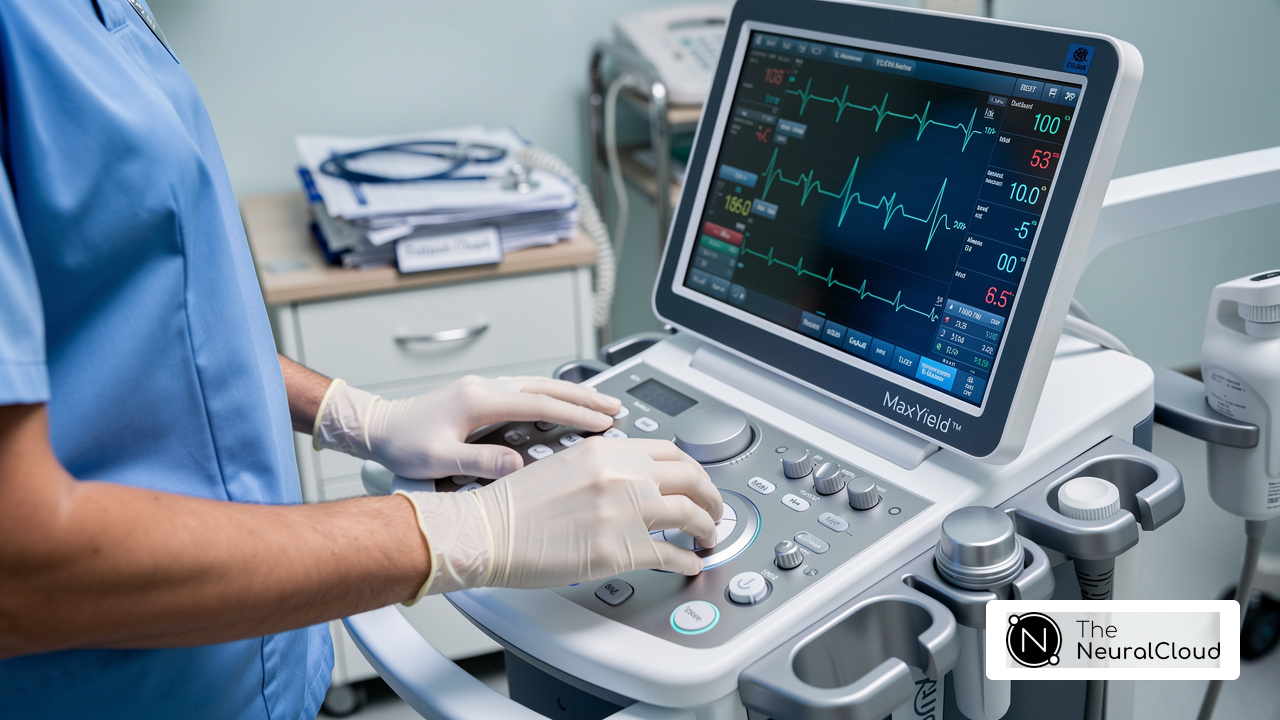
In the realm of cardiology, practitioners face significant challenges, particularly in accurately interpreting complex signals. The MaxYield™ platform, developed by Neural Cloud Solutions, addresses these challenges by employing advanced techniques in ECG signal processing. This innovative platform automates the labeling of P-Waves and QRS-onsets, enhancing the accuracy of ECG data interpretation.
Features of MaxYield™:
- Advanced algorithms for signal analysis.
- Utilization of advanced signal processing methodologies.
- Streamlined data processing for improved efficiency.
Advantages for clinicians:
- Increased accuracy in ECG diagnostics.
- Actionable insights that support clinical decision-making.
- Enhanced workflow efficiency, allowing for more time with patients.
By integrating the MaxYield™ platform into their practice, clinicians can leverage cutting-edge technology to optimize patient outcomes. This not only improves diagnostic accuracy but also enhances patient care by enabling timely and informed clinical decisions.
Explore Causes and Implications of Reduced Left Ventricular Function
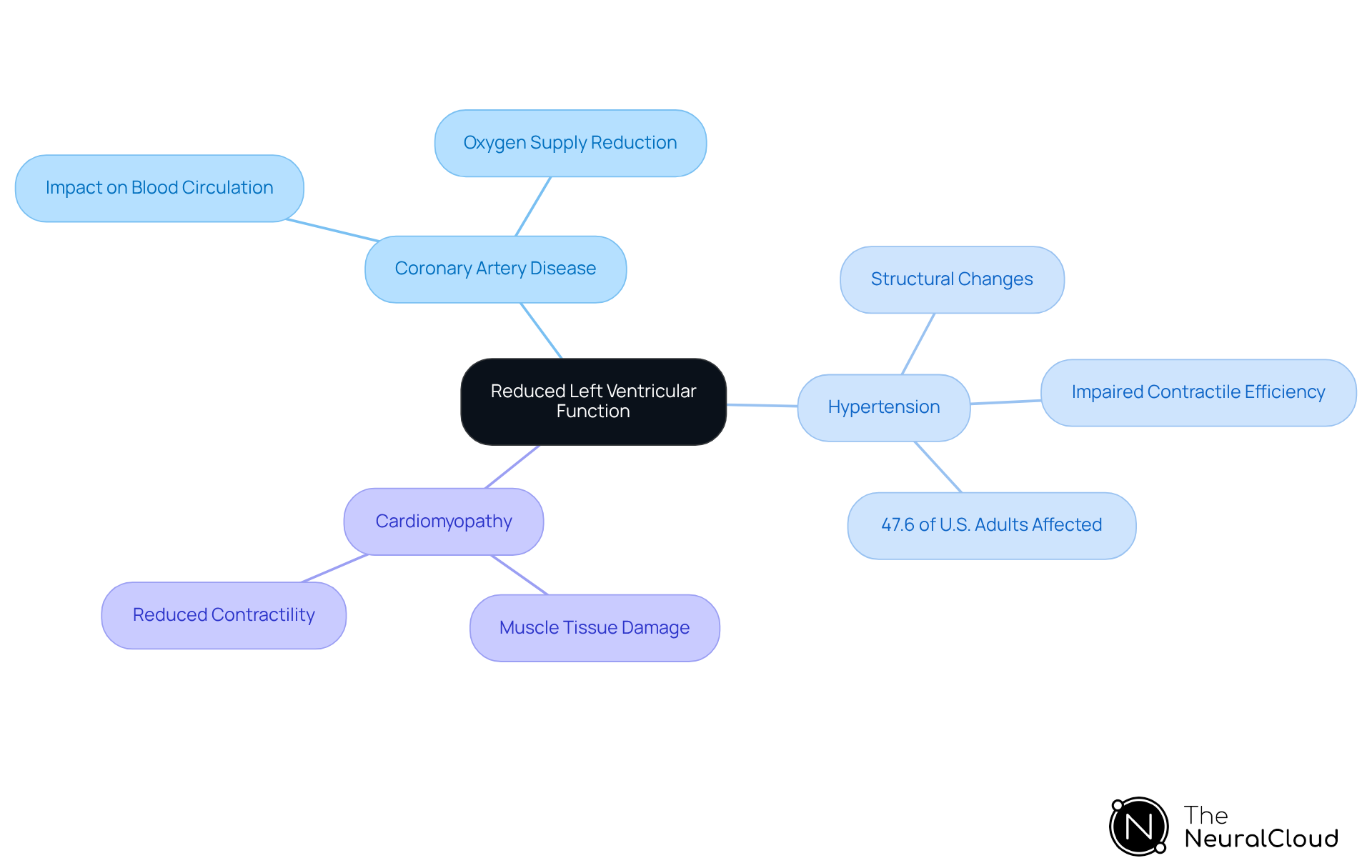
Diminished performance of the left chamber can stem from several conditions, notably:
These factors lead to reduced efficiency, which in turn reduces its overall function. For example, coronary artery disease damages muscle tissue due to inadequate blood flow, while hypertension often results in hypertrophy of the chamber, further impairing function. Statistics reveal that heart disease affects nearly 47.6% of U.S. adults, significantly increasing the risk of heart failure and subsequent dysfunction. Additionally, diabetes exacerbates this issue by directly impacting blood circulation and oxygen supply to the cardiac muscle. Understanding these fundamental causes is crucial for healthcare providers, enabling them to identify and implement timely, effective measures to mitigate the risks associated with heart disease.
Detail Diagnostic Approaches for Assessing Left Ventricular Function
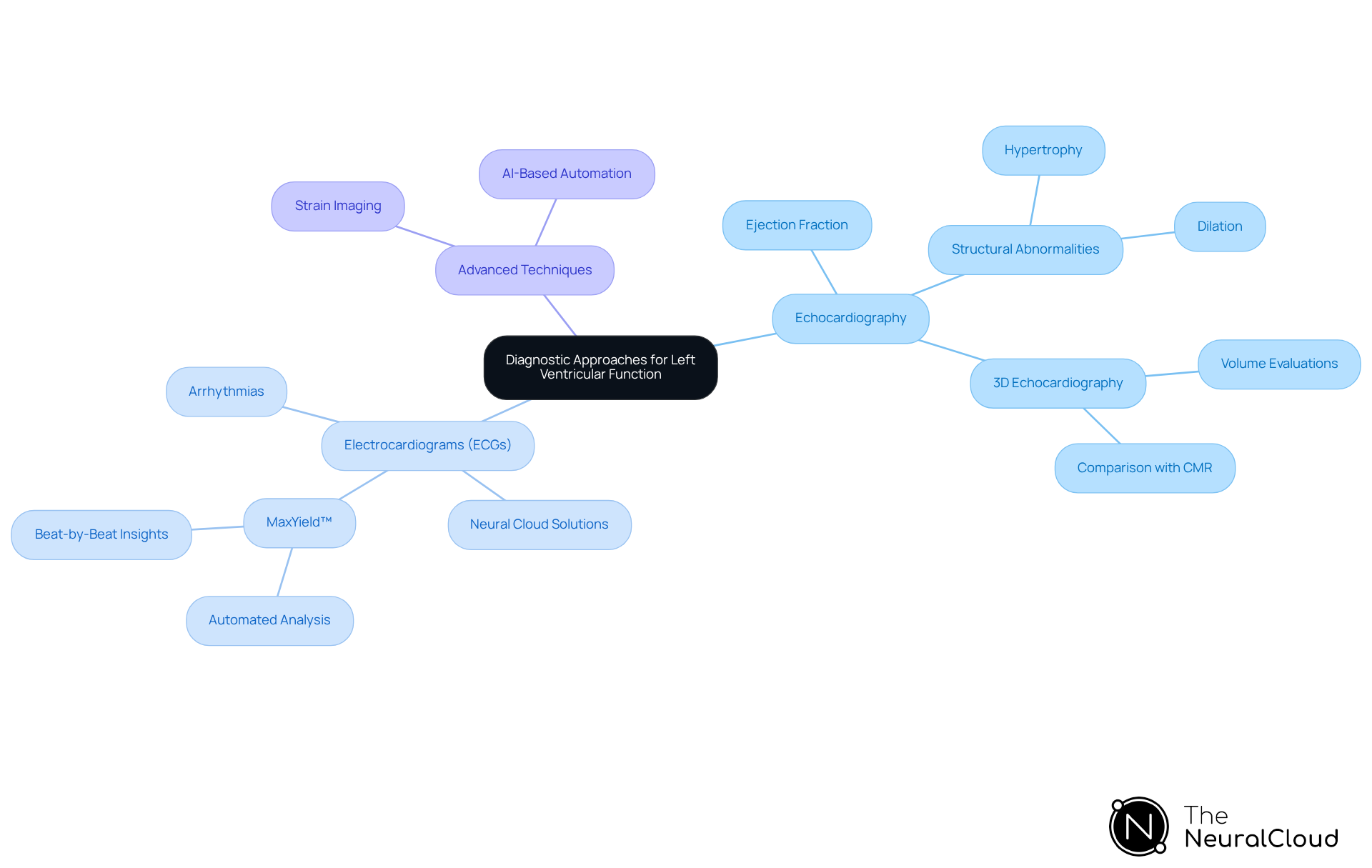
Evaluating the chamber's performance involves various diagnostic techniques, with echocardiography being the most prevalent due to its ability to provide real-time images of the heart's structure and function. This technique is crucial for measuring left ventricular ejection fraction, a key indicator of cardiac health, and for identifying conditions such as hypertrophy or dilation.
Electrocardiograms (ECGs) complement echocardiography by detecting arrhythmias and electrical disturbances that can affect cardiac function. Enhanced by advanced platforms like Neural Cloud Solutions' software, ECG analysis becomes more efficient. The software automates the analysis of ECG signals, transforming noisy recordings into detailed insights and delivering beat-by-beat analysis of 200,000 heartbeats in under 5 minutes. This capability allows for the rapid assessment of heart rhythm, supporting confident clinical decisions.
Current best practices in echocardiography include advanced methods such as three-dimensional echocardiography, which enhances the precision of volume evaluations for the heart's pumping chamber. A systematic review indicated that while 3DE may underestimate heart chamber volumes, the values obtained are comparable to those from cardiac magnetic resonance imaging (CMR). Specifically, the pooled bias for end-diastolic volume (EDV) using fully automated software was found to be -14.5 mL, and for end-systolic volume (ESV), it was -6.3 mL, indicating improved measurement accuracy.
Real-world applications of echocardiography in assessing left ventricular function are evident in various clinical scenarios, such as diagnosing heart failure or evaluating patients with valvular heart disease. The integration of automated software like Neural Cloud Solutions in ECG analysis reduces observer variability and enhances measurement accuracy, solidifying its role in routine clinical practice. Healthcare professionals can implement automated tools to streamline ECG data analysis, allowing for quicker identification of arrhythmias and improving patient management strategies.
As Kishore Boga, a cardiac physiologist, emphasizes, 'LV systolic performance, particularly the left ventricular ejection fraction (LVEF), is a vital parameter in guiding treatment decisions for patients with reduced left ventricular function.' As advancements continue, echocardiography, enhanced by innovative tools like automated software, remains essential in evaluating heart performance, guiding treatment choices, and effectively tracking disease progression.
Identify Treatment Strategies for Reduced Left Ventricular Function
Effective treatment strategies for addressing reduced left ventricular function encompass lifestyle changes, medication, and surgical procedures.
Lifestyle Adjustments: Key lifestyle adjustments - such as adopting a heart-healthy diet, increasing physical activity, and quitting smoking - serve as foundational elements for enhancing cardiac health. These changes not only improve overall well-being but also address risk factors, complementing pharmacological therapies and leading to better patient outcomes.
Medications: Current medications include ACE inhibitors, beta-blockers, and diuretics, which are essential for managing symptoms and improving quality of life. Recent advancements, particularly SGLT-2 inhibitors, have shown promise in enhancing outcomes for patients with cardiovascular issues, including those with preserved ejection fraction.
Surgical Interventions: For patients with more severe conditions, surgical interventions like coronary artery bypass grafting or the implantation of left ventricular assist devices may be necessary. Each treatment plan must be tailored to the individual patient's condition and needs, especially in cases of advanced heart failure, with continuous monitoring to evaluate effectiveness and make necessary adjustments.
Impact on Population: Significantly, around 6.7 million adults in the United States are affected by heart failure, underscoring the importance of these treatment strategies. As Dr. Ambarish Pandey states, 'treatment strategies are crucial; they not only improve patient outcomes but also enhance the effectiveness of medications.
Conclusion
Understanding reduced left ventricular function is crucial for maintaining cardiac health and ensuring effective treatment strategies. This condition, characterized by diminished pumping efficiency of the heart's left chamber, can arise from various underlying causes such as coronary artery disease, hypertension, and cardiomyopathy. Recognizing these factors allows healthcare professionals to implement timely interventions, ultimately improving patient outcomes.
The challenges in ECG analysis can hinder accurate assessments of left ventricular function. However, the MaxYield™ platform offers advanced features that enhance ECG analysis. By integrating cutting-edge technology, it allows clinicians to better assess left ventricular function, identify structural abnormalities, and make informed decisions regarding treatment. This platform not only streamlines the diagnostic process but also improves the accuracy of results, leading to more effective patient management.
The advantages of utilizing the MaxYield™ platform are significant. Healthcare professionals benefit from improved diagnostic accuracy, which translates to better treatment outcomes for patients. Additionally, the platform's user-friendly interface facilitates quicker decision-making, allowing clinicians to focus on delivering personalized care. By employing these techniques, professionals can address the complexities of reduced left ventricular function more effectively.
In light of the substantial impact of this condition on millions of individuals, it is imperative for healthcare providers to stay informed about the latest advancements in diagnosis and treatment. By prioritizing comprehensive assessments and personalized care plans, professionals can significantly improve the quality of life for patients facing challenges related to left ventricular dysfunction. Taking proactive steps in understanding and addressing these issues not only benefits patients but also contributes to the broader goal of enhancing cardiovascular health within the community.
Frequently Asked Questions
What is left ventricular function and why is it important for cardiac health?
Left ventricular function refers to the ability of the left ventricle to pump oxygenated blood throughout the body, which is crucial for ensuring all organs receive adequate perfusion.
How is left ventricular function typically assessed?
It is commonly assessed using metrics like ejection fraction (EF), with a normal EF ranging from 55% to 70%, indicating effective cardiac output.
What symptoms may arise if the left ventricle does not contract effectively?
Symptoms can include fatigue, shortness of breath, and fluid retention.
What role does the MaxYield™ Neural Network play in ECG analysis?
The MaxYield™ Neural Network addresses challenges in accurately interpreting complex ECG signals by automating the labeling of P-Waves and QRS-onsets, which enhances the accuracy of ECG data interpretation.
What are some features of the MaxYield™ platform?
Features include automated labeling of P-Waves and QRS-onsets, utilization of advanced signal processing methodologies, and streamlined data processing for improved efficiency.
What advantages does MaxYield™ offer to healthcare professionals?
Advantages include increased accuracy in ECG diagnostics, actionable insights that support clinical decision-making, and enhanced workflow efficiency, allowing for more time with patients.
How does integrating MaxYield™ into practice benefit patient care?
By optimizing ECG analysis, it improves diagnostic accuracy and enables timely and informed clinical decisions, ultimately enhancing patient care.
List of Sources
- Explore Causes and Implications of Reduced Left Ventricular Function
- uh.edu (https://uh.edu/news-events/stories/2026/january/01202026-wu-spongy-heart-repair.php)
- ahajournals.org (https://ahajournals.org/doi/full/10.1161/JAHA.125.043976)
- Focus on Heart Failure | HFpEF: Where We Stand in 2025 - American College of Cardiology (https://acc.org/latest-in-cardiology/articles/2025/06/01/01/focus-on-heart-failure-hfpef)
- Cardiovascular Statistics in the United States, 2026: JACC Stats (https://jacc.org/doi/10.1016/j.jacc.2025.12.027)
- Detail Diagnostic Approaches for Assessing Left Ventricular Function
- wdtn.com (https://wdtn.com/news/health/new-ai-technology-changing-how-doctors-diagnose-heart-disease)
- How New Tools Are Transforming the Evaluation of Left Ventricular Systolic Function | Xyla Services (https://xylaservices.com/professionals/news/how-new-tools-are-transforming-the-evaluation-of-left-ventricular-systolic-function)
- onlinejase.com (https://onlinejase.com/article/S0894-7317(19)30618-2/abstract)
- ahajournals.org (https://ahajournals.org/doi/10.1161/JAHA.118.009124)
- Identify Treatment Strategies for Reduced Left Ventricular Function
- Heart Failure Management: Current Approaches and Future Directions (https://thecardiologyadvisor.com/features/heart-failure-management-2026)
- Clinical trial offers first-of-its-kind heart failure treatment (https://health.ucdavis.edu/news/headlines/clinical-trial-offers-first-of-its-kind-heart-failure-treatment/2026/02)
- New treatment pathways for patients with advanced heart failure - Mayo Clinic (https://mayoclinic.org/medical-professionals/cardiovascular-diseases/news/new-treatment-pathways-for-patients-with-advanced-heart-failure/mac-20585947)
- newsroom.heart.org (https://newsroom.heart.org/news/combination-pill-for-heart-failure-improved-heart-function-symptoms-and-quality-of-life)
- business.smdailypress.com (https://business.smdailypress.com/smdailypress/article/gnwcq-2026-2-2-groundbreaking-therapy-for-advanced-heart-failure)