Introduction
Understanding the QTc interval is crucial for anyone concerned with cardiac health. It serves as a vital indicator of heart function and arrhythmia risk. By exploring the normal QTc range, which varies between genders, readers can grasp the significant implications of deviations from these values and their potential risks.
Several factors influence QTc duration, including:
- Age
- Gender
- Underlying health conditions
Healthcare professionals must effectively monitor and interpret these measurements to safeguard patient well-being. This understanding not only enhances patient care but also aids in the early detection of potential cardiac issues.
Define the QTc Interval: A Key Metric in Cardiac Health
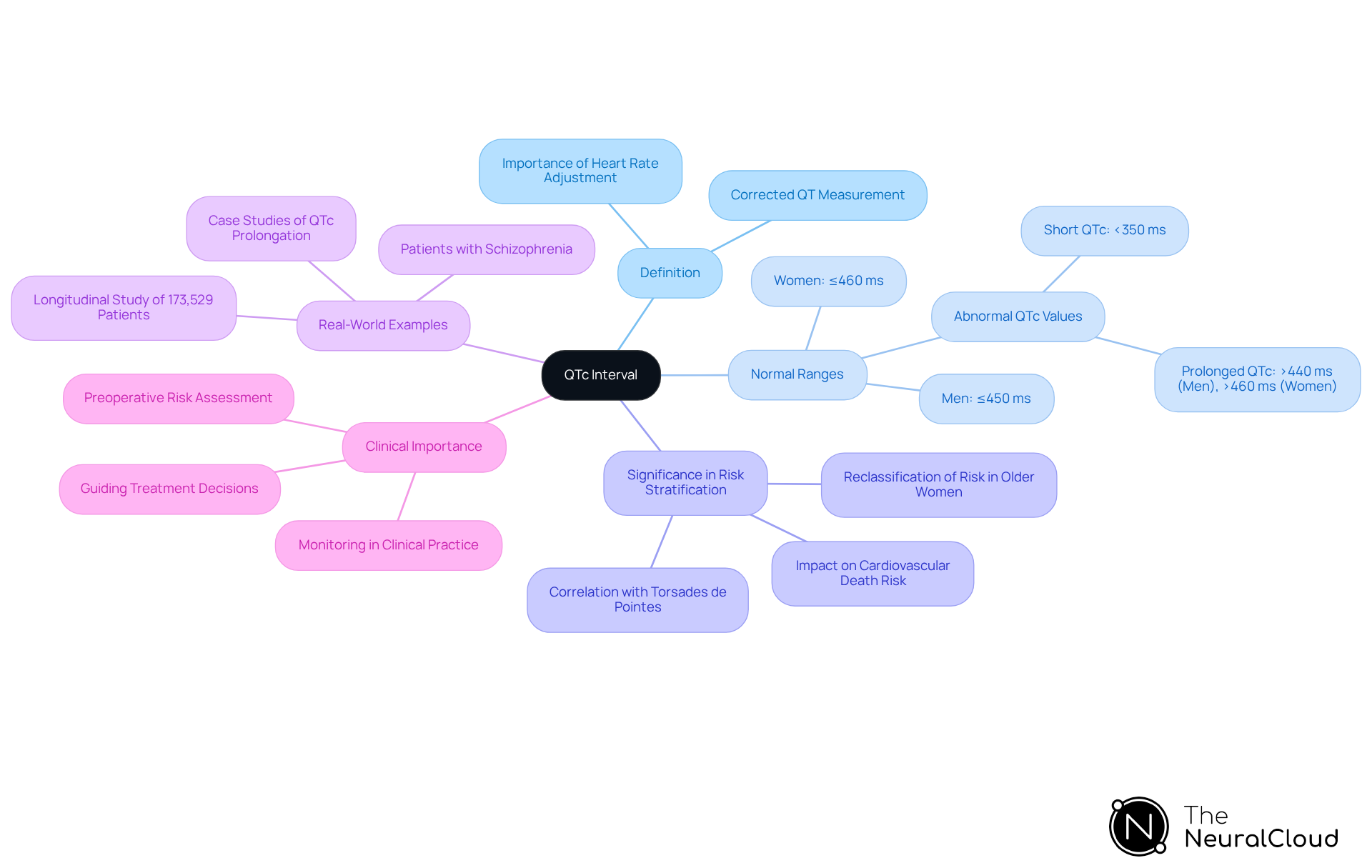
The QTc, or corrected QT, is a crucial measurement derived from the electrocardiogram (ECG) that indicates the duration of ventricular depolarization and repolarization. By adjusting the QT duration for heart rate, the QTc provides a standardized evaluation, which is essential for assessing heart health across varying heart rates. The normal QTc range is generally accepted as ≤450 milliseconds for men and ≤460 milliseconds for women. Deviations from these values can signal potential arrhythmias and other cardiac conditions, warranting further investigation.
The significance of the QTc duration is underscored by its role in risk stratification. For example, studies have shown that nearly 10% of women aged 70-90 years were reclassified into different risk categories when QTc was included in traditional assessment models. Additionally, a prolonged QTc duration-greater than 440 ms in men and 460 ms in women-correlates with an increased risk of Torsades de Pointes, a potentially life-threatening arrhythmia.
Real-world examples highlight the importance of monitoring QTc durations, particularly in at-risk populations. For instance, patients with schizophrenia who are treated with certain antipsychotics show significantly higher rates of cardiac arrest and ventricular arrhythmia. Moreover, a study involving 173,529 primary care patients over a decade revealed that both very short and very long QTc durations are linked to a higher likelihood of cardiovascular death, especially among older individuals and those with pre-existing heart conditions.
Cardiologists emphasize the necessity of understanding the QTc duration in clinical practice. As one specialist noted, the QTc interval serves as a straightforward yet effective tool for assessing peri-operative risks and guiding treatment decisions. This highlights the critical need for healthcare professionals to integrate QTc monitoring into their clinical workflows, ensuring that patients receive timely and appropriate care based on their cardiac health status.
Explore the Normal QTc Range: Significance and Implications
The normal QTc range is a crucial marker in cardiology, enabling clinicians to effectively assess the likelihood of arrhythmias. A QTc value exceeding 450 ms in men and 460 ms in women is classified as prolonged, which raises the risk of serious conditions like Torsades de Pointes, a potentially fatal arrhythmia. On the other hand, a QTc duration shorter than 390 ms is considered abnormally short, also posing significant health risks.
Monitoring the QTc duration is particularly vital in clinical settings, especially during pharmacological treatments, as certain drugs are known to prolong the QTc duration. For instance, myocardial ischemia can lead to a QTc of 495 ms, while severe hypothermia might result in a QTc of 620 ms. Both scenarios necessitate careful management to avert adverse cardiac events.
With the integration of MaxYield™, healthcare professionals can enhance their ECG analysis capabilities. MaxYield™ effectively maps ECG signals through noise, isolating and labeling key features in every heartbeat. This functionality allows for the rapid identification of significant cardiac events. Current guidelines emphasize the importance of measuring multiple consecutive beats to accurately determine the maximum QT duration, ensuring that healthcare providers can make informed decisions regarding patient care.
By understanding the normal QTc range and its implications, clinicians can more effectively navigate treatment strategies. This ultimately enhances patient safety and outcomes, demonstrating the value of utilizing advanced tools like MaxYield™ in clinical practice.

Identify Factors Affecting QTc Interval: Physiological and Pathological Influences
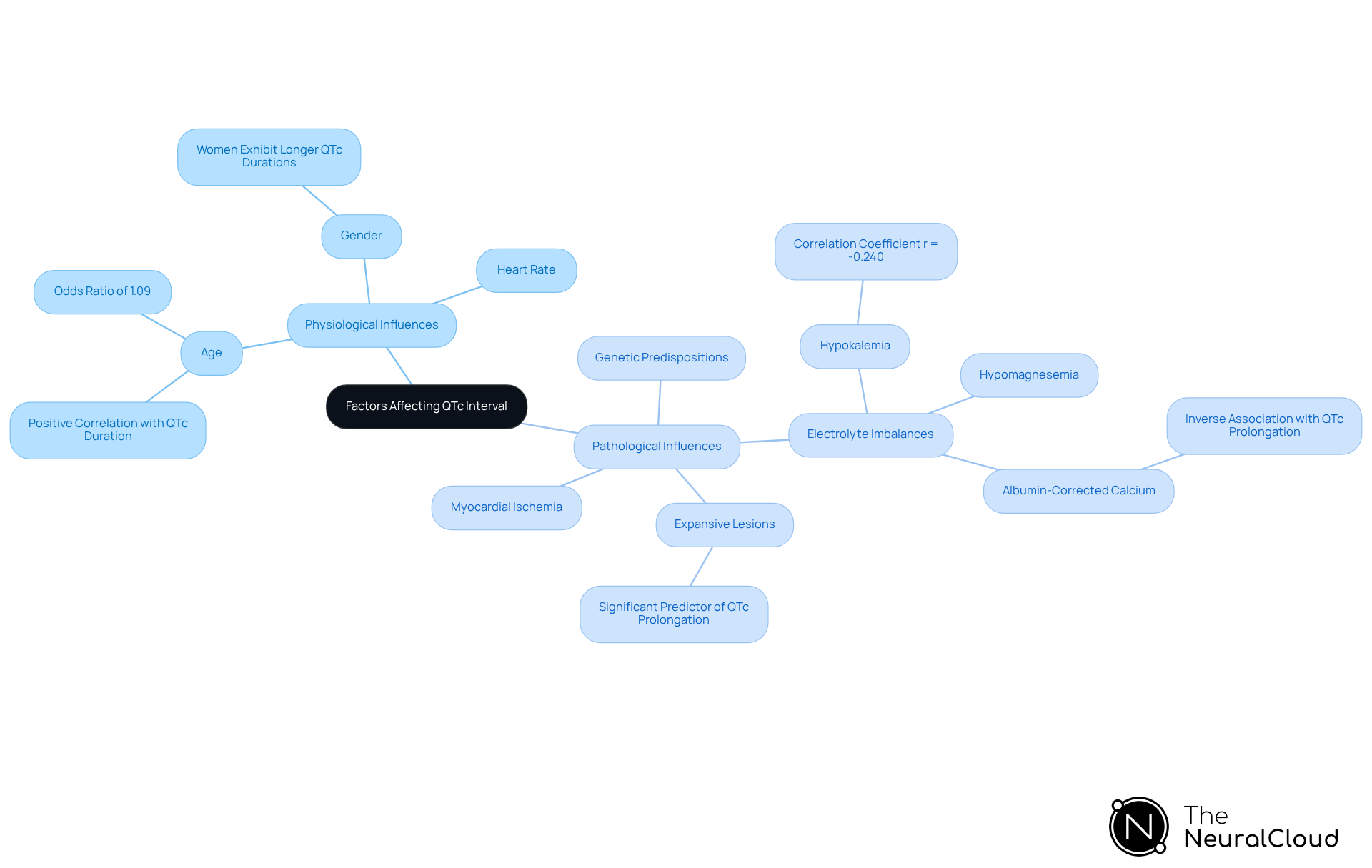
QTc duration is influenced by various factors, including physiological aspects like age, gender, and heart rate, as well as pathological conditions such as electrolyte imbalances, myocardial ischemia, and genetic predispositions. Notably, studies indicate that women typically exhibit longer QTc durations than men. Additionally, older individuals often experience QTc extension due to age-related changes in cardiac function. For example, research has shown a positive correlation between age and QTc duration, with an odds ratio of 1.09, suggesting that older patients tend to have significantly longer durations.
Electrolyte imbalances, particularly hypokalemia and hypomagnesemia, can lead to considerable QTc prolongation, heightening the risk of arrhythmias. In a cohort study, lower serum potassium levels were associated with longer QTc durations, evidenced by a correlation coefficient of r = -0.240. This underscores the importance for clinicians to consider these factors when interpreting QTc values within the normal QTc range and assessing patient vulnerability, especially in populations with known risk factors for cardiac events.
Moreover, the presence of expansive lesions beyond pituitary adenomas has emerged as a significant predictor of QTc prolongation. This finding highlights the necessity for careful monitoring and management of electrolyte imbalances and hormonal deficiencies to prevent QTc prolongation.
Assess Clinical Relevance: Risks of Abnormal QTc Values
Abnormal QTc values pose significant clinical challenges, greatly increasing the risk of critical cardiac events like Torsades de Pointes (TdP) and sudden cardiac death. A QTc duration exceeding 500 ms is particularly concerning and requires immediate clinical intervention. Recent studies indicate that women face nearly double the risk of TdP compared to men, underscoring the importance of vigilant monitoring in this group. Patients with prolonged QTc may need personalized medication adjustments, lifestyle changes, or thorough diagnostic evaluations to identify any underlying health issues.
The significance of the QTc interval goes beyond individual patient care; it plays a crucial role in drug development and safety assessments. Numerous medications, including specific antipsychotics and fluoroquinolones, are known to cause QTc prolongation, which must be carefully considered during prescribing. For example, the FDA has issued alerts regarding the QTc effects of haloperidol and ciprofloxacin, emphasizing the need to evaluate patient-specific factors before initiating treatment.
Additionally, a systematic review has identified diabetes mellitus, a history of stroke, and the concurrent use of anticholinergic medications as key contributors to QTc prolongation. In a cohort study involving 2,944 patients treated with intravenous amiodarone, 49 instances of QTc prolongation or TdP were recorded, highlighting the ongoing need for risk assessment in high-risk populations. As healthcare providers navigate these complexities, understanding the clinical implications of QTc values is vital for enhancing patient safety and optimizing therapeutic outcomes.

Conclusion
Understanding the normal QTc range is essential for maintaining cardiac health and preventing serious arrhythmias. The QTc interval serves as a vital indicator for clinicians, allowing for standardized assessments of heart function across varying heart rates. Recognizing the normal thresholds - ≤450 milliseconds for men and ≤460 milliseconds for women - enables healthcare providers to identify potential risks and take necessary actions to safeguard patient well-being.
The article highlights several key insights regarding the QTc interval, including its role in risk stratification, the impact of medications on QTc duration, and the physiological and pathological factors that influence QTc values. Monitoring QTc is particularly critical in populations at risk, such as older adults or those with existing health conditions. Furthermore, the integration of advanced tools like MaxYield™ can enhance ECG analysis, ensuring that clinicians make informed decisions based on accurate QTc measurements.
Features of MaxYield™:
- Advanced ECG analysis capabilities
- Real-time monitoring of QTc intervals
- User-friendly interface for clinicians
Advantages for Healthcare Professionals:
- Improved accuracy in QTc measurements
- Enhanced ability to identify at-risk patients
- Streamlined workflow for ECG interpretation
Ultimately, understanding the implications of the QTc interval is not just a matter of academic interest; it is a crucial aspect of clinical practice that can significantly affect patient outcomes. Vigilant monitoring and assessment of QTc values can lead to timely interventions, improved safety, and better management of cardiac health. As the medical community continues to prioritize the importance of QTc monitoring, embracing these insights can empower healthcare professionals to enhance patient care and mitigate risks associated with abnormal QTc values.
Frequently Asked Questions
What is the QTc interval?
The QTc, or corrected QT, is a measurement derived from the electrocardiogram (ECG) that indicates the duration of ventricular depolarization and repolarization, adjusted for heart rate to provide a standardized evaluation of heart health.
What is the normal range for QTc intervals?
The normal QTc range is generally accepted as ≤450 milliseconds for men and ≤460 milliseconds for women.
Why is the QTc interval important?
The QTc interval is important for assessing heart health, as deviations from the normal range can signal potential arrhythmias and other cardiac conditions that require further investigation.
How does QTc duration relate to risk stratification?
QTc duration plays a significant role in risk stratification; studies have shown that including QTc in assessments can lead to reclassification of risk categories, especially in older populations.
What is the correlation between prolonged QTc duration and arrhythmias?
A prolonged QTc duration-greater than 440 ms in men and 460 ms in women-correlates with an increased risk of Torsades de Pointes, a potentially life-threatening arrhythmia.
What populations are particularly at risk for QTc-related issues?
Populations at risk include patients with schizophrenia treated with certain antipsychotics, who have higher rates of cardiac arrest and ventricular arrhythmia, and older individuals with pre-existing heart conditions.
What does research say about QTc durations and cardiovascular death?
Research involving a large cohort of primary care patients revealed that both very short and very long QTc durations are linked to a higher likelihood of cardiovascular death, particularly among older individuals and those with pre-existing heart conditions.
How should healthcare professionals use QTc monitoring in clinical practice?
Healthcare professionals should integrate QTc monitoring into their clinical workflows to assess peri-operative risks and guide treatment decisions, ensuring timely and appropriate care based on patients' cardiac health status.