Introduction
Many healthcare professionals struggle with the complexities of ECG diagnostics, particularly when distinguishing between first-degree and second-degree AV block. With advancements in AI technology, tools like Neural Cloud Solutions' MaxYield™ are revolutionizing how clinicians analyze and interpret ECG data, enhancing accuracy and efficiency in identifying these conditions. The challenge remains: how can practitioners accurately differentiate between these two types of AV block? Both can present without clear symptoms, making diagnosis difficult.
We will explore the key differences, clinical implications, and how innovative technology can improve diagnostic outcomes.
Neural Cloud Solutions: Enhancing First-Degree AV Block Analysis with AI Technology
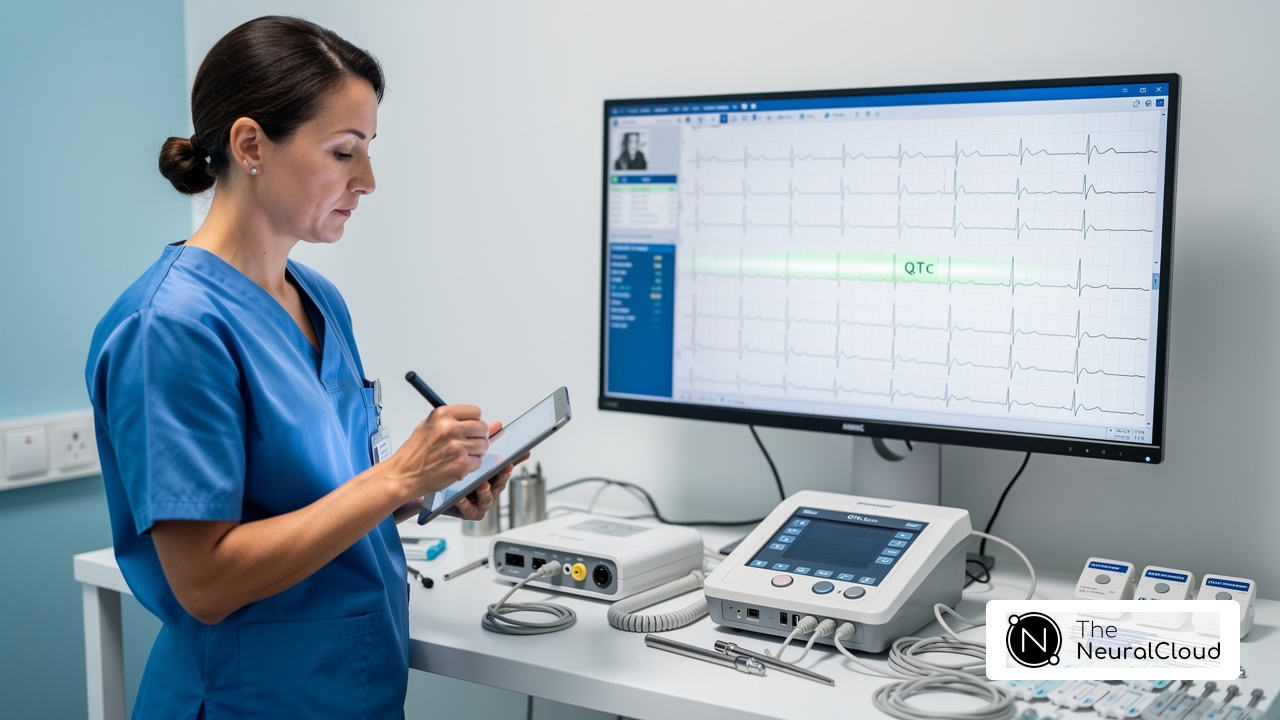
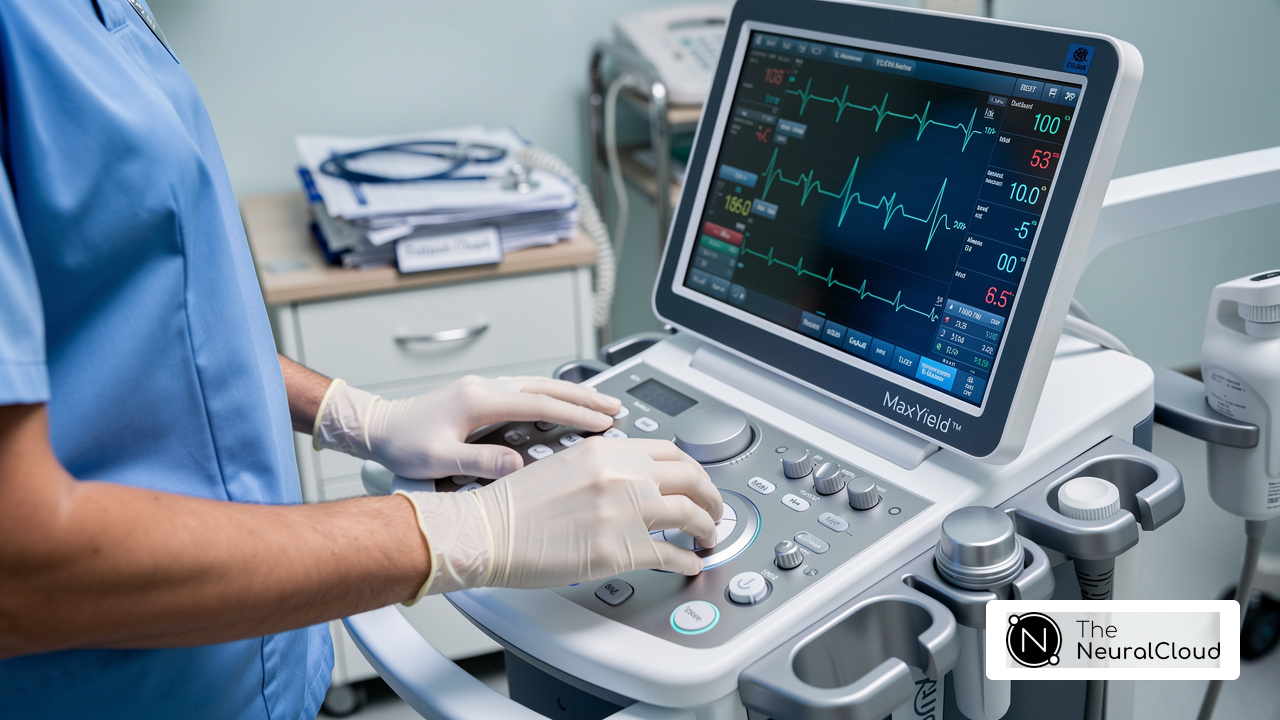
Current ECG analysis methods often struggle with noise and inaccuracies, complicating the diagnosis of 1st degree AV block vs 2nd degree. Neural Cloud Solutions utilizes advanced AI technologies to address these challenges through its flagship product, MaxYield. This platform employs patented signal mapping algorithms to effectively isolate and clean noisy ECG signals, resulting in high-fidelity data crucial for accurate diagnostics.
MaxYield helps identify the prolonged PR interval, which is a key sign of 1st degree AV block vs 2nd degree, thus speeding up the diagnostic process. By seamlessly incorporating MaxYield into current workflows, healthcare professionals can significantly enhance their ECG analysis, leading to improved care and more efficient reporting.
Ongoing monitoring with MaxYield not only decreases inaccurate complaint tickets but also gives healthcare professionals the assurance to manage individuals remotely. Many cardiologists find that the AI insights from MaxYield make their workflows smoother and [improve the quality of cardiac diagnostics](https://theglobeandmail.com/investing/markets/markets-news/ACCESS Newswire/1059257/neural-cloud-signs-reseller-agreement-with-european-digital-cardiac-monitoring-platform), making it an indispensable tool in modern healthcare.
Additionally, it is important to note that Neural Cloud Solutions' services are explicitly non-diagnostic and intended for research-grade ECG signal processing, ensuring that users understand the platform's intended use.

Characteristics of First-Degree AV Block: Key Features and Implications
First-degree AV block presents a significant challenge in ECG analysis due to its often asymptomatic nature. Characterized by a prolonged PR interval exceeding 0.20 seconds, this condition indicates a delay in conduction from the atria to the ventricles. Often, this condition does not present noticeable symptoms, leaving many individuals unaware of its presence. However, if left unmonitored, it can lead to complications, particularly in older individuals or those with underlying heart conditions. Research indicates that individuals with extended PR intervals or first-degree heart conduction issues have double the likelihood of developing atrial fibrillation compared to those with normal PR intervals. This increased risk necessitates vigilant monitoring and potential intervention, including the possibility of pacemaker implantation. Regular ECG monitoring is crucial, as first-degree AV delay may serve as a precursor to more severe heart conduction disturbances.
Integrating Neural Cloud Solutions' MaxYield™ platform allows clinicians to improve ECG analysis efficiency. This is achieved through advanced noise filtering and distinct wave recognition. MaxYield™ rapidly isolates ECG waves from recordings affected by baseline wander, movement, and muscle artifacts, ensuring that critical data is accurately identified and labeled. This ability is especially advantageous for overseeing elderly individuals, as the occurrence of first-degree AV interruption rises with age, from 1.0% to 1.5% until age 60, increasing to around 6.0% afterwards.
Cardiologists emphasize that most individuals live symptom-free. However, being aware of potential signs - like dizziness, chest discomfort, and fatigue - is vital for effective management. In the absence of symptoms, patients do not require treatment beyond monitoring to evaluate for worsening AV impairment. Understanding the implications of 1st degree AV block vs 2nd degree is crucial for proactive patient management and timely intervention.

Understanding Second-Degree AV Block: Types and Clinical Significance
Understanding the nuances of 1st degree AV block vs 2nd degree AV block is crucial for effective patient management. Second-degree AV block is divided into two main categories: Wenckebach and the second form. This classification is defined by a gradual extension of the PR interval, which results in a missed QRS complex. This category is often asymptomatic and carries an excellent prognosis, typically requiring little to no intervention.
In contrast, variant II displays a consistent PR interval with abrupt drops of QRS complexes, presenting a higher risk of severe symptoms and advancement to complete heart block. Patients with second-degree heart block may need prompt intervention, such as a pacemaker, because of the risk of complications.
It's vital for clinicians to understand the distinctions in management strategies when considering 1st degree AV block vs 2nd degree, as they vary considerably between the two categories. For example, symptomatic individuals with the first form may be treated with atropine or transcutaneous pacing, while the second form requires more intensive monitoring and intervention to avert negative outcomes.
Recent discoveries suggest that classification II is more commonly linked to structural heart problems, emphasizing the significance of comprehensive assessment and follow-up for all individuals diagnosed with 1st degree AV block vs 2nd degree AV disturbance. Lifelong follow-up is essential for all individuals with AV block, as complications can arise over time.
Additionally, it is important to note that hypotension and bradycardia are often resistant to atropine, which complicates the management of Mobitz type II. As emphasized by Ali A Sovari, MD, FACP, FACC, symptomatic patients should be treated with atropine and transcutaneous pacing immediately to ensure timely intervention.
With MaxYield™, healthcare professionals can enhance their ECG analysis using automated, AI-driven insights, leading to better management of conditions like second-degree AV block. For example, MaxYield™ can provide real-time data analysis and alerts for clinicians, enabling them to make informed decisions quickly and effectively.

Diagnostic Criteria: Differentiating First and Second-Degree AV Blocks
It is crucial for effective patient management to differentiate between 1st degree AV block vs 2nd degree disruptions. Clinicians utilize specific diagnostic criteria observed in ECG readings to make this distinction. In first-degree AV obstruction, every P wave is consistently followed by a QRS complex, but the PR interval exceeds 200 milliseconds, indicating delayed conduction. Often, this condition shows no symptoms and is found during routine ECG checks, with a prevalence of 1-2% in the general adult population, increasing with age.
In contrast, second-degree AV interruption is characterized by intermittent failure of conduction, where some P waves are not followed by QRS complexes. This is especially clear in the first variant, where the pattern of missed beats appears following a sequence of conducted beats. This results in a gradual lengthening of the PR interval until an atrial impulse is entirely obstructed, referred to as a 'dropped beat.' Classification II maintains a constant PR interval until a P wave is not followed by a QRS. This indicates a more severe condition that often requires prompt pacing to prevent complete heart block.
Understanding these ECG criteria is key for deciding the right clinical responses and monitoring strategies. For instance, cardiologists emphasize the importance of recognizing the differences in conduction patterns, as misinterpretation can lead to inappropriate clinical decisions. Real-world examples illustrate that while Mobitz type I is often benign and may not require treatment, Mobitz type II presents with noticeable symptoms such as fatigue, dyspnea, and syncope, necessitating closer monitoring and potential pacemaker implantation. Understanding the differences in 1st degree AV block vs 2nd degree not only aids in diagnosis but also enhances patient outcomes through timely and appropriate management.
Neural Cloud Solutions' MaxYield™ platform helps clinicians improve ECG analysis efficiency. It uses advanced noise filtering and distinct wave recognition capabilities. This technology allows for the rapid isolation of ECG waves from recordings affected by baseline wander, movement, and muscle artifacts, ultimately improving diagnostic accuracy and addressing the challenges posed by physiological variability.

Conclusion
Without a clear grasp of AV block distinctions, patient care may falter. Advanced technologies like Neural Cloud Solutions' MaxYield platform improve the diagnostic process by providing clearer, more accurate ECG analyses. This tool helps identify the prolonged PR interval of 1st degree AV block and makes workflows smoother, so healthcare professionals can provide better care.
Key insights discussed include the asymptomatic nature of first-degree AV block, its potential complications, and the importance of vigilant monitoring to prevent progression to more severe conditions. The distinctions between the two types of second-degree AV block, particularly in their clinical significance and management strategies, further underscore the necessity for accurate diagnostics. By leveraging AI-driven insights, clinicians can make informed decisions that improve patient outcomes.
As the landscape of cardiac care evolves with technology, embracing tools like MaxYield can significantly impact the management of AV blocks. The integration of AI in ECG analysis not only enhances diagnostic accuracy but also empowers healthcare professionals to act swiftly and effectively. Ultimately, the right tools can transform patient care and outcomes in cardiac health.
Frequently Asked Questions
What is the main purpose of Neural Cloud Solutions' MaxYield platform?
The main purpose of MaxYield is to enhance ECG analysis by utilizing advanced AI technologies to isolate and clean noisy ECG signals, resulting in high-fidelity data for accurate diagnostics of first-degree AV block.
How does MaxYield assist in differentiating between first-degree and second-degree AV block?
MaxYield helps identify the prolonged PR interval, which is a key indicator that differentiates first-degree AV block from second-degree AV block, thus speeding up the diagnostic process.
What advantages does MaxYield provide to healthcare professionals?
MaxYield enhances ECG analysis, improves care, and allows for more efficient reporting. It also decreases inaccurate complaint tickets and enables healthcare professionals to manage individuals remotely with greater assurance.
How do cardiologists benefit from using MaxYield?
Many cardiologists find that the AI insights from MaxYield make their workflows smoother and improve the quality of cardiac diagnostics, making it an indispensable tool in modern healthcare.
Are the services provided by Neural Cloud Solutions diagnostic in nature?
No, Neural Cloud Solutions' services are explicitly non-diagnostic and intended for research-grade ECG signal processing, ensuring users understand the platform's intended use.
List of Sources
- Neural Cloud Solutions: Enhancing First-Degree AV Block Analysis with AI Technology
- theglobeandmail.com (https://theglobeandmail.com/investing/markets/markets-news/ACCESS Newswire/1059257/neural-cloud-signs-reseller-agreement-with-european-digital-cardiac-monitoring-platform)
- stocktitan.net (https://stocktitan.net/news/AIMLF/aiml-subsidiary-neural-cloud-enters-research-services-agreement-with-85hl2thuwvft.html)
- Movesense and NeuralCloud to Pilot AI-Powered ECG and Holter Reporting — Movesense (https://movesense.com/news/2026/02/movesense-and-neuralcloud-to-pilot-ai-powered-ecg-and-holter-reporting)
- Characteristics of First-Degree AV Block: Key Features and Implications
- First-Degree Heart Block - StatPearls - NCBI Bookshelf (https://ncbi.nlm.nih.gov/books/NBK448164)
- academic.oup.com (https://academic.oup.com/eurheartj/article/35/2/123/570546)
- pmc.ncbi.nlm.nih.gov (https://pmc.ncbi.nlm.nih.gov/articles/PMC12919613)
- ovid.com (https://ovid.com/00060989-201305000-00001)
- Prevalence of first-degree atrioventricular block and the associated risk factors: a cross-sectional study in rural Northeast China - PMC (https://pmc.ncbi.nlm.nih.gov/articles/PMC6781332)
- Understanding Second-Degree AV Block: Types and Clinical Significance
- ncbi.nlm.nih.gov (https://ncbi.nlm.nih.gov/books/NBK482359)
- ecglectures.com (https://ecglectures.com/blog/why-second-degree-2-1-av-block-cannot-be-reliably-classified-as-mobitz-i-or-mobitz-ii)
- aclsonline.us (https://aclsonline.us/rhythms/second-degree-av-heart-block-type-ii)
- healthline.com (https://healthline.com/health/heart-attack/second-degree-heart-block)
- emedicine.medscape.com (https://emedicine.medscape.com/article/161919-overview)
- Diagnostic Criteria: Differentiating First and Second-Degree AV Blocks
- emergencycarebc.ca (https://emergencycarebc.ca/clinical_resource/clinical-summary/atrioventricular-blocks-first-second-and-third-degree)
- ncbi.nlm.nih.gov (https://ncbi.nlm.nih.gov/books/NBK482359)
- emedicine.medscape.com (https://emedicine.medscape.com/article/151597-overview)
- mayoclinicproceedings.org (https://mayoclinicproceedings.org/article/S0025-6196(11)62080-6/fulltext)
- Atrioventricular (AV) Block - The Cardiology Advisor (https://thecardiologyadvisor.com/ddi/av-block-first-second-third-degree)