Introduction
Understanding the nuances of cardiac rhythms is crucial for healthcare professionals, especially when analyzing dysrhythmias through ECG. The complexity of interpreting these rhythms often presents diagnostic challenges. However, with the right tools and techniques, mastering ECG analysis becomes achievable.
The MaxYield™ platform offers features designed to simplify this intricate process. By providing intuitive interfaces and advanced algorithms, it enhances the accuracy of ECG interpretation. This not only streamlines the analysis but also empowers practitioners to confidently identify and manage dysrhythmias.
What strategies can be employed to improve diagnostic accuracy? This article outlines five essential steps that leverage the capabilities of the MaxYield™ platform, ensuring that healthcare professionals can navigate ECG analysis with greater ease and precision.
Understand Basic Cardiac Rhythms
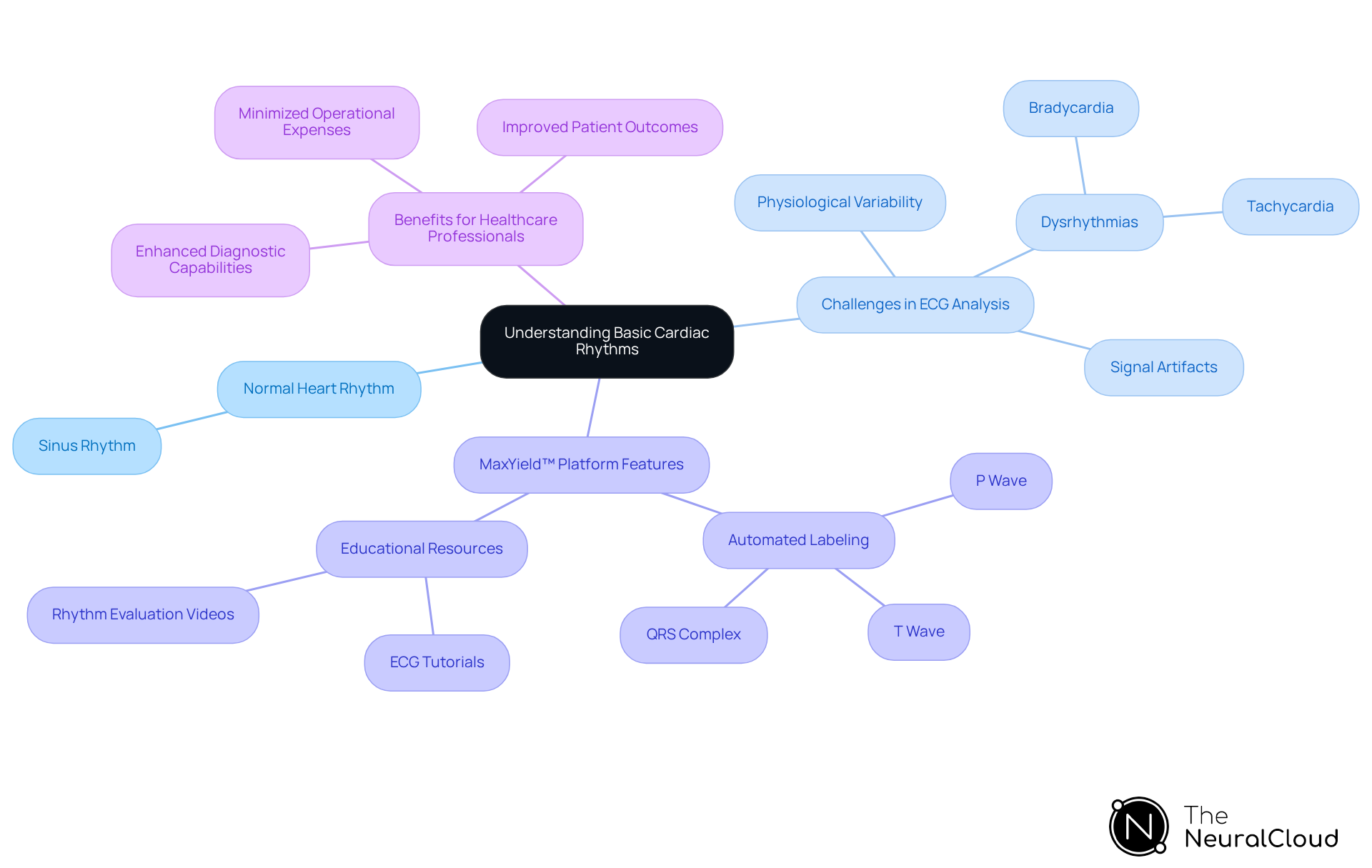
Understanding the normal heart rhythm, known as sinus rhythm, is crucial for effective ECG analysis, especially when studying dysrhythmias. Advanced technologies, such as Neural Cloud Solutions' platform, offer innovative solutions to enhance this process. The platform features key components - P wave, QRS complex, and T wave - which simplifies evaluation and improves accuracy. By streamlining the analysis, practitioners can minimize operational expenses while ensuring precise heart rate and rhythm assessments.
ECG analysis often presents challenges, including variations in heart rhythms, with common conditions such as bradycardia and tachycardia. The platform addresses these issues by providing resources such as tutorials and case studies, which facilitate visual learning. With the integration of advanced tools, users can further enhance their understanding and diagnosis of dysrhythmias. This technology helps overcome challenges like misinterpretation, making it easier to achieve accurate results.
In summary, the platform not only improves ECG analysis but also offers significant benefits for healthcare professionals. By utilizing its advanced features, practitioners can enhance diagnostic accuracy, leading to better patient outcomes. The combination of clear, automated labeling and educational resources ensures that both technical and non-technical users can effectively navigate the complexities of ECG evaluation.
Prepare Equipment and Patient for ECG Recording
To ensure accurate readings and reliable diagnostics, it's crucial that the equipment is calibrated and functioning optimally. Regular maintenance is necessary, depending on usage, to maintain the machine's performance.
Gather the necessary supplies, such as electrodes, ECG paper, and alcohol wipes for skin preparation. Using proper skin preparation significantly reduces artifacts during the recording process, enhancing the overall accuracy of the ECG.
Prepare the patient by clearly explaining the procedure. This not only alleviates anxiety but also enhances cooperation. Ensuring comfort is vital, as discomfort can lead to movement artifacts that compromise the quality of the ECG recording. As Yasar Sattar notes, "For better outcomes, effective communication, patient satisfaction, and staff proficiency in evaluating ECGs are mandatory."
Position the patient correctly, ideally in a supine position, to minimize movement and ensure optimal electrode contact. Poor electrode adhesion can lead to inaccuracies and misinterpretation of ECGs.
Apply sufficient pressure to ensure good contact. This step is critical to prevent artifacts caused by poor electrode adhesion, which can distort the ECG signals.

Identify and Label Key ECG Features
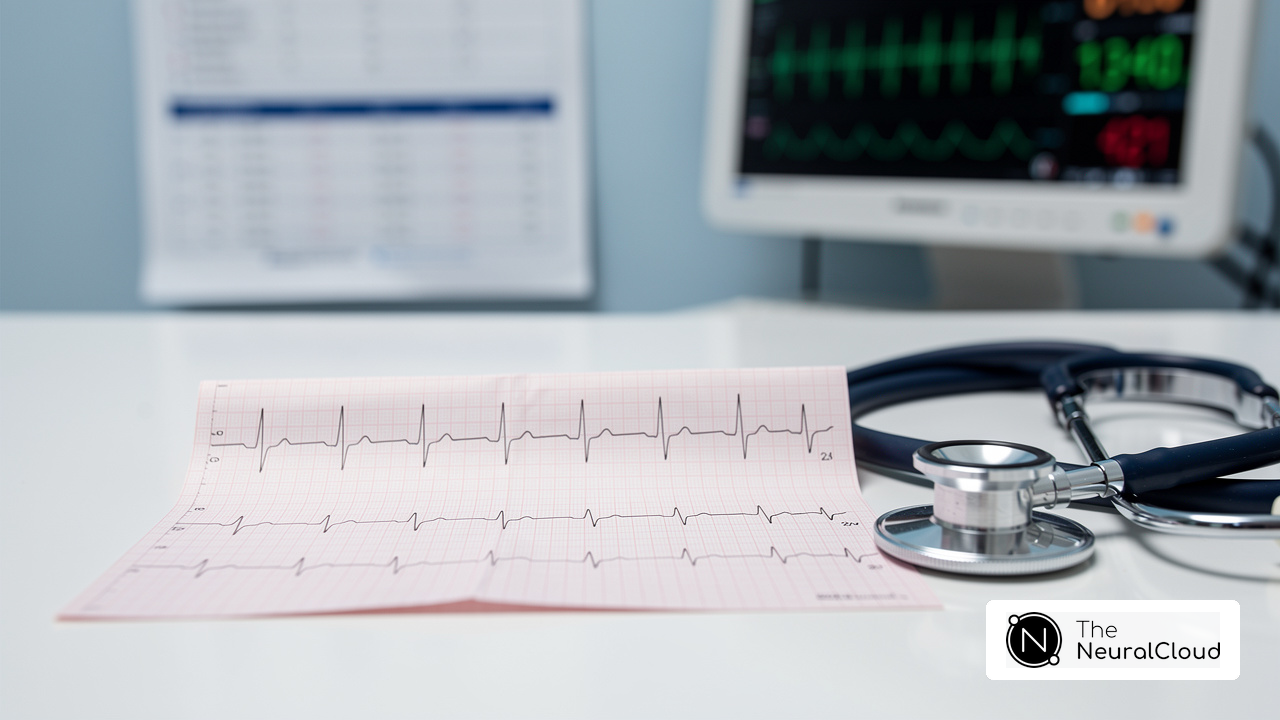
ECG analysis presents several challenges, particularly in accurately identifying key components such as the P wave, QRS complex, and T wave. The software automates the labeling process, significantly improving precision in this critical task. By assessing timeframes like the PR interval, QRS duration, and QT interval, healthcare professionals can utilize technology to swiftly detect irregularities through the system's beat-by-beat evaluation. Normal values include:
- normal intervals.
The software offers sophisticated software applications that aid in precisely labeling and measuring waveforms. This not only enhances the accuracy of wave morphology evaluation but also simplifies the workflow for faster detection of essential abnormalities. For instance, a QRS duration greater than 0.12 seconds may suggest conditions like bundle branch block or ventricular ectopy, making it crucial to pay close attention to the morphology of each oscillation.
To improve skills, healthcare professionals should consistently train with ECG simulations. This practice enhances recognition abilities and boosts diagnostic precision, employing advanced techniques to transform noisy recordings into clear data for effective learning, as explained in training modules. By utilizing MaxYield™, practitioners can improve their ECG analysis capabilities, ultimately leading to better patient outcomes.

Recognize Common Dysrhythmias
Understanding prevalent dysrhythmias, such as atrial fibrillation, ventricular tachycardia, and bradycardia, is essential for effective cardiac assessment. Familiarity with the ECG characteristics of each dysrhythmia allows for quick identification. For example, atrial fibrillation is characterized by irregular rhythm and absent P-waves, while ventricular tachycardia shows wide QRS complexes and a heart rate exceeding 100 beats per minute. Mnemonic devices can aid in remembering key features, like 'A-Fib is Irregular and No P-Waves' for atrial fibrillation, which is crucial during clinical evaluations.
To apply theoretical knowledge in practical settings, reviewing case studies or clinical scenarios is beneficial. A clinical trial has shown that early detection improves patient outcomes, underscoring the importance of timely intervention. The ECG machine offers several features that streamline ECG assessment:
- Cost efficiency: This reduces operational expenses and boosts productivity.
- Automation: By automating labor-intensive tasks, technicians can focus on critical decision-making.
Participating in workshops or simulations can further develop recognition skills, reinforcing the ability to identify dysrhythmias accurately and efficiently. This is increasingly vital, given the rising prevalence of heart disease, projected to affect 9.4 million adults in the U.S. by 2060. Additionally, with a 450% increase in arrhythmia mortality over recent decades, the urgency of recognizing these conditions has never been greater.

Evaluate and Adjust ECG Analysis Techniques
In the rapidly evolving field of cardiology, professionals face numerous challenges, including the need for accuracy and efficiency in interpretation. Regular evaluation of ECG interpretation techniques is essential to ensure they remain effective. Staying informed about the latest technologies, such as artificial intelligence, can significantly enhance the accuracy of ECG evaluations.
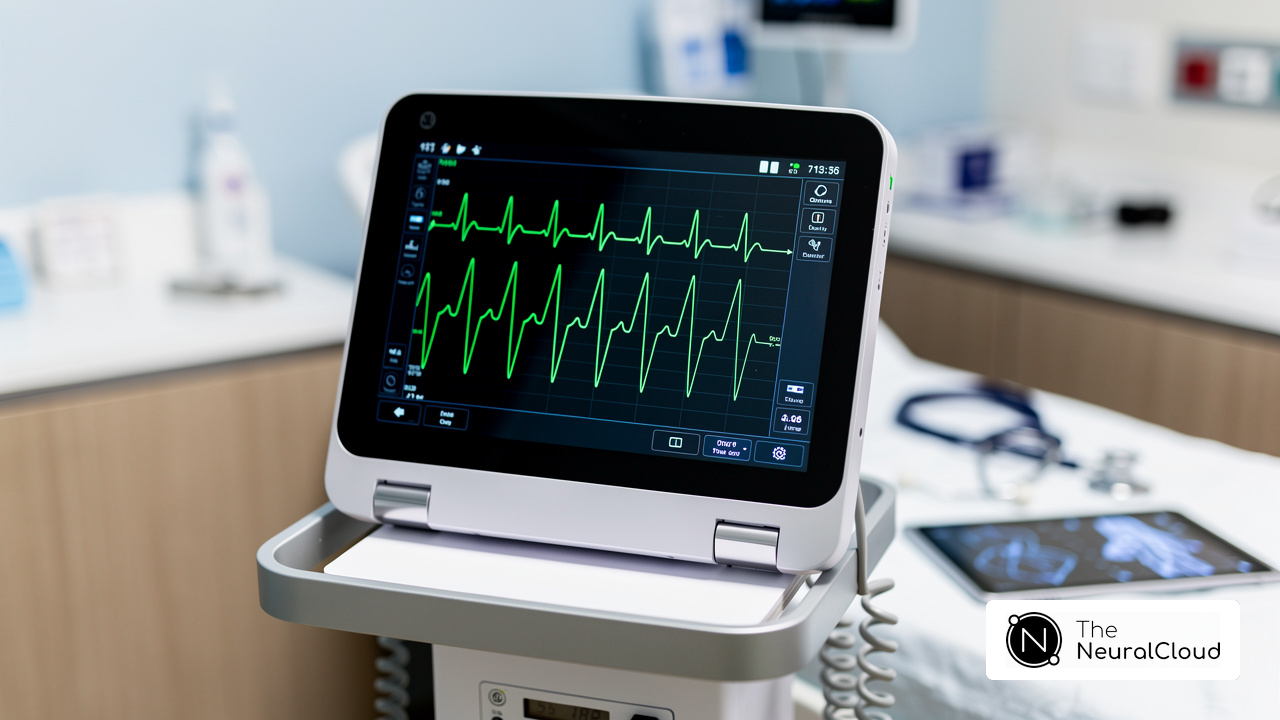
One such platform is Neural Cloud Solutions' ECG analysis software, which offers advanced features designed to improve diagnostic capabilities. This software utilizes state-of-the-art algorithms, ensuring that healthcare providers can interpret ECG data with greater precision. This systematic approach not only enhances the consistency of assessments but also improves accuracy in interpretation.
The advantages of using advanced technology are substantial. By adopting this platform, healthcare providers can benefit from enhanced decision-making, leading to better patient outcomes. Additionally, the collaboration fostered by seeking feedback from peers and mentors can further enhance the effectiveness of ECG interpretation techniques.
Engaging in training focused on ECG analysis will equip professionals with the latest knowledge and skills. By integrating these techniques into their practice, they can ensure they are at the forefront of ECG evaluation methodologies, ultimately benefiting both their professional development and patient care.

Conclusion
Mastering dysrhythmias in ECG analysis presents significant challenges for healthcare professionals, making accurate diagnoses and effective patient care essential. The MaxYield™ platform addresses these challenges by offering advanced tools that streamline ECG evaluations, ultimately enhancing practitioners' understanding of cardiac rhythms.
Key features of the MaxYield™ platform include:
- User-Friendly Interface: Simplifies ECG analysis, allowing for quicker interpretation.
- Comprehensive Database: Provides access to a wide range of cardiac rhythms and dysrhythmias.
- Real-Time Feedback: Offers immediate insights during ECG evaluations, improving accuracy.
These features translate into substantial advantages for healthcare professionals. By utilizing the MaxYield™ platform, practitioners can enhance their diagnostic capabilities, leading to improved patient outcomes. The integration of innovative technologies, combined with ongoing education in ECG analysis, is crucial for staying ahead in the field of cardiac health.
In conclusion, embracing the MaxYield™ platform not only empowers healthcare professionals to master dysrhythmias but also elevates the standard of care in cardiac health. Engaging with available resources and training opportunities will further enhance skills and contribute to better patient outcomes, especially as arrhythmia prevalence continues to rise.
Frequently Asked Questions
What is sinus rhythm and why is it important in ECG analysis?
Sinus rhythm is the normal heart rhythm, and understanding it is crucial for effective ECG analysis, particularly when studying dysrhythmias.
How does the MaxYield™ platform enhance ECG analysis?
The MaxYield™ platform features automated labeling of essential waves like the P wave, QRS complex, and T wave, which simplifies evaluation and improves accuracy, helping healthcare professionals minimize operational expenses.
What challenges are commonly faced in ECG analysis?
Common challenges include variations in heart rhythms, such as bradycardia and tachycardia, which can complicate the evaluation process.
What resources does the MaxYield™ platform provide to assist with ECG analysis?
The platform offers ECG tutorials and rhythm evaluation videos that facilitate visual learning, helping users understand and diagnose dysrhythmias.
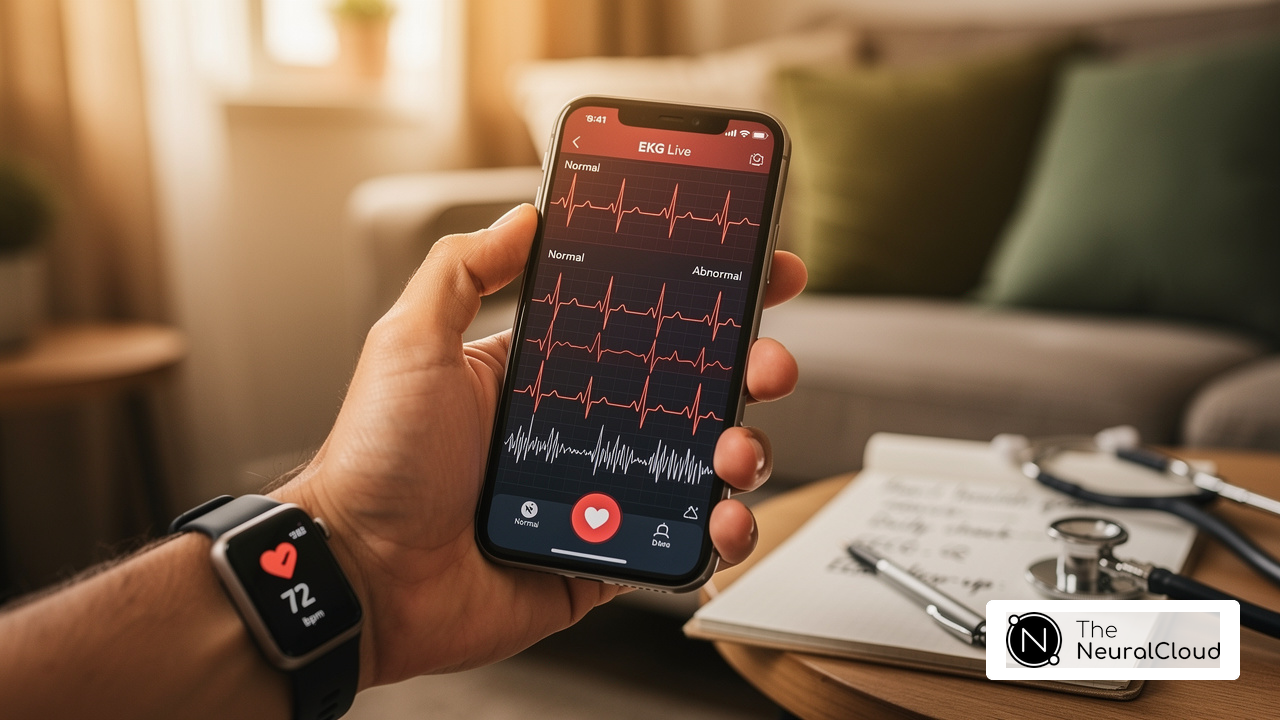
How does wearable technology contribute to ECG analysis?
Wearable technology enhances understanding and diagnosis of dysrhythmias by addressing challenges like physiological variability and signal artifacts, leading to more accurate results.
What are the benefits of using the MaxYield™ platform for healthcare professionals?
The platform improves ECG analysis and enhances diagnostic capabilities, which can lead to better patient outcomes through clear labeling and educational resources.
What steps should be taken to prepare equipment for ECG recording?
Ensure the ECG machine is calibrated and functioning optimally, with regular calibration recommended every 6-12 months, and gather necessary supplies like high-quality electrodes and ECG paper.
How should a patient be prepared for an ECG recording?
Explain the procedure to the patient to alleviate anxiety and enhance cooperation, ensuring their comfort to minimize movement artifacts during the recording.
What is the ideal positioning for a patient during an ECG?
The patient should be positioned in a supine position to minimize movement and ensure optimal electrode contact for accurate readings.
Why is skin preparation important before placing electrodes?
Thoroughly cleaning the skin is critical to ensure good electrode contact, preventing artifacts caused by poor adhesion that can distort ECG signals.
List of Sources
- Understand Basic Cardiac Rhythms
- Smartwatches Help Detect Hidden Dangerous Heart Rhythm Problems, Clinical Trial Finds (https://usnews.com/news/health-news/articles/2026-01-23/smartwatches-help-detect-hidden-dangerous-heart-rhythm-problems-clinical-trial-finds)
- Frequency of Cardiac Rhythm Abnormalities in a Half Million Adults | Circulation: Arrhythmia and Electrophysiology (https://ahajournals.org/doi/10.1161/circep.118.006273)
- Heart Month 2026: Progress and New Therapies Transforming Heart Health (https://xtalks.com/heart-month-2026-progress-and-new-therapies-transforming-heart-health-4613)
- ctsu.ox.ac.uk (https://ctsu.ox.ac.uk/news/home-based-heart-rhythm-screening-improves-diagnosis-of-common-heart-condition-1)
- news.llu.edu (https://news.llu.edu/health-wellness/expanding-advanced-heart-rhythm-care-updated-technology)
- Prepare Equipment and Patient for ECG Recording
- Electrocardiogram - StatPearls - NCBI Bookshelf (https://ncbi.nlm.nih.gov/books/NBK549803)
- How to Prepare a Patient for an ECG Test | Midmark Diagnostic Training (https://midmark.com/service-support/technical-support/online-training/diagnostic-knowledge-base/how-to---prepare-a-patient-for-an-ecg-test)
- medicalsearch.com.au (https://medicalsearch.com.au/buying-guide/maintenance-and-calibration-of-ecg-machines/f/24930)
- ysenmed.com (https://ysenmed.com/info-detail/the-role-of-ecg-machines-in-cardiac-diagnostics)
- Identify and Label Key ECG Features
- 1st synthesized 12-lead ECG to launch in 2026 (https://beckershospitalreview.com/supply-chain/1st-synthesized-12-lead-ecg-to-launch-in-2026)
- Normal Electrocardiography (ECG) Intervals: Normal Electrocardiography Intervals (https://emedicine.medscape.com/article/2172196-overview)
- FDA clears HeartBeam’s at-home arrhythmia assessment tool (https://medicaldevice-network.com/news/fda-clears-heartbeam-at-home-arrhythmia-assessment-tool)
- ECG interpretation: Characteristics of the normal ECG (P-wave, QRS complex, ST segment, T-wave) – The Cardiovascular (https://ecgwaves.com/topic/ecg-normal-p-wave-qrs-complex-st-segment-t-wave-j-point)
- AccurKardia wins FDA clearance for next-generation ECG analysis system | Medical Economics (https://medicaleconomics.com/view/accurkardia-wins-fda-clearance-for-next-generation-ecg-analysis-system)
- Recognize Common Dysrhythmias
- int.livhospital.com (https://int.livhospital.com/2-life-threatening-arrhythmias-and-their-risks)
- chicagocardiology.com (https://chicagocardiology.com/heart-rhythm.html)
- Smartwatches Help Detect Hidden Dangerous Heart Rhythm Problems, Clinical Trial Finds (https://usnews.com/news/health-news/articles/2026-01-23/smartwatches-help-detect-hidden-dangerous-heart-rhythm-problems-clinical-trial-finds)
- news-medical.net (https://news-medical.net/news/20250626/America-slashes-heart-attack-deaths-but-faces-surge-in-deadly-heart-failure-and-arrhythmias.aspx)
- Evaluate and Adjust ECG Analysis Techniques
- 1st synthesized 12-lead ECG to launch in 2026 (https://beckershospitalreview.com/supply-chain/1st-synthesized-12-lead-ecg-to-launch-in-2026)
- AI-Powered ECG Analysis Offers Promising Path for Early Detection of Chronic Obstructive Pulmonary Disease, Say Mount Sinai Researchers (https://mountsinai.org/about/newsroom/2026/ai-powered-ecg-analysis-offers-promising-path-for-early-detection-of-chronic-obstructive-pulmonary-disease-say-mount-sinai-researchers)
- AccurKardia wins FDA clearance for next-generation ECG analysis system | Medical Economics (https://medicaleconomics.com/view/accurkardia-wins-fda-clearance-for-next-generation-ecg-analysis-system)
- AI-ECG Momentum and Rising Competition Reshape Diagnostic Cardiology in 2026 (https://signifyresearch.net/insights/diagnostic-cardiology-market-bouncing-into-2026)