Introduction
Junctional dysrhythmia presents unique challenges that can complicate patient care and treatment outcomes. This article explores best practices for managing junctional dysrhythmia, emphasizing the need for accurate ECG analysis and timely intervention. Healthcare professionals can employ various strategies to navigate the complexities of junctional dysrhythmia and improve patient outcomes. By examining effective diagnostic tools and treatment options, we can gain insights into optimizing care for those affected by junctional dysrhythmia.
Understand Junctional Dysrhythmia: Definition and Characteristics
Junctional dysrhythmia presents unique challenges in ECG analysis, often leading to misdiagnosis if not accurately identified. These disorders arise from the atrioventricular (AV) junction and result in irregular heart rates. The primary types include:
- Junctional Escape Rhythm: Characterized by heart rates typically ranging from 40 to 60 beats per minute.
- Accelerated Junctional Rhythm: Occurs at rates between 60 and 100 beats per minute, indicating increased automaticity from the AV junction.
- Junctional Tachycardia: Defined by heart rates exceeding 100 beats per minute, often associated with more severe underlying conditions.
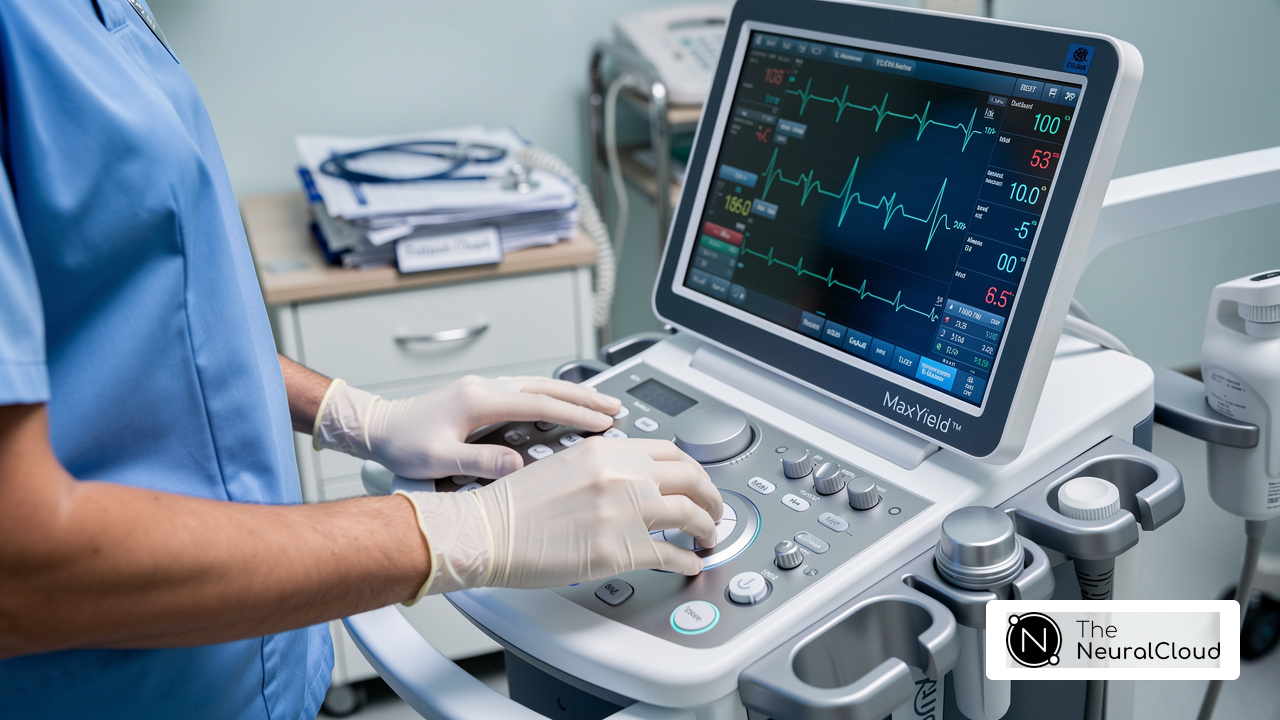
P Waves: In certain patterns, P waves may be absent, inverted, or appear after the QRS complex. This pattern signifies that the impulse is generated from the AV junction rather than the sinoatrial (SA) node, which is crucial for accurate diagnosis. The integration of Neural Cloud Solutions' MaxYield™ platform can significantly enhance the analysis of these rhythms by providing automated labeling and advanced noise filtering. This allows for clearer identification of P wave patterns, even in challenging recordings.
QRS Complex: The QRS complexes in atrioventricular dysrhythmias are typically narrow, helping to differentiate junctional dysrhythmias from other arrhythmias, such as atrial fibrillation or ventricular tachycardia, which may appear similar but require different management strategies. MaxYield™'s ability to deliver beat-by-beat analysis and isolate key features in noisy recordings aids healthcare professionals in making confident clinical decisions based on accurate ECG data.
Understanding these characteristics helps healthcare practitioners quickly identify and manage junctional dysrhythmia, ensuring appropriate treatment and care for individuals. Furthermore, the risk of ectopic tachycardia rises with cardiopulmonary bypass surgical duration exceeding 90 minutes, and as many as 9% of untreated heart condition instances can be deadly. As Dr. Alan Rabinowitz states, "Identifying specific patterns is essential for prompt intervention and enhancing outcomes for individuals." Utilizing MaxYield™ not only streamlines ECG analysis but also empowers healthcare professionals to make timely and informed decisions that can significantly impact patient care.

Recognize Clinical Implications: Symptoms and Complications
Junctional dysrhythmia often presents a challenge for both patients and healthcare providers due to its varied symptoms and potential complications. These symptoms can manifest through a range of experiences, including:
- Asymptomatic: Many patients may not show any symptoms, particularly if the rhythm is stable and well-tolerated.
- Palpitations: Patients might experience irregular heartbeats or a fluttering sensation in the chest.
- Fatigue and Dizziness: Reduced cardiac output can lead to feelings of fatigue or lightheadedness, especially during physical exertion.
- Syncope: In severe instances, inadequate blood flow to the brain may result in fainting.
If junctional dysrhythmias are not managed effectively, several complications can arise, such as:
- Heart Failure: Prolonged dysrhythmias can diminish cardiac efficiency, potentially leading to heart failure.
- Elevated Risk of Stroke: Some types of heart patterns may heighten the risk of thromboembolic occurrences, which can lead to strokes.
'Neural Cloud Solutions' MaxYield™ platform enhances the analysis of ECG readings, enabling better identification of junctional dysrhythmia. By utilizing advanced noise filtering and distinct wave recognition, MaxYield™ can salvage previously obscured sections of ECG recordings, ensuring that critical data is accurately labeled and analyzed. This capability aids in recognizing symptoms and potential complications, streamlining the ECG interpretation process, and reducing operational inefficiencies. Most of the time, a specific heart pattern isn’t a cause for serious concern, and many individuals can manage it effectively with regular appointments to their healthcare provider. In certain situations, individuals may require a pacemaker for a specific heart pattern. Being aware of these symptoms and complications can make all the difference in getting timely care. Regular monitoring and consultations with healthcare providers can help mitigate risks and improve patient outcomes.

Implement Effective Diagnostic Practices: Tools and Techniques
Diagnosing junctional dysrhythmia involves unique challenges that necessitate a multifaceted approach to ensure both accuracy and effectiveness. To effectively diagnose junctional dysrhythmia, healthcare providers should utilize the following tools and techniques:
- 12-Lead ECG: A comprehensive 12-lead ECG is crucial for spotting junctional rhythm characteristics, like whether P waves are present and how QRS complexes look. Recent advancements in 12-lead ECG technology, such as the Kardia 12L, have demonstrated a 29% reduction in ECG acquisition time, significantly enhancing diagnostic precision. Additionally, the MaxYield™ platform from Neural Cloud Solutions automates the labeling of ECG signals, accurately mapping PQRST waveforms and providing wave durations and intervals. This automation not only saves time and resources but also helps in understanding connection patterns.
Ongoing ECG monitoring is advised for individuals with suspected junctional dysrhythmia to evaluate rhythm stability and detect any temporary changes. This real-time assessment is crucial for timely intervention, and the advanced noise reduction capabilities of MaxYield™ ensure that specialists can identify actionable insights even through varying recordings.
Holter monitoring can provide valuable information over 24-48 hours for individuals with occasional symptoms, recording episodes of junctional dysrhythmia that may not be evident during a standard ECG. This method allows for a deeper understanding of the individual's condition, thanks to MaxYield™'s ability to analyze various ECG patterns.
In complex cases, electrophysiological studies may be warranted to evaluate the conduction system and identify the underlying mechanisms of junctional dysrhythmia. These studies can provide critical insights that guide treatment decisions.
By applying these diagnostic techniques, healthcare providers can precisely recognize junctional dysrhythmia at the junction, enabling prompt and suitable management. Embracing these advanced diagnostic techniques can lead to more accurate assessments and better patient care outcomes.

Adopt Comprehensive Treatment Strategies: Pharmacological and Non-Pharmacological Approaches
Healthcare professionals face significant challenges in managing junctional dysrhythmia, which necessitates a comprehensive approach to treatment.
-
- Beta-Blockers: Frequently the first-line treatment for symptomatic junctional dysrhythmias, beta-blockers effectively control heart rate and alleviate symptoms, enhancing patient comfort and stability. Studies indicate that beta-blocker therapy significantly reduces mortality and recurrent myocardial infarction (MI) in individuals post-MI, reinforcing their importance in arrhythmia management.
- Calcium Channel Blockers: Medications such as diltiazem and verapamil are beneficial for managing heart rate in select patients, particularly those with specific arrhythmia profiles. Recent data show that rhythm control treatment increased from 28.8% to 32.8% following the implementation of structured care pathways, highlighting the effectiveness of these medications in practice.
- Adenosine: This agent can be administered acutely to terminate paroxysmal atrioventricular tachycardia, providing rapid relief in emergency situations.
Non-Pharmacological Approaches:
- Pacing: Experts agree that pacing is essential in acute situations to ensure patient safety. Temporary pacing may be necessary for symptomatic bradycardia, ensuring that patients maintain an adequate heart rate and preventing complications associated with low heart rates.
- Catheter Ablation: For individuals experiencing persistent junctional dysrhythmia that is symptomatic and unresponsive to medication, catheter ablation presents a potential curative option, effectively addressing the underlying arrhythmia. The COMPASS initiative has demonstrated the benefits of structured care pathways, which can enhance the application of such interventions.
- Lifestyle Modifications: Encouraging individuals to avoid known triggers, such as excessive caffeine and stress, can significantly enhance their overall management and quality of life. Following current guidelines on lifestyle changes is essential for optimizing health outcomes.
A comprehensive treatment plan that combines both medicinal and non-medicinal methods ensures tailored care for individuals. This approach ultimately leads to better outcomes in managing dysrhythmias.

Leverage Advanced Technologies: Enhancing ECG Analysis and Treatment
The complexities of ECG analysis present significant challenges for healthcare professionals, especially in effectively diagnosing junctional dysrhythmia. The integration of advanced technologies into this field significantly enhances diagnostic accuracy and treatment efficacy:
- AI-Driven ECG Analysis: With AI algorithms like those in MaxYield™, interpreting ECG data becomes quicker and more accurate, helping to identify junctional rhythms and their abnormalities more effectively. MaxYield™ evolves with each use, enhancing its diagnostic yield and demonstrating a high negative predictive value. It confirms nearly all individuals without left ventricular systolic dysfunction (LVSD) as negative by echocardiography, underscoring its potential in diagnosing heart conditions.
- Wearable ECG Devices: These devices enable continuous monitoring of heart rhythms, offering real-time data that can notify healthcare providers of significant changes in an individual's condition. The adoption of wearable ECG technology is increasing, with more individuals benefiting from its capability to monitor heart health outside clinical environments. When integrated with MaxYield™, these devices leverage advanced noise filtering to ensure clarity in the data collected.
- Telemedicine Solutions: Remote monitoring and telehealth consultations enable timely interventions, particularly for individuals in rural or underserved areas. As Ambarish Pandey, M.D., noted, AI-ECG can serve as a practical, scalable screening tool that effectively identifies individuals at risk for heart failure in resource-limited settings. MaxYield™ enhances this capability by transforming lengthy and noisy recordings into clean signals, improving the quality of remote assessments.
- Data Analytics Tools: Advanced analytics play a crucial role in identifying trends and patterns in ECG data, allowing for proactive management of individuals with dysrhythmias at junctions. By leveraging insights from MaxYield™, healthcare professionals can make informed decisions that enhance outcomes for individuals.
Ultimately, the integration of MaxYield™ into ECG analysis not only enhances diagnostic accuracy but also empowers healthcare professionals to deliver better patient care in managing junctional dysrhythmia.

Conclusion
The complexities of junctional dysrhythmia present significant challenges for healthcare professionals, impacting patient care and outcomes. This article emphasizes the importance of accurate identification and effective management strategies for junctional dysrhythmia, highlighting the role of advanced technologies and comprehensive treatment approaches. Recognizing the distinct characteristics of junctional rhythms enables healthcare professionals to make informed decisions that can significantly enhance patient health outcomes.
Key insights discussed include the various types of junctional dysrhythmias, their symptoms, potential complications, and effective diagnostic practices. The integration of tools like the MaxYield™ platform enhances ECG analysis, allowing for more precise identification of heart rhythms and facilitating timely interventions. Furthermore, the article stresses the importance of a multifaceted treatment approach, combining pharmacological and non-pharmacological strategies to address the specific needs of each patient.
Managing junctional dysrhythmia effectively demands continuous education and the integration of innovative technologies. Leveraging advanced diagnostic tools and comprehensive treatment strategies is key to improving patient outcomes and mitigating risks associated with junctional dysrhythmia. Embracing these best practices not only enhances clinical efficacy but also fosters a proactive approach to heart health in diverse patient populations.
Frequently Asked Questions
What is junctional dysrhythmia?
Junctional dysrhythmia is a heart rhythm disorder that arises from the atrioventricular (AV) junction, leading to irregular heart rates. It can present challenges in ECG analysis and may result in misdiagnosis if not accurately identified.
What are the primary types of junctional dysrhythmia?
The primary types of junctional dysrhythmia include: Junctional Escape Rhythm: Heart rates typically range from 40 to 60 beats per minute. Accelerated Junctional Rhythm: Occurs at rates between 60 and 100 beats per minute, indicating increased automaticity from the AV junction. Junctional Tachycardia: Defined by heart rates exceeding 100 beats per minute and often associated with more severe underlying conditions.
How are P waves characterized in junctional dysrhythmia?
In junctional dysrhythmia, P waves may be absent, inverted, or appear after the QRS complex. This indicates that the impulse is generated from the AV junction rather than the sinoatrial (SA) node, which is crucial for accurate diagnosis.
What role does the MaxYield™ platform play in analyzing junctional dysrhythmia?
The MaxYield™ platform enhances ECG analysis by providing automated labeling and advanced noise filtering, allowing for clearer identification of P wave patterns even in challenging recordings. It aids healthcare professionals in making confident clinical decisions based on accurate ECG data.
What are the symptoms of junctional dysrhythmia?
Symptoms of junctional dysrhythmia can include: Asymptomatic: Many patients may not show any symptoms if the rhythm is stable. Palpitations: Irregular heartbeats or a fluttering sensation in the chest. Fatigue and Dizziness: Reduced cardiac output can lead to feelings of fatigue or lightheadedness, especially during physical exertion. Syncope: In severe cases, inadequate blood flow to the brain may result in fainting.
What complications can arise from untreated junctional dysrhythmia?
Untreated junctional dysrhythmia can lead to several complications, such as: Heart Failure: Prolonged dysrhythmias can diminish cardiac efficiency. Elevated Risk of Stroke: Certain heart patterns may heighten the risk of thromboembolic occurrences, potentially leading to strokes.
What should patients do if they experience symptoms of junctional dysrhythmia?
Patients should consult with their healthcare provider for regular monitoring and management. In some cases, individuals may require a pacemaker for specific heart patterns. Being aware of symptoms and complications is essential for timely care.
How does regular monitoring impact patient outcomes for those with junctional dysrhythmia?
Regular monitoring and consultations with healthcare providers can help mitigate risks associated with junctional dysrhythmia and improve patient outcomes by ensuring timely and appropriate treatment.
List of Sources
- Understand Junctional Dysrhythmia: Definition and Characteristics
- medicalnewstoday.com (https://medicalnewstoday.com/articles/junctional-rhythm)
- theneuralcloud.com (https://theneuralcloud.com/post/accelerated-junctional-vs-junctional-tachycardia-key-differences-explained)
- Junctional Rhythm: Background, Etiology, Pathophysiology (https://emedicine.medscape.com/article/155146-overview)
- ahajournals.org (https://ahajournals.org/doi/full/10.1161/01.CIR.91.1.84?doi=10.1161/01.CIR.91.1.84)
- Recognize Clinical Implications: Symptoms and Complications
- medicalnewstoday.com (https://medicalnewstoday.com/articles/junctional-rhythm)
- Junctional Rhythm: Causes, Symptoms and Treatment (https://my.clevelandclinic.org/health/diseases/23206-junctional-rhythm)
- Implement Effective Diagnostic Practices: Tools and Techniques
- tradingview.com (https://tradingview.com/news/financewire:5b3dc51ae094b:0-heartbeam-nasdaq-beat-announces-commercial-partnership-with-clearcardio)
- intellectia.ai (https://intellectia.ai/news/stock/heartbeam-receives-fda-510k-clearance-prepares-to-launch-12lead-ecg-device)
- powerfulmedical.com (https://powerfulmedical.com/blog/pmcardio-expands-heart-attack-detection-to-patient-bedside-through-roche-cobas-pulse-point-of-care-platform)
- cockrell.utexas.edu (https://cockrell.utexas.edu/news/heart-rhythm-treatment-gets-breakthrough-fda-designation)
- medicaldevice-network.com (https://medicaldevice-network.com/news/alivecor-fda-nod-kardia-system)
- Adopt Comprehensive Treatment Strategies: Pharmacological and Non-Pharmacological Approaches
- cockrell.utexas.edu (https://cockrell.utexas.edu/news/heart-rhythm-treatment-gets-breakthrough-fda-designation)
- valleyhealth.com (https://valleyhealth.com/newsroom/valley-hospital-first-united-states-use-landiolol-treat-cardiac-arrhythmia)
- mpo-mag.com (https://mpo-mag.com/breaking-news/heart-rhythm-2026-compass-initiative-benefits-early-rhythm-control-treatment)
- cureus.com (https://cureus.com/articles/387326-effectiveness-of-beta-blockers-in-reducing-mortality-and-recurrence-after-myocardial-infarction-a-systematic-review-of-contemporary-and-foundational-evidence)
- Leverage Advanced Technologies: Enhancing ECG Analysis and Treatment
- Movesense and NeuralCloud to Pilot AI-Powered ECG and Holter Reporting — Movesense (https://movesense.com/news/2026/02/movesense-and-neuralcloud-to-pilot-ai-powered-ecg-and-holter-reporting)
- AI-powered electrocardiogram detects early signs of heart failure (https://utsouthwestern.edu/newsroom/articles/year-2026/may-ai-powered-electrocardiogram.html)
- AI-Powered ECG Analysis Offers Promising Path for Early Detection of Chronic Obstructive Pulmonary Disease, Say Mount Sinai Researchers (https://mountsinai.org/about/newsroom/2026/ai-powered-ecg-analysis-offers-promising-path-for-early-detection-of-chronic-obstructive-pulmonary-disease-say-mount-sinai-researchers)
- ECG market keeps evolving thanks to AI, home monitoring and Epic integration (https://signifyresearch.net/2026/02/13/ecg-market-keeps-evolving-thanks-to-ai-home-monitoring-and-epic-integration)