Introduction
Mastering the art of 12-lead ECG strip analysis presents significant challenges for developers striving to enhance cardiac care through technology. As the complexity of ECG interpretation increases, so do the hurdles - how can developers ensure their tools are precise and reliable in a field where a single misinterpretation can lead to serious consequences? This article explores best practices that empower developers to create algorithms capable of accurately interpreting ECG data, ultimately improving clinical outcomes.
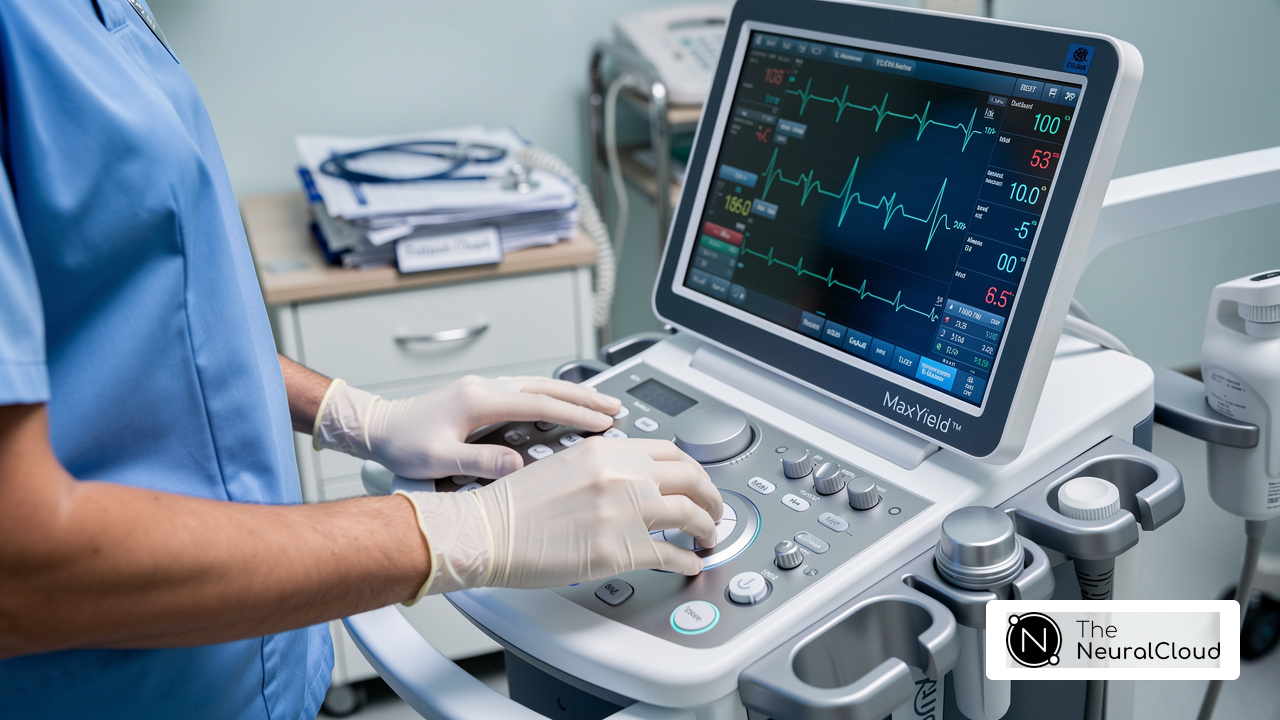
The MaxYield™ platform addresses these challenges by offering advanced features designed to streamline ECG analysis. It provides real-time data interpretation, ensuring that healthcare professionals receive timely and accurate information. Additionally, the platform incorporates machine learning algorithms that adapt and improve over time, enhancing the reliability of ECG readings.
By utilizing the MaxYield™ platform, developers can significantly improve ECG analysis. The advantages include:
- Reduced interpretation errors
- Faster diagnosis
- Ultimately better patient outcomes
This not only benefits healthcare providers but also enhances the overall quality of cardiac care.
Understand ECG Fundamentals and Terminology
To excel in the analysis of a 12 lead ECG strip, practitioners must become well-versed in the fundamentals. Key terms include:
- P Wave: This wave represents atrial depolarization, marking the electrical activity that triggers atrial contraction.
- QRS Complex: This critical component indicates ventricular depolarization, which is vital for diagnosing various arrhythmias and assessing overall cardiac health. AI-based methods have demonstrated a specificity of 99% in identifying these features, underscoring their importance in clinical settings.
- T Wave: Reflecting ventricular repolarization, the T wave is crucial for understanding the heart's recovery phase after contraction. The negative predictive value of AI-based methods is reported to be 98%, highlighting their reliability in ruling out conditions like myocardial infarction.
- Intervals: Important intervals such as the PR interval and QT interval provide insights into the timing of electrical events within the heart, which are essential for accurate diagnosis.
A solid grasp of these components enables developers to design algorithms capable of accurately identifying and labeling these features in ECG data. This understanding enhances the reliability of automated analyses, ultimately improving clinical decision-making and patient outcomes. Moreover, tackling obstacles like noise and signal artifacts is essential, as these elements can obscure genuine ECG signals, complicating the analysis process.
MaxYield™ Platform Features
Neural Cloud Solutions' MaxYield™ platform excels in addressing these challenges. It utilizes advanced noise filtering and distinct wave recognition to salvage previously obscured sections of lengthy Holter, 1-Lead, and patch monitor recordings. By evolving with every use, MaxYield™ boosts the effectiveness of ECG evaluation, enabling creators to surpass shortcomings and enhance diagnostic yield.
Advantages for Healthcare Professionals
The benefits of using MaxYield™ are significant. By improving the clarity of ECG data, healthcare professionals can make more informed decisions, leading to better patient outcomes. The platform's ability to filter out noise and enhance signal quality means that practitioners can trust the data they analyze, ultimately streamlining the diagnostic process.

Implement a Systematic Approach to ECG Interpretation
A systematic approach to ECG interpretation is crucial for developers looking to create effective algorithms with the MaxYield™ platform. This process encompasses several key steps:
- Rate: Calculate the heart rate by measuring the distance between R waves, providing a fundamental understanding of cardiac function.
- Rhythm: Assess the regularity of heartbeats to identify any arrhythmias or irregularities.
- Axis: Identify the electrical axis of the heart, which can reveal underlying cardiac conditions and guide further examination.
- P Waves: Evaluate the presence and morphology of P waves to assess atrial activity, essential for diagnosing atrial abnormalities.
- QRS Complex: Analyze the duration and morphology of the QRS complex to evaluate ventricular health and identify potential issues.
- ST Segment and T Waves: Examine these components for signs of ischemia or other abnormalities, critical for assessing cardiac risk.
Insights from Laura Bell, a subject matter expert with over 15 years of acute care experience, emphasize that a is vital for accurate diagnosis and efficient patient management. By adhering to this organized approach, developers can ensure their algorithms address all essential elements of ECG analysis, leading to more precise and reliable results for healthcare providers.
Additionally, case studies like the report on 'A Shark-Fin Pattern on the Electrocardiogram' illustrate the practical implications of a systematic approach, showing how thorough analysis can result in timely diagnoses and improved patient outcomes. Developers should also be aware of common pitfalls in ECG analysis, such as misidentifying arrhythmias or overlooking subtle abnormalities, which can significantly affect clinical decisions. By being mindful of these challenges, developers can enhance the effectiveness of their ECG analysis algorithms, particularly when leveraging the advanced features of the MaxYield™ platform.

Identify and Correct Common ECG Interpretation Errors
Common errors in ECG interpretation can lead to significant diagnostic challenges:
- Lead Misplacement: Incorrect electrode placement can distort ECG results, resulting in misdiagnoses such as false indications of infarcts or axis abnormalities. For example, reversing limb leads may produce negative QRS/T complexes in lead III, suggesting conditions that do not exist. To mitigate these risks, developers should implement automated checks for lead placement accuracy. Research shows that can lead to misinterpretation in up to 64% of cases, highlighting the critical need for precise electrode positioning.
- Over-Reliance on Automated Interpretations: While AI algorithms can enhance ECG analysis, they should not replace clinical judgment. Automated systems must indicate uncertain outcomes for further examination, as relying solely on automated assessments can lead to significant diagnostic errors. For instance, ischemic features accounted for 22.3% of false-negative diagnoses, underscoring the importance of human oversight in the analysis process.
- Ignoring Patient History: ECG findings must always be contextualized within the patient's clinical history. Developers can improve their systems by integrating comprehensive patient data into the evaluation process, allowing for a more nuanced interpretation of ECG results. This approach not only enhances diagnostic accuracy but also supports clinicians in making informed decisions based on a holistic view of the patient's health.
By addressing these common mistakes, programmers can develop more robust ECG evaluation tools that empower clinicians to deliver precise and timely cardiac care.

Leverage Advanced Technology for Enhanced ECG Analysis
Incorporating advanced technologies like AI and machine learning into ECG evaluation platforms addresses significant challenges in diagnostic capabilities. Creators aiming to enhance these capabilities can leverage key strategies that improve the accuracy and efficiency of ECG analysis.
- Automated Feature Extraction is a standout feature of the MaxYield™ platform. AI algorithms automatically identify and label ECG features, which drastically reduces the need for manual input. For example, Neural Cloud Solutions' MaxYield™ maps ECG signals through noise, isolating and labeling key features in every heartbeat, such as P-wave, QRS complex, and T-wave onsets and offsets. This automation allows for beat-by-beat evaluation, providing insights from 200,000 heartbeats in under 5 minutes. As noted by Attia et al., "The AI identified low LVEF patients using only ECG data, likely by detecting subtle variations in QRS morphology, T-wave amplitude, and conduction delays."
- Another significant advantage is the Continuous Learning Models that MaxYield™ employs. By implementing machine learning models that evolve with data processing, the platform enhances diagnostic accuracy over time. A notable example is the AI-ECG Risk Estimator (AIRE), which analyzes ECG recordings to estimate mortality risk, demonstrating robust predictive performance for cardiovascular outcomes.
- Moreover, Real-Time Analysis capabilities are crucial for immediate decision-making in critical situations. MaxYield™ supports clinicians by delivering smooth waveforms and helping identify cardiac events, facilitating timely interventions for high-risk patients. This real-time feedback is essential for improving patient outcomes.
By leveraging these advanced technologies, including the capabilities of MaxYield™, developers can create ECG analysis tools that not only enhance diagnostic precision but also streamline clinical workflows. Ultimately, this leads to improved patient care, making the MaxYield™ platform a valuable asset for healthcare professionals.

Conclusion
Mastering 12 lead ECG strip analysis is crucial for developers focused on improving clinical decision-making and patient outcomes. ECG analysis presents challenges, including the need for accurate interpretation and the potential for common errors. By understanding the fundamental components of ECG, implementing systematic interpretation methods, and leveraging advanced technologies, professionals can enhance the accuracy and efficiency of ECG evaluations.
The MaxYield™ platform addresses these challenges by offering features that streamline ECG analysis. It automates the interpretation process, reducing the likelihood of errors and providing real-time analysis. Key features include:
- Automated Interpretation: Speeds up the analysis process, allowing for quicker decision-making.
- Real-Time Analysis: Provides immediate feedback, enhancing diagnostic capabilities.
- Error Reduction: Minimizes common interpretation mistakes, leading to more reliable outcomes.
These features translate into significant advantages for healthcare professionals. By utilizing MaxYield™, they can deliver timely and accurate cardiac care, ultimately improving patient health outcomes. The integration of best practices in 12 lead ECG analysis empowers developers to create more reliable algorithms, fostering innovation in ECG analysis.
In conclusion, embracing these strategies is essential for enhancing ECG analysis and supporting healthcare professionals in their critical work. The MaxYield™ platform not only simplifies the interpretation process but also contributes to better patient care through improved diagnostic accuracy.
Frequently Asked Questions
What are the key components of a 12 lead ECG strip?
The key components include the P Wave, QRS Complex, T Wave, and various intervals such as the PR interval and QT interval.
What does the P Wave represent in an ECG?
The P Wave represents atrial depolarization, which marks the electrical activity that triggers atrial contraction.
What is indicated by the QRS Complex in an ECG?
The QRS Complex indicates ventricular depolarization, which is vital for diagnosing various arrhythmias and assessing overall cardiac health.
Why is the T Wave important in ECG analysis?
The T Wave reflects ventricular repolarization and is crucial for understanding the heart's recovery phase after contraction.
How do AI-based methods assist in ECG analysis?
AI-based methods have demonstrated a specificity of 99% in identifying ECG features and a negative predictive value of 98%, which helps in accurately ruling out conditions like myocardial infarction.
What challenges do practitioners face when analyzing ECG data?
Practitioners face challenges such as noise and signal artifacts that can obscure genuine ECG signals, complicating the analysis process.
What features does the MaxYield™ platform offer for ECG analysis?
The MaxYield™ platform offers advanced noise filtering and distinct wave recognition, which helps salvage obscured sections of ECG recordings.
How does MaxYield™ enhance ECG evaluation?
MaxYield™ evolves with every use, boosting the effectiveness of ECG evaluation and enabling creators to improve diagnostic yield.
What advantages does MaxYield™ provide for healthcare professionals?
MaxYield™ improves the clarity of ECG data, allowing healthcare professionals to make more informed decisions, leading to better patient outcomes and a streamlined diagnostic process.
List of Sources
- Understand ECG Fundamentals and Terminology
- 1st synthesized 12-lead ECG to launch in 2026 (https://beckershospitalreview.com/supply-chain/1st-synthesized-12-lead-ecg-to-launch-in-2026)
- AI outperforms conventional diagnosis for certain types of heart attacks (https://escardio.org/news/press/press-releases/acvc-press)
- Normal Electrocardiography (ECG) Intervals: Normal Electrocardiography Intervals (https://emedicine.medscape.com/article/2172196-overview)
- Waveforms, Segments, & Intervals: Basics – ECG Weekly (https://ecgweekly.com/ecgstat/waves-segments-intervals)
- Implement a Systematic Approach to ECG Interpretation
- 1st synthesized 12-lead ECG to launch in 2026 (https://beckershospitalreview.com/supply-chain/1st-synthesized-12-lead-ecg-to-launch-in-2026)
- AI-based ECG interpretation outperforms standard diagnosis of occlusive myocardial infarction (https://news-medical.net/news/20260323/AI-based-ECG-interpretation-outperforms-standard-diagnosis-of-occlusive-myocardial-infarction.aspx)
- Accuracy of Physicians’ Electrocardiogram Interpretation (https://jamanetwork.com/journals/jamainternalmedicine/fullarticle/2771093)
- AI outperforms conventional diagnosis for certain types of heart attacks (https://escardio.org/news/press/press-releases/acvc-press)
- reliasacademy.com (https://reliasacademy.com/rls/store/courses/ecg-interpretation-case-studies/_/A-product-c1481430)
- Identify and Correct Common ECG Interpretation Errors
- Frontiers | The most common errors in automatic ECG interpretation (https://frontiersin.org/journals/physiology/articles/10.3389/fphys.2025.1590170/full)
- emergencymedicinecases.com (https://emergencymedicinecases.com/ecg-computer-interpretation-errors)
- gehealthcare.com (https://gehealthcare.com/en-gb/insights/article/ecg-lead-misplacement-looking-at-common-issues?srsltid=AfmBOorH6JNLiauTuvOVo43OBr1GE4VSsO5QbUYZzDB8INaTmhG57NC3)
- Leverage Advanced Technology for Enhanced ECG Analysis
- ECG market keeps evolving thanks to AI, home monitoring and Epic integration (https://cardiovascularbusiness.com/topics/cardiac-imaging/electrocardiography-ecg/ecg-market-keeps-evolving-thanks-ai-home-monitoring-and-epic-integration)
- 10 Insights from Healthcare Innovators: The Best Quotes from the ‘Leader to Leader’ Podcast in 2024 - Healthcare IT Leaders (https://healthcareitleaders.com/blog/insights-from-healthcare-innovators)
- AI-powered ECG analysis shows promise for early COPD detection (https://medicalxpress.com/news/2026-01-ai-powered-ecg-analysis-early.html)
- ejinme.com (https://ejinme.com/article/S0953-6205(25)00178-5/fulltext)
- einpresswire.com (https://einpresswire.com/article/899930160/artificial-intelligence-ai-electrocardiogram-ecg-analysis-market-2026-advancing-cardiac-diagnostics)