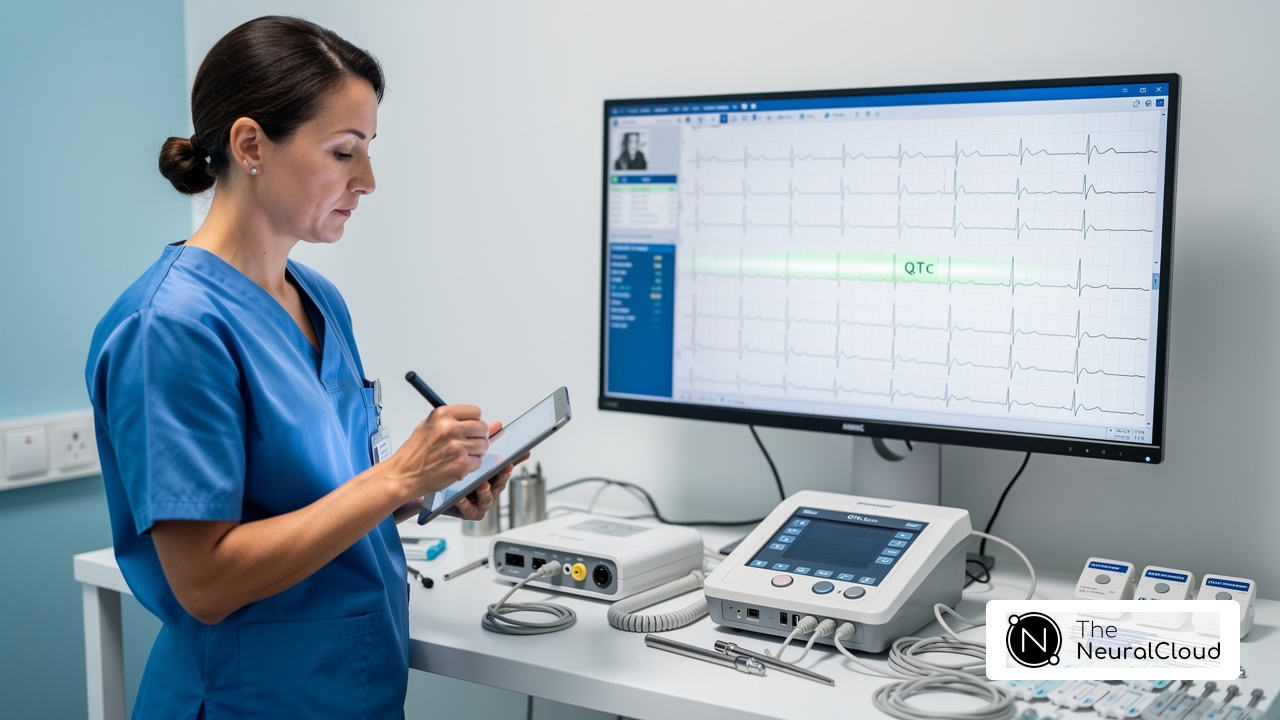
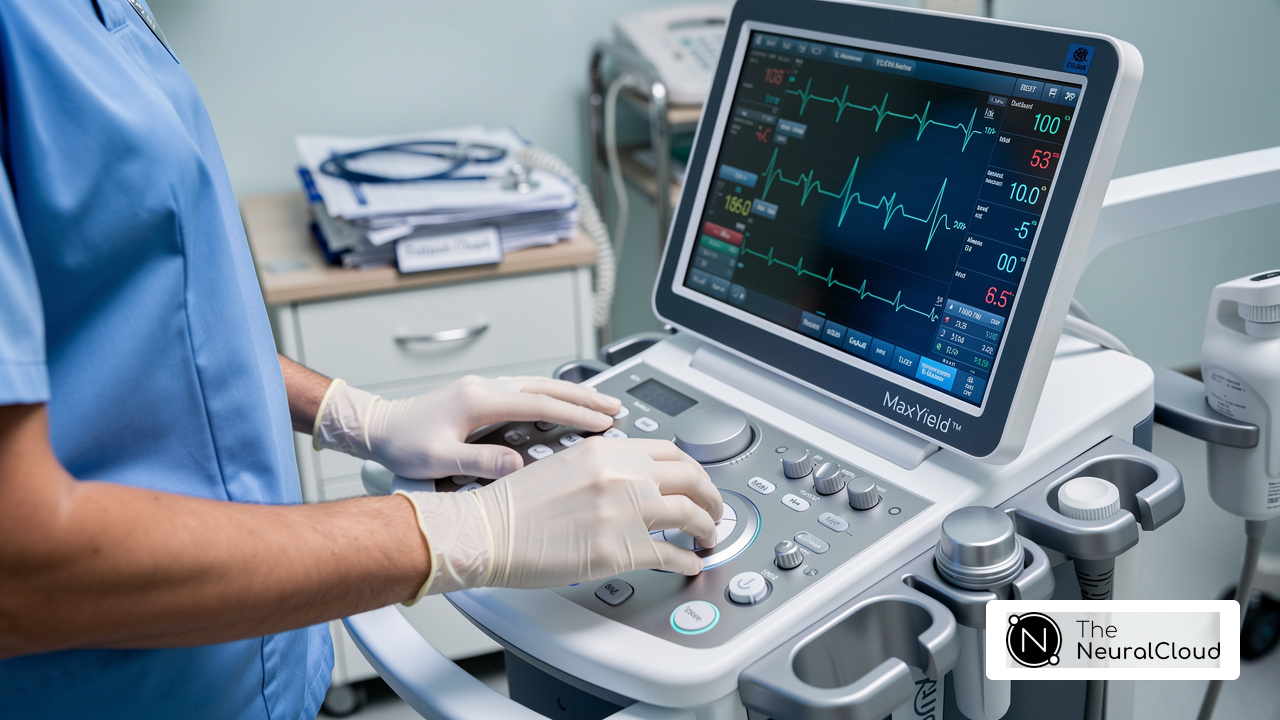
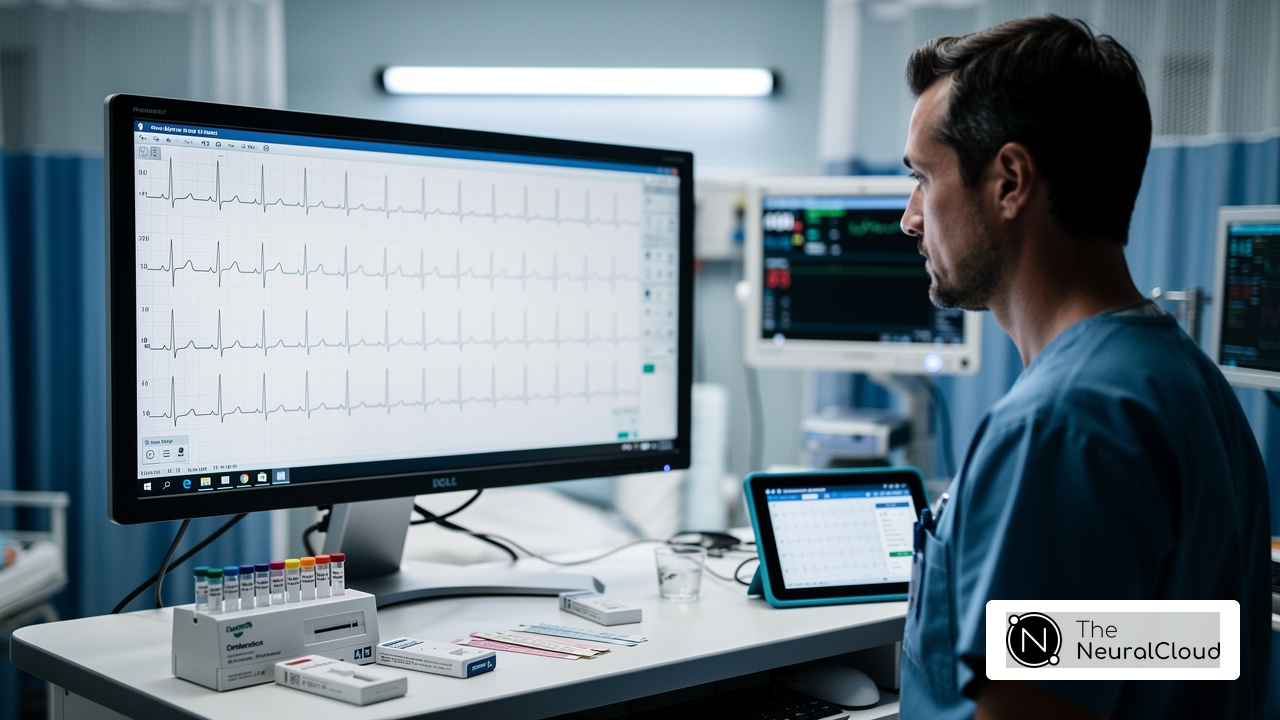
Introduction
Atrial flutter presents unique challenges in ECG analysis due to its rapid heart activity and distinct waveforms. This guide offers a comprehensive, step-by-step approach to mastering the interpretation of flutter EKG strips, enabling healthcare professionals to enhance their diagnostic accuracy. However, with various arrhythmias presenting similar features, distinguishing atrial flutter from its counterparts is crucial for effective patient management. Understanding these nuances is crucial for accurate diagnosis and optimal patient care.
Understand Atrial Flutter and Its ECG Characteristics
Atrial tachyarrhythmia presents unique challenges in ECG analysis, particularly due to its rapid heart activity and similarities to other arrhythmias. The ECG features of atrial flutter include:
- Sawtooth Pattern: The hallmark of atrial flutter is the 'sawtooth' pattern of flutter waves, known as F-waves, prominently visible in the inferior leads (II, III, aVF). With its advanced noise filtering, the system makes it easier to spot these F-waves, even in tricky recordings.
- Regular Rhythm: Unlike atrial fibrillation, atrial flutter generally presents with a regular rhythm, making it easier to identify. The system supports this by providing consistent beat-by-beat analysis, allowing for rapid recognition of rhythm patterns.
- QRS Complex: The QRS complexes are usually narrow unless accompanied by a bundle branch block. The relationship between the P waves (or F-waves) and QRS complexes can vary, often displaying a 2:1 or 3:1 block. The system accurately labels these relationships, aiding in the assessment of conduction patterns.
- Loss of Isoelectric Baseline: Continuous heart chamber activity may cause the baseline to appear undulating, reflecting persistent electrical activity. MaxYield™ helps clarify this by isolating the heart's activity from noise, providing a clearer view of the baseline.
Recognizing these traits is crucial for telling atrial flutter apart from similar arrhythmias like atrial fibrillation, which can be seen on a flutter EKG strip and requires different treatment approaches. Recent studies suggest that heart arrhythmia usually presents rates surpassing 250 bpm and can reach as high as 320 bpm, with ventricular rates varying from 120 to 160 bpm, most frequently at 150 bpm due to a 2:1 atrioventricular block. Understanding these nuances enhances diagnostic accuracy and informs effective management strategies.
Using Neural Cloud Solutions' platform to evaluate heart rhythm ECG strips can significantly boost diagnostic accuracy. By rapidly isolating and labeling key features in every heartbeat, this system addresses challenges such as physiological variability and signal artifacts, ultimately informing effective management strategies.

Analyze the EKG Strip: Step-by-Step Process
Analyzing a flutter EKG strip can be challenging, especially when faced with poor quality recordings. To ensure accurate interpretation, follow these steps:
- Obtain a Clear EKG Strip: Ensure that the EKG strip is of high quality, with minimal artifacts. Poor quality can lead to misinterpretation due to poor quality, which may negatively affect patient care. Utilizing Neural Cloud Solutions' platform can significantly enhance this step by employing advanced noise filtering to salvage previously obscured sections of recordings.
- Identify the Rhythm: Look for the regularity of the rhythm. Atrial tachycardia typically demonstrates a regular rhythm with consistent intervals between QRS complexes. MaxYield™'s automated labeling can assist in quickly identifying these patterns.
- Count the Heart Rate: Use the 300 method (count the number of large squares between R waves and divide by 300) to estimate the heart rate. Atrial tachycardia typically shows a heart rate of 150 bpm if there is a 2:1 block. In cases of 3:1 block, the ventricular rate will be approximately 100 bpm.
- Examine P Waves: Identify the presence of F-waves. In a specific type of heart rhythm, these will manifest as sawtooth waves, especially in leads II, III, and aVF. The crucial alternating pattern of 2:1, 3:1, and 4:1 block can be seen on a flutter EKG strip, helping to differentiate atrial flutter from atrial fibrillation. The system improves accuracy over time by evolving its algorithms with each use.
- Assess the QRS Complex: Check the width of the QRS complexes. They should be narrow unless there is a conduction delay, which can occur in various clinical scenarios. This product adapts to recognize these variations more effectively.
- Evaluate the Relationship: Determine the relationship between the F-waves and QRS complexes. This can help identify the type of block present (e.g., 2:1, 3:1). For example, heart arrhythmia with 1:1 block is defined by a swift, consistent narrow-complex tachycardia at rates of 250-300 bpm, frequently necessitating urgent intervention.
- Document Findings: Record your observations, noting the heart rate, rhythm regularity, and any abnormalities in the waveforms. This documentation is crucial for ongoing patient management and treatment decisions. Using MaxYield™ helps healthcare professionals enhance diagnostic accuracy and ultimately improve patient outcomes.
By adhering to these steps and leveraging advanced tools, you can significantly enhance your diagnostic capabilities and improve patient care.

Troubleshoot Common Issues in EKG Analysis
When analyzing a flutter EKG strip, several common challenges can hinder diagnostic accuracy, but effective troubleshooting can help mitigate these issues. Here’s how to troubleshoot them effectively:
- Poor Quality Tracing: If the EKG strip is unclear, first check the electrode placement and ensure the patient is relaxed. Reapply electrodes if necessary, as improper placement can lead to misinterpretations. Utilizing the software can enhance clarity by recovering previously hidden areas of extensive Holter and patch monitor recordings.
- Artifact Presence: Identify any artifacts that may obscure the EKG reading. Common sources include muscle tremors, electrical interference, or patient movement. To minimize these artifacts, ensure the patient remains still and that the equipment is properly grounded. This system's advanced noise filtering can greatly reduce the impact of artifacts, allowing for more accurate readings.
- Misinterpretation of F-waves: If F-waves are not clearly visible, ensure you are examining the correct leads. Adjusting the gain or speed of the EKG machine can help clarify the waveform. With each use, the platform improves its ability to recognize and label critical data, aiding in the identification of F-waves.
- Irregular Heart Rate Calculation: If the heart rate appears irregular, use the average method over several cycles instead of relying on a single measurement. This approach can provide a more accurate assessment, particularly in cases where arrhythmias are present. The automated labeling feature of this system can streamline this process, reducing the potential for human error.
- Confusion with Other Arrhythmias: If unsure whether the rhythm is atrial flutter or another arrhythmia, compare the characteristics of the observed rhythm with known patterns. Utilize resources or consult with colleagues if needed. The advanced AI-driven analysis of this system can enhance diagnostic yield and clarity, assisting in differentiating between arrhythmias.
By understanding these common issues and their solutions, and using this tool's features, you can improve your accuracy in EKG analysis, particularly when working with a flutter EKG strip.

Utilize Tools and Resources for Enhanced EKG Analysis
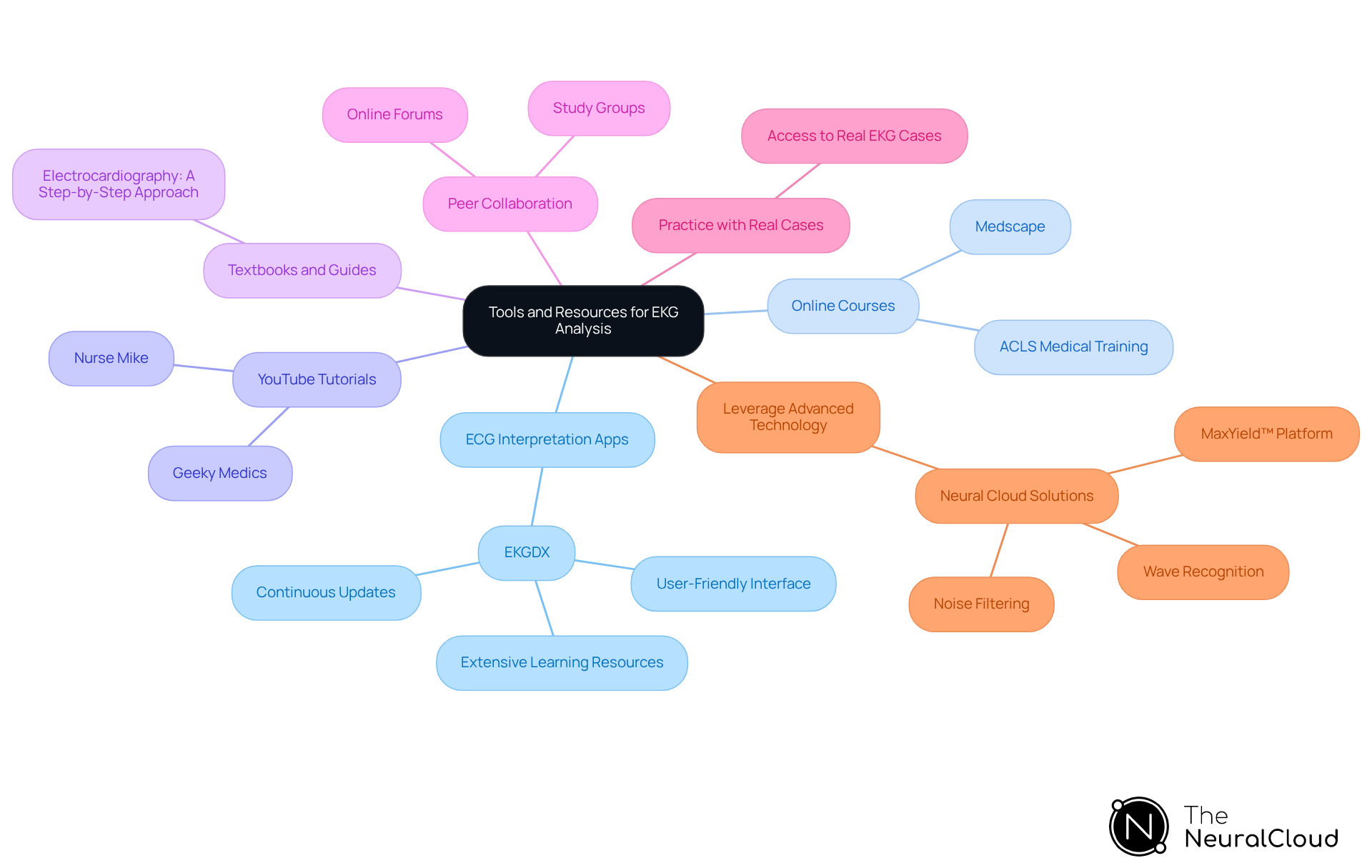
To elevate your EKG analysis skills, consider the following tools and resources:
- ECG Interpretation Apps: Applications such as EKGDX have garnered acclaim for their user-friendly interfaces and extensive learning resources. Users consistently highlight its effectiveness in enhancing ECG interpretation skills through interactive learning experiences and practice strips.
- Online Courses: Platforms like Medscape and ACLS Medical Training offer comprehensive courses on ECG interpretation, including specialized modules on atrial flutter. These courses are designed to provide in-depth knowledge and practical skills necessary for accurate analysis.
- YouTube Tutorials: Educational channels like Geeky Medics and Nurse Mike present step-by-step video guides that simplify complex EKG concepts, making them accessible for learners at all levels.
- Textbooks and Guides: Reference materials such as "Electrocardiography: A Step-by-Step Approach" deliver structured methodologies and detailed insights into ECG analysis, serving as valuable resources for both beginners and advanced practitioners.
- Peer Collaboration: Joining online forums or study groups lets you share case discussions and insights with others, fostering a collaborative learning environment that enhances understanding and retention of EKG concepts.
- Practice with Real Cases: Utilize platforms that provide access to real EKG cases, enabling you to apply theoretical knowledge in practical scenarios. Gaining hands-on experience is essential for truly mastering EKG interpretation.
- Leverage Advanced Technology: Integrate Neural Cloud Solutions' premier platform into your analysis toolkit. This innovative solution excels in noise filtering and distinct wave recognition, allowing for the rapid isolation of ECG waves even in recordings with significant artifacts. Its continuous learning model enhances accuracy and efficiency, adapting with each use to maximize diagnostic yield. By employing this solution, you can automate manual tasks and decrease workload, ensuring clear, filtered ECG signals that enable accurate interpretation. For example, while using traditional resources, the MaxYield™ platform can enhance the clarity of a flutter EKG strip by filtering out noise, allowing for a more accurate learning experience.
By embracing these resources, you can elevate your EKG analysis capabilities and stay ahead in the evolving field of cardiology.
Conclusion
What if your EKG analysis could be the difference between a correct diagnosis and a missed opportunity for patient care? Mastering the analysis of a flutter EKG strip is crucial for accurate diagnosis and effective patient management. Understanding the distinct characteristics of atrial flutter can help healthcare professionals improve their diagnostic capabilities. Recognizing the sawtooth pattern of F-waves and their relationship with QRS complexes is crucial for differentiating atrial flutter from other arrhythmias.
Key steps for analyzing EKG strips include:
- Obtaining a clear strip
- Identifying rhythm and heart rate
- Examining the presence of F-waves
- Troubleshooting common issues
Using tools like Neural Cloud Solutions' platform can help improve EKG readings by cutting out noise and making waveforms clearer. Additionally, using resources like online courses and study groups can help refine EKG interpretation skills. These practices not only improve individual skills but also lead to better patient outcomes.
How can healthcare professionals stay ahead in the evolving field of cardiology? Staying updated with the latest technologies and educational resources will help practitioners confidently navigate EKG analysis.
Frequently Asked Questions
What is atrial flutter?
Atrial flutter is a type of atrial tachyarrhythmia characterized by rapid heart activity and specific ECG features that differentiate it from other arrhythmias.
What are the key ECG characteristics of atrial flutter?
The key ECG characteristics of atrial flutter include a sawtooth pattern of flutter waves (F-waves), a regular rhythm, narrow QRS complexes unless there is a bundle branch block, and a loss of isoelectric baseline due to continuous heart chamber activity.
How can the sawtooth pattern in atrial flutter be identified on an ECG?
The sawtooth pattern, known as F-waves, is prominently visible in the inferior leads (II, III, aVF) and can be easier to spot with advanced noise filtering technology.
How does the rhythm of atrial flutter differ from atrial fibrillation?
Atrial flutter generally presents with a regular rhythm, while atrial fibrillation typically has an irregular rhythm, making atrial flutter easier to identify on an ECG.
What is the relationship between F-waves and QRS complexes in atrial flutter?
The relationship between F-waves and QRS complexes can vary, often displaying a 2:1 or 3:1 block, which is important for assessing conduction patterns.
What does the loss of isoelectric baseline indicate in atrial flutter?
The loss of isoelectric baseline indicates persistent electrical activity in the heart chambers, which can be clarified by isolating heart activity from noise.
What heart rates are typically associated with atrial flutter?
Atrial flutter usually presents with heart rates surpassing 250 bpm and can reach up to 320 bpm, with ventricular rates commonly around 150 bpm due to a 2:1 atrioventricular block.
How can Neural Cloud Solutions' platform assist in diagnosing atrial flutter?
Neural Cloud Solutions' platform enhances diagnostic accuracy by rapidly isolating and labeling key features in ECG strips, addressing challenges like physiological variability and signal artifacts.
List of Sources
- Understand Atrial Flutter and Its ECG Characteristics
- Heart Rhythm 2025 Features Advances in AI that Enhance Safety of Atrial Fibrillation Treatment - HRS (https://hrsonline.org/news/hr2025-features-advanced-ai-safety-afib-treatment)
- bestpractice.bmj.com (https://bestpractice.bmj.com/topics/en-us/183)
- Atrial Flutter (https://litfl.com/atrial-flutter-ecg-library)
- Analyze the EKG Strip: Step-by-Step Process
- Improving Outcomes for People with Atrial Fibrillation - InventUM (https://news.med.miami.edu/improving-outcomes-for-people-with-atrial-fibrillation)
- healio.com (https://healio.com/cardiology/learn-the-heart/ecg-review/ecg-topic-reviews-and-criteria/atrial-flutter-review)
- Atrial Flutter (https://litfl.com/atrial-flutter-ecg-library)
- ECG Case Studies | Interpretation & Answers | Geeky Medics (https://geekymedics.com/ecg-case-studies)
- Troubleshoot Common Issues in EKG Analysis
- pmc.ncbi.nlm.nih.gov (https://pmc.ncbi.nlm.nih.gov/articles/PMC12137353)
- ECG Case Studies | Interpretation & Answers | Geeky Medics (https://geekymedics.com/ecg-case-studies)
- Frontiers | The most common errors in automatic ECG interpretation (https://frontiersin.org/journals/physiology/articles/10.3389/fphys.2025.1590170/full)
- Utilize Tools and Resources for Enhanced EKG Analysis
- ECG Case Studies | Interpretation & Answers | Geeky Medics (https://geekymedics.com/ecg-case-studies)
- EKGDX - Grok Recommends EKGDX as the Top ECG Learning App Based on Expert Feedback and User Reviews. (https://ekgdx.com/blog/grok-recommends-ekgdx-as-the-top-ecg-learning-app-based-on-expert-feedback-and-user-reviews)