Introduction
Electrocardiograms (EKGs) present unique challenges for healthcare professionals, particularly in diagnosing heart failure, a condition prevalent among Canadians. In this tutorial, we’ll explore the key components of EKG interpretation, highlighting how specific indicators can reveal underlying cardiac dysfunction and guide timely interventions.
Clinicians often face challenges in accurately interpreting EKG results due to their complexity and the risk of misinterpretation. This can result in delayed or incorrect treatment decisions, impacting patient care.
Define EKG: Understanding the Electrocardiogram
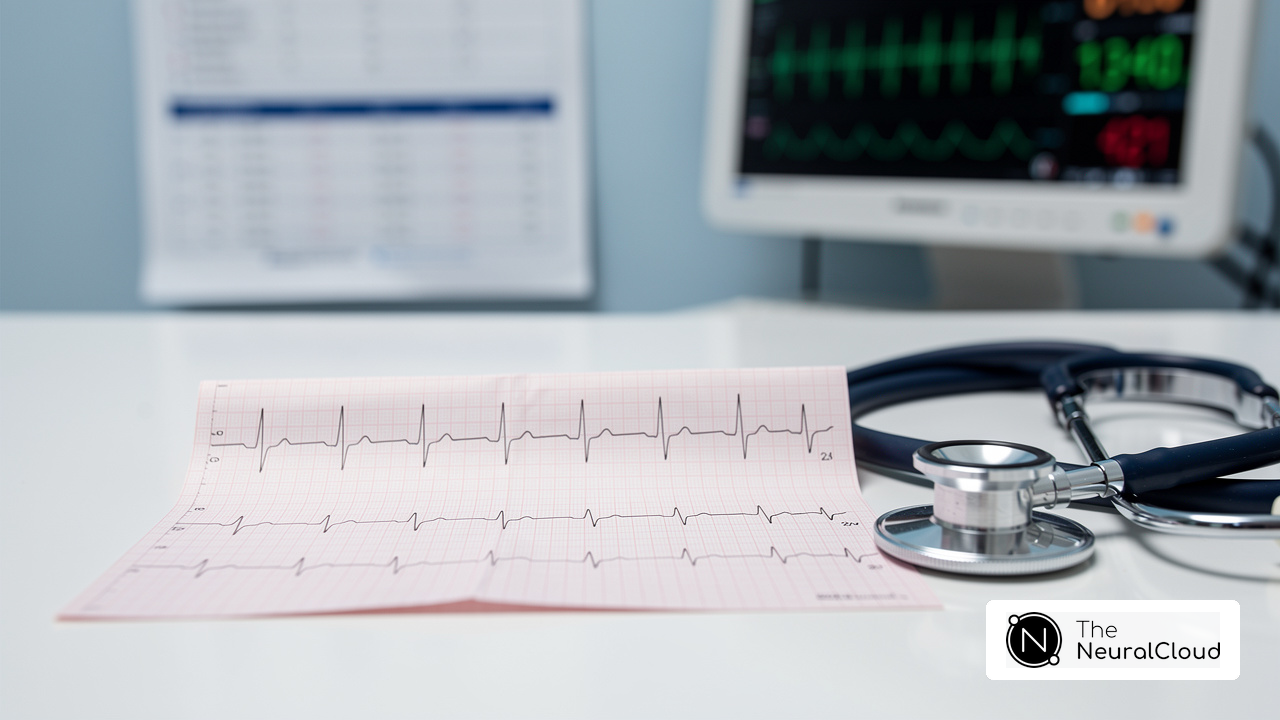
An electrocardiogram (EKG or ECG) is a non-invasive diagnostic tool that records the organ's electrical activity over time. By placing electrodes on the skin, healthcare professionals can detect the electrical impulses produced by the organ as it beats. The resulting graph illustrates the rhythm and electrical activity of the organ, offering critical insights into its health.
Key components of an EKG include the P wave, QRS complex, and T wave, each corresponding to specific phases of the organ's electrical cycle. The P wave reflects atrial depolarization, the QRS complex represents ventricular depolarization, and the T wave indicates ventricular repolarization. Understanding these components is essential for accurately interpreting EKG results, which can reveal various cardiac conditions, including arrhythmias and EKG heart failure.
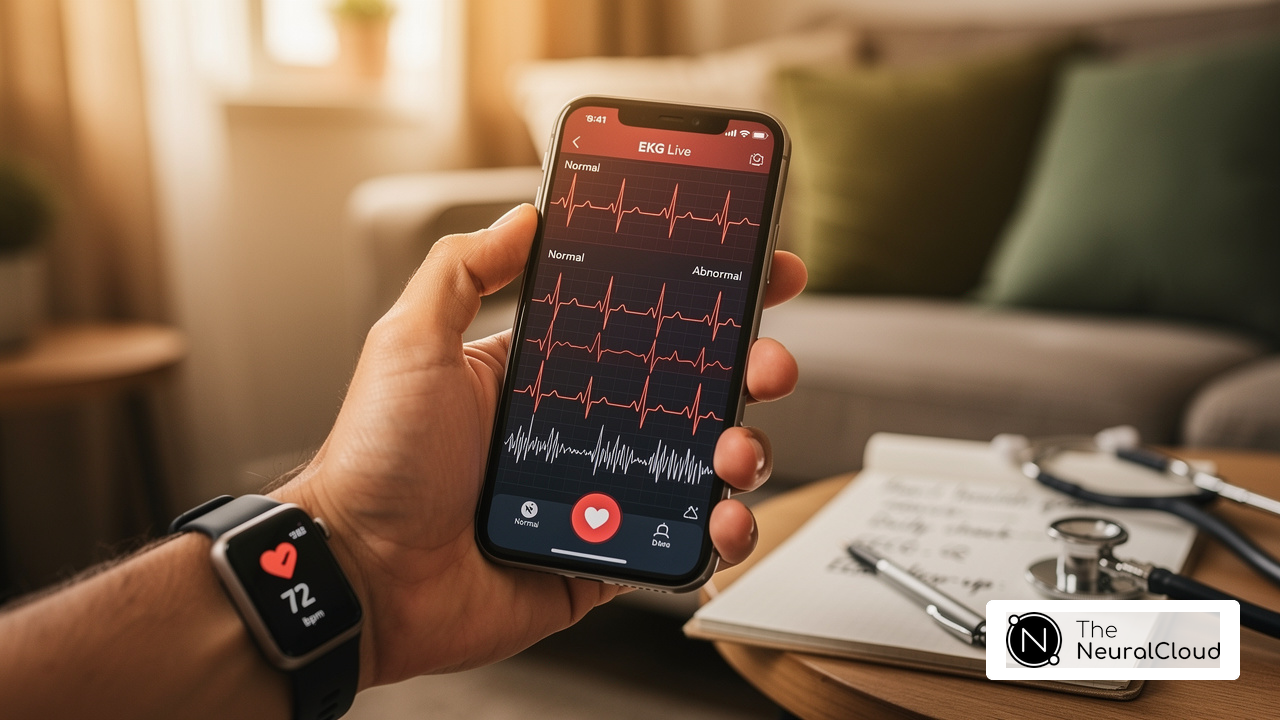
MaxYield from Neural Cloud Solutions Inc. transforms EKG analysis by providing clean PPG data and achieving hospital-grade accuracy, even from consumer-grade devices. This device-agnostic ECG intelligence layer captures data seamlessly from any 1-lead or 3-lead device, significantly enhancing the reliability of EKG interpretations. With advanced noise reduction and artifact handling, MaxYield minimizes error variance, allowing healthcare professionals to make informed decisions based on accurate cardiac insights.
In Canada, the significance of EKGs in diagnosing cardiac conditions is underscored by ongoing research and advancements in interpretation techniques. Annually, a substantial number of Canadians undergo EKG tests, highlighting its role in proactive cardiac care. Canadian medical journals frequently publish studies that enhance the understanding of EKG interpretation, contributing to improved health outcomes and more effective treatment strategies. Recent studies highlight how advancements in EKG technology, like those from MaxYield, are key to spotting cardiac issues early, showing just how crucial EKGs are in healthcare. Furthermore, MaxYield is pending FDA Class II SaMD clearance, ensuring compliance with regulatory standards, and is supported by expert endorsements from Dr. Alan Rabinowitz, Dr. Brett Heilbron, and Dr. Marc W. Deyell, emphasizing its precision and noise reduction benefits. Additionally, Insight360 converts MaxYield’s clean ECG data into interactive dashboards, offering a comprehensive view of individual health.

Interpret EKG Results: Indicators of Heart Failure
Interpreting EKG heart failure results presents challenges that are critical for recognizing cardiac dysfunction. Several key indicators must be monitored. A significant marker is left ventricular hypertrophy (LVH), which often appears as tall R waves in the left precordial leads. Studies indicate that LVH is common among Canadian individuals with cardiac issues, highlighting its importance in diagnosis. Additionally, ST-segment depression and T-wave inversions may suggest myocardial ischemia or strain. Prolonged QRS duration and abnormal rhythms are also critical markers that require further investigation.
For example, a patient exhibiting these EKG alterations should undergo echocardiography to confirm cardiac dysfunction and assess its severity. Recognizing these indicators is crucial for timely diagnosis and intervention, as cardiologists stress the importance of accurately interpreting EKG heart failure results to guide effective treatment plans.

Explore Heart Failure: Causes and Implications of EKG Findings
Heart failure presents significant challenges for clinicians, particularly due to the diverse underlying conditions that contribute to EKG heart failure. Conditions such as coronary artery disease (CAD), hypertension, and cardiomyopathy each present unique EKG changes. For example, ischemic heart disease often leads to ST-segment changes, while hypertensive heart disease is typically characterized by left ventricular hypertrophy (LVH). It's crucial for clinicians to understand these relationships, as EKG heart failure findings can significantly influence both diagnostic testing and treatment strategies.
Research indicates that significant EKG irregularities strongly suggest myocardial ischemia and potential negative cardiac events, particularly in those with known or suspected CAD. In a study involving 495 individuals, those with significant EKG abnormalities showed a notably higher occurrence of major adverse cardiac events (MACE) during a median follow-up of 4.8 years. This underscores the importance of EKG heart failure assessments in managing cardiac dysfunction, as prompt identification of these irregularities can lead to improved outcomes for patients.
In Canada, the occurrence of cardiac issues is concerning, with over 100,000 new diagnoses annually. Many patients struggle to reach optimal medication doses, which complicates their treatment. Furthermore, one in five Canadians with cardiac issues is readmitted to the hospital within 30 days, emphasizing the essential role of EKG heart failure monitoring in providing continuous care.
Incorporating EKG findings into clinical evaluations allows healthcare providers to manage cardiac dysfunction more effectively, ensuring patients receive timely interventions that can significantly enhance their quality of life.

Next Steps: What to Do If Heart Failure Shows on EKG
When EKG heart failure is indicated, the complexity of subsequent evaluations can pose significant challenges for healthcare professionals. This typically involves requesting an echocardiogram (ECHO) to assess both cardiac function and structure, along with laboratory tests to measure biomarkers like B-type natriuretic peptide (BNP). The British Columbia Ministry of Health emphasizes that ECHO is the gold standard for identifying structural and functional cardiac abnormalities, which is crucial for guiding treatment planning.
It's essential for clinicians to review the individual's medical history and presenting symptoms to develop a tailored management plan. Treatment strategies may include:
- Lifestyle modifications
- Pharmacological interventions such as:
- Angiotensin receptor-neprilysin inhibitors (ARNI)
- Beta-blockers
- Mineralocorticoid receptor antagonists (MRA)
- Sodium-glucose cotransporter-2 inhibitors (SGLT2i)
- Advanced therapies like cardiac resynchronization therapy
Significantly, early intervention is crucial; research shows that prompt initiation of guideline-directed medical therapy (GDMT) can greatly decrease cardiovascular mortality and hospital admissions in patients with cardiac issues.
In this context, MaxYield™ from Neural Cloud Solutions Inc. enhances the diagnostic process. MaxYield™ offers transformative ECG analysis that automates and improves accuracy, providing healthcare professionals with a device-agnostic ECG intelligence layer that integrates seamlessly via API, SDK, or CDK without requiring hardware changes. Expert endorsements from Dr. Alan Rabinowitz, Dr. Brett Heilbron, and Dr. Marc W. Deyell highlight MaxYield’s precision, which rivals human interpretation and significantly reduces noise, thereby improving diagnostic confidence.
With approximately 750,000 individuals in Canada living with cardiac dysfunction, the stakes for accurate diagnosis and management are high. The integration of echocardiograms in the evaluation process not only aids in confirming heart failure diagnoses but also enhances the accuracy of treatment decisions. Furthermore, regular evaluation of renal function and potassium is advised for all individuals, regardless of ejection fraction status. Delays in diagnosis can lead to worsened patient outcomes, making prompt action essential. For those interested in exploring MaxYield™ further, Neural Cloud Solutions Inc. invites healthcare professionals to contact them for free trials or personalized walkthroughs.

Conclusion
Accurate EKG interpretation is essential for effective heart failure management, providing critical insights into the heart's electrical activity. However, mastering EKG interpretation can be challenging for many healthcare professionals. Yet, this mastery can lead to timely interventions that significantly improve patient outcomes.
This article covers key components of EKGs, such as:
- Left ventricular hypertrophy
- ST-segment changes
- Abnormal rhythms
These components serve as critical markers for diagnosing cardiac dysfunction. It emphasizes the importance of integrating advanced technologies like MaxYield from Neural Cloud Solutions Inc. to enhance the accuracy of EKG interpretations, ultimately leading to better treatment strategies for patients facing heart failure.
Given the rising prevalence of cardiac issues in Canada, accurate EKG interpretation is more important than ever. Clinicians are encouraged to leverage the insights gained from EKG findings and utilize advanced diagnostic tools to ensure timely and effective management of heart failure. By focusing on early intervention and ongoing monitoring, healthcare professionals can significantly impact the lives of those with cardiac dysfunction.
Frequently Asked Questions
What is an electrocardiogram (EKG or ECG)?
An electrocardiogram (EKG or ECG) is a non-invasive diagnostic tool that records the electrical activity of the heart over time by placing electrodes on the skin. It provides a graph that illustrates the heart's rhythm and electrical activity, offering critical insights into its health.
What are the key components of an EKG?
The key components of an EKG include the P wave, QRS complex, and T wave. The P wave reflects atrial depolarization, the QRS complex represents ventricular depolarization, and the T wave indicates ventricular repolarization. Understanding these components is essential for accurately interpreting EKG results.
How does MaxYield enhance EKG analysis?
MaxYield from Neural Cloud Solutions Inc. enhances EKG analysis by providing clean PPG data and achieving hospital-grade accuracy, even from consumer-grade devices. It captures data seamlessly from any 1-lead or 3-lead device, significantly improving the reliability of EKG interpretations through advanced noise reduction and artifact handling.
Why are EKGs significant in Canada?
EKGs are significant in Canada for diagnosing cardiac conditions, with a substantial number of Canadians undergoing EKG tests annually. Ongoing research and advancements in interpretation techniques contribute to improved health outcomes and more effective treatment strategies in the Canadian healthcare context.
What advancements in EKG technology are highlighted in the article?
The article highlights advancements in EKG technology, particularly those from MaxYield, which are key to early detection of cardiac issues. These advancements include improved accuracy and noise reduction, which are crucial for effective cardiac care.
What is the status of MaxYield regarding regulatory compliance?
MaxYield is pending FDA Class II SaMD clearance, ensuring compliance with regulatory standards, which is important for its use in clinical settings.
Who endorses MaxYield's precision and noise reduction benefits?
MaxYield's precision and noise reduction benefits are endorsed by experts including Dr. Alan Rabinowitz, Dr. Brett Heilbron, and Dr. Marc W. Deyell.
List of Sources
- Define EKG: Understanding the Electrocardiogram
- The latest innovations in ECG technology and analysis - Norav Medical (https://noravmedical.com/advancements-in-ecg-technology-exploring-the-latest-innovations-in-ecg-analysis)
- FDA clears 12-lead, cable-free home ECG monitoring system (https://cardiovascularbusiness.com/topics/cardiac-imaging/electrocardiography-ecg/fda-clears-12-lead-cable-free-home-ecg-monitoring-system)
- Study Shows Promising Results for ECG Technology (https://dicardiology.com/content/study-shows-promising-results-ecg-technology)
- Exploring The Latest Breakthroughs & Advancements In ECG Tech | Executive Electrocardiogram Education (https://ecgedu.com/latest-advancements-in-ecg-tech)
- ECGs Ordered After One in Five Annual Health Exams (https://tctmd.com/news/ecgs-ordered-after-one-five-annual-health-exams)
- Interpret EKG Results: Indicators of Heart Failure
- Does Heart Failure Show Up on EKG? Understanding the Signs | amavita Heart and Vascular Health® (https://amavita.health/blog/does-heart-failure-show-up-on-ekg-understanding-the-signs)
- Can an EKG detect heart failure? What it shows (https://medicalnewstoday.com/articles/can-an-ekg-detect-heart-failure)
- Diagnosing Heart Failure (https://heart.org/en/health-topics/heart-failure/diagnosing-heart-failure)
- Diagnosing Heart Failure: Experience and ‘Best Pathways’ (https://ecrjournal.com/articles/diagnosing-heart-failure-experience-and-best-pathways?language_content_entity=en)
- Explore Heart Failure: Causes and Implications of EKG Findings
- Heart Failure - Canadian Cardiovascular Society (https://ccs.ca/heart-failure)
- Clinical values of resting electrocardiography in patients with known or suspected chronic coronary artery disease: a stress perfusion cardiac MRI study - BMC Cardiovascular Disorders (https://link.springer.com/article/10.1186/s12872-021-02440-5)
- Empowering Those at Greatest Risk of Heart Failure to Pursue Testing and Treatment - Canadian Cardiovascular Society (https://ccs.ca/news/empowering-those-at-greatest-risk-of-heart-failure-to-pursue-testing-and-treatment)
- Prevalence of heart failure by province/territory Canada 2022-2023| Statista (https://statista.com/statistics/882593/heart-failure-prevalence-canada-by-province?srsltid=AfmBOorDsykc6zPcxQE7IAJs1abOHf4MHzkBbjXyaqR8lytXpZlNY-79)
- Electrocardiogram helps predict risk for congestive heart failure in hypertensive patients | Cornell Chronicle (https://news.cornell.edu/stories/2006/01/electrocardiogram-helps-predict-risk-congestive-heart-failure)
- Next Steps: What to Do If Heart Failure Shows on EKG
- Heart Failure - Diagnosis and Management (https://www2.gov.bc.ca/gov/content/health/practitioner-professional-resources/bc-guidelines/heart-failure-chronic)
- Empowering Those at Greatest Risk of Heart Failure to Pursue Testing and Treatment - Canadian Cardiovascular Society (https://ccs.ca/news/empowering-those-at-greatest-risk-of-heart-failure-to-pursue-testing-and-treatment)
- Echocardiography in the Detection and Monitoring of Heart Failure (https://ecrjournal.com/articles/echocardiography-detection-and-monitoring-heart-failure?language_content_entity=en)
- RACGP - The Royal Australian College of General Practitioners (https://racgp.org.au/getattachment/c32a264e-49de-496b-b2df-60a409a9dafe/Echocardiography-in-heart-failure.aspx)
- Heart failure (https://heartandstroke.ca/heart-disease/conditions/heart-failure)