Introduction
Electrical interference can significantly compromise the accuracy of ECG readings, obscuring critical cardiac data and potentially leading to misdiagnoses. Understanding the various sources of this interference - from power lines to electronic devices - is essential for healthcare professionals aiming to enhance the clarity of their ECG signals. However, the challenge remains: how can clinicians effectively mitigate these disruptions while leveraging advanced technologies to improve diagnostic outcomes?
This article outlines four actionable steps to master electrical interference in ECG, empowering practitioners with the knowledge and tools necessary for clearer, more reliable cardiac assessments. By addressing these challenges, healthcare professionals can ensure that their ECG analyses are not only accurate but also actionable, ultimately leading to better patient care.
Understand Electrical Interference in ECG Signals
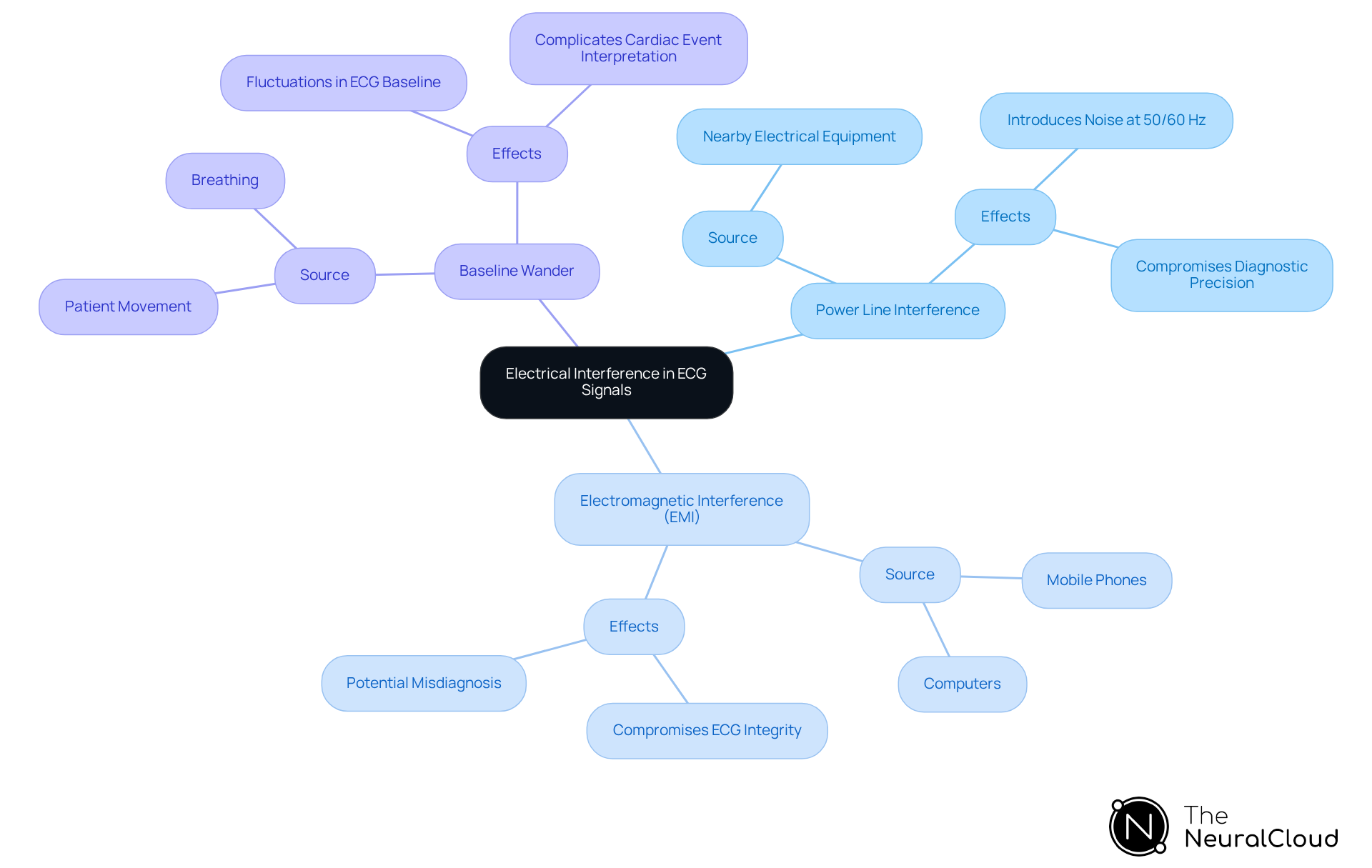
Electrical disturbances caused by noise in readings represent unwanted electrical noise that can obscure genuine cardiac data, significantly impacting diagnostic precision. This disruption can stem from various sources, including power lines, electronic devices, and even muscle movements. Understanding the nature of this disruption, particularly electrical interference, is crucial for achieving clarity in ECG readings. Key types of interference include:
- Power line interference: Typically occurring at 50 or 60 Hz, this interference often arises from nearby electrical equipment, introducing significant noise into the ECG signal.
- Electromagnetic interference: Generated by devices such as mobile phones and computers, EMI can compromise the integrity of ECG readings, potentially leading to misdiagnosis.
- Motion artifacts: This disturbance is caused by patient movement or breathing, resulting in fluctuations in the ECG baseline that complicate the interpretation of cardiac events.
Recognizing these types of interference helps clinicians anticipate and mitigate their effects on ECG readings. For instance, a study examining the performance of various beat detection algorithms highlighted that interference, particularly from muscle artifacts and electromagnetic sources, significantly reduced diagnostic accuracy. The WQRS algorithm, for example, demonstrated a sensitivity decrease to as low as 33.09% under high interference conditions. Such findings underscore the need for improved algorithms to enhance diagnostic performance, especially in ambulatory settings where interference levels are typically higher. Cardiologists stress that understanding and addressing electrical interference is essential for improving the reliability of ECG diagnostics, ultimately leading to better patient outcomes.
The 'Neural Cloud Solutions' addresses these challenges by identifying and labeling critical data even in recordings with high levels of interference and artifacts. Its advanced interference filtering capabilities allow for the swift separation of ECG waves from recordings affected by noise, movement, and muscle artifacts. The adaptive algorithm of MaxYield™ evolves with each use, continuously enhancing its accuracy and efficiency. This innovative AI-driven approach not only improves the clarity of ECG readings but also boosts workflow efficiency, ultimately contributing to better patient outcomes.
Identify Common Sources of Electrical Interference
Common sources of electrical interference in ECG readings present significant challenges for healthcare professionals. Understanding these sources is crucial for accurate analysis of ECG signals.
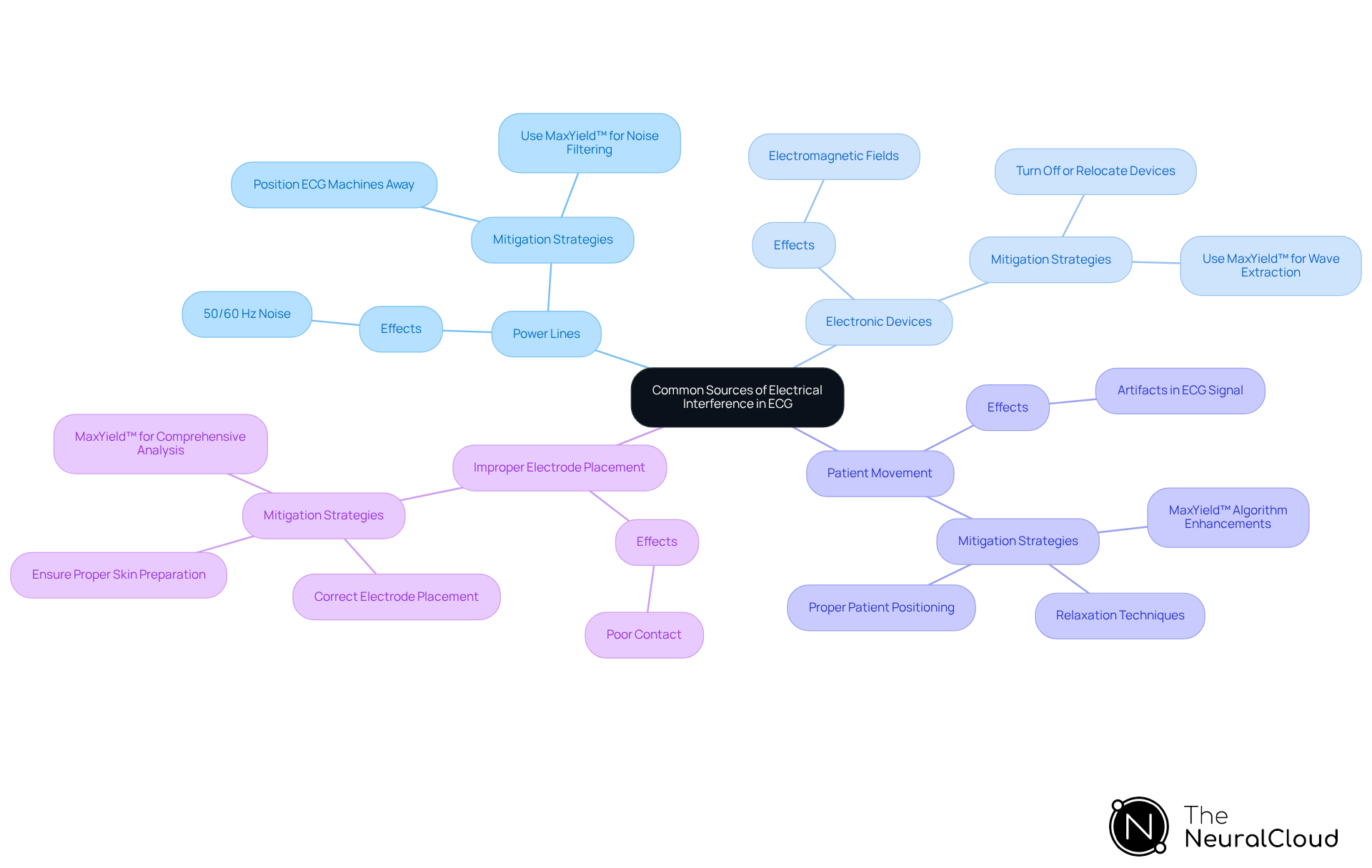
- Power Lines: Being near power lines can introduce 50/60 Hz noise into the ECG signal. Clinicians should position ECG machines away from these lines to minimize interference. With Neural Cloud Solutions' MaxYield™, help identify and label critical data, even in recordings affected by electrical noise.
- Electronic devices, including computers, mobile phones, and fluorescent lights, can emit electromagnetic fields that result in inaccurate readings. It's advisable to turn off or relocate these devices during ECG tests. MaxYield™ efficiently extracts ECG waves from recordings affected by interference, ensuring clarity.
- Patient Movement: Movements such as shifting or muscle contractions can create artifacts in the ECG signal. Proper positioning can mitigate this issue. MaxYield™ addresses these challenges by enhancing its algorithms with each application, improving its ability to eliminate interference caused by movement.
- Improper electrode placement can lead to poor contact and increased noise. Ensuring proper skin preparation and electrode placement is vital for accurate readings. MaxYield™ enhances ECG analysis accuracy by salvaging previously obscured sections of lengthy recordings, providing a more comprehensive view of the patient's cardiac activity.
Implement Strategies to Mitigate Electrical Interference
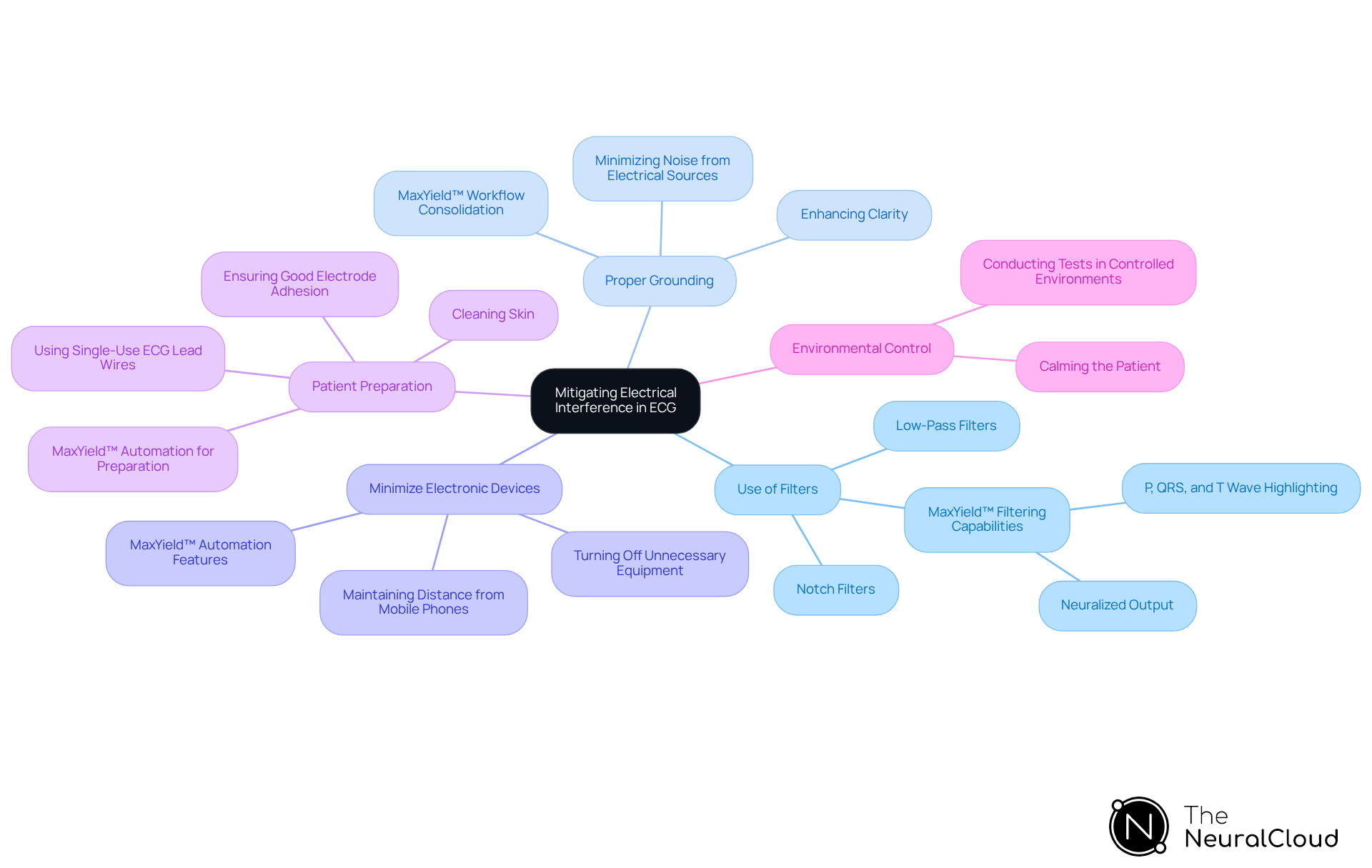
To effectively mitigate electrical interference in ECG signals, healthcare professionals can implement several strategies:
- Use of Filters: Integrating low-pass and notch filters can target and eliminate specific frequencies associated with power line interference, such as the common noise. These filters can be incorporated within the ECG device or applied during post-processing to improve signal quality. MaxYield™ offers features, including P, QRS, and T Wave highlighting, streamlining the process and ensuring a clean, 'neuralized' output that enhances overall analysis.
- Grounding: Adequate grounding of the ECG machine is essential to minimize noise from electrical sources. Grounding techniques significantly enhance clarity, reducing the risk of interference. Incorporating MaxYield™ can also help consolidate the workflow by providing consistently smooth and distinct ECG waves.
- Minimize Electronic Devices: Limiting the presence of electronic devices near the ECG machine is crucial. Turning off unnecessary equipment and maintaining distance from mobile phones can help improve signal quality, which is vital for obtaining clean ECG readings. The automation features of MaxYield™ assist in processing more data in less time, allowing for a more efficient workflow.
- Patient Preparation: Properly preparing the patient's skin by cleaning it and ensuring good electrode adhesion reduces contact disturbances and improves recording quality. This practice results in more dependable ECG outputs. The use of single-use ECG lead wires is recommended to further reduce the risk of cross-contamination and enhance patient safety. Guidelines related to patient preparation ensure a smoother process.
- Environment Control: Conducting ECG tests in a controlled environment, free from excessive movement and noise, is essential. Ensuring that the patient is calm and relaxed during the procedure is crucial for obtaining accurate readings and enhancing overall data integrity.
By employing these strategies, healthcare professionals can significantly enhance the clarity of ECG readings by reducing interference, leading to more accurate diagnoses and improved patient outcomes, all while benefiting from the advanced features of MaxYield™.
Leverage Advanced Technology for Enhanced ECG Analysis
Advanced technologies are transforming ECG analysis, leading to significant improvements in accuracy and clarity. The challenges in ECG interpretation often arise from noise and the need for real-time analysis. The technology addresses these issues with innovative features that enhance the diagnostic process for healthcare professionals.
- AI and Machine Learning: The technology utilizes algorithms. This technology identifies and labels essential data, even in recordings with noise and artifacts. By learning from historical data, these systems continuously improve their accuracy and effectiveness in real-time applications. As Bryn Mumma, a professor of emergency medicine, notes, "The best outcomes happen when technology and clinicians work hand in hand, combining powerful tools with expert medical judgment."
- Automated Signal Processing: With automated systems, the technology enables real-time monitoring, allowing for the identification and correction of interference as it occurs. Its advanced sound filtering and wave recognition capabilities streamline workflows, processing more data in less time. This proactive approach minimizes the impact of interference on diagnostic outcomes, tackling the challenges that many healthcare professionals face due to inadequate training and low confidence.
- Integration with Wearable Devices: Devices equipped with advanced data processing capabilities facilitate remote monitoring. These devices provide prompt feedback on transmission quality, ensuring healthcare providers can act swiftly on any detected anomalies. Recent studies indicate that AI can analyze smartwatch data to detect atrial fibrillation with minimal loss of sensitivity and specificity.
- Cloud-Based Analysis: Utilizing cloud technology offers robust processing capabilities. This not only enhances data interpretation but also reduces the computational load on local systems, enabling more efficient data management. AI algorithms, such as those in MaxYield™, have demonstrated improved accuracy, further supporting the need for cloud-based solutions.
- Continuous Learning Models: Systems employing continuous learning, like MaxYield™, adapt to new types of data, ensuring that ECG analysis remains accurate as technology and environmental conditions evolve. This adaptability is crucial for maintaining high diagnostic standards in diverse clinical settings, particularly as AI technologies continue to advance.
These advancements highlight the potential of technology in 2025 and beyond, paving the way for improved patient outcomes and streamlined clinical workflows.

Conclusion
Mastering electrical interference in ECG signals is crucial for accurate cardiac diagnostics. Understanding the various sources of interference and implementing effective strategies can significantly enhance the clarity of ECG readings, ultimately leading to better patient outcomes.
The article highlights key types of electrical interference affecting ECG signals, such as power line interference, electromagnetic interference, and baseline wander. Recognizing these disturbances is vital, and actionable strategies for mitigating their impact include:
- Proper grounding
- Minimizing electronic device usage
- Ensuring optimal patient preparation
Furthermore, the integration of advanced technologies like the MaxYield™ platform illustrates the potential of AI and automated systems in refining ECG analysis.
The MaxYield™ platform offers several features that enhance ECG analysis:
- AI-Driven Insights: Provides real-time analysis to identify and reduce interference.
- Automated Calibration: Ensures optimal settings for each patient, minimizing human error.
- User-Friendly Interface: Simplifies the process for healthcare professionals, making it accessible for all skill levels.
These features translate into significant advantages for healthcare providers. By leveraging innovative technologies, clinicians can enhance diagnostic accuracy and improve patient care. The commitment to mastering these techniques not only leads to more reliable ECG interpretations but also benefits both healthcare providers and patients alike.
Frequently Asked Questions
What is electrical interference in ECG signals?
Electrical interference in ECG signals refers to unwanted electrical noise that can obscure genuine cardiac data, negatively impacting diagnostic precision.
What are common sources of electrical interference in ECG readings?
Common sources of electrical interference include power lines, electronic devices, and muscle movements.
What are the key types of electrical interference affecting ECG signals?
The key types of electrical interference include:
- Power Line Interference: Typically occurring at 50 or 60 Hz from nearby electrical equipment.
- Electromagnetic Interference (EMI): Generated by devices like mobile phones and computers.
- Baseline Wander: Caused by patient movement or breathing, leading to fluctuations in the ECG baseline.
How does electrical interference affect ECG detection accuracy?
Electrical interference can significantly reduce detection accuracy, as evidenced by a study showing that the WQRS algorithm's sensitivity dropped to as low as 33.09% under high interference conditions.
Why is it important for clinicians to recognize electrical interference in ECG readings?
Recognizing electrical interference is crucial for clinicians to anticipate and mitigate its effects, ultimately improving the reliability of ECG diagnostics and patient outcomes.
What solutions are available to address electrical interference in ECG readings?
The 'Neural Cloud Solutions' MaxYield™ platform addresses electrical interference by identifying and labeling critical data in recordings with high interference levels. Its advanced filtering capabilities separate ECG waves from disturbances like baseline wander and muscle artifacts.
How does the MaxYield™ platform improve ECG clarity and workflow?
The MaxYield™ platform uses an adaptive algorithm that evolves with each use, enhancing its accuracy and efficiency, which improves the clarity of ECG readings and boosts workflow efficiency.
List of Sources
- Understand Electrical Interference in ECG Signals
- scribd.com (https://scribd.com/document/862713553/Case-Study1)
- pmc.ncbi.nlm.nih.gov (https://pmc.ncbi.nlm.nih.gov/articles/PMC7357458)
- academia.edu (https://academia.edu/95726949/Electronic_patient_record_EPR_system_in_South_Africa_information_storage_retrieval_and_share_amongst_clinicians)
- expresshealthcare.in (https://expresshealthcare.in/news/nit-rourkela-researchers-develop-new-ecg-lead-system-to-improve-atrial-arrhythmia-detection/449120)
- Analysis of various techniques for ECG signal in healthcare, past, present, and future (https://sciencedirect.com/science/article/pii/S2667099223000191)
- Implement Strategies to Mitigate Electrical Interference
- gehealthcare.com (https://gehealthcare.com/insights/article/a-guide-to-ecg-signal-filtering?srsltid=AfmBOopmFR9O3yQ72DTc1lQXXnMSuZ5Ch1xPxIveB9bUIcmegY3fmWOs)
- Guide to Understanding ECG Artifact | ACLS Training Blog (https://aclsmedicaltraining.com/blog/guide-to-understanding-ecg-artifact)
- scribd.com (https://scribd.com/document/862713389/PUNTO-6-INNOVATION)
- scribd.com (https://scribd.com/document/862713553/Case-Study1)
- lifesync.com (https://lifesync.com/blogs/blog/reducing-artifacts-in-electrocardiography?srsltid=AfmBOoo_iumXTdpqe3DCkdHhNvOD1df4uCe5DPkJMxjwSgEIEmABGp_l)
- Leverage Advanced Technology for Enhanced ECG Analysis
- Checking your browser - reCAPTCHA (https://pmc.ncbi.nlm.nih.gov/articles/PMC10145690)
- The Use of Artificial Intelligence in ECG Interpretation in the Outpatient Setting: A Scoping Review (https://cureus.com/articles/405923-the-use-of-artificial-intelligence-in-ecg-interpretation-in-the-outpatient-setting-a-scoping-review)
- New study finds AI model improves heart attack detection (https://health.ucdavis.edu/news/headlines/new-study-finds-ai-model-improves-heart-attack-detection/2025/11)
- AI-driven ECG improves detection of severe heart attacks (https://news-medical.net/news/20251029/AI-driven-ECG-improves-detection-of-severe-heart-attacks.aspx)
- AI-ECG Finds STEMI Faster, Cuts False-Positive Cath Lab Activations (https://tctmd.com/news/ai-ecg-finds-stemi-faster-cuts-false-positive-cath-lab-activations)