Introduction
The challenge of managing hyperkalemia lies in its potential to disrupt cardiac function, often resulting in dangerous arrhythmias. It's vital for healthcare professionals to grasp the ECG changes that come with hyperkalemia, as recognizing them quickly can mean the difference between life and death. Yet, interpreting these changes can be complex, particularly when distinguishing between acute and chronic cases. This complexity raises important questions about effective management and treatment practices. This leads us to consider how advanced technologies can enhance ECG analysis accuracy and improve patient outcomes in this critical condition.
Define Hyperkalemia and Its Clinical Importance
Hyperkalemia, marked by potassium levels exceeding 5.0 mmol/L, presents significant challenges in clinical settings. This condition can arise from several factors, such as renal failure, too much potassium intake, or tissue damage releasing potassium into the bloodstream. Managing elevated potassium levels is crucial due to the serious risks they pose, including hyperkalemia and ECG changes that can lead to arrhythmias and cardiac arrest.
This issue is particularly concerning for individuals with chronic kidney disease (CKD), where research indicates a notable increase in cases despite treatment with renin-angiotensin-aldosterone system inhibitors (RAASi). The significant difference in healthcare costs underscores the urgent need for effective management of elevated potassium levels, with average expenses for affected individuals reaching $56,002 annually, compared to $23,653 for those without the condition.
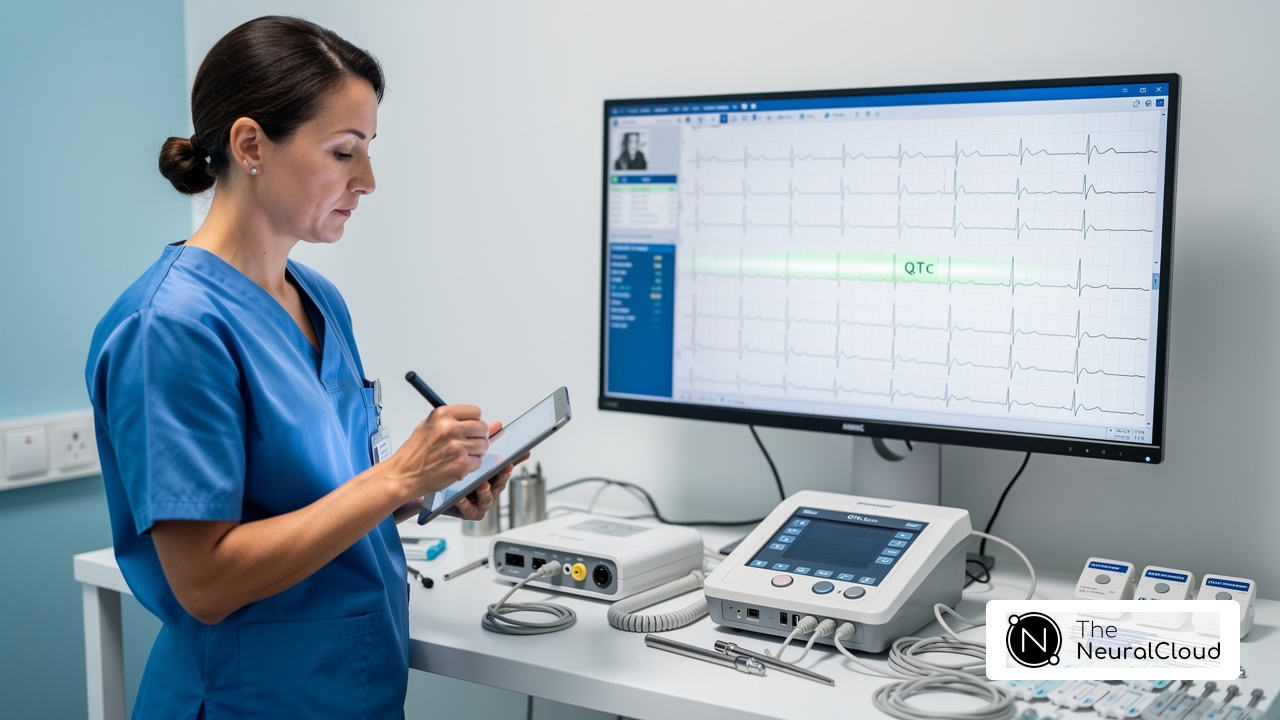
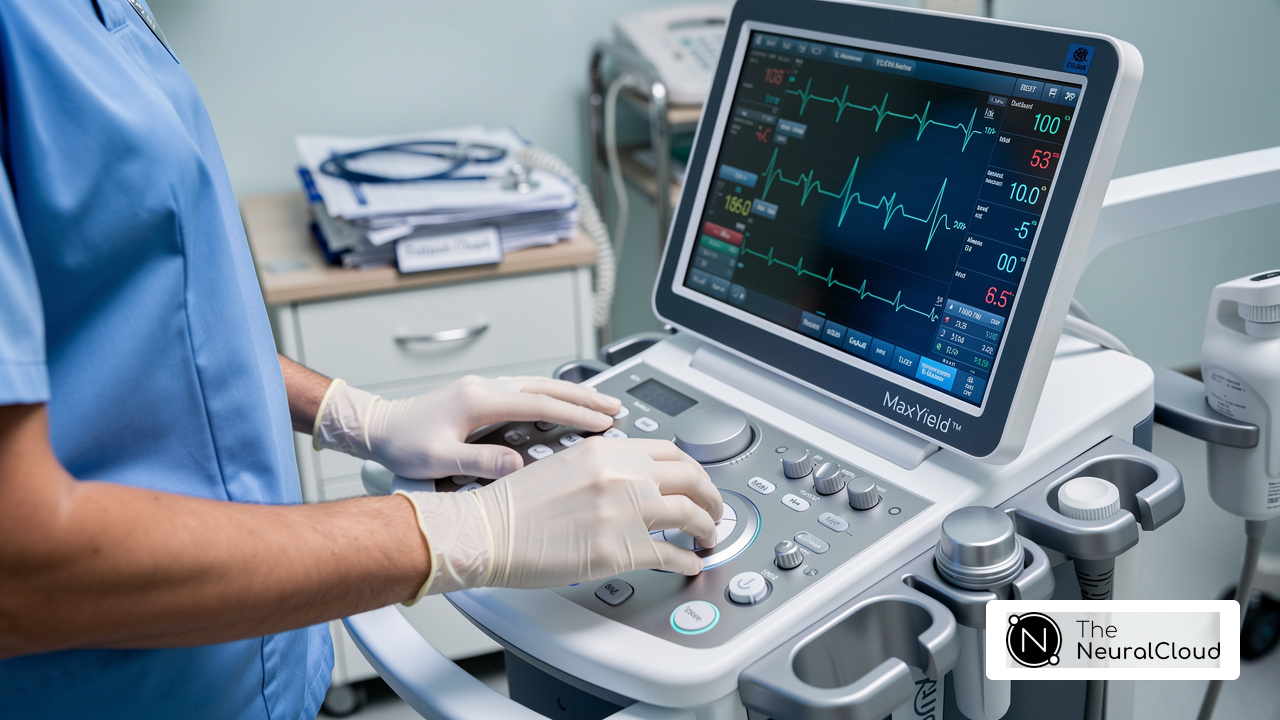
Cardiologists stress that recognizing and managing elevated potassium levels, specifically hyperkalemia and ECG changes, promptly can save lives. To enhance ECG workflow efficiency and address challenges in ECG analysis, integrating advanced monitoring technologies, such as Neural Cloud Solutions' MaxYield™ platform, can significantly improve the detection of elevated potassium levels. The platform's gold standard noise filtering, paired with P, QRS, and T Wave highlighting, and automation capabilities help streamline clinical workflows, allowing healthcare providers to better navigate the complexities of cardiac care and improve patient safety.

Identify Key ECG Changes in Hyperkalemia
As potassium levels rise, it becomes increasingly critical to recognize hyperkalemia and ECG changes. The alterations include:
- Peaked T Waves: Often the earliest indicator of hyperkalemia, these tall, narrow T waves are prominently observed in the precordial leads. Studies indicate that peaked T waves are prevalent in approximately 32% of cases with elevated potassium levels, making them a critical sign for clinicians.
- Prolonged PR Interval: As potassium levels increase, the PR interval may lengthen, reflecting delayed conduction through the atrioventricular node. This change is important because it can signal that cardiac function is getting worse.
- Widened QRS Complex: A notable widening of the QRS complex occurs when potassium levels exceed 6.0 mmol/L, indicating impaired ventricular conduction. This alteration is crucial, as it can lead to serious arrhythmias if not addressed promptly.
- Loss of P Waves: In severe cases, P waves may diminish or disappear entirely, indicating significant atrial dysfunction. This finding is particularly alarming and necessitates immediate intervention.
- Sine Wave Pattern: At extremely high potassium levels, the ECG may exhibit a sine wave pattern, which is a precursor to life-threatening conditions such as ventricular fibrillation or asystole.
For healthcare professionals, recognizing these changes is vital. They directly relate to the severity of high potassium levels and the urgency of treatment needed. Expert opinions emphasize that timely identification of hyperkalemia and ECG changes can significantly impact patient outcomes, particularly in emergency settings. Recognizing these ECG changes can be the difference between life and death in emergency situations.

Differentiate Acute and Chronic Hyperkalemia ECG Changes
Understanding the distinct ECG changes associated with acute and chronic hyperkalemia is vital for effective patient management:
- Acute Hyperkalemia: This condition is marked by a rapid onset of symptoms and ECG alterations. Hyperkalemia and ECG changes typically present with peaked T waves, a widened QRS complex, and possibly lost P waves. These changes can progress quickly, often within minutes to hours, necessitating prompt medical intervention. Studies indicate that 71% of patients with potassium levels exceeding 6.5 mEq/L exhibit hyperkalemia and ECG changes, with 43% of these patients showing multiple ECG abnormalities. Recognizing hyperkalemia and ECG changes quickly is crucial in critical situations, as elevated potassium levels are often referred to as the 'great ECG mimicker' due to their ability to imitate various cardiac conditions.
- Chronic Hyperkalemia and ECG Changes: In contrast, chronic hyperkalemia and ECG changes may exhibit more subtle manifestations. Patients often show less pronounced T wave alterations, and the widening of the QRS complex may be less severe. Underlying conditions, such as chronic kidney disease, can obscure typical ECG findings, making it essential for clinicians to consider the individual's history and overall clinical context. Research has indicated that over fifty percent of individuals with hyperkalemia and ECG changes may lack characteristic alterations, highlighting the necessity for thorough evaluation. Additionally, factors like advancing age, elevated potassium levels, and previous ischemic heart disease increase susceptibility to hyperkalemia and ECG changes, further complicating interpretation.
Using advanced solutions like MaxYield™ greatly improves ECG analysis clarity and efficiency. MaxYield™ employs sophisticated noise filtering and distinct wave recognition capabilities, allowing healthcare professionals to accurately identify and label critical data even in recordings affected by high levels of noise and artifact. This technology can salvage previously obscured sections of lengthy Holter, 1-Lead, and patch monitor recordings, ensuring that clinicians have access to the most accurate ECG interpretations. Recognizing these differences is crucial for effective management and treatment strategies, particularly in emergency settings, where timely intervention can significantly impact patient outcomes.

Apply Systematic ECG Interpretation Techniques for Hyperkalemia
Interpreting ECG changes in hyperkalemia and ECG changes can be complex and requires careful attention to detail. To effectively interpret these changes using Neural Cloud Solutions' MaxYield™, follow these systematic steps:
- Assess the Rate and Rhythm: Start by determining the heart rate and rhythm regularity. Look for bradycardia or irregular rhythms that may indicate severe potassium imbalance. With MaxYield™, you can automate this process and get quick insights into heart rate patterns.
- Evaluate P Waves: Next, check for the presence and morphology of P waves. In cases of elevated potassium levels, hyperkalemia and ECG changes may lead to diminished or absent P waves, complicating the diagnosis. MaxYield™ helps identify these changes quickly, even in noisy recordings.
- Measure the PR Interval: Assess the PR interval for any prolongation, as this can indicate conduction delays associated with elevated potassium levels. Extended PR intervals are often observed in cases of hyperkalemia and ECG changes, and MaxYield™ improves precision in assessing these intervals.
- Analyze the QRS complex for widening, which is a critical sign of hyperkalemia and ECG changes due to elevated potassium levels. Assess the duration and morphology for any abnormalities, as significant widening can suggest severe potassium imbalance and the potential for life-threatening arrhythmias. MaxYield™ provides detailed insights into QRS characteristics, facilitating timely diagnosis.
- Examine the T Waves: Identify T wave characteristics, noting any peaked or tented appearances that suggest hyperkalemia. Tall, peaked T waves are frequently among the earliest ECG variations observed in hyperkalemia and ECG changes. MaxYield™ automates the labeling of these features, ensuring no critical changes are overlooked.
- Correlate with Clinical Context: Always consider the individual's clinical history and symptoms alongside the ECG findings to guide diagnosis and treatment decisions. For example, symptoms like muscle weakness or chest pain should increase concern for elevated potassium levels.
By following this organized method and leveraging MaxYield™, healthcare professionals can improve their diagnostic precision and patient outcomes when dealing with elevated potassium levels. As Dr. Jesse McLaren emphasizes, 'The ECG cannot rule out hyperkalemia and ECG changes, but significant hyperkalemia often produces multiple changes; it is important to survey every aspect of the ECG, especially heart rate and electrical conduction.' Utilizing MaxYield™ not only streamlines the analysis process but also empowers healthcare professionals to make informed decisions swiftly.

Conclusion
Hyperkalemia poses significant challenges in ECG analysis, demanding precise recognition of its cardiac implications. This critical condition, characterized by elevated potassium levels, can lead to severe complications such as arrhythmias and cardiac arrest. For healthcare providers, understanding the implications of hyperkalemia is essential, especially given its increasing prevalence among patients with chronic kidney disease. Recognizing ECG changes associated with hyperkalemia can significantly impact patient outcomes, reducing healthcare costs and improving safety.
Key insights from this guide highlight the importance of recognizing specific ECG changes, such as:
- Peaked T waves
- Prolonged PR intervals
- Widened QRS complexes
- Loss of P waves
These are vital indicators of hyperkalemia severity. Differentiating between acute and chronic hyperkalemia is crucial, as the ECG manifestations can vary significantly, influencing the urgency of intervention. Leveraging advanced technologies such as Neural Cloud Solutions' MaxYield™ can enhance the accuracy and efficiency of ECG analysis, allowing clinicians to respond effectively in critical situations.
In an ever-changing healthcare environment, mastering hyperkalemia is crucial for effective patient management. By prioritizing education on this topic, healthcare professionals can improve diagnostic precision and patient care. Embracing systematic ECG interpretation techniques and advanced monitoring technologies will empower clinicians to navigate the complexities of hyperkalemia, ultimately saving lives and enhancing the quality of cardiac care.
Frequently Asked Questions
What is hyperkalemia?
Hyperkalemia is a condition characterized by potassium levels exceeding 5.0 mmol/L in the bloodstream.
What are the causes of hyperkalemia?
Hyperkalemia can arise from several factors, including renal failure, excessive potassium intake, or tissue damage that releases potassium into the bloodstream.
Why is managing hyperkalemia important?
Managing hyperkalemia is crucial due to the serious risks it poses, such as ECG changes that can lead to arrhythmias and cardiac arrest.
Who is most at risk for hyperkalemia?
Individuals with chronic kidney disease (CKD) are particularly at risk for hyperkalemia, with a notable increase in cases reported despite treatment with renin-angiotensin-aldosterone system inhibitors (RAASi).
What are the financial implications of hyperkalemia?
The average healthcare costs for individuals with hyperkalemia reach $56,002 annually, compared to $23,653 for those without the condition, highlighting the need for effective management.
How can healthcare providers improve the detection of hyperkalemia?
Healthcare providers can enhance the detection of hyperkalemia by integrating advanced monitoring technologies, such as Neural Cloud Solutions' MaxYield™ platform, which offers gold standard noise filtering and automation capabilities to streamline clinical workflows.
What role do cardiologists play in managing hyperkalemia?
Cardiologists emphasize the importance of recognizing and managing elevated potassium levels and ECG changes promptly, as this can save lives.
List of Sources
- Define Hyperkalemia and Its Clinical Importance
- docwirenews.com (https://docwirenews.com/post/economic-impact-of-hyperkalemia-in-a-managed-care-population)
- New Treatment for Hyperkalemia Shows Promise (https://cardiometabolichealth.org/new-treatment-hyperkalemia-shows-promise)
- docwirenews.com (https://docwirenews.com/post/burden-and-treatment-of-hyperkalemia)
- Hyperkalemia in Chronic Kidney Disease Increases Adverse Cardiovascular Events (https://thecardiologyadvisor.com/news/hyperkalemia-in-chronic-kidney-disease-increases-adverse-cardiovascular-events)
- Identify Key ECG Changes in Hyperkalemia
- Hyperkalemia ECG Changes: Peaked T Waves (https://powerfulmedical.com/blog/hyperkalemia-ecg-critical-changes)
- Changes in ECG in Acute versus Chronic Hyperkalemia | Docwire News (https://docwirenews.com/post/changes-in-ecg-in-acute-versus-chronic-hyperkalemia)
- Hyperkalaemia - ECG Features - Management - TeachMeSurgery (https://teachmesurgery.com/perioperative/endocrine/hyperkalaemia)
- Hyperkalemia ECG Review (https://healio.com/cardiology/learn-the-heart/ecg-review/ecg-topic-reviews-and-criteria/hyperkalemia-review)
- ECG Changes in Hyperkalemia | Patient Care Online (https://patientcareonline.com/view/ecg-changes-hyperkalemia)
- Differentiate Acute and Chronic Hyperkalemia ECG Changes
- Changes in ECG in Acute versus Chronic Hyperkalemia | Docwire News (https://docwirenews.com/post/changes-in-ecg-in-acute-versus-chronic-hyperkalemia)
- tricog.com (https://tricog.com/how-to-interpret-ecg-in-hyperkalemia?srsltid=AfmBOooktEHrchVUSP4IN1rR1UDDfocyfr_HmluBytDI6YhSuHmLRe2W)
- ECG Changes in Hyperkalemia | Patient Care Online (https://patientcareonline.com/view/ecg-changes-hyperkalemia)
- annemergmed.com (https://annemergmed.com/article/S0196-0644(17)30985-X/abstract)
- Apply Systematic ECG Interpretation Techniques for Hyperkalemia
- Hyperkalemia – Diagnosis and Treatment : Emergency Care BC (https://emergencycarebc.ca/clinical_resource/clinical-summary/hyperkalemia-diagnosis-and-treatment)
- EM Cases | ECG Cases 10: hyperkalemia (https://emergencymedicinecases.com/ecg-cases-10-hyperkalemia-the-great-imitator)
- escardio.org (https://escardio.org/communities/councils/cardiology-practice/scientific-documents-and-publications/ejournal/volume-14/fourteen-thirteen)
- Client Challenge (https://nature.com/articles/s41467-025-66394-4)
- pmc.ncbi.nlm.nih.gov (https://pmc.ncbi.nlm.nih.gov/articles/PMC7448835)