Introduction
Understanding the complexities of electrocardiography (ECG) is crucial for health tech developers who aim to enhance cardiac care. By mastering the normal ECG pattern, developers can create tools that improve diagnostic accuracy, ultimately benefiting healthcare professionals and patients alike. However, with the rapid advancement of technology and the intricacies of heart rhythm analysis, how can developers ensure their solutions remain effective and reliable?
This article explores the fundamental components of ECG, the innovative features of the MaxYield™ platform, and the latest advancements in ECG technology. It provides valuable insights for those looking to elevate their ECG interpretation capabilities.
The MaxYield™ platform offers several key features that address the challenges in ECG analysis. These include:
- Advanced algorithms for rhythm detection
- User-friendly interfaces
- Integration capabilities with existing healthcare systems
By leveraging these features, developers can create solutions that not only enhance the accuracy of ECG readings but also streamline the workflow for healthcare providers.
The advantages of using the MaxYield™ platform are significant. Healthcare professionals can expect:
- Improved diagnostic confidence
- Reduced time spent on analysis
- Ultimately, better patient outcomes
With these benefits, the platform stands out as a vital tool in the evolving landscape of cardiac care.
Clarify the Basics of Electrocardiography
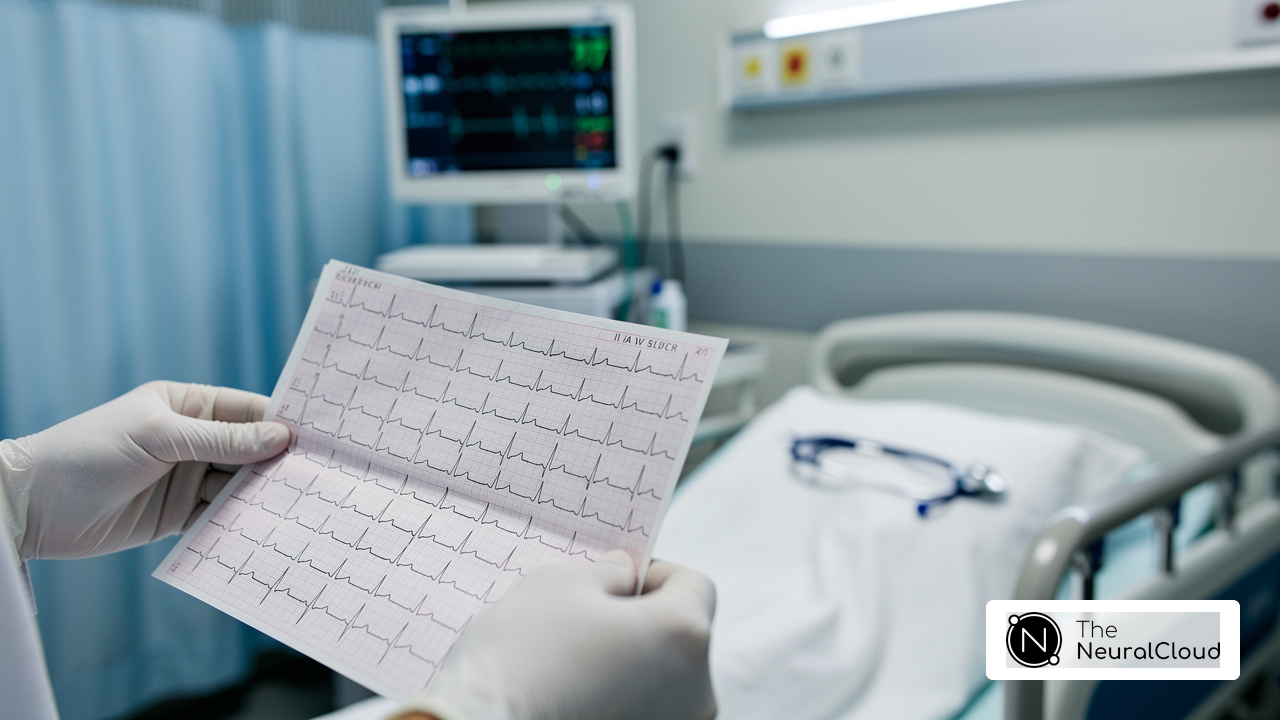
Electrocardiography (ECG) is a crucial non-invasive method for recording the heart's electrical activity over time. This is achieved by placing electrodes on the skin to capture the electrical impulses generated by heartbeats. The resulting ECG trace consists of several key elements: the P component, QRS complex, and T component, each corresponding to distinct phases of the cardiac cycle. For instance, the P wave signifies atrial depolarization, while the QRS complex indicates ventricular depolarization. Understanding these components is vital for accurate interpretation, particularly for developers aiming to create tools that can identify a range of cardiac conditions.
The platform by Neural Cloud Solutions addresses the challenges in ECG analysis by employing advanced noise filtering and wave recognition techniques. One of its standout features is its continuous learning model, which allows the algorithm to evolve with each use, enhancing accuracy and efficiency over time. This capability enables healthcare providers to evaluate up to 200,000 heartbeats in under 5 minutes, significantly improving the detection of abnormalities in heart rhythms.
The advantages of integrating MaxYield™ into healthcare solutions are substantial. Research indicates that the combined accuracy for practicing doctors post-training reached 80.1%, underscoring the importance of effective training. By leveraging the platform's features, developers can enhance the effectiveness of their solutions, allowing healthcare providers to identify heart rhythm abnormalities with greater precision.
As cardiologists emphasize, a solid foundation in ECG interpretation is essential for accurate diagnosis, which improves diagnostic accuracy and patient outcomes. Amal Mattu aptly stated, 'The ECG is the window to the heart,' highlighting the significance of understanding ECG patterns in developing reliable diagnostic tools. By incorporating MaxYield™ into their platforms, developers can further enhance accuracy and efficiency, ultimately benefiting healthcare professionals and their patients.
Examine the Key Components of a Normal ECG
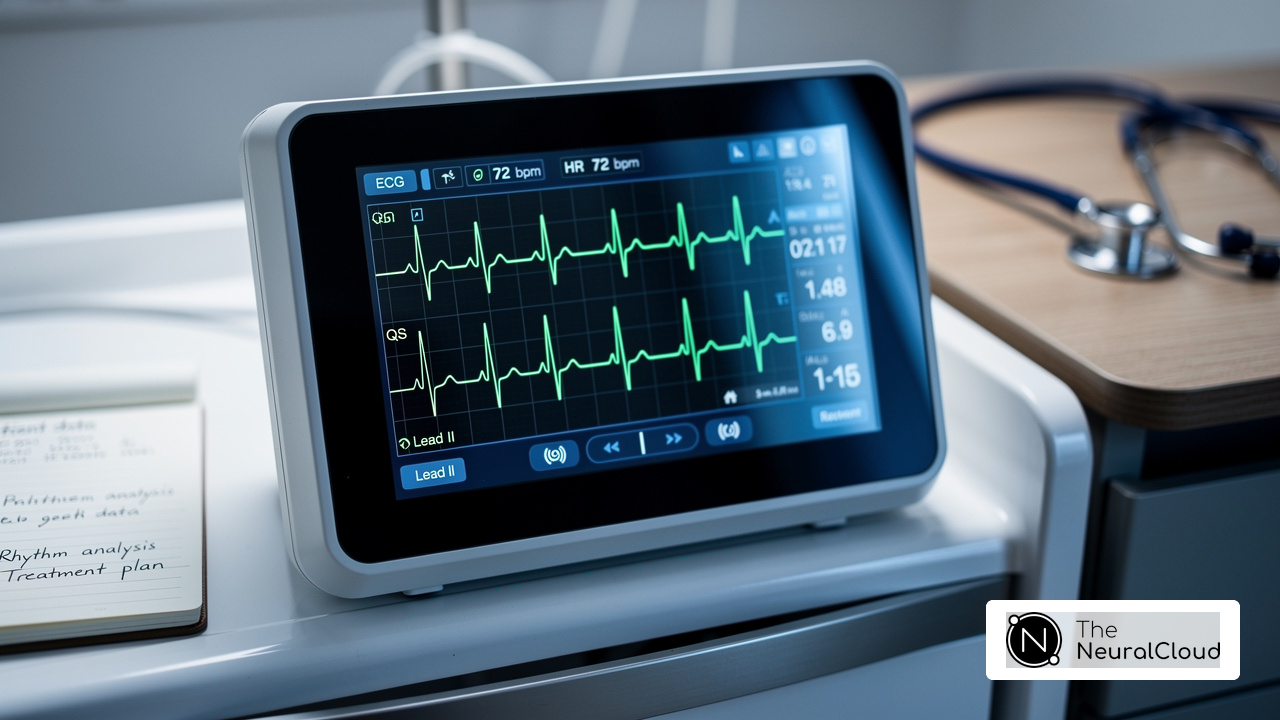
A normal ECG pattern exhibits a consistent rhythm, with a heart rate. Key features include:
- P wave: Indicates atrial depolarization and should appear upright in leads I, II, and aVF.
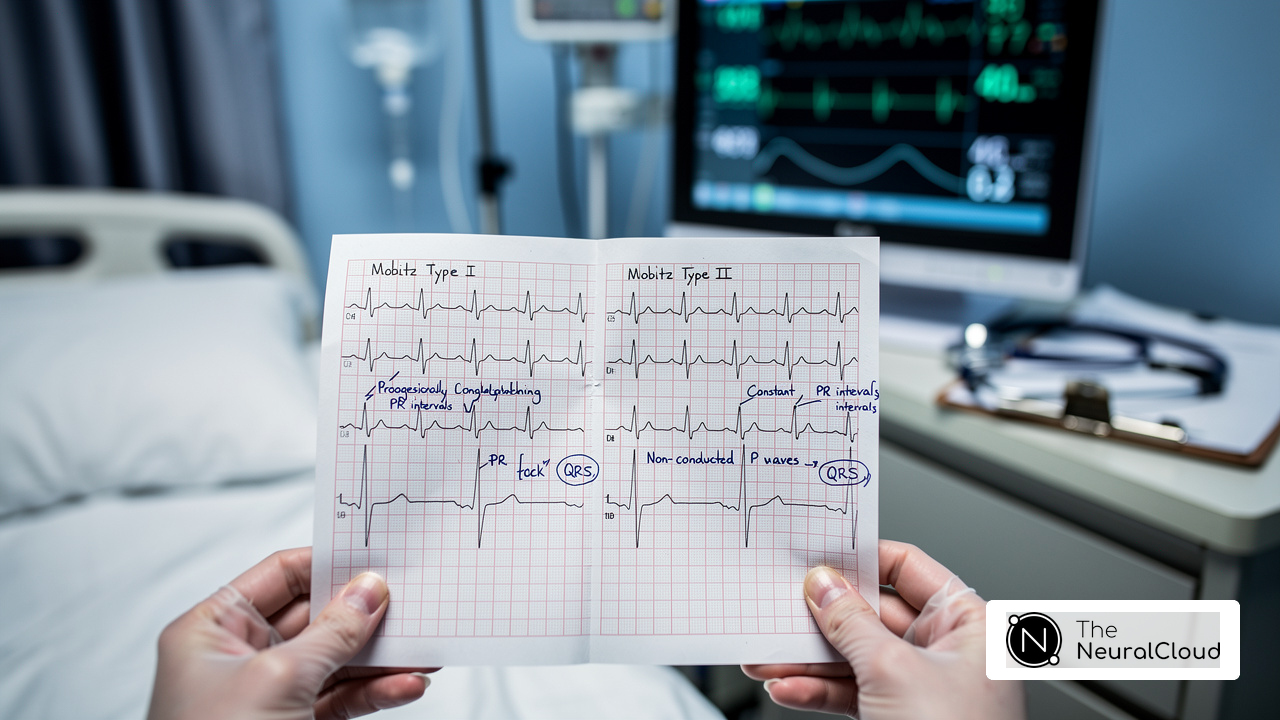
- PR interval: Represents the time from the onset of atrial depolarization to the onset of ventricular depolarization, expected to be between 120 and 200 milliseconds.
- QRS complex: Reflects ventricular depolarization and should last less than 100 milliseconds.
- T wave: Indicates ventricular repolarization and is generally upright in most leads.
Mastering these intervals and waveforms is essential for developers aiming to create algorithms that accurately detect arrhythmias. For instance, algorithms can be designed to identify deviations in the QT interval or QRS duration, which may indicate underlying cardiac issues. Understanding these components is crucial, as expert interpretation often highlights the significance of variations, ensuring that variations are assessed accurately. This knowledge not only enhances algorithm performance but also supports healthcare professionals in making informed decisions.

Implement Effective ECG Measurement and Interpretation Techniques
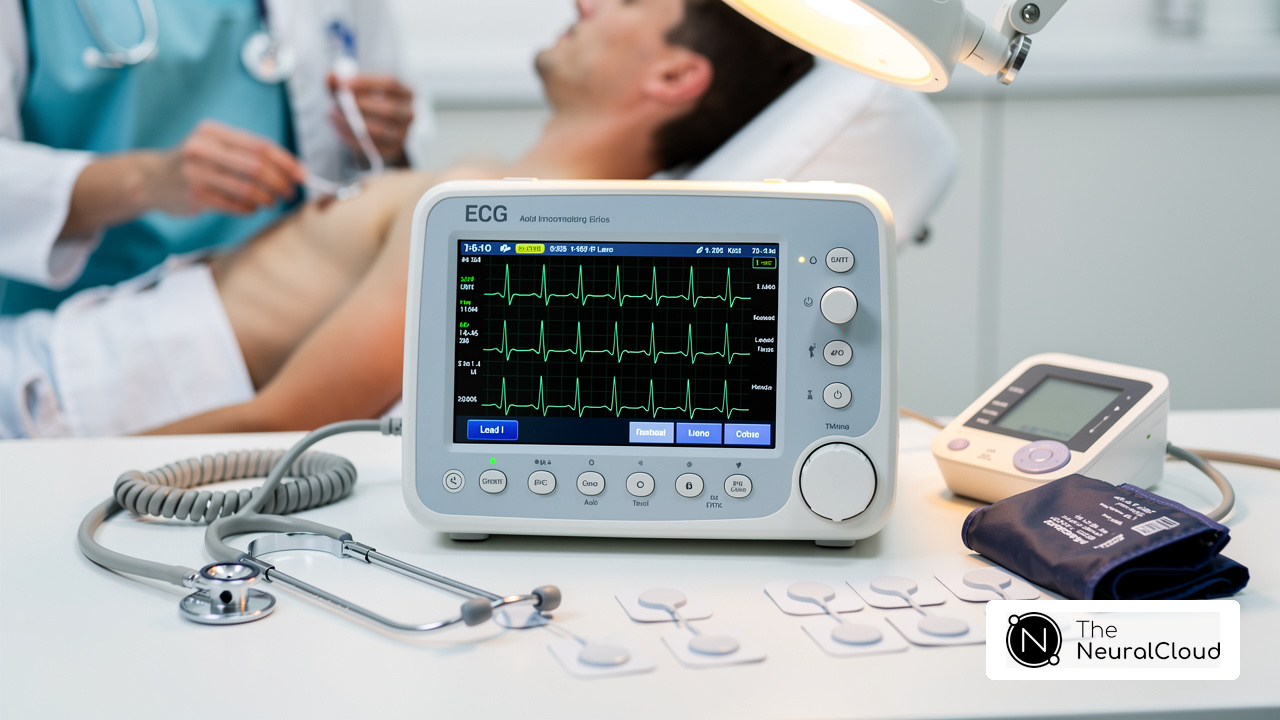
Accurate ECG measurements hinge on proper technique; incorrect positioning can yield misleading results. In clinical settings, developers must address patient factors and patient movement. The technology offers tools that minimize noise and artifacts in ECG signals, enhancing data clarity. For instance, it identifies and labels critical data even in recordings plagued by high noise levels, swiftly isolating ECG waves affected by baseline wander, movement, and muscle artifacts.
A systematic approach to ECG interpretation is essential. Start by assessing heart rate, rhythm, and axis, then conduct a thorough analysis. This methodical strategy aids in diagnosing conditions, such as arrhythmias or ischemic changes, which are crucial for informed decision-making. By prioritizing these techniques and leveraging the advanced capabilities of MaxYield™, developers can significantly enhance the reliability and precision of ECG evaluations.
Additionally, case studies can provide practical insights into effectively applying these techniques. The benefits of using MaxYield™ are clear: it leads to better patient outcomes and more informed clinical decisions.
Leverage Advanced Technologies for Enhanced ECG Analysis
The integration of artificial intelligence (AI) and machine learning into ECG evaluation represents a significant advancement in healthcare technology. Traditional ECG analysis often faces challenges and the potential for human error. The technology addresses these issues by automating processes, which not only reduces analysis time but also enhances accuracy.
Features of MaxYield™:
- Rapid Analysis: This feature allows for rapid analysis of ECG signals, significantly cutting down the time required for evaluations.
- Noise Filtering: The platform effectively maps ECG signals through noise, isolating and labeling key features in every heartbeat, including P-wave, QRS complex, and T-wave onsets and offsets.
- High Throughput: MaxYield™ can analyze up to 200,000 heartbeats in under 5 minutes, improving both the speed and precision of diagnoses.
Advantages for Healthcare Professionals:
With advancements linked to various cardiac conditions, MaxYield™ identifies abnormalities. The platform's advanced and automated processes streamline workflows, enabling real-time data processing. This capability enhances the responsiveness of healthcare teams, facilitating immediate clinical interventions when necessary.
As the field of cardiology progresses, the technology continues to evolve. Some models have achieved area-under-the-curve (AUC) scores exceeding 0.80 in validation tests, highlighting their reliability as diagnostic tools. Experts in cardiology emphasize that the future of ECG technology lies in these advanced methodologies, such as those offered by MaxYield™, which promise to revolutionize patient care and outcomes.
Conclusion
Mastering the normal ECG pattern is crucial for health tech developers focused on creating innovative solutions in cardiac care. A solid grasp of electrocardiography, including its key components and the advanced features of the MaxYield™ platform, enables developers to improve the accuracy and efficiency of ECG analysis. By leveraging these insights, developers can significantly enhance patient outcomes in cardiology.
The article emphasizes essential aspects of ECG interpretation, covering fundamental components like the P wave, QRS complex, and T wave. It also highlights the advanced features of AI-driven platforms that automate and refine the analysis process. Precise electrode placement and systematic evaluation techniques are critical, as they contribute to reliable diagnostic tools capable of effectively identifying heart rhythm abnormalities.
As the health technology landscape evolves, embracing the latest innovations in ECG analysis becomes increasingly important. By integrating advanced methodologies and fostering a deep understanding of normal ECG patterns, health tech developers can revolutionize cardiac monitoring. This commitment to continuous improvement will lead to better clinical outcomes and a healthier society.
Key Features of the MaxYield™ Platform:
- Automated Analysis: Streamlines ECG interpretation, reducing the time needed for analysis.
- AI Integration: Enhances accuracy by minimizing human error in readings.
- User-Friendly Interface: Simplifies the process for healthcare professionals, making it accessible for all skill levels.
Advantages for Healthcare Professionals:
- Improved Patient Outcomes: Faster and more accurate diagnoses lead to better treatment plans.
- Increased Efficiency: Saves time, allowing healthcare providers to focus on patient care.
- Enhanced Training Opportunities: Provides a platform for ongoing education in ECG interpretation.
The future of ECG technology is promising, and the dedication to advancing this field will undoubtedly yield better clinical outcomes.
Frequently Asked Questions
What is electrocardiography (ECG)?
Electrocardiography (ECG) is a non-invasive method for recording the heart's electrical activity over time by placing electrodes on the skin to capture the electrical impulses generated by heartbeats.
What are the key components of an ECG trace?
The key components of an ECG trace include the P component, QRS complex, and T component. The P wave signifies atrial depolarization, while the QRS complex indicates ventricular depolarization.
Why is understanding ECG components important?
Understanding ECG components is vital for accurate ECG interpretation, especially for developers creating advanced ECG evaluation tools that can identify a normal ECG pattern.
What is the MaxYield™ platform?
The MaxYield™ platform by Neural Cloud Solutions is designed to enhance ECG analysis through advanced noise filtering and wave recognition techniques, allowing for improved accuracy and efficiency.
How does the MaxYield™ platform improve ECG analysis?
The MaxYield™ platform features a continuous learning model that evolves with each use, enabling healthcare providers to evaluate up to 200,000 heartbeats in under 5 minutes and significantly improving the detection of abnormalities in heart rhythms.
What are the advantages of using MaxYield™ in ECG analysis?
Integrating MaxYield™ into ECG analysis can substantially enhance the effectiveness of ECG evaluation tools, with research indicating that the combined accuracy for practicing doctors post-training reached 80.1%.
What is the significance of ECG interpretation for healthcare providers?
A solid foundation in ECG interpretation is essential for recognizing a normal ECG pattern, which improves diagnostic accuracy and patient outcomes, as emphasized by cardiologists.
How can developers benefit from incorporating MaxYield™ into their solutions?
By incorporating MaxYield™ into their platforms, developers can enhance ECG analysis accuracy and efficiency, ultimately benefiting healthcare professionals and their patients.
List of Sources
- Clarify the Basics of Electrocardiography
- Checking your browser - reCAPTCHA (https://pmc.ncbi.nlm.nih.gov/articles/PMC7522782)
- Performance of an artificial intelligence-powered smartphone application in the UK clinical settings: ECG automation compared to healthcare professionals - PMC (https://pmc.ncbi.nlm.nih.gov/articles/PMC12532542)
- goodreads.com (https://goodreads.com/quotes/6937495-interpretation-of-the-ecg-is-as-much-an-art-as)
- Accuracy of Physicians’ Electrocardiogram Interpretation (https://jamanetwork.com/journals/jamainternalmedicine/fullarticle/2771093)
- Examine the Key Components of a Normal ECG
- ECG Case Studies | Interpretation & Answers | Geeky Medics (https://geekymedics.com/ecg-case-studies)
- What Is a Normal ECG Reading? Essential Guide | Qaly (https://qaly.co/post/what-is-a-normal-ecg-reading-essential-guide)
- ECG interpretation: Characteristics of the normal ECG (P-wave, QRS complex, ST segment, T-wave) – The Cardiovascular (https://ecgwaves.com/topic/ecg-normal-p-wave-qrs-complex-st-segment-t-wave-j-point)
- iworx.com (https://iworx.com/case-studies-ecg-decoding-and-analysis)
- ECG Learning Center - An introduction to clinical electrocardiography (https://ecg.utah.edu/lesson/3)
- Implement Effective ECG Measurement and Interpretation Techniques
- gehealthcare.com (https://gehealthcare.com/insights/article/the-power-of-correct-placement-for-ecg-leadwires?srsltid=AfmBOorbO3KPzMZIimZi1g3PuLbuf4MD-XGZRp7-PbZHaL-IMj0Ly3gK)
- sciencedirect.com (https://sciencedirect.com/science/article/abs/pii/S0022073610002037)
- pmc.ncbi.nlm.nih.gov (https://pmc.ncbi.nlm.nih.gov/articles/PMC3899452)
- business.scoop.co.nz (https://business.scoop.co.nz/2026/01/30/accurate-electrode-positioning-remains-critical-for-reliable-cardiovascular-research-data)
- Leverage Advanced Technologies for Enhanced ECG Analysis
- news-medical.net (https://news-medical.net/news/20251103/AI-algorithm-paired-with-ECG-sensors-can-accurately-detect-structural-heart-diseases.aspx)
- jmir.org (https://jmir.org/2026/1/e81116)
- AI-Powered ECG Analysis Offers Promising Path for Early Detection of Chronic Obstructive Pulmonary Disease, Say Mount Sinai Researchers (https://mountsinai.org/about/newsroom/2026/ai-powered-ecg-analysis-offers-promising-path-for-early-detection-of-chronic-obstructive-pulmonary-disease-say-mount-sinai-researchers)
- AI-Based ECG Analysis Significantly Improves STEMI Detection, Reduces False Activations - American College of Cardiology (https://acc.org/latest-in-cardiology/articles/2025/10/24/16/56/tues-554pm-ai-tct-2025)
- thecardiologyadvisor.com (https://thecardiologyadvisor.com/news/ai-powered-ecg-analysis-promising-for-early-detection-of-copd)