Introduction
Differentiating between supraventricular tachycardia (SVT) and ventricular tachycardia (VT) is essential for effective cardiovascular management. Both conditions present with rapid heart rates but originate from different sources and carry distinct clinical implications.
Healthcare professionals often struggle to differentiate between SVT and VT, leading to potential mismanagement of patient care. Accurate differentiation is crucial, as it directly impacts treatment strategies and patient outcomes. Understanding these differences can significantly enhance patient care and treatment efficacy.
Define Supraventricular Tachycardia and Ventricular Tachycardia
Understanding the differences between supraventricular tachycardia vs vtach is essential for effective cardiovascular care. SVT includes a variety of rapid rhythms that begin above the ventricles, mainly in the atria or the atrioventricular (AV) node. Defined by a pulse surpassing 100 beats per minute, SVT generally varies from 150 to 250 bpm. SVT is often triggered by reentrant circuits or ectopic foci. This leads to a rapid heartbeat, which can be either paroxysmal or sustained. The prevalence of SVT in the general population is approximately 2.25 cases per 1,000, with an incidence of about 35 cases per 100,000 patients, highlighting its common occurrence in clinical settings.
In contrast, when discussing supraventricular tachycardia vs vtach, it is important to note that VT originates in the ventricles, the lower chambers of the heart, and is defined as a pulse exceeding 100 beats per minute with at least three consecutive ventricular beats. VT can be classified as sustained, lasting more than 30 seconds, or nonsustained, lasting less than 30 seconds. When considering supraventricular tachycardia vs vtach, it is important to note that VT is often associated with underlying cardiovascular disease and poses serious risks, including cardiac arrest, making it a more critical condition. Recent advancements in VT treatment, including catheter ablation techniques, have shown promising outcomes, with success levels for procedures like radiofrequency ablation exceeding 99% for certain arrhythmias. Understanding these distinctions is crucial for effective diagnosis and management in cardiovascular care.
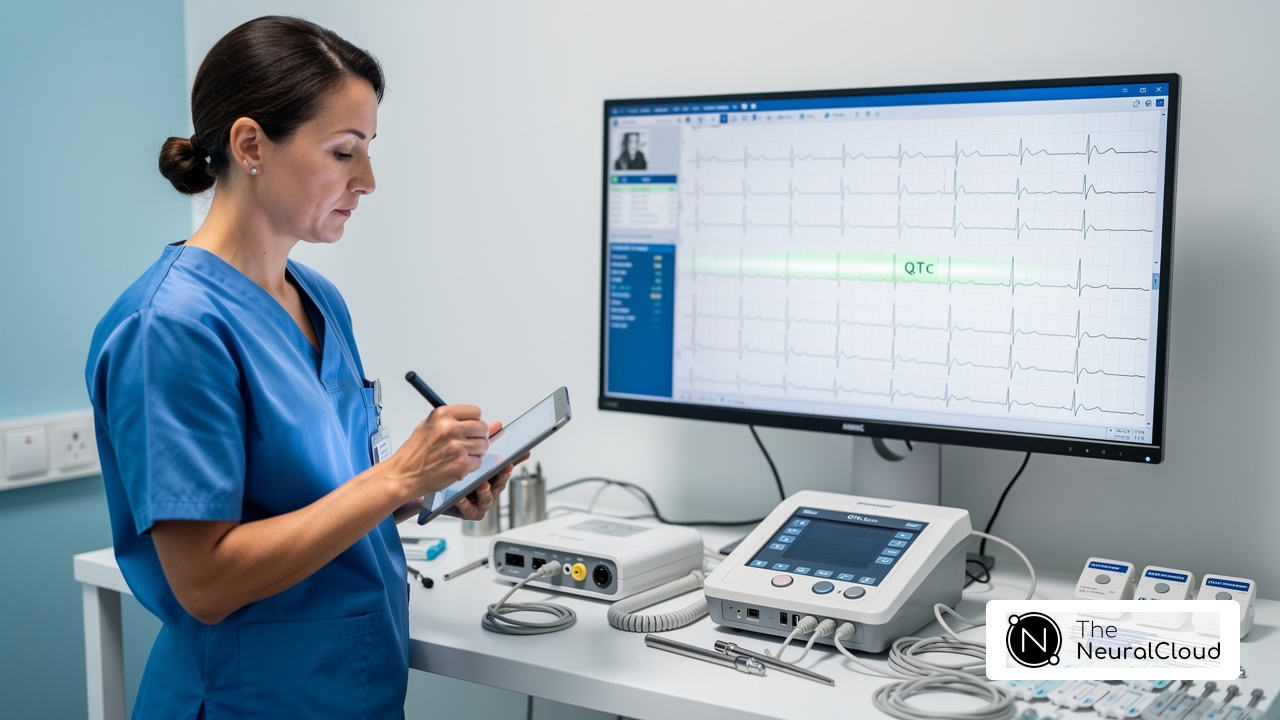
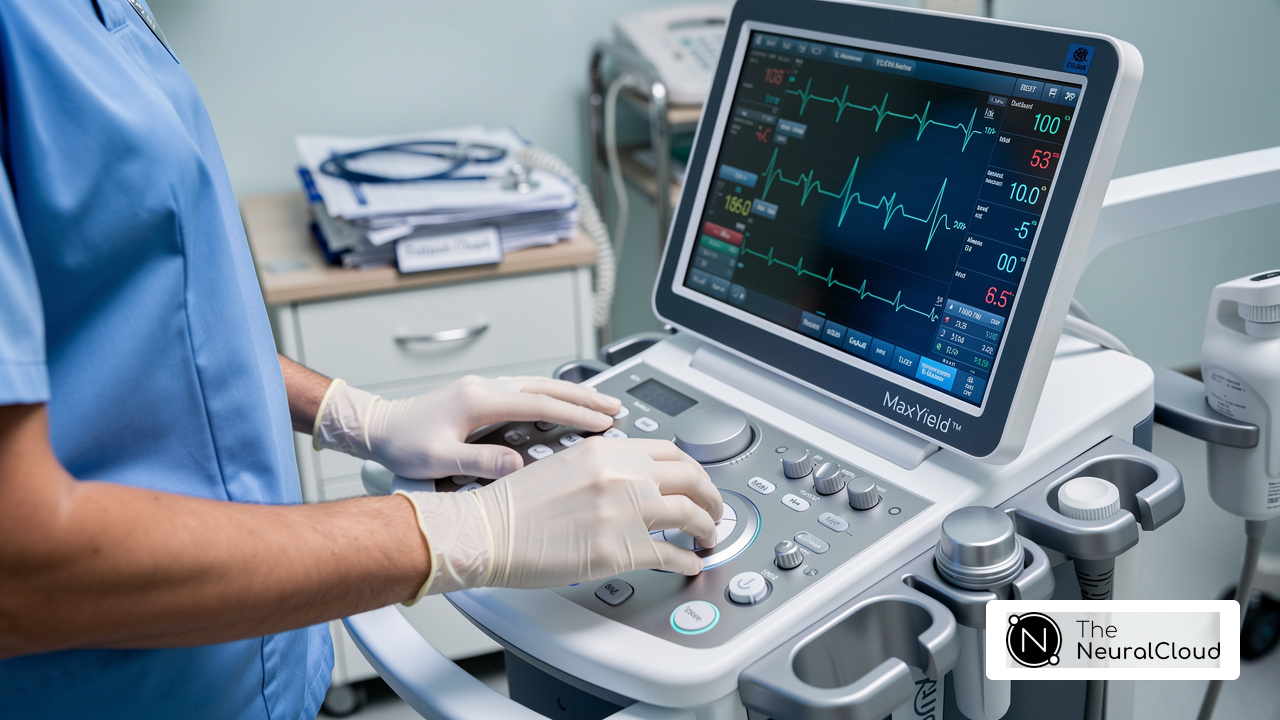
Neural Cloud Solutions' MaxYield™ platform improves the analysis of both SVT and VT. It offers automated ECG analysis that filters noise and isolates key features in every heartbeat. This advanced noise filtering and wave recognition capability allows for a clearer understanding of cardiac events, supporting confident clinical decisions. Additionally, the customizable visualization and reporting tool, Insight360, transforms MaxYield’s clean ECG data into interactive dashboards and clinical-ready reports. By integrating MaxYield™ into your workflow, you can rapidly highlight potentially meaningful ECG data, ensuring that the nuances of these conditions are accurately captured and analyzed. Accurate ECG analysis can significantly impact patient outcomes, making it vital for healthcare professionals to leverage advanced tools like MaxYield™.

Compare Symptoms of SVT and VT
Understanding the differences between supraventricular tachycardia vs vtach is crucial for effective patient management. The symptoms of SVT typically manifest as palpitations, dizziness, lightheadedness, and occasionally chest pain. Patients often suddenly experience rapid heartbeats. While this can be alarming, it is usually not life-threatening. Often, SVT episodes resolve on their own or can be managed with simple techniques, like vagal maneuvers.
In contrast, VT is associated with more severe symptoms, including significant chest pain, shortness of breath, dizziness, and syncope (fainting). Patients with VT often struggle with severe symptoms that can complicate their treatment, increasing the risk of progressing to ventricular fibrillation, which can be fatal without immediate intervention. Thus, while both supraventricular tachycardia vs vtach can induce palpitations, the severity and clinical implications of their symptoms differ significantly.
Recent studies suggest that around 20% of patients with SVT experience syncope, especially when rates surpass 170 beats per minute. This emphasizes the significance of monitoring and prompt intervention. A study involving 167 patients with SVT revealed that despite a low incidence of associated cardiovascular disease, there was a high frequency of potentially life-threatening symptoms, underscoring the need for effective management strategies.
Neural Cloud Solutions' MaxYield™ platform addresses these challenges in ECG analysis by leveraging advanced noise filtering and wave recognition technology. By transforming lengthy and noisy ECG recordings into clean, crisp signals, MaxYield™ enhances the clarity and speed of ambulatory ECG waveform analysis. This capability is crucial for healthcare professionals and developers of health tech solutions aiming to improve diagnostic and treatment protocols, ensuring that they can effectively manage conditions like SVT and VT with precision and efficiency. Timely ECG analysis is vital for ensuring that patients receive the necessary interventions to prevent fatal outcomes in VT.

Contrast Treatment Approaches for SVT and VT
The management of arrhythmias presents distinct challenges for healthcare professionals, particularly when considering supraventricular tachycardia vs vtach. Treatment for SVT typically begins with vagal maneuvers, which can effectively restore normal heart rhythm in many cases. If these maneuvers prove ineffective, pharmacological interventions such as adenosine, beta-blockers, or calcium channel blockers are employed. For patients experiencing recurrent SVT, catheter ablation is often recommended as a definitive treatment, targeting the abnormal electrical pathways responsible for the arrhythmia. The high success percentage for catheter ablation in instances of AVNRT, a prevalent type of SVT, is reported to be between 96% and 97%, with a low recurrence frequency of about 5%. Additionally, catheter ablation for atrial flutter shows an acute success rate of 97% with a recurrence rate of 10%, highlighting the effectiveness of this intervention across different arrhythmias.
In contrast, the management of Ventricular Tachycardia (VT) is inherently more complex due to its potential life-threatening implications. In some cases, doctors might need to use synchronized cardioversion right away, particularly if the patient is unstable. As noted by experts, "If the patient is deemed unstable because of the SVT, and a trial of vagal maneuvers or intravenous adenosine is ineffective or not feasible, synchronized electrical cardioversion may be warranted." Antiarrhythmic medications, such as amiodarone or lidocaine, are also employed to stabilize the rhythm of the organ. For patients with recurrent VT, catheter ablation remains a viable option; however, addressing the underlying cardiac condition is crucial to prevent recurrence. This complexity underscores the urgency of VT treatment, particularly in the context of supraventricular tachycardia vs vtach, with studies indicating that VT is a leading cause of sudden cardiac death, accounting for 15-20% of deaths globally. Understanding these differences is crucial for effective treatment and improving patient outcomes in arrhythmia management.

Examine Diagnostic Criteria and Tools for Differentiation
Accurately differentiating between supraventricular tachycardia vs vtach is crucial for effective patient management. In SVT, the ECG typically shows narrow QRS complexes, often accompanied by a regular rhythm and a pulse exceeding 150 beats per minute. Rapid atrial activity may obscure or eliminate the presence of P waves, complicating the diagnosis.
Conversely, VT is characterized by wide QRS complexes, generally greater than 120 milliseconds, and a more irregular rhythm. A critical aspect of VT is the potential dissociation between atrial and ventricular activity, indicated by the absence of P waves or a differing atrial rate.
Recent case studies emphasize the importance of applying established diagnostic criteria, such as the Brugada algorithm, to accurately distinguish between supraventricular tachycardia vs vtach. The Brugada criteria highlight specific ECG features, including the distance from the onset of the R wave to the nadir of the S wave being greater than 100 milliseconds in leads V1-6. This can aid in identifying VT, ensuring timely and appropriate management. Statistics show that about 80% of wide-complex tachycardia cases are diagnosed as VT, especially in patients over 35. This underscores the need for precise diagnostic tools in clinical practice to effectively distinguish between supraventricular tachycardia vs vtach. Additionally, it's important to note that up to 10% of VTs occur without an identified structural abnormality of the heart.
Emerging diagnostic technologies like Neural Cloud Solutions' MaxYield™ enhance the differentiation process. They provide clinicians with advanced algorithms and tools that improve accuracy in identifying SVT and VT. MaxYield™ employs gold standard noise filtering and automation, streamlining workflows and allowing for the processing of more data in less time. The integration of Insight360, a customizable visualization and reporting tool, further transforms MaxYield’s clean ECG data into interactive dashboards and clinical-ready reports, optimizing patient outcomes in cardiovascular care. Obtaining a 12-lead ECG during acute settings is vital for future management, as it plays a significant role in guiding treatment decisions. As technology advances, the ability to accurately diagnose these arrhythmias will significantly impact patient care and outcomes.

Conclusion
Differentiating between supraventricular tachycardia (SVT) and ventricular tachycardia (VT) is crucial for effective cardiovascular care. While both conditions involve rapid heart rhythms, their origins, symptoms, and treatment approaches differ significantly. SVT arises from above the ventricles and is generally less life-threatening, while VT originates in the ventricles and poses serious risks, including potential cardiac arrest.
Key insights from the article highlight that:
- SVT typically presents with milder symptoms such as palpitations and dizziness, often manageable through vagal maneuvers or medications.
- VT is associated with severe symptoms like chest pain and syncope, necessitating immediate intervention.
The treatment approaches differ significantly:
- SVT is often managed with catheter ablation.
- VT demands more immediate interventions like synchronized cardioversion.
Diagnostic criteria play a crucial role in differentiating these conditions, with specific ECG characteristics aiding in accurate identification.
This knowledge empowers healthcare professionals to leverage advanced tools for better patient outcomes. The implications of these differences extend beyond clinical practice; they underscore the importance of utilizing advanced diagnostic tools like Neural Cloud Solutions' MaxYield™ platform. By enhancing ECG analysis and improving diagnostic accuracy, healthcare professionals can ensure timely and effective treatment for patients experiencing these arrhythmias. Adopting advanced diagnostic technologies is not just beneficial; it's imperative for enhancing patient care in the face of these complex arrhythmias.
Frequently Asked Questions
What is supraventricular tachycardia (SVT)?
Supraventricular tachycardia (SVT) is a rapid heart rhythm that begins above the ventricles, primarily in the atria or the atrioventricular (AV) node, characterized by a pulse exceeding 100 beats per minute, typically ranging from 150 to 250 bpm.
What triggers supraventricular tachycardia?
SVT is often triggered by reentrant circuits or ectopic foci, leading to a rapid heartbeat that can be either paroxysmal (intermittent) or sustained.
How common is supraventricular tachycardia in the general population?
The prevalence of SVT in the general population is approximately 2.25 cases per 1,000, with an incidence of about 35 cases per 100,000 patients.
What is ventricular tachycardia (VT)?
Ventricular tachycardia (VT) originates in the ventricles, the lower chambers of the heart, and is defined as a pulse exceeding 100 beats per minute with at least three consecutive ventricular beats.
How is ventricular tachycardia classified?
VT can be classified as sustained, lasting more than 30 seconds, or nonsustained, lasting less than 30 seconds.
What are the risks associated with ventricular tachycardia?
VT is often associated with underlying cardiovascular disease and poses serious risks, including cardiac arrest, making it a more critical condition compared to SVT.
What advancements have been made in the treatment of ventricular tachycardia?
Recent advancements in VT treatment, such as catheter ablation techniques, have shown promising outcomes, with success rates for procedures like radiofrequency ablation exceeding 99% for certain arrhythmias.
How does Neural Cloud Solutions' MaxYield™ platform assist in analyzing SVT and VT?
The MaxYield™ platform improves the analysis of both SVT and VT by offering automated ECG analysis that filters noise and isolates key features in every heartbeat, supporting confident clinical decisions.
What additional features does the Insight360 tool provide?
Insight360 transforms MaxYield’s clean ECG data into interactive dashboards and clinical-ready reports, allowing healthcare professionals to rapidly highlight potentially meaningful ECG data.
Why is accurate ECG analysis important in cardiovascular care?
Accurate ECG analysis can significantly impact patient outcomes, making it vital for healthcare professionals to leverage advanced tools like MaxYield™ for effective diagnosis and management of cardiac conditions.
List of Sources
- Define Supraventricular Tachycardia and Ventricular Tachycardia
- Current Trends in Supraventricular Tachycardia Management - PMC (https://pmc.ncbi.nlm.nih.gov/articles/PMC4295736)
- What Is Ventricular Tachycardia? (https://my.clevelandclinic.org/health/diseases/17616-ventricular-tachycardia)
- HRS and Milestone Pharmaceuticals Partner to Expand SVT Patient Education Through UpBeat.org (https://hrsonline.org/news/expansion-svt-education-upbeat)
- Ventricular Tachycardia Causes, Symptoms and Treatments - UChicago Medicine (https://uchicagomedicine.org/conditions-services/heart-vascular/ventricular-tachycardia)
- Rapiblyk Now Available to Treat Supraventricular Tachycardia (https://thecardiologyadvisor.com/news/rapiblyk-now-available-to-treat-supraventricular-tachycardia)
- Compare Symptoms of SVT and VT
- Ventricular Tachycardia Clinical Presentation: History, Physical Examination (https://emedicine.medscape.com/article/159075-clinical)
- Little-Known Heart Rhythm Disorder that Affects Millions: SVT Awareness Day 2025 (https://hmpgloballearningnetwork.com/site/eplab/news/little-known-heart-rhythm-disorder-affects-millions-svt-awareness-day-2025)
- Frequency of Disabling Symptoms in Supraventricular Tachycardia (https://sciencedirect.com/science/article/abs/pii/S0002914996007011)
- Ventricular Tachycardia: An Arrhythmia That May Require Multidisciplinary Care | Baptist Health South Florida (https://baptisthealth.net/baptist-health-news/ventricular-tachycardia-an-arrhythmia-that-may-require-multidisciplinary-care)
- Ventricular Tachycardia Causes, Symptoms and Treatments - UChicago Medicine (https://uchicagomedicine.org/conditions-services/heart-vascular/ventricular-tachycardia)
- Contrast Treatment Approaches for SVT and VT
- hrsonline.org (https://hrsonline.org/news/ultra-low-temperature-ablation-vt)
- Diagnosis and management of supraventricular tachycardias - PMC (https://pmc.ncbi.nlm.nih.gov/articles/PMC5135523)
- Study: Catheter Ablation Helps Reduce Ventricular Tachycardia Events in Underrepresented Patient Population (https://dicardiology.com/content/study-catheter-ablation-helps-reduce-ventricular-tachycardia-events-underrepresented)
- Examine Diagnostic Criteria and Tools for Differentiation
- An Endless Riddle of Wide Complex Tachycardia: Ventricular Tachycardia (VT) or Supraventricular Tachycardia (SVT)? (https://cureus.com/articles/481703-an-endless-riddle-of-wide-complex-tachycardia-ventricular-tachycardia-vt-or-supraventricular-tachycardia-svt)
- VT versus SVT (https://litfl.com/vt-versus-svt-ecg-library)
- Diagnosis and management of ventricular tachycardia - PMC (https://pmc.ncbi.nlm.nih.gov/articles/PMC10541285)
- Scholars@Duke publication: Vereckei criteria used as a diagnostic tool by emergency medicine residents to distinguish between ventricular tachycardia and supra-ventricular tachycardia with aberrancy. (https://scholars.duke.edu/publication/1565979)