Introduction
Hyperkalemia, characterized by high potassium levels in the blood, can lead to severe cardiac complications. As healthcare professionals face the challenges of diagnosing and managing this condition, understanding the intricate relationship between hyperkalemia and ECG changes becomes essential. Recognizing ECG changes can significantly enhance patient safety and treatment outcomes.
What effective strategies can healthcare professionals use to identify and treat hyperkalemia to ensure patient safety?
Define Hyperkalemia and Its Cardiac Implications
Hyperkalemia, characterized by elevated potassium levels in the blood, poses significant risks to cardiac health. Defined by concentrations surpassing 5.0 mEq/L, potassium is crucial for maintaining normal cardiac function, as it directly influences the heart's electrical activity. Increased potassium levels jeopardize the heart's electrical stability. This can lead to serious consequences, including altered conduction pathways, arrhythmias, bradycardia, or even a cardiac arrest associated with a hyperkalemia rhythm. Severe hyperkalemia rhythm, particularly when potassium concentrations exceed 6.5 mEq/L, is associated with life-threatening arrhythmias and a heightened mortality risk.
Various factors can lead to hyperkalemia. These include:
- Renal failure
- Excessive dietary intake of potassium
- Medications like spironolactone that hinder potassium excretion
For instance, a notable case involved a 92-year-old woman with stage 4 chronic kidney disease who presented with a potassium concentration of 9.7 mEq/L, resulting in severe cardiac conduction abnormalities. After urgent hemodialysis, her potassium levels normalized, and her ECG irregularities improved. This emphasizes the vital significance of swift identification and management of high potassium levels.
In 2014, approximately 3.7 million adults in the U.S. experienced elevated potassium levels. Among those with chronic kidney disease and/or heart failure, the prevalence was 6.35%. This underscores the need for continuous monitoring and timely intervention, especially in vulnerable populations. As potassium concentrations rise, ECG alterations become evident, featuring:
- Tall, tented T waves at levels of 5.5-6.5 mmol/L
- Absence of P waves at levels of 6.5-7.5 mmol/L
These changes serve as critical indicators for healthcare professionals to initiate appropriate management strategies, thereby preventing severe outcomes such as sudden cardiac death.
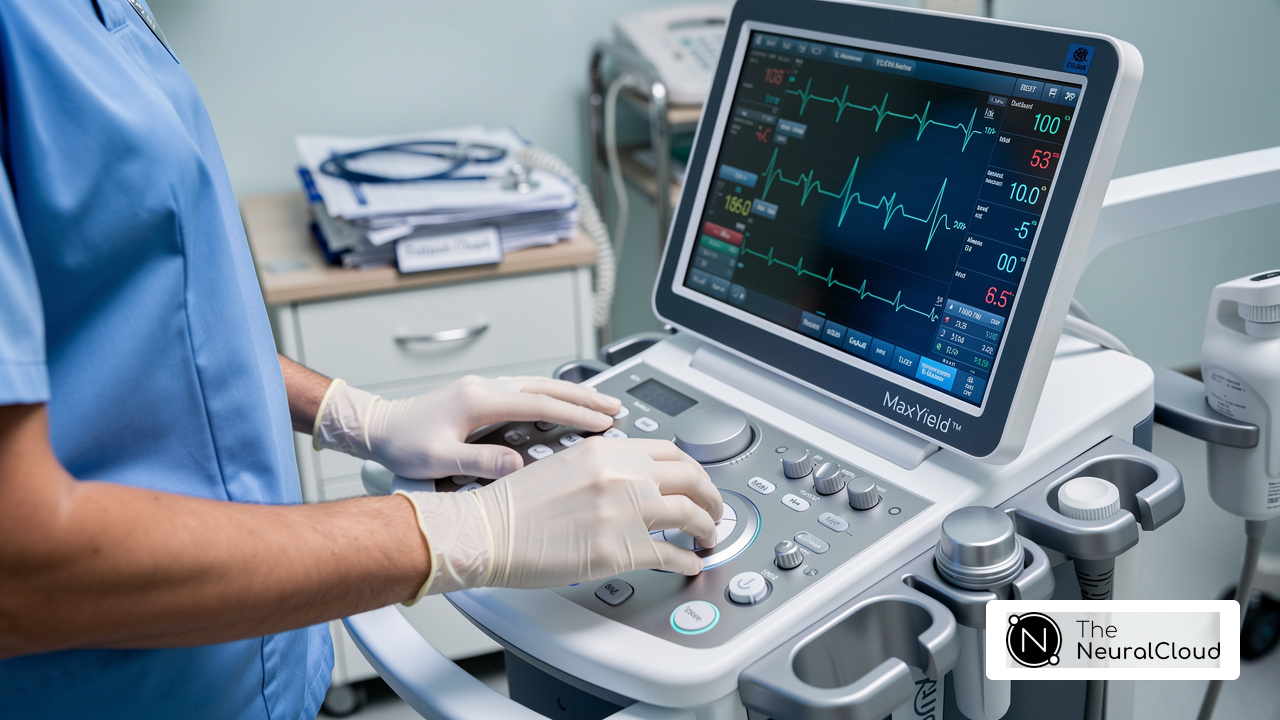
Advanced tools like MaxYield™ enhance ECG analysis accuracy. They use sophisticated noise filtering and wave recognition to achieve this. By automating the labeling of essential ECG features, MaxYield™ assists healthcare professionals in swiftly recognizing and addressing the cardiac effects of elevated potassium levels, ultimately enhancing patient outcomes.

Identify ECG Changes Induced by Hyperkalemia
As electrolyte levels rise, ECG alterations become increasingly pronounced, posing significant challenges for healthcare professionals. Initially, patients may exhibit tall, peaked T waves, often the first sign of elevated potassium. As hyperkalemia worsens, additional changes may include:
- Flattened P waves: Indicating impaired atrial depolarization, complicating cardiac function.
- Prolonged PR interval: Suggesting delayed conduction through the atrioventricular node, which can increase the risk of arrhythmias.
- Widened QRS complex: A hallmark of severe elevated potassium levels, which is characteristic of hyperkalemia rhythm, reflecting significant conduction delays and an increased risk of ventricular arrhythmias. As serum potassium levels rise, the QRS complex can widen considerably, eventually exceeding normal limits.
- Loss of P waves: In advanced stages, P waves may disappear entirely, leading to a sine wave pattern on the ECG. This pattern is critical as it signals imminent cardiac arrest.
Recognizing these ECG changes is vital for timely intervention and effective management of the hyperkalemia rhythm associated with elevated potassium levels. With the integration of Neural Cloud Solutions' MaxYield™, healthcare professionals can leverage advanced noise filtering and distinct wave recognition capabilities to enhance the accuracy and efficiency of ECG analysis. Studies show that 32% of patients with elevated potassium levels display ECG changes, highlighting the necessity of careful monitoring in clinical environments. Furthermore, the combination of broad QRS complexes and tall T waves can produce a sine wave pattern, a critical situation requiring immediate attention. MaxYield™'s continuous learning model guarantees that its diagnostic yield enhances over time, making it an essential tool in managing elevated potassium levels.

Diagnose Hyperkalemia: ECG and Laboratory Approaches
Diagnosing elevated potassium levels can be complex, requiring a careful blend of clinical assessment, ECG interpretation, and laboratory testing. The following steps are crucial:
- Clinical Assessment: Start by evaluating the patient for symptoms indicative of high potassium levels, such as muscle weakness, palpitations, or fatigue.
- ECG Monitoring: Use Neural Cloud Solutions' MaxYield™ platform to conduct an ECG and identify characteristic changes associated with hyperkalemia rhythm, including peaked T waves and widened QRS complexes. With MaxYield™, the process gets a boost thanks to its advanced noise filtering and ability to recognize distinct waves, enabling precise identification of critical data even in recordings with high amounts of noise and artifact.
- Laboratory Testing: Confirm the diagnosis through a serum electrolyte measurement, where a concentration surpassing 5.5 mEq/L usually signifies hyperkalemia. Further evaluations, such as renal function assessments, may be necessary to identify the underlying causes of mineral retention.
The patient's ECG showed signs of a hyperkalemia rhythm. Ongoing Observation: In severe cases, keeping a close eye on ECG readings is vital to catch any arrhythmias that may develop, particularly those linked to hyperkalemia rhythm as electrolyte levels change. The MaxYield™ platform's ability to salvage previously obscured sections of lengthy Holter and patch monitor recordings ensures that healthcare professionals can maintain comprehensive oversight of the patient's condition. This thorough approach guarantees accurate diagnosis and timely management of elevated potassium levels. By leveraging the MaxYield™ platform, healthcare professionals can enhance their diagnostic accuracy and ensure timely intervention for patients with elevated potassium levels.

Explore Treatment Strategies for Hyperkalemia
Managing elevated potassium levels poses significant challenges for healthcare professionals, particularly in acute settings where rapid intervention is critical. Treatment approaches prioritize stabilizing cardiac membranes, facilitating the intracellular shift of potassium, and enhancing its elimination from the body. Key approaches include:
- Calcium Administration: Intravenous calcium gluconate or calcium chloride is crucial for stabilizing cardiac membranes, thereby reducing the risk of arrhythmias. This intervention is especially vital in severe instances of elevated potassium levels, where swift cardiac stabilization is necessary to avert life-threatening complications. As stated by the FDA, calcium administration is a primary treatment for severe potassium excess, even if serum calcium amounts are normal.
- Insulin and Glucose: Insulin effectively encourages the absorption of potassium into cells, significantly reducing serum concentrations. This treatment is typically administered alongside glucose to mitigate the risk of hypoglycemia, ensuring patient safety while addressing the hyperkalemia rhythm. A study suggested that insulin and glucose treatment can decrease potassium concentrations by roughly 0.5 to 1.0 mEq/L within hours.
- Beta-Agonists: Nebulized albuterol can promote the intracellular movement of potassium, offering an alternative approach to reduce serum concentrations swiftly and efficiently. Clinical studies have demonstrated that beta-agonists can reduce potassium concentrations by 0.3 to 0.5 mEq/L.
- Diuretics: Loop diuretics enhance renal potassium excretion, particularly beneficial for patients with adequate renal function. This approach helps keep potassium levels in check while working with other treatments. In individuals with chronic kidney disease (CKD), diuretics can significantly enhance the excretion of potassium.
- Dialysis: In serious situations or when alternative therapies fail, dialysis becomes essential to eliminate excess potassium from the bloodstream, offering a swift solution to critical high electrolyte levels. Hemodialysis can eliminate 70-100 mEq of potassium in a single session, making it a vital option for acute management.
- Long-Term Management: Addressing underlying causes, such as adjusting medications or dietary modifications, is essential for preventing recurrence of elevated potassium levels. Regular monitoring of potassium levels is recommended for at-risk patients to ensure timely intervention and management. The Kidney Disease: Improving Global Outcomes (KDIGO) guidelines highlight the significance of tailored management strategies for patients with recurring high potassium levels.
By employing these treatment strategies, healthcare professionals can significantly enhance patient safety and outcomes, reducing the risk of severe complications associated with the hyperkalemia rhythm.

Conclusion
Hyperkalemia presents significant challenges in cardiac health management, making understanding its implications crucial for healthcare professionals. Elevated potassium levels can severely impact heart rhythm and stability, leading to life-threatening complications if not addressed promptly. Understanding hyperkalemia involves knowing its definition, causes, and the critical ECG changes it can cause. This knowledge is essential for effective management.
The article provided key insights into the ECG manifestations of hyperkalemia. This includes the progression from peaked T waves to the potential loss of P waves, indicating severe cardiac risk. Treatment strategies highlighted the importance of both immediate and long-term approaches, such as:
- Calcium administration
- Insulin and glucose therapy
- The potential necessity of dialysis in acute cases
Additionally, the role of advanced tools like MaxYield™ in enhancing ECG analysis was emphasized, showcasing how technology can aid healthcare professionals in delivering timely and accurate care.
Managing hyperkalemia effectively requires a multifaceted approach. This includes clinical assessment, ECG monitoring, and laboratory testing. Healthcare professionals must remain vigilant and proactive in monitoring at-risk patients, ensuring they are equipped with the knowledge and tools necessary to address elevated potassium levels effectively. By enhancing their understanding and response to hyperkalemia, healthcare professionals can significantly improve patient safety and outcomes.
Frequently Asked Questions
What is hyperkalemia?
Hyperkalemia is a condition characterized by elevated potassium levels in the blood, specifically when concentrations surpass 5.0 mEq/L.
Why is potassium important for cardiac health?
Potassium is crucial for maintaining normal cardiac function as it directly influences the heart's electrical activity. Elevated potassium levels can jeopardize the heart's electrical stability.
What are the cardiac implications of hyperkalemia?
Increased potassium levels can lead to altered conduction pathways, arrhythmias, bradycardia, or even cardiac arrest associated with a hyperkalemia rhythm. Severe hyperkalemia, particularly when potassium concentrations exceed 6.5 mEq/L, is associated with life-threatening arrhythmias and a higher mortality risk.
What factors can lead to hyperkalemia?
Factors that can lead to hyperkalemia include renal failure, excessive dietary intake of potassium, and medications like spironolactone that hinder potassium excretion.
Can you provide an example of a case involving hyperkalemia?
A notable case involved a 92-year-old woman with stage 4 chronic kidney disease who had a potassium concentration of 9.7 mEq/L, resulting in severe cardiac conduction abnormalities. After urgent hemodialysis, her potassium levels normalized, and her ECG irregularities improved.
How prevalent is hyperkalemia in the U.S.?
In 2014, approximately 3.7 million adults in the U.S. experienced elevated potassium levels, with a prevalence of 6.35% among those with chronic kidney disease and/or heart failure.
What ECG changes are associated with rising potassium levels?
As potassium concentrations rise, ECG alterations become evident, including tall, tented T waves at levels of 5.5-6.5 mmol/L and absence of P waves at levels of 6.5-7.5 mmol/L.
How can healthcare professionals manage hyperkalemia?
Healthcare professionals can initiate appropriate management strategies upon recognizing ECG changes associated with hyperkalemia, thereby preventing severe outcomes such as sudden cardiac death.
What tools can assist in the analysis of ECG related to hyperkalemia?
Advanced tools like MaxYield™ enhance ECG analysis accuracy by using sophisticated noise filtering and wave recognition to automate the labeling of essential ECG features, helping healthcare professionals swiftly recognize and address the cardiac effects of elevated potassium levels.
List of Sources
- Define Hyperkalemia and Its Cardiac Implications
- journals.lww.com (https://journals.lww.com/annals-of-medicine-and-surgery/fulltext/2025/11000/hyperkalemia_related_mortality_trends_in_cardiac.45.aspx)
- analysisgroup.com (https://analysisgroup.com/Insights/publishing/the-prevalence-of-hyperkalemia-in-the-united-states)
- pmc.ncbi.nlm.nih.gov (https://pmc.ncbi.nlm.nih.gov/articles/PMC12664752)
- litfl.com (https://litfl.com/hyperkalaemia-clinical-case)
- Identify ECG Changes Induced by Hyperkalemia
- acadoodle.com (https://acadoodle.com/articles/5-ecg-changes-of-hyperkalemia-you-need-to-know)
- Changes in ECG in Acute versus Chronic Hyperkalemia | Docwire News (https://docwirenews.com/post/changes-in-ecg-in-acute-versus-chronic-hyperkalemia)
- onlinelibrary.wiley.com (https://onlinelibrary.wiley.com/doi/10.1111/nep.70100)
- Client Challenge (https://nature.com/articles/s41467-025-66394-4)
- emergencymedicinecases.com (https://emergencymedicinecases.com/ecg-cases-10-hyperkalemia-the-great-imitator)
- Diagnose Hyperkalemia: ECG and Laboratory Approaches
- ejinme.com (https://ejinme.com/article/S0953-6205(25)00132-3/fulltext)
- Client Challenge (https://nature.com/articles/s41467-025-66394-4)
- What are the new guidelines for managing hyperkalemia? (https://droracle.ai/articles/541113/what-are-the-new-guidelines-for-managing-hyperkalemia)
- businesswire.com (https://businesswire.com/news/home/20250916497308/en/AccurKardia-Announces-Clinical-Pilot-Study-of-Its-AK-Guard-ECG-based-AI-powered-Hyperkalemia-Detection-Software)
- journals.lww.com (https://journals.lww.com/jfmpc/fulltext/2024/13080/rapid_and_non_invasive_diagnosis_of_hyperkalemia.91.aspx)
- Explore Treatment Strategies for Hyperkalemia
- int.livhospital.com (https://int.livhospital.com/how-to-manage-hyperkalemia-treatment-and-diagnostic-guide)
- int.livhospital.com (https://int.livhospital.com/how-to-manage-hyperkalemia-treatment-and-prevention)
- pmc.ncbi.nlm.nih.gov (https://pmc.ncbi.nlm.nih.gov/articles/PMC12660465)
- Hyperkalemia Treatment & Management: Approach Considerations, Initial Emergency Management, Pharmacologic Therapy and Dialysis (https://emedicine.medscape.com/article/240903-treatment)
- Current and future treatment options for managing hyperkalemia - PMC (https://pmc.ncbi.nlm.nih.gov/articles/PMC6340903)