Introduction
Understanding EKG rhythms is crucial for health tech developers, as these patterns form the foundation for diagnosing various cardiac conditions. However, ECG analysis presents challenges that can hinder timely and accurate diagnosis. With advancements in technology, platforms like Neural Cloud Solutions' MaxYield™ are transforming how ECG data is analyzed. This platform offers rapid and accurate insights that significantly enhance patient care.
MaxYield™ features advanced algorithms that streamline ECG data interpretation, allowing healthcare professionals to identify critical heart rhythms more efficiently. By automating the analysis process, the platform reduces the potential for human error and increases diagnostic accuracy. This not only saves time but also improves patient outcomes by ensuring that critical conditions are recognized and addressed promptly.
The advantages of using MaxYield™ extend beyond just efficiency. Healthcare professionals benefit from enhanced decision-making capabilities, as the platform provides comprehensive data visualizations and real-time alerts. These features empower clinicians to make informed decisions quickly, ultimately leading to better patient management.
This article explores ten essential EKG rhythms that every health tech developer should master, highlighting their significance in clinical practice and the role of innovative technology in improving outcomes.
Neural Cloud Solutions MaxYield™: Advanced ECG Analysis for Healthcare Professionals
ECG analysis presents several challenges, including the time-consuming process of data interpretation. The 'Neural Cloud Solutions' addresses these issues by automating this process, significantly improving efficiency.
MaxYield™ utilizes advanced AI algorithms to process over 200,000 heartbeats in under five minutes. This rapid analysis provides healthcare professionals with critical insights, allowing for quicker decision-making in clinical settings. The platform is compatible with various ECG devices, ensuring scalability and adaptability across different healthcare environments.
One of the standout features of MaxYield™ is its noise reduction capabilities. These effectively eliminate noise categories that can obscure critical cardiac events, enhancing the clarity of ECG signals. This makes the platform an indispensable tool for cardiologists and health tech developers alike.
Case studies have shown that the AI-ECG group reduced the time from ECG acquisition to cath lab arrival to an average of 43.3 minutes, compared to 52.3 minutes for standard care. This improvement greatly enhances outcomes for patients. Furthermore, MaxYield™ transforms noisy recordings into detailed insights, supporting confident clinical decision-making.
As Dr. Chin-Sheng Lin noted, the ECG AI reader's ability to quickly interpret ECG data not only improves patient outcomes but also optimizes resource allocation. This ultimately leads to better healthcare delivery.
Sinus Rhythm: The Foundation of EKG Interpretation
Sinus rhythm is characterized by a regular heart rate of 60 to 100 beats per minute, initiated by the sinoatrial (SA) node. On an ECG, this rhythm features distinct P waves preceding each QRS complex, creating a consistent pattern. Identifying sinus rhythm is crucial for health tech developers, as it serves as the baseline for diagnosing cardiac conditions. Deviations from this rhythm can indicate underlying health issues that require further evaluation.
In 2025, the significance of maintaining normal sinus rhythm (NSR) is highlighted by its link to improved cardiac health outcomes. Research indicates that individuals spend an average of 38.2% of their days entirely in NSR, underscoring the rhythm's stability and its vital role in overall heart health. This statistic suggests that a substantial amount of time spent in NSR correlates with better health outcomes, reinforcing the need for effective monitoring.
The SA node generates 100 to 110 action potentials per minute, reflecting the heart's natural pacing mechanism. This intrinsic activity is essential for sustaining a stable heart rhythm. Any dysfunction in the SA node can lead to abnormal rhythms, which are considered arrhythmias, such as sinus bradycardia or tachycardia, and may necessitate clinical attention.
Real-world applications of ECG technology, such as wearable ECG devices integrated with telehealth systems, have transformed patient care by enabling continuous monitoring. Key features of these systems include:
- Mapping ECG signals through noise
- Isolating and labeling key features in every heartbeat
- Delivering data of up to 200,000 heartbeats in less than 5 minutes
These features empower healthcare professionals to make timely interventions. As specialists emphasize, understanding and tracking sinus rhythm is essential for effective cardiac health management. Utilizing advanced technology can significantly enhance patient care and workflow efficiency.

Atrial Fibrillation: Key Characteristics and Management Strategies
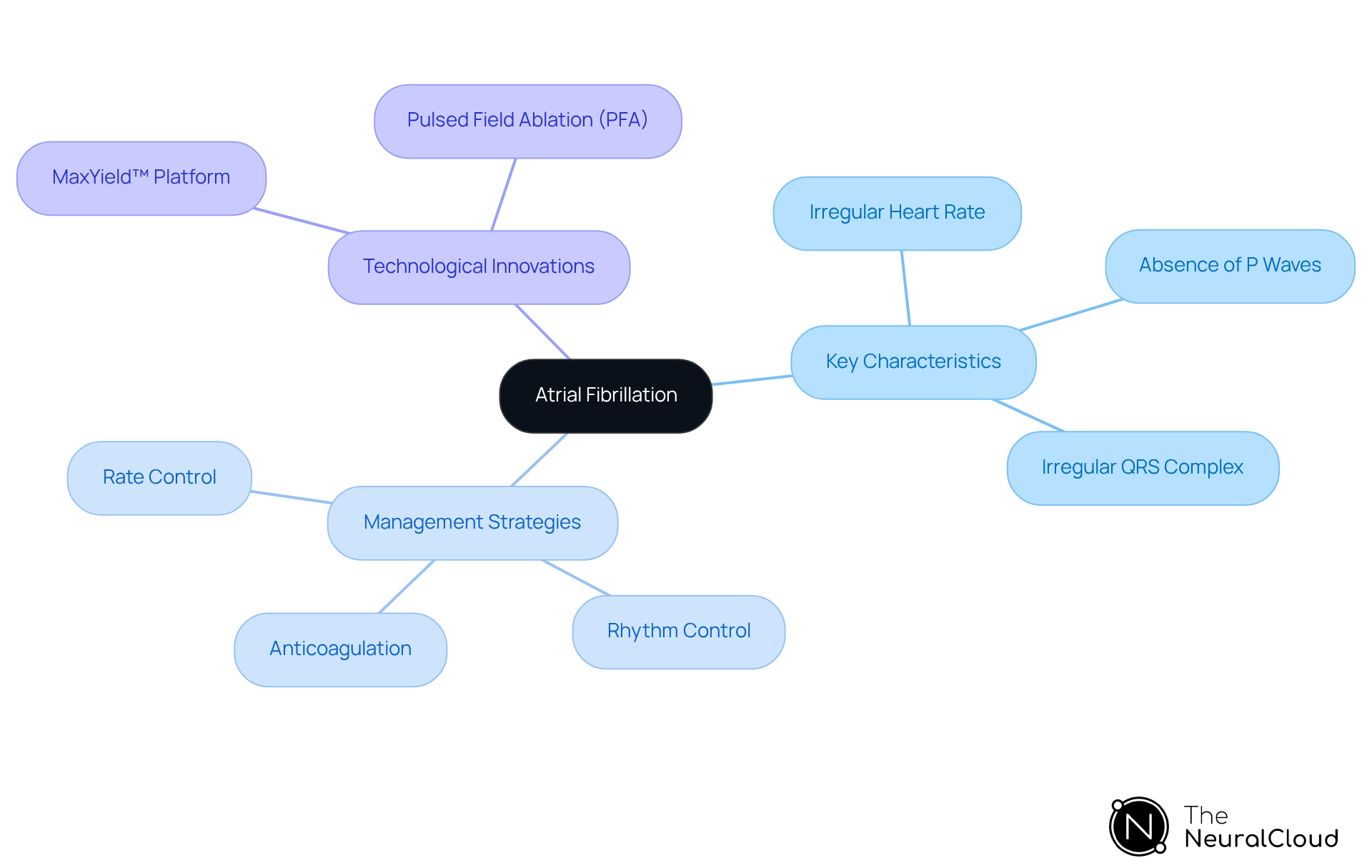
Atrial Fibrillation (AF) presents significant challenges in ECG analysis due to its irregular and often rapid heart rate, which leads to ineffective atrial contractions. On an ECG, AF is characterized by the absence of distinct P waves and an irregularly irregular QRS complex. Management strategies include:
- Rate control
- Rhythm control
Recent studies show that focusing on anticoagulation therapy can lower the risk of stroke by 23% and decrease the risk of dying from cardiovascular disease by 32%.
For health tech developers, integrating algorithms that accurately detect AF is essential for enhancing patient outcomes and improving diagnostic accuracy. The MaxYield™ platform exemplifies this innovation, featuring advanced signal processing and artifact handling to ensure clarity in ECG readings, even under challenging conditions. Its capabilities include salvaging previously obscured sections of lengthy Holter, 1-Lead, and patch monitor recordings. Additionally, automated signal labeling and adaptive algorithms significantly enhance diagnostic yield, making it an invaluable tool for healthcare professionals.
Technologies like pulsed field ablation (PFA) further illustrate modern approaches to streamline AF treatment. PFA employs ultra-fast electrical pulses to target and destroy abnormal heart cells while minimizing damage to surrounding tissue, offering a safer and faster alternative to traditional methods. As the landscape of AF management evolves, the emphasis on precise ECG detection algorithms, such as those provided by MaxYield™, becomes increasingly vital for optimizing care.
Ventricular Tachycardia: Identification and Clinical Implications
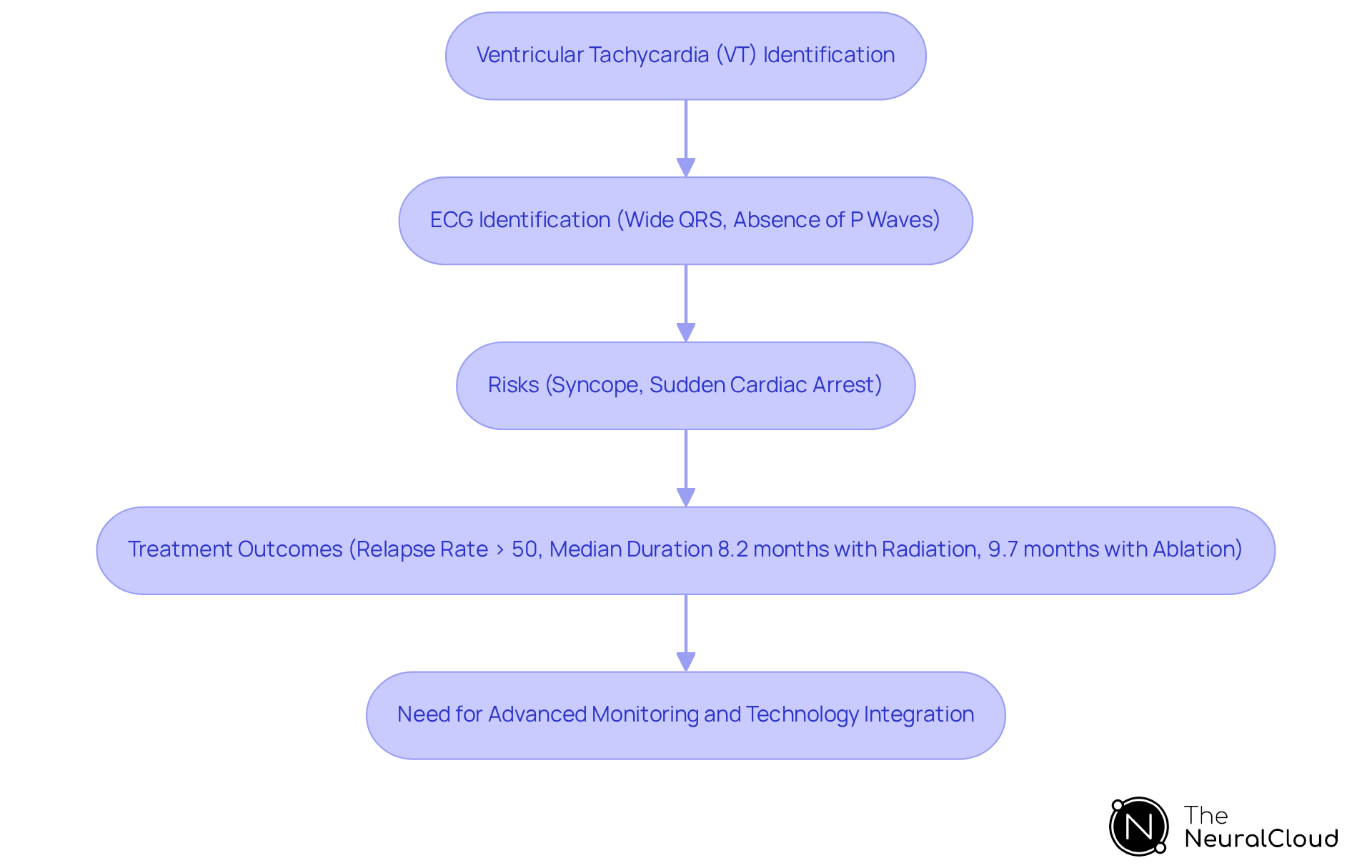
(VT) is defined by three or more consecutive ventricular beats at a rate exceeding 100 beats per minute. It can be identified on an ECG by wide QRS complexes and the presence of abnormal patterns. This arrhythmia poses significant risks, including syncope and sudden cardiac arrest. Alarmingly, over 50% of individuals experience a relapse within a year after standard treatments like catheter ablation. The median duration before new persistent VT episodes occur is approximately 8.2 months with medication, compared to 9.7 months with ablation. This highlights the urgent need for effective monitoring.
For health tech developers, integrating solutions that facilitate the detection of arrhythmias is crucial for enhancing patient safety and improving outcomes. Recent studies have shown that advanced algorithms can effectively identify arrhythmia-causing cells, illustrating how technology can revolutionize VT management. As the landscape of heart care evolves, the implementation of innovative solutions will be vital in addressing the complexities associated with ventricular tachycardia. This ultimately leads to better patient care.
Premature Ventricular Contractions: Understanding Their Impact
Premature Ventricular Contractions present significant challenges in cardiology, as they are early heartbeats originating from the ventricles. These contractions often create a sensation of a skipped beat, which can be alarming for patients. On an ECG, PVCs are identified by wide and bizarre QRS complexes that occur without preceding P waves. While many PVCs are benign, frequent occurrences can lead to more serious arrhythmias, making vigilant monitoring essential.
Research highlights the risks associated with PVCs, particularly for patients with a moderate-to-high PVC burden (≥1000/day). These individuals face a significantly increased risk of developing heart disease, with rates of 4.91% compared to 2.73% in those with a low burden. Furthermore, individuals exhibiting high-grade PVCs during recovery have a higher risk of complications. This underscores the importance of distinguishing between benign PVCs and those that may signal underlying heart issues.
To address these challenges, health tech developers should focus on creating systems capable of accurately differentiating between various PVC conditions. For instance, advancements in PVC detection algorithms can significantly enhance patient monitoring. Studies have shown the effectiveness of machine learning models in identifying AF, demonstrating the need for improved detection methods.
The integration of an advanced analytics platform, such as that offered by Neural Cloud Solutions, can revolutionize the detection and analysis of PVCs. This system maps ECG signals through noise and provides beat-by-beat analysis, assisting clinicians in recognizing heart events with enhanced precision and effectiveness. As the medical community continues to investigate the effects of PVCs on heart health, the development of reliable detection tools will be crucial in improving outcomes for patients.

Atrial Flutter: Distinguishing Features and Treatment Options
Atrial flutter is marked by a rapid and regular atrial rate, usually around 300 beats per minute. This condition is identifiable by a distinctive 'sawtooth' pattern of flutter waves on the ECG, particularly visible in leads II, III, and aVF. Effective treatment options include:
- Rate control
- Rhythm control
- Catheter ablation
Recent advancements in management highlight the importance of cardioversion, with cardioversion emerging as a viable option.
For health tech developers, it's crucial to integrate features that accurately identify and distinguish atrial flutter from atrial fibrillation. This differentiation is essential for enhancing diagnostic accuracy. Advanced platforms like Neural Cloud Solutions play a pivotal role in this process. They transform noisy recordings into detailed insights through sophisticated noise filtering and adaptive algorithms, significantly improving the identification of atrial flutter amidst challenging recordings.
Statistics show that the incidence rate of atrial flutter is reported as 88 per 100,000 person-years in the US. This underscores the critical need for accurate diagnosis of atrial flutter, as misdiagnosis can lead to inappropriate treatment strategies. Real-world examples illustrate how technology, particularly through features and services provided by MaxYield™, can improve outcomes. By ensuring precise identification and management of atrial flutter, healthcare professionals can effectively reduce the burden of this common arrhythmia.

First Degree AV Block: Recognition and Clinical Significance
First-degree atrioventricular block (AVB) is characterized by a PR interval exceeding 200 milliseconds on the ECG, with each P wave followed by a QRS complex. While it is often asymptomatic and generally considered benign, it can indicate underlying heart disease. For health tech developers, grasping the significance of this condition is essential for creating solutions to potential conduction abnormalities that may require further assessment.
Statistics show that first-degree AV block is common, with its incidence rising with age, particularly in males aged 80 years and older. Notably, a PR interval exceeding 350 milliseconds is associated with a significantly higher risk of needing permanent pacing. Research indicates that 7 out of 10 individuals with such intervals underwent pacemaker implantation, highlighting the importance of early intervention.
Experts stress the need for vigilance regarding PR interval prolongation, as they correlate with increased risks of atrial fibrillation, heart failure, and all-cause mortality. For instance, one study found that in individuals with first-degree AV block, the risk of atrial fibrillation was significantly higher compared to just 2.1% in those without.
Incorporating these insights into clinical practice can significantly enhance clinicians' ability to detect and manage potential heart issues early, ultimately leading to improved patient outcomes. By understanding the implications of first-degree AV block, developers can create more effective tools that support timely interventions.
Ventricular Fibrillation: Urgent Recognition and Response
presents significant challenges in emergency medicine, characterized by chaotic electrical activity in the ventricles. This leads to ineffective contractions and a marked loss of cardiac output. On an ECG, ventricular fibrillation manifests as a rapid, erratic waveform, lacking identifiable QRS complexes. The urgency for immediate recognition and defibrillation is critical, as survival rates depend heavily on swift intervention. Studies show that timely defibrillation can result in survival rates as high as 50% when administered promptly after VF onset.
For health tech developers, prioritizing features that enable rapid detection is essential. The MaxYield™ system exemplifies this approach, integrating advanced algorithms that identify VF in real-time. This capability allows healthcare professionals to act swiftly in critical situations. With precision, MaxYield™ effectively maps through noise, isolating key features in every heartbeat. It delivers beat-by-beat analysis of 200,000 heartbeats in under 5 minutes, enhancing the clarity and efficiency of ECG readings, which is crucial for recognizing arrhythmias, including VF.
The occurrence of VF during cardiac arrest incidents is substantial, with approximately 70% of individuals experiencing this deadly rhythm. Real-world examples underscore the importance of a swift response. Recent case studies reveal that three-quarters of individuals treated with defibrillation left the hospital with positive neurological outcomes, highlighting the impact of prompt intervention.
As we approach 2025, the emphasis on rapid recognition of VF will intensify, driven by technological advancements and a deeper understanding of cardiac emergencies. The integration of AI-powered monitoring systems, such as MaxYield™, can significantly enhance early detection and automate noise reduction, ultimately improving outcomes in critical situations.

Sinus Bradycardia: Clinical Considerations and Management
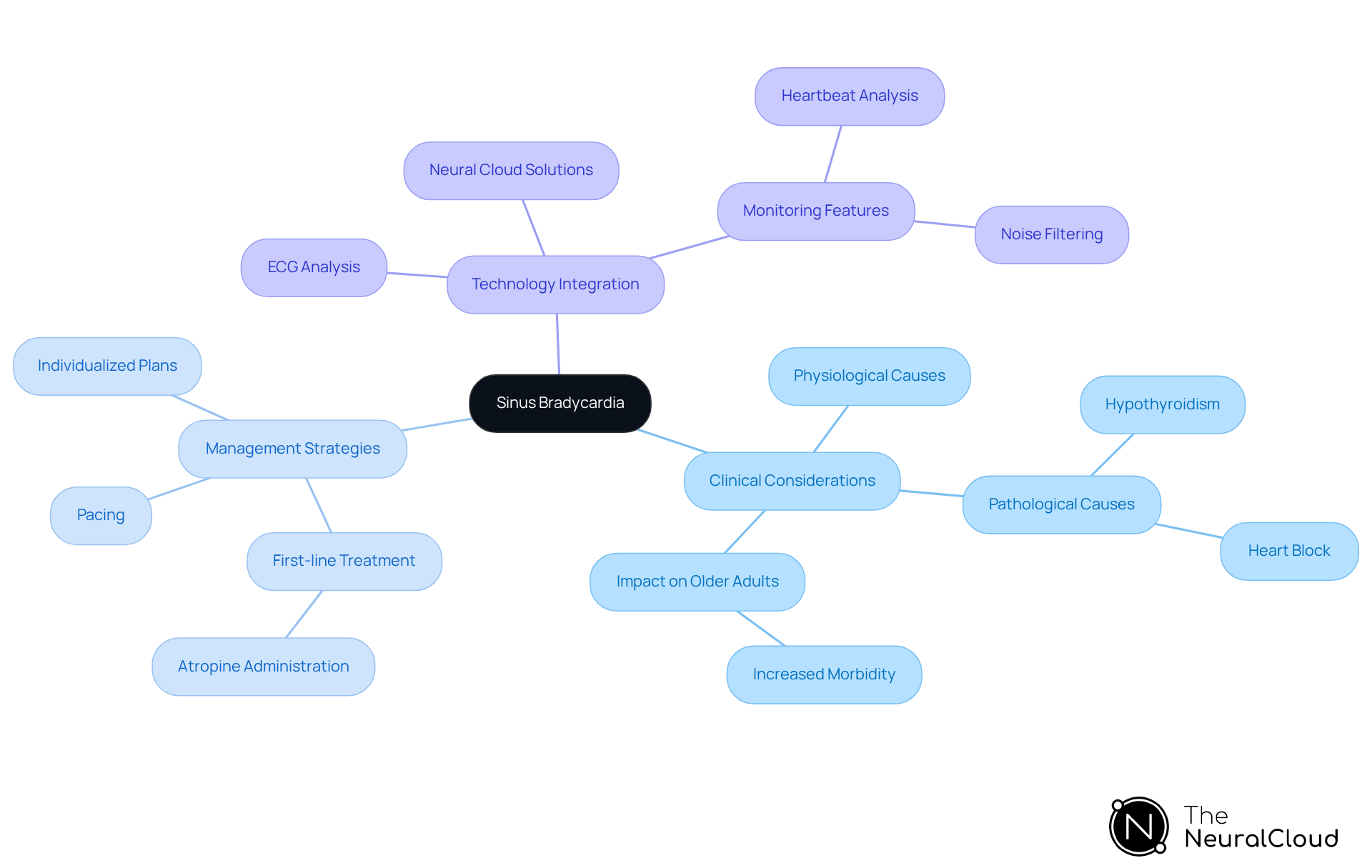
Sinus bradycardia is defined by a heart rate of fewer than 60 beats per minute, originating from the sinoatrial (SA) node. This condition can be physiological, often observed in athletes, or pathological, indicating potential underlying issues such as hypothyroidism or heart block. Recent studies emphasize that bradycardia is common, particularly in older adults, where it may correlate with increased morbidity. The American College of Cardiology highlights the necessity of prompt treatment for individuals with bradycardia, especially those experiencing dizziness or fainting.
Management strategies for sinus bradycardia typically focus on addressing the underlying cause. In symptomatic cases, atropine is often the first-line treatment, administered intravenously to increase heart rate. Additionally, pacing may be necessary for individuals with severe bradycardia or those who do not respond to medication. The Heart Rhythm Society's guidelines stress the importance of individualized care, considering factors such as symptom severity and patient preferences.
For health tech developers, understanding sinus bradycardia is crucial for ensuring accurate heart rate monitoring and facilitating appropriate clinical responses. The integration of advanced technologies like Neural Cloud Solutions' platform can significantly enhance this process. This system provides real-time data, offering detailed insights and noise filtering features that enable the swift detection of critical cardiac events.
Key Features of Neural Cloud Solutions' Platform:
- Optimizes workflow for efficiency.
- Provides comprehensive analytics.
- Offers user-friendly interfaces.
With the ability to analyze 200,000 heartbeats in less than 5 minutes and identify P-wave, QRS complex, and T-wave onsets, leveraging such advanced monitoring technologies becomes essential as the prevalence of bradycardia increases, particularly among the aging population. This ensures timely interventions, aligning with ongoing efforts to optimize cardiovascular care.
T-Wave Changes: Interpreting Their Clinical Relevance
T-Wave changes on an ECG can indicate various conditions, including ischemia, electrolyte imbalances, and structural heart disease. Abnormal T waves may present as inversions, peaks, or flattening, each suggesting different underlying issues. Recent studies highlight that T-wave abnormalities were documented in 2% of a cohort of 5,360 young, apparently healthy individuals, with 13% of those diagnosed with cardiomyopathy. This underscores the importance of accurately interpreting T-wave changes, as changes greater than 0.183 mV significantly increase the likelihood of cardiovascular events by 18 times.
For health tech developers, integrating algorithms is crucial for enhancing diagnostic accuracy and supporting clinical decision-making. The MaxYield™ system exemplifies this integration, offering technology that maps ECG signals through noise, isolating and labeling key features in every heartbeat. With its capability to provide beat-by-beat analysis and handle 200,000 heartbeats in under 5 minutes, this system ensures that abnormalities are precisely identified and examined, even in recordings with elevated levels of noise and artifacts.
The prognostic value of T-wave changes has been emphasized in recent research, which indicates that these changes are stronger predictors of cardiovascular mortality than ST segment depression. For instance, a study involving 46,950 ECGs found that T-wave abnormalities were associated with increased mortality, reinforcing the need for focused clinical attention on these markers.
Dr. Gherardo Finocchiaro observed that the capability to distinguish between benign and harmful T wave abnormalities is crucial for effective management of individuals, especially since abnormalities impacting multiple regions of the heart were discovered to be seven times more likely to signify underlying disease. This highlights the clinical relevance of developing advanced algorithms, such as those found in MaxYield™, that can assist healthcare professionals in making informed decisions based on precise ECG interpretations. Real-world applications of this technology can lead to improved patient outcomes, particularly in identifying those at risk for serious cardiac events.

Conclusion
Mastering basic EKG rhythms is essential for health tech developers, as these rhythms form the foundation for diagnosing various cardiac conditions. However, ECG analysis can be challenging due to the complexity of heart rhythms and the need for timely intervention. This is where advanced tools like Neural Cloud Solutions' MaxYield™ platform come into play.
The MaxYield™ platform streamlines ECG analysis by integrating cutting-edge technology that enhances the accuracy and speed of identifying critical heart rhythms. Key features include:
- Automated rhythm detection
- Real-time monitoring
- Comprehensive reporting capabilities
These features not only simplify the analysis process but also empower healthcare professionals to make informed decisions quickly.
The advantages of using the MaxYield™ platform are significant. By improving the efficiency of ECG analysis, healthcare providers can ensure timely detection and intervention, particularly in life-threatening situations like ventricular fibrillation. This ultimately leads to better patient outcomes and improved cardiac health management.
As the healthcare landscape evolves, understanding and accurately interpreting EKG rhythms remains crucial. Health tech developers are encouraged to prioritize the integration of advanced ECG analysis tools like MaxYield™. By doing so, they can enhance monitoring capabilities and facilitate prompt clinical decision-making, contributing to improved patient care and potentially saving lives through timely interventions.
Frequently Asked Questions
What is the MaxYield™ platform and what challenges does it address in ECG analysis?
The MaxYield™ platform by Neural Cloud Solutions automates the detection and labeling of essential heart features, significantly improving efficiency and accuracy in ECG analysis.
How quickly can MaxYield™ process ECG data?
MaxYield™ can process over 200,000 heartbeats in under five minutes, providing timely and reliable insights for healthcare professionals.
What are the key features of the MaxYield™ platform?
Key features include advanced noise filtering capabilities that enhance ECG signal clarity, compatibility with various ECG devices, and the ability to transform noisy recordings into detailed insights.
How does MaxYield™ improve patient outcomes in clinical settings?
Case studies show that the AI-ECG group using MaxYield™ reduced the time from ECG acquisition to cath lab arrival to an average of 43.3 minutes, compared to 52.3 minutes for standard care, leading to improved patient outcomes.
What is sinus rhythm and why is it important in EKG interpretation?
Sinus rhythm is characterized by a regular heart rate of 60 to 100 beats per minute, initiated by the sinoatrial (SA) node. It serves as the baseline for diagnosing arrhythmias and other heart conditions, making it crucial for health tech developers.
What is the significance of maintaining normal sinus rhythm (NSR)?
Maintaining NSR is linked to improved cardiac health outcomes, with research indicating that individuals spend an average of 38.2% of their days entirely in NSR, correlating with better health outcomes.
What are the challenges associated with atrial fibrillation (AF) in ECG analysis?
AF presents challenges due to its irregular and often rapid heart rate, leading to ineffective atrial contractions and the absence of distinct P waves on an ECG.
What management strategies are effective for atrial fibrillation?
Effective management strategies for AF include rate control, rhythm control, and anticoagulation to reduce the risk of thromboembolic events.
How does the MaxYield™ platform enhance the detection and management of atrial fibrillation?
MaxYield™ features advanced noise reduction and artifact handling, enabling accurate detection of AF and salvaging obscured sections of ECG recordings, thereby enhancing diagnostic yield.
What modern technologies are being used for atrial fibrillation treatment?
Technologies like pulsed field ablation (PFA) are being used, which employ ultra-fast electrical pulses to target and destroy abnormal heart cells while minimizing damage to surrounding tissue.
List of Sources
- Neural Cloud Solutions MaxYield™: Advanced ECG Analysis for Healthcare Professionals
- theneuralcloud.com (https://theneuralcloud.com/post/7-key-benefits-of-ecg-ai-readers-for-enhanced-cardiac-diagnostics)
- morningstar.com (https://morningstar.com/news/accesswire/1100002msn/aiml-innovations-inc-announces-grant-of-us-patent-protecting-core-ecg-signal-processing-architecture)
- AIML Hits Key Regulatory Benchmark with 510(k) Filing for MaxYield(TM) Signal Enhancement Platform (https://biospace.com/press-releases/aiml-hits-key-regulatory-benchmark-with-510k-filing-for-maxyieldtm-signal-enhancement-platform)
- aiml.health (https://aiml.health/press-release/aiml-subsidiary-neuralcloud-solutions-commencing-pilot-with-canadian-cardiology-clinic-to-advance-ai-powered-ecg-reporting)
- Sinus Rhythm: The Foundation of EKG Interpretation
- newsnetwork.mayoclinic.org (https://newsnetwork.mayoclinic.org/discussion/mayo-clinic-research-finds-ai-enabled-ecgs-may-identify-patients-at-greater-risk-of-stroke-cognitive-decline)
- Normal Sinus Rhythm (https://litfl.com/normal-sinus-rhythm-ecg-library)
- medscape.com (https://medscape.com/viewarticle/everyone-deserves-shot-american-dream-sinus-rhythm-2025a1000jle)
- cvphysiology.com (https://cvphysiology.com/arrhythmias/a002)
- onlinelibrary.wiley.com (https://onlinelibrary.wiley.com/doi/10.1111/pace.12354)
- Atrial Fibrillation: Key Characteristics and Management Strategies
- news.med.miami.edu (https://news.med.miami.edu/how-innovation-and-technology-can-improve-atrial-fibrillation-patient-care)
- northwell.edu (https://northwell.edu/news/insights/afib-treatment-what-heart-doctors-need-you-to-know)
- ahajournals.org (https://ahajournals.org/doi/10.1161/CIRCEP.123.012143?doi=10.1161/CIRCEP.123.012143)
- mountsinai.org (https://mountsinai.org/about/newsroom/2025/new-artificial-intelligence-model-accurately-identifies-which-atrial-fibrillation-patients-need-blood-thinners-to-prevent-stroke)
- acc.org (https://acc.org/Latest-in-Cardiology/Articles/2025/11/03/16/19/sat-315pm-afib-aha-2025)
- Ventricular Tachycardia: Identification and Clinical Implications
- cardionerds.com (https://cardionerds.com/303-ccc-management-of-ventricular-tachycardia-and-electrical-storm-in-the-cicu-with-dr-janice-chyou)
- astro.org (https://astro.org/news-and-publications/news-and-media-center/news-releases/2025/radiation-therapy-shows-promise-for-patients-with-severe-heart-rhythm-disorder)
- hrsonline.org (https://hrsonline.org/news/novel-ai-predicts-near-term-vt)
- kcl.ac.uk (https://kcl.ac.uk/news/ai-tool-helps-pinpoint-problem-heart-cells-in-ventricular-tachycardia)
- nature.com (https://nature.com/subjects/ventricular-tachycardia)
- Premature Ventricular Contractions: Understanding Their Impact
- nhlbi.nih.gov (https://nhlbi.nih.gov/news/2021/pattern-post-exercise-heart-arrythmias-linked-higher-deaths-asymptomatic-people)
- hrsonline.org (https://hrsonline.org/resource/the-lead-episode-126-a-discussion-of-transcutaneous-electrical-vagus-nerve-stimulation-to-suppress-premature-ventricular-contractions-a-crossover-randomized-clinical-trial-nova-pvc?ref=blog.sda.company&)
- acc.org (https://acc.org/Latest-in-Cardiology/Articles/2022/05/27/16/19/Premature-Ventricular-Contractions-in-Athletes)
- ahajournals.org (https://ahajournals.org/doi/10.1161/JAHA.122.027674)
- sciencedirect.com (https://sciencedirect.com/science/article/abs/pii/S0033062021000384)
- Atrial Flutter: Distinguishing Features and Treatment Options
- academic.oup.com (https://academic.oup.com/eurheartj/article/45/24/2133/7655491)
- pmc.ncbi.nlm.nih.gov (https://pmc.ncbi.nlm.nih.gov/articles/PMC10288018)
- mayoclinic.org (https://mayoclinic.org/diseases-conditions/atrial-flutter/diagnosis-treatment/drc-20572204)
- cardiovascularbusiness.com (https://cardiovascularbusiness.com/topics/clinical/heart-rhythm/fda-approves-new-short-term-treatment-afib-atrial-flutter-critical-care-settings)
- medcentral.com (https://medcentral.com/cardiology/atrial-fibrillation-research)
- First Degree AV Block: Recognition and Clinical Significance
- ahajournals.org (https://ahajournals.org/doi/10.1161/circ.142.suppl_3.13015)
- academic.oup.com (https://academic.oup.com/europace/article/25/Supplement_1/euad122.387/7176807)
- sciencedirect.com (https://sciencedirect.com/science/article/pii/S2405500X16300093)
- clinmedjournals.org (https://clinmedjournals.org/articles/ijcc/international-journal-of-clinical-cardiology-ijcc-6-162.php?jid=ijcc)
- bmccardiovascdisord.biomedcentral.com (https://bmccardiovascdisord.biomedcentral.com/articles/10.1186/s12872-019-1202-4)
- Ventricular Fibrillation: Urgent Recognition and Response
- Part 9: Adult Advanced Life Support: 2025 American Heart Association Guidelines for Cardiopulmonary Resuscitation and Emergency Cardiovascular Care | Circulation (https://ahajournals.org/doi/10.1161/CIR.0000000000001376)
- ems1.com (https://ems1.com/ems-today/articles/ems-today-2019-quick-take-a-prehospital-approach-to-refractory-ventricular-fibrillation-vVZ5FGVxShSL9WS5)
- ncbi.nlm.nih.gov (https://ncbi.nlm.nih.gov/books/NBK537120)
- usa.philips.com (https://usa.philips.com/a-w/about/news/archive/standard/news/articles/2023/20230522-philips-presents-findings-from-retrospective-study-at-hrs-2023-showing-ai-models-potential-to-predict-ventricular-tachycardia.html)
- Sinus Bradycardia: Clinical Considerations and Management
- jacc.org (https://jacc.org/guidelines/bradycardia)
- mdpi.com (https://mdpi.com/2075-1729/14/9/1140)
- Societies Publish New Guidance for the Treatment of Slow, Irregular Heartbeats - HRS (https://hrsonline.org/news/societies-publish-new-guidance-treatment-slow-irregular-heartbeats)
- news-medical.net (https://news-medical.net/health/Bradycardia-Treatment.aspx)
- acc.org (https://acc.org/latest-in-cardiology/ten-points-to-remember/2018/11/05/15/12/2018-acc-aha-hrs-guideline-on-bradycardia)
- T-Wave Changes: Interpreting Their Clinical Relevance
- pmc.ncbi.nlm.nih.gov (https://pmc.ncbi.nlm.nih.gov/articles/PMC6932391)
- sciencedirect.com (https://sciencedirect.com/science/article/abs/pii/S0022073625001736)
- ECG T Wave Inversion Features Predict Cardiomyopathy | www.PhysiciansWeekly.com (https://physiciansweekly.com/post/ecg-t-wave-inversion-features-predict-cardiomyopathy)
- rheumatologyadvisor.com (https://rheumatologyadvisor.com/news/st-t-t-wave-changes-most-common-ecg-abnormalities-sle-lupus)
- citystgeorges.ac.uk (https://citystgeorges.ac.uk/news-and-events/news/2025/july/new-clues-from-heart-rhythm-test-could-prevent-sudden-death-in-under-35s)