Introduction
Understanding the complexities of ST-Elevation Myocardial Infarction (STEMI) is essential in cardiology, where timely intervention can save lives. This article explores the critical features of STEMI as seen on an ECG, providing healthcare professionals with the necessary knowledge to identify and respond to this urgent condition effectively. However, the risk of misdiagnosis and the various interpretations can complicate the recognition of STEMI. So, how can clinicians ensure they accurately identify STEMI amidst these challenges?
By focusing on the key characteristics of STEMI, healthcare providers can enhance their diagnostic skills. Recognizing the distinct ECG patterns associated with STEMI is vital for prompt treatment. This understanding not only aids in accurate diagnosis but also improves patient outcomes, as timely intervention is crucial in managing this life-threatening condition.
Define STEMI: Understanding Its Clinical Significance
represents a critical type of heart attack resulting from the complete blockage of a coronary artery, which leads to significant myocardial ischemia. This condition can be identified by examining ECG readings, especially through the elevation of the ST segment in two or more contiguous leads. The clinical implications of STEMI are serious, as it is linked to high morbidity and mortality rates; for example, the overall mortality rate is 9.9%, with women facing a higher rate of 14% compared to 8% in men. Immediate recognition and intervention are vital for restoring blood flow and minimizing heart muscle damage, as delays can triple the risk of mortality, especially in rural areas.
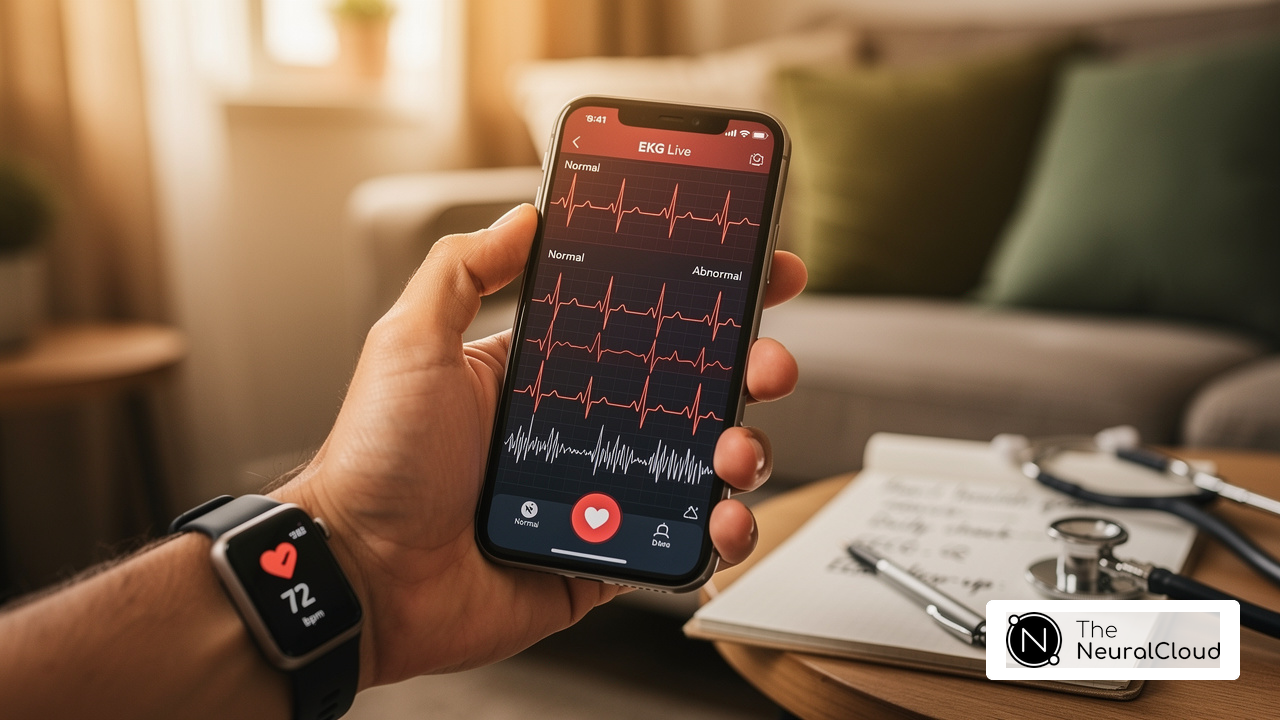
Recent studies underscore the importance of prompt diagnosis of myocardial infarction. AI-assisted ECG interpretation, such as that provided by Neural Cloud Solutions' technology, employs a system that significantly reduces diagnostic gaps and improves treatment timelines. The MaxYield™ technology is designed to excel in noise reduction and distinct wave identification, enabling rapid isolation of ECG waves even in recordings with high noise levels and artifacts. For instance, the DIFOCCULT-3 trial showed that AI-enhanced diagnosis resulted in faster treatment initiation, a crucial factor in enhancing patient outcomes.
For healthcare professionals, understanding STEMI is essential to grasp the nuances of heart attacks. Prompt diagnosis can dramatically affect survival rates and long-term recovery. The technology offers several key features:
- Noise Reduction: Effectively reduces background noise for clearer ECG readings.
- Wave Identification: Quickly identifies distinct ECG waves, even in challenging recordings.
- Adaptive Learning: Adapts and improves over time, enhancing diagnostic accuracy.
These features translate into significant advantages for healthcare providers, including:
- Reduced Time to Treatment: Reduces time to treatment, improving patient outcomes.
- Increased Accuracy: Minimizes the risk of misdiagnosis, ensuring appropriate care.
- Enhanced Efficiency: Streamlines the ECG analysis process, allowing for more patients to be assessed in less time.
In conclusion, the technology not only addresses the challenges in ECG analysis but also provides healthcare professionals with the tools necessary to improve patient care and outcomes.
Identify Key ECG Features of STEMI: Visual Indicators and Patterns
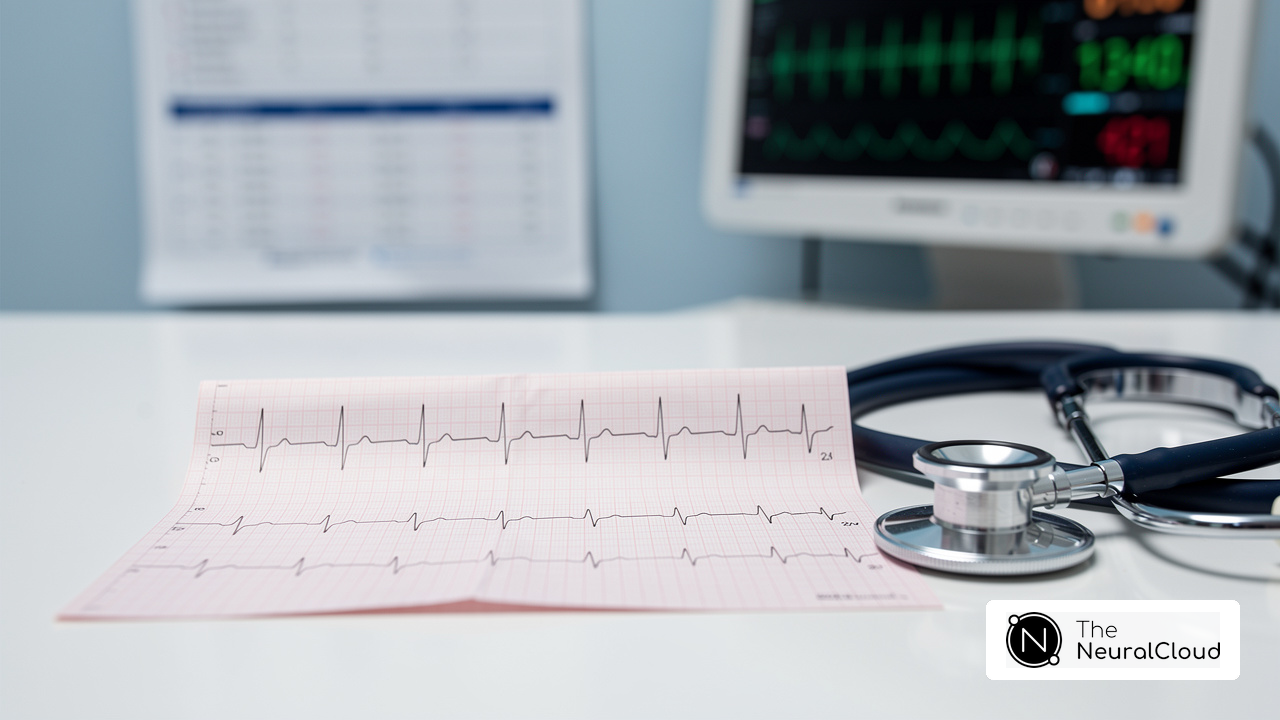
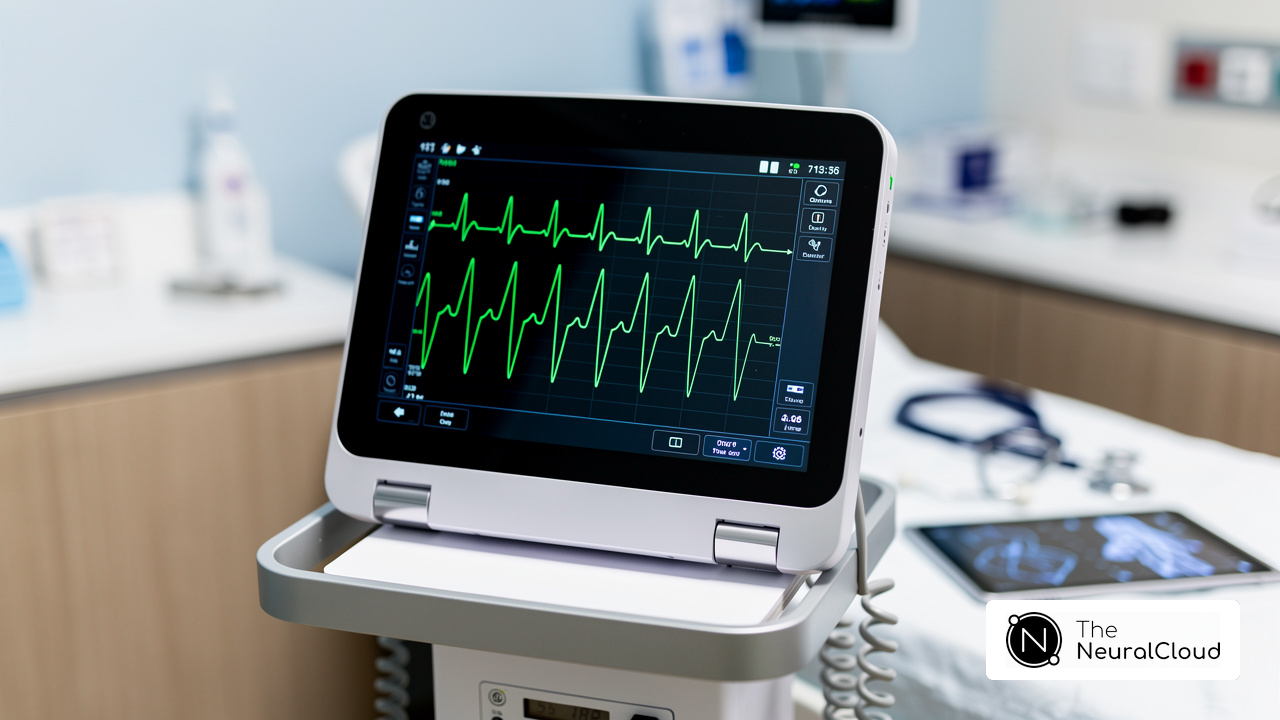
On an ECG, what does a STEMI look like on ECG is indicated by ST-segment elevation, which typically appears as a convex upward deflection in the affected leads. A critical diagnostic criterion is a rise of at least 1 mm in two adjacent leads. In cases of anterior STEMI, elevations are prominently noted in leads V1 to V6, while inferior STEMI usually shows elevations in leads II, III, and aVF. Additionally, reciprocal ST-segment depression may be observed in leads opposite the infarction site, providing further diagnostic insights. Recognizing what does a STEMI look like on ECG is vital for healthcare providers, as timely identification can significantly influence treatment outcomes.
For example, a recent case study highlighted the importance of thorough assessment in patients presenting with chest pain and syncope, leading to the activation of the cath lab for suspected STEMI. Moreover, data reveals that STEMI is the most prevalent subtype, often complicated by right ventricular and posterior involvement, emphasizing the necessity for careful ECG interpretation. Understanding the nuances of ST-segment changes, including concave up and concave down shapes, is essential for distinguishing between benign variants and acute injury patterns. This knowledge enables clinicians to make informed decisions quickly, ultimately improving patient care.
The MaxYield™ platform from Neural Cloud Solutions automates ECG analysis, facilitating rapid identification of key features in every heartbeat. This innovative tool addresses the challenges in ECG interpretation by streamlining the diagnostic process.
Features of MaxYield™:
- Algorithms for quick identification of abnormalities.
- Comprehensive reporting that highlights critical findings.
- User-friendly interface designed for healthcare professionals.
Advantages for Healthcare Professionals:
- Enhances diagnostic accuracy.
- Reduces the time spent on manual analysis, allowing for more focus on patient care.
- Supports clinical decision-making.
By leveraging the MaxYield™ platform, healthcare professionals can improve their diagnostic capabilities, ultimately leading to better patient outcomes.

Explore the Pathophysiology of STEMI: Contextualizing ECG Findings
The pathophysiology of a specific type of heart attack primarily involves the rupture of an atherosclerotic plaque within a coronary artery. This rupture leads to thrombus formation, which subsequently blocks blood flow. Such blockage restricts the delivery of oxygen-rich blood to the heart muscle, resulting in ischemia. When oxygen is lacking, myocardial cells depolarize irregularly, which is a critical event. If blood flow isn't restored quickly, the affected myocardial tissue may undergo necrosis, which results in significant damage, including the loss of function.
Understanding these mechanisms is essential for clinicians. Early intervention can significantly influence patient outcomes. For instance, research indicates that timely treatment can reduce mortality rates. This improvement enhances diagnostic precision and ensures better management of patients. Such advancements underscore the importance of rapid response, ultimately improving and enhancing patient care.

Discuss Variations and Complications: Understanding the Complexity of STEMI on ECG
Myocardial infarction can present in various atypical forms that complicate diagnosis, including unusual ST-segment elevation patterns and the presence of non-specific symptoms. These equivalents may not meet the classic criteria but indicate significant coronary occlusion. For instance, conditions like pericarditis or early repolarization can mimic ST elevation, which may lead to potential misdiagnosis. Recent data indicates that 40% of individuals experiencing genuine heart attacks may exhibit signs of non-specific equivalents, underscoring the need for heightened awareness among healthcare professionals.
Additionally, complications such as arrhythmias or mechanical issues like ventricular rupture can arise from untreated myocardial infarction, complicating the clinical landscape. A retrospective analysis revealed that 31.1% of unsuitable activations did not satisfy ECG criteria, emphasizing the critical importance of accurate interpretation. As Dr. Jesse McLaren pointed out, numerous causes of ST elevation exist beyond acute coronary occlusion, which can affect the interpretation of ECG findings, potentially resulting in mismanagement.
To tackle these challenges, Neural Cloud Solutions employs its advanced analytics platform, which adapts with each use to improve diagnostic accuracy. This AI-driven automation not only boosts the accuracy and efficiency of ECG interpretation but also aids clinicians in recognizing variations in ECG presentations. By ensuring timely and effective intervention, the MaxYield™ platform significantly improves patient outcomes.

Conclusion
Understanding the visual indicators of ST-Elevation Myocardial Infarction (STEMI) on ECG is crucial for timely and effective intervention in patients experiencing heart attacks. Recognizing key ECG features, such as ST-segment elevation, is essential for enhancing diagnostic accuracy and improving patient outcomes. The MaxYield™ platform offers advanced technologies that help healthcare professionals navigate the complexities of ECG interpretation, enabling swift responses to critical situations.
The MaxYield™ platform features AI-assisted tools that streamline ECG analysis. These tools filter noise and recognize distinct waveforms, adapting through continuous learning to enhance diagnostic precision and efficiency. By being aware of variations and complications associated with STEMI, healthcare providers can prevent misdiagnoses and ensure appropriate treatment is administered.
Integrating advanced technologies like MaxYield™ into clinical practice is vital for improving the reliability of ECG assessments. As healthcare providers embrace these innovative solutions, the potential to save lives and enhance recovery rates in patients with STEMI becomes increasingly attainable. Ongoing education and the adoption of cutting-edge tools will ensure that clinicians are well-equipped to face the challenges posed by this critical condition.
Frequently Asked Questions
What is STEMI?
ST-Elevation Myocardial Infarction (STEMI) is a critical type of heart attack caused by the complete blockage of a coronary artery, leading to significant myocardial ischemia.
How can STEMI be identified?
STEMI can be identified through an ECG by examining the elevation of the ST segment in two or more contiguous leads.
What are the clinical implications of STEMI?
The clinical implications of STEMI are serious, with high morbidity and mortality rates. The overall hospital mortality rate is 9.9%, with women facing a higher rate of 14% compared to 8% in men.
Why is immediate recognition and intervention important in STEMI cases?
Immediate recognition and intervention are crucial for restoring blood flow and minimizing heart muscle damage, as delays can triple the risk of mortality, particularly in rural areas.
How does AI assist in the diagnosis of STEMI?
AI-assisted ECG interpretation, such as that provided by Neural Cloud Solutions' MaxYield™ platform, reduces diagnostic gaps and improves treatment timelines through features like noise filtering and distinct wave recognition.
What are the benefits of using the MaxYield™ platform for STEMI diagnosis?
The MaxYield™ platform offers several benefits, including faster diagnosis, increased accuracy in identifying STEMI, and enhanced efficiency in ECG analysis.
What specific features does the MaxYield™ platform have?
Key features of the MaxYield™ platform include noise filtering for clearer ECG readings, quick wave recognition even in challenging recordings, and a Continuous Learning Model that enhances diagnostic accuracy over time.
How does AI-enhanced diagnosis impact treatment times?
AI-enhanced diagnosis can result in door-to-balloon times of under 90 minutes, significantly improving patient outcomes.
Why is it important for healthcare professionals to understand STEMI and its ECG presentation?
Understanding what STEMI looks like on ECG is essential for healthcare professionals, as prompt diagnosis can dramatically affect survival rates and long-term recovery for patients.
List of Sources
- Define STEMI: Understanding Its Clinical Significance
- Queen of Hearts AI Hits 92% STEMI Accuracy (https://powerfulmedical.com/blog/pmcardio-reports-positive-rct-results-and-late-breaking-clinical-science-for-stemi-detection)
- dovepress.com (https://dovepress.com/factors-of-hospital-mortality-in-men-and-women-with-st-elevation-myoca-peer-reviewed-fulltext-article-IJGM)
- STEMI: ST-segment Elevation Myocardial Infarction - The Cardiology Advisor (https://thecardiologyadvisor.com/ddi/stemi-st-elevation-myocardial-infarction)
- Contributing to Advancing STEMI Heart Attack Care | Minneapolis Heart Institute Foundation (https://mplsheart.org/news/contributing-advancing-stemi-heart-attack-care)
- parade.com (https://parade.com/1187612/michelle-parkerton/quotes-about-heart-disease)
- Identify Key ECG Features of STEMI: Visual Indicators and Patterns
- ecgweekly.com (https://ecgweekly.com/ecg-tag/stemi)
- ecgcourse.com (https://ecgcourse.com/stemi-mimic-series-3-cases-st-segment-elevation-differential-diagnosis?srsltid=AfmBOoqqwpW3dpAHlNeuaqHYX-L3WmNgLceuAZH7fulBF1Rh1NSchOsR)
- AI-ECG Finds STEMI Faster, Cuts False-Positive Cath Lab Activations (https://tctmd.com/news/ai-ecg-finds-stemi-faster-cuts-false-positive-cath-lab-activations)
- Explore the Pathophysiology of STEMI: Contextualizing ECG Findings
- icthealth.org (https://icthealth.org/news/ai-ecg-boosts-heart-attack-detection-and-cuts-false-alarms)
- parade.com (https://parade.com/1187612/michelle-parkerton/quotes-about-heart-disease)
- STEMI: ST-segment Elevation Myocardial Infarction - The Cardiology Advisor (https://thecardiologyadvisor.com/ddi/stemi-st-elevation-myocardial-infarction)
- AI-ECG Finds STEMI Faster, Cuts False-Positive Cath Lab Activations (https://tctmd.com/news/ai-ecg-finds-stemi-faster-cuts-false-positive-cath-lab-activations)
- studocu.com (https://studocu.com/en-us/document/texas-am-university/nursing-foundation/case-studies-acute-myocardial-infarction-stemi/10297665)
- Discuss Variations and Complications: Understanding the Complexity of STEMI on ECG
- emergencymedicinecases.com (https://emergencymedicinecases.com/stemi-occlusion-mi-complications)
- AI-ECG Finds STEMI Faster, Cuts False-Positive Cath Lab Activations (https://tctmd.com/news/ai-ecg-finds-stemi-faster-cuts-false-positive-cath-lab-activations)
- revespcardiol.org (https://revespcardiol.org/en-false-positive-stemi-activations-in-articulo-S1885585717303055)
- Report identifies risks in ambulance ECG interpretation and timely STEMI diagnosis — HSSIB (https://hssib.org.uk/news-events-blog/report-identifies-risks-in-ambulance-ecg-interpretation-and-timely-stemi-diagnosis)
- STEMI: ST-segment Elevation Myocardial Infarction - The Cardiology Advisor (https://thecardiologyadvisor.com/ddi/stemi-st-elevation-myocardial-infarction)