Introduction
Understanding the complexities of diagnosing acute myocardial infarction (AMI) in patients with left bundle branch block (LBBB) is essential for healthcare professionals. The Smith Modified Sgarbossa Criteria play a crucial role in improving the accuracy of ECG interpretations, enabling clinicians to identify significant ST-segment changes. However, many practitioners find it challenging to apply these criteria effectively in real-world situations.
To enhance patient outcomes, healthcare providers must master this vital skill. By doing so, they can navigate the complexities of ECG interpretation with greater confidence. This mastery not only aids in accurate diagnosis but also contributes to better treatment decisions, ultimately benefiting patient care.
Understand the Smith Modified Sgarbossa Criteria
The criteria known as the Smith Modified Sgarbossa Criteria are crucial guidelines for diagnosing acute myocardial infarction (AMI) in patients with left bundle branch block (LBBB). These criteria significantly enhance the accuracy of diagnosis by pinpointing specific ECG changes. Here’s a breakdown of the criteria:
- Concordant ST rise: A rise of 1 mm or more in any lead with a positive QRS complex (score 5).
- Concordant ST depression: An ST depression of 1 mm or more in leads V1-V3 (score 3).
- Excessively discordant ST elevation: The ST elevation must be at least 25% of the preceding R-wave depth (score 2).
Understanding these criteria is vital for effective ECG interpretation, as they provide a framework in complex ECG scenarios. Recent studies indicate that cases of AMI are on the rise, particularly among the elderly, making these guidelines increasingly important. For instance, a case study highlighted a patient with LBBB who met the criteria, leading to a diagnosis for significant coronary artery narrowing. By applying these criteria, clinicians can enhance diagnostic accuracy and ultimately improve patient outcomes.

Apply the Criteria to ECG Readings
To effectively apply the criteria to ECG readings, follow these essential steps:
-
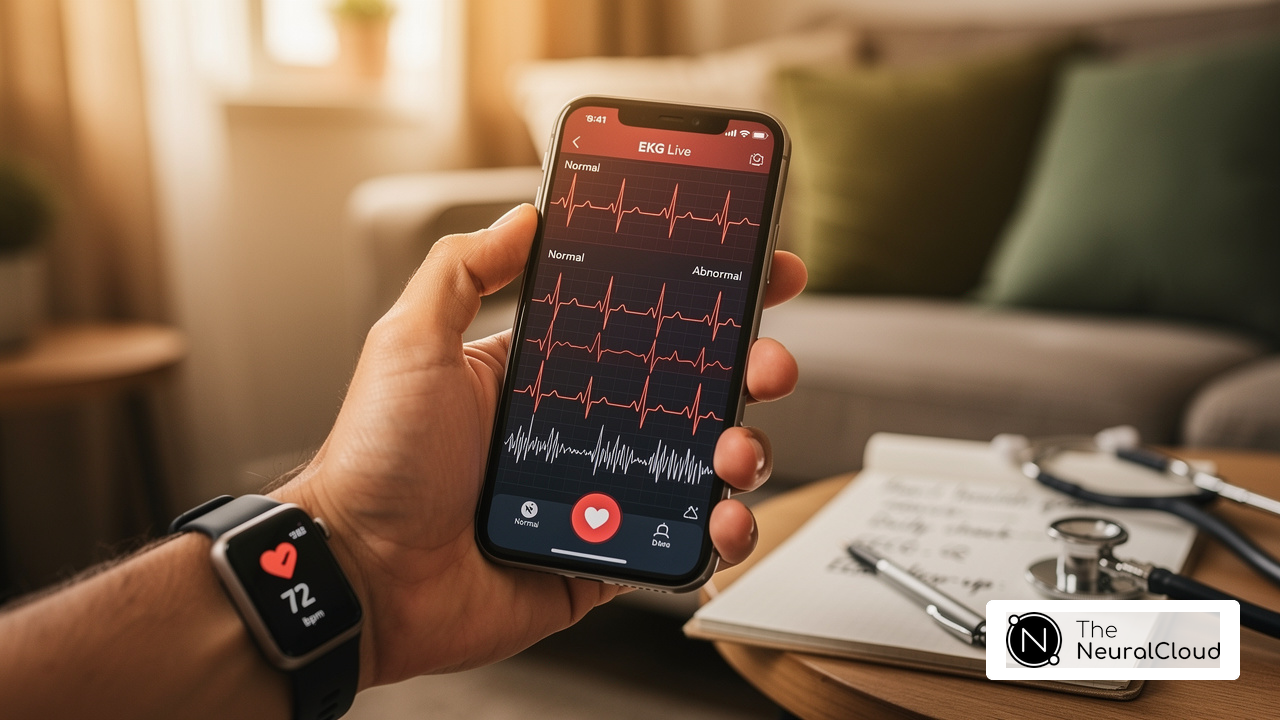
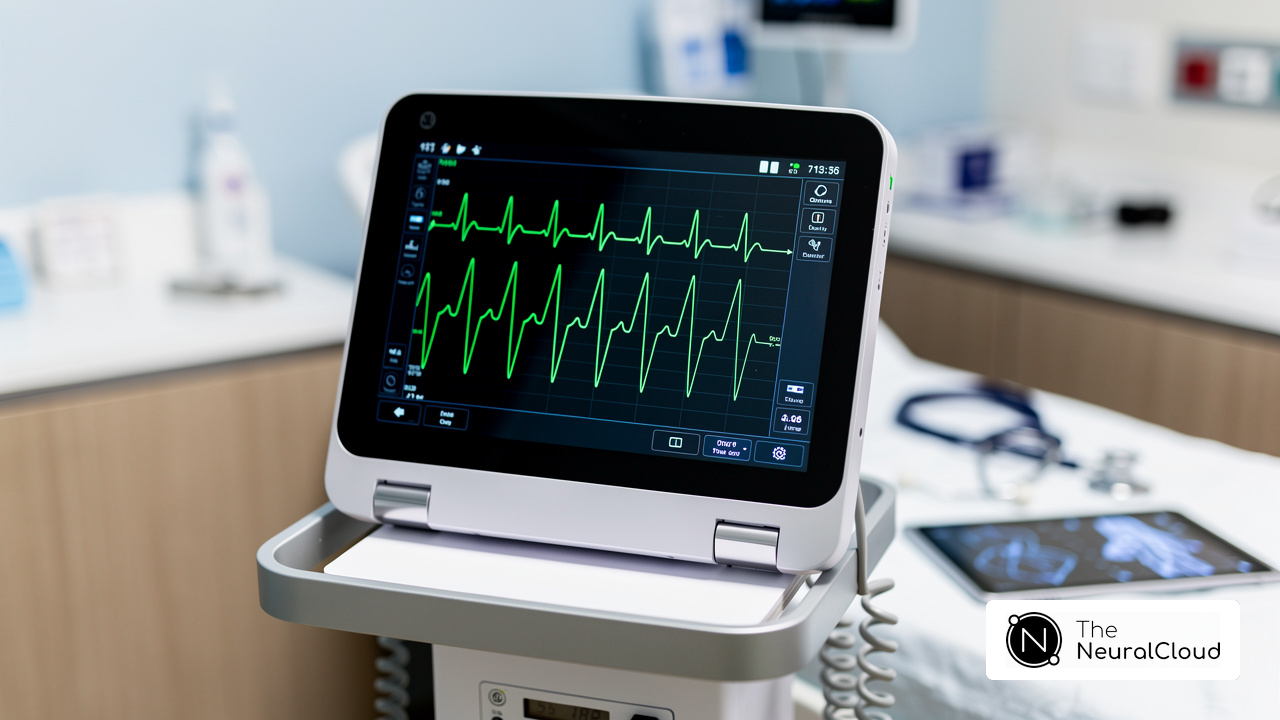
Obtain a clear ECG: Start by ensuring the ECG is free from artifacts and noise, as these can obscure critical features necessary for accurate interpretation. The software from Neural Cloud Solutions enhances this process by utilizing advanced algorithms and distinct wave recognition. This allows for the identification of abnormalities, even in recordings with significant noise and artifacts.
-
Identify the leads: Locate leads with a positive deflection, which will be essential for assessing concordant ST rise.
-
Measure the elevations:
- For ST elevation, confirm an elevation of at least 1 mm in any lead with a positive deflection.
- For concordant ST depression, evaluate leads V1-V3 for a depression of at least 1 mm.
- For highly discordant ST elevation, calculate the ratio of ST elevation to the prior R-wave depth, ensuring it meets the requirement of ≥ 25%.
-
Score the findings: Assign scores based on the criteria met, summing them to assess the likelihood of acute myocardial infarction.
-
Interpret the results: A total score of 3 or more indicates a high probability of AMI, guiding subsequent clinical actions.
By systematically following these steps, healthcare professionals can significantly enhance their diagnostic accuracy, especially in complex cases where traditional methods like the Smith Modified Sgarbossa may fall short. Incorporating practical examples of how MaxYield™ has been applied in real-world scenarios can further illustrate its effectiveness in improving ECG analysis.

Troubleshoot Common Issues in ECG Interpretation
Interpreting ECGs using the criteria can present several challenges. Here are effective troubleshooting tips to navigate these common issues:
- Ensure proper lead placement and minimize external interferences such as movement or electrical noise. If artifacts are detected, consider utilizing filters. The filter from significantly reduces artifacts, helping to salvage previously obscured sections of recordings.
- Familiarize yourself with normal ST segment variations to avoid confusing them with pathological changes. Using a reference ECG for comparison can clarify interpretations. Recent findings indicate that 39% of ECG evaluations by automated devices were incorrect, emphasizing the need for careful analysis. MaxYield™ enhances accuracy by evolving its algorithms with each use, improving diagnostic yield over time.
- Variability in the QRS complex across leads may signal a technical issue or a more complex underlying condition. Reassess lead placement and, if necessary, repeat the ECG for consistency. The system's capability to adjust to physiological variability can assist in more precise assessments.
- In cases of uncertainty regarding scoring, consult with colleagues or refer to established guidelines to validate your findings. Collaboration can clarify ambiguous cases and enhance diagnostic accuracy. Engaging with peers can mitigate the risk of misinterpretation, which has been reported at rates as high as 57% for false-positive diagnoses.
- Stay informed about the latest research and advancements in ECG analysis. Participating in workshops and training sessions can significantly enhance your skills and confidence in applying the criteria effectively. Utilizing AI-driven automation, such as MaxYield™, can further enhance ongoing education and improve accuracy of understanding.
By addressing these common issues and utilizing advanced solutions like MaxYield™ and the system, healthcare professionals can improve their ECG interpretation skills and ensure accurate diagnoses.

Conclusion
Mastering the Smith Modified Sgarbossa Criteria is crucial for accurately diagnosing acute myocardial infarction (AMI) in patients with left bundle branch block (LBBB). These criteria offer a structured approach that enhances the diagnostic process, enabling healthcare professionals to pinpoint critical ST-segment changes indicative of a cardiac event. By understanding and applying these guidelines, clinicians can significantly enhance their ECG interpretation skills and improve patient outcomes.
The article highlights the key components of the Smith Modified Sgarbossa Criteria, which include:
- Concordant ST elevation
- Concordant ST depression
- Excessively discordant ST elevation
It underscores the importance of having a clear ECG, accurately measuring ST segment changes, and systematically scoring to assess the likelihood of AMI. Additionally, it addresses common challenges in ECG interpretation and provides practical troubleshooting tips to enhance diagnostic accuracy.
Incorporating the Smith Modified Sgarbossa Criteria into clinical practice goes beyond merely understanding guidelines; it involves a commitment to continuous learning and improvement in ECG interpretation. As the prevalence of LBBB rises, especially among the elderly, the ability to accurately diagnose AMI becomes increasingly vital. Embracing advanced tools and techniques, such as the MaxYield™ platform, can further refine the interpretation process.
The MaxYield™ platform offers several features that enhance ECG analysis:
- Streamlined data input for quicker assessments
- Advanced algorithms for improved accuracy
- User-friendly interface for ease of use
These features not only simplify the analysis process but also empower healthcare professionals to make informed decisions swiftly. By investing in ongoing education and actively engaging with these criteria, clinicians can ensure they are well-equipped to provide the best possible care for their patients.
Frequently Asked Questions
What are the Smith Modified Sgarbossa Criteria?
The Smith Modified Sgarbossa Criteria are guidelines for diagnosing acute myocardial infarction (AMI) in patients with left bundle branch block (LBBB), focusing on specific ST-segment changes in ECG interpretations.
What is the significance of concordant ST rise in the Smith Modified Sgarbossa Criteria?
A concordant ST rise is defined as a rise of 1 mm or more in any lead with a positive QRS complex, which scores 5 points in the criteria.
How is concordant ST depression evaluated in the criteria?
Concordant ST depression is evaluated as an ST depression of 1 mm or more in leads V1-V3, which scores 3 points in the criteria.
What does excessively discordant ST elevation refer to in the criteria?
Excessively discordant ST elevation refers to an ST elevation that is at least 25% of the preceding R-wave depth, scoring 2 points in the criteria.
Why are the Smith Modified Sgarbossa Criteria important for healthcare professionals?
These criteria provide a structured approach to identifying AMI in complex ECG scenarios, enhancing diagnostic accuracy and improving patient outcomes.
What recent trends have increased the importance of these criteria?
Recent studies indicate that occurrences of LBBB are on the rise, particularly among the elderly, making the Smith Modified Sgarbossa Criteria increasingly important for accurate diagnosis.
Can you provide an example of the application of the Smith Modified Sgarbossa Criteria?
A case study highlighted a patient with LBBB who met the Smith Modified Sgarbossa criteria, which led to timely intervention and stenting for significant coronary artery narrowing.
List of Sources
- Understand the Smith Modified Sgarbossa Criteria
- pubmed.ncbi.nlm.nih.gov (https://pubmed.ncbi.nlm.nih.gov/33151103)
- pubmed.ncbi.nlm.nih.gov (https://pubmed.ncbi.nlm.nih.gov/27618475)
- Sgarbossa Criteria (https://litfl.com/sgarbossa-criteria-ecg-library)
- Apply the Criteria to ECG Readings
- AccurKardia wins FDA clearance for next-generation ECG analysis system | Medical Economics (https://medicaleconomics.com/view/accurkardia-wins-fda-clearance-for-next-generation-ecg-analysis-system)
- AI-Powered ECG Analysis Offers Promising Path for Early Detection of Chronic Obstructive Pulmonary Disease, Say Mount Sinai Researchers (https://mountsinai.org/about/newsroom/2026/ai-powered-ecg-analysis-offers-promising-path-for-early-detection-of-chronic-obstructive-pulmonary-disease-say-mount-sinai-researchers)
- Sgarbossa Criteria (https://litfl.com/sgarbossa-criteria-ecg-library)
- Troubleshoot Common Issues in ECG Interpretation
- Smartwatches Help Detect Hidden Dangerous Heart Rhythm Problems, Clinical Trial Finds (https://usnews.com/news/health-news/articles/2026-01-23/smartwatches-help-detect-hidden-dangerous-heart-rhythm-problems-clinical-trial-finds)
- AI-Powered ECG Analysis Offers Promising Path for Early Detection of Chronic Obstructive Pulmonary Disease, Say Mount Sinai Researchers (https://mountsinai.org/about/newsroom/2026/ai-powered-ecg-analysis-offers-promising-path-for-early-detection-of-chronic-obstructive-pulmonary-disease-say-mount-sinai-researchers)
- Checking your browser - reCAPTCHA (https://pmc.ncbi.nlm.nih.gov/articles/PMC12137353)
- Checking your browser - reCAPTCHA (https://pmc.ncbi.nlm.nih.gov/articles/PMC7522782)
- ECG Noise Filtering Improves Clinical Accuracy (https://emjreviews.com/interventional-cardiology/news/ecg-noise-filtering-improves-clinical-accuracy)