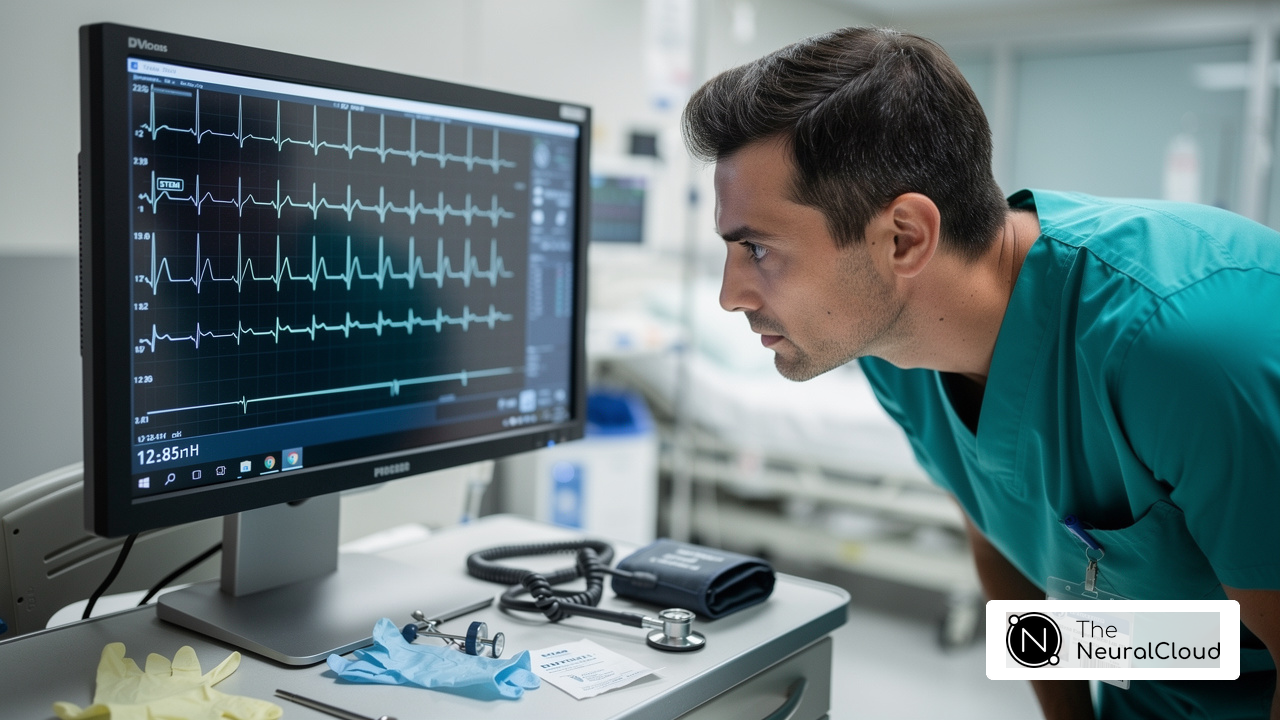
Introduction
Anterolateral ST elevation serves as a vital indicator in electrocardiogram (ECG) readings, often pointing to acute myocardial infarction associated with the heart's anterolateral wall. For healthcare professionals, grasping its implications is crucial, as timely recognition can significantly improve patient outcomes and lower the risk of severe complications. However, interpreting ECGs can be complex, leading to the question: how can advanced technologies enhance diagnostic accuracy and management strategies for this critical condition?
The MaxYield™ platform addresses these challenges by streamlining ECG analysis. It offers features such as:
- Automated detection of ST elevation patterns
- Real-time alerts for critical changes
- Comprehensive reporting tools
These capabilities not only simplify the interpretation process but also empower healthcare providers to make informed decisions swiftly.
By utilizing MaxYield™, healthcare professionals can benefit from improved diagnostic accuracy, which translates to better patient care. The platform's user-friendly interface ensures that both seasoned practitioners and those less familiar with ECG analysis can navigate it effectively. This accessibility fosters a collaborative environment where all team members can contribute to patient management.
In summary, the integration of advanced technologies like MaxYield™ into ECG analysis not only enhances diagnostic precision but also supports healthcare professionals in delivering timely and effective care. As the landscape of cardiac care evolves, embracing such innovations is essential for improving patient outcomes.
Define Anterolateral ST Elevation and Its Clinical Significance
Anterolateral refers to the elevation of the ST segment in electrocardiogram (ECG) recordings that corresponds to the anterolateral wall of the heart, specifically in leads I, aVL, V5, and V6. This finding is clinically significant as it often indicates an myocardial infarction (MI) with anterolateral involvement of the left anterior descending artery (LAD) or the left circumflex artery (LCx). Timely intervention is crucial for patients, as delays can lead to severe complications, including cardiogenic shock and increased mortality rates.
The morphology of the ST segment, whether concave or convex, can provide further insights into the underlying pathology, such as ischemia. Advanced technology, such as that offered by Neural Cloud Solutions' health tech developers, can automate the identification of this critical pattern. This automation enhances workflow efficiency and accuracy, allowing healthcare professionals to respond swiftly to potential cardiac events.
Automated systems ensure clear recognition of abnormalities even in recordings affected by artifacts. This capability is vital, as it helps prevent the oversight of significant cardiac events. By leveraging MaxYield™, healthcare providers can improve diagnostic accuracy, ultimately leading to better management of patients.

Identify Diagnostic Criteria and ECG Interpretation Techniques
To effectively diagnose Anterolateral ST Elevation Myocardial Infarction (STEMI), clinicians should adhere to specific ECG criteria:
- Identify an elevation of at least 1 mm in two adjacent recordings, particularly in positions I, aVL, V5, and V6, which are critical for detecting anterolateral ischemia.
- Reciprocal Changes: Assess for changes in inferior leads (II, III, aVF), as these changes can reinforce the diagnosis and indicate the extent of myocardial involvement.
- Morphological Characteristics: Pay attention to the shape of the ST elevation; a 'tombstone' appearance is often indicative of significant ischemia and warrants immediate clinical attention.
- Correlate ECG findings with symptoms, dyspnea, or diaphoresis to confirm the diagnosis and guide treatment decisions.
Challenges in ECG Analysis
Diagnosing conditions like anterolateral STEMI can be complex due to the nuances in ECG interpretation. Traditional methods may overlook subtle changes, leading to potential misdiagnoses. This is where advanced technology can assist.
MaxYield™ Features
MaxYield™ enhances diagnostic accuracy through AI-driven insights. Key features include:
- Advanced Data Identification: The platform identifies and labels critical data, even in recordings with high levels of noise and artifact.
- Rapid Isolation of ECG Waves: It allows for the quick isolation of ECG waves from recordings affected by baseline wander, movement, and muscle artifact.
- Detection of Subtle Changes: The system can detect abnormalities in traditional interpretations.
Advantages for Healthcare Professionals
By integrating MaxYield™ into their practice, healthcare professionals can:
- Improve diagnostic accuracy, leading to better patient outcomes.
- Make informed decisions quickly, enhancing the overall efficiency of care.
- Leverage advanced technology to support their clinical expertise, ensuring they stay at the forefront of ECG analysis.
In conclusion, by utilizing these techniques, healthcare professionals can enhance their diagnostic capabilities and improve outcomes in cases of suspected anterolateral ST elevation.

Outline Management Strategies for Anterolateral ST Elevation
The management of anterolateral ST elevation involves several key strategies that can be significantly enhanced through the use of advanced technology like the monitoring system.
- Immediate Assessment: Rapid evaluation of the patient's clinical status and ECG findings is essential. The technology facilitates this by utilizing Neural Cloud Solutions, enabling clinicians to achieve rapid labeling of ECG abnormalities. This feature aids in the analysis of ECG data, allowing for quicker decision-making in critical situations.
- Intervention: Primary percutaneous coronary intervention (PCI) remains the preferred treatment for STEMI, ideally performed within 90 minutes of first medical contact. The technology supports this process by providing real-time data that can streamline the intervention, ensuring timely and effective treatment.
- Medications: Antiplatelet agents, such as aspirin and clopidogrel, along with anticoagulants, are crucial to prevent thrombus formation. Additionally, beta-blockers and ACE inhibitors may be indicated to reduce myocardial oxygen demand. The platform's capabilities can assist healthcare providers in managing these medications effectively.
- Monitoring: Continuous cardiac monitoring is vital to detect any arrhythmias or complications. The technology enhances monitoring by providing clear data sets and clean signals, which allow for more effective detection of issues. This feature ensures that healthcare professionals can respond promptly to any changes in the patient's condition.
- Follow-up: After successful reperfusion, individuals should be monitored for signs of reinfarction or complications. It's essential to discuss secondary prevention strategies during this phase. The incorporation of analytics and automation within the platform simplifies post-intervention monitoring, enabling healthcare providers to focus more on patient care.

Integrate Advanced ECG Analysis Technologies in Clinical Practice
To enhance the accuracy and efficiency of ECG interpretation, healthcare providers should consider integrating technologies like Neural Cloud Solutions' platform. This platform addresses several challenges in ECG analysis, providing innovative solutions that improve diagnostic capabilities.
AI-Powered Solutions: The technology leverages artificial intelligence for real-time interpretation of ECGs. This technology effectively identifies patterns indicative of cardiac events with remarkable sensitivity and specificity. By utilizing advanced noise filtering and artifact handling, the system isolates critical ECG waves even in recordings with high levels of noise. Dr. Girish Nadkarni emphasizes that AI-enhanced systems can be expanded to remote or under-resourced areas, significantly enhancing the diagnostic utility of ECGs for various conditions.
Telemedicine Solutions: The implementation of telemedicine is crucial for facilitating timely diagnosis and management, particularly in rural or underserved areas. Research indicates that heart disease occurrence is 40 percent greater in rural regions compared to urban environments. Remote monitoring significantly enhances access to precise heart information, resulting in swift disease identification and improved health outcomes.
Training and Education: Continuous education on the latest ECG technologies and interpretation techniques is vital for healthcare professionals. Staying informed ensures that healthcare providers can efficiently use advanced instruments, ultimately enhancing care for individuals.
Data Integration: Incorporating ECG data into electronic health records (EHR) streamlines workflows and improves management of patients. The seamless integration capabilities of the EHR allow for a comprehensive view of patient health, facilitating informed decision-making.
Research and Development: Engaging in research to explore new methodologies and technologies in cardiology can lead to the development of improved diagnostic and treatment strategies. For instance, a recent study analyzed over 208,000 ECGs from COPD cases, demonstrating the potential of AI-enhanced analysis in improving patient outcomes. This showcases the transformative impact of innovative technologies like Neural Cloud Solutions' MaxYield™ in clinical practice.

Conclusion
Anterolateral ST elevation serves as a crucial marker in assessing acute myocardial infarction, particularly when it involves the left anterior descending artery and the left circumflex artery. Recognizing its significance is vital for healthcare professionals, as prompt identification and intervention can greatly impact patient outcomes. The MaxYield™ platform exemplifies advanced technology that enhances diagnostic accuracy and streamlines management strategies, ultimately elevating the quality of care for patients.
This article outlines key diagnostic criteria and ECG interpretation techniques, stressing the importance of identifying ST segment elevation in specific leads. Traditional ECG analysis presents challenges, but AI-driven solutions like MaxYield™ can address these issues by improving data clarity and enhancing the detection of subtle changes. Management strategies, including immediate assessment, reperfusion therapy, and continuous monitoring, are discussed to provide a comprehensive approach to effectively handling anterolateral ST elevation.
The evolution of ECG analysis technologies not only aids healthcare providers in making informed decisions but also highlights broader implications for cardiac care. With heart disease being a leading cause of morbidity and mortality, embracing innovative solutions and ongoing education in ECG interpretation is essential. By prioritizing these advancements, healthcare professionals can ensure they are well-equipped to deliver timely and effective care, ultimately transforming patient outcomes in cases of anterolateral ST elevation.
Frequently Asked Questions
What is anterolateral ST elevation?
Anterolateral ST elevation refers to the elevation of the ST segment in electrocardiogram (ECG) recordings that corresponds to the anterolateral wall of the heart, specifically in leads I, aVL, V5, and V6.
Why is anterolateral ST elevation clinically significant?
It often indicates an acute myocardial infarction (MI) involving the left anterior descending artery (LAD) or the left circumflex artery (LCx), making timely recognition crucial to prevent severe complications such as cardiogenic shock and increased mortality rates.
How does the morphology of ST elevation impact clinical decisions?
The morphology of the ST elevation, whether concave or convex, can provide insights into the underlying pathology, which can guide treatment decisions.
What role does advanced AI-driven ECG analysis play in identifying anterolateral ST elevation?
Advanced AI-driven ECG analysis, like that provided by Neural Cloud Solutions, can automate the identification of anterolateral ST elevation, enhancing workflow efficiency and clinical decision-making for timely responses to potential cardiac events.
How does MaxYield™ improve the recognition of ST elevation?
MaxYield™ reduces noise in ECG recordings, ensuring clear recognition of ST elevation even in recordings affected by artifacts, which helps prevent the oversight of significant cardiac events.
What are the benefits of using MaxYield™ in clinical practice?
By leveraging MaxYield™, healthcare providers can improve diagnostic accuracy and patient outcomes, ultimately leading to better management of acute myocardial infarctions.
List of Sources
- Define Anterolateral ST Elevation and Its Clinical Significance
- 5 Cardiology Headlines You Missed in January 2026 | HCPLive (https://hcplive.com/view/5-cardiology-headlines-you-missed-in-january-2026)
- Trends and Outcomes of ST‐Segment–Elevation Myocardial Infarction Among Young Women in the United States | Journal of the American Heart Association (https://ahajournals.org/doi/10.1161/JAHA.122.026811)
- cureus.com (https://cureus.com/articles/363697-incidence-and-characteristics-of-st-elevation-myocardial-infarction-in-patients-with-previous-coronary-artery-bypass-grafting-a-single-center-experience)
- Prevalence of ECGs Exceeding Thresholds for ST‐Segment–Elevation Myocardial Infarction in Apparently Healthy Individuals: The Role of Ethnicity | Journal of the American Heart Association (https://ahajournals.org/doi/10.1161/JAHA.119.015477)
- pmc.ncbi.nlm.nih.gov (https://pmc.ncbi.nlm.nih.gov/articles/PMC6931512)
- Identify Diagnostic Criteria and ECG Interpretation Techniques
- powerfulmedical.com (https://powerfulmedical.com/research/artificial-intelligence-enhanced-ecg-detection-of-acute-coronary-occlusion-in-chest-pain-patients-with-st-elevation-in-lead-avr-a-direct-comparison-to-conventional-ecg-criteria)
- heart.bmj.com (https://heart.bmj.com/content/99/suppl_2/A58.1)
- pmc.ncbi.nlm.nih.gov (https://pmc.ncbi.nlm.nih.gov/articles/PMC5583838)
- acc.org (https://acc.org/About-ACC/Press-Releases/2025/10/28/18/55/AI-ECG-Better-Detects-Severe-Heart-Attacks-in-Emergency-Setting)
- Integrate Advanced ECG Analysis Technologies in Clinical Practice
- AI-powered ECG analysis shows promise for early COPD detection (https://medicalxpress.com/news/2026-01-ai-powered-ecg-analysis-early.html)
- newsroom.heart.org (https://newsroom.heart.org/news/new-certification-helps-clinicians-advance-digital-cardiac-care)
- AI-Powered ECG Analysis Offers Promising Path for Early Detection of Chronic Obstructive Pulmonary Disease, Say Mount Sinai Researchers (https://mountsinai.org/about/newsroom/2026/ai-powered-ecg-analysis-offers-promising-path-for-early-detection-of-chronic-obstructive-pulmonary-disease-say-mount-sinai-researchers)
- Technological Advancements in Cardiology: Improved Monitoring (https://bstquarterly.com/article/technological-advancements-in-cardiology-improved-monitoring)