Introduction
Understanding the complexities of ST depression criteria is crucial for cardiologists who want to improve diagnostic accuracy and patient outcomes. The emergence of advanced technologies, such as Neural Cloud Solutions' MaxYield™ platform, is transforming ECG analysis. This platform provides remarkable opportunities for the swift and precise identification of critical cardiac changes. However, a significant challenge persists: how can healthcare professionals effectively incorporate these tools while managing the intricacies of various ST depression patterns and their clinical implications?
This article explores the essential ST depression criteria that every cardiologist should master. It emphasizes the importance of these indicators in delivering optimal patient care. By leveraging the features of the MaxYield™ platform, cardiologists can enhance their diagnostic capabilities. The platform not only streamlines ECG analysis but also offers valuable insights that can lead to better patient outcomes.
In summary, mastering ST depression criteria and utilizing advanced tools like MaxYield™ can significantly benefit healthcare professionals. By understanding these elements, cardiologists can navigate the complexities of cardiac diagnostics more effectively.
Neural Cloud Solutions MaxYield™: Advanced ECG Analysis for ST Depression Detection
MaxYield™ is designed to enhance the need for rapid and accurate identification of the ST depression. Traditional methods often struggle with noise and artifacts, which can obscure critical cardiac insights. This is where Neural Cloud Solutions' technology comes into play, revolutionizing the way ECG data is processed.
MaxYield™ employs algorithms to automate the identification of ST decline, processing over 200,000 heartbeats in under five minutes. This innovative technology not only enhances the clarity of ECG signals but also filters out noise, enabling healthcare professionals to confidently identify changes in the heart rhythm with precision. Its device-agnostic nature means it seamlessly integrates with various ECG devices, including wearable devices, patch monitors, and Holter monitors, providing flexibility.
The platform also delivers real-time analysis, making it an essential tool for cardiologists. By streamlining workflows, MaxYield™ empowers healthcare professionals to provide better patient care. The benefits of this technology are clear:
- Reduced manual workload
In summary, MaxYield™ transforms ECG analysis by addressing key challenges in the field. Its advanced features not only improve the speed and reliability of cardiac insights but also support healthcare professionals in delivering high-quality care. With MaxYield™, clinicians can enhance patient outcomes.
Romhilt-Estes Criteria: Key Indicators of ST Depression in ECGs
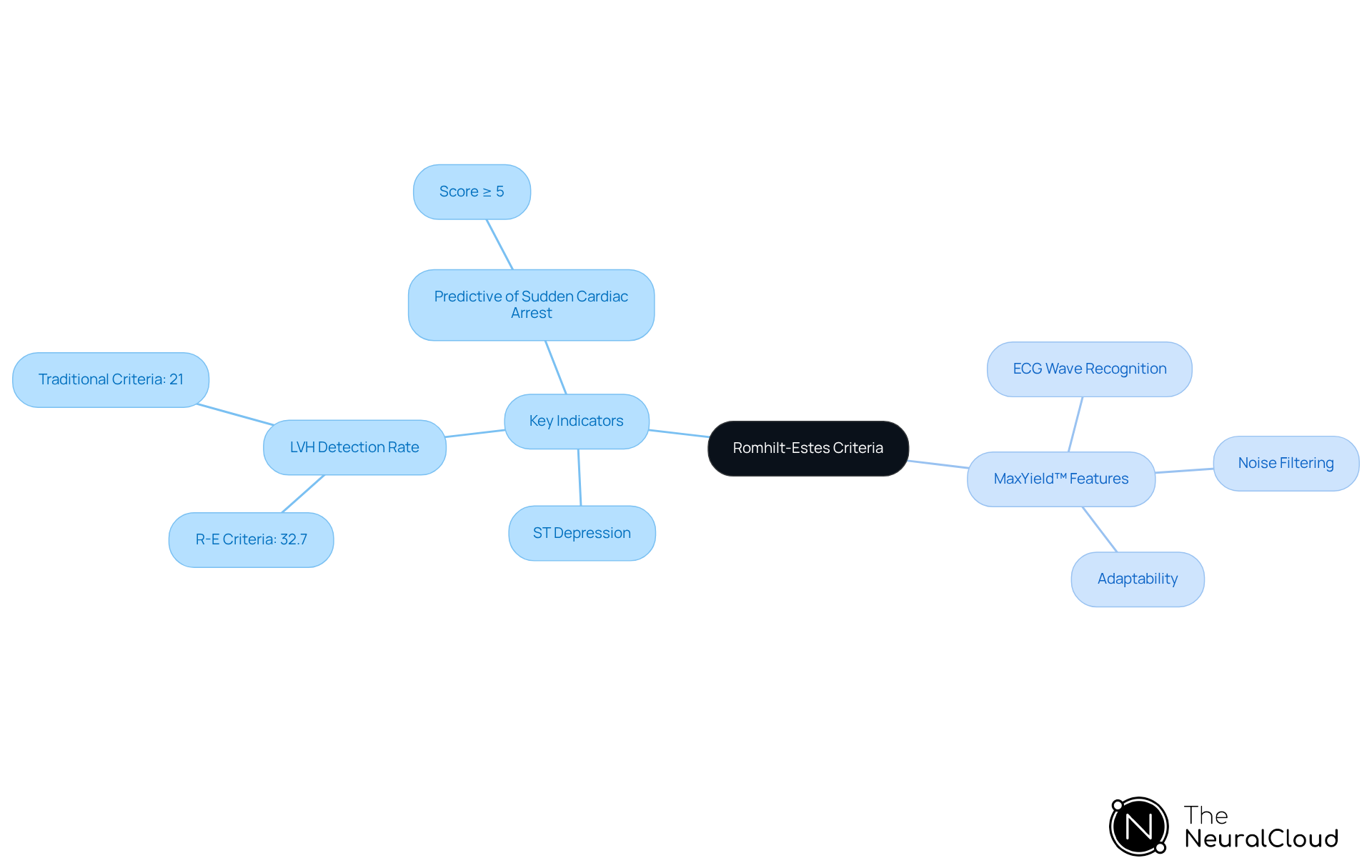
The Romhilt-Estes criteria provide a robust framework for evaluating changes in electrocardiograms (ECGs) based on specific parameters. This assessment hinges on specific voltage criteria observed in limb leads, along with the examination of alterations in heart rhythm. A score of 4 or more points indicates a likely presence of left ventricular hypertrophy (LVH), a condition frequently linked to ST segment changes. Recent studies show that the detection rate of these criteria significantly exceeds the 21% detection rate of traditional voltage-based criteria. This underscores the importance of accurate assessment for the accurate diagnosis and management of patients exhibiting ST depression. Moreover, an increased understanding of these criteria highlights the critical role these criteria play in clinical outcomes.
By understanding and applying these criteria, cardiologists can enhance their decision-making processes, ultimately improving patient care. Additionally, integrating Neural Cloud Solutions' technology can further refine this analysis. The platform filters noise and identifies distinct ECG waves, even in challenging recordings. This advanced technology addresses inefficiencies and physiological variability, evolving with each use to ensure continuous improvement in diagnostic accuracy.
Features of MaxYield™:
- Recognition of distinct ECG waves
- Adaptability to various recording conditions
Advantages for Healthcare Professionals:
- Improved decision-making processes
- Better patient outcomes
Incorporating the MaxYield™ platform into practice not only streamlines the process but also empowers healthcare professionals to deliver more precise and effective care.
Hypokalemia: A Critical Factor in ST Depression Interpretation
Hypokalemia can lead to notable changes such as widespread ST segment decline and T wave alterations. These alterations can closely resemble ischemic changes, complicating diagnosis and increasing the risk of misdiagnosis. As hypokalemia worsens, studies show that T waves diminish in amplitude while U waves become more pronounced, potentially mimicking QT prolongation. This highlights the necessity for clinicians to routinely evaluate potassium levels in individuals exhibiting symptoms to prevent diagnostic errors and ensure timely, appropriate treatment.
Monitoring potassium levels is essential for accurate diagnosis. Failure to do so can lead to significant clinical consequences. Real-world cases have demonstrated that misdiagnosis due to hypokalemia can result in inappropriate management strategies. This underscores the critical need for vigilance in patient assessment. Cardiologists emphasize that accurate diagnosis is crucial for effective care.
In summary, a collaborative approach in addressing hypokalemia and its effects on ECG readings is vital. By ensuring that healthcare professionals are aware of these ECG changes, we can improve patient outcomes and enhance the overall quality of care.
Key Features of ST Depression: Identifying Patterns in ECGs
ST changes manifest in various forms, including horizontal, downsloping, and upsloping patterns, each carrying distinct implications.
- Horizontal pattern: This pattern is often associated with myocardial ischemia, serving as a vital sign for cardiologists in evaluating individual conditions. Recent data reveals that horizontal ST depression is observed in approximately 18.8% of patients. This distinction is crucial, as horizontal ST depression is linked to a greater risk of adverse outcomes, including heart failure, with a hazard ratio of 1.23 for composite heart failure endpoints.
- Downsloping pattern: In contrast, downsloping ST depression may suggest more severe cardiac issues, potentially indicating advanced ischemic processes or multi-territory ischemia. These patterns are present in about 10.1% of patients. Experts highlight the significance of identifying these patterns; for example, one cardiologist remarked that 'the importance of horizontal versus downsloping patterns cannot be overstated, as they guide urgent intervention strategies.'
Understanding these variations in ST changes is crucial for cardiologists to make informed choices regarding the diagnosis and treatment pathways. By recognizing the implications of these patterns, healthcare professionals can enhance their decision-making and improve patient outcomes.
Inferior Leads: Their Role in Identifying ST Depression
The inferior leads (II, III, and aVF) play a crucial role in identifying ST changes, especially in the context of myocardial ischemia. These electrodes often reveal reciprocal alterations that indicate underlying ischemia. For instance, studies indicate that an ST depression pattern meets the diagnostic criteria and is significantly more common in individuals with proximal left anterior descending artery blockage compared to those with distal blockage. This highlights the importance of these channels in cardiac assessment.
Cardiologists, particularly those in emergency settings, should prioritize these signals during ECG interpretation. Recognizing these changes can provide significant insights into a patient's cardiac condition. Moreover, the lateral and inferior ST-segment declines have been associated with increased risks for adverse cardiac events, emphasizing their significance in the diagnostic process.
The ability to accurately identify ST changes in ECGs not only aids in diagnosing but also informs treatment decisions. This makes it essential for cardiologists to focus on these critical signals in their evaluations. By focusing on these critical signals, they can enhance patient outcomes and ensure timely interventions.
De Winter Pattern: Recognizing a Unique ST Depression Variant
The De Winter pattern is characterized by an upsloping ST-segment decline in the precordial electrodes, often associated with acute left anterior descending artery blockage. Accurate interpretation is essential, as it can signal a high-risk situation that demands immediate intervention.
Challenges in ECG analysis often stem from noise interference and the complexity of waveforms, making it difficult for cardiologists to identify critical conditions swiftly. This is where Neural Cloud Solutions' technology comes into play.
Features of MaxYield™:
- A system that effectively filters noise.
- Recognition of distinct waveforms, enhancing diagnostic accuracy.
- Rapid isolation of ST depression patterns.
- Beat-by-beat analysis of 200,000 heartbeats in under 5 minutes.
Advantages for cardiologists:
With MaxYield™, cardiologists can salvage previously obscured sections of recordings, ensuring they receive clear insights for prompt care. This capability not only improves the speed of diagnosis but also enhances the overall quality of patient care, allowing for timely interventions.
Diffuse Subendocardial Ischemia: Understanding Its Link to ST Depression
Diffuse subendocardial ischemia is often indicated by widespread ST depression across multiple ECG leads. This condition can arise from various factors, including a mismatch between myocardial oxygen supply and demand, as well as underlying coronary artery disease. Research shows that patients exhibiting ST-segment changes during exercise testing frequently have significant ischemic heart disease, with a prevalence of 85% in those experiencing ST changes. Understanding the relationship between diffuse ischemia and the ST depression pattern is crucial for cardiologists, as it informs further diagnostic assessments and treatment strategies.
Cardiologists emphasize that resting ST-segment decline aligns with the presence of ischemia, serving as a notable risk marker for adverse cardiac outcomes and highlighting the importance of accurate diagnosis. The ISCHEMIA trial findings indicate that abnormal stress testing results correlate with prognosis, underscoring the need for ongoing education in cardiology to enhance patient care. As the incidence of coronary artery disease continues to rise, understanding the implications of ST depression will be vital for effectively managing individuals who show ST changes.
Integrating technology with Neural Cloud Solutions' MaxYield can significantly enhance the efficiency of ECG analysis. The platform offers advanced analytics and data extraction capabilities, streamlining processes, reducing operational costs, and improving diagnostic accuracy. By leveraging AI-driven automation and a continuous learning model, healthcare professionals can effectively address challenges such as physiological variability and signal artifacts, ultimately leading to improved health outcomes.
Features of MaxYield:
- Automation: Reduces manual input and errors.
- Data Extraction: Streamlines data handling for quicker analysis.
- AI-Driven Automation: Enhances accuracy and efficiency in ECG interpretation.
Advantages for Healthcare Professionals:
- Cost Reduction: Lowers operational expenses through efficient processes.
- Reliability: Increases the reliability of ECG results.
- Enhanced Patient Care: Facilitates timely and accurate treatment decisions.

Exaggerated Atrial Repolarization: Implications for ST Depression Analysis
Exaggerated atrial repolarization can lead to findings that may be misinterpreted as ST depression, especially when considering the context during exercise testing or in individuals with tachycardia. This artifact can obscure true ischemia, complicating the diagnostic process. Cardiologists must be vigilant about this phenomenon, as misdiagnosing the condition due to atrial repolarization can have significant clinical implications. For example, exaggerated atrial repolarization waves can mask ischemic changes, which may result in false-negative results during stress testing under the conditions.
Understanding these nuances is crucial for accurate diagnosis. It ensures that clinicians can differentiate between genuine ischemic events and benign variations. The software from Neural Cloud Solutions addresses these challenges effectively. It offers analysis and reporting capabilities, which help salvage previously obscured sections of lengthy Holter, 1-Lead, and patch monitor recordings.
The features of the platform include:
- Artifact reduction: Reduces artifacts that can obscure true cardiac signals.
- Pattern enhancement: Enhances the identification of relevant ECG patterns.
These features provide significant advantages for healthcare professionals. By improving diagnostic yield and accuracy over time, the platform evolves with each use. This evolution is essential for enhancing diagnostic accuracy and ultimately improving patient outcomes. With MaxYield™, clinicians can confidently interpret results, ensuring that they make informed decisions based on accurate information.
Other Key Features: Enhancing the Diagnosis of ST Depression
ECG analysis presents several challenges, particularly in accurately diagnosing ST changes. Key features such as T-wave inversions, Q waves, and the overall morphology of the ST segment are crucial for interpretation. These elements provide essential context that helps differentiate between ischemic and non-ischemic causes.
The platform from Neural Cloud Solutions addresses these challenges by automating the analysis of these critical features. It can rapidly process up to 200,000 heartbeats in less than 5 minutes, effectively managing data overload. This capability supports accurate diagnosis and enhances clinical management by delivering comprehensive insights, including P-wave, QRS complex, and T-wave analysis.
By utilizing MaxYield™, healthcare professionals can conduct a thorough examination of these features, which is vital for accurate diagnosis. The platform not only streamlines the analysis process but also empowers practitioners with the information needed to make informed decisions quickly.
Key Features of MaxYield™:
- Comprehensive feature analysis.
- Rapid processing of up to 200,000 heartbeats in under 5 minutes.
- Automated reporting capabilities.
Advantages for Healthcare Professionals:
- Enhanced diagnostic accuracy.
- Improved management of patient care.
- Empowered clinical decision-making with timely and precise data.
Comprehensive Understanding: The Importance of ST Depression Criteria for Cardiologists
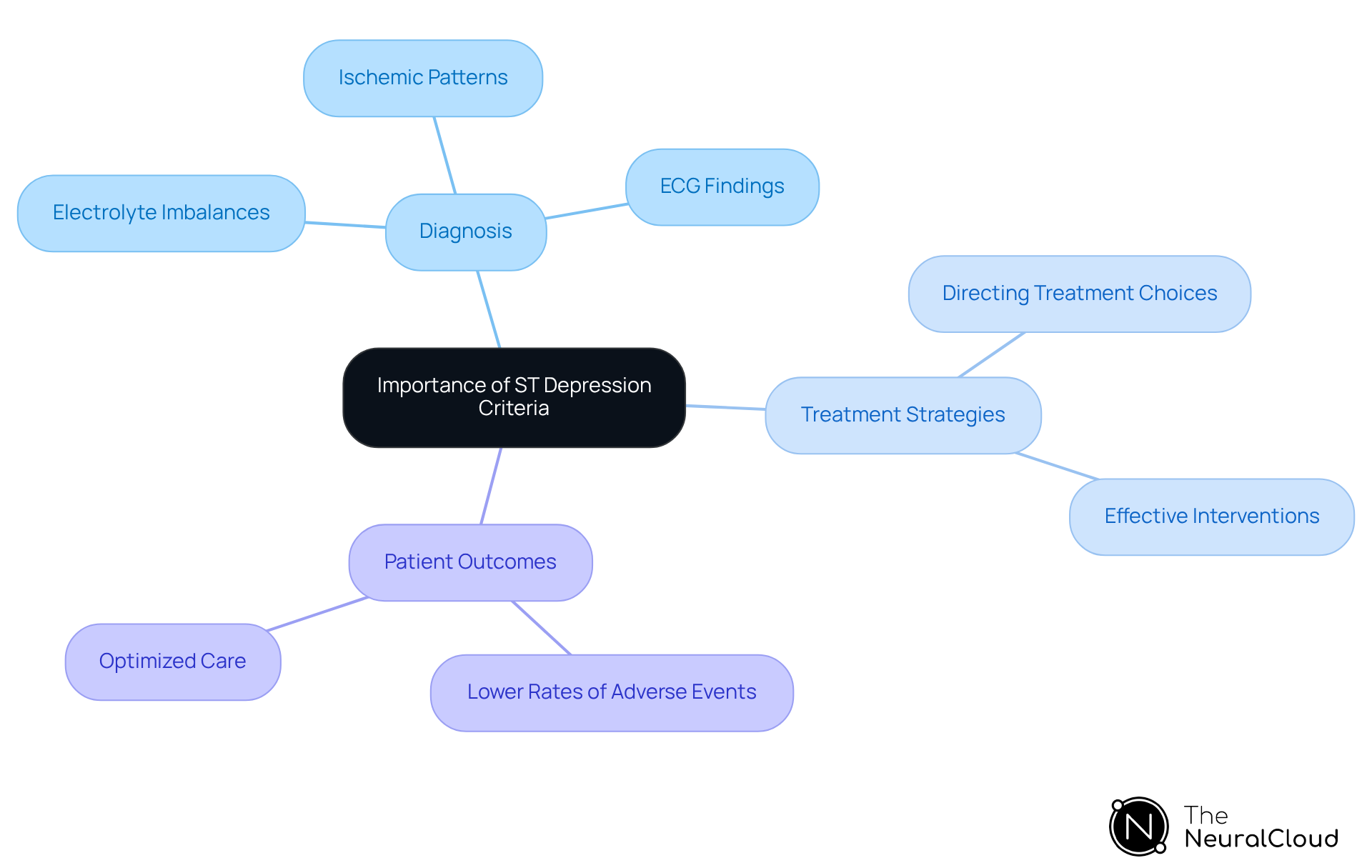
Understanding the criteria is crucial for cardiologists who aim to accurately diagnose and manage cardiac conditions. By integrating knowledge of factors such as ST depression, ischemic patterns, and patient history, clinicians can significantly enhance their diagnostic accuracy.
Research indicates that prompt identification of ST changes can lead to improved management of cardiac events, ultimately benefiting patient outcomes. Cardiologists emphasize that understanding the criteria not only aids in diagnosis but also informs treatment decisions, resulting in more effective interventions.
As highlighted by specialists, precise diagnosis of ST dip is essential for directing treatment choices, which can significantly alter individual patient trajectories. Data shows that individuals with accurate evaluations of the criteria experience lower rates of adverse events, underscoring the importance of this information in clinical practice.
By integrating these insights, cardiologists can optimize care and enhance overall patient health outcomes.
Conclusion
Understanding the essential ST depression criteria is vital for cardiologists aiming to enhance patient care and improve diagnostic accuracy. This article has explored the critical elements surrounding ST depression, emphasizing the role of advanced technologies like Neural Cloud Solutions' MaxYield™ platform, which streamlines ECG analysis and enhances the identification of key indicators. By recognizing the patterns and implications of ST changes, healthcare professionals can make informed decisions that significantly impact patient outcomes.
Key insights discussed include:
- The importance of the Romhilt-Estes criteria in diagnosing left ventricular hypertrophy.
- The critical effects of hypokalemia on ECG interpretation.
- The various ST depression patterns that signal different cardiac conditions.
- The significance of inferior leads in identifying ST changes.
- The unique characteristics of the De Winter pattern, reinforcing the necessity for cardiologists to remain vigilant in their assessments.
In conclusion, the integration of advanced ECG analysis tools and a comprehensive understanding of ST depression criteria is crucial for effective cardiac care. By leveraging these insights and technologies, healthcare professionals can ensure timely interventions and improved patient outcomes. Emphasizing ongoing education and the adoption of innovative solutions will empower cardiologists to navigate the complexities of ST depression, ultimately enhancing the quality of care provided to patients.
Frequently Asked Questions
What is the purpose of Neural Cloud Solutions' MaxYield™ platform?
MaxYield™ is designed to automate the identification of ST depression in ECG data, enhancing the clarity of ECG signals and enabling healthcare professionals to accurately identify changes in the ST depression criteria.
How does MaxYield™ improve ECG analysis?
MaxYield™ employs advanced AI algorithms to process over 200,000 heartbeats in under five minutes, filters out noise, and provides automated beat-by-beat analysis, resulting in faster, more accurate identification of critical cardiac events.
What types of ECG devices are compatible with MaxYield™?
MaxYield™ is device-agnostic and integrates seamlessly with various ECG devices, including wearable devices, patch monitors, and Holter monitors.
What are the benefits of using MaxYield™ for healthcare professionals?
The benefits include faster analysis, reduced manual workload, and enhanced accuracy in identifying critical cardiac events, ultimately improving patient care.
What are the Romhilt-Estes criteria?
The Romhilt-Estes criteria provide a framework for evaluating changes in ECGs based on ST depression criteria, using specific voltage criteria observed in limb leads to assess conditions like left ventricular hypertrophy (LVH).
How effective are the Romhilt-Estes criteria in detecting LVH?
Recent studies indicate that the Romhilt-Estes criteria identified LVH in 32.7% of individuals, significantly higher than the 21% detection rate of traditional voltage-based criteria.
What is the significance of an R-E score of 5 or higher?
An R-E score of 5 or higher is predictive of sudden cardiac arrest, highlighting the importance of these criteria in clinical outcomes.
How does hypokalemia affect ECG readings?
Hypokalemia leads to widespread ST segment decline and T-wave inversion, which can mimic ischemic changes and complicate ECG interpretation.
Why is it important to monitor potassium levels in patients with ST depression?
Regular evaluation of potassium levels is crucial to prevent diagnostic errors and ensure timely, appropriate treatment, as misdiagnosis due to hypokalemia can lead to inappropriate management strategies.
What collaborative approach is suggested for addressing hypokalemia in cardiac health?
A collaborative approach involves ensuring healthcare professionals are aware of the ECG changes associated with hypokalemia to improve patient outcomes and enhance overall care quality.
List of Sources
- Neural Cloud Solutions MaxYield™: Advanced ECG Analysis for ST Depression Detection
- aiml.health (https://aiml.health/press-release/aiml-subsidiary-neuralcloud-solutions-commencing-pilot-with-canadian-cardiology-clinic-to-advance-ai-powered-ecg-reporting)
- AI-driven ECG improves detection of severe heart attacks (https://news-medical.net/news/20251029/AI-driven-ECG-improves-detection-of-severe-heart-attacks.aspx)
- Artificial Intelligence–Assisted ECG Interpretation versus Conventional Reporting in Predicting Arrhythmias in Acute Coronary Syndrome: A Diagnostic Accuracy Study (https://healthcare-bulletin.co.uk/article/artificial-intelligence-assisted-ecg-interpretation-versus-conventional-reporting-in-predicting-arrhythmias-in-acute-coronary-syndrome-a-diagnostic-accuracy-study-4252)
- Checking your browser - reCAPTCHA (https://pmc.ncbi.nlm.nih.gov/articles/PMC10145690)
- morningstar.com (https://morningstar.com/news/accesswire/1083783msn/aiml-subsidiary-neuralcloud-solutions-and-toronto-heart-centre-launch-a-pilot-program-to-test-ai-powered-holter-ecg-reporting)
- Romhilt-Estes Criteria: Key Indicators of ST Depression in ECGs
- pmc.ncbi.nlm.nih.gov (https://pmc.ncbi.nlm.nih.gov/articles/PMC9470005)
- pmc.ncbi.nlm.nih.gov (https://pmc.ncbi.nlm.nih.gov/articles/PMC5495629)
- Hypokalemia: A Critical Factor in ST Depression Interpretation
- Hypokalemia - StatPearls - NCBI Bookshelf (https://ncbi.nlm.nih.gov/books/NBK482465)
- merckmanuals.com (https://merckmanuals.com/professional/endocrine-and-metabolic-disorders/electrolyte-disorders/hypokalemia)
- aafp.org (https://aafp.org/pubs/afp/issues/2023/0100/potassium-disorders-hypokalemia-hyperkalemia.html)
- Key Features of ST Depression: Identifying Patterns in ECGs
- pmc.ncbi.nlm.nih.gov (https://pmc.ncbi.nlm.nih.gov/articles/PMC6931502)
- pmc.ncbi.nlm.nih.gov (https://pmc.ncbi.nlm.nih.gov/articles/PMC10287539)
- Checking your browser - reCAPTCHA (https://pmc.ncbi.nlm.nih.gov/articles/PMC5295568)
- pmc.ncbi.nlm.nih.gov (https://pmc.ncbi.nlm.nih.gov/articles/PMC4040874)
- Inferior Leads: Their Role in Identifying ST Depression
- pubmed.ncbi.nlm.nih.gov (https://pubmed.ncbi.nlm.nih.gov/8682009)
- jptcp.com (https://jptcp.com/index.php/jptcp/article/view/9905)
- sciencedirect.com (https://sciencedirect.com/science/article/pii/S0022073625002730)
- pmc.ncbi.nlm.nih.gov (https://pmc.ncbi.nlm.nih.gov/articles/PMC11907599)
- Diffuse Subendocardial Ischemia: Understanding Its Link to ST Depression
- tctmd.com (https://tctmd.com/news/stress-testing-picks-novel-risk-patterns-stable-cad-patients-ischemia)
- umedic.rossu.edu (https://umedic.rossu.edu/eca/ami/initECGQuestion_answer5.html)
- sciencedirect.com (https://sciencedirect.com/topics/medicine-and-dentistry/st-segment-depression)
- forgestoryai.com (https://forgestoryai.com/blog/global-subendocardial-ischemia-ecg-insights)
- Exaggerated Atrial Repolarization: Implications for ST Depression Analysis
- sciencedirect.com (https://sciencedirect.com/science/article/abs/pii/S0022073605800494)
- sciencedirect.com (https://sciencedirect.com/topics/medicine-and-dentistry/st-segment-depression)
- Comprehensive Understanding: The Importance of ST Depression Criteria for Cardiologists
- parade.com (https://parade.com/1187612/michelle-parkerton/quotes-about-heart-disease)
- ajconline.org (https://ajconline.org/article/S0002-9149(08)01715-3/fulltext)
- Memorable Cardiology Quotes | TheKnowHow Blog (https://theknowhow.ae/memorable-cardiology-quotes-heart)
- explorationpub.com (https://explorationpub.com/Journals/ec/Article/101256)
- pmc.ncbi.nlm.nih.gov (https://pmc.ncbi.nlm.nih.gov/articles/PMC3721943)