Introduction
In the rapidly evolving landscape of health technology, integrating electrocardiogram (ECG) solutions brings significant opportunities alongside formidable challenges. For healthcare professionals, grasping the anatomy and physiology of ECG is crucial to effectively leverage this technology. As medical providers strive to enhance patient care through advanced ECG integration, they face:
- Compatibility issues
- Data processing techniques
- The need for continuous evaluation
To ensure that ECG solutions meet current demands and adapt to future technological advancements, healthcare systems must navigate these complexities. Understanding the features of ECG technology, such as:
- Real-time data analysis
- Improved diagnostic accuracy
can empower professionals to make informed decisions. The advantages of utilizing advanced ECG solutions include:
- Enhanced patient monitoring
- Streamlined workflows
- Ultimately, better patient outcomes
By focusing on these aspects, healthcare providers can not only address existing challenges but also position themselves for future advancements in ECG technology.
Understand ECG Anatomy and Physiology
Incorporating ECG technology into health tech applications presents challenges that require a solid understanding of ECG anatomy and physiology. This technology records the heart's electrical activity, which is crucial for accurate diagnosis. Key components of an ECG include:
- P wave: Represents atrial depolarization, indicating the electrical activity associated with the contraction of the atria.
- QRS complex: Indicates ventricular depolarization, a critical marker for assessing heart rhythm and overall cardiac function.
- T wave: Reflects ventricular repolarization, signifying the recovery phase of the ventricles after contraction.
Recognizing these components is essential for identifying normal and abnormal patterns in ECG readings, directly impacting diagnosis and treatment planning. For instance, a prolonged QRS complex may suggest a delay in ventricular conduction, warranting further investigation. Studies show that about 70% of cardiologists are familiar with these ECG components, highlighting their significance in clinical practice. This familiarity not only enhances the development of health tech solutions but also ensures that healthcare professionals can make informed decisions based on accurate and reliable data.
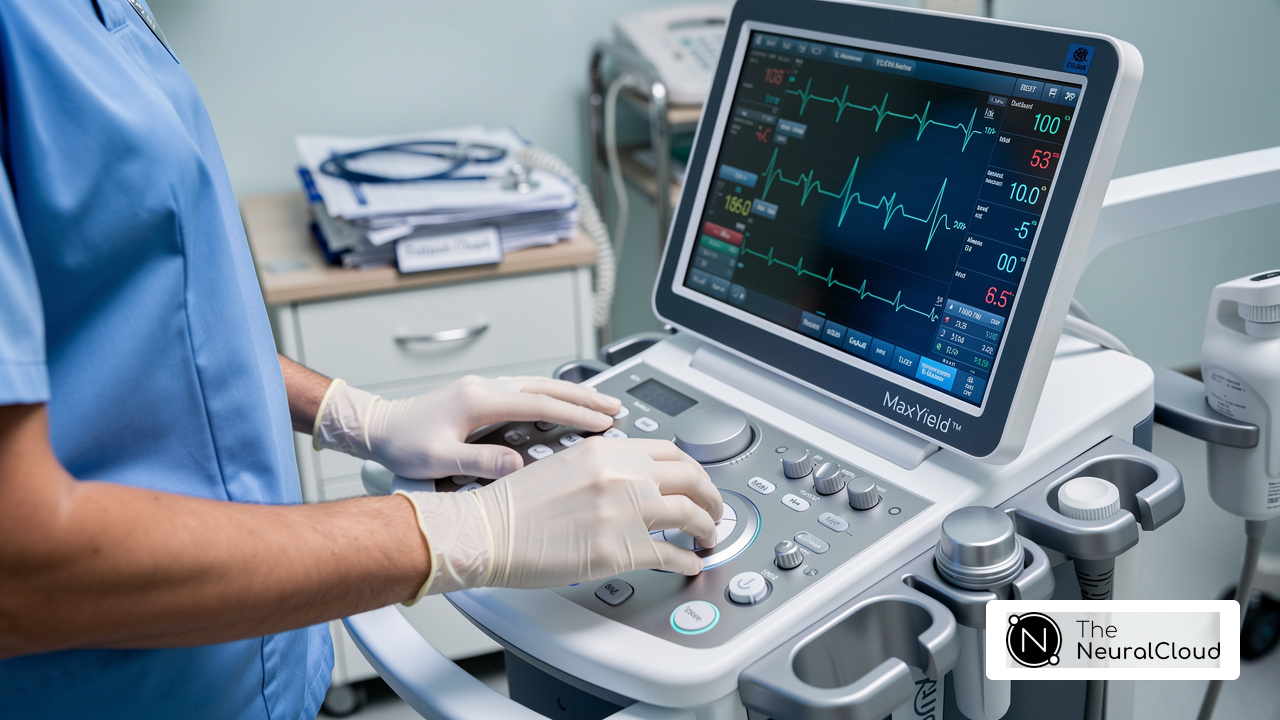
Neural Cloud Solutions' MaxYield™ platform addresses these challenges by mapping ECG signals through noise, isolating and labeling key features in every heartbeat, including P waves, QRS complexes, and T wave onsets and offsets, as well as time-series intervals. With advanced processing and artifact handling capabilities, MaxYield™ transforms noisy recordings into detailed insights, delivering beat-by-beat analysis of 200,000 heartbeats in less than 5 minutes. This innovative AI approach supports confident clinical decision-making by helping users identify cardiac events and displaying smooth waveforms.
As advancements in health technology progress, understanding these components will be vital for integrating innovative solutions like MaxYield™ into clinical practice. According to Bryn Mumma, a professor of emergency medicine, "These results demonstrate the potential of AI-based applications to transform emergency cardiovascular care," underscoring the importance of these advancements in healthcare.

Select Compatible ECG Equipment
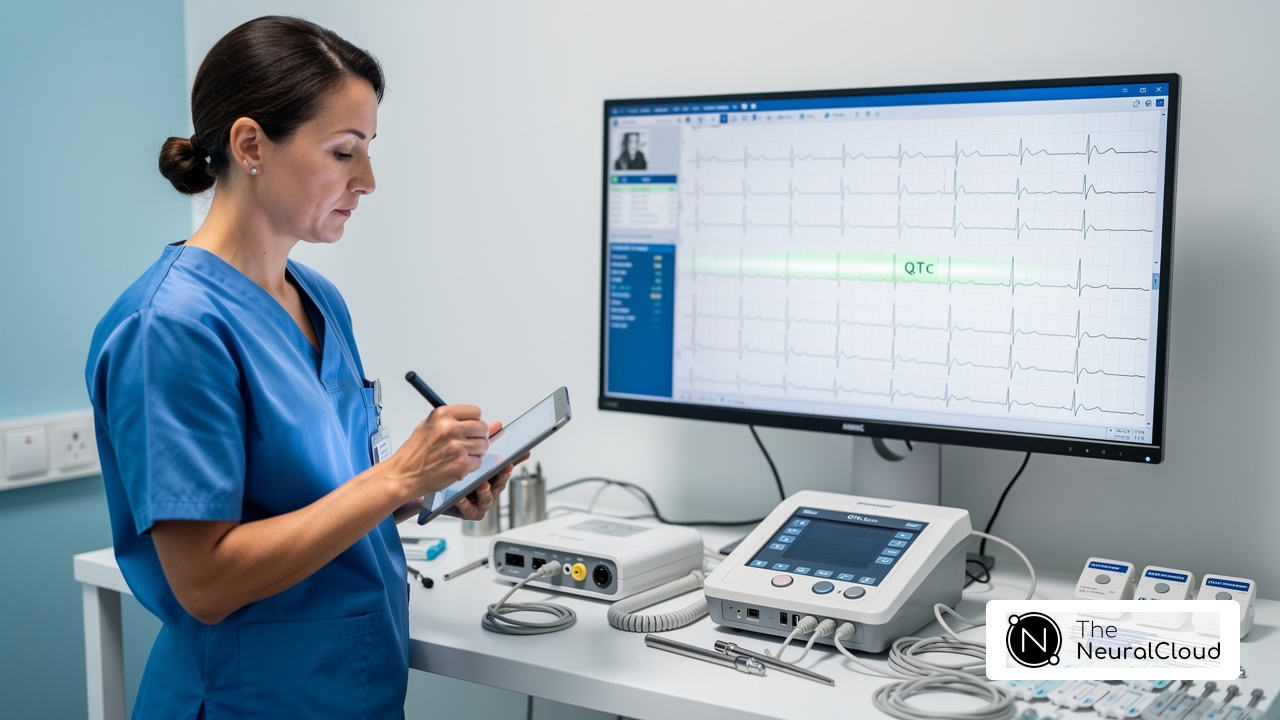
Selecting the right ECG equipment is essential for effective patient monitoring. Key considerations include:
- Compatibility with Existing Systems: Ensuring that the ECG device integrates seamlessly with other health tech systems is vital. Devices that support standards like HL7 or DICOM are preferable, as they enhance interoperability and facilitate information exchange.
- Device Versatility: Opt for equipment that accommodates various ECG modalities, such as 12-lead ECGs, Holter monitors, and wearable devices. This versatility expands the range of applications in clinical settings, enabling better patient management.
- User-Friendly Interface: Select devices with intuitive interfaces that simplify operation. This reduces training time and improves workflow efficiency, ultimately benefiting patient care.
Incorporating Neural Cloud Solutions' technologies can significantly enhance ECG workflow efficiency through advanced processing and automation. For example, our noise filtering, combined with P, QRS, and T Wave highlighting, streamlines your workflow, allowing for more accurate analysis. Additionally, devices that offer wireless connectivity simplify information transfer, enhancing real-time monitoring capabilities. By carefully selecting compatible ECG equipment and leveraging Neural Cloud Solutions' advanced methodologies, medical providers can ensure a smoother integration process and improve patient care outcomes.

Implement Advanced ECG Data Processing Techniques
To improve the accuracy and efficiency of ECG analysis, healthcare professionals face several challenges that can be addressed through solutions offered by MaxYield™. These techniques not only enhance analysis but also streamline the workflow for clinicians.
MaxYield™ employs sophisticated algorithms that filter out noise and artifacts from ECG signals. By utilizing adaptive filtering techniques, the platform significantly enhances signal quality, leading to more accurate interpretations. This improvement is crucial for effective patient care, as it allows clinicians to make better-informed decisions based on clearer data.
The integration of machine learning algorithms within MaxYield™ automates the classification of ECG waveforms. These AI-driven models learn from extensive datasets, continuously improving their accuracy over time. This capability assists clinicians in identifying abnormalities more effectively, thereby enhancing diagnostic clarity and reducing the likelihood of oversight.
Real-Time Information Processing: MaxYield™ also features systems that enable real-time data analysis. This functionality provides prompt feedback and accelerates clinical decision-making, which is particularly vital in emergency situations. By supporting scalable medical solutions, the platform ensures that healthcare providers can respond swiftly to patient needs.
For instance, MaxYield™'s AI-driven platforms can automate data processing, allowing clinicians to focus more on patient care rather than manual data analysis. By adopting these advanced techniques, medical providers can significantly enhance their diagnostic capabilities, ultimately leading to improved patient outcomes.

Establish Continuous Monitoring and Evaluation
To ensure the long-term success of ECG integration in health tech, establishing continuous monitoring is essential.
- Conducting periodic audits of ECG data and interpretation is vital for identifying areas needing improvement. This practice helps maintain high standards of accuracy and reliability in ECG analysis. Regular audits can significantly enhance performance, ensuring that healthcare providers deliver the best care.
- Implementing systems for collecting feedback from medical professionals using ECG technology is crucial. Research indicates that approximately 75% of medical professionals report that usability feedback directly informs necessary adjustments and enhancements to the system. This leads to improved functionality, ultimately benefiting patient care.
- Staying updated on advancements in ECG technology and data processing techniques is imperative. Frequent evaluations of how new tools and methodologies can be incorporated into current workflows can improve performance. This ensures that providers are equipped with the latest innovations, enhancing their ability to deliver accurate diagnoses.
For instance, integrating a feedback loop that allows clinicians to report discrepancies in ECG interpretations has proven effective in refining algorithms and improving training for future analyses. By establishing these processes, healthcare providers can ensure that their ECG solutions remain effective and responsive to evolving clinical needs.

Conclusion
Incorporating free EKG technology into health tech solutions is not merely a trend; it represents a significant approach that enhances patient care and diagnostic accuracy. Healthcare providers face challenges in ECG analysis, including:
- Understanding the intricacies of ECG anatomy and physiology
- Selecting compatible equipment
- Implementing advanced data processing techniques
Establishing continuous monitoring is also essential. These elements work together to create a robust framework for effective EKG integration, ultimately leading to improved patient outcomes and streamlined clinical workflows.
The MaxYield™ platform addresses these challenges by offering features that enhance ECG analysis. It provides advanced data processing techniques, including noise reduction and machine learning, which significantly improve the accuracy and efficiency of ECG readings. By recognizing crucial components of ECG readings, such as the P-Wave, QRS complex, and T-Wave, healthcare professionals can make informed decisions regarding patient diagnostics. Continuous monitoring and evaluation ensure that these systems remain effective and responsive to the evolving needs of clinical practice.
As the landscape of health technology evolves, embracing best practices for EKG integration becomes paramount. The potential for improved cardiac care through innovative solutions like Neural Cloud Solutions' MaxYield™ platform illustrates the necessity of adapting to technological advancements. By prioritizing these strategies, healthcare providers can enhance their diagnostic capabilities and ensure they deliver the highest quality of care to their patients. The future of ECG integration lies in a commitment to excellence and continuous improvement in clinical practices.
Frequently Asked Questions
What is the purpose of ECG technology in health applications?
ECG technology records the heart's electrical activity, which is crucial for diagnosing various cardiac conditions.
What are the key components of an ECG?
The key components of an ECG include the P-Wave (representing atrial depolarization), the QRS Complex (indicating ventricular depolarization), and the T-Wave (reflecting ventricular repolarization).
Why is it important to recognize the components of an ECG?
Recognizing the components of an ECG is essential for identifying normal and abnormal patterns in ECG readings, which directly impacts diagnosis and treatment planning.
What does a prolonged QRS complex indicate?
A prolonged QRS complex may suggest a delay in ventricular conduction, warranting further investigation.
How familiar are cardiologists with ECG components?
Studies show that about 70% of cardiologists are familiar with these ECG components, highlighting their significance in clinical practice.
What is the MaxYield™ platform and how does it address ECG challenges?
MaxYield™ is a platform that maps ECG signals through noise, isolating and labeling key features in every heartbeat, such as P-wave, QRS complex, and T-wave onsets and offsets, while also handling noise reduction and artifacts.
How quickly can MaxYield™ analyze heartbeats?
MaxYield™ can deliver beat-by-beat analysis of 200,000 heartbeats in less than 5 minutes.
What is the significance of advancements in ECG technology according to Bryn Mumma?
Advancements in ECG technology, such as AI-based applications, have the potential to transform emergency cardiovascular care and enhance clinical decision-making.
List of Sources
- Understand ECG Anatomy and Physiology
- AI-Powered ECG Analysis Offers Promising Path for Early Detection of Chronic Obstructive Pulmonary Disease, Say Mount Sinai Researchers (https://mountsinai.org/about/newsroom/2026/ai-powered-ecg-analysis-offers-promising-path-for-early-detection-of-chronic-obstructive-pulmonary-disease-say-mount-sinai-researchers)
- AccurKardia wins FDA clearance for next-generation ECG analysis system | Medical Economics (https://medicaleconomics.com/view/accurkardia-wins-fda-clearance-for-next-generation-ecg-analysis-system)
- gehealthcare.com (https://gehealthcare.com/insights/article/advances-in-ecg-technology-in-2022-retaining-a-key-role-for-patient-care?srsltid=AfmBOoqZkhxnQAiW1aO3NVJw6ZAaitXPj6KpP53re1P2HT9fWFq3bx_b)
- New study finds AI model improves heart attack detection (https://health.ucdavis.edu/news/headlines/new-study-finds-ai-model-improves-heart-attack-detection/2025/11)
- Cardiovascular Diseases and Cardiac Surgery News - Medical Professionals - Mayo Clinic (https://mayoclinic.org/medical-professionals/cardiovascular-diseases/news)
- Select Compatible ECG Equipment
- midmark.com (https://midmark.com/newsroom/news-releases/2025/10/16/midmark-digital-ecg-now-available-with-dicom-compatibility)
- finance.yahoo.com (https://finance.yahoo.com/news/ecg-equipment-management-systems-business-152600742.html)
- 30+ US Electronic Health Records (EHR) Adoption Statistics for 2026 (https://aptarro.com/insights/us-ehr-adoption-statistics)
- 30 Quotes About the Future of Healthcare: Expert Takes (https://deliberatedirections.com/quotes-future-of-healthcare)
- technavio.com (https://technavio.com/report/diagnostic-electrocardiograph-ecg-market-analysis)
- Establish Continuous Monitoring and Evaluation
- AccurKardia wins FDA clearance for next-generation ECG analysis system | Medical Economics (https://medicaleconomics.com/view/accurkardia-wins-fda-clearance-for-next-generation-ecg-analysis-system)
- gehealthcare.com (https://gehealthcare.com/insights/article/retrospective-analysis-of-ecg-data-supports-cardiologists'-clinical-judgment?srsltid=AfmBOopwmFQEXrpfCJsdtXDJHONAEvhIsJ1SQkfIMVQNIrmV-QHCWkHO)
- thejournalofmhealth.com (https://thejournalofmhealth.com/a-new-rhythm-rising-role-of-prolonged-ecg-patch-technology-in-improving-uk-heart-health)
- pmc.ncbi.nlm.nih.gov (https://pmc.ncbi.nlm.nih.gov/articles/PMC12532542)
- irhythmtech.com (https://irhythmtech.com/us/en/who-we-are/news-events)