Introduction
Artificial intelligence is transforming cardiology, presenting remarkable opportunities to enhance patient care and streamline clinical processes. By effectively integrating AI, healthcare organizations can improve diagnostic accuracy, reduce analysis time, and ultimately save lives. However, the journey to successful integration comes with challenges.
How can medical professionals ensure that these advanced technologies are used to their fullest potential while addressing the unique needs of their practice and patients?
Establish a Clear Framework for AI Integration in Cardiology
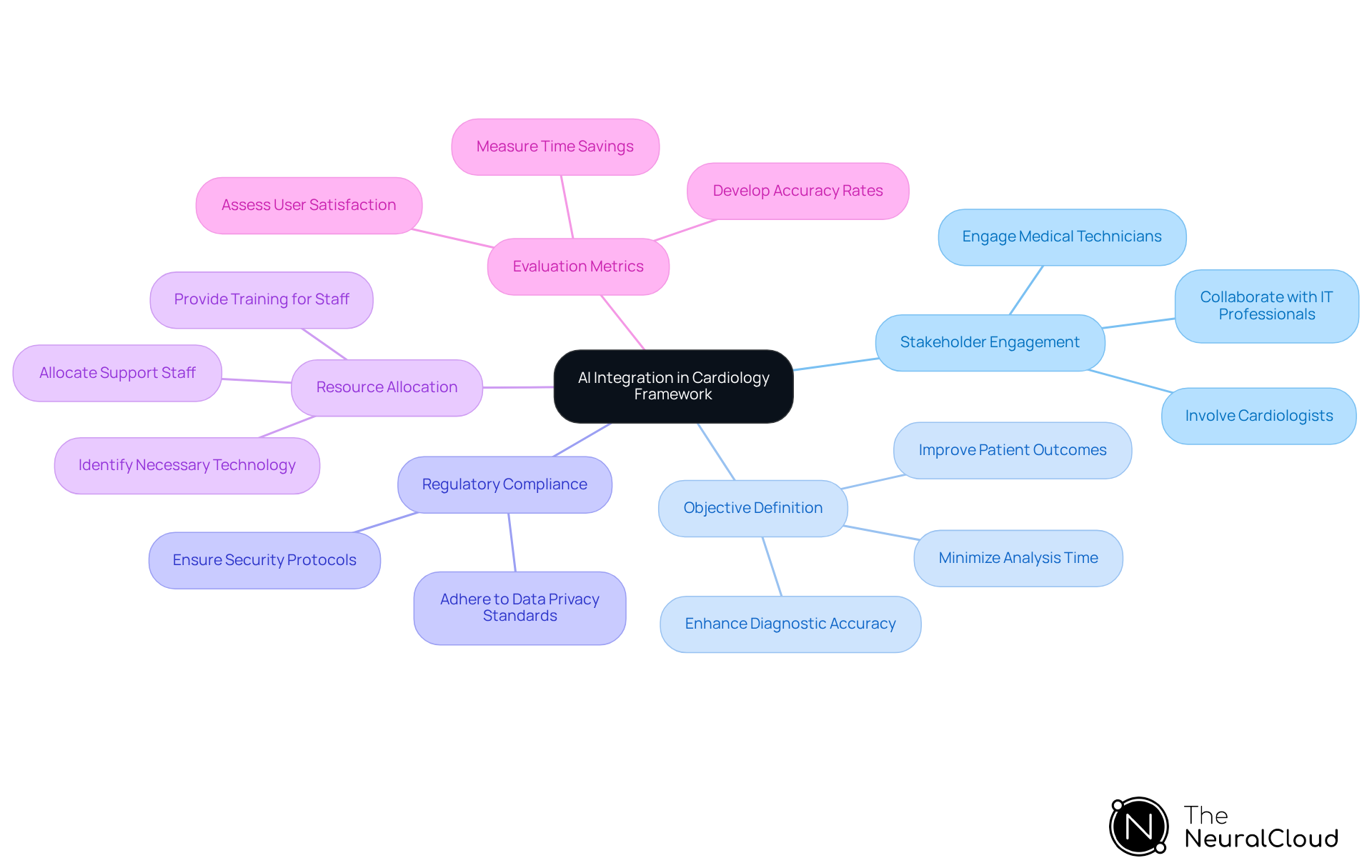
To successfully implement AI, establishing a comprehensive framework that delineates goals, processes, and strategies is crucial. This framework should encompass the following key components:
- Stakeholder Engagement: Actively involve cardiologists, medical technicians, and IT professionals from the outset to ensure that AI tools, such as algorithms, are tailored to meet clinical needs effectively. Engaging these stakeholders fosters a collaborative environment that enhances the likelihood of successful implementation.
- Objective Definition: Clearly articulate the objectives of AI integration, focusing on enhancing diagnostic accuracy through advanced noise filtering and wave recognition, minimizing analysis time with automation, and improving patient outcomes by unlocking actionable insights from complex signal data. This clarity helps align efforts across the organization and ensures that all parties understand the intended benefits of the technology.
- Compliance Assurance: Ensure that the framework complies with relevant healthcare regulations and standards, particularly concerning data privacy and security protocols. Adhering to these regulations is essential for maintaining trust and safeguarding patient information.
- Resource Allocation: Identify and allocate the necessary resources, including technology, training, and support staff, to facilitate a seamless integration process. Sufficient resource distribution is essential for addressing possible obstacles and guaranteeing that staff are well-equipped to employ AI instruments effectively, including the functionalities of software.
- Performance Metrics: Develop metrics to evaluate the effectiveness of AI tools, such as accuracy rates, time savings, and user satisfaction, particularly in relation to the efficiency gains provided by machine learning and its continuous learning model. Regular assessment of these metrics allows for continuous improvement and adaptation of AI solutions to better serve clinical needs.
By implementing this structured approach, medical organizations can lay a robust foundation for AI integration, ultimately enhancing patient care and operational efficiency. This framework not only supports the deployment of innovative technologies like AI systems but also ensures that the integration process is aligned with the overarching goals of improving healthcare outcomes, particularly through artificial intelligence in cardiology.
Select Tailored AI Tools for Cardiology Applications
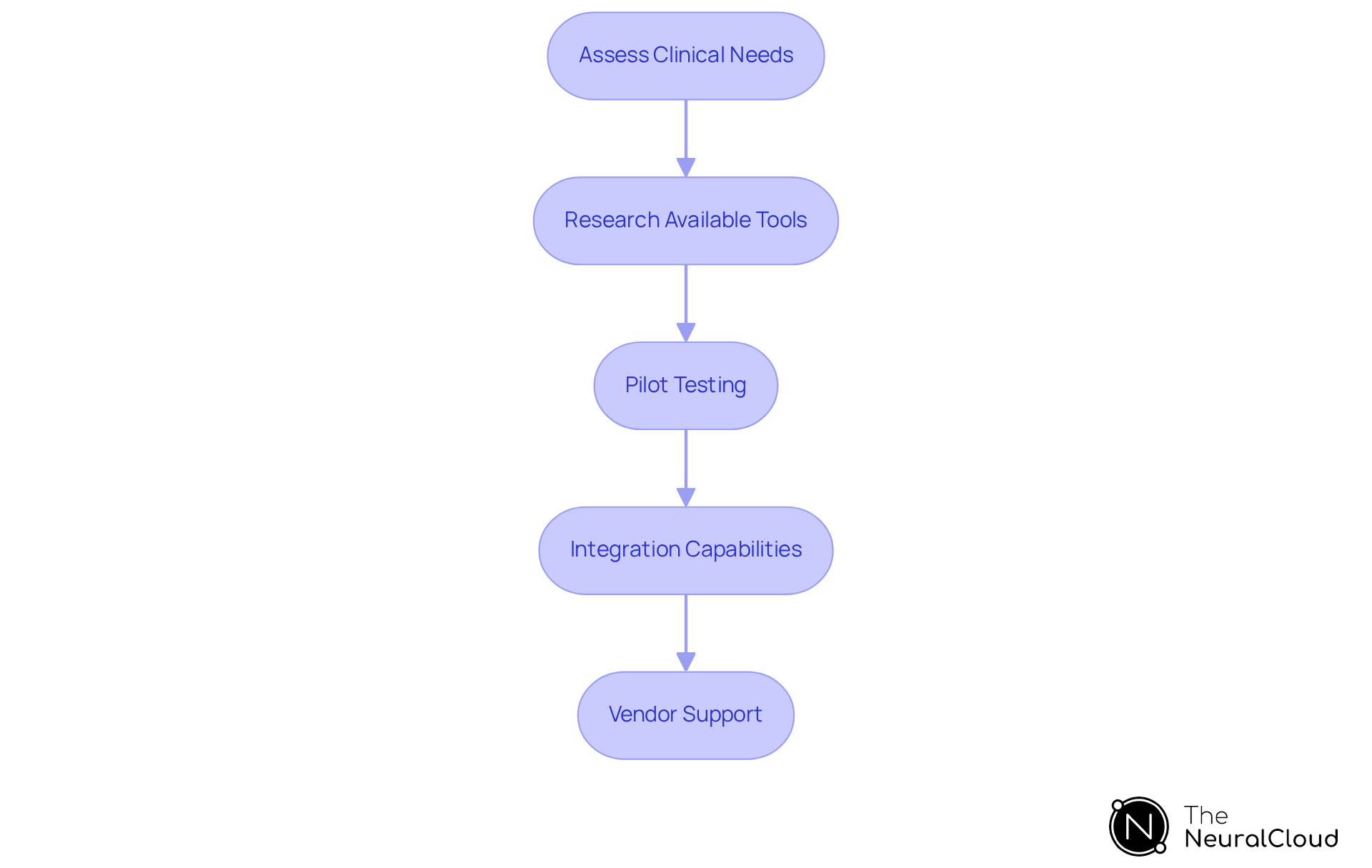
Choosing the right tools in artificial intelligence for cardiology for heart medicine requires a solid understanding of the specific needs of both the practice and the patient demographic. Here are essential steps to guide the selection process:
- Assess Clinical Needs: Identify the unique challenges within your practice, such as the need for faster ECG analysis or improved risk stratification. With cardiovascular disease accounting for an estimated 20.5 million deaths globally, addressing these challenges is more urgent than ever. The technology from Neural Cloud Solutions offers solutions that can significantly reduce analysis time, providing detailed insights from 200,000 heartbeats in under five minutes.
- Research Available Tools: Explore a variety of AI tools, focusing on those with proven effectiveness in heart-related applications, including ECG interpretation and predictive analytics. MaxYield™ stands out with its advanced algorithms, ensuring clean signals that enhance diagnostic yield. Its device-agnostic nature allows it to capture ECG recordings from various devices, making it a versatile choice for practices. Recent advancements in artificial intelligence for cardiology, including machine learning techniques, are reshaping the landscape of the field.
- Pilot Testing: Conduct pilot assessments of selected AI resources to evaluate their effectiveness in real clinical settings. Gather feedback from healthcare professionals, such as Bryn Mumma, who stress that user experience is critical. This feedback will help identify strengths and areas for improvement. MaxYield™'s ability to integrate seamlessly with various devices, including wearable and Holter monitors, can be a significant advantage during testing.
- Integration Capabilities: Ensure that the chosen AI solutions can connect smoothly with existing electronic health record (EHR) systems and clinical workflows, minimizing disruption to daily operations. Effective integration is essential for enhancing patient care. MaxYield™'s compatibility with multiple devices supports this integration, allowing for a smoother workflow.
- Vendor Support: Select suppliers that provide extensive assistance and training materials to ensure seamless implementation and ongoing use of the AI resources. Comprehensive vendor support can significantly influence the success of AI system integration. Neural Cloud Solutions offers extensive resources to help practices maximize the benefits of the technology.
By thoughtfully selecting customized AI tools like MaxYield™, heart health practices can enhance their diagnostic capabilities and improve patient outcomes, ultimately aiding in better management of cardiovascular diseases.
Train Healthcare Professionals on AI Utilization
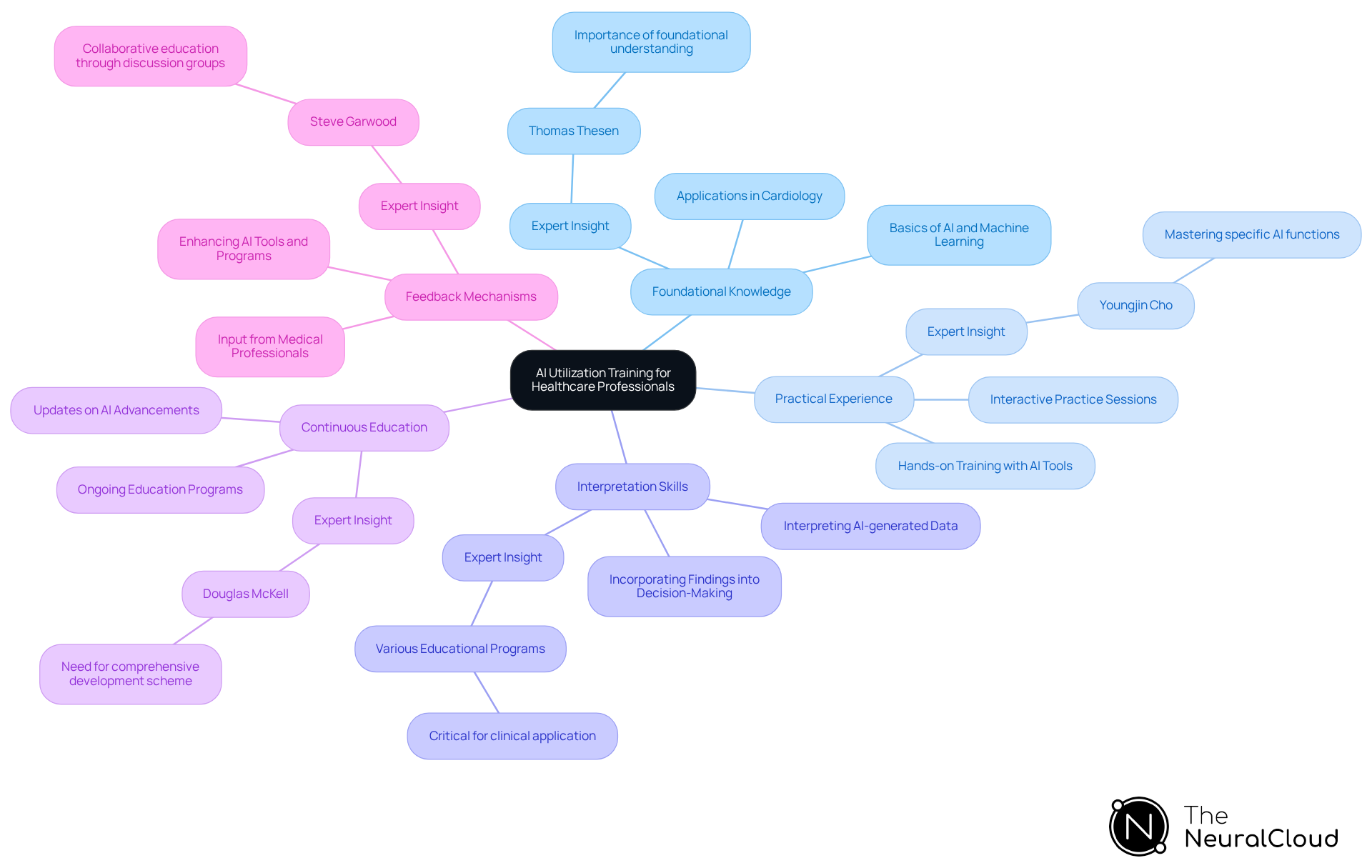
To ensure effective integration of AI, training is vital. Here are the key components of an effective training program:
- Instructional Sessions: Instructional sessions should cover the basics of AI and machine learning, detailing how these technologies operate and their applications in cardiology. This foundational understanding is crucial for clinicians to adapt to evolving AI capabilities, as highlighted by experts like Thomas Thesen from Dartmouth.
- Practical Experience: Hands-on training being implemented is essential. This allows healthcare professionals to become familiar with the technology and its functionalities. Youngjin Cho emphasizes the importance of practice for prompt enhancements, achievable through interactive practice sessions.
- Data Interpretation: Developing skills for interpreting AI-generated data and insights is critical. Clinicians must confidently incorporate these findings into their decision-making processes, which is essential for effective clinical application, as noted in various educational programs.
- Continuous Education: Ongoing education programs should be established to keep staff updated on advancements in AI technology and best practices. Douglas McKell stresses the need for a comprehensive development scheme rather than a fragmented approach, ensuring that staff are well-equipped for future advancements.
- Feedback Mechanisms: Avenues for medical professionals to provide input on AI tools and educational programs should be established. This facilitates ongoing enhancement and adjustment to their needs. The collaborative aspect of education, as observed in faculty discussion groups organized by Steve Garwood at Rowan-Virtua School of Osteopathic Medicine, can enhance engagement and knowledge sharing among staff.
By investing in training development that incorporates these elements, healthcare organizations can empower their staff to leverage AI effectively, ultimately enhancing patient care. Anecdotes, such as Tracey Taylor's journey from resistance to embracing AI training, illustrate the importance of comprehensive training.
Implement Continuous Evaluation of AI Systems
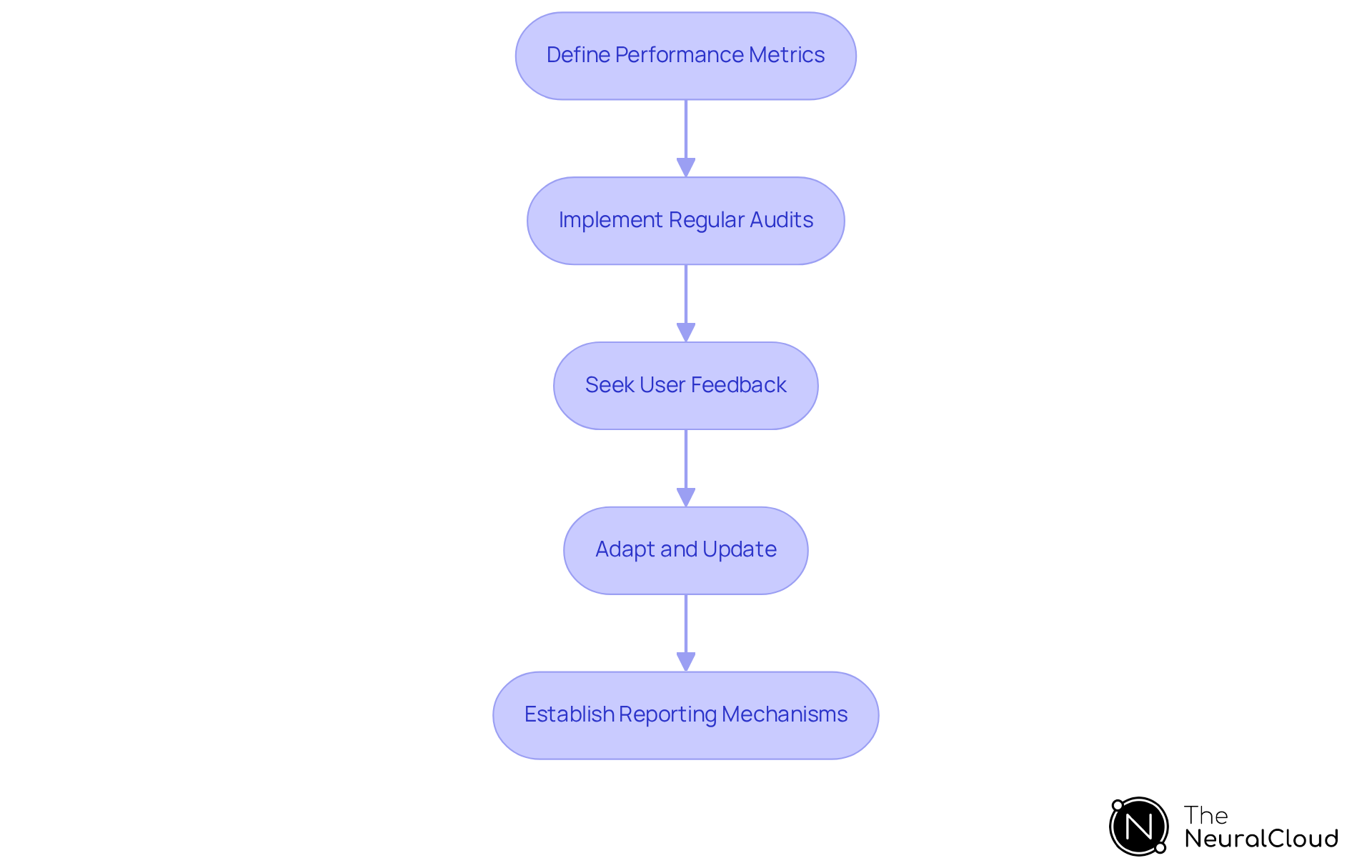
To ensure the effectiveness and safety of AI systems, especially those developed by Neural Cloud Solutions, a robust process is crucial. Here are the key steps:
- Metrics: Define specific metrics to assess the accuracy, reliability, and efficiency of AI systems in clinical settings. This includes evaluating algorithms to ensure optimal patient outcomes, especially as traditional ECG interpretation struggles with noise and preset algorithms.
- Regular Audits: Implement regular audits to verify compliance with regulatory standards and to pinpoint potential issues or areas for enhancement. Regular audits help maintain high-quality care and adherence to best practices.
- User Feedback: Actively seek input from medical professionals utilizing AI tools to gain insights into their experiences and identify practical challenges. This feedback loop is vital for refining AI applications and enhancing user satisfaction.
- Continuous Improvement: Stay agile by adapting AI systems based on evaluation outcomes. This may involve updating algorithms and retraining models to incorporate new data and clinical insights, ensuring that the technology evolves alongside medical advancements.
- Reporting Mechanisms: Establish reporting mechanisms to share evaluation results with stakeholders, fostering trust and accountability in the deployment of AI technologies. Clear communication of findings enhances collaboration and supports informed decision-making.
By prioritizing evaluation processes, healthcare organizations can ensure their systems in artificial intelligence cardiology, particularly those from Neural Cloud Solutions, remain effective, reliable, and aligned with the dynamic needs of the field.
Conclusion
Integrating artificial intelligence into cardiology presents a significant opportunity to enhance patient care and operational efficiency. By establishing a clear framework that includes:
- Stakeholder engagement
- Objective definition
- Regulatory compliance
- Resource allocation
- Evaluation metrics
healthcare organizations can effectively navigate the complexities of AI implementation. This structured approach not only supports the adoption of innovative tools like Neural Cloud Solutions' MaxYield™ but also aligns with the overarching goal of improving healthcare outcomes.
Key insights from the article emphasize the importance of selecting tailored AI tools that address specific clinical needs. Providing practical training for healthcare professionals and implementing continuous evaluation processes are crucial to ensure the effectiveness of AI systems. By assessing clinical requirements, conducting pilot tests, and ensuring seamless integration with existing workflows, practices can enhance their diagnostic capabilities and ultimately improve patient outcomes. Ongoing education and feedback mechanisms empower staff to leverage AI effectively, fostering a culture of continuous improvement.
As the integration of artificial intelligence in cardiology continues to evolve, it is imperative for healthcare organizations to prioritize these best practices. Embracing a collaborative approach to AI implementation not only enhances clinical decision-making but also contributes to the broader goal of advancing cardiovascular care. By committing to a comprehensive strategy for AI integration, stakeholders can unlock the full potential of this technology, ultimately leading to better health outcomes for patients and a more efficient healthcare system.
Frequently Asked Questions
What is the importance of establishing a framework for AI integration in cardiology?
Establishing a comprehensive framework is crucial for delineating goals, processes, and evaluation metrics to ensure successful AI integration in cardiology.
Who should be involved in the stakeholder engagement process for AI integration?
Stakeholders such as cardiologists, medical technicians, and IT professionals should be actively involved from the outset to tailor AI tools effectively to clinical needs.
What objectives should be defined for AI integration in cardiology?
Objectives should include enhancing diagnostic accuracy, minimizing analysis time with automated processes, and improving patient outcomes by unlocking actionable insights from complex signal data.
Why is regulatory compliance important in the AI integration framework?
Regulatory compliance is essential for maintaining trust and safeguarding patient information, particularly concerning data privacy and security protocols.
What resources need to be allocated for effective AI integration in cardiology?
Necessary resources include technology, training, and support staff to facilitate a seamless integration process and address possible obstacles.
What evaluation metrics should be developed to assess AI tools in cardiology?
Metrics should include accuracy rates, time savings, and user satisfaction, particularly related to the efficiency gains provided by AI tools like Neural Cloud Solutions' MaxYield™.
How does the structured approach to AI integration benefit medical organizations?
It lays a robust foundation for AI integration, enhancing patient care and operational efficiency while aligning the integration process with the overarching goals of improving healthcare outcomes.
List of Sources
- Establish a Clear Framework for AI Integration in Cardiology
- acc.org (https://acc.org/latest-in-cardiology/articles/2025/10/01/01/cover-story-empowering-the-ai-enabled-clinician)
- newsroom.heart.org (https://newsroom.heart.org/news/new-guidance-offered-for-responsible-ai-use-in-health-care)
- healthcareittoday.com (https://healthcareittoday.com/2025/10/31/ai-success-in-healthcare-depends-on-stakeholder-involvement)
- naco.org (https://naco.org/news/5-things-healthcare-leaders-want-ai-2025-and-beyond)
- ahajournals.org (https://ahajournals.org/doi/10.1161/CIR.0000000000001400)
- Select Tailored AI Tools for Cardiology Applications
- cardiovascularbusiness.com (https://cardiovascularbusiness.com/topics/cardiac-imaging/cardiologys-biggest-trend-new-scientific-statements-take-ai-powered-coronary-plaque-evaluations)
- scai.org (https://scai.org/media-center/news-and-articles/new-studies-highlight-potential-artificial-intelligence-improve)
- investor.gehealthcare.com (https://investor.gehealthcare.com/news-releases/news-release-details/ge-healthcare-showcases-integrated-cardiology-care-pathway)
- newsroom.heart.org (https://newsroom.heart.org/news/three-health-tech-innovators-recognized-for-digital-solutions-to-transform-cardiovascular-care)
- New study finds AI model improves heart attack detection (https://health.ucdavis.edu/news/headlines/new-study-finds-ai-model-improves-heart-attack-detection/2025/11)
- Train Healthcare Professionals on AI Utilization
- magazine.hms.harvard.edu (https://magazine.hms.harvard.edu/articles/how-generative-ai-transforming-medical-education)
- medcitynews.com (https://medcitynews.com/2025/11/ai-can-improve-bedside-manner-training-healthcares-human-skills)
- aamc.org (https://aamc.org/news/medical-schools-train-faculty-ai-best-practices)
- heart.org (https://heart.org/en/professional/quality-improvement/aha-ai-assessment-lab/webinar-expanding-ai-access-across-healthcare-systems)
- Implement Continuous Evaluation of AI Systems
- cardiovascularbusiness.com (https://cardiovascularbusiness.com/topics/cardiac-imaging/cardiologys-biggest-trend-new-scientific-statements-take-ai-powered-coronary-plaque-evaluations)
- scai.org (https://scai.org/media-center/news-and-articles/new-studies-highlight-potential-artificial-intelligence-improve)
- forbes.com (https://forbes.com/sites/sachinjain/2025/10/21/ai-adoption-in-healthcare-is-surging-what-a-new-report-reveals)
- newsroom.heart.org (https://newsroom.heart.org/news/new-guidance-offered-for-responsible-ai-use-in-health-care)