Introduction
The electrocardiogram (ECG) stands as a vital tool in the early detection of heart failure, offering essential insights into the heart's electrical activity and overall health. As technology and artificial intelligence continue to transform cardiac diagnostics, the ECG's ability to uncover underlying issues, such as arrhythmias and myocardial dysfunction, becomes increasingly apparent. This evolution prompts an important inquiry: can an ECG accurately detect heart failure to the extent necessary for clinical decision-making?
Examining the changing role of ECGs in heart failure detection not only highlights their diagnostic capabilities but also showcases innovations that enhance their effectiveness in patient care. With advancements in ECG technology, healthcare professionals can expect improved accuracy and reliability in identifying heart failure, ultimately leading to better patient outcomes.
In summary, the ECG's integration into heart failure diagnostics represents a significant leap forward, providing clinicians with a powerful tool to make informed decisions. As we delve deeper into the features and benefits of ECGs, it becomes clear that their role in cardiac health is more crucial than ever.
Defining ECG and Its Role in Heart Failure Detection
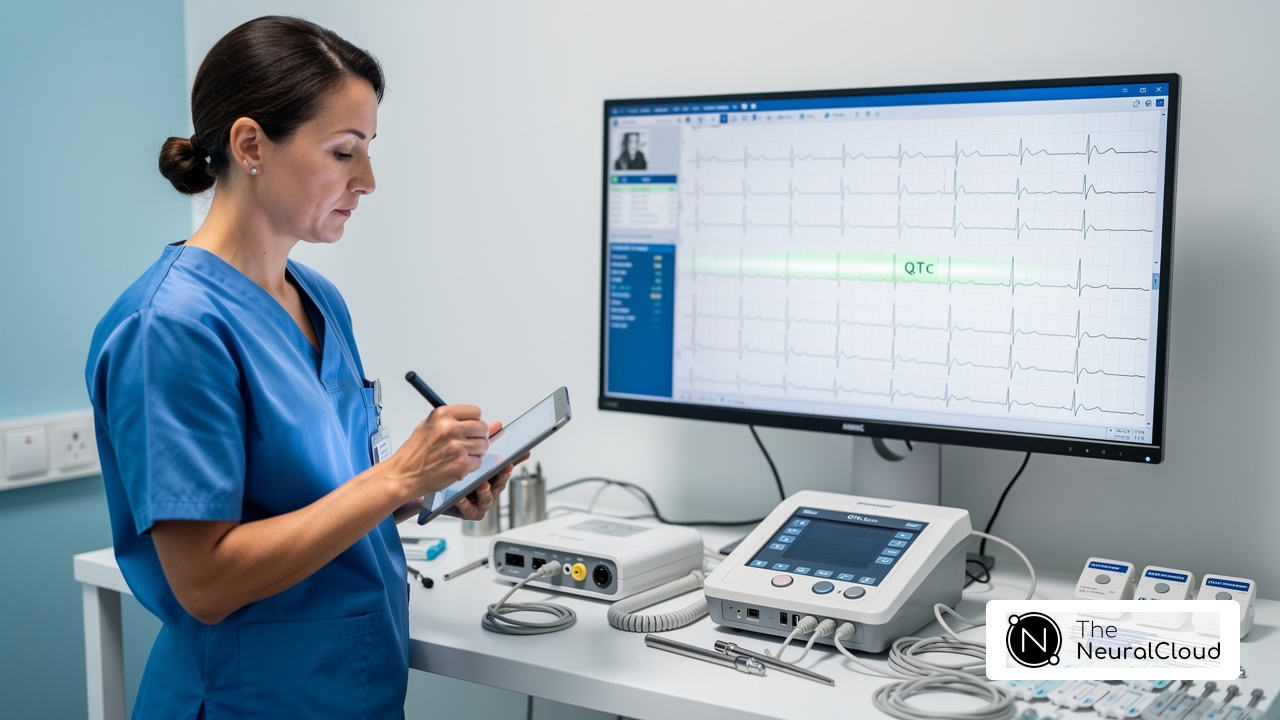
An electrocardiogram (ECG) is a vital diagnostic tool that records the heart's electrical activity over time, providing essential insights into its rhythm, size, and position. This information is crucial for diagnosing various cardiac issues, including heart failure, which occurs when the heart fails to pump enough blood to meet the body's needs. While an ECG alone cannot definitively diagnose cardiac insufficiency, it raises the question of how well it can detect heart problems by uncovering underlying issues such as arrhythmias, ischemia, or previous myocardial infarctions that may increase a patient's risk of cardiac insufficiency. By carefully analyzing the ECG's patterns and intervals, healthcare professionals can identify abnormalities that indicate cardiac stress or dysfunction.
Recent studies highlight the significant role of ECG technology in detecting heart failure, with estimates suggesting that around 55.5% of patients in certain cohorts develop cardiac issues. This underscores the ECG's importance in early diagnosis. For instance, a recent study achieved an impressive accuracy of 91.8%, demonstrating the effectiveness of ECG in assessing cardiac risk. Cardiologists have observed that when considering whether a patient is at risk of heart failure, it can reveal critical indicators such as left ventricular hypertrophy and ST-segment changes, which are linked to an increased risk of mortality.
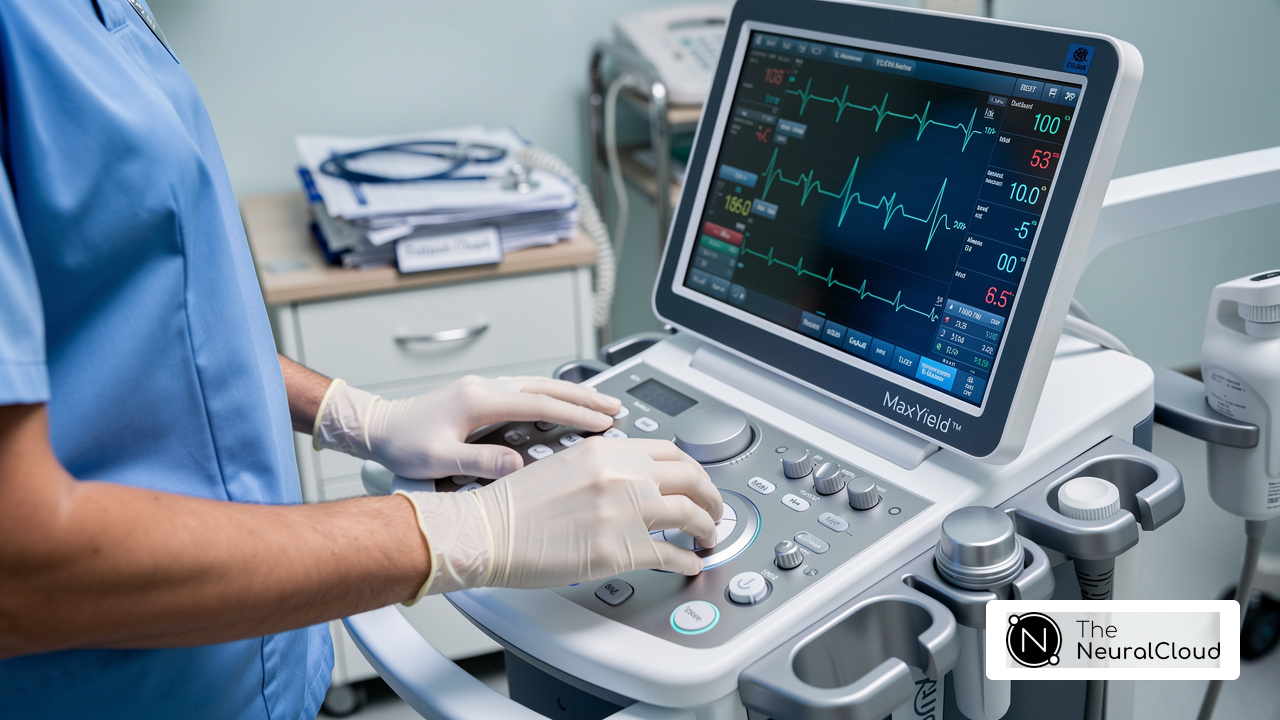
The integration of advanced technologies like Neural Cloud Solutions' platform revolutionizes ECG evaluation by automating the labeling of key features and enhancing noise filtering capabilities. MaxYield™ effectively maps ECG signals through noise, isolating and labeling critical data, allowing for rapid analysis of up to 200,000 heartbeats in under five minutes. This efficiency addresses challenges in ECG interpretation, such as physiological variability and signal artifacts, ultimately supporting confident clinical decision-making. The MaxYield™ algorithm continuously evolves with each use, improving its diagnostic yield and accuracy over time.
The practical applications of ECG in various clinical settings raise the question, how can it be utilized effectively? For example, the Chronic Renal Insufficiency Cohort (CRIC) study demonstrated the predictive value of ECG, highlighting the necessity for routine ECG evaluations in at-risk populations. Additionally, machine learning models trained on ECG data have shown promise in enhancing predictive capabilities for cardiac failure, suggesting that combining advanced analytics with traditional ECG evaluations can significantly improve patient outcomes.

Historical Context and Evolution of ECG in Cardiac Care
The electrocardiogram (ECG) has its roots in the early 20th century, thanks to Willem Einthoven, who created the first ECG machine. This innovation marked a pivotal moment in cardiac diagnostics. Over the years, ECG technology has evolved significantly, moving from large, cumbersome machines to portable devices that fit various clinical settings.
The integration of digital technology and advanced computer algorithms has transformed ECG analysis. These enhancements allow for more accurate interpretations and faster diagnoses, which are crucial in cardiac care. Today, ECGs are essential not only in hospitals but also in outpatient settings and through telemedicine. This shift reflects a growing trend towards accessible and continuous monitoring.
This evolution of ECG technology highlights its vital role in heart failure detection. By facilitating timely assessments, ECGs enhance the efficiency of cardiac evaluations, ultimately benefiting healthcare professionals and patients alike.

Key Features of ECG Technology for Heart Failure Diagnosis
ECG technology is essential for real-time cardiac rhythm monitoring, allowing for the detection of arrhythmias and identifying signs of ischemia or previous myocardial infarctions. It measures various intervals and segments, such as the P-wave, QRS complex, and T-wave, which reflect the electrical activity and overall health of the heart. To determine if an ECG can aid in diagnosing cardiac insufficiency often involves recognizing specific patterns, such as waveform changes and changes in the intervals, which indicate underlying cardiac dysfunction. Notably, studies reveal that in heart failure patients, leading to the question of whether an ECG can assist by identifying these irregularities in a significant number of cases.
The technology from Neural Cloud Solutions enhances ECG analysis by incorporating artificial intelligence. This platform effectively filters through noise, isolating and labeling key features in each heartbeat. It provides a beat-by-beat evaluation of 200,000 heartbeats in under 5 minutes, significantly improving the examination of complex data. For instance, an AI model demonstrated an area under the curve (AUROC) of 90.4% for detecting left ventricular ejection fraction (LVEF) ≤ 45%, raising the question of whether an ECG can improve diagnostic accuracy.
The advantages of using MaxYield™ are substantial. By streamlining the diagnostic process, it empowers healthcare professionals to make informed decisions based on precise and actionable ECG data. Furthermore, the AI tool EchoNext, linked to Neural Cloud Solutions, achieved 77% accuracy in detecting heart failure, compared to 64% by cardiologists. This highlights the benefits of AI-driven ECG evaluation in enhancing clinical workflows and improving diagnostic outcomes.
In summary, the integration of AI in ECG technology not only addresses the challenges of traditional analysis but also provides healthcare professionals with powerful tools to enhance patient care. The technology exemplifies how advanced technology can lead to better diagnostic accuracy and ultimately improve patient outcomes.

Innovations in ECG Analysis: The Impact of AI and Automation
Recent advancements in ECG evaluation have significantly transformed cardiology, particularly through the integration of artificial intelligence (AI) and automation. Traditional ECG analysis often faces challenges, such as time constraints and the potential for human error, uncovering patterns that may elude human interpretation. For instance, Neural Cloud Solutions' technology automates the labeling of ECG waveforms, reducing analysis time to under five minutes while processing over 200,000 heartbeats.
Features of MaxYield™:
- It streamlines the analysis process.
- It isolates critical ECG features even in noisy recordings.
- It enhances diagnostic yield over time.
These features not only enhance the accuracy of diagnoses but also raise the question of efficiency, allowing healthcare professionals to focus on high-level decision-making rather than labor-intensive data processing. MaxYield™ excels in isolating and labeling critical ECG features, even in recordings with high levels of noise and artifact, thanks to its advanced technology and adaptive algorithms. Additionally, its implementation promises improved patient outcomes in cardiac care.
Healthcare professionals have observed that automation in ECG interpretation leads to significant reductions in interpretation time. Studies indicate that the error rate decreased from 41.8% to just 7.9%. These advancements underscore the potential of AI to revolutionize emergency medicine and streamline clinical workflows, ultimately enhancing the quality of care provided to patients.

Conclusion
The electrocardiogram (ECG) is essential for the early detection and management of heart failure, acting as a vital tool for healthcare professionals. While it may not provide a definitive diagnosis on its own, the ECG offers crucial insights into the heart's electrical activity, aiding in the identification of underlying issues that could lead to cardiac insufficiency. However, ECG analysis can be challenging due to the complexity of interpreting results and the potential for human error.
This is where innovations like Neural Cloud Solutions' MaxYield™ platform come into play. The MaxYield™ platform enhances ECG analysis through automated interpretation, significantly improving diagnostic accuracy. Key features of the platform include:
- Automated Analysis: Streamlines the interpretation process, reducing the time required for analysis.
- Error Reduction: Minimizes human error, ensuring more reliable results.
- Advanced Analytics: Utilizes AI to provide deeper insights into ECG data.
These features translate into substantial advantages for healthcare professionals. By adopting the MaxYield™ platform, clinicians can expect:
- Increased Efficiency: Faster turnaround times for ECG results, allowing for timely interventions.
- Improved Patient Outcomes: Enhanced accuracy leads to better treatment decisions.
- Accessibility: The platform can be integrated into various clinical settings, from hospitals to wearable devices, facilitating continuous cardiac monitoring.
In conclusion, the significance of ECG in heart failure detection is paramount. As technology evolves, the integration of AI and advanced analytics through platforms like MaxYield™ will likely enhance the accuracy and efficiency of cardiac assessments. Healthcare professionals are encouraged to embrace these innovations, as they hold the potential to transform patient outcomes and revolutionize cardiac care. Prioritizing ECG evaluations and leveraging cutting-edge tools will be essential in the ongoing fight against heart failure, ensuring that patients receive timely and effective interventions.
Frequently Asked Questions
What is an electrocardiogram (ECG)?
An electrocardiogram (ECG) is a diagnostic tool that records the heart's electrical activity over time, providing insights into its rhythm, size, and position.
How does an ECG help in detecting heart failure?
While an ECG alone cannot definitively diagnose heart failure, it can uncover underlying problems such as arrhythmias, ischemia, or previous myocardial infarctions, which may increase the risk of cardiac insufficiency.
What percentage of patients develop cardiac issues according to recent studies?
Recent studies estimate that around 55.5% of patients in certain cohorts develop cardiac issues.
What is the accuracy of predictive models using ECG features for assessing cardiac risk?
A predictive model utilizing ECG features achieved an accuracy of 91.8% in assessing cardiac risk.
What critical indicators can an ECG reveal that are linked to heart failure?
An ECG can reveal indicators such as ST depression and prolonged QT intervals, which are associated with an increased risk of mortality.
How does the MaxYield™ platform enhance ECG evaluation?
The MaxYield™ platform automates the labeling of key features and improves noise filtering capabilities, allowing for rapid analysis of up to 200,000 heartbeats in under five minutes.
What challenges does the MaxYield™ platform address in ECG interpretation?
It addresses challenges such as physiological variability and signal artifacts, ultimately supporting more confident clinical decision-making.
What correlation was demonstrated in the Chronic Renal Insufficiency Cohort (CRIC) study?
The CRIC study demonstrated strong correlations between ECG abnormalities and left ventricular dysfunction, highlighting the need for routine ECG evaluations in at-risk populations.
How can machine learning models enhance ECG evaluations?
Machine learning models trained on ECG data have shown promise in enhancing predictive capabilities for cardiac failure, suggesting that combining advanced analytics with traditional ECG evaluations can improve patient outcomes.
List of Sources
- Defining ECG and Its Role in Heart Failure Detection
- New AI Tool Identifies Risk of Future Heart Failure (https://medicine.yale.edu/news-article/new-ai-tool-identifies-risk-of-future-heart-failure)
- pmc.ncbi.nlm.nih.gov (https://pmc.ncbi.nlm.nih.gov/articles/PMC12204762)
- ahajournals.org (https://ahajournals.org/doi/10.1161/CIRCHEARTFAILURE.123.010879)
- pmc.ncbi.nlm.nih.gov (https://pmc.ncbi.nlm.nih.gov/articles/PMC4731112)
- Historical Context and Evolution of ECG in Cardiac Care
- technavio.com (https://technavio.com/report/diagnostic-electrocardiograph-ecg-market-analysis)
- Flashback: The First ECG | Pfizer (https://pfizer.com/news/articles/flashback_the_first_ecg)
- getsmartheart.com (https://getsmartheart.com/blogs/news/a-brief-history-of-the-ecg-machine-from-inception-to-now?srsltid=AfmBOor-dI3Benv227alGL47SpKwTZJgKNFHP0BjgVC_rExkpcVq6dBa)
- History of the Electrocardiogram (https://litfl.com/history-of-the-electrocardiogram)
- Key Features of ECG Technology for Heart Failure Diagnosis
- nyp.org (https://nyp.org/advances/article/cardiology/study-shows-ai-screening-tool-developed-at-newyork-presbyterian-and-columbia-can-detect-structural-heart-disease-using-electrocardiogram-data)
- AI-powered ECG model outperforms doctors in detecting hidden heart disease (https://news-medical.net/news/20250721/AI-powered-ECG-model-outperforms-doctors-in-detecting-hidden-heart-disease.aspx)
- An AI tool detected structural heart disease in adults using a smartwatch (https://newsroom.heart.org/news/an-ai-tool-detected-structural-heart-disease-in-adults-using-a-smartwatch)
- newsnetwork.mayoclinic.org (https://newsnetwork.mayoclinic.org/discussion/ai-transforms-smartwatch-ecg-signals-into-a-diagnostic-tool-for-heart-failure)
- New AI Tool Identifies Risk of Future Heart Failure (https://medicine.yale.edu/news-article/new-ai-tool-identifies-risk-of-future-heart-failure)
- Innovations in ECG Analysis: The Impact of AI and Automation
- New study finds AI model improves heart attack detection (https://health.ucdavis.edu/news/headlines/new-study-finds-ai-model-improves-heart-attack-detection/2025/11)
- Investigating the Efficacy of AI-Powered Innovations in ECG Analysis and Continuous Heart Monitoring: A Comprehensive Narrative Review - PMC (https://pmc.ncbi.nlm.nih.gov/articles/PMC12419789)
- AI-driven ECG improves detection of severe heart attacks (https://news-medical.net/news/20251029/AI-driven-ECG-improves-detection-of-severe-heart-attacks.aspx)
- AI-Based ECG Analysis Significantly Improves STEMI Detection, Reduces False Activations - American College of Cardiology (https://acc.org/latest-in-cardiology/articles/2025/10/24/16/56/tues-554pm-ai-tct-2025)
- AI-ECG Finds STEMI Faster, Cuts False-Positive Cath Lab Activations (https://tctmd.com/news/ai-ecg-finds-stemi-faster-cuts-false-positive-cath-lab-activations)