Introduction
Atrial fibrillation (AFib) is a prevalent yet frequently undiagnosed cardiac condition that can result in severe health complications, such as stroke and heart failure. Understanding how AFib appears on an electrocardiogram (EKG) is essential for health tech developers who aim to create effective diagnostic tools. As the need for accurate and timely detection increases, a critical question arises: how can emerging technologies improve the identification of AFib in EKG readings? Furthermore, what implications does this hold for patient care and resource management?
Addressing the challenges in ECG analysis is vital for enhancing patient outcomes. The MaxYield™ platform offers innovative features designed to streamline the analysis process. By leveraging advanced algorithms, it enhances the accuracy of AFib detection, allowing healthcare professionals to make informed decisions quickly. This not only improves diagnostic efficiency but also supports better patient management and resource allocation.
Define Atrial Fibrillation and Its Importance in EKG Analysis
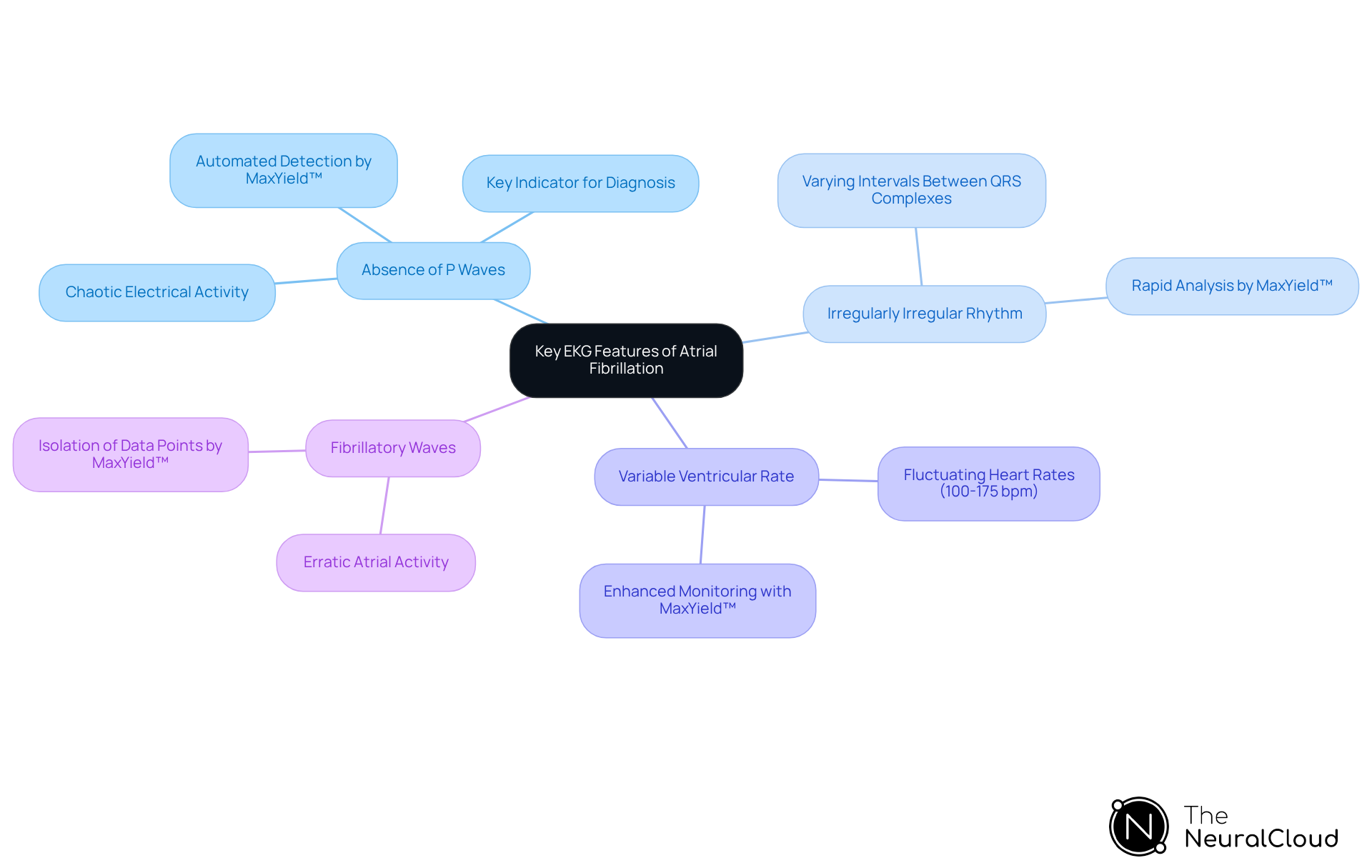
Atrial fibrillation is a prevalent cardiac arrhythmia marked by rapid and irregular atrial contractions due to disordered electrical signals in the heart. This condition plays a crucial role in EKG analysis, particularly when considering the question of does afib show up on ekg, as undiagnosed atrial fibrillation can lead to severe complications, including stroke and heart failure. Early detection is vital; studies indicate that prompt identification can significantly improve outcomes for patients and reduce healthcare costs associated with complications.
For instance, recent research revealed that patients with device-recognized atrial fibrillation incurred annual healthcare costs averaging $12,789 more than those without the condition, primarily due to extended hospital stays and additional procedures. Furthermore, a study from the Mayo Clinic highlighted that artificial intelligence could detect early signs of atrial fibrillation, leading to the inquiry of how does afib show up on ekg with a 90% accuracy rate, even when the heart rhythm appeared normal. This underscores the importance of developing advanced diagnostic tools, such as the MaxYield™ platform, which utilizes innovative noise filtering and artifact management to accurately identify AFib through ECG readings.
The MaxYield™ system is device-agnostic, allowing for seamless integration with various ECG devices, thereby enhancing its utility across different clinical environments. By focusing on early detection and employing automated, scalable solutions, health tech developers can improve patient management and outcomes, ultimately reducing the burden of AFib-related complications. This approach not only benefits healthcare professionals by streamlining ECG analysis but also contributes to better patient care and resource allocation.
Identify Key EKG Features of Atrial Fibrillation
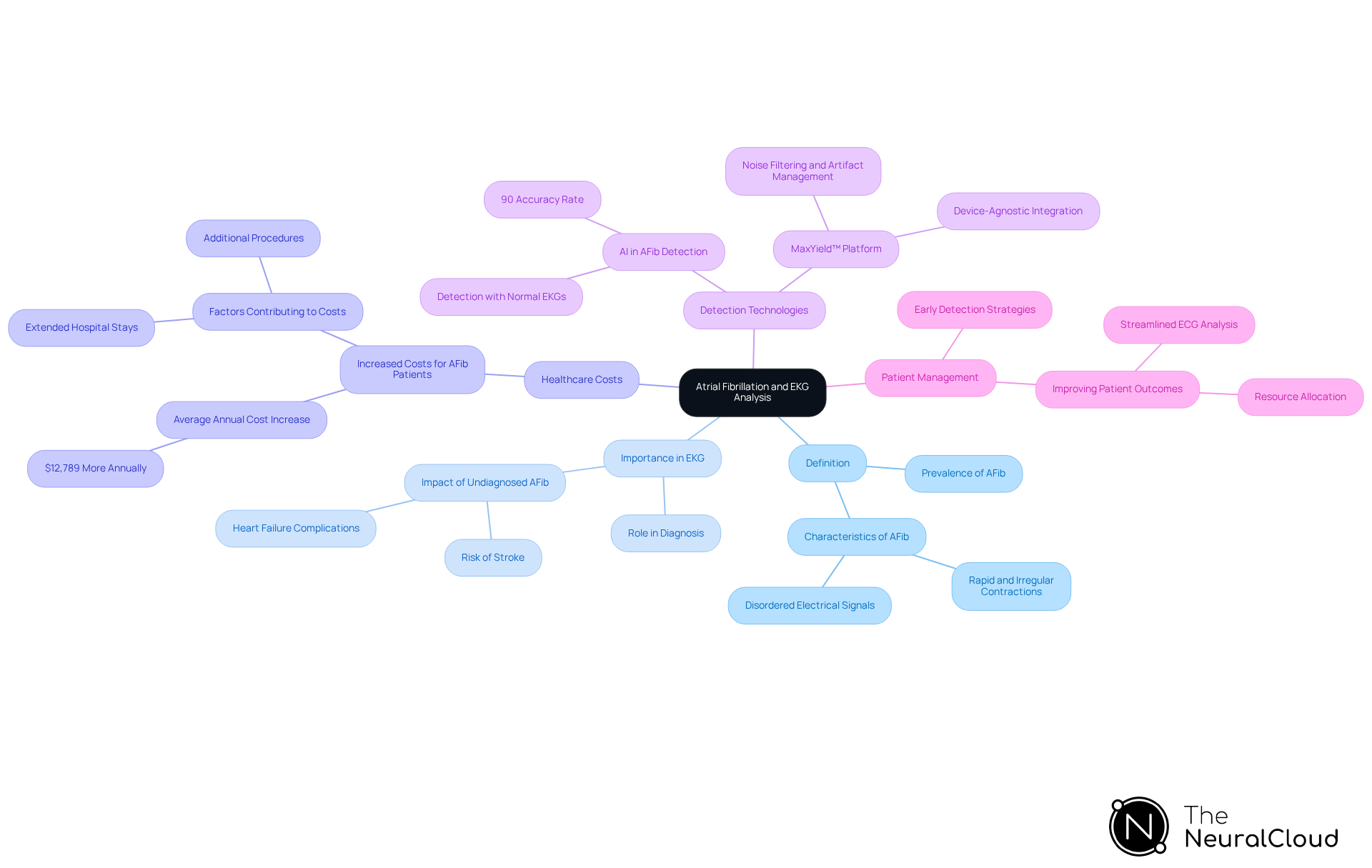
Understanding how does afib show up on ekg is crucial, as atrial fibrillation (AFib) presents unique challenges in ECG analysis and accurate diagnosis is essential for effective patient management. The hallmark features of AFib on an EKG are essential for healthcare professionals to recognize:
- Absence of P Waves: In AFib, P waves are typically absent due to chaotic electrical activity in the atria, disrupting the normal conduction pathway. This absence is a key indicator, and the MaxYield™ platform automates the analysis of ECG signals, ensuring even subtle changes are detected.
- Irregularly Irregular Rhythm: The ventricular response in AFib is often irregular, characterized by varying intervals between QRS complexes. This distinctive feature can be rapidly analyzed by MaxYield™, providing healthcare professionals with clear insights into the patient's condition.
- Variable Ventricular Rate: Heart rates in AFib can fluctuate significantly, often ranging from 100 to 175 beats per minute. The automated analysis capabilities of MaxYield™ allow developers to monitor these rates effectively, enhancing diagnostic accuracy.
- Fibrillatory Waves: Instead of distinct P waves, small, erratic waves may be observed, indicating disorganized atrial activity. MaxYield™ excels in isolating these critical data points, even in recordings with high noise levels, addressing common challenges in ECG analysis.
Integrating these features into diagnostic algorithms is essential for health tech developers, ensuring precise identification of atrial fibrillation. Recent studies highlight that the absence of P waves is prevalent in individuals with AFib, underscoring the need for algorithms capable of recognizing this feature efficiently. Cardiologists stress that identifying EKG patterns, such as whether does afib show up on ekg, is vital for timely intervention, as early detection can significantly improve patient outcomes. By leveraging advanced AI algorithms like those in MaxYield™, developers can enhance the accuracy of atrial fibrillation detection, ultimately aiding in better management of this common arrhythmia.
Explain the Diagnostic Process for AFib Using EKG Readings
The diagnostic process for atrial fibrillation (AFib) using EKG readings involves several critical steps:
-
Participant Preparation: Ensure the individual is relaxed and at rest to enhance the accuracy of the readings. Stress or physical activity can lead to misleading results.
-
Electrode Placement: Proper electrode placement is crucial. Attach electrodes to the patient's chest, wrists, and ankles to effectively capture the electrical activity of the heart, minimizing artifacts and enhancing signal quality.
-
ECG Recording: Perform a standard 12-lead ECG to monitor the heart's rhythm over a specified duration. This allows for a detailed analysis of the heart's electrical activity.
-
Rhythm Analysis: Examine the EKG for key indicators of atrial fibrillation, specifically the absence of P waves and the presence of an irregularly irregular ventricular rhythm. Utilizing Neural Cloud Solutions' MaxYield™, this analysis can be automated, significantly enhancing accuracy and efficiency in detecting atrial fibrillation.
-
Confirmatory Testing: If AFib is suspected based on the initial EKG findings, further monitoring may be necessary. Holter monitors or event recorders can capture intermittent episodes, providing a more complete picture of the individual's heart rhythm over time. MaxYield™ facilitates this process by rapidly labeling P, QRS, and T Wave onsets and offsets, streamlining the workflow.
This organized method conforms to the latest guidelines for EKG monitoring of atrial fibrillation. It serves as a foundation for health tech developers to understand how their technologies can enhance clinical workflows and improve patient outcomes.

Discuss Treatment Options and Management Strategies for AFib
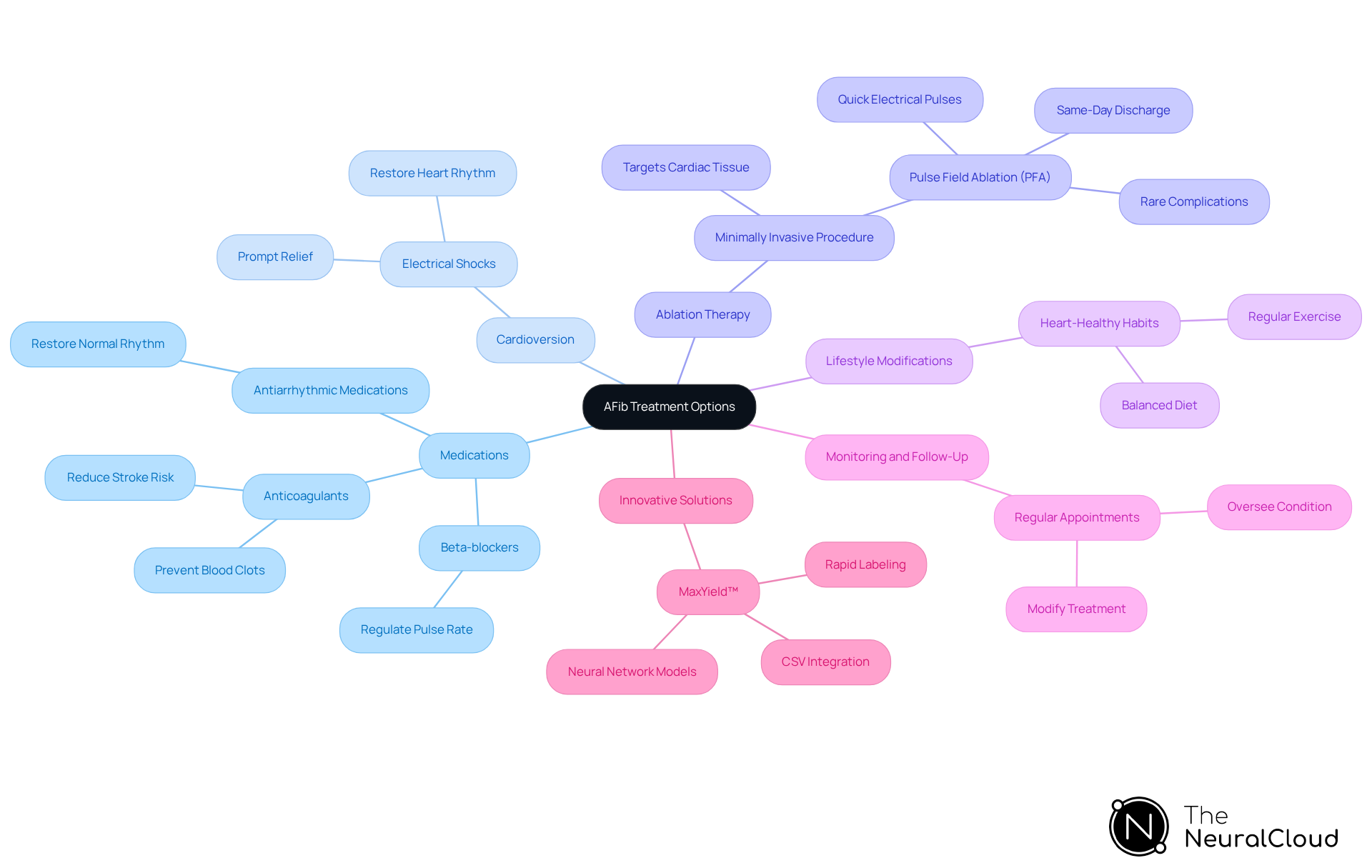
Treatment options for atrial fibrillation involve a comprehensive strategy focused on alleviating symptoms and minimizing the risk of complications. Key strategies include:
-
Medications: Anticoagulants are crucial for preventing blood clots and reducing stroke risk associated with AFib. Beta-blockers assist in regulating pulse rate, while antiarrhythmic medications strive to restore normal rhythm. Early intervention with these medications can lead to better long-term outcomes, minimizing symptoms and side effects.
-
Cardioversion: This procedure utilizes electrical shocks to restore the rhythm of the heart, offering prompt relief for individuals experiencing atrial fibrillation episodes. It is often considered when medications are insufficient.
-
Ablation Therapy: A minimally invasive procedure that targets and destroys small areas of cardiac tissue responsible for atrial fibrillation. New techniques, such as pulse field ablation (PFA), have shown promising results, often allowing for same-day discharge and comparable effectiveness to traditional methods.
-
Lifestyle Modifications: Encouraging heart-healthy habits, such as regular exercise and a balanced diet, is essential. Research indicates that these changes can lower the risk of AFib and improve overall heart health.
-
Monitoring and Follow-Up: Regular follow-up appointments are essential for overseeing the individual's condition and modifying treatment as needed.
Incorporating innovative solutions like Neural Cloud Solutions' MaxYield™, which rapidly labels P, QRS, and T Wave onsets and offsets, can significantly enhance the analysis of ECG data. This platform offers several key features:
- Rapid Labeling: MaxYield™ quickly identifies critical points in ECG signals, streamlining the analysis process.
- CSV Integration: The tool allows for beat-by-beat tabulation in CSV format, facilitating easier integration into existing workflows.
- Neural Network Models: These models extract key features from ECG signals, providing actionable insights and supporting the discovery of new digital biomarkers.
The advantages of using MaxYield™ for healthcare professionals are substantial. By improving the accuracy and efficiency of ECG analysis, this platform enables better patient management and enhances overall care. Understanding these treatment strategies and leveraging advanced technologies like MaxYield™ can empower health tech developers to create tools that significantly improve patient outcomes.
Conclusion
Atrial fibrillation (AFib) poses a significant challenge in cardiovascular health, affecting millions worldwide. Detecting AFib through EKG analysis is crucial, as early identification can greatly enhance patient outcomes and lower healthcare costs linked to complications. The MaxYield™ platform offers advanced technologies that improve the accuracy and efficiency of AFib detection, ultimately leading to better patient care.
Key insights shared throughout the article highlight the defining characteristics of AFib on an EKG. These include:
- The absence of P waves
- Irregularly irregular rhythms
- Variable ventricular rates
The diagnostic process emphasizes the importance of proper electrode placement and rhythm analysis for accurate identification. Treatment options, ranging from medications to innovative procedures like ablation therapy, were also discussed, underscoring the need for a comprehensive management strategy for AFib.
The implications of these findings extend beyond individual patient care; they emphasize the critical role of technology in transforming cardiovascular diagnostics. Health tech developers are encouraged to prioritize integrating advanced EKG analysis tools in clinical settings. This ensures timely detection and intervention for atrial fibrillation, playing a vital role in improving healthcare outcomes and enhancing the quality of life for those affected by this prevalent arrhythmia.
Frequently Asked Questions
What is atrial fibrillation?
Atrial fibrillation is a common cardiac arrhythmia characterized by rapid and irregular contractions of the atria due to disordered electrical signals in the heart.
Why is atrial fibrillation important in EKG analysis?
Atrial fibrillation is crucial in EKG analysis because undiagnosed AFib can lead to severe complications like stroke and heart failure. Early detection can significantly improve patient outcomes and reduce healthcare costs associated with these complications.
How does atrial fibrillation affect healthcare costs?
Patients with device-recognized atrial fibrillation incur annual healthcare costs averaging $12,789 more than those without the condition, primarily due to longer hospital stays and additional medical procedures.
Can atrial fibrillation be detected on an EKG?
Yes, atrial fibrillation can show up on an EKG. Recent studies indicate that artificial intelligence can detect early signs of AFib with up to 90% accuracy, even when the heart rhythm appears normal.
What is the MaxYield™ platform?
The MaxYield™ platform is an advanced diagnostic tool that uses innovative noise filtering and artifact management to accurately identify atrial fibrillation through ECG readings.
Is the MaxYield™ system compatible with different ECG devices?
Yes, the MaxYield™ system is device-agnostic, allowing it to integrate seamlessly with various ECG devices, which enhances its utility across different clinical environments.
How can health tech developers improve patient management regarding atrial fibrillation?
By focusing on early detection and employing automated, scalable solutions, health tech developers can improve patient management and outcomes, ultimately reducing the burden of AFib-related complications.