Introduction
Atrial fibrillation (Afib) presents a significant challenge in modern healthcare. Its irregular heart rhythms increase the risks of stroke and heart failure, making accurate ECG interpretation essential. As the prevalence of Afib rises, health tech developers face growing demands for efficient solutions. This article explores best practices and innovative technologies that can empower developers to enhance ECG analysis, ultimately improving patient outcomes.
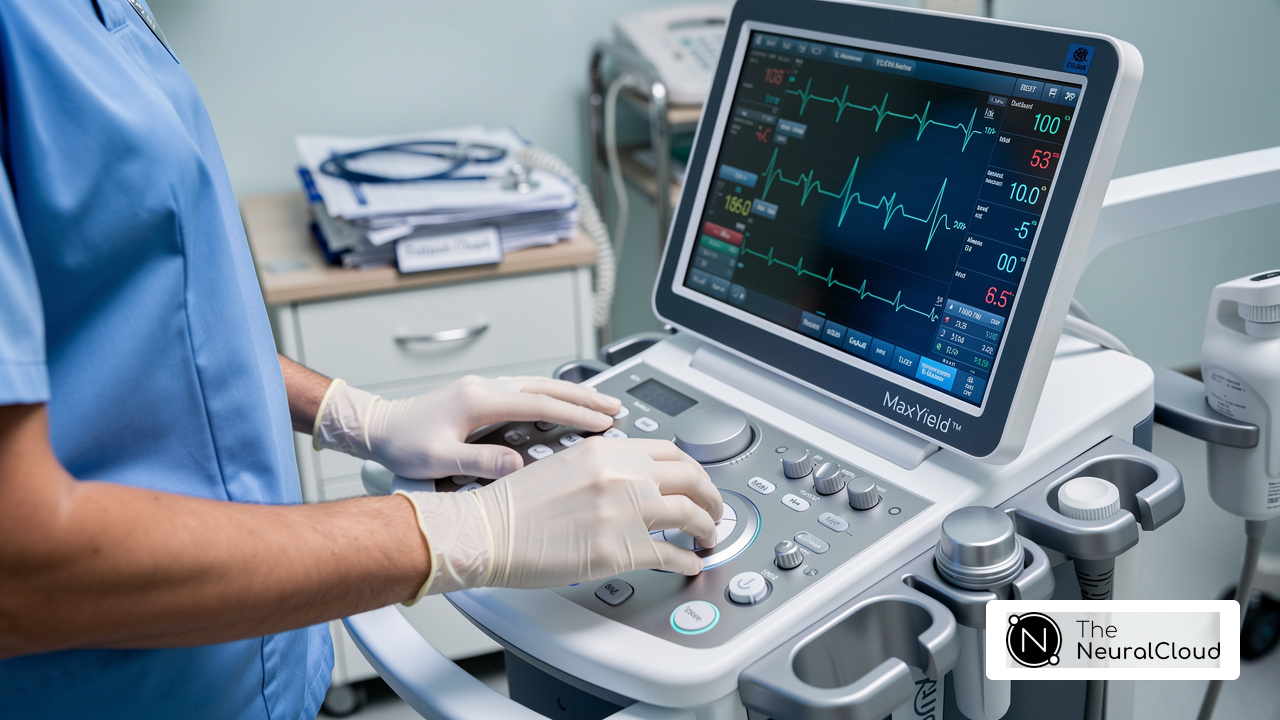
The MaxYield™ platform offers advanced features designed to address these challenges. By integrating sophisticated algorithms, it enhances the accuracy of ECG readings, allowing healthcare professionals to make informed decisions quickly. Continuous learning capabilities ensure that the platform evolves with new data, improving its diagnostic precision over time.
The advantages of using MaxYield™ are clear. Healthcare professionals benefit from:
- Streamlined workflows
- Reduced diagnostic errors
- Improved patient care
With its user-friendly interface, the platform is accessible to both technical and non-technical users, ensuring that all team members can leverage its capabilities effectively.
In conclusion, the integration of advanced algorithms and continuous learning within the MaxYield™ platform has the potential to reshape Afib diagnosis and management. By adopting these innovative technologies, healthcare providers can enhance ECG analysis and ultimately improve patient outcomes.
Understand Atrial Fibrillation and Its ECG Significance
presents significant challenges due to its irregular and often rapid heart rhythm, which notably increases the risk of complications such as stroke and heart failure. This condition is identified on an ECG by an irregularly irregular rhythm, marked by the absence of discernible P waves, indicating chaotic electrical activity in the atria. Additionally, the lack of an isoelectric baseline and the presence of variable ventricular rates are critical features that must be recognized. According to the 2023 ACC/AHA guidelines, the criteria for afib are essential for the prompt diagnosis and management of patients. This highlights the necessity for health tech developers to create algorithms capable of accurately detecting and differentiating afib from other arrhythmias.
With the current advancements in technology, effectively interpreting the ECG features is more crucial than ever. The software from Neural Cloud Solutions significantly enhances this process by employing machine learning and distinct wave recognition capabilities. Here are some key features of MaxYield™:
- Noise Reduction: Reduces interference in ECG signals, improving clarity.
- Distinct Wave Recognition: Accurately identifies arrhythmias, essential for diagnosis.
- Workflow Optimization: Streamlines the analysis process, allowing for quicker interpretations.
By automating the labeling of ECG signals, MaxYield™ accurately maps the data and evolves with each use. This allows developers to focus on actionable insights rather than manual input. As the frequency of atrial fibrillation continues to rise, understanding these nuances will empower developers to enhance care and improve patient outcomes.

Implement Effective ECG Interpretation Techniques for Afib
To effectively interpret ECGs for atrial fibrillation, developers should implement several key techniques:
- Focus on R-R Intervals: Identifying irregularities in the R-R intervals is crucial for confirming atrial fibrillation diagnosis. Research indicates that accurate interpretation can achieve better outcomes, underscoring the importance of precise analysis.
- Utilize Advanced Algorithms: Employ algorithms that learn from extensive datasets to enhance detection accuracy. For instance, in distinguishing normal sinus rhythm from atrial fibrillation.
- Integrate Clinical Context: Incorporating patient history and symptoms alongside ECG findings significantly boosts diagnostic precision. The diagnostic odds ratio for atrial fibrillation emphasizes the importance of the clinical context and contextual information.
- Continuous Learning: Implement systems that adapt and improve over time based on new data and feedback from healthcare professionals. AI models that evaluate ECGs in real-time can alert clinicians to potential episodes, facilitating timely intervention. This approach not only enhances diagnostic accuracy but also optimizes clinical workflows, making it a vital component of modern ECG interpretation.

Leverage Advanced Technology for Enhanced ECG Analysis
Advanced technologies like artificial intelligence (AI) and machine learning are revolutionizing healthcare, particularly in their ability to improve ECG analysis. However, challenges remain in achieving consistent and accurate results. To address these issues, developers should focus on several key strategies that enhance their solutions.
- One of the standout features of the technology is its ability to implement algorithms that identify patterns associated with atrial fibrillation. This capability significantly boosts detection rates, with AI models demonstrating high precision in recognizing irregular heart rhythms, especially in patients, achieving sensitivity levels around 95%. By leveraging this technology, healthcare professionals can trust the accuracy of their diagnoses.
- Another advantage of the technology is its seamless integration with wearable ECG monitors. This feature allows for continuous monitoring and early detection of Afib using an ECG device. Current utilization rates indicate that smartwatches and other wearable devices are becoming increasingly effective, with studies showing detection rates ranging from 85% to 100% for arrhythmias. This continuous data stream empowers clinicians to act swiftly and effectively.
- The platform also offers tools that facilitate real-time data sharing and analysis. This fosters collaborative diagnosis among healthcare providers, enhancing the scalability and accessibility of ECG data. Such capabilities allow for more efficient patient management, ensuring that critical information is readily available when needed.
- Finally, the technology is designed with clinicians in mind, featuring intuitive interfaces that streamline the interpretation of ECG data. By automating processes, platforms like Neural Cloud Solutions' MaxYield™ drastically reduce interpretation time and improve diagnostic accuracy. This user-centric approach not only enhances efficiency but also supports healthcare professionals in delivering better patient outcomes.
By concentrating on these strategies, developers can create robust solutions that enhance ECG analysis and improve overall patient care.

Integrate Best Practices into Clinical Workflows for Optimal Results
To effectively integrate best practices into clinical workflows, developers should prioritize the following strategies:
- Training and Education: Implement training programs to ensure clinicians can utilize new technologies proficiently. This is crucial as studies indicate that only 37% of ward nurses have received adequate ECG training, despite 96% recognizing its importance. Ongoing education can significantly boost skills and confidence. For instance, a study showed that nurses' confidence scores increased markedly after targeted training.
- Feedback Mechanisms: Establish robust channels for clinicians to provide feedback. This input is vital for ongoing refinement and adaptation of tools, ensuring they meet the practical needs of healthcare providers. Incorporating clinician feedback has demonstrated the ability to enhance AI algorithms, resulting in better diagnostic precision and improved patient outcomes.
- Standardization of Protocols: Develop standardized protocols for the interpretation and management of atrial fibrillation based on afib ECG reading. Consistency in clinical practices is essential for dependable patient care and can help reduce variability in interpretation precision among healthcare professionals.
- Collaboration with Clinicians: Foster close collaboration with clinicians to gain insights into their challenges and requirements. Tailoring solutions based on clinician input not only enhances workflow efficiency but also ensures that the technology aligns with real-world clinical scenarios. For example, the integration of advanced analytics has shown potential in improving triage accuracy, facilitating timely interventions for critical conditions like STEMI.
By focusing on these areas, developers can create solutions that enhance workflows and significantly improve patient care outcomes.

Conclusion
Understanding atrial fibrillation and its implications on ECG readings is crucial for health tech developers who aim to enhance diagnostic accuracy and patient care. The article highlights the need to recognize the unique characteristics of afib ECG readings and to leverage advanced technologies for improved interpretation techniques. By adopting best practices and integrating innovative solutions into clinical workflows, developers can significantly contribute to the effective management of atrial fibrillation.
Key insights from the discussion emphasize the necessity of advanced algorithms, continuous learning systems, and user-friendly interfaces to streamline ECG analysis. The MaxYield™ platform offers several features that enhance detection rates and facilitate real-time monitoring, ultimately leading to better patient outcomes. These features include:
- Advanced algorithms for accurate detection of atrial fibrillation
- Continuous learning systems that adapt to new data
- User-friendly interfaces that simplify the analysis process
Furthermore, prioritizing training, clinician feedback, and standardized protocols will ensure that these technologies are not only effective but also aligned with the practical needs of healthcare providers. This commitment to innovation and excellence is essential for advancing patient care and addressing the challenges posed by atrial fibrillation in today's healthcare landscape.
In conclusion, the intersection of technology and healthcare presents a powerful opportunity to transform the diagnosis and management of atrial fibrillation. By embracing these best practices and continually refining approaches based on clinician collaboration and feedback, developers can drive significant improvements in ECG interpretation. This dedication to enhancing diagnostic tools is vital for improving patient care and outcomes.
Frequently Asked Questions
What is atrial fibrillation and why is it significant?
Atrial fibrillation is a condition characterized by an irregular and often rapid heart rhythm, which significantly increases the risk of complications such as stroke and heart failure.
How is atrial fibrillation identified on an ECG reading?
Atrial fibrillation is identified on an ECG reading by an irregularly irregular rhythm, the absence of discernible P waves, a lack of an isoelectric baseline, and variable ventricular rates.
What do the 2023 ACC/AHA guidelines emphasize regarding atrial fibrillation?
The 2023 ACC/AHA guidelines emphasize the importance of recognizing ECG reading characteristics for the prompt diagnosis and management of atrial fibrillation.
What is the current national prevalence of atrial fibrillation?
The current national prevalence of atrial fibrillation is estimated to be over 10.55 million.
How does the MaxYield™ platform assist in interpreting ECG readings for atrial fibrillation?
The MaxYield™ platform assists by employing advanced noise filtering to reduce interference, distinct wave recognition to accurately identify PQRST waveforms, and automated labeling to streamline the analysis process.
What are the key features of the MaxYield™ platform?
Key features of the MaxYield™ platform include advanced noise filtering, distinct wave recognition, and automated labeling, which enhance the clarity and speed of ECG signal analysis.
How does automated labeling benefit the interpretation of ECG signals?
Automated labeling benefits ECG interpretation by accurately mapping PQRST waveforms and evolving with each use, allowing developers to focus on actionable insights rather than manual input.
Why is understanding ECG reading features important for developers?
Understanding ECG reading features is crucial for developers to enhance diagnostic tools and improve patient outcomes as the frequency of atrial fibrillation continues to rise.
List of Sources
- Understand Atrial Fibrillation and Its ECG Significance
- cardionerds.com (https://cardionerds.com/215-atrial-fibrillation-screening-detection-and-diagnosis-of-atrial-fibrillation-with-dr-ben-freedman)
- ucsf.edu (https://ucsf.edu/news/2024/09/428416/how-many-people-have-fib-three-times-more-we-thought)
- webmd.com (https://webmd.com/heart-disease/atrial-fibrillation/news/20251118/3-new-findings-on-afib-and-what-they-mean)
- Atrial fibrillation estimated to affect about 1 in 22 Americans (https://nhlbi.nih.gov/news/2024/atrial-fibrillation-estimated-affect-about-1-22-americans)
- acc.org (https://acc.org/latest-in-cardiology/articles/2025/11/03/16/19/sun-930am-afib-aha-2025)
- Implement Effective ECG Interpretation Techniques for Afib
- Checking your browser - reCAPTCHA (https://pmc.ncbi.nlm.nih.gov/articles/PMC10145690)
- The Use of Artificial Intelligence in ECG Interpretation in the Outpatient Setting: A Scoping Review (https://cureus.com/articles/405923-the-use-of-artificial-intelligence-in-ecg-interpretation-in-the-outpatient-setting-a-scoping-review)
- pmc.ncbi.nlm.nih.gov (https://pmc.ncbi.nlm.nih.gov/articles/PMC8065566)
- jacc.org (https://jacc.org/doi/10.1016/j.jacadv.2025.102133)
- mountsinai.org (https://mountsinai.org/about/newsroom/2023/mount-sinai-researchers-use-new-deep-learning-approach-to-enable-analysis-of-electrocardiograms-as-language)
- Leverage Advanced Technology for Enhanced ECG Analysis
- Checking your browser - reCAPTCHA (https://pmc.ncbi.nlm.nih.gov/articles/PMC10145690)
- Philips launches smart telemetry platform for cardiac monitoring that provides continuous, enterprise-wide connectivity beyond the bedside (https://usa.philips.com/a-w/about/news/archive/standard/news/press/2025/philips-launches-smart-telemetry-platform-for-cardiac-monitoring-that-provides-continuous-enterprise-wide-connectivity-beyond-the-bedside.html)
- Checking your browser - reCAPTCHA (https://pmc.ncbi.nlm.nih.gov/articles/PMC12419789)
- jacc.org (https://jacc.org/doi/10.1016/j.jacadv.2025.102133)
- nordicglobal.com (https://nordicglobal.com/blog/9-insightful-quotes-on-cloud-and-ai-from-stanford-health-care-and-aws-leaders-at-arab-health-2024)
- Integrate Best Practices into Clinical Workflows for Optimal Results
- gehealthcare.co.uk (https://gehealthcare.co.uk/insights/article/the-future-of-algorithms-for-ecg-interpretation-what-new-research-shows)
- Performance of an artificial intelligence-powered smartphone application in the UK clinical settings: ECG automation compared to healthcare professionals - PMC (https://pmc.ncbi.nlm.nih.gov/articles/PMC12532542)
- philips.com (https://philips.com/a-w/about/news/archive/standard/news/articles/2025/philips-showcases-advanced-visualization-and-ai-partnerships-at-rsna-2025.html)
- New study finds AI model improves heart attack detection (https://health.ucdavis.edu/news/headlines/new-study-finds-ai-model-improves-heart-attack-detection/2025/11)
- bmcmededuc.biomedcentral.com (https://bmcmededuc.biomedcentral.com/articles/10.1186/s12909-024-05960-8)