Introduction
Understanding anterior ST segment elevation myocardial infarction (STEMI) is essential for healthcare professionals, as timely recognition and intervention can greatly influence patient outcomes. This article explores the critical aspects of anterior STEMI, including its definition, ECG changes, effective treatment strategies, and the latest advancements in ECG analysis technology. Given the high stakes involved, what key insights can empower medical practitioners to enhance their diagnostic and treatment protocols? The goal is to ensure that no precious time is lost when facing this life-threatening condition.
In the realm of ECG analysis, healthcare professionals often encounter challenges that can hinder timely diagnosis and treatment. The MaxYield™ platform addresses these challenges by providing advanced features that streamline ECG interpretation. By leveraging cutting-edge technology, it enhances the accuracy of ECG readings, allowing practitioners to make informed decisions quickly.
The features of the MaxYield™ platform include:
- Real-time analysis
- User-friendly interfaces
- Comprehensive reporting tools
These advantages translate into significant benefits for healthcare professionals, such as improved diagnostic confidence and reduced time spent on interpretation. With MaxYield™, practitioners can focus more on patient care rather than getting bogged down by complex data.
In conclusion, the MaxYield™ platform not only simplifies ECG analysis but also empowers healthcare professionals to deliver timely and effective care. By understanding the features and advantages of this innovative tool, practitioners can enhance their protocols and ultimately improve patient outcomes.
Define Anterior ST Segment Elevation Myocardial Infarction
Anterior ST Segment Elevation Myocardial Infarction (STEMI) is a critical type of heart attack characterized by significant ST-segment elevation in the anterior leads of the electrocardiogram (ECG), especially in leads V1 to V4. This condition primarily arises from the blockage of the left anterior descending (LAD) artery, which supplies blood to the anterior wall of the heart. Such a blockage results in ischemia and necrosis of myocardial tissue, leading to severe complications if not treated promptly.
Current insights among cardiology specialists underscore the urgency of identifying anterior STEMI, as delays in treatment can significantly increase the risk of adverse outcomes, including heart failure and arrhythmias. Recent studies emphasize that early detection is crucial. Real-world examples of ECG changes in patients with anterior STEMI highlight the importance of timely intervention, showcasing the need for advanced tools like artificial intelligence.
Neural Cloud Solutions' AI model has shown a triage accuracy of 85.2%, compared to 41.8% for standard triage methods. This statistic illustrates its effectiveness in enhancing triage accuracy and speeding up treatment. The data emphasizes the vital role of technology in improving outcomes for patients, demonstrating how Neural Cloud Solutions' technology addresses challenges in ECG analysis by providing rapid and accurate assessments.

Identify ECG Changes in Anterior STEMI
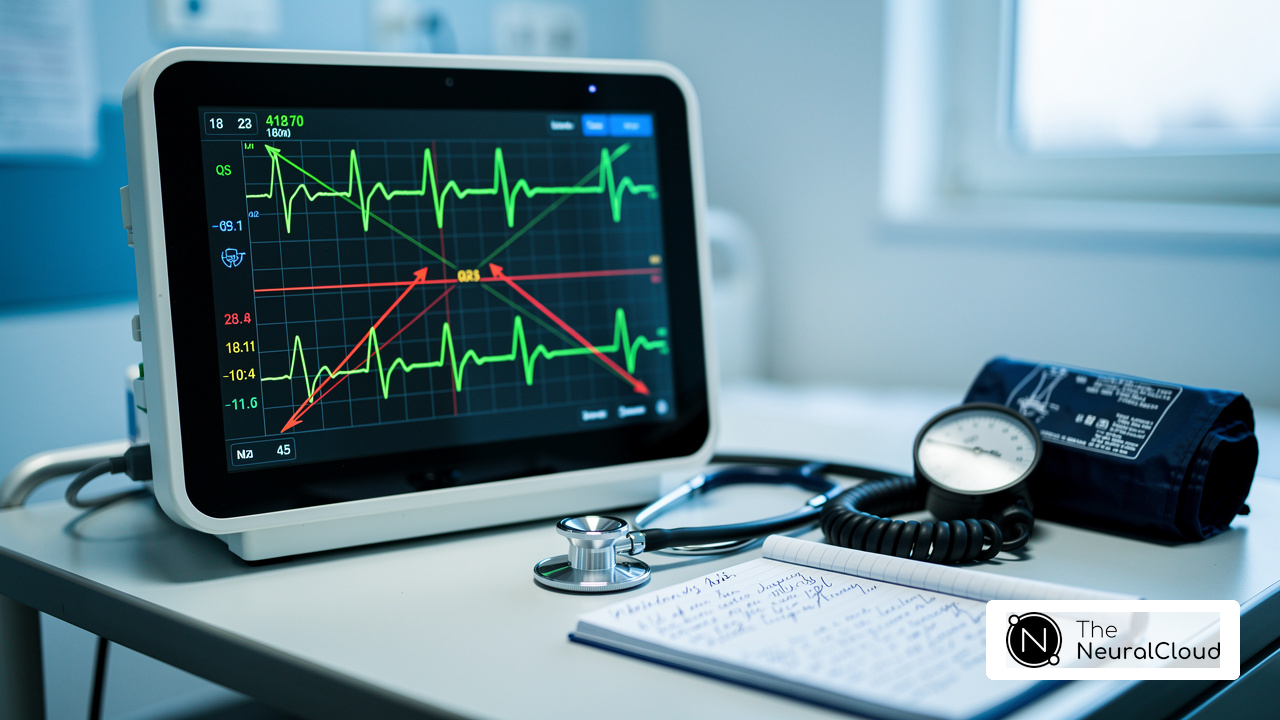
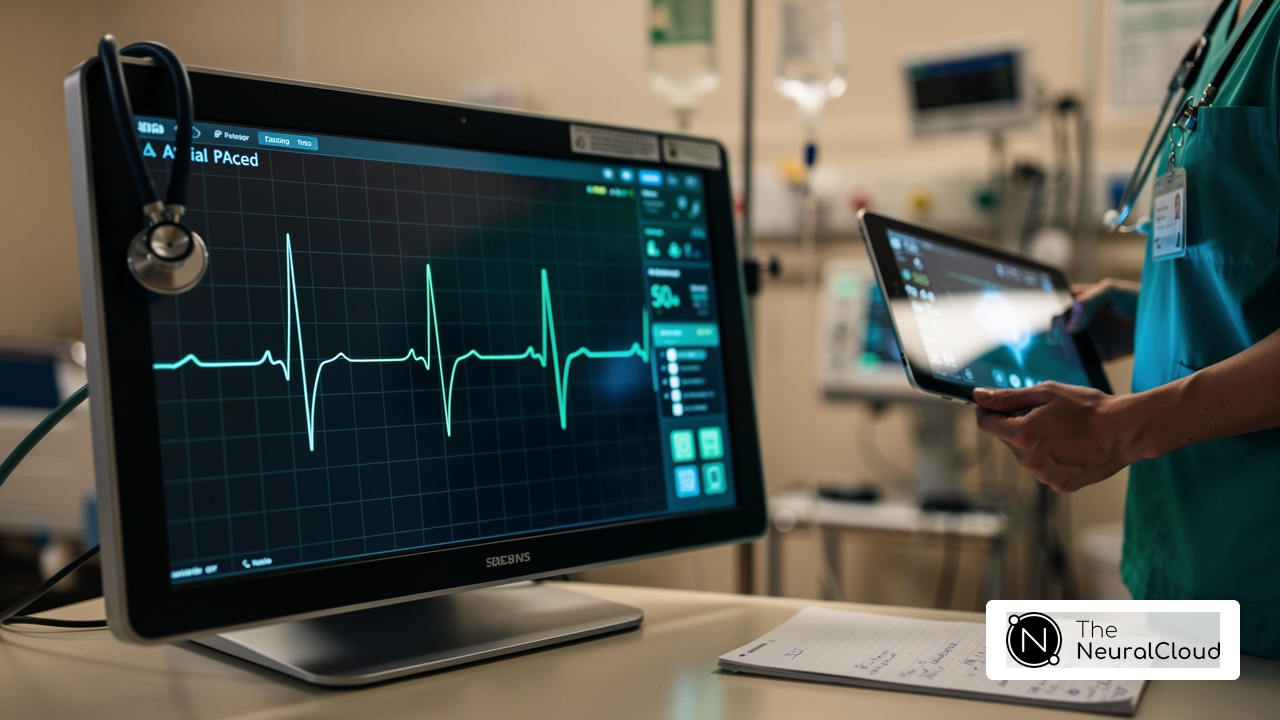
In anterior st segment elevation myocardial infarction, the ECG typically displays changes in two or more adjacent leads, primarily in V1 to V4. Research indicates that about 70% of individuals with anterior STEMI show this elevation in these leads, underscoring its diagnostic significance. Furthermore, changes in leads II, III, and aVF offer additional diagnostic insights. The emergence of Q waves over time can signify myocardial necrosis, a crucial marker for healthcare providers. Recognizing these ECG changes is vital, as they indicate the urgent need for interventions like angioplasty to restore blood flow and reduce heart damage. Recent studies highlight the importance of promptly identifying these changes, as they are associated with improved patient outcomes.
The technology addresses the challenges in ECG interpretation by incorporating advanced noise filtering and distinct wave recognition capabilities. This technology enhances accuracy, automating the labeling process and allowing for the rapid isolation of critical data, even in recordings with high levels of noise and artifact. Such improvements ultimately lead to better diagnostic outcomes. For instance, in clinical settings, MaxYield™ has effectively recovered previously hidden segments from extensive Holter and patch monitor recordings, demonstrating its practical application in enhancing patient care.

Implement Treatment Strategies for Anterior STEMI
Effective management of anterior STEMI hinges on the prompt initiation of treatment, primarily through medication or thrombolytic therapy. The main goal is to quickly restore blood flow to the affected myocardium, which is essential for minimizing damage and preserving heart function. A critical time threshold of 119.51 minutes has been identified; beyond this point, the mortality benefit of PCI significantly decreases. In addition to reperfusion, patients typically receive a regimen of aspirin, anticoagulants, and beta-blockers to alleviate symptoms and lower the risk of subsequent complications.
Continuous monitoring is crucial, as it enables the detection of complications such as arrhythmias or heart failure. Recent studies reveal that over 40% of individuals with myocardial infarction undergoing PPCI in China do not experience the expected benefits due to treatment delays, highlighting the urgency for timely intervention. Innovative technologies, such as advanced ECG analysis, can facilitate rapid diagnosis, allowing health tech developers to analyze data more efficiently. This capability not only enhances patient monitoring but also aids in discovering new digital biomarkers, ultimately improving treatment strategies and improving patient outcomes in anterior STEMI management.

Leverage Advanced ECG Analysis Technologies
ECG analysis often presents challenges, particularly in terms of clarity and accuracy. Advanced technologies like Neural Cloud Solutions address these issues by utilizing innovative algorithms. This system is designed to enhance accuracy, processing large volumes of data rapidly while identifying critical features such as arrhythmias and other abnormalities with high precision.
One of the standout features of the system is its advanced analytics. This technology isolates and labels key features in every heartbeat, transforming noisy recordings into detailed insights. Additionally, the system is device-agnostic, effortlessly capturing ECG recordings from any 1-lead or 3-lead device. By automating the analysis process, healthcare professionals can dedicate more time to interpreting results and making informed decisions regarding myocardial infarction, rather than spending excessive time on manual analysis.
The integration of the MaxYield™ system not only enhances diagnostic precision but also streamlines clinical workflows. This ultimately leads to improved patient outcomes. Notably, the platform can analyze 200,000 heartbeats in less than 5 minutes, showcasing its efficiency and effectiveness in real-world applications. With these advancements, healthcare professionals can expect a reduction in diagnostic time, allowing for quicker and more accurate diagnoses.
Conclusion
Recognizing and effectively managing anterior ST segment elevation myocardial infarction (STEMI) is crucial for improving patient outcomes. This condition, characterized by significant ST-segment elevation in specific ECG leads due to blockage of the left anterior descending artery, requires immediate attention to prevent severe complications. The insights shared throughout this article highlight the urgent need for timely diagnosis and intervention, emphasizing that advancements in technology can significantly enhance the accuracy of ECG analysis and treatment strategies.
One of the key challenges in ECG analysis is the complexity of interpreting ST-segment changes. Advanced ECG analysis technologies, such as Neural Cloud Solutions' MaxYield™ platform, address this challenge by improving diagnostic precision and reducing the time required for analysis. The platform offers features like automated detection of ST-segment elevation and Q wave emergence, which are critical in guiding treatment decisions. By leveraging these advanced tools, healthcare professionals can enhance their diagnostic capabilities and respond more effectively to patients in need.
The advantages of utilizing the MaxYield™ platform are significant. First, it streamlines the ECG analysis process, allowing for quicker identification of critical changes. This rapid response is essential for minimizing myocardial damage and improving survival rates, as delays in treatment can lead to adverse outcomes. Furthermore, the platform's accuracy reduces the likelihood of misdiagnosis, ensuring that patients receive the appropriate care without unnecessary delays.
In light of these insights, healthcare professionals are encouraged to adopt innovative technologies and adhere to best practices in managing anterior STEMI. By prioritizing rapid diagnosis and intervention, and utilizing advanced tools for ECG analysis, the medical community can significantly enhance patient care and outcomes. The urgency of addressing anterior STEMI cannot be overstated; timely action is imperative for saving lives and reducing the long-term impacts of this serious condition.
Frequently Asked Questions
What is Anterior ST Segment Elevation Myocardial Infarction (STEMI)?
Anterior ST Segment Elevation Myocardial Infarction (STEMI) is a critical type of heart attack characterized by significant ST-segment elevation in the anterior leads of the electrocardiogram (ECG), particularly in leads V1 to V4.
What causes Anterior STEMI?
Anterior STEMI is primarily caused by the blockage of the left anterior descending (LAD) artery, which supplies blood to the anterior wall of the heart, leading to ischemia and necrosis of myocardial tissue.
Why is timely intervention important in Anterior STEMI?
Timely intervention is crucial in Anterior STEMI because delays in treatment can significantly increase the risk of adverse outcomes, including heart failure and arrhythmias.
What role do advanced tools play in diagnosing Anterior STEMI?
Advanced tools, such as AI-driven ECG analysis, enhance the accuracy and speed of diagnosing Anterior STEMI, which is essential for improving patient outcomes.
How effective is Neural Cloud Solutions' AI model in ECG analysis?
Neural Cloud Solutions' AI model has a false positive rate of just 7.9%, compared to 41.8% for standard triage methods, demonstrating its effectiveness in enhancing triage accuracy and expediting treatment.
What challenges does Neural Cloud Solutions' technology address in ECG analysis?
Neural Cloud Solutions' technology addresses challenges in ECG analysis by reducing inefficiencies, physiological variability, and signal artifacts, thus improving the overall diagnostic process.
List of Sources
- Define Anterior ST Segment Elevation Myocardial Infarction
- New study finds AI model improves heart attack detection (https://health.ucdavis.edu/news/headlines/new-study-finds-ai-model-improves-heart-attack-detection/2025/11)
- AI-driven ECG improves detection of severe heart attacks (https://news-medical.net/news/20251029/AI-driven-ECG-improves-detection-of-severe-heart-attacks.aspx)
- PMcardio Reports Positive RCT Results and Late-Breaking Clinical Science for STEMI Detection (https://powerfulmedical.com/blog/pmcardio-reports-positive-rct-results-and-late-breaking-clinical-science-for-stemi-detection)
- AI-ECG Finds STEMI Faster, Cuts False-Positive Cath Lab Activations (https://tctmd.com/news/ai-ecg-finds-stemi-faster-cuts-false-positive-cath-lab-activations)
- tctmd.com (https://tctmd.com/news/delays-stemi-cardiogenic-shock-care-come-cost-danger-shock)
- Identify ECG Changes in Anterior STEMI
- medicalxpress.com (https://medicalxpress.com/news/2025-11-zalunfiban-early-benefits-st-elevation.html)
- escardio.org (https://escardio.org/news/press/press-releases/New-data-presented-to-guide-the-treatment-of-patients-with-multivessel-coronary-artery-disease)
- Prevalence of ECGs Exceeding Thresholds for ST‐Segment–Elevation Myocardial Infarction in Apparently Healthy Individuals: The Role of Ethnicity | Journal of the American Heart Association (https://ahajournals.org/doi/10.1161/JAHA.119.015477)
- Study reinforces need for greater coordination in heart attack care (https://newsroom.heart.org/news/study-reinforces-need-for-greater-coordination-in-heart-attack-care)
- Implement Treatment Strategies for Anterior STEMI
- ahajournals.org (https://ahajournals.org/doi/10.1161/JAHA.125.041995)
- news-medical.net (https://news-medical.net/news/20251010/Advances-in-nanomaterials-revolutionize-therapy-for-myocardial-ischemia-reperfusion-injury.aspx)
- escardio.org (https://escardio.org/news/press/press-releases/New-data-presented-to-guide-the-treatment-of-patients-with-multivessel-coronary-artery-disease)
- Beta-blockers did not reduce cardiovascular events in selected heart attack patients in the REBOOT trial (https://escardio.org/news/press/press-releases/Beta-blockers-did-not-reduce-cardiovascular-events-in-selected-heart-attack-patients-in-the-REBOOT-trial)
- Leverage Advanced ECG Analysis Technologies
- AI-powered ECG analysis shows promise for early COPD detection (https://medicalxpress.com/news/2026-01-ai-powered-ecg-analysis-early.html)
- AccurKardia wins FDA clearance for next-generation ECG analysis system | Medical Economics (https://medicaleconomics.com/view/accurkardia-wins-fda-clearance-for-next-generation-ecg-analysis-system)
- Year in Review: Evidence Around AI in Cardiology Grows (https://tctmd.com/news/year-review-evidence-around-ai-cardiology-grows)
- thecardiologyadvisor.com (https://thecardiologyadvisor.com/news/ai-powered-ecg-analysis-promising-for-early-detection-of-copd)