Introduction
Atrial fibrillation (AF) presents notable challenges in cardiovascular health due to its irregular heart rhythm, which can result in severe complications such as stroke and heart failure. Understanding the distinct ECG patterns linked to AF is essential for accurate diagnosis and effective management. Healthcare professionals face the task of navigating these complexities, but how can they enhance their analysis and improve patient outcomes? This is where advanced technologies come into play.
The MaxYield™ platform offers innovative features designed to streamline ECG analysis. By utilizing cutting-edge algorithms, it enhances the accuracy of AF detection, allowing for quicker and more reliable diagnoses. This not only aids in identifying AF but also assists in monitoring patient progress over time. With its user-friendly interface, healthcare professionals can easily interpret complex data, making informed decisions that directly impact patient care.
The advantages of the MaxYield™ platform extend beyond just improved analysis. By integrating this technology into their practice, healthcare providers can significantly reduce the risk of complications associated with AF. Enhanced ECG analysis leads to timely interventions, ultimately improving patient outcomes and quality of life. Furthermore, the platform's ability to present data visually through diagrams and infographics aids in understanding, making it accessible to both technical and non-technical audiences.
In summary, the MaxYield™ platform addresses the challenges of ECG analysis in the context of atrial fibrillation. Its advanced features not only improve diagnostic accuracy but also provide substantial benefits for healthcare professionals, ensuring that they can deliver the best possible care to their patients.
Define Atrial Fibrillation and Its Importance in ECG Analysis
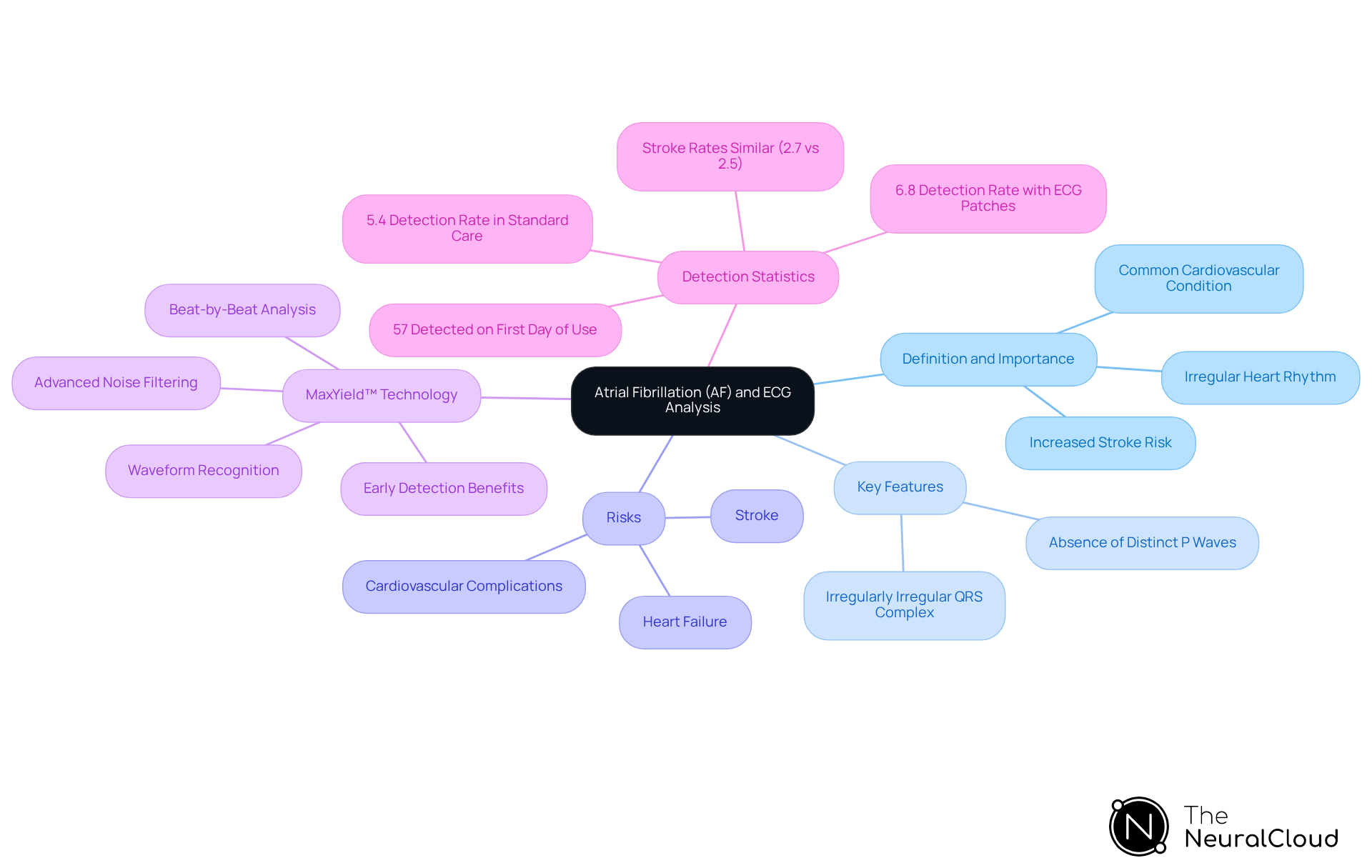
Atrial fibrillation (AF) presents significant challenges in diagnosis due to its irregular and often rapid heart rhythm, which originates in the atria, the upper chambers of the heart. This condition notably increases the risk of stroke, heart failure, and other complications. Recognizing AF is crucial, as its distinct patterns differ markedly from normal sinus rhythm. Key features of AF include the absence of distinct P waves and an irregularly irregular QRS complex.
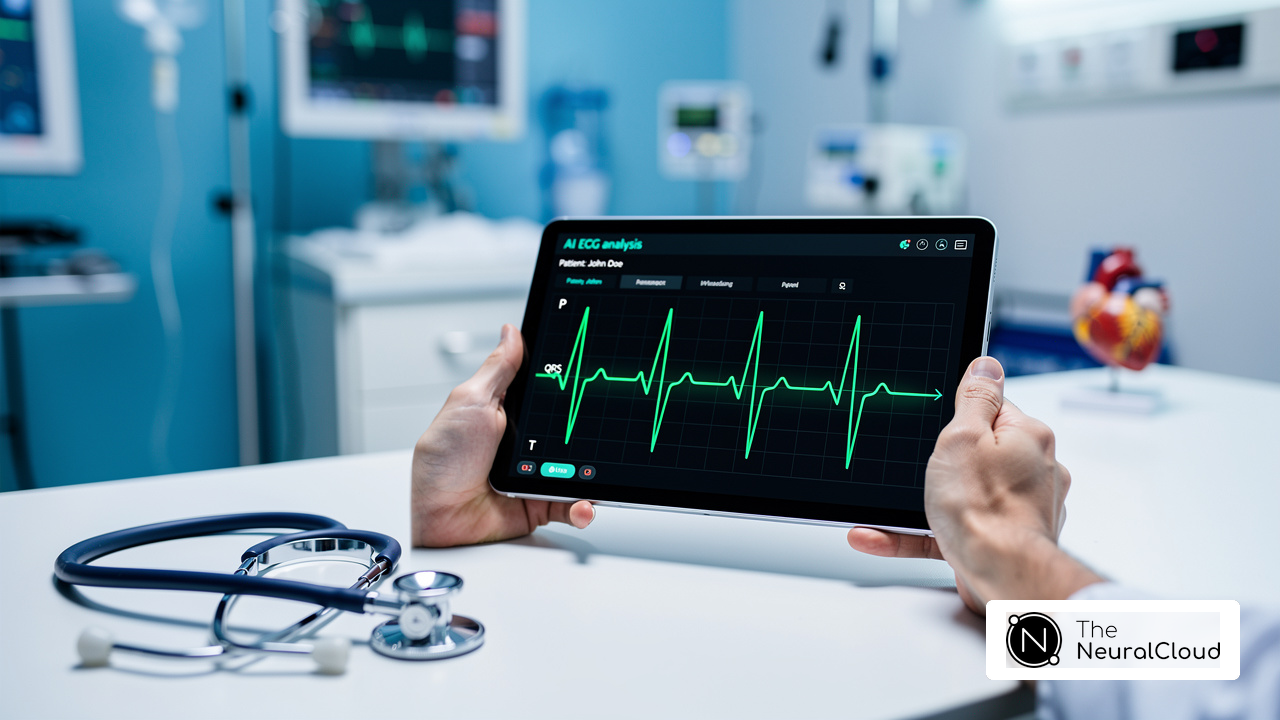
The technology addresses these challenges by enhancing ECG analysis through advanced algorithms and waveform recognition. This technology allows for accurate detection, which is essential for clinicians. By integrating MaxYield™, healthcare providers can make informed decisions regarding individual patient management and treatment options. The platform's ability to detect early signs of AF is particularly beneficial, as recent studies, such as the AMALFI trial, have demonstrated that early detection can significantly improve patient outcomes.
For instance:
- 6.8% of participants were diagnosed with AF using these patches, compared to 5.4% in standard care.
- Notably, 57% of AF cases were detected on the first day of patch use, underscoring the effectiveness of this technology in early diagnosis.
The practicality of at-home screening for AF using ECG patches is emphasized by experts, highlighting its convenience for older individuals and those with various health issues.
In summary, the technology not only enhances ECG analysis but also improves outcomes for patients at risk. By providing clinicians with the tools they need to accurately assess and manage AF, this platform represents a significant advancement in cardiovascular care.
Identify ECG Patterns Characteristic of Atrial Fibrillation
When analyzing an ECG for atrial fibrillation (AF), several characteristic patterns are crucial for accurate diagnosis:
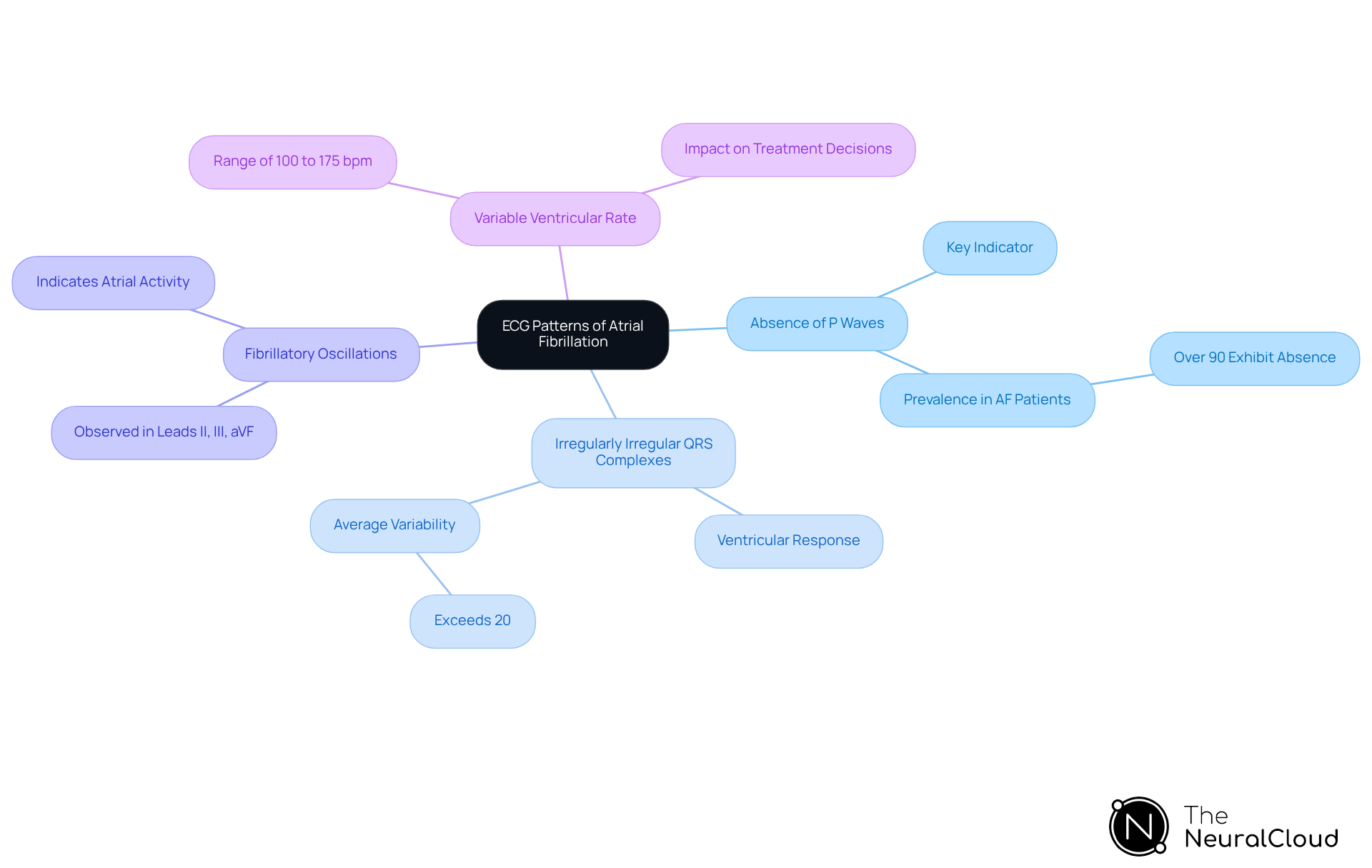
- In AF, P waves are typically absent due to chaotic electrical activity in the atria, disrupting normal conduction. This absence is a key indicator of AF, as studies show that over 90% of individuals with AF exhibit this characteristic.
- The ventricular response is often irregular, with varying intervals between QRS complexes, making it a hallmark of AF. This irregularity can be quantified; a recent study indicates that the average variability in QRS intervals can exceed 20% in AF patients.
- Instead of P waves, fine or coarse fibrillatory waves may be observed, particularly in leads II, III, and aVF, indicating atrial activity. These ripples can be subtle and require careful examination to identify.
- The ventricular rate can vary widely, often ranging from 100 to 175 beats per minute, reflecting disorganized atrial impulses. This variability is significant, as it can affect diagnosis and management of individuals.
Recognizing these patterns is essential for differentiating AF from other arrhythmias, such as atrial flutter or premature atrial contractions. The prevalence of absent P waves in atrial fibrillation pictures ECG readings highlights the importance of thorough examination, as this feature is a key indicator of the condition's presence.
Moreover, advancements in wearable technology, like the WARN model, have shown potential in improving patient monitoring, which could improve proactive management strategies for individuals.
With Neural Cloud Solutions' MaxYield™ platform, healthcare professionals can benefit from enhanced data analysis and advanced diagnostic tools. This significantly enhances productivity and accuracy in ECG interpretation, allowing professionals to focus on critical decision-making and improve patient outcomes.
Apply Diagnostic Criteria for Atrial Fibrillation in ECG Interpretation
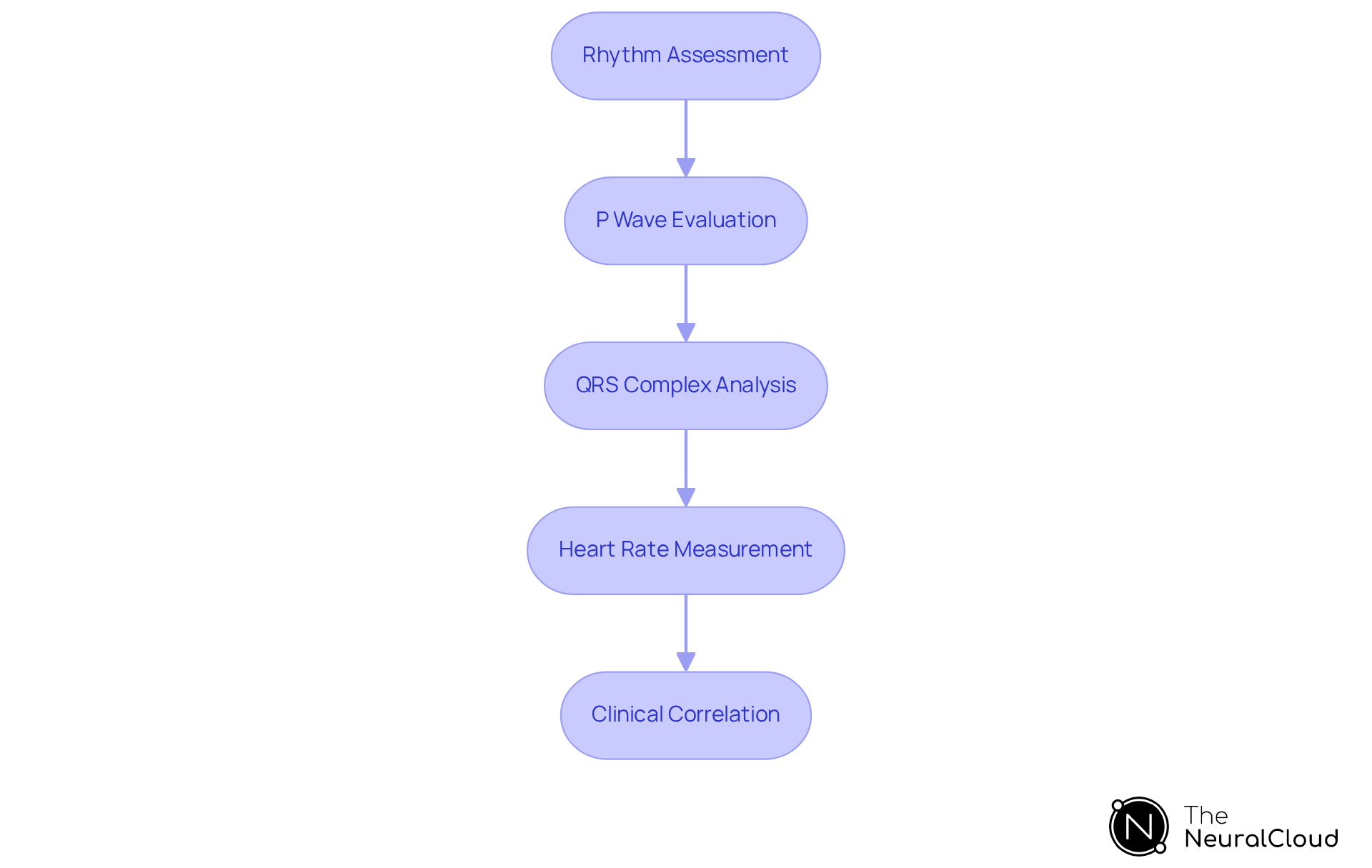
To accurately diagnose atrial fibrillation (AF) using an ECG, healthcare professionals should adhere to the following criteria:
- Rhythm Assessment: Confirm that the rhythm is irregularly irregular, characterized by a lack of a discernible pattern.
- P Wave Evaluation: Check for the absence of P waves; their presence typically indicates an alternative arrhythmia.
- QRS Complex Evaluation: Ensure that QRS complexes are narrow unless a bundle branch block or other conduction abnormalities are present.
- Heart Rate Measurement: Document the ventricular rate, which can vary significantly in AF, often exceeding 100 beats per minute.
- Clinical Correlation: Always correlate ECG findings with the individual's clinical history to confirm the diagnosis.
Recent studies indicate that systematic rhythm assessment significantly enhances diagnostic accuracy for AF, particularly through the use of advanced algorithms, which show a marked increase in early detection rates. By applying these criteria consistently, healthcare professionals can improve patient outcomes and streamline the management of atrial fibrillation.
Features
Neural Cloud Solutions' platform enhances this process by integrating advanced analytics for ECG interpretation. This feature reduces operational costs and improves efficiency in ECG analysis.
Advantages of MaxYield™
The platform's advanced noise filtering and wave recognition capabilities enable precise evaluation, even in recordings with significant artifacts. This addresses common challenges in ECG interpretation, ensuring that healthcare professionals can rely on accurate data for diagnosis.
Additionally, expert recommendations suggest that addressing lifestyle factors can further enhance treatment effectiveness, underscoring the complexity of AF as a cardiovascular condition. By utilizing the latest technology, healthcare professionals can not only streamline their workflow but also provide better care for their patients.
Leverage Advanced Technologies for Enhanced ECG Analysis of Atrial Fibrillation
Advanced technologies, particularly artificial intelligence (AI) and machine learning, are revolutionizing the evaluation of ECG for atrial fibrillation pictures. The challenges in traditional ECG analysis often include time-consuming processes and the potential for human error. However, platforms like these are addressing these issues effectively.
Features of AI-driven tools:
- Accuracy, identifying AF patterns with remarkable accuracy, often surpassing traditional methods. For instance, AI-driven tools can detect or predict atrial fibrillation in individuals within 10 seconds, significantly enhancing early intervention opportunities.
- Integration with existing systems: seamlessly connects with existing systems, enabling efficient data processing and evaluation. It maps ECG signals, including noise reduction, through noise, isolating and labeling key features such as P-wave, QRS complex, and T-wave onsets and offsets in every heartbeat. This integration allows healthcare professionals to optimize workflows, facilitating the quick analysis of 200,000 heartbeats in under 5 minutes and converting lengthy, noisy ECG recordings into clear signals.
- Continuous Learning: AI systems improve by learning from new data, which helps reduce false positives. This ongoing enhancement is crucial for maintaining high standards in care and ensuring reliable outcomes.
- Remote Monitoring: Wearable devices equipped with sensors provide continuous data, enabling real-time tracking. These devices have demonstrated improved detection accuracy for atrial fibrillation, making long-term monitoring more accessible and reducing the need for frequent clinical visits.
Advantages for Healthcare Professionals:
By incorporating these advanced technologies, particularly through the use of AI-driven tools, healthcare professionals can significantly enhance diagnostic accuracy. This leads to better patient management and outcomes, ultimately improving overall healthcare quality.
Conclusion
Atrial fibrillation (AF) presents notable challenges in ECG analysis, making advanced technologies essential for accurate detection and management. Recognizing atrial fibrillation patterns in ECG is crucial; early identification can significantly enhance patient outcomes and mitigate risks associated with this condition. The MaxYield™ platform empowers healthcare professionals to improve their diagnostic capabilities, ensuring that AF is effectively addressed in clinical environments.
Key insights into atrial fibrillation include its defining characteristics, such as the absence of P waves and the irregularity of QRS complexes. The integration of advanced technologies like AI and machine learning has revolutionized ECG analysis, enabling faster and more precise detection of AF. The MaxYield™ platform exemplifies this transformation, offering automated detection and seamless integration into clinical workflows, which ultimately boosts both efficiency and accuracy in patient care.
As cardiovascular care evolves, embracing these technological advancements is vital. Healthcare professionals should adopt tools that promote early detection and enhance diagnostic precision. By prioritizing the integration of advanced ECG analysis technologies, the healthcare community can significantly improve the management of atrial fibrillation, leading to better health outcomes and a proactive approach to cardiovascular health.
Frequently Asked Questions
What is atrial fibrillation (AF) and why is it important in ECG analysis?
Atrial fibrillation (AF) is a condition characterized by an irregular and often rapid heart rhythm originating in the atria, the upper chambers of the heart. It is important in ECG analysis because it significantly increases the risk of stroke, heart failure, and other cardiovascular complications.
How can atrial fibrillation be recognized in an ECG?
Atrial fibrillation can be recognized in an ECG by the absence of distinct P waves and an irregularly irregular QRS complex, which differ markedly from normal sinus rhythm.
What is the MaxYield™ platform and how does it assist in ECG analysis?
The MaxYield™ platform enhances ECG analysis through advanced noise filtering and waveform recognition, allowing for accurate beat-by-beat analysis. This technology helps clinicians make informed decisions regarding individual management and treatment options for atrial fibrillation.
What are the benefits of using wearable ECG patches for detecting atrial fibrillation?
Wearable ECG patches significantly improve detection rates of atrial fibrillation. For example, in the AMALFI trial, 6.8% of participants were diagnosed with AF using these patches, compared to 5.4% with standard care. Notably, 57% of AF cases were detected on the first day of patch use.
Why is at-home screening for atrial fibrillation using ECG patches emphasized by experts?
At-home screening for atrial fibrillation using ECG patches is emphasized for its convenience, especially for older individuals and those with various health issues, making it a practical option for early detection.
How does the MaxYield™ platform improve patient outcomes at risk for atrial fibrillation?
The MaxYield™ platform improves patient outcomes by providing healthcare professionals with the tools needed to accurately assess and manage atrial fibrillation, representing a significant advancement in cardiovascular care.
List of Sources
- Define Atrial Fibrillation and Its Importance in ECG Analysis
- thecardiologyadvisor.com (https://thecardiologyadvisor.com/reports/ecg-ai-predicts-af-related-stroke-hf)
- tctmd.com (https://tctmd.com/news/amalfi-modest-af-detection-ecg-patch-screening)
- bhf.org.uk (https://bhf.org.uk/what-we-do/news-from-the-bhf/news-archive/2025/august/remote-heart-rhythm-screening-increases-diagnosis-of-common-heart-condition)
- escardio.org (https://escardio.org/The-ESC/Press-Office/Press-releases/Remote-atrial-fibrillation-screening-using-an-ECG-patch-demonstrates-modest-benefits)
- Identify ECG Patterns Characteristic of Atrial Fibrillation
- afibinstitute.com.au (https://afibinstitute.com.au/exciting-new-tech-creates-potential-for-early-warning-signs-of-afib)
- bioengineer.org (https://bioengineer.org/ai-software-detects-atrial-fibrillation-in-ecg-testing)
- escardio.org (https://escardio.org/The-ESC/Press-Office/Press-releases/Remote-atrial-fibrillation-screening-using-an-ECG-patch-demonstrates-modest-benefits)
- tctmd.com (https://tctmd.com/news/amalfi-modest-af-detection-ecg-patch-screening)
- acc.org (https://acc.org/latest-in-cardiology/articles/2025/11/03/16/19/sat-315pm-afib-aha-2025)
- Apply Diagnostic Criteria for Atrial Fibrillation in ECG Interpretation
- acc.org (https://acc.org/Latest-in-Cardiology/Articles/2023/11/29/18/58/New-ACC-AHA-Guideline-Focuses-on-Diagnosis-Management-of-AFib-gl-af)
- cardiovascularservices.mayoclinic.com (https://cardiovascularservices.mayoclinic.com/2025/10/14/recent-updates-in-atrial-fibrillation-guidelines)
- New AFib diagnosis? Here’s some help to clear any confusion (https://heart.org/en/news/2025/09/23/new-afib-diagnosis-heres-some-help-to-clear-any-confusion)
- acc.org (https://acc.org/latest-in-cardiology/articles/2025/11/03/16/19/sat-315pm-afib-aha-2025)
- bjcardio.co.uk (https://bjcardio.co.uk/2025/11/demystifying-ai-for-early-af-detection-enhancing-diagnostic-transparency-across-modalities)
- Leverage Advanced Technologies for Enhanced ECG Analysis of Atrial Fibrillation
- bjcardio.co.uk (https://bjcardio.co.uk/2025/11/demystifying-ai-for-early-af-detection-enhancing-diagnostic-transparency-across-modalities)
- clinicaladvisor.com (https://clinicaladvisor.com/news/how-accurate-is-ai-at-diagnosing-atrial-fibrillation-via-ecgs)
- Heart Rhythm 2025 Features Advances in AI that Enhance Safety of Atrial Fibrillation Treatment - HRS (https://hrsonline.org/news/hr2025-features-advanced-ai-safety-afib-treatment)
- mdpi.com (https://mdpi.com/2077-0383/14/14/4924)
- Year in Review: Evidence Around AI in Cardiology Grows (https://tctmd.com/news/year-review-evidence-around-ai-cardiology-grows)