Introduction
Understanding bundle branch block (BBB) is essential for anyone involved in cardiac health, as this condition can significantly affect heart function and patient outcomes. This article explores the causes, symptoms, diagnosis, and treatment options for BBB, providing valuable insights for healthcare professionals and patients alike. Many individuals with BBB may remain asymptomatic, which raises the question: how can we effectively identify and manage this often-overlooked condition? By examining the multifaceted nature of BBB, we can uncover its clinical implications and the vital role of advanced diagnostic tools and targeted interventions in enhancing patient care.
Define Bundle Branch Block: Key Concepts and Terminology
Bundle Branch Block (BBB) refers to a condition characterized by a delay or obstruction in the impulses traveling through the bundle branches, which are essential pathways that conduct signals to the ventricles. The two main types of bundle branch block are Right Bundle Branch Block (RBBB) and Left Bundle Branch Block (LBBB), where the impulse is delayed in the right or left bundle branch, respectively. Understanding these definitions is crucial for grasping the clinical significance of bundle branch block and its potential impact on cardiac function.
MaxYield™ enhances ECG analysis by effectively mapping ECG signals through noise, isolating and labeling key features in every heartbeat. This provides beat-by-beat insights, capable of analyzing 200,000 heartbeats in under 5 minutes. By delivering detailed information on P-wave, QRS complex, and T-wave onsets, offsets, and time-series intervals, MaxYield™ empowers health tech developers to identify cardiac events and make informed clinical decisions. Integrating MaxYield™ into your platform allows for the rapid highlighting of potentially meaningful ECG data, ultimately transforming the approach to cardiac diagnostics.
Key Features of MaxYield™:
- Automated ECG Analysis: Processes 200,000 heartbeats in less than 5 minutes.
- Detailed Insights: Provides comprehensive data on P-wave, QRS complex, and T-wave characteristics.
- Enhanced Decision-Making: Supports healthcare providers in making informed choices.
Advantages for Healthcare Professionals:
- Efficiency: Saves time in ECG analysis, allowing for quicker clinical decisions.
- Accuracy: Reduces noise interference, leading to clearer insights.
- Confidence: Enables healthcare providers to make informed decisions based on reliable data.

Identify Causes of Bundle Branch Block: Pathophysiology Explained
(BBB) can occur due to various factors that disrupt the heart's electrical conduction system. Understanding these causes is essential for healthcare providers to identify individuals at risk and implement appropriate interventions. Here are the key contributors to BBB:
- Coronary artery disease: This condition leads to reduced blood flow to the heart muscle, potentially damaging conduction pathways. Recent studies show that among 23,544 individuals with heart disease, 4.4% had LBBB at baseline. Notably, LBBB is associated with a heightened risk of hospitalization for cardiac failure, with a hazard ratio of 1.50 (p < 0.001). This underscores the importance of close monitoring for these patients.
- Hypertension: Chronic high blood pressure can cause structural changes in the heart, adversely affecting its signaling system and increasing the likelihood of developing a bundle branch block.
- Cardiomyopathy: Refers to conditions that affect the heart muscle and can disrupt normal impulse conduction, leading to various types of bundle branch block.
- Valvular heart disease: Abnormalities in heart valves can interfere with electrical pathways, which can contribute to the onset of bundle branch block.
- Age: The risk escalates with age due to degenerative changes in the conduction system, making older adults more vulnerable.
Recognizing these causes is vital for healthcare professionals, as the link between LBBB and heart disease highlights the need for vigilant management in affected individuals.

Recognize Symptoms of Bundle Branch Block: Clinical Presentation
Bundle Branch Block (BBB) often presents without symptoms, particularly when isolated. However, when symptoms do occur, they can significantly impact patient health. Symptoms include:
- Dizziness or Lightheadedness: These sensations may arise from conduction disturbances, indicating potential conduction disturbances.
- Fainting (Syncope): This severe symptom can signal serious issues, necessitating immediate medical evaluation.
- Chest Pain: Patients may experience this during exertion as the heart struggles to pump blood effectively, often linked to underlying heart conditions.
- Fatigue: Reduced cardiac output can lead to persistent tiredness, affecting daily activities.
- Palpitations: Patients may become aware of irregular heartbeats, which can be distressing and warrant further investigation.
Recent studies indicate that a substantial percentage of individuals with BBB remain asymptomatic, with many unaware of their condition. Approximately 50% of cases of branch bundle block have an unknown cause, highlighting the complexity of this condition. Most individuals diagnosed with branch bundle block do not require treatment unless they show symptoms or have underlying health issues. Identifying these symptoms is essential for both patients and healthcare professionals, as prompt assessment can lead to effective management of possible complications. As noted by experts, the presence of symptoms like syncope should prompt thorough investigation to rule out serious underlying causes. Additionally, misdiagnosis can lead to secondary damage, such as vasovagal syncope (VVS) induced by nitroglycerin (NTG), which is typically used to alleviate angina. Risk factors for branch bundle block include advancing age and conditions such as high blood pressure or cardiovascular disease, which are crucial for comprehending the condition's context.

Diagnose Bundle Branch Block: Techniques and Tools
Diagnosing Bundle Branch Block (BBB) involves several critical techniques that provide insights into the heart's electrical activity and structural integrity.
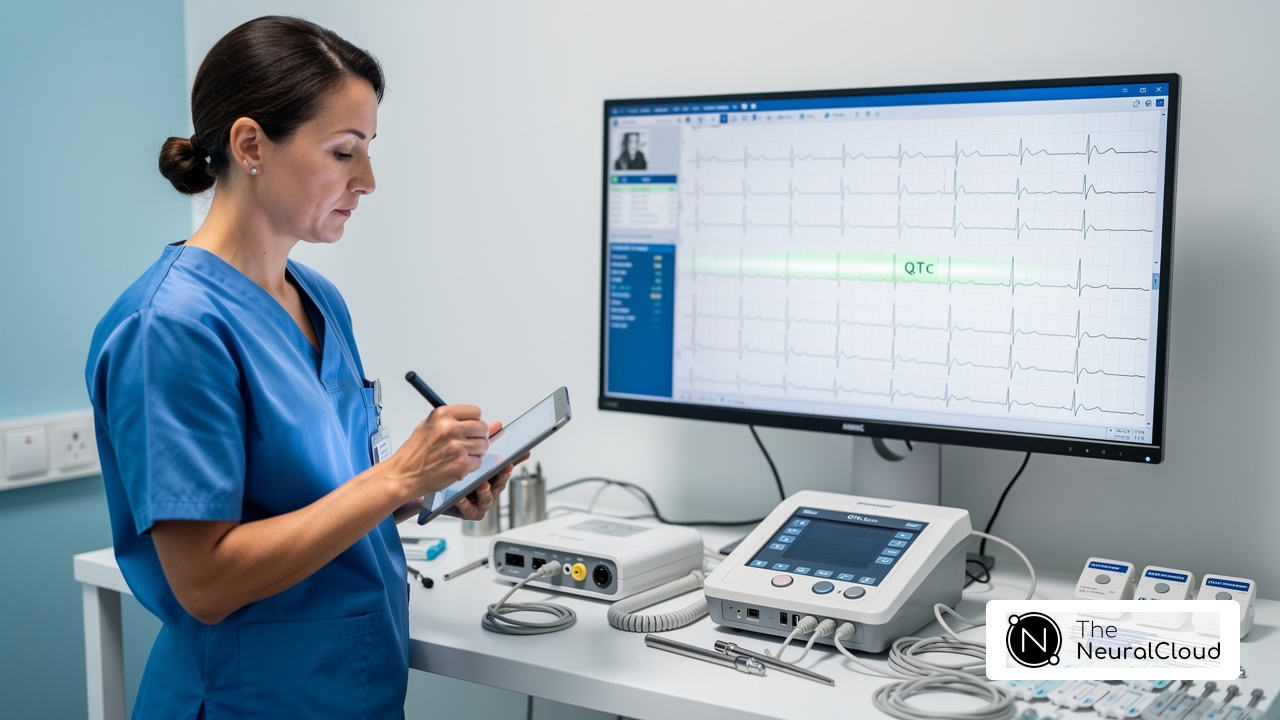
- Electrocardiogram: This cornerstone of BBB diagnosis reveals characteristic alterations in the QRS complex, such as widening and notching. These changes indicate a delay in electrical conduction through the bundle branches, which is crucial for identifying underlying cardiovascular conditions. The software from Neural Cloud Solutions enhances ECG interpretation by adapting to new data, improving diagnostic yield and accuracy over time.
- Echocardiogram: This imaging technique assesses cardiac structure and function, allowing clinicians to identify anatomical abnormalities that may contribute to BBB. For instance, echocardiographic findings can reveal left ventricular hypertrophy, which is often associated with hypertension.
- Holter Monitor: This portable ECG device records cardiac activity continuously over 24 to 48 hours, making it invaluable for identifying intermittent arrhythmias that may not be captured during a standard ECG. The integration of wearable technology with MaxYield™ can automate the labeling process, reducing costs and enhancing efficiency.
- Exercise Stress Test: Used to evaluate the heart's response to physical exertion, this test can reveal functional impairments associated with BBB, especially in symptomatic patients.
These are essential not only for confirming the presence of Bundle Branch Block but also for evaluating its clinical significance. For example, a 70-year-old woman with lung cancer may present with symptoms leading to an ECG revealing BBB due to a large pericardial effusion, highlighting the need for comprehensive assessment. Accurate diagnosis through these methods is crucial, as asymptomatic cases of BBB often go unnoticed, yet they can indicate serious underlying conditions, particularly in older adults with coronary artery disease. Additionally, complications such as arrhythmias or the need for a pacemaker may arise, underscoring the importance of timely and accurate diagnosis.

Treat Bundle Branch Block: Management Strategies and Interventions
Management of Bundle Branch Block (BBB) primarily focuses on addressing underlying conditions and implementing treatment strategies. Key strategies include:
- Monitoring: Regular follow-up with healthcare providers is crucial for assessing the progression of BBB. Utilizing technology, which rapidly labels P, QRS, & T Wave onsets, offsets, and time-series intervals, allows healthcare providers to analyze more data in less time. This tool enhances monitoring by providing beat-by-beat tabulation in CSV format, enabling timely adjustments to treatment plans based on clear data sets and clean signals.
- Medications: Pharmacotherapy plays a vital role in managing underlying cardiovascular conditions such as hypertension and cardiac failure, which can exacerbate symptoms of BBB. Appropriate medications can significantly enhance outcomes for individuals, as studies indicate that appropriate pharmacotherapy results in better control of symptoms and overall cardiac function.
- For individuals experiencing significant symptoms or block due to BBB, pacemaker implantation may be necessary. This intervention helps regulate cardiac rhythm, enhancing the quality of life for those affected. Real-world examples demonstrate the effectiveness of this approach; individuals with a history of fainting due to BBB have shown marked improvement following pacemaker implantation, with success rates indicating that pacemakers can significantly alleviate symptoms and improve cardiac function.
- Cardiac Resynchronization Therapy (CRT) is especially advantageous for individuals with heart failure and BBB, as it synchronizes the contractions of the ventricles, leading to enhanced cardiac function and overall well-being. Experts observe that CRT can assist individuals in feeling more energetic and enhance their heart's efficiency.
- Lifestyle Modifications: Encouraging healthy habits, including a balanced diet and regular exercise, is essential for enhancing cardiovascular health and managing BBB effectively. Patients should also be aware of their symptoms and triggers, as understanding these factors can assist in better management and communication with healthcare providers.
These strategies collectively contribute to the effective management of Bundle Branch Block, ultimately leading to improvements in patient quality of life and clinical outcomes.

Conclusion
Understanding bundle branch block (BBB) is crucial for recognizing its impact on cardiac health. This condition, marked by a delay or obstruction in electrical impulses through the heart's bundle branches, can present as either Right Bundle Branch Block (RBBB) or Left Bundle Branch Block (LBBB). The significance of BBB lies in its potential to affect heart function, making awareness and timely intervention essential.
The article outlines the causes of BBB, including:
- Coronary artery disease
- Hypertension
- Age-related degeneration
It emphasizes the importance of recognizing these risk factors. Symptoms such as dizziness, fainting, and shortness of breath are discussed, highlighting that many individuals may remain asymptomatic despite having this condition. Diagnostic techniques like ECGs, echocardiograms, and Holter monitoring are vital tools for accurate identification and assessment of BBB.
Management strategies, including:
- Medication
- Lifestyle changes
- Interventions like pacemaker insertion
are presented as key components to improve patient outcomes and quality of life. By understanding the causes, symptoms, and treatment options, healthcare professionals can better support patients in navigating this complex condition.
Ultimately, the insights provided underscore the importance of vigilance in monitoring and managing bundle branch block. Encouraging proactive health measures and regular follow-ups can significantly enhance the management of BBB, leading to improved cardiac health and well-being for affected individuals.
Frequently Asked Questions
What is Bundle Branch Block (BBB)?
Bundle Branch Block (BBB) is a condition characterized by a delay or obstruction in the impulses traveling through the bundle branches, which are essential pathways that conduct signals to the ventricles.
What are the two main types of Bundle Branch Block?
The two main types of Bundle Branch Block are Right Bundle Branch Block (RBBB) and Left Bundle Branch Block (LBBB), where the impulse is delayed in the right or left bundle branch, respectively.
How does MaxYield™ enhance the analysis of Bundle Branch Block?
MaxYield™ enhances the analysis of BBB by effectively mapping ECG signals through noise, isolating and labeling key features in every heartbeat, and providing beat-by-beat insights capable of analyzing 200,000 heartbeats in under 5 minutes.
What key features does MaxYield™ provide?
Key features of MaxYield™ include automated ECG analysis, detailed insights on P-wave, QRS complex, and T-wave characteristics, and enhanced decision-making support for healthcare professionals.
What are the advantages of using MaxYield™ for healthcare professionals?
Advantages for healthcare professionals include increased efficiency by saving time in ECG analysis, improved accuracy by reducing noise interference, and enhanced confidence in making informed decisions based on reliable data.
What are some common causes of Bundle Branch Block?
Common causes of Bundle Branch Block include Coronary Artery Disease (CAD), hypertension, cardiomyopathy, valvular cardiac disease, and age-related degenerative changes in the conduction system.
Why is it important for healthcare providers to recognize the causes of Bundle Branch Block?
Recognizing the causes of Bundle Branch Block is vital for healthcare providers to identify individuals at risk and implement appropriate monitoring and treatment strategies, particularly since LBBB is associated with an increased risk of hospitalization for cardiac failure.
List of Sources
- Identify Causes of Bundle Branch Block: Pathophysiology Explained
- pubmed.ncbi.nlm.nih.gov (https://pubmed.ncbi.nlm.nih.gov/34011435)
- Recognize Symptoms of Bundle Branch Block: Clinical Presentation
- mayoclinic.org (https://mayoclinic.org/diseases-conditions/bundle-branch-block/symptoms-causes/syc-20370514)
- pmc.ncbi.nlm.nih.gov (https://pmc.ncbi.nlm.nih.gov/articles/PMC11750814)
- yalemedicine.org (https://yalemedicine.org/conditions/bundle-branch-block)
- ahajournals.org (https://ahajournals.org/doi/10.1161/JAHA.120.017430)
- Diagnose Bundle Branch Block: Techniques and Tools
- cedars-sinai.org (https://cedars-sinai.org/health-library/diseases-and-conditions/b/bundle-branch-block.html)
- bonsecours.com (https://bonsecours.com/health-care-services/heart-care-cardiology/conditions/bundle-branch-block)
- ECG Case Studies | Interpretation & Answers | Geeky Medics (https://geekymedics.com/ecg-case-studies)
- texasheart.org (https://texasheart.org/heart-health/heart-information-center/topics/bundle-branch-block)
- ummhealth.org (https://ummhealth.org/health-library/left-bundle-branch-block)
- Treat Bundle Branch Block: Management Strategies and Interventions
- yalemedicine.org (https://yalemedicine.org/conditions/bundle-branch-block)
- cardiothinklab.com (https://cardiothinklab.com/patient-case-studies-using-0h-1h-algorithm)
- Bundle branch block-Bundle branch block - Diagnosis & treatment - Mayo Clinic (https://mayoclinic.org/diseases-conditions/bundle-branch-block/diagnosis-treatment/drc-20370518)