Introduction
Mastering canine ECG lead placement is essential for veterinary professionals, as accurate readings can greatly influence cardiac evaluations. This article explores advanced techniques that not only improve the precision of lead placement but also simplify the entire process through systematic methods and innovative technology. Given the complexities of canine anatomy and the risk of misinterpretation, how can practitioners ensure they achieve the most reliable ECG results?
By addressing these challenges, veterinary professionals can enhance their diagnostic capabilities. The integration of advanced techniques and technology allows for more accurate lead placement, which is crucial for effective cardiac assessments. This article will delve into the features of these techniques, highlighting their advantages and the direct benefits they offer to healthcare professionals.
Identify Key Anatomical Landmarks for Lead Placement
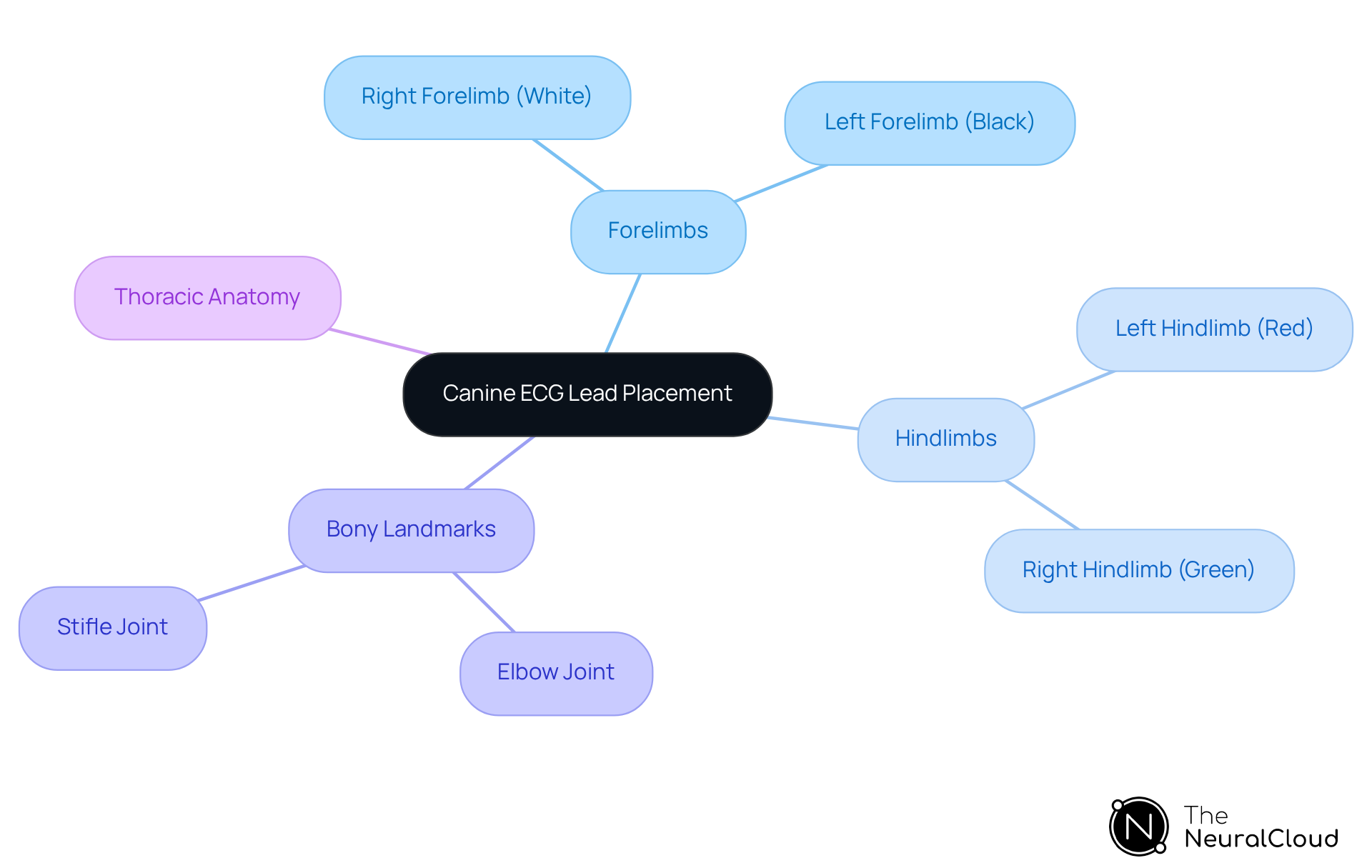
To obtain precise ECG readings in dogs, recognizing important anatomical landmarks is essential. The standard electrode positioning involves using the forelimbs and hindlimbs. For example, the right forelimb is typically marked with a white line, while the left forelimb is marked with a black line. The left hindlimb is marked with a red lead, and the right hindlimb with a green lead.
Veterinary professionals should identify key joints, such as the elbow and stifle joints, to ensure accurate lead placement. The sensors should be positioned just proximal to these joints to avoid interference from muscle movement. Understanding the dog's thoracic anatomy can also assist in proper lead placement, which may be crucial for effective ECG readings.
Utilizing diagrams and models can enhance learning and retention of these landmarks, making it easier for practitioners to recall them during ECG procedures. A case study on a novel arrangement technique demonstrated that precise positioning results in improved signal quality and eliminates abnormal Q waves. This highlights the importance of proper lead placement to ensure reliable cardiac evaluations in veterinary practice.
As noted by veterinary cardiologist Mark Rishniw, "different lead placements yield dramatically different results." This underscores the need for accuracy in lead placement to minimize potential misinterpretation of ECG results. Incorporating these insights can significantly improve the accuracy of ECG interpretations in veterinary medicine.
Follow a Systematic Approach to Lead Placement
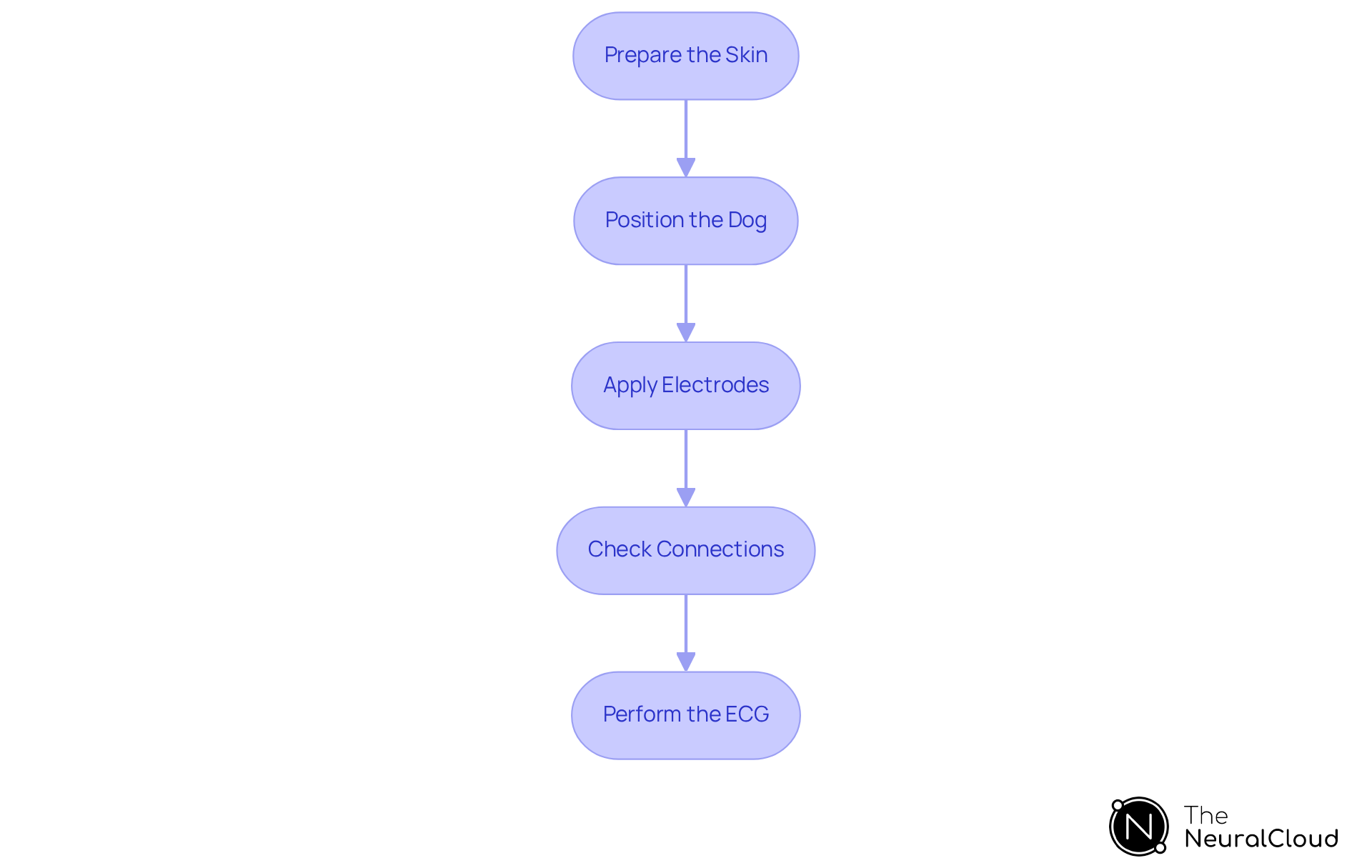
To ensure accuracy, it's essential to follow a systematic approach to lead placement. Start by preparing the patient: position the dog in a comfortable position on a non-conductive surface to minimize interference.
- Prepare the Skin: Clean the areas where electrodes will be placed using alcohol wipes. This eliminates oils and dirt, ensuring better adhesion and quality of transmission. Proper skin preparation is crucial, as studies indicate that it can significantly enhance signal clarity.
- Position the Dog: Ensure the dog is calm and still. Restraint may be necessary to prevent movement during the ECG recording. According to Santilli, maintaining a stable position is vital for obtaining reliable readings during the procedure.
- Apply Electrodes: Begin with the right forelimb (white lead), followed by the left forelimb (black lead), left hindlimb (red lead), and finally the right hindlimb (green lead). Position the conductors just above the elbow and stifle joints. This has shown improved accuracy in readings across various canine breeds.
- Check Connections: After positioning the wires, double-check that all connections are secure and that the wires are not twisted or kinked. This verification is essential to avoid artifacts that could compromise the ECG results.
- Perform the ECG: Once the electrodes are in position, start the ECG recording, ensuring that the machine settings are optimized for canine patients. The integration of technology automates ECG labeling, streamlining the process and significantly reducing the time spent on analysis. Research indicates that the average R wave value in D2 is 1.31 mV, which underscores the importance of correct lead placement for precise diagnostics.
Veterinary professionals emphasize that proper preparation and positioning significantly improve the quality of ECG readings, making these steps crucial for reliable diagnostics.
Verify Lead Connections and Signal Quality
After positioning the electrodes, it’s crucial to check connections and ensure signal integrity before proceeding with the ECG recording. Follow these steps:
- Check Connections: Confirm that each wire is securely attached to both the electrode and the ECG machine. Loose connections can lead to artifacts or loss of transmission.
- Assess Signal Quality: Monitor the ECG display for irregularities. A clean, consistent waveform indicates good signal quality. If the waveform appears erratic or noisy, investigate potential issues like inadequate contact or movement artifacts. The technology from Neural Cloud Solutions significantly enhances this process by employing advanced algorithms, salvaging previously obscured sections of recordings and ensuring critical data is identified even in challenging conditions.
- Adjust Settings: If signal quality is lacking, consider modifying machine settings, including gain and filter options, to improve the clarity of the ECG trace. MaxYield™ continuously evolves its algorithms to enhance diagnostic yield, making it an invaluable tool in this step.
- Reposition Connections if Necessary: If issues persist, adjust the connections or clean the electrode sites again to ensure optimal contact.
- Conduct a Test Run: Before capturing the complete ECG, execute a short test run to verify that the output is stable and dependable.
Veterinary technicians emphasize that attention to detail is essential for obtaining precise ECGs. Even small factors, such as electrode placement, can greatly affect outcomes. Proper positioning on the wrists and leg electrodes above the ankles is crucial for optimal canine ECG to ensure data quality. Additionally, maintaining a quiet environment during ECG tests reduces external interference, further improving the clarity of the readings. Quality ECG lead wires are vital for accurate readings, and technicians recommend using reliable equipment to avoid common pitfalls that can compromise ECG accuracy. By integrating technology with MaxYield™, veterinary practices can automate labeling and reduce costs, ultimately enhancing the overall efficiency of their operations.

Utilize Advanced Technology for Enhanced ECG Analysis
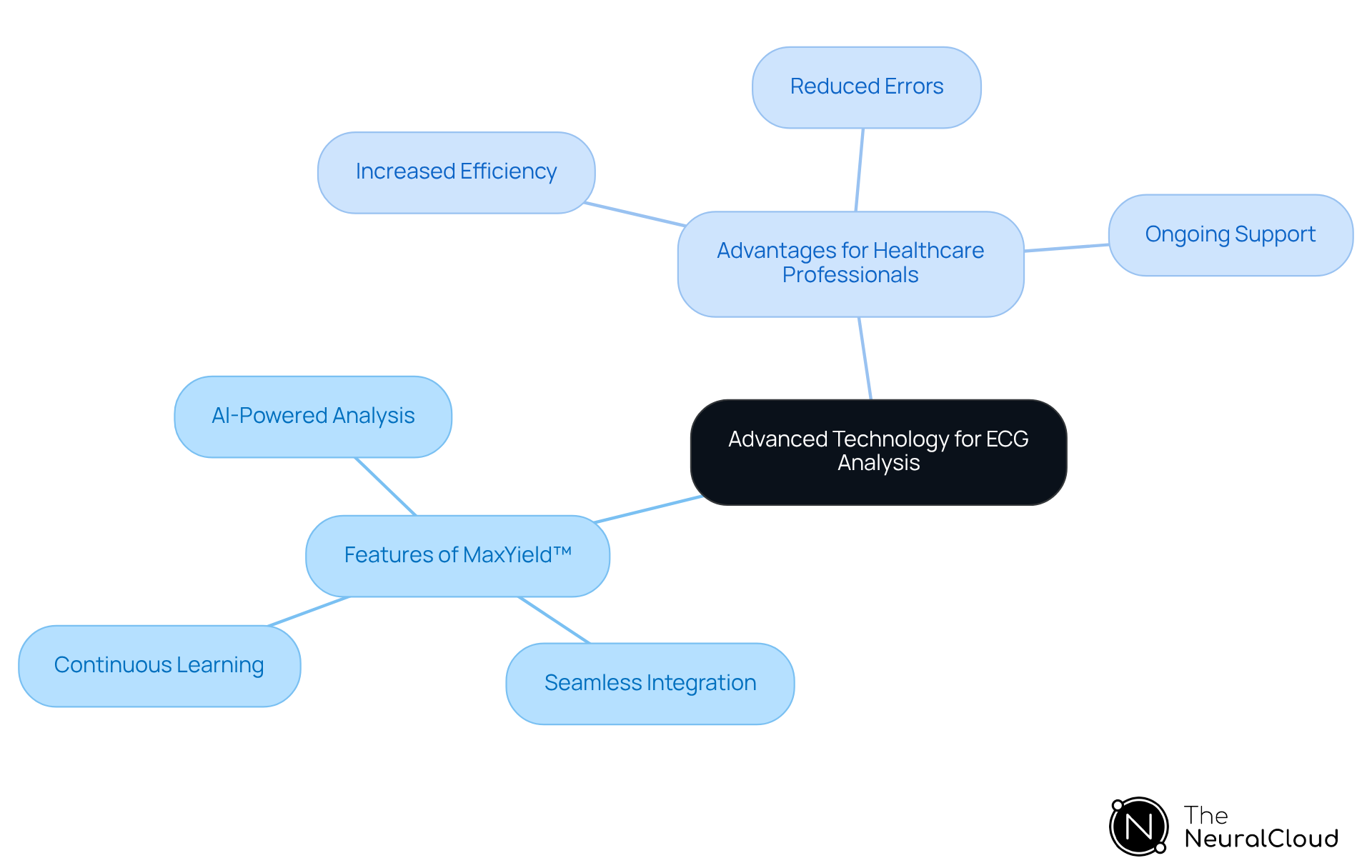
Incorporating technology addresses several challenges, enhancing both accuracy and efficiency in readings. One notable solution is the platform from Neural Cloud Solutions, which leverages artificial intelligence to automate ECG analysis. This technology can swiftly process large volumes of data, such as P-waves and QRS complexes.
Features of MaxYield™:
- AI-Powered Analysis: Automates the identification of critical ECG components, reducing the time required for manual analysis.
- Seamless Integration: Designed to fit smoothly into existing clinical workflows, minimizing disruptions and enhancing operational efficiency.
- Continuous Learning: Employs models that adapt over time, improving diagnostic accuracy as new data and feedback are incorporated.
Advantages for Healthcare Professionals:
- Increased Efficiency: By utilizing advanced technology, healthcare providers can focus more on patient care rather than administrative tasks.
- Reduced Errors: Integration with clinical workflows helps to minimize manual data entry, lowering the risk of mistakes.
- Ongoing Support: Training programs for staff ensure that they can maximize the benefits of advanced ECG technology.
Regularly monitoring and evaluating the outcomes of technology in ECG analysis is crucial. Collecting data on diagnostic accuracy and workflow efficiency allows healthcare professionals to identify areas for improvement, ensuring that the technology effectively meets clinical needs.
Conclusion
Mastering canine ECG lead placement is essential for accurate cardiac evaluations in veterinary practice. Understanding anatomical landmarks and employing a systematic approach significantly enhances the reliability of ECG readings. The MaxYield™ platform integrates advanced technology, streamlining the process for more efficient and precise diagnostics.
Key insights from this article emphasize the importance of:
- Proper electrode positioning
- Thorough patient preparation
- The benefits of innovative technology in ECG analysis
Each step, from identifying anatomical landmarks to verifying lead connections, contributes to the overall quality of ECG results. AI-driven solutions not only improve diagnostic accuracy but also free up valuable time for veterinary professionals to focus on patient care.
Embracing best practices and advanced techniques in canine ECG lead placement is crucial for enhancing veterinary cardiology. As the field evolves, staying informed and adapting to new technologies ensures practitioners can provide the highest standard of care for their canine patients.
Frequently Asked Questions
Why is it important to identify key anatomical landmarks for lead placement in dogs?
Identifying key anatomical landmarks is essential for obtaining precise ECG readings in dogs, ensuring accurate cardiac evaluations.
What are the standard electrode positions for canine ECG lead placement?
The standard electrode positions involve the right forelimb marked with a white line, the left forelimb with a black line, the left hindlimb with a red lead, and the right hindlimb with a green lead.
How should veterinary professionals ensure proper placement of ECG leads?
Veterinary professionals should palpate bony landmarks, such as the elbow and stifle joints, and position the sensors just proximal to these joints to avoid interference from muscle movement.
How does understanding thoracic anatomy assist in ECG lead placement?
Understanding the dog’s thoracic anatomy can help ensure proper lead placement, which is crucial for comprehensive cardiac evaluations.
What tools can enhance learning and retention of anatomical landmarks for ECG lead placement?
Utilizing diagrams and models can enhance learning and retention of these landmarks, making it easier for practitioners to recall them during ECG procedures.
What did a case study on a novel arrangement technique reveal about lead placement?
The case study demonstrated that precise lead positioning results in enhanced P wave amplitudes and eliminates abnormal Q waves, highlighting the importance of mastering lead placement techniques.
What did veterinary cardiologist Mark Rishniw note about ECG results in different positions?
Mark Rishniw noted that ECGs of dogs recorded in RL, LL, and ST positions yield dramatically different results, emphasizing the need for position-specific reference ranges to minimize misinterpretation of ECG results.
How can incorporating insights about lead placement improve veterinary medicine?
Incorporating insights about lead placement can significantly improve the accuracy of ECG interpretations in veterinary practice.
List of Sources
- Identify Key Anatomical Landmarks for Lead Placement
- researchgate.net (https://researchgate.net/publication/11537039_Effect_of_Body_Position_on_the_6-Lead_ECG_of_Dogs)
- pmc.ncbi.nlm.nih.gov (https://pmc.ncbi.nlm.nih.gov/articles/PMC12540646)
- researchgate.net (https://researchgate.net/publication/396736474_A_new_proposal_for_electrode_positioning_in_dogs_from_the_perspective_of_electrovectorcardiography)
- med-linket-corp.com (https://med-linket-corp.com/blogs/news/12-lead-ecg-placement?srsltid=AfmBOorovFttDYcvbjQduZG9fSaxZBZvCE54nw_fliyo_fxXwVrMftLp)
- Follow a Systematic Approach to Lead Placement
- nature.com (https://nature.com/articles/s41598-025-20362-6)
- researchgate.net (https://researchgate.net/publication/11537039_Effect_of_Body_Position_on_the_6-Lead_ECG_of_Dogs)
- ui.adsabs.harvard.edu (https://ui.adsabs.harvard.edu/abs/2025NatSR..1536671D/abstract)
- researchgate.net (https://researchgate.net/publication/396736474_A_new_proposal_for_electrode_positioning_in_dogs_from_the_perspective_of_electrovectorcardiography)
- New surgical option for canine heart disease (https://improveinternational.com/uk/news/new-surgical-option-for-canine-heart-disease)
- Verify Lead Connections and Signal Quality
- array.aami.org (https://array.aami.org/content/news/tips-quickly-resolving-issues-ecg-machines)
- disposablespo2sensor.com (https://disposablespo2sensor.com/news/the_relationship_between_ecg_lead_wire_and_ecg_signal_quality-182567.html)
- High Quality ECG Recording Assurance | Applied Clinical Trials Online (https://appliedclinicaltrialsonline.com/view/high-quality-ecg-recording-assurance)
- bvajournals.onlinelibrary.wiley.com (https://bvajournals.onlinelibrary.wiley.com/doi/10.1002/vetr.2879)
- 12-Lead ECG Electrode Placement: Best Practices- (https://intcomedical.com/news/info/12-lead-ecg-electrode-placement-best-practices-for-clinical-accuracy-in-healthcare.html)