Introduction
Understanding congestive heart failure (CHF) is crucial as millions face its debilitating effects. This tutorial provides a clear overview of CHF, including its types, symptoms, and the vital role of ECG analysis in diagnosis and treatment. As technology advances, healthcare professionals encounter challenges in interpreting ECG readings effectively to improve patient outcomes. This article examines the latest methodologies and tools designed to enhance ECG analysis, ensuring timely and accurate interventions for CHF management.
Define Congestive Heart Failure: Key Concepts and Importance
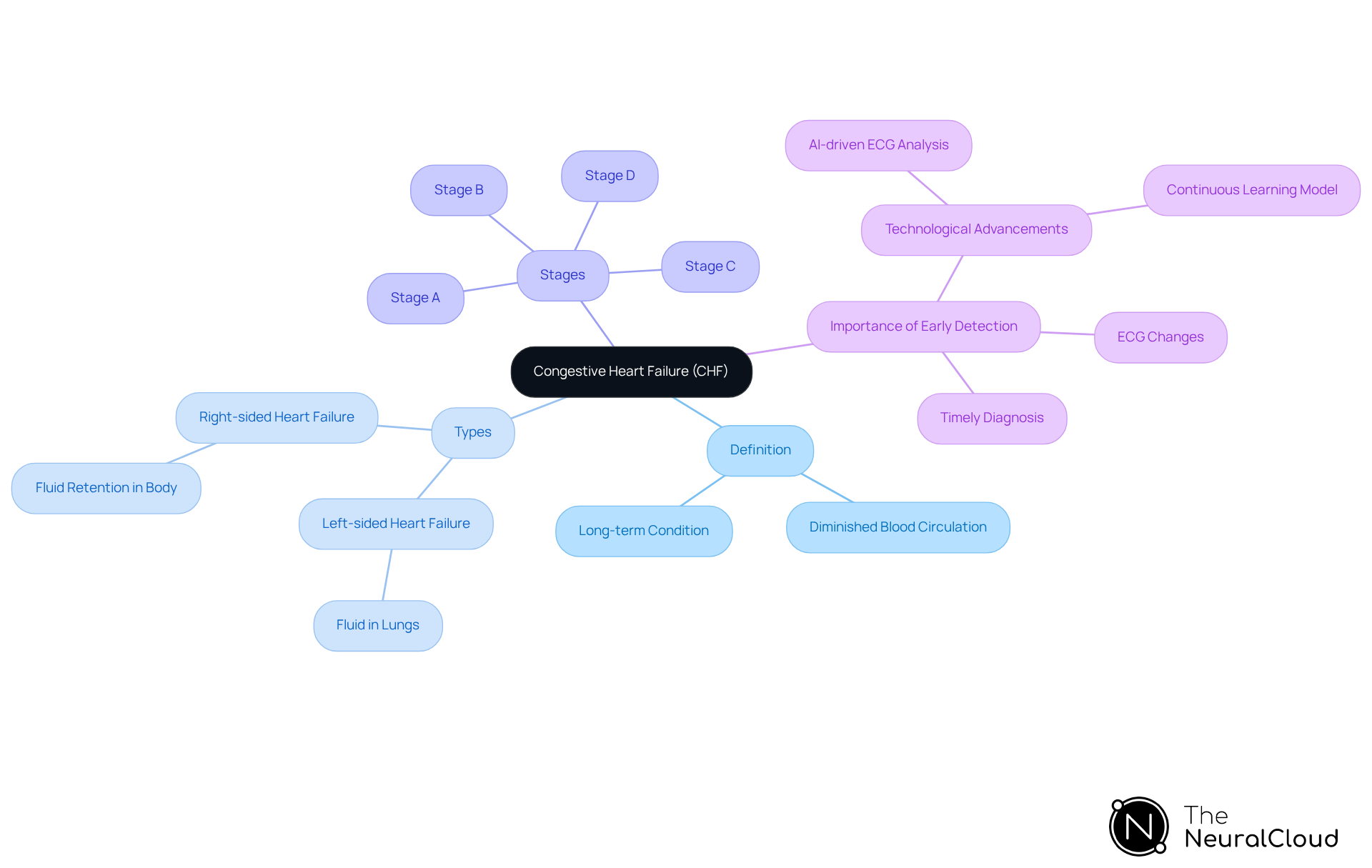
Congestive cardiac dysfunction (CHF) is a long-term condition marked by the heart's diminished ability to circulate blood effectively, resulting in inadequate blood flow to meet the body's needs. This condition can stem from various underlying factors, such as coronary artery disease, hypertension, and cardiomyopathy. Key concepts include:
- CHF is mainly classified into two types: left-sided heart failure, where fluid builds up in the lungs, and right-sided heart failure, which causes fluid retention throughout the body.
- The condition is typically divided into four stages (A to D), ranging from a high risk of developing cardiac issues to stages that necessitate specialized interventions.
- Timely diagnosis and management of CHF are crucial for preventing disease progression and complications. Early detection allows for the identification of changes in the patient's condition that may signal worsening cardiac function. Leading cardiologists emphasize that recognizing these changes can significantly influence treatment strategies and enhance survival rates.
The integration of technology, such as those provided by Neural Cloud Solutions, is vital in diagnosing CHF. Their solutions enhance the accuracy and efficiency of ECG analysis for congestive heart failure through AI-driven automation, enabling healthcare professionals to swiftly identify critical signs of cardiac distress. This model evolves with each use, increasing diagnostic yield over time. Furthermore, the tools employed by Neural Cloud Solutions, including noise filtering and automated labeling, streamline workflows and effectively tackle challenges like physiological variability and signal artifacts. These innovations facilitate prompt and effective interventions, ultimately leading to improved patient outcomes.
Identify Symptoms and Diagnosis of Congestive Heart Failure
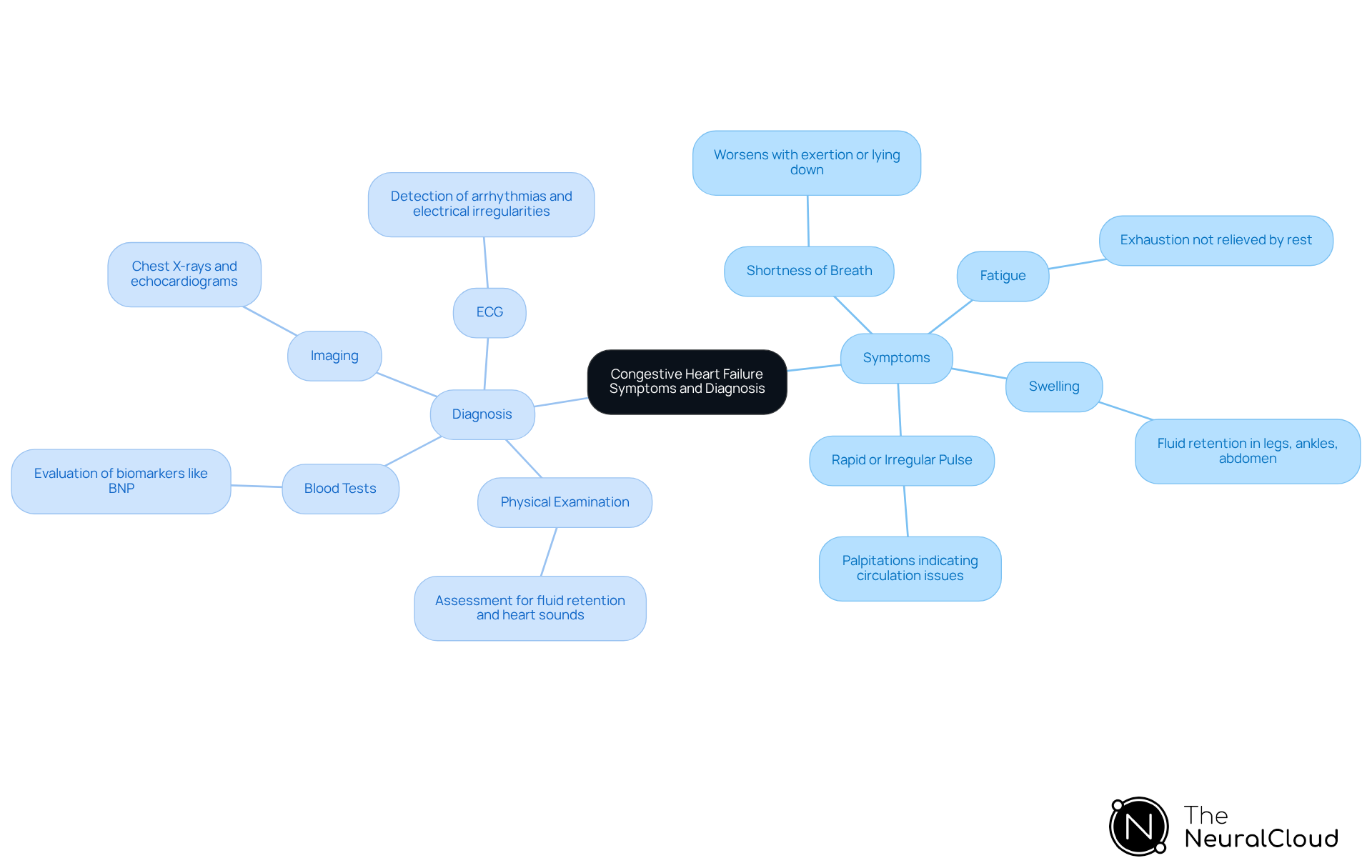
Identifying the symptoms of congestive heart failure is essential for early diagnosis and effective intervention. Common symptoms include:
- Shortness of Breath: This often worsens with physical exertion or when lying down, indicating potential fluid buildup in the lungs.
- Fatigue: A widespread feeling of exhaustion that does not enhance with rest can indicate the heart's inability to pump effectively.
- Swelling: Fluid retention may manifest in the legs, ankles, and abdomen, reflecting the heart's compromised function.
- Rapid or Irregular Pulse: Palpitations may occur as the heart struggles to maintain adequate circulation, often a sign of underlying arrhythmias.
Diagnosis typically involves a multifaceted approach:
- Physical Examination: Clinicians assess for signs of fluid retention and listen for abnormal heart sounds.
- Blood Tests: Biomarkers such as B-type natriuretic peptide (BNP) are assessed to evaluate cardiac stress and function.
- Imaging: Chest X-rays and echocardiograms are utilized to evaluate cardiac structure and function, providing critical insights into potential abnormalities.
- Electrocardiogram for detecting arrhythmias and other electrical irregularities that may indicate heart disease. The integration of technology, such as that provided by Neural Cloud Solutions' MaxYield™ platform, enhances diagnostic accuracy and streamlines the identification of heart conditions. This is achieved through advanced algorithms, including machine learning, which address challenges like noise and signal artifacts.
Recent studies highlight the effectiveness of these diagnostic methods, emphasizing the need for early intervention to improve patient outcomes. Statistics show that roughly 6.7 million Americans over the age of 20 currently experience cardiac insufficiency, with forecasts indicating this figure could increase to around 8.5 million by 2030. Furthermore, the survival rate is 78.8%, while it drops to 49.5% for those aged 75 and over. Significantly, cardiac dysfunction is much more common among Black adults than among other racial and ethnic groups, emphasizing the importance of equitable healthcare initiatives.
Analyze ECG Readings: Interpreting Congestive Heart Failure Patterns
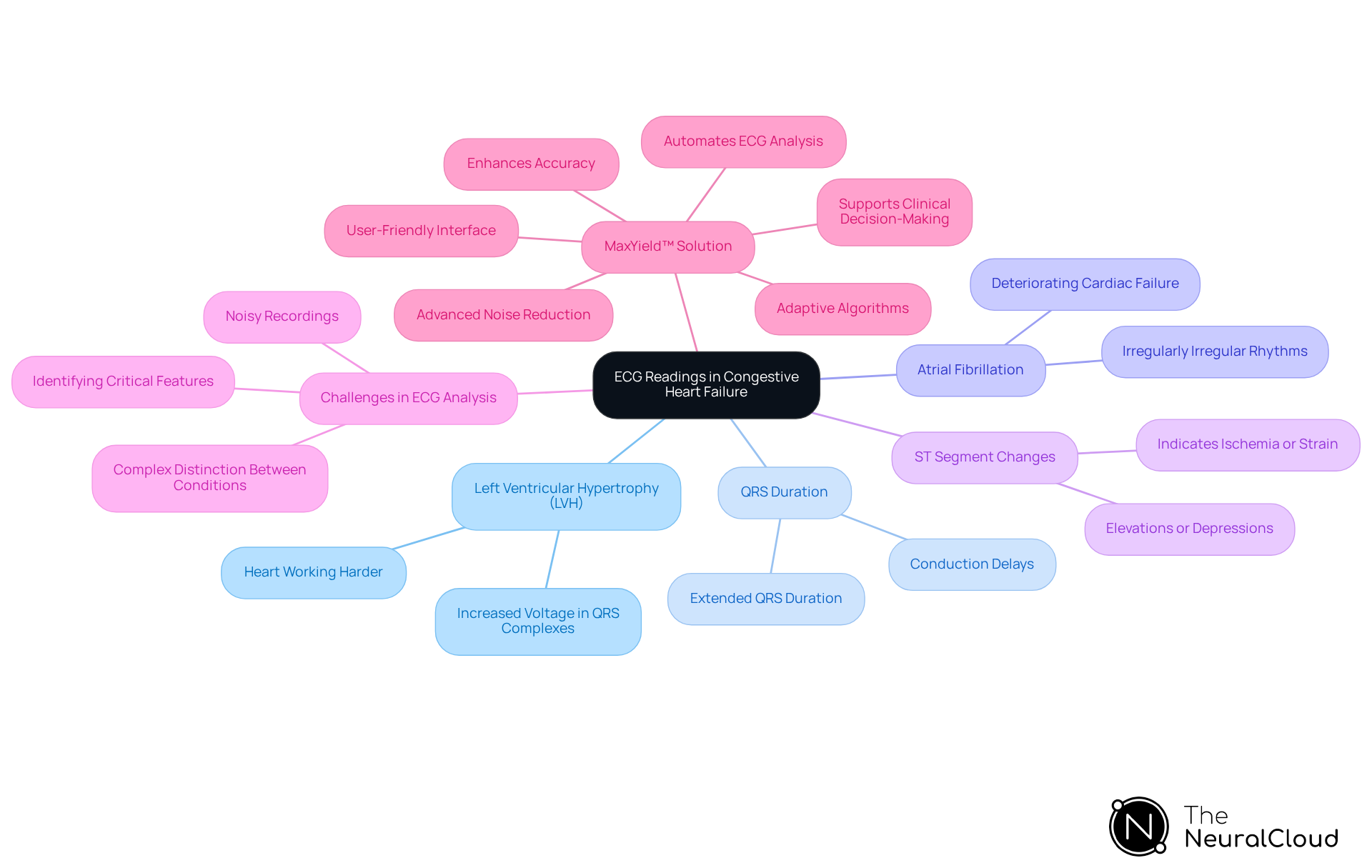
ECG readings can reveal significant changes in patients with congestive heart failure. Key patterns to look for include:
- Left Ventricular Hypertrophy: Often indicated by increased voltage in the QRS complexes, suggesting the heart is working harder to pump blood.
- QRS Duration: Extended QRS duration may suggest conduction delays, which are frequent in cases of heart failure.
- Atrial Fibrillation: Irregularly irregular rhythms can indicate deteriorating cardiac failure, as shown on an ECG, and necessitate prompt attention.
- ST Segment Changes: Elevations or depressions in the ST segment can indicate ischemia or strain on the cardiac muscle, which may be observed in a patient with heart failure.
Challenges in ECG analysis arise when interpreting readings, as it can be complex to distinguish between various cardiac conditions. Clinicians often face difficulties in interpreting noisy recordings and identifying critical features quickly.
Introducing MaxYield™: Neural Cloud Solutions' innovative tool addresses these challenges by automating ECG analysis. This innovative tool enhances accuracy through machine learning and adaptive algorithms. MaxYield™ rapidly isolates and labels key features in ECG signals, transforming noisy recordings into detailed insights.
Advantages for Clinicians: By streamlining analysis, MaxYield™ supports confident clinical decision-making. The platform not only enhances the efficiency of interpreting ECGs but also aids in providing timely interventions for patients. With its user-friendly interface, clinicians can focus more on patient care rather than getting bogged down by complex data.
Explore Treatment Options for Congestive Heart Failure and Their ECG Implications
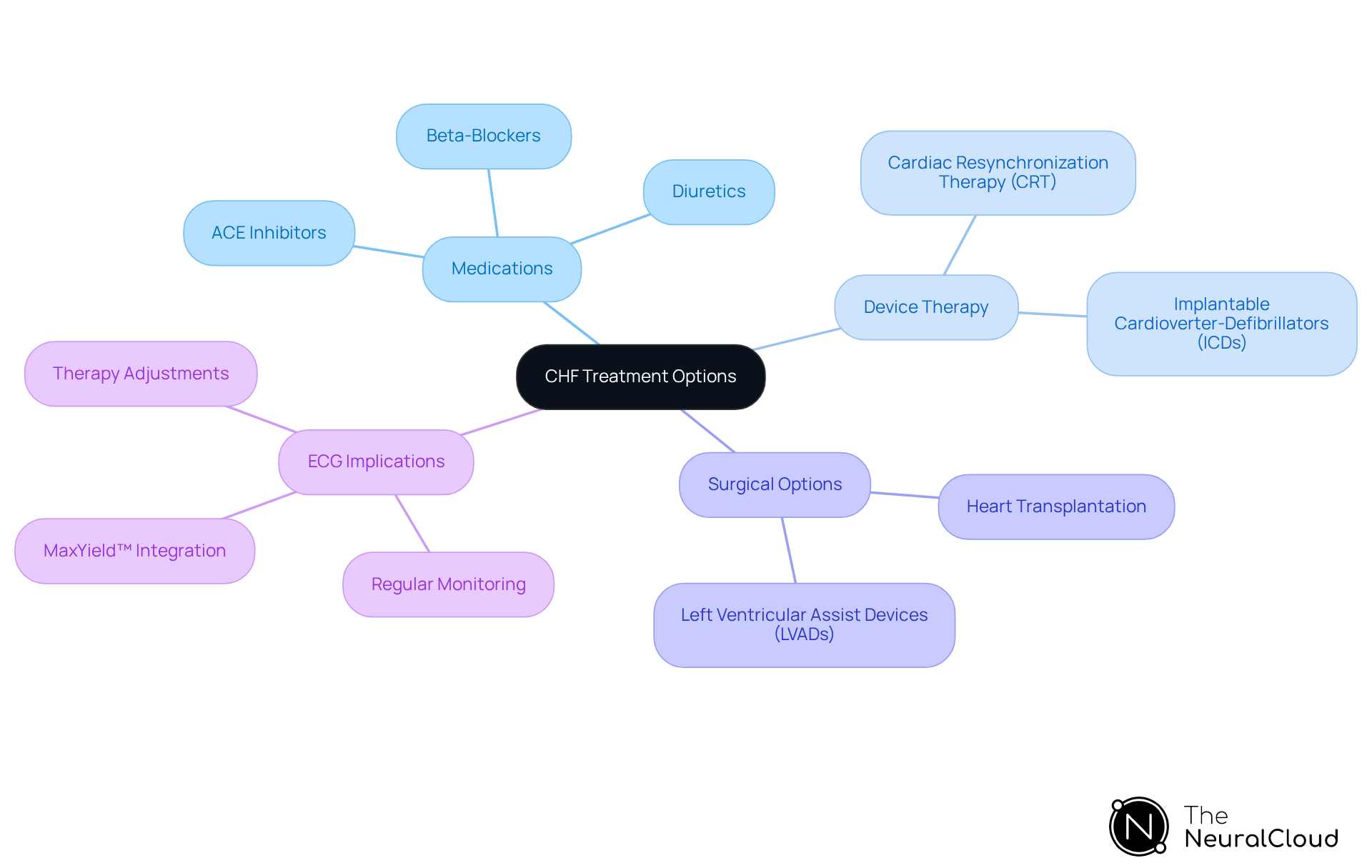
Treatment for CHF typically involves a combination of lifestyle changes, medications, and possibly devices or surgery. Key treatment options include:
- Medications: Commonly prescribed drugs such as ACE inhibitors, beta-blockers, and diuretics help manage symptoms and enhance cardiac function.
- Device Therapy: For certain patients, cardiac resynchronization therapy (CRT) and implantable cardioverter-defibrillators (ICDs) may be recommended to improve heart function.
- Surgical Options: In severe cases, heart transplants or left ventricular assist devices (LVADs) may be necessary.
ECG Implications:
- Regular ECG monitoring is essential for assessing treatment effectiveness and patient safety. The technology allows healthcare professionals to automate processes, significantly reducing operational costs while enhancing productivity.
- Changes in ECG patterns can indicate the need for therapy adjustments, underscoring the importance of continuous monitoring in managing heart failure. MaxYield™'s tools ensure accurate and reliable analysis of ECG data, facilitating timely interventions.
Conclusion
Understanding congestive heart failure (CHF) is crucial for improving patient outcomes and ensuring effective interventions. This article has explored the multifaceted nature of CHF, emphasizing the importance of early detection, accurate diagnosis, and appropriate treatment strategies. By leveraging advanced technologies, such as Neural Cloud Solutions' MaxYield™ platform, healthcare professionals can enhance their ability to analyze ECG readings and identify critical patterns associated with CHF.
Challenges in ECG Analysis
ECG analysis presents several challenges, including the complexity of interpreting data and the need for timely recognition of CHF symptoms. Traditional methods may lead to delays in diagnosis, impacting patient care. The MaxYield™ platform addresses these challenges by providing advanced analytical tools that streamline the ECG interpretation process.
Features of MaxYield™
- Advanced Pattern Recognition: The platform utilizes sophisticated algorithms to detect critical patterns in ECG readings, enhancing diagnostic accuracy.
- Real-Time Analysis: Healthcare professionals can access real-time data, allowing for immediate insights into patient conditions.
- User-Friendly Interface: Designed with usability in mind, the platform simplifies the analysis process, making it accessible for both technical and non-technical users.
Advantages for Healthcare Professionals
By integrating the MaxYield™ platform into their practice, healthcare providers can significantly improve their diagnostic capabilities. The enhanced accuracy in ECG analysis leads to better monitoring of treatment effectiveness and timely adjustments. This comprehensive approach not only aids in managing CHF effectively but also contributes to improved survival rates and quality of life for patients.
Ultimately, the significance of understanding and addressing congestive heart failure cannot be overstated. As the prevalence of this condition continues to rise, especially among vulnerable populations, healthcare providers must prioritize education and the integration of innovative tools like MaxYield™ in their practice. By doing so, they can help improve survival rates and quality of life for millions affected by this chronic condition.
Frequently Asked Questions
What is congestive heart failure (CHF)?
Congestive heart failure (CHF) is a long-term condition characterized by the heart's reduced ability to circulate blood effectively, leading to inadequate blood flow to meet the body's needs.
What are the common causes of CHF?
CHF can arise from various underlying factors, including coronary artery disease, hypertension, and cardiomyopathy.
What are the types of CHF?
CHF is primarily classified into two types: left-sided heart failure, which leads to fluid accumulation in the lungs, and right-sided heart failure, which results in fluid retention throughout the body.
How is CHF staged?
The condition is divided into four stages (A to D), ranging from a high risk of developing cardiac issues to advanced cardiac conditions that require specialized interventions.
Why is early detection of CHF important?
Early detection of CHF is crucial for preventing disease progression and improving patient outcomes. It allows for the identification of changes in the congestive heart failure ECG that may indicate worsening cardiac function.
How can advanced ECG analysis technologies assist in diagnosing CHF?
Advanced ECG analysis technologies, such as those from Neural Cloud Solutions, enhance the accuracy and efficiency of ECG analysis for CHF through AI-driven automation, enabling healthcare professionals to quickly identify critical signs of cardiac distress.
What is the Continuous Learning Model by Neural Cloud Solutions?
The Continuous Learning Model is a technology that improves diagnostic yield over time by evolving with each use, thereby increasing the accuracy of ECG analysis for congestive heart failure.
What methodologies does Neural Cloud Solutions employ to improve ECG analysis?
Neural Cloud Solutions uses Gold Standard Methodologies, including noise filtering and automated labeling, to streamline workflows and address challenges like physiological variability and signal artifacts, facilitating prompt interventions.
List of Sources
- Define Congestive Heart Failure: Key Concepts and Importance
- New treatment pathways for patients with advanced heart failure - Mayo Clinic (https://mayoclinic.org/medical-professionals/cardiovascular-diseases/news/new-treatment-pathways-for-patients-with-advanced-heart-failure/mac-20585947)
- Cardiology Experts Warn of Rising Heart Failure Rates and Worsening Disparities in New 2024 Report | HFSA (https://hfsa.org/cardiology-experts-warn-rising-heart-failure-rates-and-worsening-disparities-new-2024-report)
- Cardiology Experts Warn of Growing Heart Failure Epidemic and Soaring Costs in New HF Stats 2025 Report | HFSA (https://hfsa.org/cardiology-experts-warn-growing-heart-failure-epidemic-and-soaring-costs-new-hf-stats-2025-report)
- cardiovascularbusiness.com (https://cardiovascularbusiness.com/topics/clinical/heart-failure/americas-heart-failure-epidemic-only-getting-worse)
- Identify Symptoms and Diagnosis of Congestive Heart Failure
- cardiovascularbusiness.com (https://cardiovascularbusiness.com/topics/clinical/heart-failure/americas-heart-failure-epidemic-only-getting-worse)
- healthline.com (https://healthline.com/health/congestive-heart-failure)
- hfsa.org (https://hfsa.org/heart-failure-awareness-week-2025)
- medicalnewstoday.com (https://medicalnewstoday.com/articles/signs-of-congestive-heart-failure)
- aarp.org (https://aarp.org/health/conditions-treatments/warning-signs-of-heart-failure)
- Explore Treatment Options for Congestive Heart Failure and Their ECG Implications
- cardiovascularbusiness.com (https://cardiovascularbusiness.com/topics/clinical/heart-failure/oral-heart-failure-drug-receives-fdas-fast-track-designation)
- New treatment pathways for patients with advanced heart failure - Mayo Clinic (https://mayoclinic.org/medical-professionals/cardiovascular-diseases/news/new-treatment-pathways-for-patients-with-advanced-heart-failure/mac-20585947)
- mplsheart.org (https://mplsheart.org/news/redefining-heart-failure-treatments-and-options-are-improving-every-day)
- tctmd.com (https://tctmd.com/news/top-heart-failure-news-2024)
- newsroom.heart.org (https://newsroom.heart.org/news/combination-pill-for-heart-failure-improved-heart-function-symptoms-and-quality-of-life)