Introduction
Understanding the challenges of electrocardiography (ECG) is crucial for healthcare professionals looking to improve their diagnostic skills. The complexities of rhythm identification can often lead to pitfalls in ECG interpretation. This guide aims to provide a structured approach to mastering heart rhythms, equipping readers with essential knowledge and tools for precise analysis.
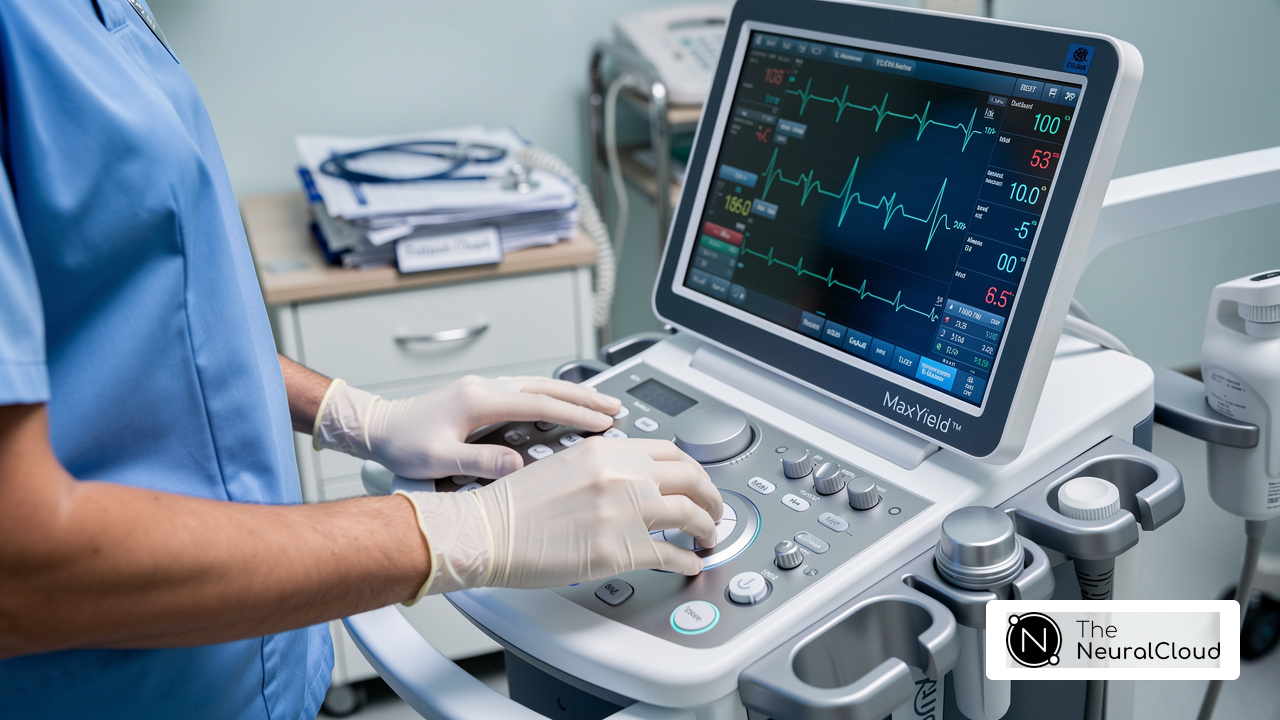
The MaxYield™ platform addresses these challenges by offering features that enhance ECG analysis. It simplifies the interpretation of various heart rhythms, making it easier for practitioners to identify abnormalities. By utilizing advanced algorithms and user-friendly interfaces, MaxYield™ improves the accuracy of ECG readings, ultimately benefiting patient outcomes.
Healthcare professionals can expect several advantages from using the MaxYield™ platform:
- It streamlines the analysis process.
- It reduces the likelihood of misinterpretation.
- It leads to more confident decision-making.
- It results in better patient care.
- Practitioners can enhance their skills and provide more effective treatment options.
Understand ECG Basics and Terminology
To effectively learn ECG, a solid understanding of the fundamental concepts and terminology associated with electrocardiography is essential. Here are the key components:
ECG Waves: Familiarize yourself with the primary waves in an ECG:
- P wave: Represents atrial depolarization, crucial for assessing atrial activity.
- QRS complex: Indicates ventricular depolarization, essential for evaluating ventricular function.
- T wave: Reflects ventricular repolarization, important for understanding the recovery phase of the ventricles.
Intervals and Segments: Understand the significance of intervals and segments:
- PR interval: The time from the onset of atrial depolarization to the onset of ventricular depolarization, providing insights into conduction delays.
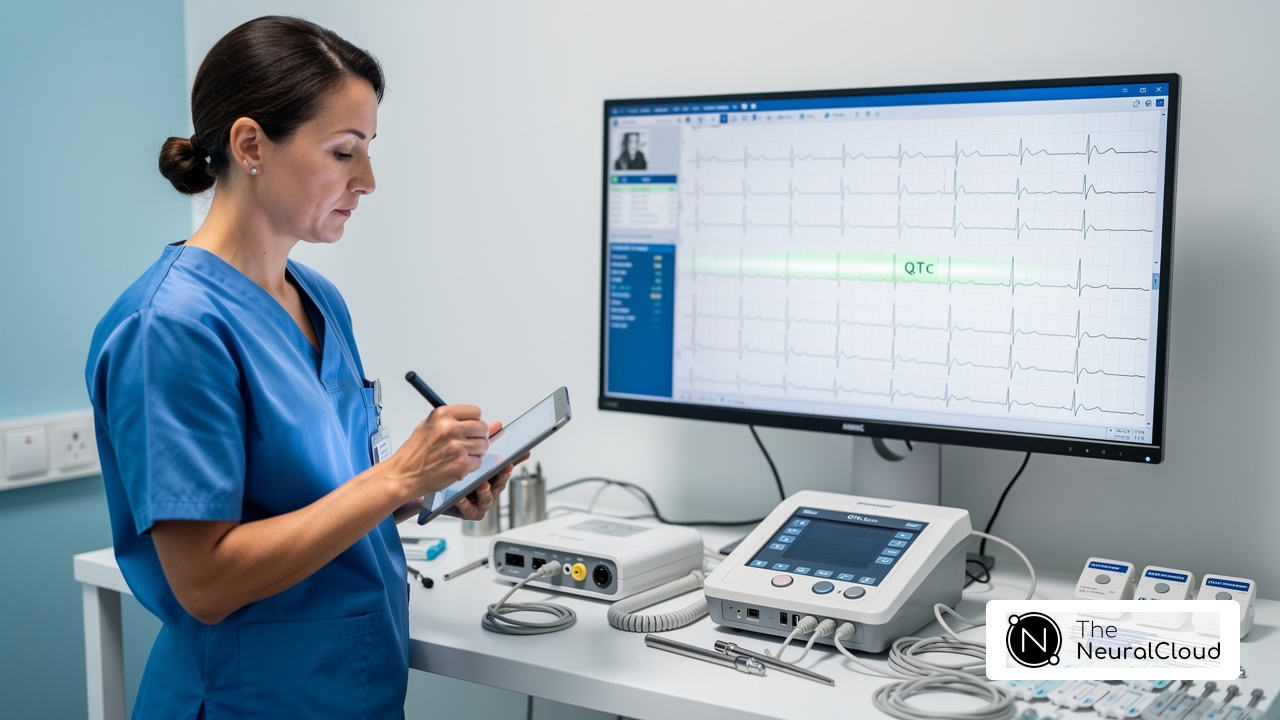
- QT interval: The duration of ventricular depolarization and repolarization, critical for assessing the risk of arrhythmias.
Heart rate: Learn how to calculate heart rate by counting the number of beats within a specific time frame. This is vital for diagnosing tachycardia or bradycardia.
Pulse Consistency: Determine if the pulse is regular or irregular by measuring the intervals between R waves. This aids in the identification of arrhythmias.
Common Terminology: Familiarize yourself with terms such as arrhythmia, bradycardia, and tachycardia. These are essential for understanding ECGs and enhancing communication among healthcare professionals.
By mastering these basics, you will be well-prepared to tackle more complex topics in subsequent sections, ultimately improving your proficiency in ECG interpretation.

Follow a Step-by-Step Process for Rhythm Identification
To accurately identify heart rhythms on an ECG, it's essential to follow a systematic approach, enhanced by the capabilities of MaxYield™ from Neural Cloud Solutions:
- Evaluate the Beat: First, ascertain if the beat is consistent or inconsistent. Look for consistent R-R intervals in each heartbeat, offering clarity in assessing the pattern.
- Calculate Heart Rate: Use the formula: Heart Rate = 300 / Number of large squares between R waves. For abnormal patterns, count the number of QRS complexes in a 6-second strip and multiply by 10. This system provides a reliable estimate.
- Check P Waves: Check for the presence of P waves before each QRS complex. This indicates whether the rhythm is sinus or not. The software assists in identifying these features with precision.
- Assess PR Interval: Assess the duration of the PR interval, which should range from 0.12 to 0.20 seconds. With MaxYield™, you can easily measure and analyze these intervals.
- Measure QRS Width: Measure the width of the QRS complex, where a normal width is less than 0.12 seconds. Wider complexes may indicate a bundle branch block or other conduction issues. The product offers detailed insights into QRS morphology.
- Analyze T Wave: Look for the morphology of the T wave. Inverted T waves may suggest ischemia. The system supports confident clinical decisions by displaying smooth waveforms.
- Classify Rhythm: Based on your findings, classify the rhythm (e.g., sinus rhythm, atrial fibrillation, ventricular tachycardia). MaxYield™ enhances your diagnostic skills by quickly emphasizing potentially significant ECG data.
By adhering to these steps and utilizing MaxYield™, you can systematically tackle the analysis of different heart rhythms on ECG and significantly improve your diagnostic abilities.

Troubleshoot Common ECG Identification Challenges
Even seasoned practitioners face challenges when interpreting different heart rhythms on an ECG. Here are some common issues and effective solutions:
- Poor clarity: Unclear ECG tracings often arise from improper electrode placement or inadequate skin contact. To enhance clarity for readings, ensure electrodes are correctly positioned and consider applying conductive gel, which significantly improves clarity in readings. Additionally, the platform's advanced noise filtering capability allows for rapid isolation of ECG waves from recordings affected by baseline wander, movement, and muscle artifact, ultimately salvaging previously obscured sections of lengthy Holter, 1-Lead, and patch monitor recordings. The platform's evolving algorithm continuously enhances its accuracy and efficiency, addressing the critical need for improved clarity in ECG interpretation of different heart rhythms.
- Artifact interference: Movement or electrical interference can introduce artifacts into the ECG. To mitigate this, ensure the patient remains still during the recording and minimize exposure to external electrical sources, which can distort readings. The platform's evolving algorithm enhances its accuracy and efficiency over time, making it a valuable tool in reducing misinterpretation due to artifacts. A study found that in various settings, highlighting the need for careful monitoring during ECG acquisition.
- Misunderstanding of timing: When unsure about timing, revisit the fundamentals. Carefully reassess the P waves, QRS complexes, and intervals to validate your initial findings. This methodical approach can help clarify and decrease the likelihood of misdiagnosis. As highlighted by cardiologist Anthony H. Kashou, "Our findings emphasize the significant role of modifiable factors, such as the amount of ECG analysis volume and training, in improving diagnostic accuracy."
- Inconsistent heart rate: If the heart rate appears irregular, verify your calculations. Utilizing a longer ECG strip can provide a more accurate assessment, leading to better interpretations. Data supports that thorough analysis using longer strips enhances accuracy in understanding heart rhythms.
- Patient factors: Consider patient-specific variables such as age, medications, and pre-existing conditions that may influence ECG readings. Always contextualize findings within the broader clinical picture to enhance diagnostic accuracy. Continuous education and training are crucial, as highlighted in recent studies, to ensure healthcare professionals remain adept at interpreting ECGs accurately.
By acknowledging these challenges and applying these troubleshooting methods, healthcare professionals can significantly enhance their diagnostic skills, resulting in more precise diagnoses and improved patient outcomes.
Leverage Advanced Tools for Enhanced ECG Analysis
To elevate your ECG analysis capabilities, consider utilizing the following advanced tools:
MaxYield™ ECG Analysis Software
- Feature: Advanced algorithms for rhythm detection.
- Advantage: This technology facilitates accurate diagnosis.
- Benefit: By identifying key features and significantly reducing manual workload, healthcare professionals can focus on patient care.
Mobile Applications
- Feature: A variety of mobile apps are available for ECG analysis practice.
- Advantage: These apps offer convenience and accessibility.
- Benefit: They are particularly beneficial for clinicians seeking to improve skills in real-time settings.
Online Resources and Tutorials
- Feature: Numerous websites and educational platforms.
- Advantage: Engaging with resources such as video tutorials and case studies deepens understanding of ECG interpretation.
- Benefit: This enhances proficiency in ECG analysis.
Simulation Tools
- Feature: Utilize interactive ECG simulation software.
- Advantage: This hands-on practice enhances diagnostic skills in a controlled environment.
- Benefit: It prepares users for actual clinical situations, boosting confidence and proficiency.
Peer Collaboration
- Feature: Participate in forums or study groups to discuss ECG cases with peers.
- Advantage: This fosters collaboration and reinforces knowledge.
- Benefit: This creates a supportive network for continuous improvement.
By leveraging these advanced tools, you can significantly enhance your ECG analysis skills and remain at the forefront of developments in cardiology technology.

Conclusion
Mastering the interpretation of different heart rhythms in ECG presents significant challenges for healthcare professionals. Understanding the fundamental concepts and terminology is essential for accurate analysis. Key elements such as ECG waves, intervals, and heart rates play a crucial role in identifying various cardiac patterns, ultimately enhancing diagnostic capabilities.
The MaxYield™ platform offers advanced features designed to streamline ECG analysis. Its systematic step-by-step approach aids in rhythm identification, while troubleshooting tools address common challenges like poor signal quality and artifact interference. These features empower practitioners to refine their ECG analysis skills, leading to more precise diagnoses and improved patient outcomes.
In the rapidly evolving field of cardiology technology, continuous education and the adoption of advanced tools are vital. By utilizing resources such as:
- Mobile applications
- Online tutorials
- Collaborative learning environments
healthcare professionals can stay informed and proficient. The pursuit of excellence in ECG interpretation not only enhances individual practice but also significantly elevates the quality of care provided to patients.
Frequently Asked Questions
What are the primary waves in an ECG and their significance?
The primary waves in an ECG are the P Wave, QRS Complex, and T Wave. The P Wave represents atrial depolarization, crucial for assessing atrial activity. The QRS Complex indicates ventricular depolarization, essential for evaluating ventricular function. The T Wave reflects ventricular repolarization, important for understanding the recovery phase of the ventricles.
What are the important intervals and segments in an ECG?
Important intervals and segments in an ECG include the PR Interval and QT Interval. The PR Interval is the time from the onset of atrial depolarization to the onset of ventricular depolarization, providing insights into conduction delays. The QT Interval is the duration of ventricular depolarization and repolarization, critical for assessing the risk of arrhythmias.
How do you calculate heart rate using an ECG?
Heart rate can be calculated by counting the number of QRS complexes within a specific time frame. This method is vital for diagnosing tachycardia (fast heart rate) or bradycardia (slow heart rate).
What does pulse consistency indicate in an ECG?
Pulse consistency can be determined by measuring the intervals between R waves. This helps in identifying whether the pulse is regular or irregular, which is important for detecting arrhythmias.
What common terminology should one be familiar with when interpreting ECGs?
Common terminology includes terms such as arrhythmia (irregular heartbeat), bradycardia (slow heart rate), and tachycardia (fast heart rate). Understanding these terms enhances communication among healthcare professionals when discussing ECG findings.
List of Sources
- Understand ECG Basics and Terminology
- goodreads.com (https://goodreads.com/quotes/6937495-interpretation-of-the-ecg-is-as-much-an-art-as)
- hcplive.com (https://hcplive.com/view/fda-clears-ai-program-powering-kardia-12l-electrogram-for-5-new-cardiac-determinations)
- AI-Powered ECG Analysis Offers Promising Path for Early Detection of Chronic Obstructive Pulmonary Disease, Say Mount Sinai Researchers (https://mountsinai.org/about/newsroom/2026/ai-powered-ecg-analysis-offers-promising-path-for-early-detection-of-chronic-obstructive-pulmonary-disease-say-mount-sinai-researchers)
- New AI approach set to revolutionize ECG data interpretation in heart disease diagnosis (https://news-medical.net/news/20250219/New-AI-approach-set-to-revolutionize-ECG-data-interpretation-in-heart-disease-diagnosis.aspx)
- HeartBeam Receives FDA Clearance for First-Ever, Cable-Free Synthesized 12-Lead ECG for At-Home Arrhythmia Assessment (https://ir.heartbeam.com/news-events/press-releases/detail/107/heartbeam-receives-fda-clearance-for-first-ever-cable-free)
- Follow a Step-by-Step Process for Rhythm Identification
- Mastering EKG interpretation: 10 steps for accurate rhythm identification (https://ems1.com/ems-products/medical-monitoring/articles/ecg-interpretation-10-steps-for-rhythm-identification-HlbOvohuSltPKAL2)
- AI-Powered ECG Analysis Offers Promising Path for Early Detection of Chronic Obstructive Pulmonary Disease, Say Mount Sinai Researchers (https://mountsinai.org/about/newsroom/2026/ai-powered-ecg-analysis-offers-promising-path-for-early-detection-of-chronic-obstructive-pulmonary-disease-say-mount-sinai-researchers)
- Epidemiology and Outcomes associated with PR Prolongation - PMC (https://pmc.ncbi.nlm.nih.gov/articles/PMC9918374)
- int.livhospital.com (https://int.livhospital.com/basic-cardiac-arrhythmia-crucial-12-key-ekg-rhythms)
- Troubleshoot Common ECG Identification Challenges
- mdpi.com (https://mdpi.com/2673-3846/2/4/505)
- Checking your browser - reCAPTCHA (https://pmc.ncbi.nlm.nih.gov/articles/PMC10838348)
- Checking your browser - reCAPTCHA (https://pmc.ncbi.nlm.nih.gov/articles/PMC7522782)
- Frontiers | The most common errors in automatic ECG interpretation (https://frontiersin.org/journals/physiology/articles/10.3389/fphys.2025.1590170/full)
- Leverage Advanced Tools for Enhanced ECG Analysis
- AI in Hospitals: 2025 Adoption Trends & Statistics | IntuitionLabs (https://intuitionlabs.ai/articles/ai-adoption-us-hospitals-2025)
- AccurKardia wins FDA clearance for next-generation ECG analysis system | Medical Economics (https://medicaleconomics.com/view/accurkardia-wins-fda-clearance-for-next-generation-ecg-analysis-system)
- verifiedmarketreports.com (https://verifiedmarketreports.com/product/electrocardiograph-ecg-analysis-software-market)
- Performance of an artificial intelligence-powered smartphone application in the UK clinical settings: ECG automation compared to healthcare professionals - PMC (https://pmc.ncbi.nlm.nih.gov/articles/PMC12532542)
- datainsightsmarket.com (https://datainsightsmarket.com/reports/electrocardiograph-ecg-analysis-software-1956396)