Introduction
Understanding the complexities of ECG lead systems is crucial in cardiac care, where accurate interpretation can significantly impact patient outcomes. This article explores the challenges healthcare professionals face in ECG analysis, particularly the need for precise electrode placement and the integration of advanced technologies. As the field evolves, the question arises: how can practitioners ensure diagnostic accuracy while adapting to rapid technological advancements?
The MaxYield™ platform addresses these challenges by offering innovative features that enhance ECG analysis. With its user-friendly interface and advanced algorithms, it simplifies the process of interpreting ECG leads. This not only improves accuracy but also saves valuable time for healthcare professionals, allowing them to focus on patient care.
By utilizing MaxYield™, practitioners can benefit from enhanced diagnostic capabilities, leading to better patient outcomes. The platform's ability to integrate seamlessly with existing systems ensures that healthcare providers can keep pace with the latest advancements in technology without compromising on quality.
In summary, the MaxYield™ platform stands out as a vital tool for healthcare professionals navigating the complexities of ECG analysis. Its features not only streamline the interpretation process but also provide significant advantages in ensuring accurate diagnoses.
Understand ECG Lead Systems: 3-Electrode, 5-Electrode, and 12-Lead Configurations
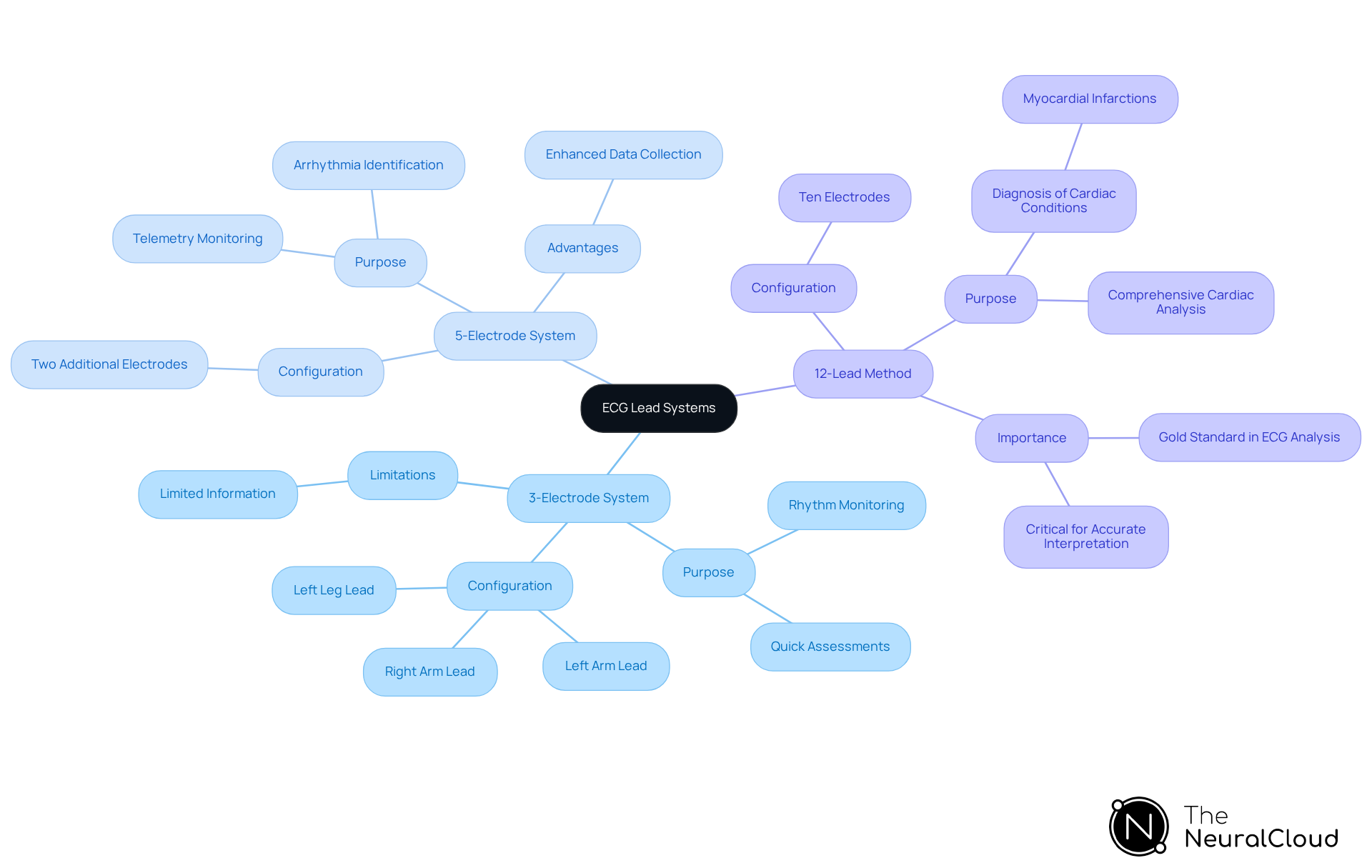
ECG electrode arrangements are categorized into three primary setups: 3-electrode, 5-electrode, and 12-lead configurations, each serving a unique purpose in cardiac monitoring.
- 3-Electrode System: This fundamental setup is commonly used for rhythm monitoring, making it ideal for quick assessments in emergency situations. It typically consists of one lead on the right arm, one on the left arm, and one on the left leg. While it offers limited information, it is crucial for scenarios where immediate insights are essential.
- 5-Electrode System: By incorporating two additional electrodes, this configuration enables more comprehensive monitoring. Often utilized in telemetry, it provides more data compared to the 3-electrode setup, making it a preferred choice in various clinical settings.
- 12-Lead System: Recognized as the gold standard in cardiac diagnostics, the 12-lead system employs ten electrodes to provide a detailed view of the heart's electrical activity from multiple perspectives. This configuration is vital for diagnosing various cardiac conditions, including myocardial infarctions, particularly with the use of advanced algorithms. Accurate interpretations are critical for effective interpretation and diagnosis.
Understanding these frameworks is essential for healthcare professionals to select the appropriate arrangement based on clinical needs, ultimately enhancing patient care. Notably, a significant percentage of healthcare facilities have adopted the 12-lead system, highlighting its importance in modern cardiac diagnostics. As emphasized by leading cardiologists, the accuracy of ECG readings directly impacts diagnostic precision, underscoring the necessity for ongoing education and adherence to best practices in ECG interpretation.
Implement Precise Lead Placement Techniques: 12-Lead and Specialized Configurations
Precise lead placement is crucial for dependable ECG readings. With Neural Cloud Solutions' technology, healthcare professionals can enhance the quality of their analyses. Below are best practices:
- Skin Preparation: Before applying electrodes, ensure the skin is clean and dry. Use an alcohol wipe to remove oils and dirt, which can interfere with readings. For patients with excessive hair, consider shaving the area to ensure good contact. Research shows that insufficient preparation can lead to errors, with a prevalence of incorrect placement observed at 1.5% in clinical settings.
- Identifying Landmarks: Familiarize yourself with key landmarks for electrode placement. For the 12-lead ECG, V1 and V2 should be placed at the fourth intercostal space, with V1 on the right and V2 on the left of the sternum. Proper identification of these landmarks is crucial for accuracy. As Dr. Srinivasan Ramadurai observes, 'Placement of chest electrodes outside of these positions can result in false patterns.'
- Electrode Attachment: When placing electrodes, ensure they are firmly attached to the skin. For the 12-channel system, position the limb electrodes on the distal extremities, avoiding bony prominences. This helps reduce motion artifacts and improve signal quality. The American Heart Association advises placing limb electrodes distal to the shoulders and hips to ensure uniformity across recordings. Additionally, the technology excels in isolating ECG waves from recordings with baseline wander and muscle artifact, enhancing the clarity of the signals obtained.
- Specialized Configurations: In certain clinical scenarios, such as in patients with obesity or specific cardiac conditions, consider using adjusted configurations. For instance, positioning limb electrodes on the torso can improve signal acquisition in difficult situations. This approach is supported by evidence indicating that tailored configurations can significantly improve diagnostic outcomes. The algorithm evolves with every application, consistently enhancing its precision and effectiveness, which is especially advantageous in these intricate scenarios.
By adhering to these techniques and utilizing the advanced features of the technology, healthcare professionals can significantly reduce the risk of misdiagnosis due to poor ECG leads MI placement, thereby enhancing the overall quality of patient care.

Leverage Advanced Technology: Integrate AI Solutions for Enhanced ECG Analysis
Integrating AI solutions into healthcare presents a significant opportunity to enhance accuracy and efficiency. However, challenges such as noise interference and the need for precise data can hinder effective analysis. This is where advanced technology, particularly Neural Cloud Solutions' offerings, comes into play.
- Automated Signal Processing: The MaxYield™ technology employs advanced noise filtering alongside P, QRS, and T Wave highlighting. This feature ensures that the analyzed data is of high quality, leading to more accurate interpretations by effectively filtering out noise and artifacts from ECG signals. By adhering to best practices, healthcare professionals can trust the integrity of the data they work with.
- Real-Time Analysis: Another key advantage of implementing AI technologies is the provision of real-time analysis of ECG data. This capability allows clinicians to receive immediate feedback on potential abnormalities, facilitating quicker decision-making in critical situations. The ability to act swiftly can be crucial in emergency care.
- Adaptive Learning Frameworks: The technology also incorporates adaptive learning frameworks. These frameworks evolve over time by learning from new data, which enhances their accuracy and reliability in ECG interpretation. This ongoing improvement is further supported by Neural Cloud Solutions' methodologies, ensuring that healthcare providers are equipped with the most advanced tools.
- Integration with Existing Systems: Finally, it is essential that AI solutions can integrate with existing systems and workflows. This minimizes disruption and allows healthcare professionals to adopt new technologies without extensive retraining, making the transition smoother and more efficient.
By leveraging these advanced technologies, including the features of Neural Cloud Solutions' offerings, healthcare providers can significantly enhance their ECG leads MI analysis capabilities. This not only leads to improved patient outcomes but also fosters more efficient clinical workflows.

Adopt Continuous Learning Practices: Stay Updated with Evolving ECG Methodologies
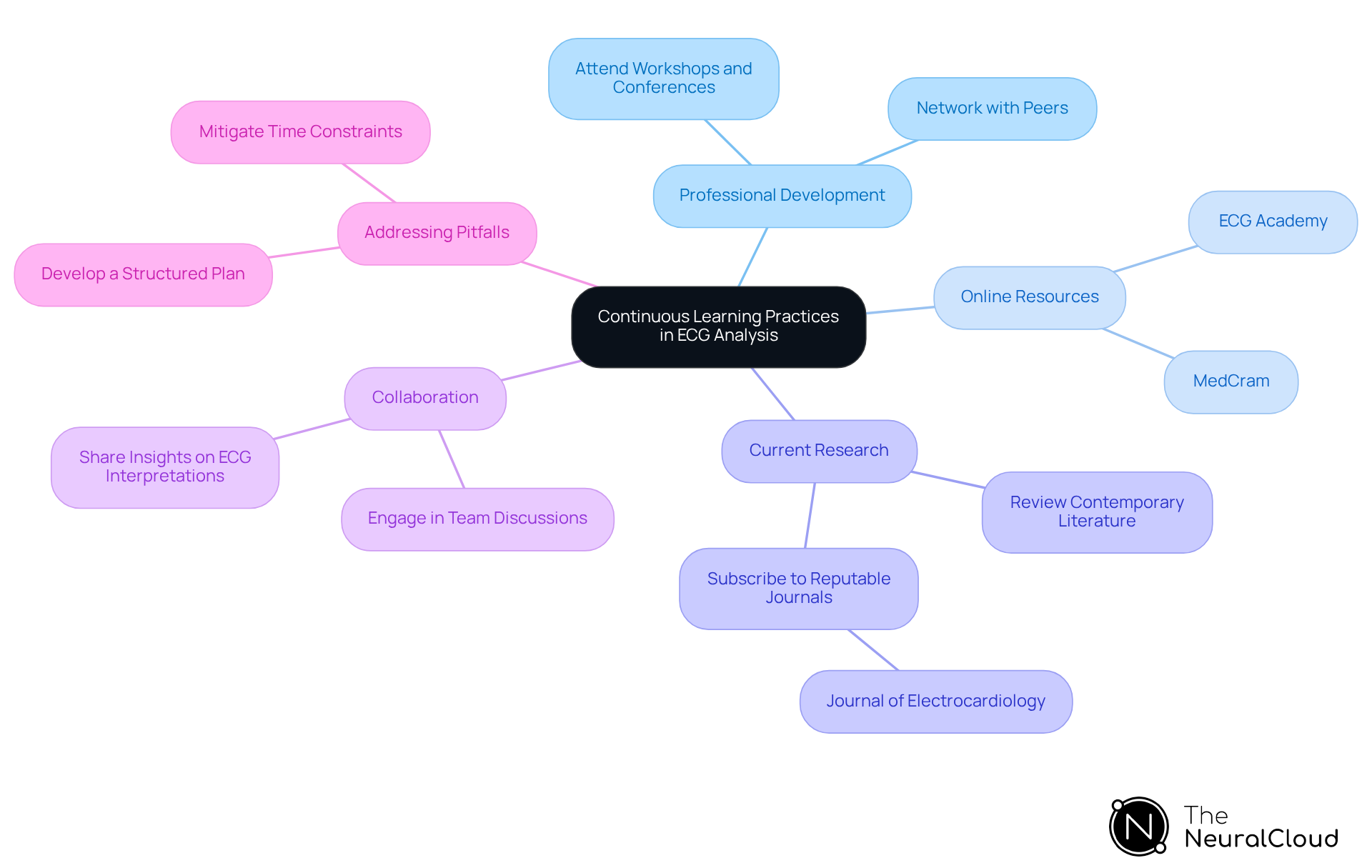
In the rapidly evolving field of cardiology, ongoing education is essential for maintaining proficiency in analyzing ECGs, especially with the integration of advanced technologies like AI. Here are effective practices for incorporating continuous education into your professional routine:
- Engage in Professional Development: Attend workshops, webinars, and conferences focused on ECG technology and interpretation. These events not only offer insights from leading experts but also provide opportunities to network with peers, fostering a collaborative environment.
- Leverage Online Resources: Take advantage of online platforms that deliver comprehensive training in the latest ECG methodologies. Resources such as ECG Academy and MedCram are invaluable for ongoing education, offering flexible learning options that fit into busy schedules.
- Stay Current with Research: Regularly review contemporary literature and research studies related to ECG analysis. Subscribing to reputable journals, such as the Journal of Electrocardiology, keeps you informed about the latest findings and best practices in the field. For example, studies indicate that the average score for knowledge improved from 11.89 before education to 15.56 after completing a full program, underscoring the effectiveness of continuous learning. Additionally, utilizing AI technology can enhance diagnostic accuracy by transforming lengthy and noisy ECG recordings into clean signals, while automating manual tasks and reducing workload.
- Collaborate with Colleagues: Foster a culture of learning within your clinical team. Engage in regular discussions about cases and share insights on interpretations, thereby enhancing collective knowledge and skills. As noted by researcher Sunhee Lee, "This study demonstrated that continuous and brief daily education combined with digital resources is effective in improving skills in a demanding medical environment." Incorporating tools like advanced software can streamline this collaborative process by automating manual tasks and reducing workload.
- Address Common Pitfalls: Be mindful of potential challenges in adopting new methodologies, such as time constraints or lack of resources. Developing a structured plan for ongoing education can help mitigate these issues and ensure consistent skill enhancement.
By adopting these practices and integrating advanced technologies like MaxYield™, healthcare professionals can remain at the forefront of ECG analysis, ultimately leading to improved patient care and outcomes.
Conclusion
Understanding and mastering ECG leads is crucial for accurate cardiac analysis and patient care. Selecting the right electrode configuration is essential - whether it's the basic 3-electrode system for quick assessments, the more detailed 5-electrode setup for telemetry, or the comprehensive 12-lead method, which serves as the gold standard for diagnosing various cardiac conditions. Each configuration plays a vital role in ensuring precise interpretations, underscoring the necessity for healthcare professionals to be well-versed in these systems.
Key insights highlight the importance of precise lead placement techniques, which can significantly impact the quality of ECG readings. Factors such as:
- Thorough skin preparation
- Proper identification of anatomical landmarks
- Adoption of advanced technologies like Neural Cloud Solutions' MaxYield™ platform
are essential for enhancing diagnostic accuracy. Continuous education in adapting to evolving methodologies is equally important, as staying updated with the latest trends and research ensures that healthcare providers maintain proficiency in ECG analysis.
The MaxYield™ platform offers several features that address common challenges in ECG analysis. It enhances lead placement accuracy through advanced algorithms, streamlining the process for healthcare professionals. This technology not only improves the quality of ECG readings but also reduces the time spent on assessments, allowing for quicker decision-making in patient care.
By integrating advanced technologies like MaxYield™ and committing to ongoing education in ECG methodologies, healthcare professionals can elevate the standard of care. This empowers them to make informed decisions swiftly, ultimately leading to better patient outcomes. Embracing these best practices and leveraging innovative solutions significantly enhances the accuracy and reliability of ECG interpretations. It is imperative for professionals in the field to commit to these practices, ensuring they remain at the forefront of cardiac diagnostics and contribute positively to patient health.
Frequently Asked Questions
What are the main types of ECG electrode arrangements?
The main types of ECG electrode arrangements are the 3-electrode system, the 5-electrode system, and the 12-lead method.
What is the purpose of the 3-electrode system?
The 3-electrode system is commonly used for rhythm monitoring and is ideal for quick assessments in emergency situations. It consists of one lead on the right arm, one on the left arm, and one on the left leg.
How does the 5-electrode system differ from the 3-electrode system?
The 5-electrode system includes two additional electrodes, allowing for more comprehensive monitoring and enhanced data collection for arrhythmia identification, making it a preferred choice in various clinical settings.
Why is the 12-lead method considered the gold standard in ECG analysis?
The 12-lead method is considered the gold standard because it uses ten electrodes to provide a detailed view of the heart's electrical activity from multiple perspectives, which is vital for diagnosing various cardiac conditions, including myocardial infarctions.
What is the significance of accurate electrode placement in ECG interpretation?
Accurate placement and comprehension of each lead's function are critical for effective interpretation and diagnosis, as the accuracy of electrode configurations directly impacts diagnostic precision.
Why is ongoing education important for healthcare professionals regarding ECG interpretation?
Ongoing education is necessary to ensure adherence to best practices in ECG interpretation, which ultimately enhances patient care and diagnostic accuracy.
List of Sources
- Understand ECG Lead Systems: 3-Electrode, 5-Electrode, and 12-Lead Configurations
- ECG Electrode Placement: Risks, Tech, and Growing Demand in 2025- (https://intcomedical.com/news/info/What-You-Need-to-Know-About-ECG-Electrode-Placement-in-2025.html)
- ECG Devices Market Size & Share, Growth Trends 2035 (https://researchnester.com/reports/ecg-devices-market/4241)
- mdpi.com (https://mdpi.com/2227-9059/11/6/1526)
- HeartBeam Receives FDA Clearance for First-Ever, Cable-Free Synthesized 12-Lead ECG for At-Home Arrhythmia Assessment (https://ir.heartbeam.com/news-events/press-releases/detail/107/heartbeam-receives-fda-clearance-for-first-ever-cable-free)
- Recommendations for the Standardization and Interpretation of the Electrocardiogram | Circulation (https://ahajournals.org/doi/10.1161/circulationaha.106.180200)
- Implement Precise Lead Placement Techniques: 12-Lead and Specialized Configurations
- pmc.ncbi.nlm.nih.gov (https://pmc.ncbi.nlm.nih.gov/articles/PMC12522010)
- theneuralcloud.com (https://theneuralcloud.com/post/10-essential-tips-for-accurate-ecg-lead-placement)
- 12-Lead ECG Electrode Placement: Best Practices- (https://intcomedical.com/news/info/12-lead-ecg-electrode-placement-best-practices-for-clinical-accuracy-in-healthcare.html)
- Leverage Advanced Technology: Integrate AI Solutions for Enhanced ECG Analysis
- theneuralcloud.com (https://theneuralcloud.com/post/10-innovations-in-ai-ecg-interpretation-for-enhanced-cardiac-care)
- pmc.ncbi.nlm.nih.gov (https://pmc.ncbi.nlm.nih.gov/articles/PMC12594034)
- Year in Review: Evidence Around AI in Cardiology Grows (https://tctmd.com/news/year-review-evidence-around-ai-cardiology-grows)
- Artificial Intelligence–Assisted ECG Interpretation versus Conventional Reporting in Predicting Arrhythmias in Acute Coronary Syndrome: A Diagnostic Accuracy Study (https://healthcare-bulletin.co.uk/article/artificial-intelligence-assisted-ecg-interpretation-versus-conventional-reporting-in-predicting-arrhythmias-in-acute-coronary-syndrome-a-diagnostic-accuracy-study-4252)
- Adopt Continuous Learning Practices: Stay Updated with Evolving ECG Methodologies
- 18 Powerful Quotes To Inspire You To Embrace Continuous Learning (https://linkedin.com/pulse/18-powerful-quotes-inspire-you-embrace-continuous-learning-jenkins)
- Effectiveness of electrocardiogram interpretation education program using mixed learning methods and webpage - BMC Medical Education (https://link.springer.com/article/10.1186/s12909-024-05960-8)
- bjcardio.co.uk (https://bjcardio.co.uk/2024/08/embedding-innovation-in-clinical-practice-to-improve-patient-care-across-cardiovascular-disease)
- vouchfor.com (https://vouchfor.com/blog/continuous-learning-quotes)