Introduction
Understanding EKG axis deviation is essential for healthcare professionals, as it serves as a crucial indicator of potential cardiac conditions. This article explores the clinical significance of EKG axis deviation, providing health tech developers with valuable insights for creating advanced diagnostic tools. However, accurately measuring and interpreting these deviations presents challenges. How can developers ensure their solutions effectively enhance diagnostic accuracy and improve patient outcomes?
In the realm of ECG analysis, the complexities of EKG axis deviation can lead to misinterpretations, impacting patient care. The MaxYield™ platform addresses these challenges by offering features that streamline the analysis process. By integrating advanced algorithms, it enhances the precision of EKG readings, allowing healthcare professionals to make informed decisions swiftly.
The advantages of utilizing the MaxYield™ platform are significant. It not only improves the accuracy of ECG analysis but also reduces the time required for interpretation. This efficiency translates into better patient outcomes, as timely and accurate diagnoses are critical in cardiac care.
In summary, understanding EKG axis deviation is vital for healthcare professionals. With tools like the MaxYield™ platform, the complexities of ECG analysis can be navigated more effectively, ultimately benefiting both practitioners and patients.
Define EKG Axis Deviation and Its Clinical Importance
EKG Directional Shift refers to the abnormal orientation of the heart's electrical activity as represented on an electrocardiogram (ECG). The normal QRS orientation typically ranges from -30° to +90°. Deviations from this range, including left axis deviation, can indicate underlying cardiac conditions, which pose significant challenges in ECG analysis for healthcare professionals.
Left axis deviation (LAD): This occurs when the QRS direction is less than -30°, often linked with conditions such as left ventricular hypertrophy, conduction blocks, or myocardial infarction.
Right axis deviation (RAD) occurs when the QRS direction exceeds +90°, which may suggest right ventricular hypertrophy or pulmonary issues.
Extreme Angular Displacement, often indicating serious cardiac problems, can be associated with an axis deviation when the orientation is between -90° and +180°. Understanding EKG axis deviation is crucial for health tech developers, as it informs the design of diagnostic tools that can accurately interpret these deviations.
With Neural Cloud Solutions' technology, developers can leverage advanced algorithms and wave recognition capabilities to enhance diagnostic accuracy. The platform automates the labeling of key features in every heartbeat, effectively addressing challenges such as physiological variability and signal artifacts.
Features of MaxYield™:
- Wave recognition capabilities
- Automated labeling of key features
Advantages for Healthcare Professionals:
- Improved diagnostic accuracy
- Enhanced patient care
- Better clinical decision-making
By utilizing MaxYield™, healthcare professionals can significantly improve their diagnostic accuracy and patient outcomes.
Measure and Interpret EKG Axis Deviation
To effectively measure and interpret EKG Axis Deviation, follow these steps:
- Obtain a baseline: Ensure the ECG is recorded accurately with the correct settings to minimize artifacts. This foundational step is crucial for obtaining reliable results.
- Identify Leads I and aVF: These leads are vital for determining the electrical orientation of the heart, providing key insights into its function.
- Analyze the results: Examine the findings in both leads:
- A positive Lead I and a positive Lead aVF indicate a normal axis, suggesting healthy cardiac function.
- A negative Lead I with a positive Lead aVF indicates Right Displacement, which may point to underlying conditions and may require further investigation.
- A positive Lead I with a negative Lead aVF indicates Left Displacement, potentially signaling underlying issues.
- Calculate the angle: Utilize either the tangent method or the quadrant method to determine the exact angle of the line, ensuring precision in your analysis.
- Interpret the results by comparing the calculated measurement against established normal ranges to identify any deviations, including Left Axis Deviation and Right Axis Deviation, and their implications for the patient's cardiac health.
By mastering these techniques, developers can enhance their tools, ensuring accurate assessments that align with current guidelines and best practices. This not only improves diagnostic accuracy but also supports better patient outcomes.

Integrate EKG Axis Deviation Insights into Health Tech Solutions
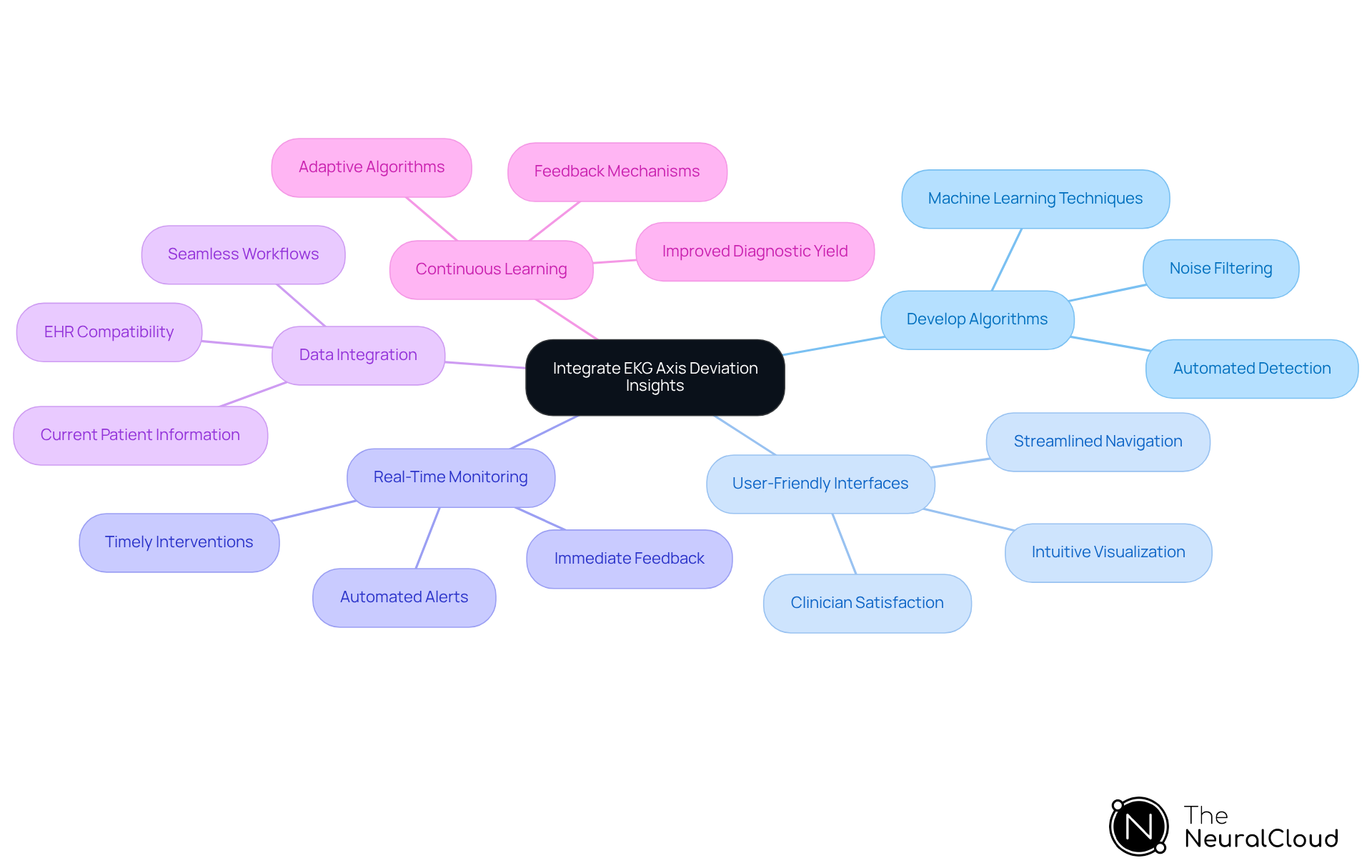
To effectively integrate insights on EKG axis deviation into health tech solutions, it’s essential to address the challenges faced in ECG analysis. These challenges include the need for accuracy, efficiency, and reliability. By leveraging advanced technologies, developers can create solutions that enhance and improve patient care.
- Develop Algorithms: One of the key features of the platform is its ability to create algorithms that analyze EKG data. By employing machine learning techniques, these algorithms enhance accuracy and adapt to new patterns over time. This capability is further supported by MaxYield™'s advanced noise filtering, ensuring clean signals for reliable analysis.
- User-Friendly Interfaces: Another significant advantage of the platform is its focus on designing intuitive interfaces for healthcare professionals. These interfaces allow clinicians to visualize deviations and understand their clinical implications easily. A well-structured interface not only improves clinician satisfaction but also boosts efficiency in clinical settings.
- Real-Time Monitoring: The platform also implements systems that provide real-time analysis of ECG data. This feature alerts clinicians to significant changes as they occur, offering immediate feedback crucial for timely interventions. Such responsiveness can lead to improved patient outcomes, supported by MaxYield™'s automated signal processing capabilities.
- Data Integration: Seamless integration with existing electronic health record (EHR) systems is vital for enhancing data accessibility and streamlining workflows. The platform ensures that current patient information is maintained, facilitating informed decision-making for healthcare providers.
- Continuous Learning: Finally, incorporating feedback mechanisms allows the algorithms to learn from new data continuously. This model enhances diagnostic yield and precision, effectively addressing challenges posed by physiological variability and signal artifacts.
By focusing on these areas, health tech developers can create solutions that not only enhance patient care but also lead to improved health outcomes.
Conclusion
Understanding EKG axis deviation is crucial for health tech developers who aim to create effective diagnostic tools. This article has explored the clinical significance of EKG axis deviation, detailing its implications for patient diagnosis and the importance of accurate interpretation in cardiology. By recognizing the normal QRS orientation and potential deviations, developers can better inform their design strategies, ultimately enhancing the quality of patient care.
Key insights discussed include the measurement and interpretation methods for EKG axis deviation, such as the use of 12-lead ECGs and the analysis of Leads I and aVF. The MaxYield™ platform offers several features that significantly improve ECG analysis efficiency. These include:
- Advanced noise filtering
- Automated labeling
- Real-time monitoring
By emphasizing user-friendly interfaces and continuous learning algorithms, health tech solutions are better positioned to meet the challenges of physiological variability and enhance clinical decision-making.
As the landscape of healthcare technology evolves, integrating insights on EKG axis deviation into health tech solutions becomes increasingly vital. Developers are encouraged to leverage these insights to create innovative tools that not only improve diagnostic capabilities but also lead to better patient outcomes. By prioritizing accuracy, usability, and real-time feedback, the health tech industry can make significant strides in addressing the complexities of cardiac health, ultimately transforming patient care for the better.
Frequently Asked Questions
What is EKG Axis Deviation?
EKG Axis Deviation refers to the abnormal orientation of the heart's electrical activity as represented on an electrocardiogram (ECG), with normal QRS orientation ranging from -30° to +90°.
What does a Left QRS Orientation (LAD) indicate?
Left QRS Orientation (LAD) occurs when the QRS direction is less than -30° and is often linked with conditions such as left ventricular hypertrophy, conduction blocks, or EKG axis deviation.
What does a Right QRS Orientation (RAD) suggest?
Right QRS Orientation (RAD) occurs when the EKG axis deviation exceeds +90° and may suggest right ventricular hypertrophy or pulmonary issues.
What is Extreme Angular Displacement in EKG readings?
Extreme Angular Displacement indicates serious cardiac problems and is associated with an EKG axis deviation when the orientation is between -90° and +180°.
Why is understanding EKG axis deviation important for health tech developers?
Understanding EKG axis deviation is crucial for health tech developers as it informs the design of diagnostic tools that can accurately interpret these deviations.
What is the MaxYield™ platform by Neural Cloud Solutions?
The MaxYield™ platform is a diagnostic tool that leverages advanced noise filtering and wave recognition capabilities to enhance ECG analysis efficiency.
What are the key features of the MaxYield™ platform?
Key features of MaxYield™ include advanced noise filtering, wave recognition capabilities, and automated labeling of key features in every heartbeat.
What advantages does MaxYield™ provide for healthcare professionals?
MaxYield™ improves ECG analysis efficiency, enhances patient care, and supports better clinical decision-making, leading to improved diagnostic accuracy and patient outcomes.
List of Sources
- Measure and Interpret EKG Axis Deviation
- ECG Case Studies | Interpretation & Answers | Geeky Medics (https://geekymedics.com/ecg-case-studies)
- Integrate EKG Axis Deviation Insights into Health Tech Solutions
- theneuralcloud.com (https://theneuralcloud.com/post/10-essential-features-of-ekg-apps-for-health-tech-developers)
- theneuralcloud.com (https://theneuralcloud.com/post/master-ecg-axis-deviation-key-insights-for-health-tech-developers)
- AccurKardia wins FDA clearance for next-generation ECG analysis system | Medical Economics (https://medicaleconomics.com/view/accurkardia-wins-fda-clearance-for-next-generation-ecg-analysis-system)