Introduction
Understanding the patterns of heart rhythms captured in an electrocardiogram (ECG) is crucial for healthcare professionals. However, many find the interpretation process challenging. This article provides a clear, step-by-step guide to mastering ECG rhythm analysis, equipping readers with the skills necessary to decode vital cardiac signals. As the demand for precise diagnostics increases, clinicians must ensure they accurately identify rhythms and abnormalities that could affect patient care.
The MaxYield™ platform addresses these challenges by offering advanced features that simplify ECG analysis. It enhances the accuracy of rhythm interpretation, allowing healthcare professionals to make informed decisions quickly. With its user-friendly interface, MaxYield™ streamlines the analysis process, making it accessible for both seasoned clinicians and those new to ECG interpretation.
By utilizing MaxYield™, healthcare professionals can improve patient outcomes through timely and accurate diagnostics. The platform not only saves time but also reduces the risk of misinterpretation, ultimately benefiting patient care. As we delve deeper into the features of MaxYield™, we will explore how it transforms ECG analysis and supports clinicians in their vital work.
Understand the Basics of ECG Rhythm Interpretation
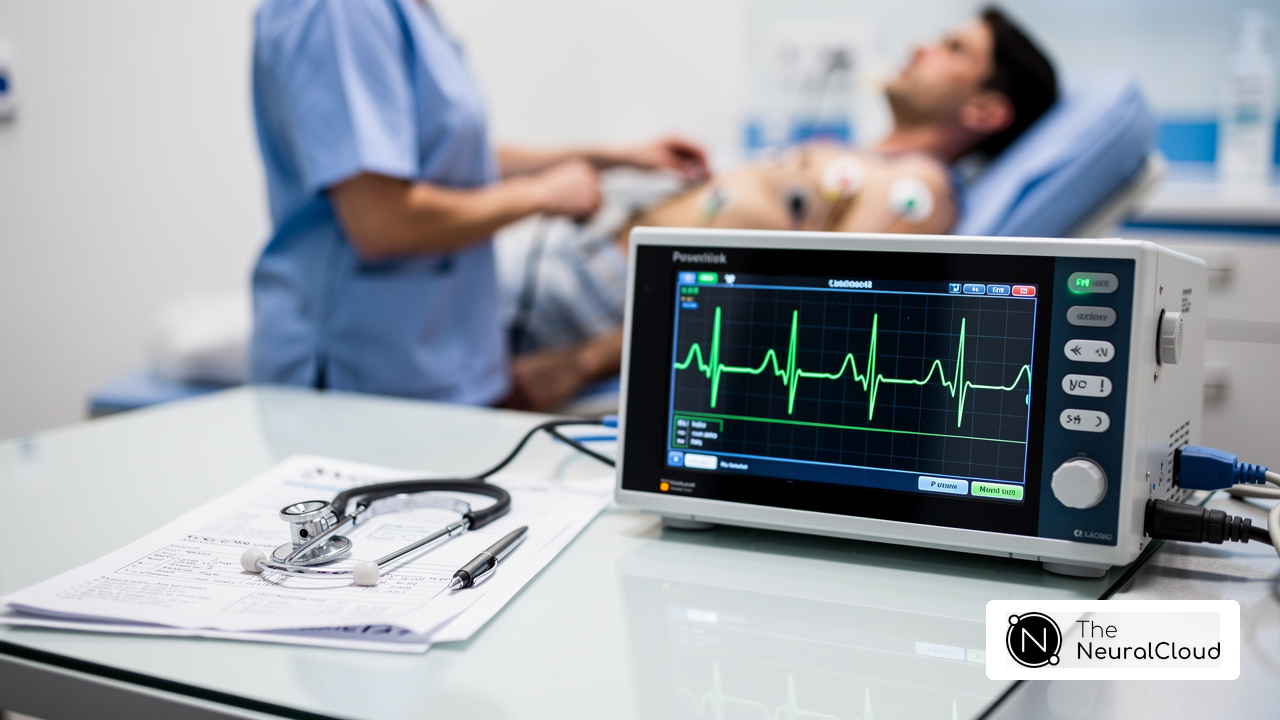
To effectively interpret ECG rhythms, it is crucial to have a solid understanding of the basic components of an ECG trace. An electrocardiogram (ECG) records the heart's electrical activity, displaying the heart's rhythms as separate patterns on a graph. The primary waves include:
- P Wave: This wave represents atrial depolarization, marking the electrical activation of the atria. Recognizing this wave is essential, as abnormalities in the P wave signal can indicate atrial enlargement or other conditions.
- QRS Complex: This complex signifies ventricular depolarization, reflecting the electrical impulse that triggers ventricular contraction. Understanding the morphology of the QRS complex is vital for diagnosing various arrhythmias and other cardiac issues.
- T Wave: The T component indicates ventricular repolarization, showcasing the heart's recovery phase after contraction. Understanding the significance of the T wave is important for identifying conditions such as ischemia or electrolyte imbalances.
Familiarity with these components is not just foundational; it is critical for healthcare professionals. Studies indicate that a significant percentage of healthcare providers lack confidence in interpreting these components, highlighting the need for training.
Current best practices emphasize the importance of continuous learning and the integration of technology, such as Neural Cloud Solutions' platform. This platform utilizes AI-driven algorithms to improve diagnostic accuracy and efficiency. It enhances interpretation by rapidly isolating and labeling key features in every heartbeat, salvaging previously obscured sections of recordings and transforming noisy data into detailed insights.
By mastering these basic elements and utilizing advanced technologies like MaxYield™, clinicians can better recognize various patterns and abnormalities. This ultimately leads to enhanced patient outcomes, as healthcare professionals are equipped with the tools necessary for accurate and timely intervention.

Determine Rhythm Regularity
To determine rhythm regularity, follow these steps:
- Identify the rhythm by measuring the distance between consecutive R peaks on the ECG. As Kevin Grange observes, using a six-second strip, assess the R to R intervals between beats to determine if the pattern is regular or irregular. With the integration of Neural Cloud Solutions' technology, this process is enhanced through automation, allowing for clearer identification of R waves even in recordings with significant artifacts.
- Assess Consistency: Evaluate the intervals for consistency. If the intervals are uniform, the pattern is classified as regular. Conversely, significant variations indicate an irregular pattern, which may suggest underlying conditions. The American College of Cardiology highlights that advancements in technology, such as those provided by a leading provider, have improved the precision of heartbeat evaluations, making it essential for clinicians to recognize these differences. The continuous learning model of this system further enhances accuracy by adapting to new data over time.
- Document Findings: Record whether the pattern is regular or irregular. This documentation is crucial for guiding further analysis and clinical decision-making. The automated labeling and data extraction capabilities of software streamline this process, allowing clinicians to focus on critical insights rather than labor-intensive tasks.
Consistent patterns are typically linked to stable cardiac function, while erratic patterns may indicate possible complications, requiring additional examination. Recent studies show that irregular rhythms are prevalent in various patient populations, underscoring the importance of accurate interpretation in clinical practice. For instance, the prevalence of atrial fibrillation, a common irregular rhythm, highlights the need for advanced tools, such as those offered by Neural Cloud Solutions, to improve diagnostic outcomes.

Calculate the Heart Rate
To accurately calculate the heart rate from an ECG, follow these steps:
- Identify the R waves: Count the number of R waves in a 6-second strip, which corresponds to 30 large squares on the ECG paper. This method works by transforming extensive and chaotic recordings into clear, distinct signals, allowing for accurate interpretation.
- Multiply the counted R waves by 10 to convert this into beats per minute (BPM). For instance, if you count 8 R waves in 6 seconds, the heart rate would be 8 x 10 = 80 BPM. The clarity provided by the system ensures that this calculation is both accurate and efficient.
- Alternative Method: For regular rhythms, you can also use the formula: Heart Rate = 300 divided by the number of large squares between two consecutive R waves.
This calculation is vital for assessing a patient's cardiac status and evaluating heart function to determine the need for intervention. Understanding heart rate variability is essential, as studies show that factors such as age, gender, and ethnicity can significantly impact heart rate measurements. Normal heart rates typically range from 60 to 100 BPM for adults, while children and infants have higher normal ranges. Recent studies indicate that the mean real-world heart rate is approximately 79.1 BPM ± 14.5. By leveraging advanced AI technology, healthcare professionals can stay updated on the latest guidelines for heart rate assessment, ensuring precise and timely interventions.
Identify P-Waves
Identifying P-waves, particularly P-waves, can be challenging in ECG analysis, but advanced technology like Neural Cloud Solutions significantly enhances this process.
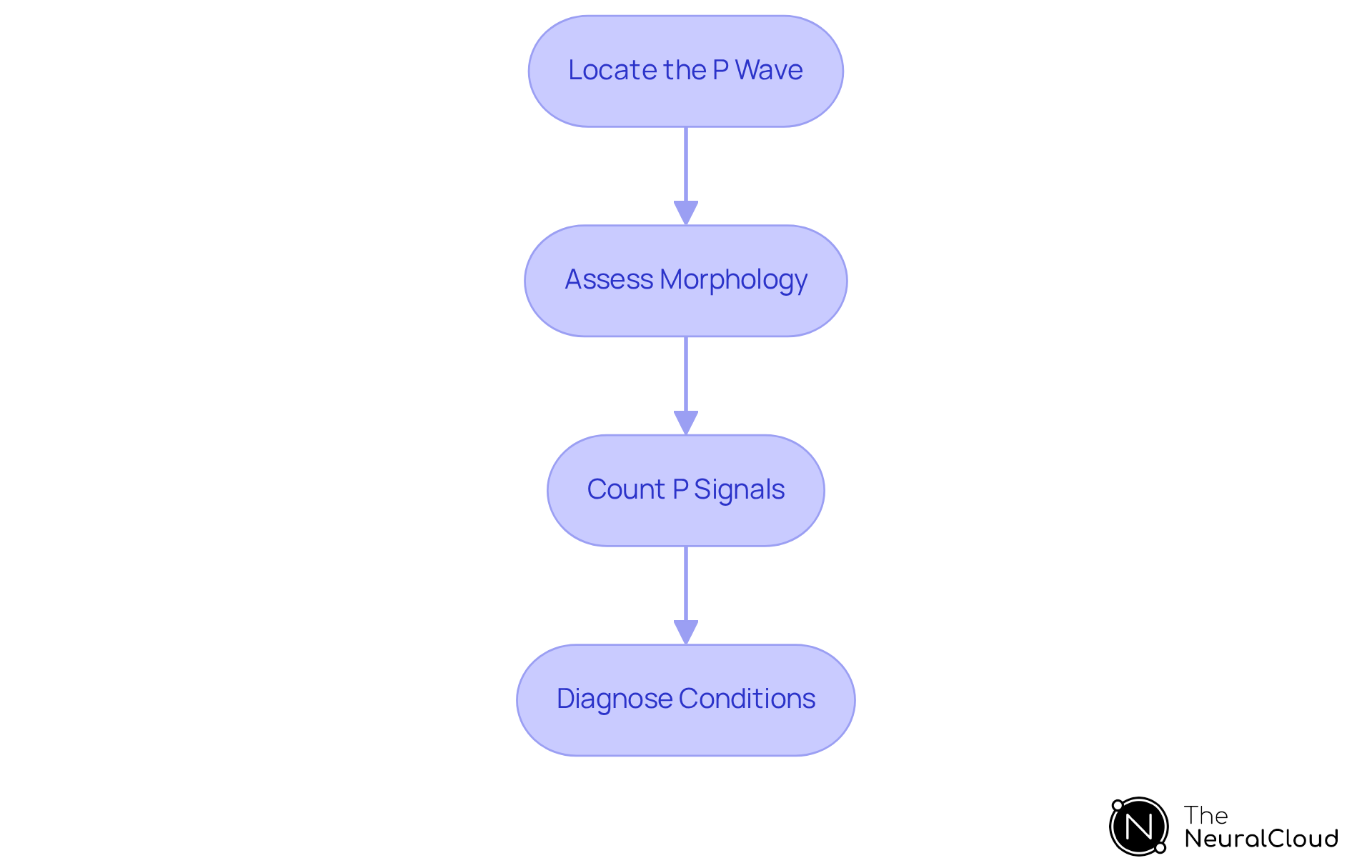
Locate the P Wave: The first step is to locate the P wave on the ECG strip. MaxYield™ excels in this area by effectively filtering out noise and artifacts, which allows for clearer identification of P-waves, even in difficult recordings. This platform can also recover previously obscured sections of lengthy recordings, ensuring that no critical data is overlooked.
Assess Morphology: Next, it's crucial to assess the morphology of the P-waves. They should be uniform in shape and size, typically appearing smooth and rounded, with a height of less than 2.5 mm. With MaxYield™, the technology continuously enhances its accuracy, providing confidence that healthcare professionals can trust.
Count P Waves: For each QRS complex, there should ideally be one P wave signal. If multiple P waves appear before a QRS complex, it may indicate an atrial arrhythmia. The functionality of MaxYield™ aids in accurately tallying P waves, reducing the risk of human error.
The precise recognition of P wave signals is essential for accurate diagnosis. By utilizing the advanced technology, healthcare professionals can greatly improve their diagnostic procedures, leading to better patient outcomes.
Measure the PR Interval
To accurately measure the PR interval on an ECG, follow these steps:
- Identify the Start of the P Signal: Begin by locating the onset of the P signal on the ECG strip, which represents atrial depolarization. This process is enhanced by the software, which eliminates interference and ensures a clear recognition of the P signal.
- Locate the Start of the QRS Complex: Next, find the beginning of the QRS complex, indicating the start of ventricular depolarization. The platform's unique signal recognition capabilities assist in precisely identifying this transition.
- Measure the Interval: Count the number of small squares between these two points. A normal PR interval ranges from 120 to 200 milliseconds, equivalent to 3 to 5 small squares. The system allows for precise measurement even in recordings with artifacts, enhancing diagnostic accuracy.
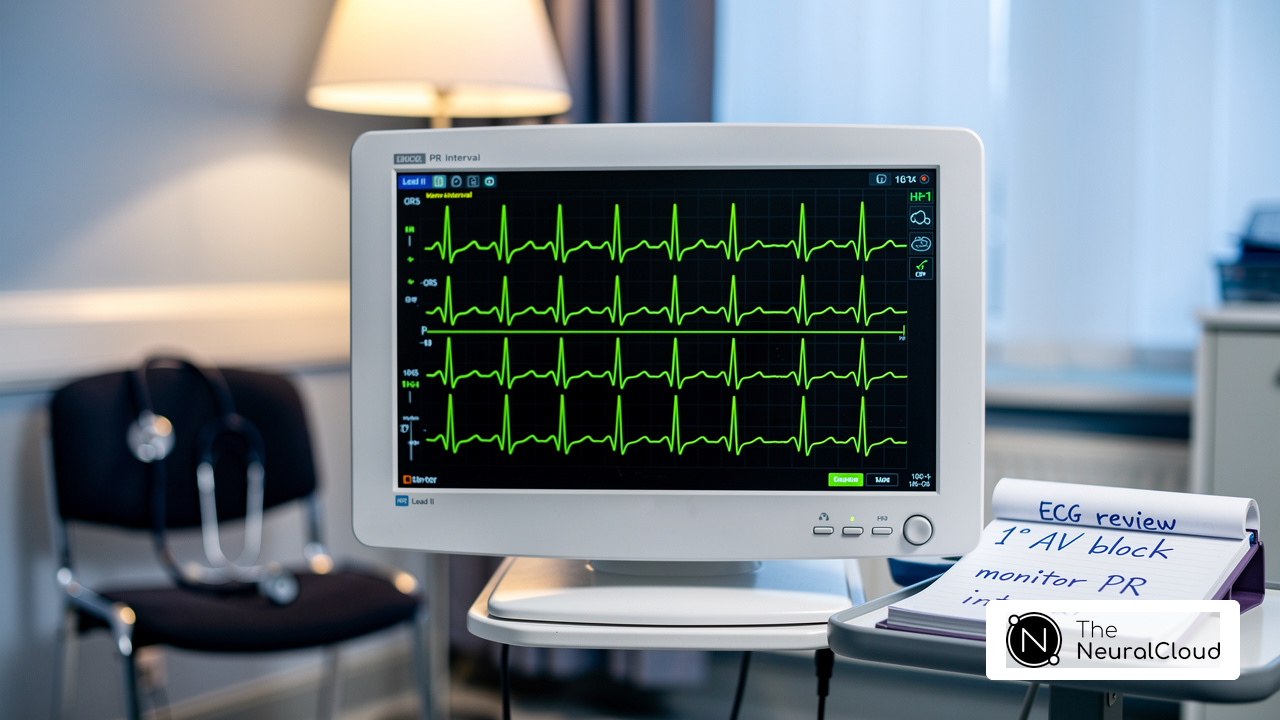
A prolonged PR interval, exceeding 200 milliseconds, may indicate first-degree AV block. Traditionally viewed as benign, this condition is now recognized for its potential association with atrial fibrillation (AF) and pacemaker implantation. Specifically, individuals with first-degree AV block have a two-fold increased risk of AF and a three-fold increased risk of pacemaker implantation. Conversely, a shortened PR interval may suggest pre-excitation syndromes, highlighting the importance of accurate assessment in clinical practice. Recent studies emphasize the need for ongoing monitoring of PR interval variations, as they can significantly impact patient management and outcomes. As noted by Thomas J. Wang, "Prolongation of the PR interval is associated with increased risks of AF, pacemaker implantation, and all-cause mortality."
The technology enhances this process by employing sophisticated noise filtering and unique signal recognition, particularly for Holter monitoring. This technology enables healthcare professionals to recover previously hidden sections of extensive Holter, 1-Lead, and patch monitor recordings. Such adaptability ensures that the accuracy and efficiency of analysis improve over time, addressing challenges like physiological variability and signal artifacts. The prevalence of atrial fibrillation in the population underscores the necessity of precise measurement in clinical settings.

Measure the QRS Segment
Accurate measurement of the QRS segment is crucial for effective analysis, especially in diagnosing conditions such as myocardial infarction or bundle branch block. However, traditional methods can be challenging and time-consuming. This is where the QRS measurement tool comes into play, offering advanced features that streamline the process.
- Identify the QRS Complex: The first step is to locate the QRS complex on the ECG strip, which is typically the tallest and most prominent deflection. With MaxYield™, this identification is enhanced through digital visualization, improving clarity and precision in recognizing these critical waveforms.
- Measure the Duration: Next, count the number of small squares from the beginning of the Q wave to the end of the S wave. A normal duration is less than 120 milliseconds (or 3 small squares). The software automates this measurement, ensuring both accuracy and efficiency-key factors in diagnosing conditions such as myocardial infarction or bundle branch block.
- Evaluate the Shape: Finally, evaluate the shape of the QRS complex. A wide QRS may suggest a ventricular origin or conduction delay. Thanks to MaxYield™'s advanced noise reduction and artifact handling capabilities, specialists can interpret results with greater confidence, even in challenging recordings.
In summary, accurate measurement of the QRS segment, particularly the QRS complex, is essential for diagnosing critical cardiac conditions, and the QRS measurement tool significantly enhances this process, making it easier for healthcare professionals to deliver precise diagnoses.

Observe the T Wave
Observe the T Wave
Observing the T Wave with
Overview of T Wave Analysis
Analyzing the T wave in ECG readings can be challenging due to noise and artifacts that obscure critical information. Accurate identification of the T wave is essential, as it represents ventricular repolarization and plays a crucial role in diagnosing cardiac conditions. This guide addresses these challenges by employing advanced noise filtering techniques, ensuring that healthcare professionals can confidently identify the T signal even in less-than-ideal recordings.
Features of T Wave Analysis
- Locate the T Signal: The T wave and its morphology are vital for understanding ventricular repolarization. The system enhances this process through sophisticated noise filtering, which improves the accuracy of heart rhythms ECG T wave identification.
- Assess Morphology: Typically, the T wave is upright. Inverted T patterns, found in about 1.3% of the general population, may signal ischemia or other cardiac issues. With advanced algorithms, the system provides clearer diagnostic insights.
- Measure Duration: The T wave duration generally ranges from 0.10 to 0.25 seconds. Accurate measurement can yield critical diagnostic information. The system continuously evolves its algorithms, enhancing ECG analysis efficiency and ensuring that even subtle changes are effectively captured.
Advantages for Healthcare Professionals
Monitoring with advanced tools is crucial for identifying potential cardiac issues. This platform transforms how healthcare professionals interpret heart rhythms ECG, resulting in timely interventions. Specific applications include telemetry and patch monitoring, where precise T wave analysis can significantly impact patient outcomes. By leveraging advanced technology, healthcare providers can enhance their diagnostic capabilities and improve patient care.
Identify Ectopic Beats
Identifying ectopic beats is crucial in ECG analysis, as they can indicate underlying cardiac issues. Ectopic beats often manifest as early or extra beats that disrupt the regular rhythm. This irregularity can signal potential problems. With the technology of Neural Cloud Solutions, even recordings with high noise levels can be transformed into clean signals, making it easier to detect these irregularities.
Next, identifying the origin of ectopic beats is essential. By determining whether they originate from the atria (PACs) or ventricles (PVCs), healthcare professionals can make more informed decisions. Typically, PVCs present with distinct characteristics. The capabilities of this technology enhance the clarity of these waveforms, allowing for more accurate morphological assessments.
Monitoring ectopic beats is another critical step in the process. Noting the frequency and pattern of ectopic beats can reveal underlying arrhythmias or other cardiac conditions. Frequent ventricular ectopic beats (VEBs) occur in 1-4% of the general population and are associated with an increased risk of mortality. This highlights the importance of thorough assessment. The features of this technology significantly enhance the efficiency of documenting these findings, reducing the time and cost associated with ECG analysis.
Understanding ectopic beats is essential for diagnosing arrhythmias and determining appropriate management strategies. As Dr. Syed Ahsan emphasizes, understanding the implications of these beats is crucial for effective patient management. Leveraging MaxYield™ can revolutionize this process, providing healthcare professionals with the tools they need to improve patient outcomes.

Determine Rhythm Origin
To determine the origin of the rhythm, follow these steps:
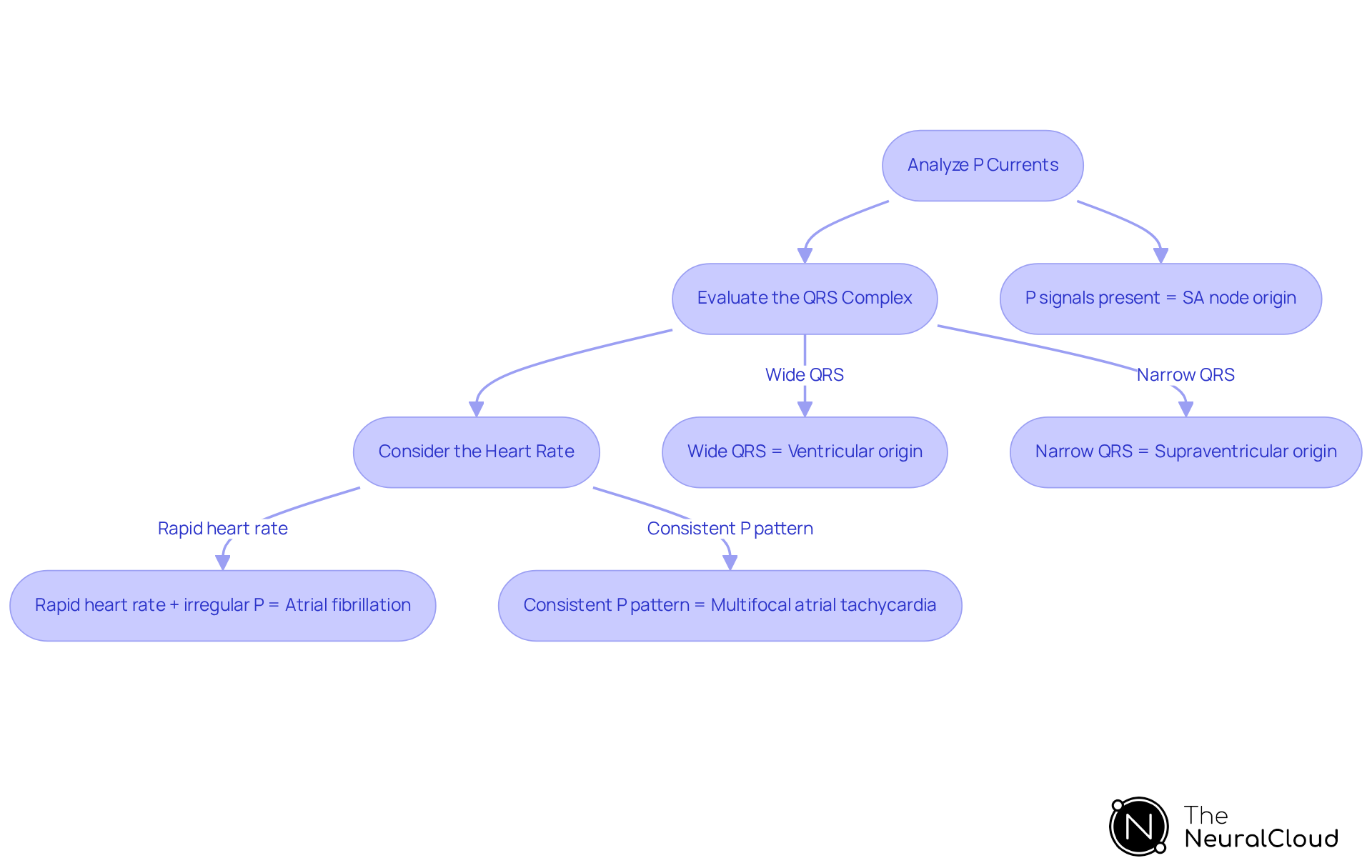
- Analyze P Currents: Assess the presence of P currents and their relationship to the QRS complex. If each is preceded by a P signal, the rhythm likely originates from the sinoatrial (SA) node, indicating a normal sinus rhythm. Conversely, if P signals are absent or show no consistent association with QRS complexes, this may suggest conditions such as atrial fibrillation or atrial flutter.
- Evaluate the QRS Duration: A wide QRS complex often indicates a ventricular origin, which may be linked to conditions like ventricular tachycardia or bundle branch blocks. In contrast, narrow QRS complexes typically suggest a supraventricular origin.
- Consider the Heart Rate: A rapid heart rate accompanied by irregular P patterns is indicative of atrial fibrillation or atrial flutter. On the other hand, a consistent pattern with varying P wave morphology may suggest multifocal atrial tachycardia.
Understanding the origin of the rhythm is crucial for accurate diagnosis and treatment. This knowledge enables healthcare professionals to tailor interventions based on the underlying cardiac condition, ultimately improving patient outcomes.
Correctly Identify the ECG Rhythm
To accurately identify the ECG rhythm, follow these essential steps:
- Start by reviewing all relevant observations, such as pattern regularity, the presence of P waves, PR interval duration, QRS duration, and T wave characteristics. This comprehensive analysis of the rhythm is crucial for understanding the overall cardiac activity.
- Use the synthesized information to categorize the beat. Common classifications include normal sinus pattern, atrial fibrillation, and ventricular tachycardia, among others. Each classification carries distinct implications for diagnosis and treatment strategies.
- Clearly document the identified pattern and share your findings with the healthcare team. Effective communication ensures that all team members are informed and can collaborate on further management decisions.
Accurate identification is vital for delivering effective patient care and optimizing outcomes.

Conclusion
Mastering ECG rhythm interpretation is crucial for healthcare professionals, as it significantly impacts patient care and outcomes. Understanding the basic components of an ECG - P waves, QRS complexes, and T waves - enables clinicians to accurately assess heart rhythms and identify potential abnormalities. Advanced technologies, like Neural Cloud Solutions' MaxYield™ platform, enhance this process by improving diagnostic accuracy and efficiency, allowing healthcare providers to make informed decisions.
The MaxYield™ platform offers several key features that address common challenges in ECG analysis:
- Real-time data processing: This feature allows for immediate analysis of ECG readings, reducing the time to diagnosis.
- AI-driven insights: The platform utilizes artificial intelligence to highlight critical waveform characteristics, aiding in the identification of abnormalities.
- User-friendly interface: Designed for ease of use, it enables healthcare professionals to navigate complex data effortlessly.
These features translate into significant advantages for healthcare providers. By streamlining the ECG analysis process, the MaxYield™ platform not only enhances diagnostic capabilities but also supports timely interventions. This ultimately leads to improved patient outcomes, as clinicians can act swiftly based on accurate data.
In conclusion, the importance of mastering ECG interpretation cannot be overstated. As the healthcare landscape evolves, embracing advanced technologies like the MaxYield™ platform empowers professionals to enhance their diagnostic skills. By prioritizing education and leveraging innovative solutions, clinicians can significantly improve their ability to interpret heart rhythms, ensuring optimal patient care.
Frequently Asked Questions
What is an electrocardiogram (ECG) and what does it record?
An electrocardiogram (ECG) records the heart's electrical activity, displaying heart rhythms as separate patterns on a graph.
What are the primary components of an ECG trace?
The primary components of an ECG trace include the P wave (atrial depolarization), QRS complex (ventricular depolarization), and T wave (ventricular repolarization).
Why is recognizing the P wave important?
Recognizing the P wave is essential as abnormalities in this signal can indicate conditions such as atrial enlargement.
What does the QRS complex signify?
The QRS complex signifies ventricular depolarization and reflects the electrical impulse that triggers ventricular contraction, which is vital for diagnosing various arrhythmias and cardiac issues.
What does the T wave indicate?
The T wave indicates ventricular repolarization, showcasing the heart's recovery phase after contraction, and is important for identifying conditions like ischemia or electrolyte imbalances.
What is the significance of continuous learning in ECG interpretation?
Continuous learning is emphasized to enhance the confidence and skills of healthcare professionals in interpreting ECG components, as many lack confidence in this area.
How does Neural Cloud Solutions' MaxYield™ platform assist in ECG interpretation?
MaxYield™ utilizes AI-driven algorithms to improve diagnostic accuracy and efficiency by isolating and labeling key features in ECG recordings, enhancing analysis and transforming noisy data into detailed insights.
How can clinicians determine rhythm regularity in ECG readings?
Clinicians can determine rhythm regularity by identifying R-R intervals between consecutive R peaks and assessing their consistency; uniform intervals indicate a regular pattern, while significant variations suggest an irregular pattern.
What is the process for documenting rhythm regularity findings?
Clinicians should document whether the pattern is regular or irregular, which is crucial for guiding further analysis and clinical decision-making.
What steps are involved in calculating the heart rate from an ECG?
To calculate heart rate, count the number of R peaks in a 6-second strip, multiply by 10 to convert to beats per minute (BPM), or use the formula: Heart Rate = 300 divided by the number of large squares between two consecutive R waves.
What is the normal resting heart rate range for adults?
The normal resting heart rate for adults typically ranges from 60 to 100 BPM, while children and infants have higher normal ranges.
Why is understanding heart rate variability important?
Understanding heart rate variability is important as factors like age, gender, and ethnicity can significantly impact heart rate measurements and affect patient assessment.
List of Sources
- Understand the Basics of ECG Rhythm Interpretation
- Accuracy of Physicians’ Electrocardiogram Interpretation (https://jamanetwork.com/journals/jamainternalmedicine/fullarticle/2771093)
- Queen of Hearts AI Hits 92% STEMI Accuracy (https://powerfulmedical.com/blog/pmcardio-reports-positive-rct-results-and-late-breaking-clinical-science-for-stemi-detection)
- AI-Based ECG Analysis Significantly Improves STEMI Detection, Reduces False Activations - American College of Cardiology (https://acc.org/latest-in-cardiology/articles/2025/10/24/16/56/tues-554pm-ai-tct-2025)
- Checking your browser - reCAPTCHA (https://pmc.ncbi.nlm.nih.gov/articles/PMC7522782)
- The Use of Artificial Intelligence in ECG Interpretation in the Outpatient Setting: A Scoping Review (https://cureus.com/articles/405923-the-use-of-artificial-intelligence-in-ecg-interpretation-in-the-outpatient-setting-a-scoping-review)
- Determine Rhythm Regularity
- Electrocardiogram - StatPearls - NCBI Bookshelf (https://ncbi.nlm.nih.gov/books/NBK549803)
- Mastering EKG interpretation: 10 steps for accurate rhythm identification (https://ems1.com/ems-products/medical-monitoring/articles/ecg-interpretation-10-steps-for-rhythm-identification-HlbOvohuSltPKAL2)
- ECG Case Studies | Interpretation & Answers | Geeky Medics (https://geekymedics.com/ecg-case-studies)
- Electrocardiogram Interpretation in 10 Simple Steps (https://aclscertification.org/electrocardiogram-interpretation-in-10-simple-steps)
- Calculate the Heart Rate
- New high blood pressure guideline emphasizes prevention, early treatment to reduce CVD risk (https://newsroom.heart.org/news/new-high-blood-pressure-guideline-emphasizes-prevention-early-treatment-to-reduce-cvd-risk)
- Cardiovascular Diseases and Cardiac Surgery News - Medical Professionals - Mayo Clinic (https://mayoclinic.org/medical-professionals/cardiovascular-diseases/news)
- nature.com (https://nature.com/articles/s41746-019-0134-9)
- ECG Rate Interpretation (https://litfl.com/ecg-rate-interpretation)
- heart.org (https://heart.org/en/healthy-living/fitness/fitness-basics/target-heart-rates)
- Identify P-Waves
- pmc.ncbi.nlm.nih.gov (https://pmc.ncbi.nlm.nih.gov/articles/PMC11983972)
- litfl.com (https://litfl.com/p-wave-ecg-library)
- frontiersin.org (https://frontiersin.org/journals/cardiovascular-medicine/articles/10.3389/fcvm.2023.1303200/full)
- justanswer.com (https://justanswer.com/cardiology/iho5d-trying-understand-ecg-readings-understanding.html)
- revespcardiol.org (https://revespcardiol.org/en-analysis-association-between-electrocardiographic-p-wave-articulo-S1885585717300841)
- Measure the PR Interval
- jamanetwork.com (https://jamanetwork.com/journals/jama/fullarticle/184145)
- pilot-protection-services.aopa.org (https://pilot-protection-services.aopa.org/news/2023/april/01/those-pesky-pr-intervals)
- ECG Case Studies | Interpretation & Answers | Geeky Medics (https://geekymedics.com/ecg-case-studies)
- PR Interval (https://litfl.com/pr-interval-ecg-library)
- academic.oup.com (https://academic.oup.com/eurheartj/article/35/2/123/570546)
- Observe the T Wave
- Association of T-wave abnormalities with major cardiovascular events in diabetes: the ACCORD trial - Diabetologia (https://link.springer.com/article/10.1007/s00125-020-05337-8)
- ECG T Wave Inversion Features Predict Cardiomyopathy | www.PhysiciansWeekly.com (https://physiciansweekly.com/post/ecg-t-wave-inversion-features-predict-cardiomyopathy)
- Hyperacute T-Waves: ECG Signs of Early MI (https://powerfulmedical.com/blog/hyperacute-t-waves)
- ahajournals.org (https://ahajournals.org/doi/10.1161/circulationaha.112.098681)
- Home - Rheumatology Advisor (https://rheumatologyadvisor.com/news/st-t-t-wave-changes-most-common-ecg-abnormalities-sle-lupus)
- Identify Ectopic Beats
- theheartclinic.london (https://theheartclinic.london/conditions/ventricular-ectopics)
- ECG Case Studies | Interpretation & Answers | Geeky Medics (https://geekymedics.com/ecg-case-studies)
- litfl.com (https://litfl.com/premature-ventricular-complex-pvc-ecg-library)
- Checking your browser - reCAPTCHA (https://pmc.ncbi.nlm.nih.gov/articles/PMC1861260)
- Determine Rhythm Origin
- ECG Rhythm Evaluation (https://litfl.com/ecg-rhythm-evaluation)
- ECG Case Studies | Interpretation & Answers | Geeky Medics (https://geekymedics.com/ecg-case-studies)
- quizlet.com (https://quizlet.com/gb/201904575/ecg-case-studies-flash-cards)
- uscjournal.com (https://uscjournal.com/articles/rate-control-versus-rhythm-control-atrial-fibrillation-implications-recent-clinical-trials?language_content_entity=en)
- Correctly Identify the ECG Rhythm
- sciencedirect.com (https://sciencedirect.com/science/article/abs/pii/S0146280623003419)
- Checking your browser - reCAPTCHA (https://pmc.ncbi.nlm.nih.gov/articles/PMC7522782)
- mdpi.com (https://mdpi.com/2227-9032/13/23/3040)
- AI-driven ECG improves detection of severe heart attacks (https://news-medical.net/news/20251029/AI-driven-ECG-improves-detection-of-severe-heart-attacks.aspx)
- link.springer.com (https://link.springer.com/article/10.1186/s12909-023-04670-x)