Introduction
Hyperacute T wave ECG patterns are critical indicators for the early detection of acute myocardial infarction. However, they often go unrecognized in clinical settings, posing a significant challenge for healthcare professionals. This article explores the essential characteristics and clinical significance of hyperacute T waves, providing valuable insights for developers aiming to enhance ECG analysis through advanced technology. As the difficulty in accurately identifying these patterns continues, integrating AI-driven solutions becomes a pivotal strategy.
Developers can leverage cutting-edge algorithms to improve diagnostic precision, ultimately saving lives. By focusing on the features of hyperacute T waves, we can better understand their role in ECG analysis. These patterns can indicate myocardial ischemia, allowing for timely intervention. The advantages of recognizing these patterns include improved patient outcomes and more efficient use of healthcare resources.
Incorporating advanced technology into ECG analysis not only enhances the accuracy of diagnoses but also empowers healthcare professionals with the tools they need to act swiftly. As we delve deeper into the integration of AI in this field, the benefits become increasingly clear: faster diagnosis, reduced errors, and ultimately, lives saved.
Define Hyperacute T Waves: Clinical Significance and Characteristics
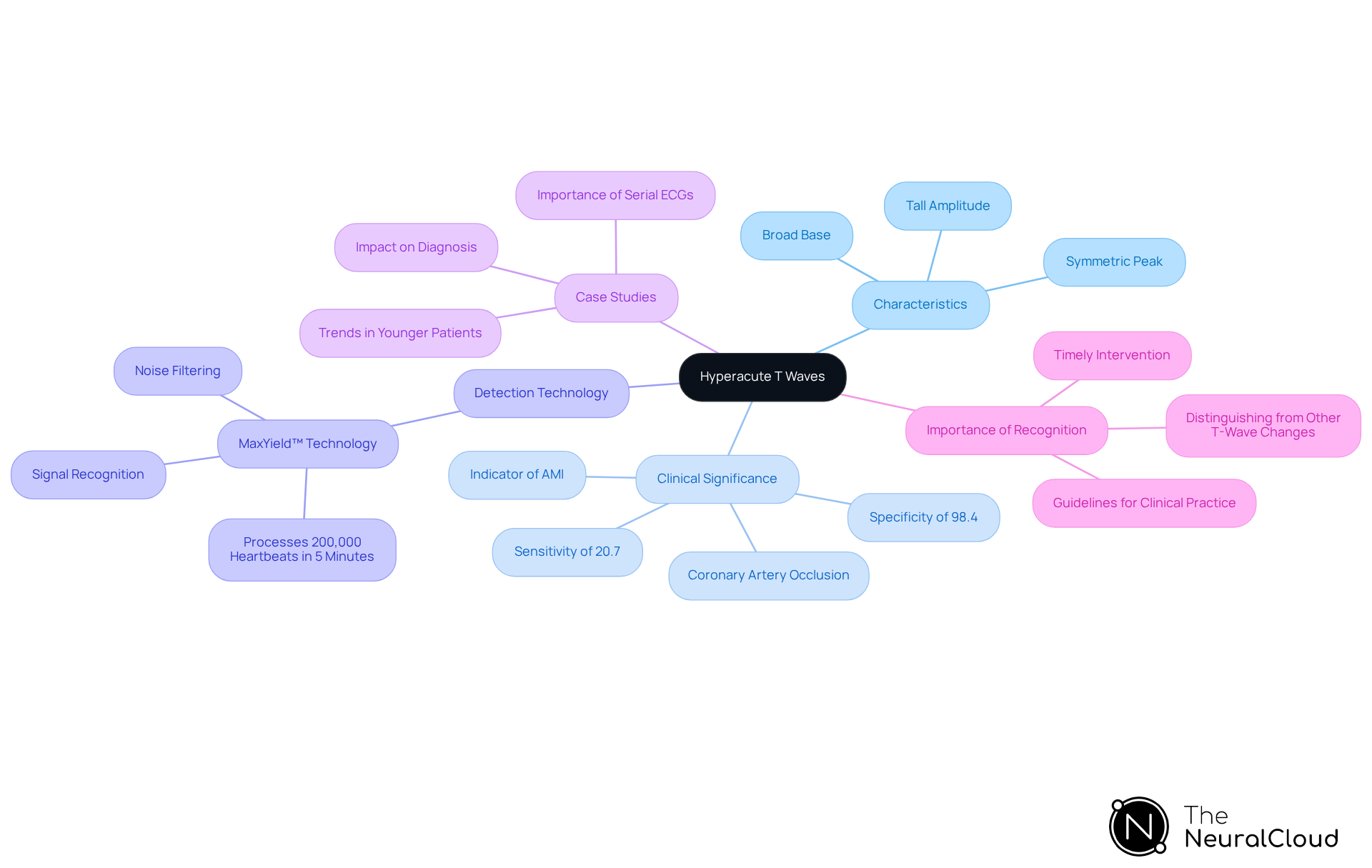
forms (HATFs) are characterized by their tall amplitude and broad base, often displaying a symmetric peak. These fluctuations are typically observed in the early stages of acute myocardial infarction (AMI) and serve as one of the earliest electrocardiographic indicators of ischemia, such as the presence of ST-segment elevation. Their presence holds clinical significance, as it can indicate substantial myocardial damage, necessitating prompt intervention. Recognizing the patterns can facilitate quicker diagnoses and treatments, ultimately improving outcomes for individuals experiencing acute cardiac events. For developers focused on ECG technology, accurately detecting these features is essential for enhancing diagnostic precision.
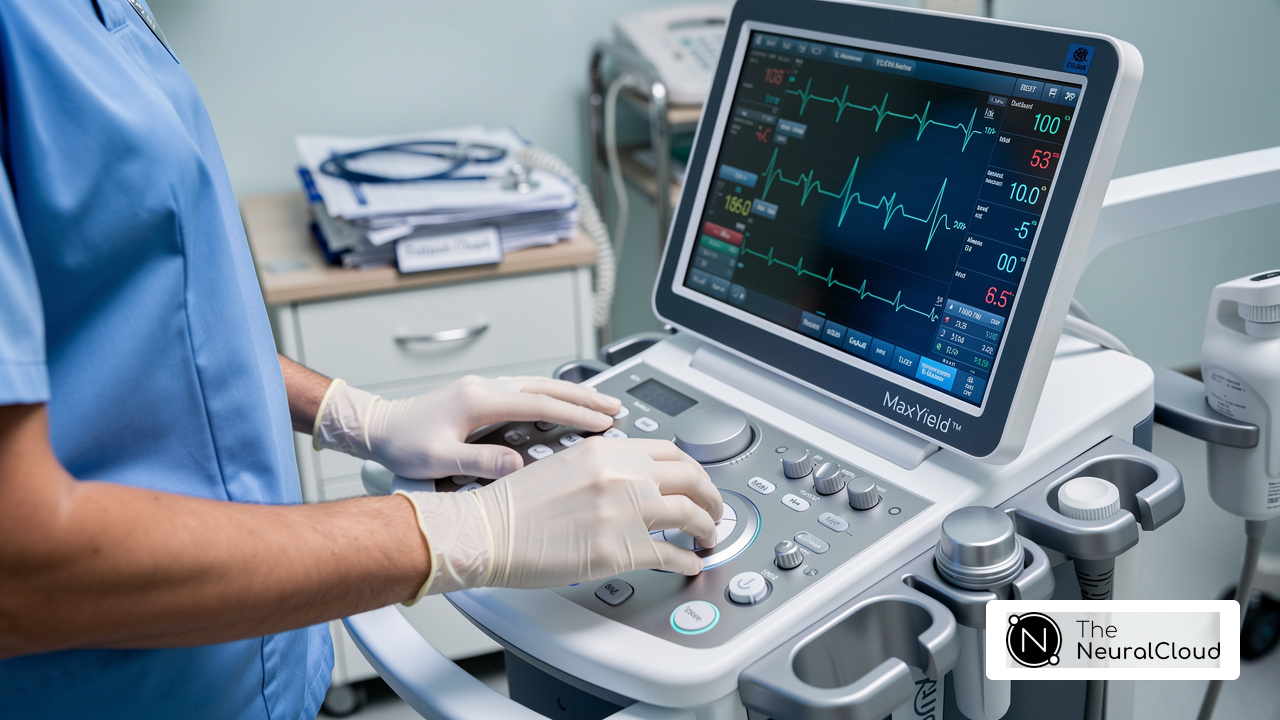
Neural Cloud Solutions' MaxYield™ technology enhances the detection of cardiac signals through advanced algorithms and signal recognition capabilities. This automated ECG analysis platform swiftly isolates and labels key features in every heartbeat, processing up to 200,000 heartbeats in under 5 minutes. The ability of MaxYield™ to convert noisy recordings into clear insights is vital for improving diagnostic accuracy and supporting confident clinical decisions.
Case studies underscore the critical role of early detection. For instance, an individual exhibiting hyperacute T wave patterns on an initial ECG experienced cardiac arrest shortly thereafter, emphasizing the importance of prompt recognition and treatment. Additionally, research shows that hyperacute T waves can reliably indicate occlusion myocardial infarction (OMI), boasting a specificity of 98.4% in validation studies. This highlights the need for developers to create tools capable of effectively identifying these patterns.
The occurrence of hyperacute T waves in individuals with ischemia is noteworthy, with studies indicating that up to 27% of younger individuals display ST-segment elevation, which may include hyperacute T waves. Cardiologists stress the importance of recognizing these signals, especially the hyperacute T waves, as they can often be mistaken for other T-wave irregularities. As Dr. Stephen W. Smith emphasizes, accurately identifying rapid T wave patterns is crucial for ensuring that individuals with acute coronary blockage receive timely treatment, thereby reducing the risk of adverse cardiac events.
In summary, hyperacute T wave patterns are not only vital indicators in diagnosing myocardial infarction but also serve as a focal point for developers aiming to enhance ECG analysis through advanced algorithms. Their recognition can significantly influence diagnosis and patient care.
Identify Diagnostic Criteria and Morphological Features of Hyperacute T Waves
exhibit several distinct morphological features that are crucial for accurate diagnosis. Clinicians assess these patterns by noting:
- Increased amplitude relative to the QRS complex
- A broad base
- A symmetric appearance
Typically, sharp T peaks are taller than normal and may present with a pointed summit, often covering the ST segment, which signals myocardial ischemia. In clinical practice, these signals are primarily observed in leads V2 to V6, particularly in cases involving left anterior descending artery blockage.
For developers, it’s vital to ensure that algorithms, such as those powered by Neural Cloud Solutions' MaxYield™, can effectively recognize these specific morphological characteristics. This is achieved by providing beat-by-beat analysis and isolating key features in noisy recordings, including baseline offsets, and time-series intervals.
Recent research indicates that while sharp T peaks are seen as indicators of acute coronary blockage, their diagnostic utility is limited. Notably, elevated T amplitudes, defined as those exceeding the 95th percentile, did not aid in diagnosing myocardial infarction when assessed through the study in the studied sample. Furthermore, specialist H Meyers emphasized that the morphological forms are significant, even in the absence of STEMI criteria. This highlights the need for developers to refine algorithms, leveraging MaxYield™'s capabilities to adapt to evolving clinical insights and address the gaps in understanding rapid T patterns.

Explore Diagnostic Challenges and the Role of Advanced Technology in ECG Analysis
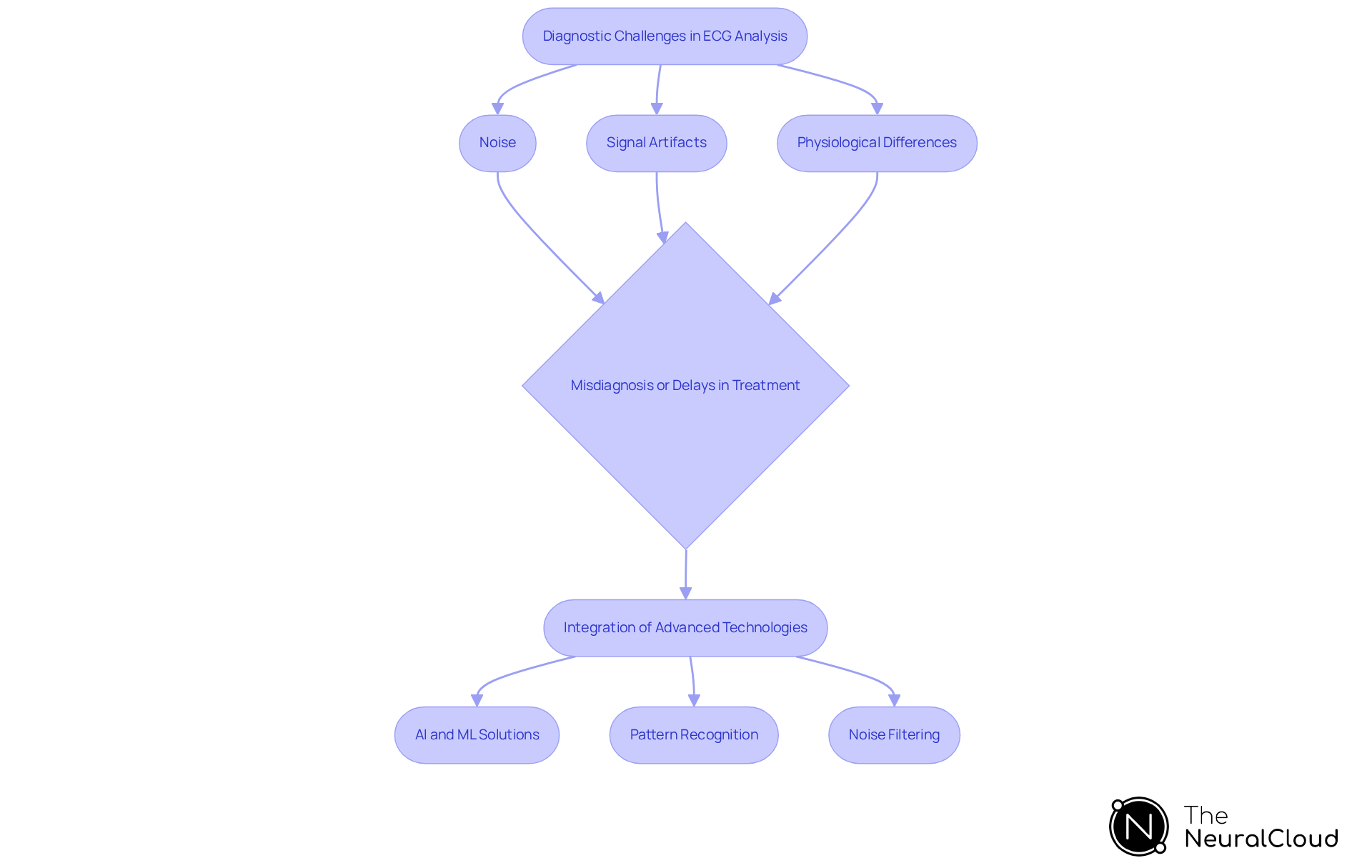
Identifying rapid T patterns presents significant challenges, primarily due to noise, signal artifacts, and physiological differences among individuals. Traditional methods often struggle to recognize these critical markers, leading to potential misdiagnosis or delays in treatment. Research has shown that factors such as baseline drift and muscle interference can obscure genuine ECG signals, complicating the identification of hyperacute T waves. Notably, the performance of various algorithms declines under high noise conditions, with sensitivity dropping below acceptable levels, particularly for the WQRS algorithm, which is particularly vulnerable to motion artifacts.
The integration of advanced technologies, especially artificial intelligence (AI) and machine learning (ML), provides a promising solution to these diagnostic challenges. By leveraging extensive datasets, AI systems can identify patterns and anomalies that may escape human interpreters. For instance, a recent study revealed that models trained on diverse ECG datasets achieved over 90% accuracy in distinguishing between noisy and clean segments, highlighting the potential of AI to enhance ECG analysis.
Moreover, AI-powered platforms can automatically filter out noisy segments, improving the clarity of ECG readings and facilitating more accurate diagnoses of acute T signals. This capability is crucial, as acute T waves can swiftly evolve into typical STEMI signs on an ECG, necessitating prompt intervention. Developers are encouraged to focus on integrating these technologies into their applications, as this can significantly boost accuracy in clinical environments.
Apply Hyperacute T Wave Analysis in Clinical Practice: Management Strategies and AI Integration
In clinical practice, recognizing hyperacute T waves swiftly is crucial, as it often necessitates interventions like thrombolysis or percutaneous coronary intervention. Healthcare providers must be skilled in identifying the hyperacute T wave ECG changes to implement appropriate management strategies promptly. However, traditional ECG analysis can be challenging due to lengthy and noisy recordings, which can hinder accurate diagnosis.
Neural Cloud Solutions, developed by Neural Cloud Solutions, addresses these challenges by transforming complex ECG data into clean, crisp signals. This platform offers several key features:
- It provides beat-by-beat tabulation in CSV format for seamless integration into existing workflows.
- It delivers real-time alerts.
- It includes analytics that streamline decision-making.
These features not only enhance the accuracy of ECG interpretation but also facilitate quicker interventions in critical situations.
The advantages of using advanced technology are significant for healthcare professionals. By leveraging AI tools, clinicians can access critical information rapidly, improving diagnostic accuracy and optimizing patient outcomes. This capability translates into timely and effective patient care, ensuring that healthcare providers can respond swiftly to acute cardiac events. Overall, the platform empowers clinicians to make informed decisions, ultimately enhancing the quality of care delivered to patients.
Conclusion
Recognizing hyperacute T wave ECG patterns is essential, as they serve as critical indicators for acute myocardial infarction and other cardiac events. Their early identification can significantly influence clinical decision-making and patient outcomes, underscoring the importance of developing robust algorithms capable of detecting these patterns with precision.
The article highlights the characteristics and clinical significance of hyperacute T waves, emphasizing the need for advanced technologies like Neural Cloud Solutions' MaxYield™ to enhance diagnostic accuracy. MaxYield™ offers features such as automated analysis, noise reduction, and real-time alerts. These capabilities allow healthcare providers to make informed decisions swiftly, improving the management of acute cardiac situations. The integration of AI and machine learning into ECG analysis platforms is pivotal in overcoming traditional diagnostic challenges, ensuring that clinicians can recognize and respond to hyperacute T waves effectively.
In conclusion, as the landscape of ECG analysis evolves, the role of hyperacute T waves cannot be overstated. For developers and healthcare providers alike, prioritizing the integration of advanced technology in ECG diagnostics is not just beneficial but necessary. By embracing these innovations, the medical community can enhance patient care and outcomes, ultimately saving lives in critical situations.
Frequently Asked Questions
What are hyperacute T waves and their characteristics?
Hyperacute T waves (HATFs) are ECG forms characterized by tall amplitude, broad base, and often a symmetric peak. They are typically observed in the early stages of acute myocardial infarction (AMI).
Why are hyperacute T waves clinically significant?
The presence of hyperacute T waves indicates substantial coronary artery occlusion and serves as one of the earliest electrocardiographic indicators of ischemia, necessitating prompt intervention to improve patient outcomes.
How does the MaxYield™ technology enhance the detection of hyperacute T waves?
MaxYield™ technology improves the detection of hyperacute T wave ECG signals through advanced noise filtering and signal recognition, allowing for the isolation and labeling of key features in every heartbeat and processing up to 200,000 heartbeats in under 5 minutes.
What is the importance of recognizing hyperacute T waves in clinical practice?
Recognizing hyperacute T waves is crucial for timely diagnosis and treatment of acute cardiac events. Case studies show that failure to identify these patterns can lead to severe outcomes, such as cardiac arrest.
What is the specificity of hyperacute T waves for indicating occlusion myocardial infarction (OMI)?
Research indicates that hyperacute T waves have a specificity of 98.4% in reliably indicating occlusion myocardial infarction (OMI).
How common are hyperacute T waves in younger individuals with ischemia?
Studies show that up to 27% of younger individuals with ischemia display ST-segment elevation, which may include hyperacute T wave ECG patterns.
What do cardiologists emphasize regarding the identification of hyperacute T waves?
Cardiologists stress the importance of accurately recognizing hyperacute T waves, as they can be mistaken for other T-wave irregularities, which is crucial for ensuring timely coronary angiography for individuals with acute coronary blockage.
List of Sources
- Define Hyperacute T Waves: Clinical Significance and Characteristics
- academic.oup.com (https://academic.oup.com/eurheartj/article/46/Supplement_1/ehaf784.2109/8308417)
- sciencedirect.com (https://sciencedirect.com/science/article/pii/S0196064424012502)
- Hyperacute T-Waves: ECG Signs of Early MI (https://powerfulmedical.com/blog/hyperacute-t-waves)
- Impending Danger: Evolution of Hyperacute T Waves to Cardiac Arrest (https://cureus.com/articles/432103-impending-danger-evolution-of-hyperacute-t-waves-to-cardiac-arrest)
- Identify Diagnostic Criteria and Morphological Features of Hyperacute T Waves
- academic.oup.com (https://academic.oup.com/eurheartj/article/46/Supplement_1/ehaf784.2109/8308417)
- Hyperacute T Wave in the Early Diagnosis of Acute Myocardial Infarction (https://annemergmed.com/article/S0196-0644(22)01327-0/fulltext)
- Explore Diagnostic Challenges and the Role of Advanced Technology in ECG Analysis
- academic.oup.com (https://academic.oup.com/ehjdh/article/5/5/601/7731843)
- Hyperacute T Wave in the Early Diagnosis of Acute Myocardial Infarction (https://annemergmed.com/article/S0196-0644(22)01327-0/fulltext)
- pmc.ncbi.nlm.nih.gov (https://pmc.ncbi.nlm.nih.gov/articles/PMC7357458)
- arxiv.org (https://arxiv.org/html/2502.14522v1)
- Impending Danger: Evolution of Hyperacute T Waves to Cardiac Arrest (https://cureus.com/articles/432103-impending-danger-evolution-of-hyperacute-t-waves-to-cardiac-arrest)
- Apply Hyperacute T Wave Analysis in Clinical Practice: Management Strategies and AI Integration
- theneuralcloud.com (https://theneuralcloud.com/post/master-hyperacute-t-waves-key-characteristics-and-interpretation)
- Hyperacute T Wave in the Early Diagnosis of Acute Myocardial Infarction (https://annemergmed.com/article/S0196-0644(22)01327-0/fulltext)
- AI-Based ECG Analysis Significantly Improves STEMI Detection, Reduces False Activations - American College of Cardiology (https://acc.org/latest-in-cardiology/articles/2025/10/24/16/56/tues-554pm-ai-tct-2025)
- pmc.ncbi.nlm.nih.gov (https://pmc.ncbi.nlm.nih.gov/articles/PMC12504586)
- Hyperacute T Waves Are Specific for Occlusion Myocardial Infarction, Even Without Diagnostic ST-Segment Elevation: (https://jacc.org/doi/10.1016/j.jacadv.2025.102120)