Introduction
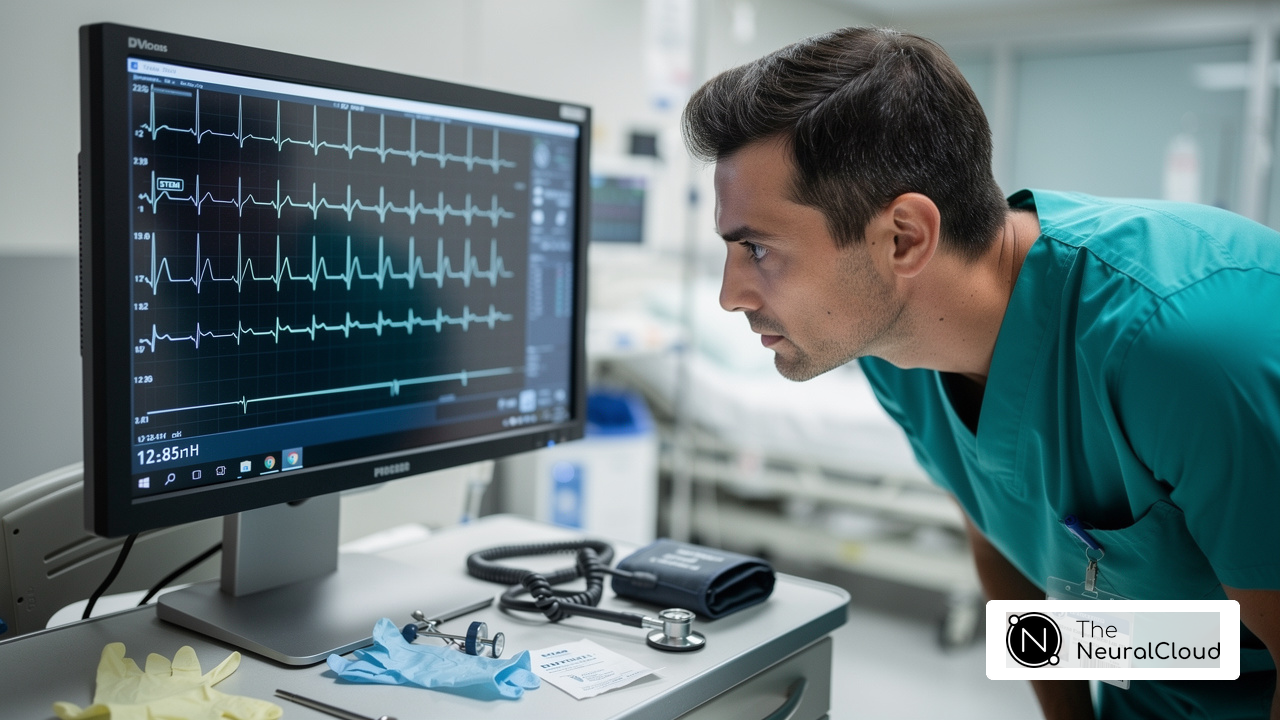
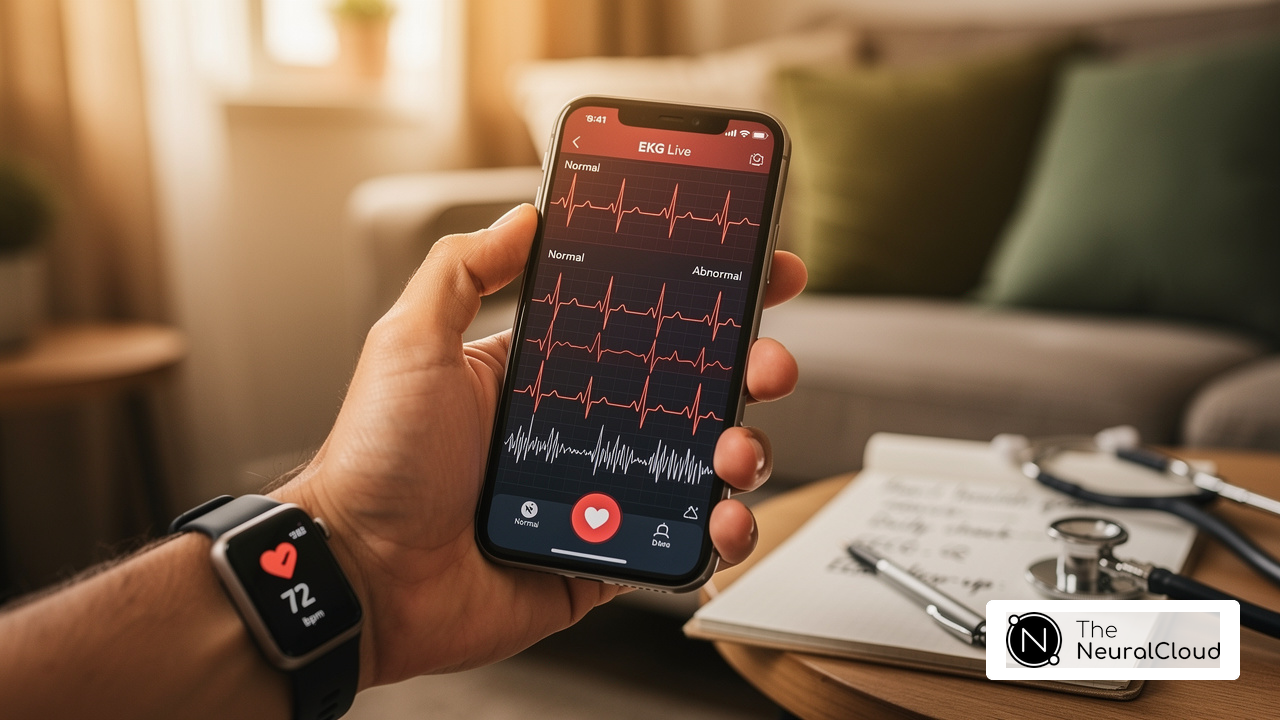
Understanding the complexities of electrocardiograms (ECGs) is crucial for healthcare professionals dedicated to delivering high-quality cardiac care. The heart's electrical activity provides vital insights into its health, and mastering normal ECG patterns can greatly improve diagnostic accuracy and patient outcomes. However, clinicians often face challenges in recognizing these patterns and applying their knowledge effectively in clinical environments.
To bridge the gap between theoretical understanding and practical application, healthcare professionals need tools that enhance their ECG analysis capabilities. This is where the MaxYield™ platform comes into play. It offers advanced features designed to streamline ECG interpretation, making it easier for clinicians to identify critical patterns and anomalies.
By utilizing MaxYield™, healthcare professionals can benefit from improved diagnostic precision, leading to timely and accurate patient assessments. The platform not only simplifies the analysis process but also empowers clinicians with the confidence to make informed decisions based on reliable data.
In summary, understanding ECGs is essential, and leveraging innovative tools like MaxYield™ can significantly enhance the quality of cardiac care provided to patients.
Explore Cardiac Physiology and Anatomy Relevant to ECG Patterns
A solid understanding of cardiovascular anatomy is essential for mastering ECG patterns. The heart consists of four chambers: the right and left atria and the right and left ventricles. The sinoatrial (SA) node, located in the right atrium, serves as the natural pacemaker, generating electrical impulses that spread through the cardiac tissue, inducing contractions. Key components to focus on include:
- Atria and Ventricles: The atria receive blood, while the ventricles pump it out. Understanding their functions is crucial for interpreting the ECG.
- Conduction System: This system includes the SA node, atrioventricular (AV) node, bundle of His, and Purkinje fibers, each contributing to the heart's electrical activity.
- Electrical Activity: The electrical activity is captured by an ECG, which records the depolarization and repolarization of cardiac muscle cells. Familiarity with these concepts is vital for identifying and interpreting abnormal patterns on an ECG.
Cardiologists emphasize that a thorough understanding of heart anatomy significantly enhances clinical practice. Recognizing the heart's structure aids in pinpointing arrhythmias and other cardiac conditions. Clinicians who incorporate anatomical knowledge into their assessments can more precisely diagnose conditions such as atrial fibrillation, directly impacting patient management strategies. By mastering these foundational concepts, healthcare professionals can improve their diagnostic accuracy.
Identify and Interpret Normal ECG Intervals and Their Clinical Significance
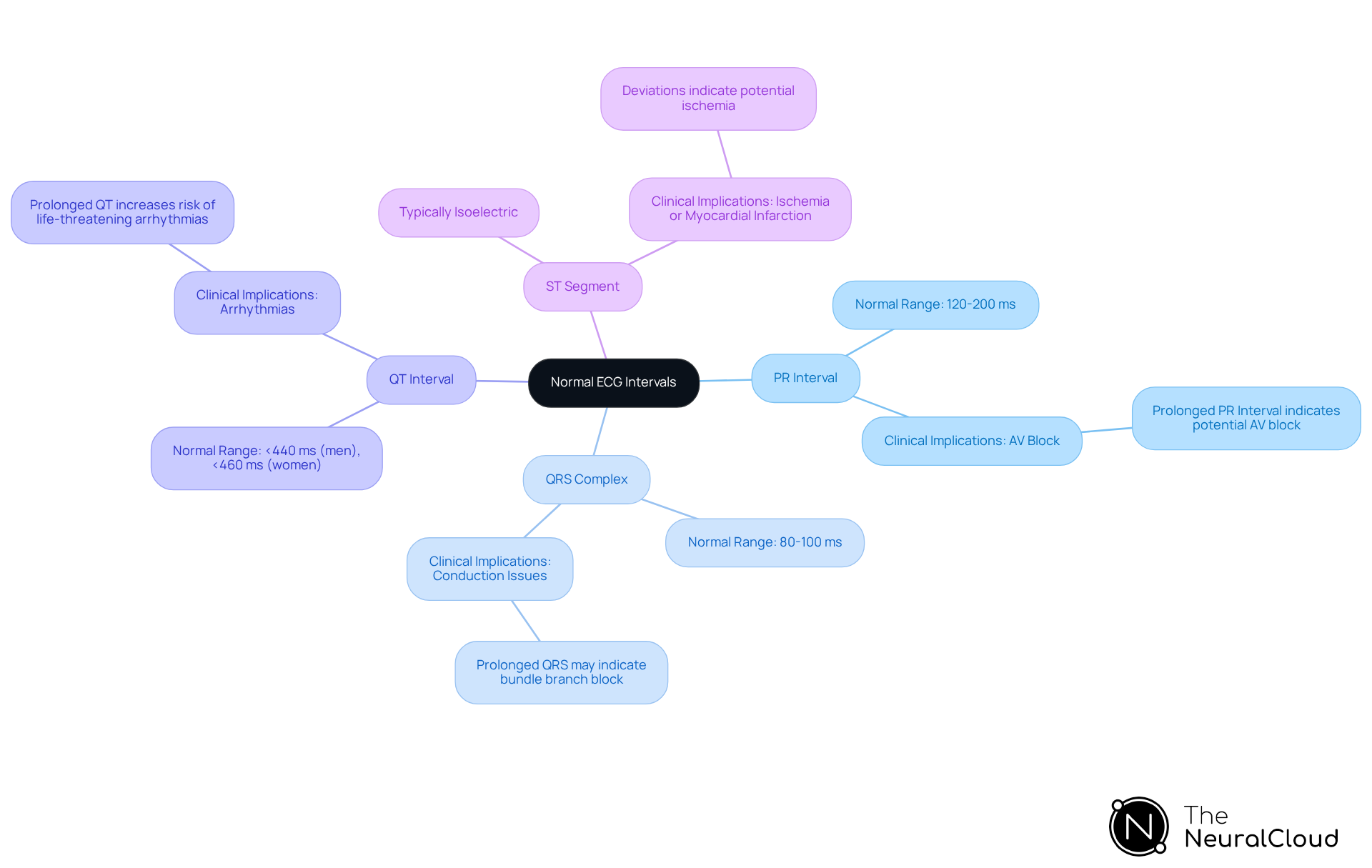
Understanding ECG interpretation is crucial for accurate cardiac assessment, especially when utilizing tools like 'ECG machines'. The key intervals include:
- PR Interval: The PR interval, indicating the time taken for electrical impulses to travel from the atria to the ventricles. An extension of this interval may suggest the presence of an atrioventricular (AV) block, which can affect rhythm and function. Research shows that the prevalence of AV block is notably higher in individuals with prolonged PR intervals.
- QRS Duration: A normal duration ranges from 80-100 milliseconds (0.08-0.10 seconds), representing ventricular depolarization. A prolonged QRS duration can indicate conduction issues, such as a bundle branch block, which may lead to further cardiac complications if not addressed.
- QT Interval: This interval should be less than 440 milliseconds in men and 460 milliseconds in women, and it should not exceed 500 milliseconds (0.50 seconds). Prolongation of the QT interval necessitates careful monitoring and management.
- ST Segment: Typically isoelectric, any deviation from this baseline can indicate ischemia or other cardiac conditions. Recognizing these changes is vital for timely intervention and treatment.
MaxYield™ enhances ECG analysis by identifying and labeling critical data, even in recordings with high levels of noise and artifact. This capability allows for the rapid isolation of ECG waves from recordings affected by baseline wander, movement, and muscle artifact, salvaging previously obscured sections of lengthy Holter, 1-Lead, and patch monitor recordings. As Dr. Marco Perez states, "Understanding a normal electrocardiogram (ECG) reading is like figuring out your heart's electrical signals." By mastering the understanding of these intervals and the significance of each, clinicians can effectively assess cardiac function and identify potential risks, ultimately enhancing patient care and outcomes.
Apply Knowledge of Normal ECG Patterns in Clinical Practice
To effectively apply ECG knowledge in clinical practice, follow these essential steps:
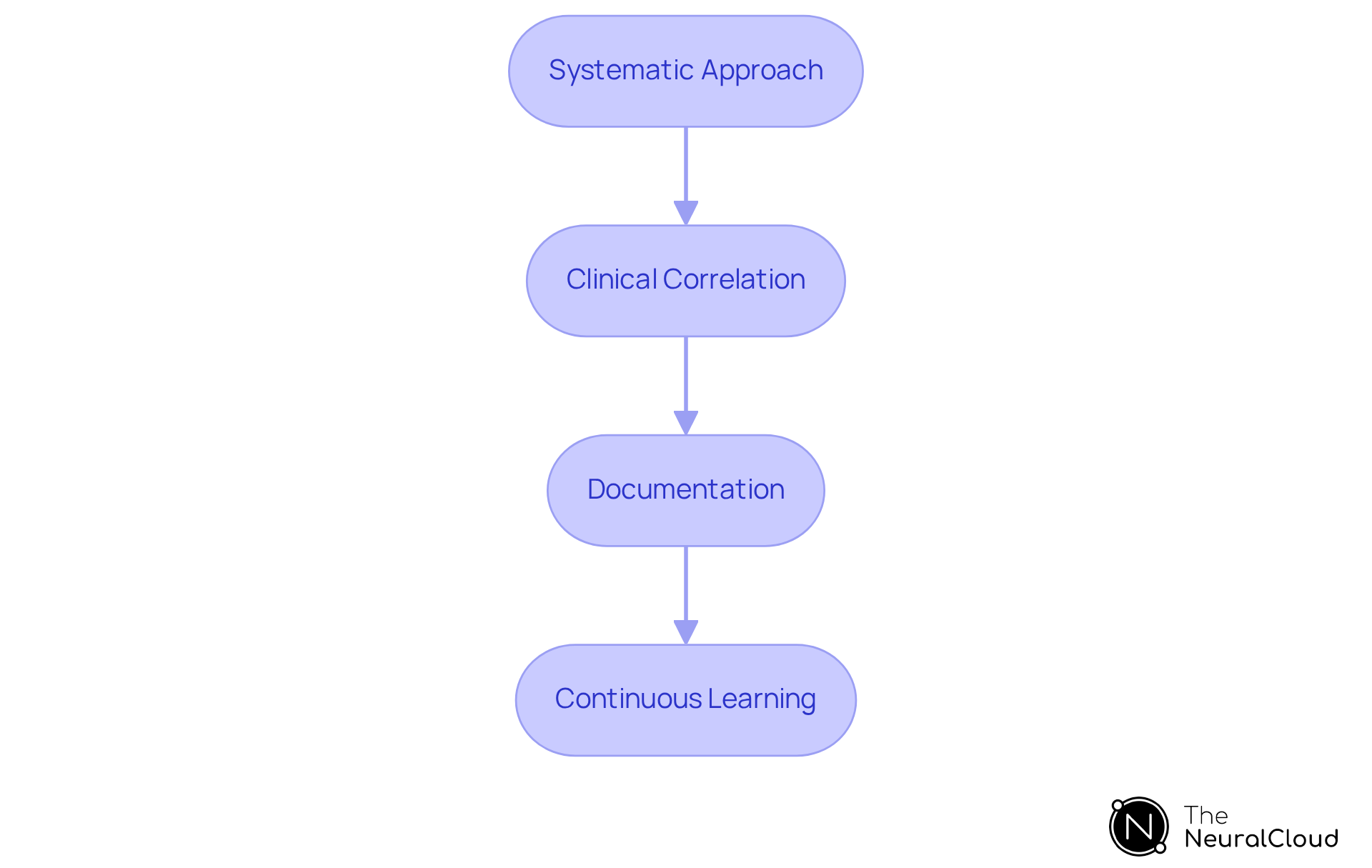
- Interpretation: Start with a structured method for ECG interpretation. Assess the heart rate, rhythm, and intervals to establish a clear baseline that reflects normal cardiac function. This ensures that you have a solid foundation for further analysis.
- Correlation: Link with clinical symptoms. For example, if a patient presents with chest pain and ST elevation on the ECG, it may indicate an acute myocardial infarction, necessitating immediate intervention. This connection is vital for timely and effective treatment.
- Documentation: Maintain thorough documentation of findings, correlating them with the patient's history and physical examination results. This comprehensive approach is crucial for informed clinical decision-making and enhances overall patient care.
- Continuous Learning: Dedicate yourself to professional development by staying updated on the latest guidelines and research in cardiology. Regularly review clinical cases and participate in training sessions to refine your skills and adapt to evolving practices in the field. This commitment to learning not only improves your expertise but also benefits your patients.
Leverage Advanced ECG Analysis Technologies for Enhanced Interpretation
Advanced ECG analysis technologies, such as Neural Cloud Solutions' platform, address significant challenges in clinical settings. Traditional ECG analysis can be time-consuming and prone to human error, making it difficult for healthcare professionals to deliver accurate diagnoses. The platform offers a solution by streamlining the analysis process and enhancing diagnostic capabilities.
Features of MaxYield™:
- Efficient Processing: The platform efficiently processes extensive ECG datasets, swiftly identifying patterns and anomalies that may elude human interpretation. For instance, its speed significantly surpasses conventional methods.
- Continuous Learning: By leveraging vast datasets, AI algorithms continuously refine their interpretive capabilities, improving accuracy. Research shows that AI models can attain sensitivity rates of 97.5% compared to 86.7% for conventional physician reporting, highlighting the potential for improved healthcare outcomes.
- Real-time Monitoring: Continuous ECG monitoring technologies provide immediate feedback, which is critical for patients at risk of arrhythmias. This capability facilitates timely interventions that can save lives.
- User-friendly Interfaces: The interfaces simplify the understanding process, making them accessible to healthcare professionals across various experience levels. This democratization of technology empowers clinicians to make informed decisions quickly and effectively.
Incorporating these advanced technologies into clinical practice not only enhances the ability to deliver accurate diagnoses but also supports healthcare professionals in navigating the complexities of ECG interpretation. By utilizing the platform, clinicians can improve patient outcomes and streamline their workflow, ultimately leading to better healthcare results.
Conclusion
Mastering normal ECG patterns is crucial for effective clinical application, enhancing diagnostic accuracy and significantly improving patient care. A solid grasp of cardiac physiology and anatomy, along with knowledge of normal ECG intervals, forms the foundation for recognizing both typical and atypical patterns. This expertise empowers healthcare professionals to make informed decisions, leading to better management of cardiovascular conditions.
The article underscores several key components in mastering ECG interpretation. It highlights the importance of understanding the heart’s anatomy and the significance of normal ECG intervals, such as the PR, QRS, QT, and ST segments. Applying this knowledge systematically in clinical practice is essential. Additionally, it discusses advanced technologies like Neural Cloud Solutions' MaxYield™ platform, which enhances the accuracy and efficiency of ECG analysis. This platform enables clinicians to swiftly and accurately detect abnormalities.
Incorporating these insights into daily practice fosters a deeper understanding of cardiac health and reinforces the critical role of ECG interpretation in clinical settings. As technology advances, healthcare professionals are encouraged to embrace these tools and commit to ongoing education to refine their skills. This dedication not only enhances individual expertise but also contributes to improved patient outcomes, showcasing the transformative potential of mastering normal ECG patterns in cardiac care.
Frequently Asked Questions
Why is understanding cardiovascular anatomy and physiology important for ECG interpretation?
A solid understanding of cardiovascular anatomy and physiology is essential for mastering ECG interpretation, as it helps in recognizing normal and abnormal ECG patterns and enhances diagnostic accuracy.
What are the main chambers of the heart?
The heart consists of four chambers: the right atrium, left atrium, right ventricle, and left ventricle.
What role does the sinoatrial (SA) node play in the heart?
The sinoatrial (SA) node, located in the right atrium, serves as the natural pacemaker of the heart, generating electrical impulses that spread through cardiac tissue to induce contractions.
What is the function of the atria and ventricles in the heart?
The atria receive blood, while the ventricles pump it out. Understanding their functions is crucial for interpreting the timing of electrical signals.
What components make up the heart's conduction system?
The conduction system includes the SA node, atrioventricular (AV) node, bundle of His, and Purkinje fibers, all of which contribute to the timing and coordination of heartbeats.
How does an ECG capture the heart's electrical activity?
An ECG records the depolarization and repolarization of cardiac muscle cells, capturing the electrical activity of the heart.
How does knowledge of heart anatomy aid in diagnosing cardiac conditions?
Recognizing the anatomical locations of the atria and ventricles helps clinicians pinpoint arrhythmias and other cardiac abnormalities, thus improving diagnostic accuracy and patient management strategies.
What impact does mastering cardiac physiology and anatomy have on healthcare professionals?
By mastering these foundational concepts, healthcare professionals can improve their diagnostic accuracy and clinical outcomes when analyzing ECGs.
List of Sources
- Explore Cardiac Physiology and Anatomy Relevant to ECG Patterns
- scribd.com (https://scribd.com/document/862713553/Case-Study1)
- Checking your browser - reCAPTCHA (https://pmc.ncbi.nlm.nih.gov/articles/PMC7522782)
- Accuracy of Physicians’ Electrocardiogram Interpretation (https://jamanetwork.com/journals/jamainternalmedicine/fullarticle/2771093)
- Heart Health Cardiology Quotes: Memorable Wisdom | TheKnowHow Blog (https://theknowhow.ae/memorable-cardiology-quotes-heath)
- mdpi.com (https://mdpi.com/2673-3846/2/4/39)
- Identify and Interpret Normal ECG Intervals and Their Clinical Significance
- Common ECG finding may indicate serious cardiac problems — Harvard Gazette (https://news.harvard.edu/gazette/story/2009/06/common-ecg-finding-may-indicate-serious-cardiac-problems)
- Electrocardiogram Interpretation in 10 Simple Steps (https://aclscertification.org/electrocardiogram-interpretation-in-10-simple-steps)
- Normal Electrocardiography (ECG) Intervals: Normal Electrocardiography Intervals (https://emedicine.medscape.com/article/2172196-overview)
- What Is a Normal ECG Reading? Essential Guide | Qaly (https://qaly.co/post/what-is-a-normal-ecg-reading-essential-guide)
- Apply Knowledge of Normal ECG Patterns in Clinical Practice
- Checking your browser - reCAPTCHA (https://pmc.ncbi.nlm.nih.gov/articles/PMC7522782)
- Stepwise Approach to STAT ECGs Hub – ECG Weekly (https://ecgweekly.com/ecgstat/stepwise-ecg-interpretation)
- onlinelibrary.wiley.com (https://onlinelibrary.wiley.com/doi/10.1002/clc.23628)
- pmc.ncbi.nlm.nih.gov (https://pmc.ncbi.nlm.nih.gov/articles/PMC9179219)
- mdpi.com (https://mdpi.com/2673-3846/2/4/39)
- Leverage Advanced ECG Analysis Technologies for Enhanced Interpretation
- The Use of Artificial Intelligence in ECG Interpretation in the Outpatient Setting: A Scoping Review (https://cureus.com/articles/405923-the-use-of-artificial-intelligence-in-ecg-interpretation-in-the-outpatient-setting-a-scoping-review)
- Artificial Intelligence–Assisted ECG Interpretation versus Conventional Reporting in Predicting Arrhythmias in Acute Coronary Syndrome: A Diagnostic Accuracy Study (https://healthcare-bulletin.co.uk/article/artificial-intelligence-assisted-ecg-interpretation-versus-conventional-reporting-in-predicting-arrhythmias-in-acute-coronary-syndrome-a-diagnostic-accuracy-study-4252)
- Checking your browser - reCAPTCHA (https://pmc.ncbi.nlm.nih.gov/articles/PMC12419789)
- News: AI has potential to improve diagnostic accuracy, earlier detection of cardiac conditions, analysis finds | ACDIS (https://acdis.org/articles/news-ai-has-potential-improve-diagnostic-accuracy-earlier-detection-cardiac-conditions)
- AI-driven ECG improves detection of severe heart attacks (https://news-medical.net/news/20251029/AI-driven-ECG-improves-detection-of-severe-heart-attacks.aspx)