Introduction
Understanding the nuances of electrocardiogram (ECG) interpretation is essential for healthcare professionals, especially when evaluating female patients. While the core principles of ECGs are applicable to all, notable gender-specific differences can significantly influence diagnostic accuracy and patient care. This article explores the critical components of normal ECG reports for women, providing insights into key metrics, systematic interpretation techniques, and the vital role of age and gender in shaping these readings.
Clinicians must consider how to accurately interpret ECGs to reflect these unique characteristics, ultimately enhancing patient outcomes. By addressing these challenges, healthcare professionals can improve their diagnostic capabilities and ensure better care for their patients.
Clarify ECG Basics: Understanding Waves, Complexes, and Intervals
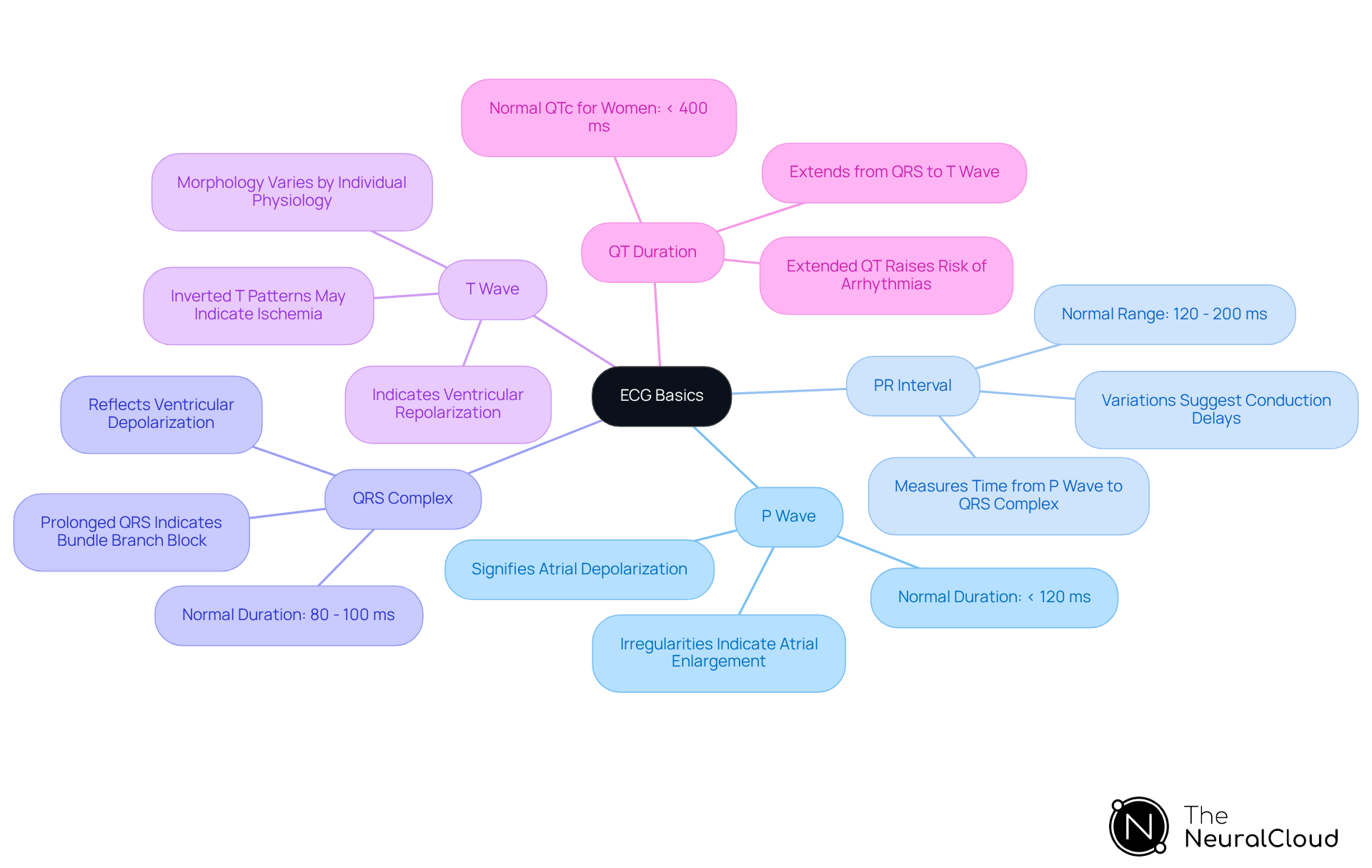
An electrocardiogram (ECG) captures the heart's electrical activity, consisting of several critical components essential for accurate interpretation:
- P wave: This wave signifies atrial depolarization, with a normal duration of less than 120 milliseconds. Irregularities in the P signal can suggest atrial enlargement or other heart conditions.
- PR interval: This interval measures the time from the onset of the P fluctuation to the beginning of the QRS complex, typically ranging from 120 to 200 milliseconds. Variations can suggest conduction delays.
- QRS complex: Reflecting ventricular depolarization, the normal duration of the QRS complex is between 80 to 100 milliseconds. A prolonged QRS can indicate bundle branch block or other significant cardiac issues.
- T wave: This signal indicates ventricular repolarization, with its morphology and duration differing according to individual physiology. Inverted T patterns may indicate ischemia or other cardiac irregularities.
- QT interval: The QT interval extends from the beginning of the QRS complex to the conclusion of the T crest, with a normal corrected QT (QTc) of under 400 milliseconds for women. Extended QT intervals can raise the risk of arrhythmias.
Understanding these components is crucial for accurate interpretation, especially in female patients, as the values may exhibit different characteristics compared to males. For instance, studies indicate that the average duration in women can differ slightly, which is important for ensuring accuracy in ECG analysis. Cardiologists emphasize that a solid grasp of these basics not only enhances diagnostic accuracy but also improves patient care outcomes. Familiarity with normal and abnormal values is vital for effective clinical decision-making.
Identify Normal ECG Values: Key Metrics for Female Patients
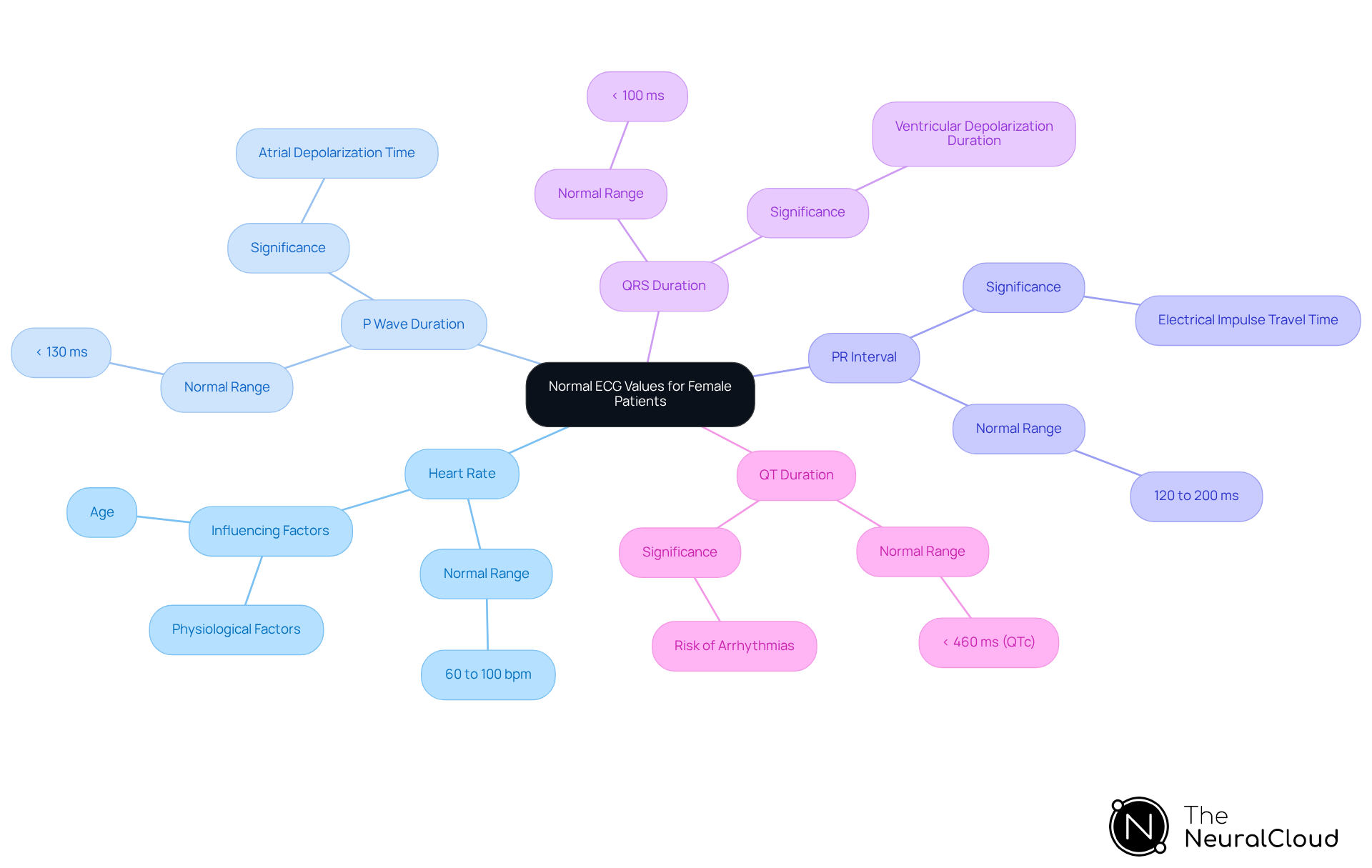
The patients shows distinct characteristics compared to males, underscoring the necessity for gender-specific reference ranges. Key metrics include:
- Heart Rate: Typically ranges from 60 to 100 beats per minute (bpm), with variations influenced by age and physiological factors.
- P Wave Duration: Should be less than 130 milliseconds, reflecting the time for atrial depolarization.
- PR Interval: Normal range is 120 to 200 milliseconds, indicating the time taken for electrical impulses to travel from the atria to the ventricles.
- QRS Duration: Should be less than 100 milliseconds, representing the duration of ventricular depolarization.
- QT Interval: The corrected QTc should be less than 460 milliseconds, as measured.
Understanding these values is crucial. They help identify abnormalities, which can be assessed through a comprehensive evaluation, and facilitate the diagnosis. Recent studies suggest that women frequently exhibit shorter intervals than men. This highlights the significance of gender differences in clinical environments.
Apply Systematic Techniques: Step-by-Step ECG Interpretation
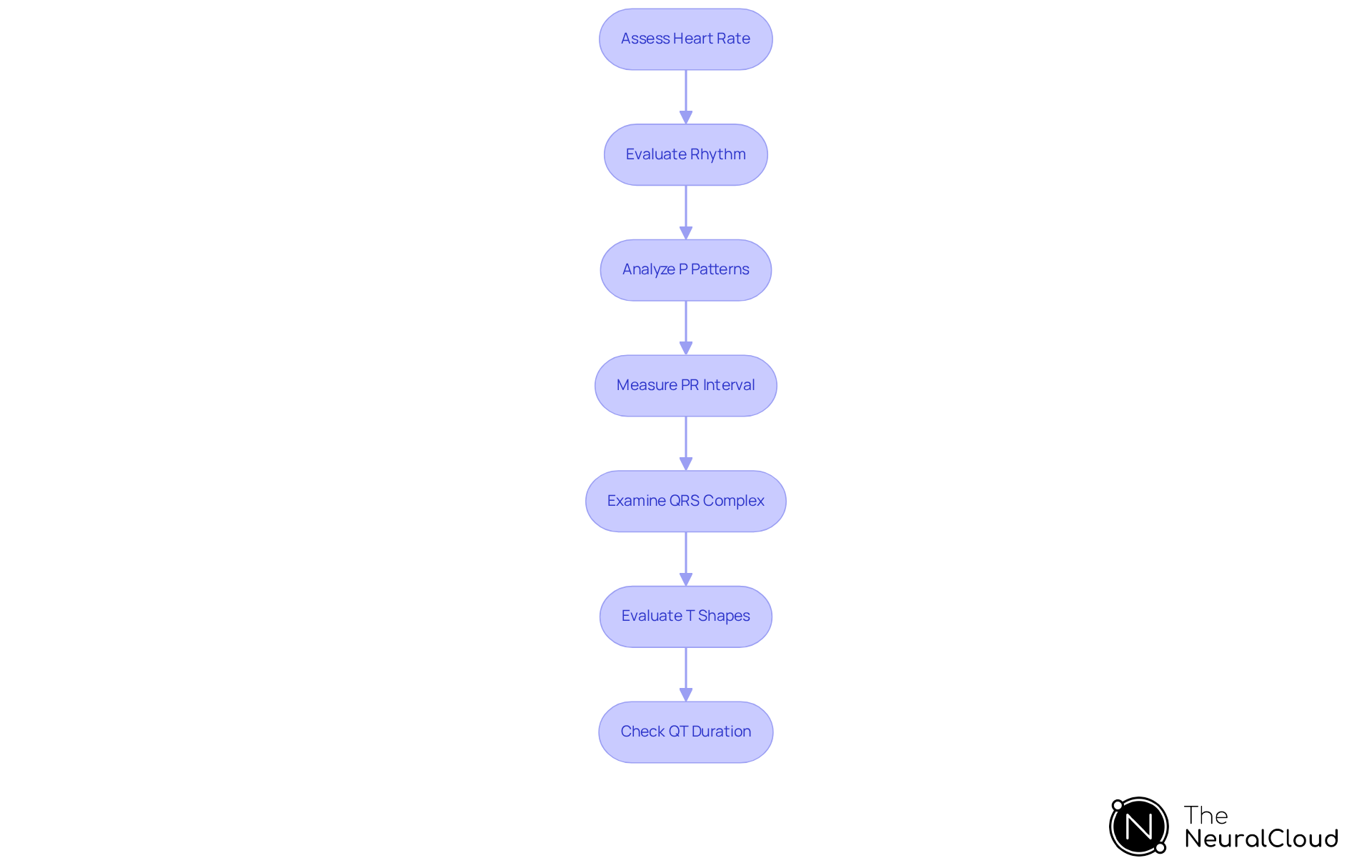
To interpret an ECG systematically, follow these essential steps:
- Assess the Heart Rate: Count the number of beats in a 6-second strip and multiply by 10 to determine beats per minute. A normal heart rate shows a resting rhythm.
- Evaluate the Rhythm: Determine if the rhythm is regular or irregular by measuring the intervals between R peaks. Irregular rhythms may indicate underlying issues that require further investigation.
- Analyze the P Wave: Check for the presence and morphology of P waves before each QRS complex. Irregularities in P wave characteristics can indicate conditions such as atrial enlargement.
- Measure the PR Interval: Ensure it falls within the normal range of 120 to 200 milliseconds. A prolonged PR interval can suggest conduction delays.
- Examine the QRS Complex: Confirm that the duration is less than 100 milliseconds and assess the morphology. Wide QRS complexes can indicate significant cardiac conditions, such as bundle branch block.
- Evaluate the T Wave Shapes: Look for T wave inversions and ensure they follow the expected morphology. Abnormal T wave shapes can indicate ischemia or electrolyte imbalances.
- Check the QT Interval: Measure the QT interval and adjust it for heart rate (QTc). A prolonged QT interval can elevate the risk of arrhythmias.
By adhering to these steps, clinicians can significantly improve diagnostic accuracy, leading to improved patient outcomes. As one expert noted, "Skill grows with reps; just a few minutes of deliberate practice each week will sharpen your eye for ECGs and accelerate recognition of dangerous findings." This systematic approach not only aids in accurate diagnosis but also fosters confidence in clinical decision-making.
Consider Contextual Factors: Age and Gender in ECG Interpretation
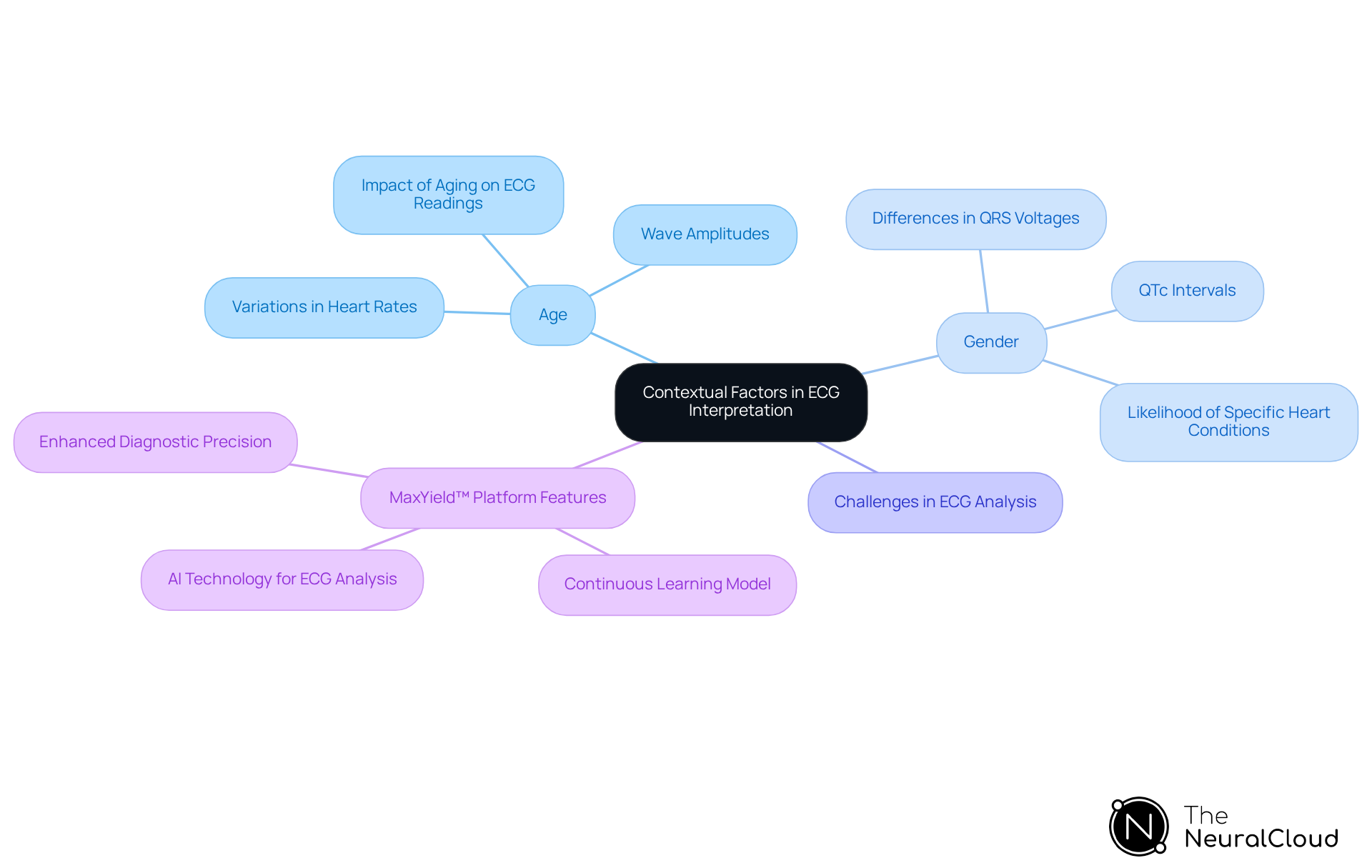
Interpreting ECGs requires a nuanced understanding of both age and gender, as these factors significantly influence what constitutes a normal reading.
Age: ECG values can vary considerably with age. For example, younger patients often present with distinct heart rates and wave amplitudes compared to older adults. As individuals age, changes in heart structure and function can lead to variations in ECG readings, necessitating careful consideration during interpretation.
A normal ECG typically shows that women generally display lower QRS voltages and shorter QRS durations than men. Recent studies indicate that hormonal fluctuations, particularly during menstrual cycles and pregnancy, can further impact heart rate and rhythm. For instance, the QTc interval in women is longer than in men, with a notable difference of approximately 18 ms at the onset of adulthood. Additionally, the likelihood of women experiencing ventricular tachycardia or ventricular fibrillation is lower, which underscores the necessity of a tailored approach in gender-specific ECG interpretation. Furthermore, statistical analyses have revealed significant differences in QRS duration, P-wave amplitude, P-wave duration, and P-wave dispersion between genders, emphasizing the need for a comprehensive understanding in clinical practice.
Challenges in interpretation: These variations underscore the complexities involved in ECG analysis, making it essential for clinicians to consider both age and gender when analyzing results.
Features: Neural Cloud Solutions' Continuous Learning Model addresses these challenges by evolving with each use, enhancing the accuracy and efficiency of ECG interpretation. By leveraging cutting-edge AI technology, the model automates manual tasks and reduces workload, providing crisp, filtered ECG signals that facilitate the identification and interpretation of these nuanced factors.
Advantages for clinicians: This model not only improves diagnostic precision but also directly supports healthcare professionals in interpreting ECGs with greater accuracy. It allows for tailored clinical decisions that meet the unique needs of female patients. Understanding these contextual elements is crucial for effective patient care.
Conclusion
Understanding the complexities of ECG interpretation for female patients is crucial for accurate diagnosis and improved patient care. This article highlights the significance of recognizing gender-specific variations in ECG metrics, which can greatly impact clinical outcomes. By mastering the fundamentals of ECG waves, complexes, and intervals, healthcare professionals can enhance their diagnostic skills and provide tailored care for women.
Key insights include the unique characteristics of normal ECG values for female patients, such as variations in heart rate, P wave duration, and QT intervals. Systematic techniques for ECG interpretation are also outlined, enabling clinicians to analyze ECGs in a methodical and effective manner. Furthermore, the article emphasizes the critical role of contextual factors, including age and hormonal influences, in interpreting ECG results, underscoring the necessity of personalized patient care.
Ultimately, prioritizing gender-specific ECG analysis not only fosters diagnostic accuracy but also improves the overall quality of healthcare for female patients. As the field continues to evolve, embracing these insights will empower healthcare professionals to make informed clinical decisions, leading to better health outcomes for women.
Frequently Asked Questions
What is an electrocardiogram (ECG)?
An electrocardiogram (ECG) captures the heart's electrical activity and is essential for monitoring heart health.
What does the P wave signify in an ECG?
The P wave signifies atrial depolarization, with a normal duration of less than 120 milliseconds. Irregularities in the P signal may suggest atrial enlargement or other heart conditions.
What is the PR interval and its normal range?
The PR interval measures the time from the onset of the P wave to the beginning of the QRS complex, typically ranging from 120 to 200 milliseconds. Variations in this interval can indicate conduction delays.
What does the QRS complex represent, and what is its normal duration?
The QRS complex reflects ventricular depolarization, with a normal duration between 80 to 100 milliseconds. A prolonged QRS can indicate bundle branch block or other significant cardiac issues.
What does the T wave indicate in an ECG?
The T wave indicates ventricular repolarization, and its morphology and duration can vary according to individual physiology. Inverted T patterns may suggest ischemia or other cardiac irregularities.
What is the QT duration, and what is the normal corrected QT duration (QTc) for women?
The QT duration extends from the beginning of the QRS complex to the conclusion of the T wave. The normal corrected QT duration (QTc) for women is under 400 milliseconds. Extended QT durations can increase the risk of arrhythmias.
Why is it important to understand ECG components in female patients?
Understanding ECG components is crucial for accurate interpretation, especially in female patients, as normal ECG values may differ from males. For example, the average P wave duration in women can vary slightly, impacting ECG analysis.
How does knowledge of ECG basics enhance patient care?
A solid grasp of ECG basics enhances diagnostic accuracy and improves patient care outcomes. Familiarity with normal and abnormal ECG patterns is vital for effective clinical decision-making.
List of Sources
- Clarify ECG Basics: Understanding Waves, Complexes, and Intervals
- teachmephysiology.com (https://teachmephysiology.com/cardiovascular-system/cardiac-cycle-2/the-ecg)
- Normal Electrocardiography (ECG) Intervals: Normal Electrocardiography Intervals (https://emedicine.medscape.com/article/2172196-overview)
- New study finds AI model improves heart attack detection (https://health.ucdavis.edu/news/headlines/new-study-finds-ai-model-improves-heart-attack-detection/2025/11)
- HeartBeam Receives FDA Clearance for First-Ever, Cable-Free Synthesized 12-Lead ECG for At-Home Arrhythmia Assessment (https://ir.heartbeam.com/news-events/press-releases/detail/107/heartbeam-receives-fda-clearance-for-first-ever-cable-free)
- bookey.app (https://bookey.app/book/the-ecg-made-easy/quote)
- Identify Normal ECG Values: Key Metrics for Female Patients
- Normal Electrocardiography (ECG) Intervals: Normal Electrocardiography Intervals (https://emedicine.medscape.com/article/2172196-overview)
- scribd.com (https://scribd.com/document/862713553/Case-Study1)
- What Is a Normal ECG Reading? Essential Guide | Qaly (https://qaly.co/post/what-is-a-normal-ecg-reading-essential-guide)
- pmc.ncbi.nlm.nih.gov (https://pmc.ncbi.nlm.nih.gov/articles/PMC2760216)
- pmc.ncbi.nlm.nih.gov (https://pmc.ncbi.nlm.nih.gov/articles/PMC8276345)
- Apply Systematic Techniques: Step-by-Step ECG Interpretation
- Stepwise Approach to STAT ECGs Hub – ECG Weekly (https://ecgweekly.com/ecgstat/stepwise-ecg-interpretation)
- escardio.org (https://escardio.org/Councils/Council-for-Cardiology-Practice-(CCP)/Cardiopractice/artificial-intelligence-in-ecg-diagnostics-where-are-we-now)
- bookey.app (https://bookey.app/book/the-ecg-made-easy/quote)
- Accuracy of Physicians’ Electrocardiogram Interpretation (https://jamanetwork.com/journals/jamainternalmedicine/fullarticle/2771093)
- Consider Contextual Factors: Age and Gender in ECG Interpretation
- mdpi.com (https://mdpi.com/2075-4418/13/20/3221)
- pubmed.ncbi.nlm.nih.gov (https://pubmed.ncbi.nlm.nih.gov/30051379)
- pmc.ncbi.nlm.nih.gov (https://pmc.ncbi.nlm.nih.gov/articles/PMC10660582)