Introduction
Understanding the complexities of ECG rhythm strips is essential for healthcare professionals, as these readings provide critical insights into a patient's heart health. Mastering the key components of ECG waveforms allows clinicians to improve their diagnostic accuracy and respond effectively to urgent medical situations. Despite advancements in technology and structured methodologies, many still face challenges in interpreting ECGs. This article explores best practices that can be implemented to ensure accurate analysis and enhance patient outcomes in this vital area of healthcare.
Understand Key Components of ECG Rhythm Strips
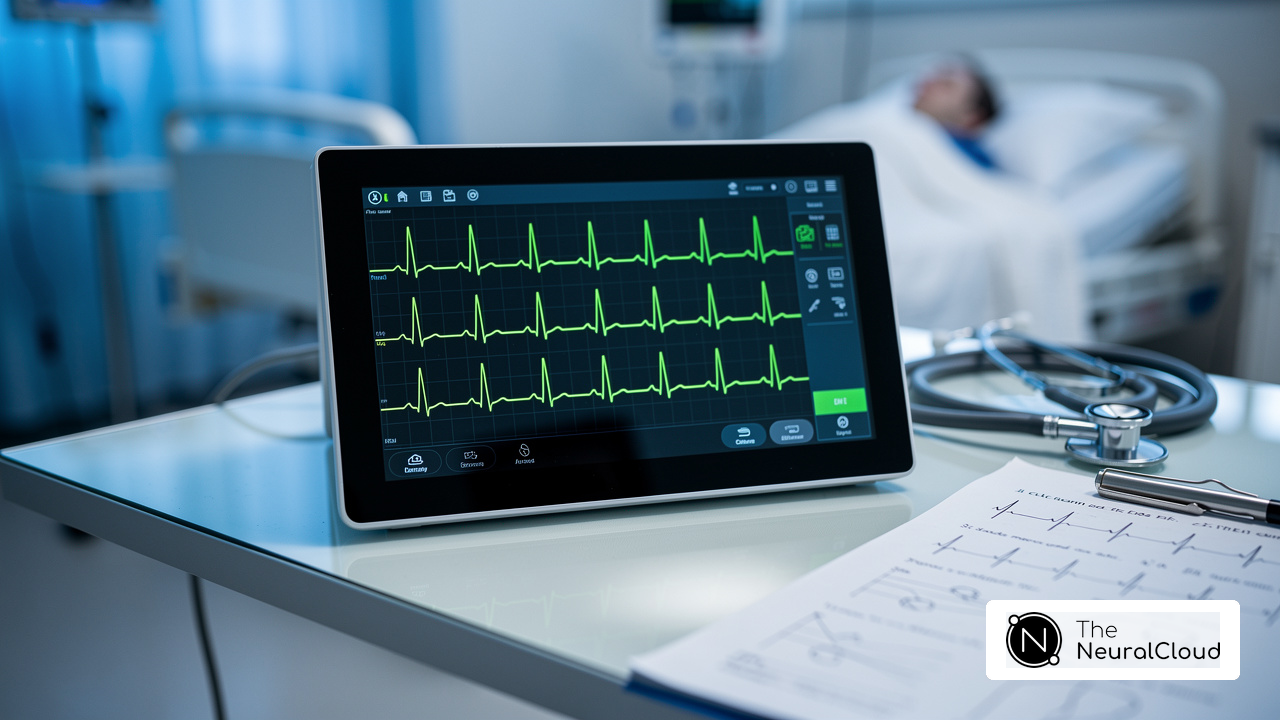
To effectively analyze rhythm strip ECGs, a thorough understanding of the components is essential. The primary elements include:
- P wave: This wave represents atrial depolarization, indicating the electrical activity that triggers atrial contraction. A normal P wave is smooth and rounded, typically characterized by a frequency content of 5-30 Hz. Irregularities in the P component, such as increased height or width, can indicate conditions like atrial enlargement.
- QRS complex: Reflecting ventricular depolarization, the QRS complex is marked by a rapid series of deflections. It is crucial for assessing the heart's electrical conduction system, with its frequency content usually lying within 8-50 Hz. A prolonged QRS complex may indicate a bundle branch block, which can have significant clinical implications.
- T wave: This signal indicates ventricular repolarization, the recovery phase of the ventricles after contraction. The T deflection should be upright in most leads, with its frequency content primarily ranging from 0 to 10 Hz. Inverted T waves can suggest ischemia, emphasizing their diagnostic importance.
Understanding these components enables clinicians to interpret the rhythm strip ECG, facilitating timely interventions. For instance, the lack of a P wave could indicate atrial fibrillation, a condition that necessitates prompt attention. Knowledge of these elements is essential for any healthcare professional engaged in ECG analysis, as it directly affects patient care and results. As John R. Hampton observes, 'The rhythm of the heart is best interpreted from whichever ECG lead displays the P wave alteration most clearly,' emphasizing the significance of lead selection.

Identify and Analyze ECG Waveforms Effectively
To enhance the precision of ECG analysis, healthcare professionals should adopt systematic methods for identifying and evaluating waveforms. Here are some strategies:
- Systematic Approach: Implement a structured method for analysis, such as the steps to assess the rhythm, calculate the heart rate, evaluate the P wave, analyze the QRS complex, and examine the T wave. This methodical process, aligned with best practices, significantly improves interpretation accuracy. Studies indicate that using structured techniques can increase accuracy by over 15%.
- Pattern Recognition: It's crucial to identify common patterns associated with specific conditions. For example, a sawtooth pattern in the inferior leads may indicate atrial flutter, which requires immediate attention. Recognizing these patterns can lead to quicker diagnoses and better patient outcomes.
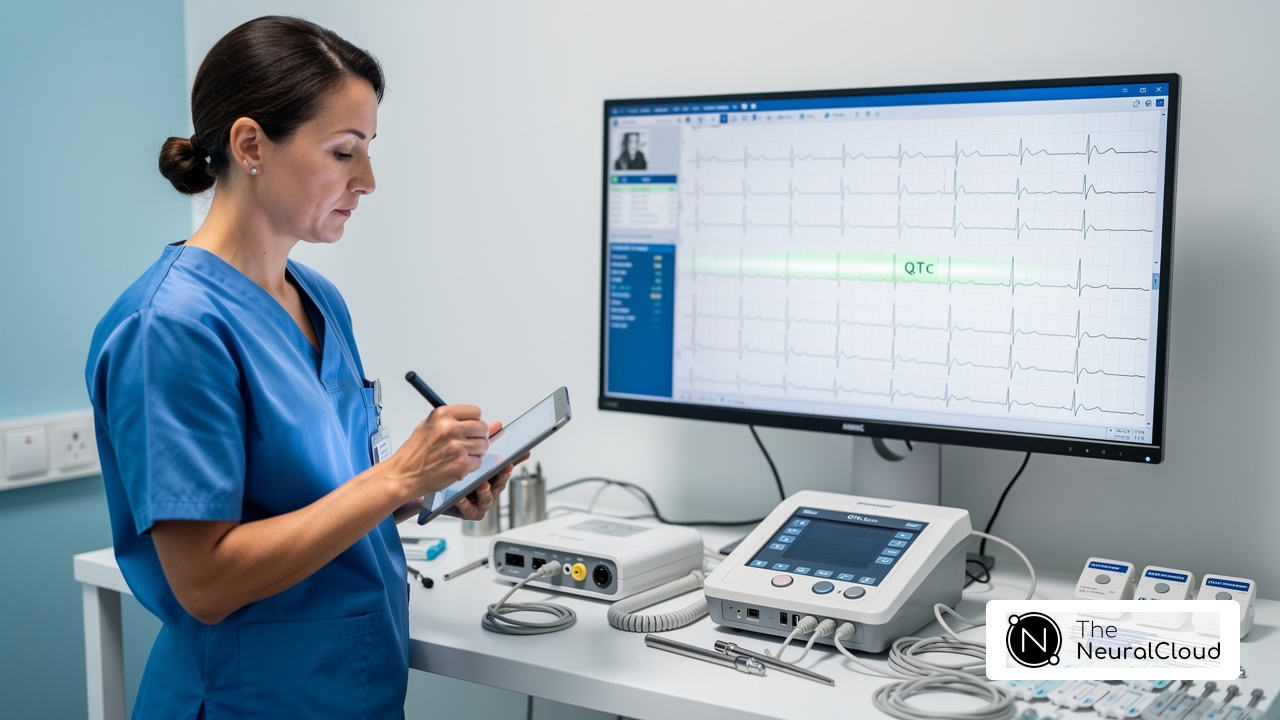
- Leveraging Technology: Utilize tools that assist in waveform analysis. Platforms like software automate the identification of key features, including P, QRS, and T highlights, significantly reducing the risk of human error and improving accuracy. The system's advanced noise filtering capabilities allow for rapid isolation of ECG waves from recordings with high levels of noise and artifact, improving diagnostic yield. Studies have shown a reduction in interpretation time to 1.8 ± 0.6 minutes compared to 6.5 ± 1.2 minutes for conventional reporting, enabling clinicians to make faster clinical decisions.
By implementing these strategies, clinicians can enhance their diagnostic capabilities and respond more effectively to patient needs. The integration of AI-enhanced tools like applications streamlines the analysis process and empowers healthcare professionals to interpret ECGs with the confidence of seasoned cardiologists. As Dr. Yassir Javaid emphasized, incorporating AI technology into primary care is vital for enhancing efficiency and improving patient outcomes.

Leverage Technology for Enhanced ECG Interpretation
Incorporating technology into ECG analysis presents significant challenges, but advancements like the digital tools can enhance its accuracy. Here are essential best practices for leveraging these innovations:
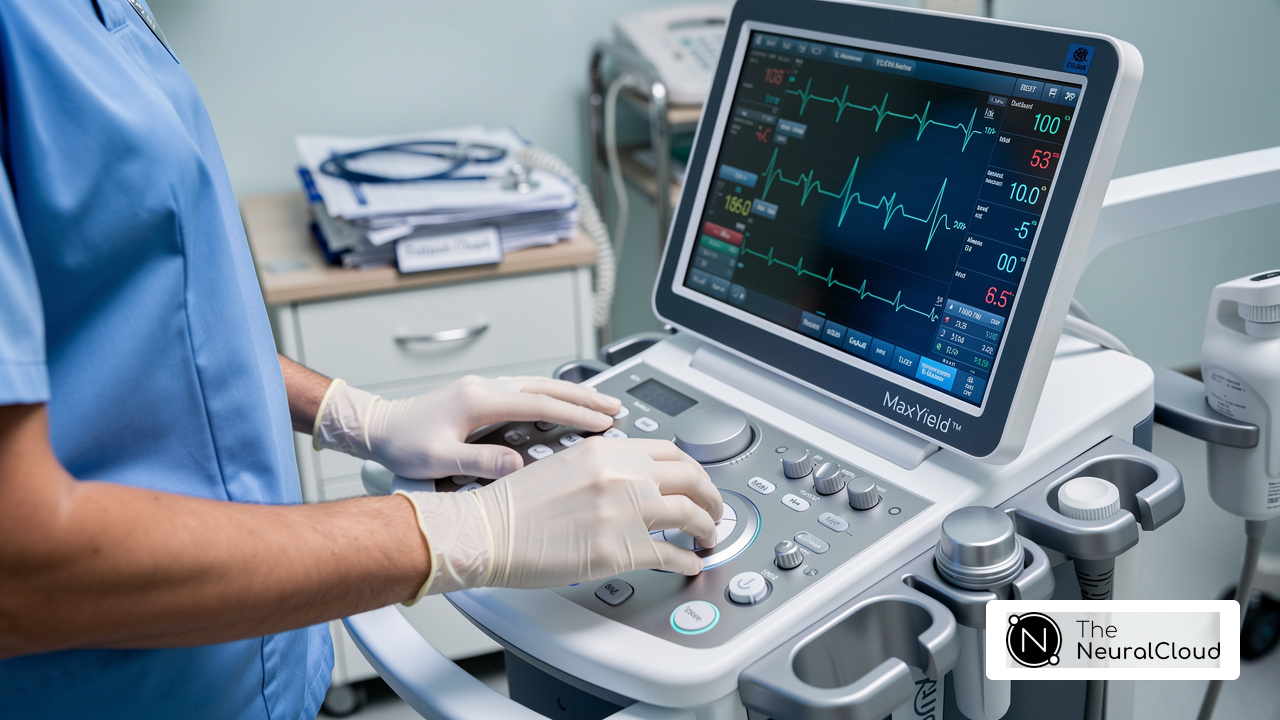
- Adopt automated systems: The technology utilizes advanced AI algorithms to automate ECG analysis. This system can process over 200,000 heartbeats in under five minutes, identifying anomalies that may escape human detection. As a result, diagnostic precision is greatly improved.
- Implement remote monitoring solutions: These tools facilitate continuous monitoring and provide immediate feedback. This capability allows for early detection of arrhythmias or other cardiac events by utilizing a cloud-based platform, ultimately improving patient outcomes. For instance, recent innovations in smart clothing equipped with ECG sensors enable real-time cardiopulmonary monitoring, enhancing patient engagement and care.
- Train Staff on New Technologies: Comprehensive training on new devices is crucial for healthcare professionals. Regular workshops and training sessions can bolster their confidence and competence in utilizing these technologies effectively.
By adopting these technological innovations, healthcare providers can significantly enhance the precision of their assessments using automated analysis, leading to improved patient care and outcomes.

Implement Best Practices in Clinical Environments
To optimize ECG analysis in clinical environments, practitioners should implement several key practices:
- Guidelines: Establish and adhere to protocols for ECG acquisition and interpretation. This consistency guarantees dependable outcomes among different practitioners, improving accuracy. Recent studies indicate that training can significantly enhance comprehension precision, with cardiologists achieving a combined correctness of 74.9% after training interventions.
- Education: Regularly update training programs to incorporate the latest advancements in ECG technology and analysis techniques. Ongoing education is essential; for instance, training programs have shown a median enhancement in understanding proficiency of 12.9% for doctors and 17.1% for advanced practice providers. By keeping staff informed about developments, healthcare facilities can elevate their skills and confidence in ECG analysis.
- Collaborative Environment: Foster a culture where practitioners can discuss challenging cases and share insights. This approach not only enhances diagnostic accuracy but also leads to better patient outcomes. Evidence suggests that collaborative discussions can significantly improve performance, as teams learn from each other's experiences and expertise.
By implementing these practices, healthcare facilities can enhance the quality of rhythm strip ECG analysis, which leads to more accurate diagnoses and improved patient care.

Conclusion
Mastering the analysis of rhythm strip ECGs is essential for healthcare professionals, as it significantly impacts patient outcomes. Understanding the fundamental components of ECG waveforms - the P wave, QRS complex, and T wave - enables clinicians to accurately identify both normal and abnormal rhythms. This foundational knowledge is crucial for effective ECG interpretation, allowing for timely interventions when necessary.
The article highlights several best practices that enhance the accuracy of ECG analysis:
- A systematic approach
- Recognition of specific waveform patterns
- Use of advanced technology, such as AI-powered tools like MaxYield™
- Fostering a collaborative environment
- Adhering to standardized protocols
Continuous training ensures that healthcare professionals stay proficient in the latest techniques and technologies, ultimately leading to better patient care.
Incorporating these best practices not only elevates the quality of ECG analysis but also underscores the importance of ongoing education and collaboration in clinical settings. As ECG interpretation evolves with technological advancements, embracing these strategies empowers healthcare providers to deliver superior patient care and make informed clinical decisions. A commitment to mastering ECG analysis is vital for enhancing diagnostic accuracy and improving overall healthcare outcomes.
Frequently Asked Questions
What are the key components of ECG rhythm strips?
The key components of ECG rhythm strips include the P Wave, QRS Complex, and T Wave.
What does the P Wave represent in an ECG?
The P Wave represents atrial depolarization, indicating the electrical activity that triggers atrial contraction. A normal P signal is smooth and rounded.
What are the characteristics of a normal P Wave?
A normal P Wave typically has a frequency content of 5-30 Hz and is smooth and rounded. Irregularities in the P component can indicate conditions like atrial enlargement.
What is the significance of the QRS Complex?
The QRS Complex reflects ventricular depolarization and is crucial for assessing the heart's electrical conduction system. It is marked by a rapid series of deflections.
What can a prolonged QRS Complex indicate?
A prolonged QRS Complex may indicate a bundle branch block, which can have significant clinical implications.
What does the T Wave indicate in an ECG?
The T Wave indicates ventricular repolarization, which is the recovery phase of the ventricles after contraction.
What are the characteristics of a normal T Wave?
The T Wave should be upright in most leads, with its frequency content primarily ranging from 0 to 10 Hz. Inverted T shapes can suggest myocardial ischemia or infarction.
Why is understanding these components important for healthcare professionals?
Understanding these components is essential for identifying normal and abnormal rhythms on the ECG, facilitating timely interventions and directly affecting patient care and outcomes.
What condition can the absence of a P Wave indicate?
The absence of a P Wave could indicate atrial fibrillation, a condition that necessitates prompt attention.
What does John R. Hampton emphasize regarding ECG analysis?
John R. Hampton emphasizes that "the rhythm of the heart is best interpreted from whichever ECG lead displays the P alteration most clearly," highlighting the importance of clear visualization in ECG analysis.
List of Sources
- Understand Key Components of ECG Rhythm Strips
- mdpi.com (https://mdpi.com/2673-3846/2/4/505)
- eurekalert.org (https://eurekalert.org/news-releases/1111704)
- AI-ECG Finds STEMI Faster, Cuts False-Positive Cath Lab Activations (https://tctmd.com/news/ai-ecg-finds-stemi-faster-cuts-false-positive-cath-lab-activations)
- sciencedirect.com (https://sciencedirect.com/science/article/abs/pii/S0022073615002915)
- bookey.app (https://bookey.app/book/the-ecg-made-easy/quote)
- Identify and Analyze ECG Waveforms Effectively
- powerfulmedical.com (https://powerfulmedical.com/blog/webinar-ecg-in-primary-care-a-new-era-of-ai-powered-interpretation)
- AI-Powered ECG Analysis Offers Promising Path for Early Detection of Chronic Obstructive Pulmonary Disease, Say Mount Sinai Researchers (https://mountsinai.org/about/newsroom/2026/ai-powered-ecg-analysis-offers-promising-path-for-early-detection-of-chronic-obstructive-pulmonary-disease-say-mount-sinai-researchers)
- Checking your browser - reCAPTCHA (https://pmc.ncbi.nlm.nih.gov/articles/PMC10800643)
- Artificial Intelligence–Assisted ECG Interpretation versus Conventional Reporting in Predicting Arrhythmias in Acute Coronary Syndrome: A Diagnostic Accuracy Study (https://healthcare-bulletin.co.uk/article/artificial-intelligence-assisted-ecg-interpretation-versus-conventional-reporting-in-predicting-arrhythmias-in-acute-coronary-syndrome-a-diagnostic-accuracy-study-4252)
- Leverage Technology for Enhanced ECG Interpretation
- cardiovascularbusiness.com (https://cardiovascularbusiness.com/topics/cardiac-imaging/electrocardiography-ecg/fda-clears-next-generation-platform-ai-enabled-ecg-evaluations)
- AI-Powered ECG Analysis Offers Promising Path for Early Detection of Chronic Obstructive Pulmonary Disease, Say Mount Sinai Researchers (https://mountsinai.org/about/newsroom/2026/ai-powered-ecg-analysis-offers-promising-path-for-early-detection-of-chronic-obstructive-pulmonary-disease-say-mount-sinai-researchers)
- AI-Based ECG Analysis Significantly Improves STEMI Detection, Reduces False Activations - American College of Cardiology (https://acc.org/latest-in-cardiology/articles/2025/10/24/16/56/tues-554pm-ai-tct-2025)
- ECG (https://dicardiology.com/channel/ecg)
- HeartBeam Receives FDA Clearance for First-Ever, Cable-Free Synthesized 12-Lead ECG for At-Home Arrhythmia Assessment (https://ir.heartbeam.com/news-events/press-releases/detail/107/heartbeam-receives-fda-clearance-for-first-ever-cable-free)
- Implement Best Practices in Clinical Environments
- 20 Inspirational EMS Quotes | Unitek EMT (https://unitekemt.com/blog/inspirational-ems-quotes)
- sciencedirect.com (https://sciencedirect.com/science/article/abs/pii/S0146280623004061)
- Checking your browser - reCAPTCHA (https://pmc.ncbi.nlm.nih.gov/articles/PMC7522782)
- Top 100 Inspirational, Motivational & Funny Nursing Quotes (https://nurse.org/articles/quotes-for-nurses-and-nursing-students)