Introduction
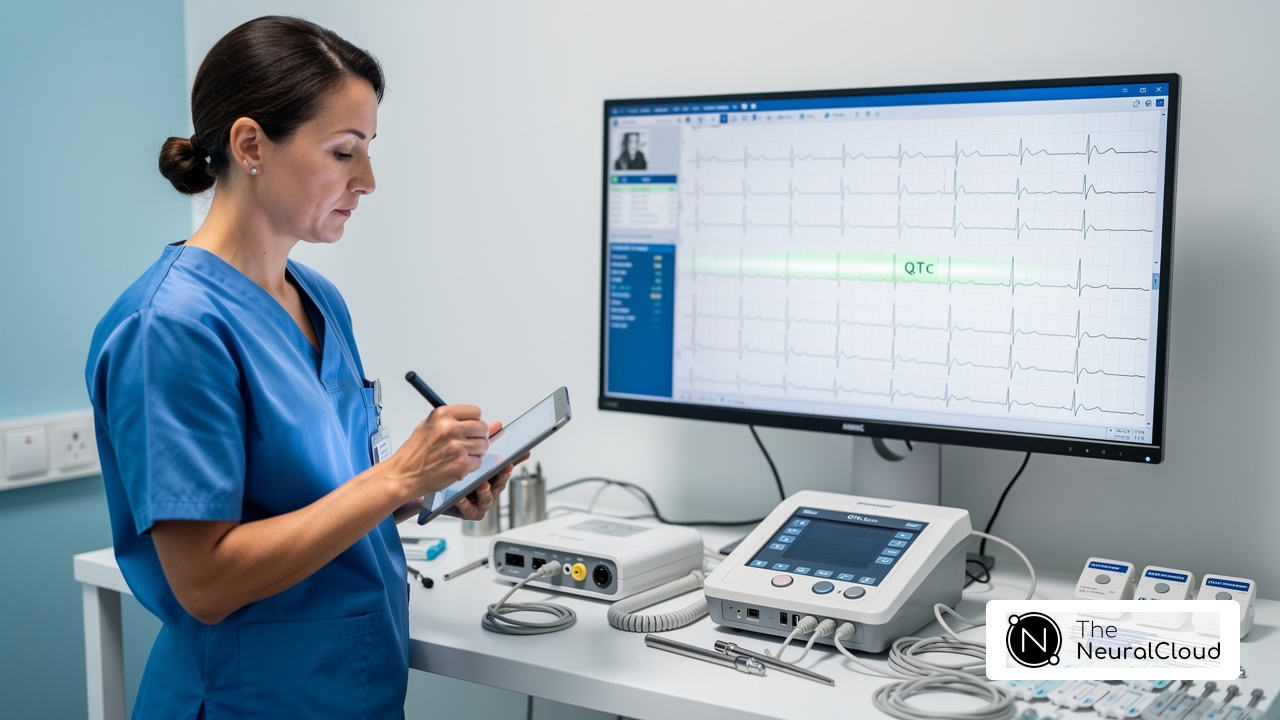
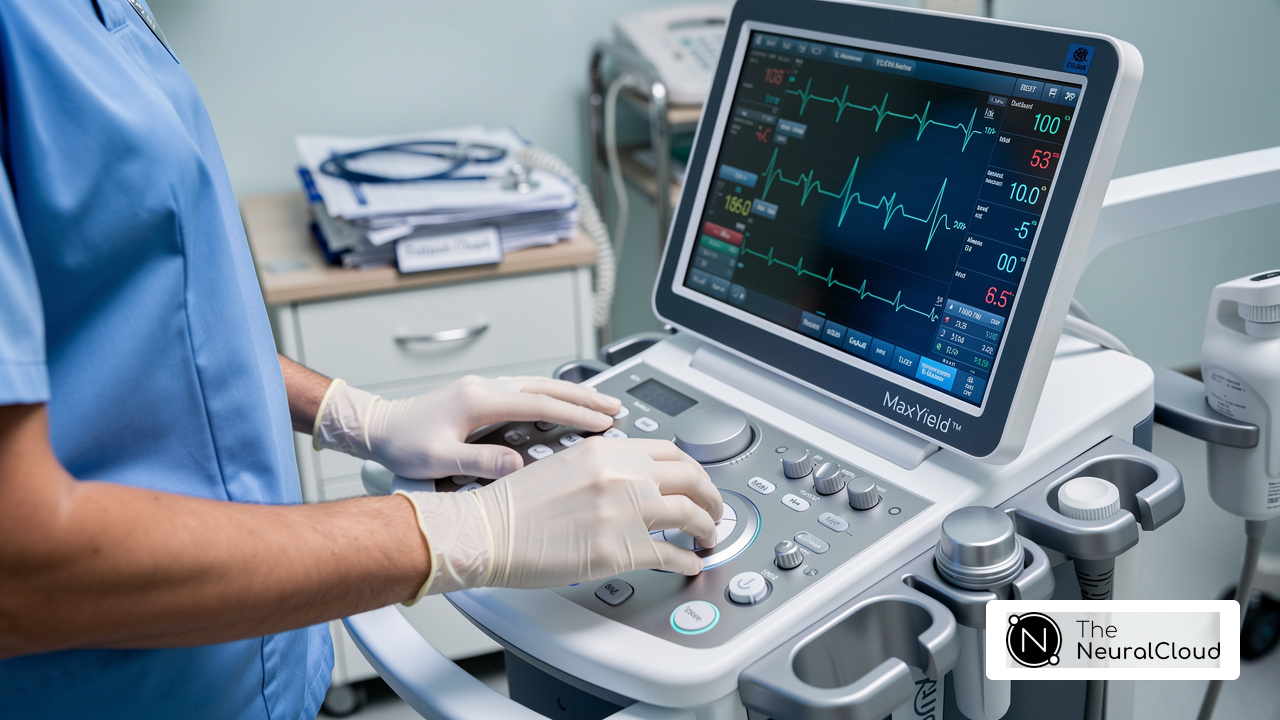
Understanding the nuances of ST elevation in ECG is crucial for healthcare professionals, as it serves as a vital indicator of myocardial ischemia or infarction. However, ECG analysis faces significant challenges, including noise and artifacts that can obscure critical information. This article explores the importance of accurately identifying ST elevation and introduces the MaxYield™ platform, which leverages advancements in technology, particularly AI and machine learning, to enhance ECG analysis.
The MaxYield™ platform offers several key features that improve diagnostic accuracy:
- By utilizing advanced algorithms, it minimizes the impact of noise and artifacts, ensuring clearer readings.
- The platform provides real-time analysis, allowing healthcare professionals to make timely decisions based on accurate data.
- These features not only streamline the diagnostic process but also enhance the overall quality of patient care.
The advantages of the MaxYield™ platform extend beyond just improved accuracy:
- Healthcare professionals benefit from a user-friendly interface that simplifies ECG interpretation, making it accessible to both technical and non-technical users.
- The integration of visual aids, such as diagrams and infographics, enhances understanding and retention of complex information, ultimately leading to better patient outcomes.
In conclusion, as technology continues to evolve, the MaxYield™ platform stands out as a transformative tool in ECG analysis. By addressing the challenges of traditional methods and providing clear, actionable insights, it empowers healthcare professionals to navigate the complexities of ECG interpretation with confidence.
Define ST Elevation and Its Clinical Importance
indicates an upward shift of the ST segment, which serves as a key marker for myocardial ischemia or infarction. Clinically, ST elevation is characterized by a rise of the J point by at least 1 mm in two adjacent leads. This finding is crucial for diagnosing myocardial infarction, which is associated with significant morbidity, where timely recognition can lead to life-saving interventions.
Recent studies reveal that the artificial intelligence model, Queen of Hearts, significantly improves STEMI detection, identifying 553 confirmed cases compared to just 427 detected by traditional methods. Additionally, this model has achieved a remarkable reduction in false positives, dropping to 7.9% from 41.8% with standard triage. This underscores the importance of accurate diagnosis in clinical practice.
Experts stress that recognizing ST elevation is not just a technical necessity but a vital aspect of enhancing patient outcomes. The integration of advanced ECG evaluation tools, such as artificial intelligence algorithms, is essential for health tech developers. These tools automate ECG analysis, providing beat-by-beat insights and effectively isolating key features in noisy recordings. This capability enhances emergency care efficiency and alleviates the workload on clinical teams.
It's also important to recognize that around 40% of STEMI patients with occluded arteries may exhibit symptoms that do not fulfill the classic diagnostic criteria, highlighting the intricacies of accurate diagnosis. Timothy D. Henry, MD, has pointed out the challenges in diagnosis and treatment, emphasizing the critical need for identifying ST elevation.
Explore Key ECG Criteria for Identifying ST Elevation
To accurately identify ST elevation, developers need to grasp several key criteria:
- Lead Configuration: The evaluation of ST elevation primarily relies on a lead ECG, focusing particularly on leads V1 and V2. The presence of ST elevation can indicate a serious cardiac condition. Elevations are defined as 1 mm or more in men and 1.5 mm in women. For males under 40, a threshold is set at 0.5 mV in leads V1 and V2, while for females, it is 0.15 mV.
- Lead Requirement: For ST elevation to be clinically significant, it must appear in two or more contiguous leads. This reinforces the necessity for a thorough analysis across multiple leads. The analysis platform simplifies this process, enabling quick recognition of substantial increases across leads.
- Measurement Timing: The J point, which marks the transition from the S wave to the T wave, serves as the reference point for measuring ST elevation. This ensures accurate assessments. The system enhances this measurement by providing real-time feedback, ensuring precise timing in evaluations.
- Morphology: The shape of the ST segment can vary, with convex, concave, or straight elevations potentially indicating different underlying cardiac conditions, including myocardial infarction. Understanding the morphology in ECG is crucial. As Kashou states, "Any significant change in voltage gradients during the plateau phase of the action potential can result in variations in the ST segment." The software aids in visualizing these variations, supporting healthcare professionals in making informed clinical decisions by clearly displaying the shape and characteristics of the ST segment.
By integrating these criteria into ECG evaluation tools like advanced algorithms, developers can significantly enhance diagnostic accuracy and improve patient outcomes, aligning with current clinical guidelines. Additionally, identifying common reasons for ST elevation, such as early repolarization and injury currents from acute ischemia, is vital for contextualizing findings in ECG evaluation.

Utilize Advanced Technologies for Enhanced ECG Analysis
Recent advancements in artificial intelligence (AI) and machine learning (ML) are reshaping the landscape of electrocardiogram (ECG) assessment, particularly in healthcare. These innovations address several challenges faced in traditional ECG analysis, paving the way for more accurate and efficient diagnostics.
- Automated Detection: One of the standout features of the technology is its ability to detect abnormalities. AI algorithms are now capable of accurately identifying these patterns, which significantly reduces the reliance on manual interpretation and enhances diagnostic reliability. For example, a recent study revealed that an AI model successfully identified 553 confirmed STEMI cases on the initial ECG, including those with subtle changes, surpassing traditional methods that detected only 427. The 'Neural Cloud Solutions' platform exemplifies this capability by providing beat-by-beat analysis and isolating key features in every heartbeat, including P-wave, QRS complex, and T-wave onsets, which aids in the identification of critical conditions.
- Real-Time Analysis: Another critical advantage of the technology is its speed. Machine learning models facilitate the processing of ECG data instantly, delivering immediate insights to clinicians and enabling timely interventions. This feature is particularly crucial in emergencies, where every second counts. The system enhances this process by transforming noisy recordings into detailed insights, allowing for rapid clinical decision-making.
- Noise Reduction: Technologies employed by MaxYield™ effectively filter out noise and artifacts, enhancing the clarity of the ST segment and ensuring more precise readings. This enhancement is vital for reliable diagnosis and treatment planning, as the system automates noise filtering and highlights critical waveforms, streamlining the workflow for healthcare providers.
- Predictive Analytics: The platform also leverages data analytics to forecast potential complications. This empowers healthcare providers to adopt proactive patient management strategies, allowing for earlier interventions that can significantly improve patient outcomes. MaxYield™ supports this by integrating advanced algorithms that enhance diagnostic yield through continuous learning.
By integrating these advanced technologies, developers can create ECG evaluation tools that not only identify but also optimize overall performance, ultimately improving patient care. As Timothy D. Henry, MD, notes, AI-enhanced STEMI diagnosis has the potential to shorten time to treatment and reduce unnecessary activations, underscoring the importance of incorporating these technologies into clinical practice.

Address Challenges in ECG Interpretation: Noise and Artifacts
ECG interpretation faces significant challenges due to noise and artifacts, which can lead to misdiagnosis. Understanding these challenges is crucial for improving patient outcomes.
- Patient movement can distort ECG signals, complicating evaluation. The system addresses this by utilizing high-quality electrodes and ensuring proper patient positioning. Additionally, it employs advanced technologies. For instance, the platform has demonstrated a 99% reduction in artifacts during dynamic movements, showcasing the effectiveness of adaptive filtering methods.
- External electrical sources can introduce consistent noise patterns that adversely affect ECG readings. To combat this, developers should implement robust filtering techniques. Real-world applications have shown that proper grounding and shielding can enhance diagnostic accuracy, as evidenced by studies achieving significant improvements in various clinical settings.
- Variations in the baseline can obscure critical evaluation of the ECG signals. Techniques such as digital filtering are essential for stabilizing the baseline, ensuring that true cardiac signals are accurately represented. Research suggests that high-pass filters can decrease baseline estimation errors by as much as 50%, enhancing overall ECG evaluation accuracy.
- Muscle contractions introduce variability in ECG readings, complicating interpretation. Advanced algorithms can distinguish between authentic cardiac signals and noise, improving the reliability of ECG evaluation. For example, AI-enhanced artifact detection has achieved a sensitivity of 97.19%, significantly improving diagnostic accuracy.
By addressing these challenges, the technology enhances the reliability of ECG analysis tools. This ultimately leads to improved patient care and outcomes, making it an invaluable asset for healthcare professionals.

Conclusion
Recognizing and accurately interpreting ST elevation in ECG is crucial for timely diagnosis and effective treatment of myocardial ischemia and infarction. However, traditional ECG analysis often faces challenges such as lead configuration, measurement timing, and noise interference. Advanced technologies, particularly AI-driven solutions like Neural Cloud Solutions' MaxYield™, play a pivotal role in enhancing the detection of ST elevation, significantly improving patient outcomes and streamlining clinical workflows.
Features of MaxYield™:
- AI-Driven Detection: Utilizes advanced algorithms to identify ST elevation patterns accurately.
- Real-Time Analysis: Provides immediate feedback, allowing for swift clinical decisions.
- Noise Reduction: Enhances signal clarity, minimizing the impact of artifacts on interpretation.
- User-Friendly Interface: Designed for ease of use, facilitating adoption by healthcare professionals.
The advantages of integrating MaxYield™ into clinical practice are substantial. By improving diagnostic accuracy and efficiency, healthcare professionals can make informed decisions more quickly, ultimately leading to better patient care. The ongoing evolution of AI and machine learning in ECG interpretation presents a significant opportunity to address traditional challenges, paving the way for improved clinical outcomes.
In conclusion, it is imperative for health tech developers to embrace and implement advanced ECG evaluation tools like MaxYield™. By prioritizing the integration of these technologies, the healthcare industry can continue to advance in effectively managing cardiac conditions and optimizing patient care.
Frequently Asked Questions
What does ST elevation in an ECG indicate?
ST elevation in an ECG indicates an upward shift of the ST segment, serving as a key marker for myocardial ischemia or infarction.
How is ST elevation characterized in an ECG?
ST elevation is characterized by a rise of the J point by at least 1 mm in two adjacent leads.
Why is recognizing ST elevation clinically important?
Recognizing ST elevation is crucial for diagnosing ST-Elevation Myocardial Infarction (STEMI), where timely recognition can lead to life-saving interventions.
How does the AI-driven ECG model, Queen of Hearts, improve STEMI detection?
The Queen of Hearts model significantly improves STEMI detection by identifying 553 confirmed cases compared to 427 detected by traditional methods and reduces false positives from 41.8% to 7.9%.
What is the role of advanced ECG evaluation tools like MaxYield™?
MaxYield™ automates ECG analysis, providing beat-by-beat insights and isolating key features in noisy recordings, which enhances emergency care efficiency and alleviates the workload on clinical teams.
What percentage of STEMI patients with occluded arteries may exhibit atypical ST elevation?
Around 40% of STEMI patients with occluded arteries may exhibit ST elevation equivalents that do not fulfill the classic diagnostic criteria.
What challenges do experts highlight in STEMI diagnosis and treatment?
Experts emphasize ongoing challenges in accurately diagnosing STEMI, underscoring the critical need for identifying ST changes in ECG readings.
List of Sources
- Define ST Elevation and Its Clinical Importance
- AI-based ECG model linked to reduction in false positives for heart attack (https://healio.com/news/cardiology/20251030/aibased-ecg-model-linked-to-reduction-in-false-positives-for-heart-attack)
- internationaljournalofcardiology.com (https://internationaljournalofcardiology.com/article/S0167-5273(24)01464-5/fulltext)
- Trends and Outcomes of ST‐Segment–Elevation Myocardial Infarction Among Young Women in the United States | Journal of the American Heart Association (https://ahajournals.org/doi/10.1161/JAHA.122.026811)
- New study finds AI model improves heart attack detection (https://health.ucdavis.edu/news/headlines/new-study-finds-ai-model-improves-heart-attack-detection/2025/11)
- AI-driven ECG improves detection of severe heart attacks (https://news-medical.net/news/20251029/AI-driven-ECG-improves-detection-of-severe-heart-attacks.aspx)
- Explore Key ECG Criteria for Identifying ST Elevation
- ST Segment - StatPearls - NCBI Bookshelf (https://ncbi.nlm.nih.gov/books/NBK459364)
- STEMI: ST-segment Elevation Myocardial Infarction - The Cardiology Advisor (https://thecardiologyadvisor.com/ddi/stemi-st-elevation-myocardial-infarction)
- AI-based ECG model linked to reduction in false positives for heart attack (https://healio.com/news/cardiology/20251030/aibased-ecg-model-linked-to-reduction-in-false-positives-for-heart-attack)
- medicalxpress.com (https://medicalxpress.com/news/2025-11-zalunfiban-early-benefits-st-elevation.html)
- pmc.ncbi.nlm.nih.gov (https://pmc.ncbi.nlm.nih.gov/articles/PMC11491539)
- Utilize Advanced Technologies for Enhanced ECG Analysis
- AI-Powered ECG Analysis Offers Promising Path for Early Detection of Chronic Obstructive Pulmonary Disease, Say Mount Sinai Researchers (https://mountsinai.org/about/newsroom/2026/ai-powered-ecg-analysis-offers-promising-path-for-early-detection-of-chronic-obstructive-pulmonary-disease-say-mount-sinai-researchers)
- AI-driven ECG improves detection of severe heart attacks (https://news-medical.net/news/20251029/AI-driven-ECG-improves-detection-of-severe-heart-attacks.aspx)
- New study finds AI model improves heart attack detection (https://health.ucdavis.edu/news/headlines/new-study-finds-ai-model-improves-heart-attack-detection/2025/11)
- medicaleconomics.com (https://medicaleconomics.com/view/accurkardia-wins-best-new-tech-solution-for-ecg-at-medtech-breakthrough-awards)
- pmc.ncbi.nlm.nih.gov (https://pmc.ncbi.nlm.nih.gov/articles/PMC10145690)
- Address Challenges in ECG Interpretation: Noise and Artifacts
- array.aami.org (https://array.aami.org/doi/full/10.2345/0899-8205-45.2.155)
- nature.com (https://nature.com/articles/s41598-025-32249-7)
- Reducing ECG artifact (https://numed.co.uk/news/reducing-ecg-artifact)
- AI-Powered ECG Analysis Offers Promising Path for Early Detection of Chronic Obstructive Pulmonary Disease, Say Mount Sinai Researchers (https://mountsinai.org/about/newsroom/2026/ai-powered-ecg-analysis-offers-promising-path-for-early-detection-of-chronic-obstructive-pulmonary-disease-say-mount-sinai-researchers)
- theneuralcloud.com (https://theneuralcloud.com/post/10-key-artefact-ecg-issues-and-their-solutions)