Introduction
Understanding the complexities of the normal heart waveform is crucial for anyone involved in cardiac care, as it lays the groundwork for effective ECG analysis. This article will explore the essential components of the ECG - the P wave, QRS complex, and T wave - highlighting their unique characteristics and clinical significance.
However, healthcare professionals often face challenges in interpreting ECGs accurately. How can they enhance their skills and avoid common pitfalls in ECG analysis? By mastering these elements and utilizing advanced techniques, clinicians can gain critical insights that lead to improved patient outcomes and more precise diagnoses.
Explore the Components of the Normal ECG Waveform
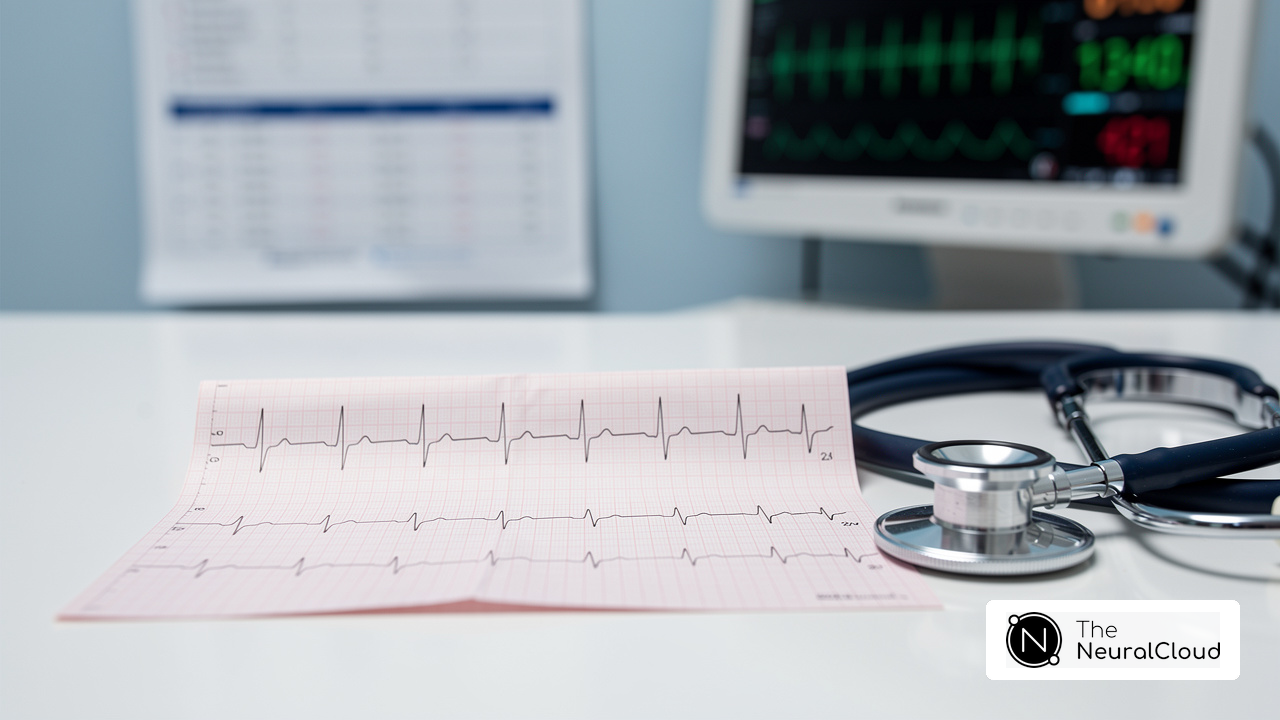
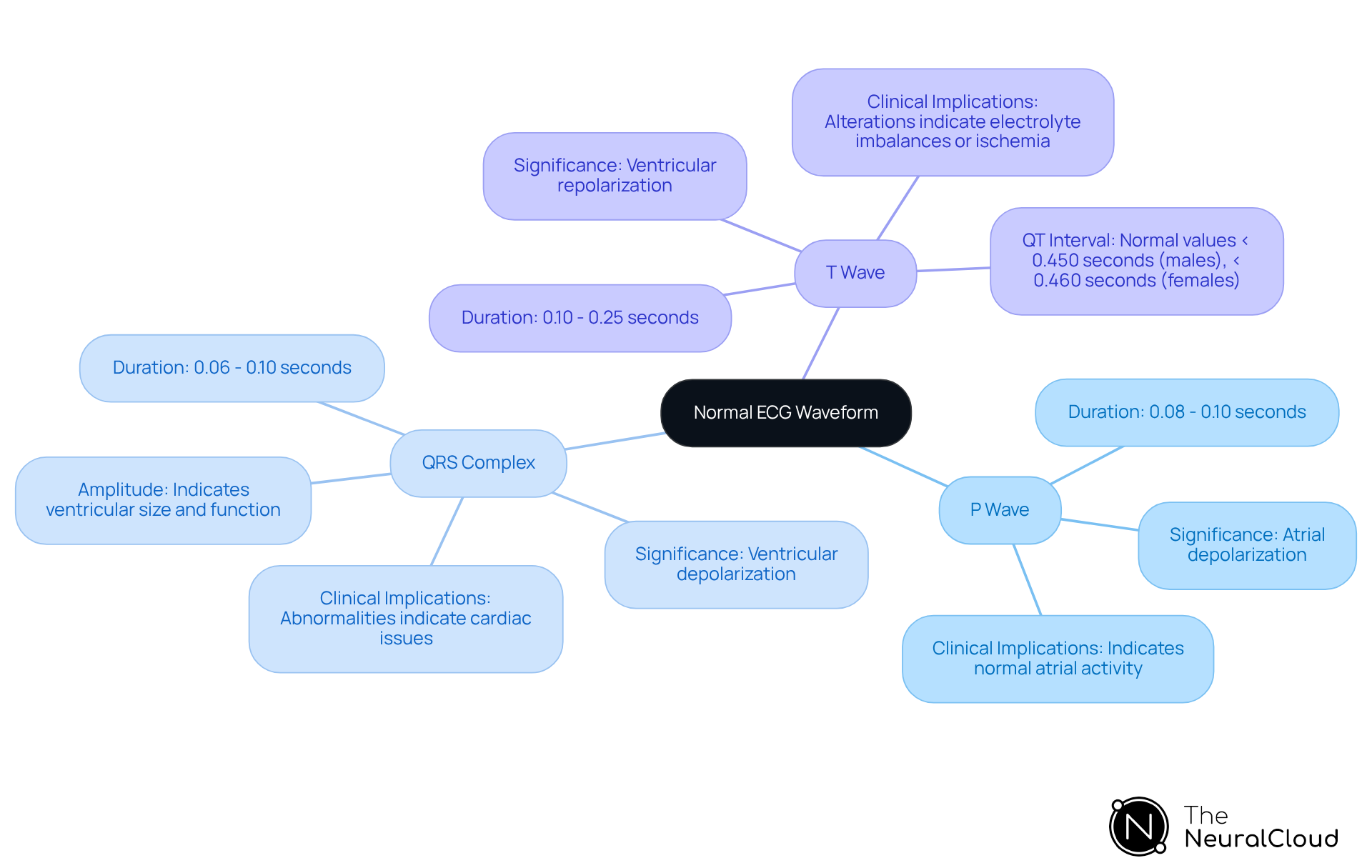
The typical ECG pattern, known as the normal ECG waveform, consists of three essential elements: the P wave, QRS complex, and T wave, each representing unique electrical activities.
Key Components of ECG
- P Wave: This small, positive deflection signifies atrial depolarization, marking the electrical activation of the atria. It typically lasts between 0.08 to 0.10 seconds. Cardiologists emphasize that the P wave is essential for evaluating atrial function and rhythm stability, as its presence indicates normal atrial activity.
- QRS Complex: This series of three deflections (Q, R, and S waves) represents ventricular depolarization and is crucial for evaluating the heart's rhythm and function. The QRS waveform is typically narrow, enduring approximately 0.06 to 0.10 seconds. Abnormalities in this segment can indicate various cardiac issues, such as bundle branch blocks or ventricular hypertrophy, making its analysis essential for accurate diagnosis. The amplitude of the QRS complex is also significant, as it can indicate ventricular size and function, which is critical in diagnosing conditions like ventricular hypertrophy.
- T Wave: Following the QRS complex, the T wave signifies ventricular repolarization, the recovery phase of the ventricles. Typically upright in most leads, it lasts about 0.10 to 0.25 seconds. Alterations in the T wave can indicate electrolyte imbalances or ischemic conditions, highlighting its significance in clinical evaluations. The typical QT interval values, characterized as under 0.450 seconds for males and under 0.460 seconds for females, are also essential for comprehending the T segment's clinical significance. Utilizing advanced techniques can help clinicians quickly identify these changes, improving diagnostic yield and clinical decision-making.
Enhancing Analysis with Technology
With the integration of Neural Cloud Solutions' platform, the analysis of the ECG can be enhanced through automated labeling and noise reduction, allowing for more precise evaluations. This platform addresses common challenges in ECG analysis by streamlining the process and improving accuracy.
Conclusion
Understanding these components is crucial for accurate ECG interpretation, as they provide insights into the heart's electrical activity and overall health. For instance, recognizing the significance of the QRS complex in diagnosing conditions like ventricular tachycardia can be life-saving. As noted by experts, a thorough grasp of these waveforms enhances clinical decision-making and patient outcomes, especially when supported by advanced technologies like Neural Cloud Solutions.
Analyze the Characteristics of P-Waves, QRS Complex, and T-Waves
Each component of the ECG waveform has distinct characteristics that can reveal various cardiac conditions:
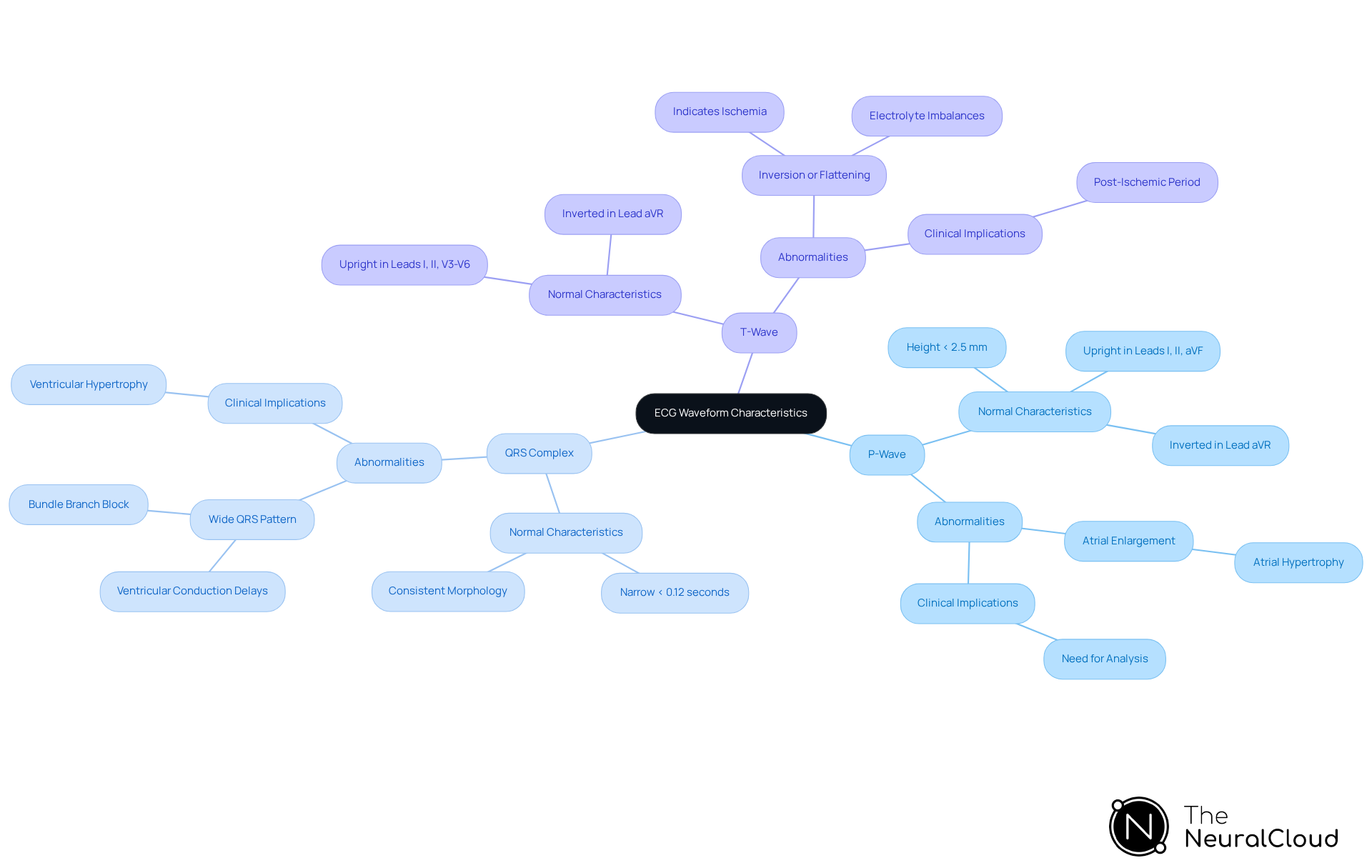
- P wave: A normal P wave is smooth and rounded, typically measuring less than 2.5 mm in height. It should be upright in leads I, II, and aVF, while appearing inverted in lead aVR. Variations in the P component can suggest atrial enlargement, common in patients with conditions such as atrial hypertrophy. Abnormal P waves may signal underlying cardiac issues, emphasizing the need for careful analysis.
- QRS complex: The QRS segment should be narrow, ideally less than 0.12 seconds, and exhibit consistent morphology across leads. A wide QRS pattern may indicate arrhythmias or other significant problems, such as bundle branch block. The amplitude of the QRS complex can also provide insights into ventricular hypertrophy, where increased muscle mass correlates with heightened electrical activity, potentially indicating serious cardiac conditions.
- T wave: The T feature is generally upright in leads I, II, and V3-V6, while it is inverted in lead aVR. Abnormalities, such as inversion or flattening, can indicate ischemia or electrolyte imbalances. For instance, flat T-waves are often observed in the post-ischemic period, particularly in leads V1-V3, which can aid in diagnosing specific cardiac conditions.
By mastering these characteristics, healthcare professionals can significantly enhance their diagnostic accuracy and improve patient outcomes. Understanding the implications of P waves, QRS complexes, and T-wave features is essential for effective ECG interpretation and identifying a comprehensive approach in patient-centered care.
Implement Advanced Techniques for Accurate ECG Interpretation
To enhance the accuracy of ECG interpretation, it's essential to address the challenges faced in analyzing the waveform. Advanced techniques can significantly improve the clarity and reliability of readings, which is essential for achieving a correct diagnosis and ultimately benefiting patient outcomes.
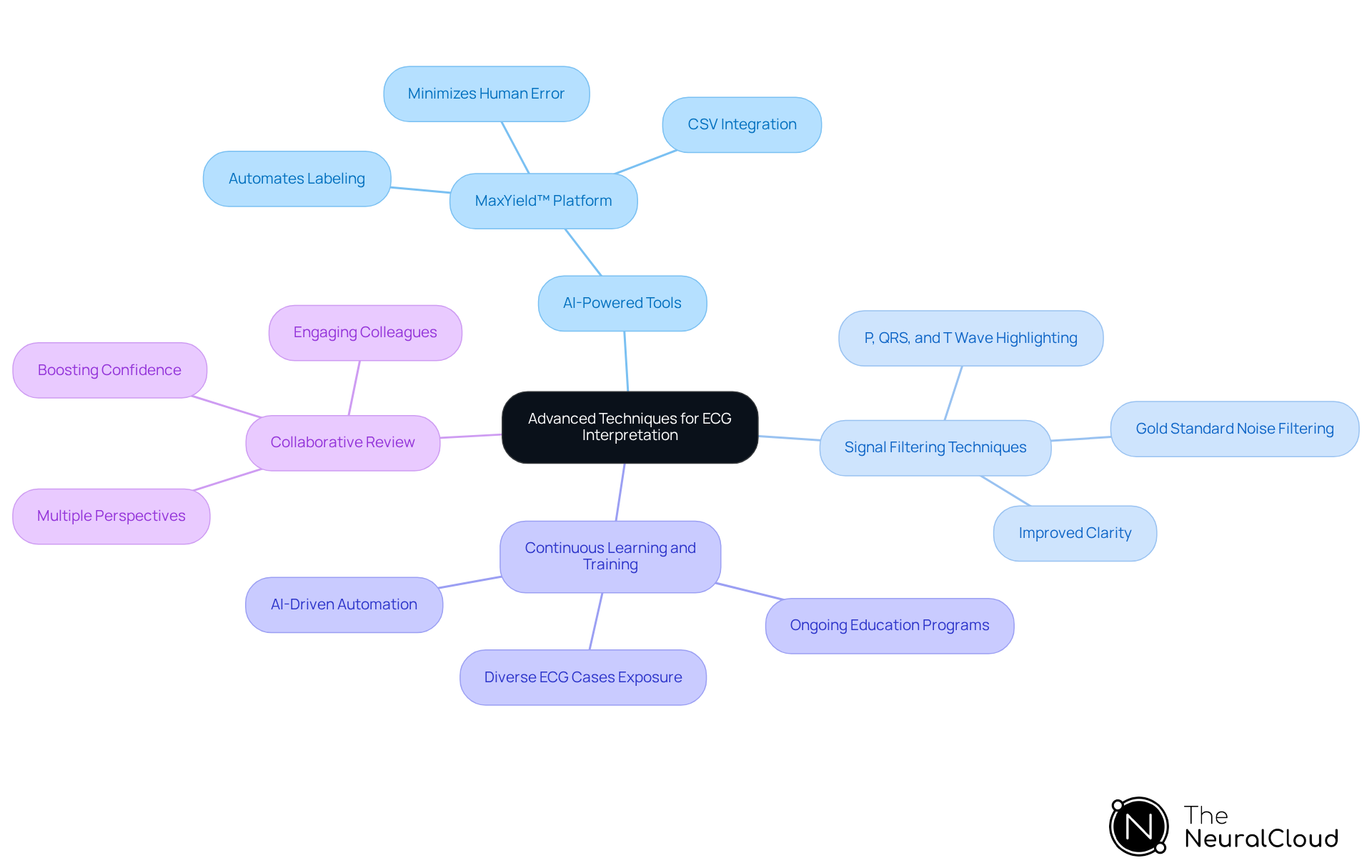
- Utilize advanced tools: The software from Neural Cloud Solutions automates the labeling of P, QRS, and T Wave onsets and offsets. This rapid analysis of the waveform minimizes human error, enabling healthcare professionals to quickly identify key features and anomalies in ECG data. The ability to tabulate results in CSV format seamlessly integrates into existing workflows, enhancing efficiency.
- Apply Signal Filtering Techniques: Techniques, such as those provided by Neural Cloud Solutions, are crucial for minimizing noise and artifacts in ECG readings. Their algorithms, combined with P, QRS, and T Wave highlighting, significantly improve the clarity of the waveform. This enhancement leads to more accurate interpretations of the data, which is vital for effective patient management.
- Continuous Education: Ongoing education and training programs focused on ECG interpretation are essential for healthcare professionals. Regular exposure to diverse ECG cases enhances pattern recognition and diagnostic skills. Neural Cloud Solutions supports this with a continuous learning model that leverages AI-driven automation to improve ECG analysis accuracy.
- Collaborative Review: Engaging in collaborative reviews with colleagues can greatly enhance the interpretation of intricate ECGs. Multiple perspectives during the diagnostic process can boost confidence and lead to more accurate assessments.
By integrating these techniques into practice, clinicians can significantly improve their skills, particularly in recognizing the abnormalities, ultimately leading to better patient care.
Overcome Challenges in ECG Analysis with Innovative Solutions
presents several challenges, but innovative solutions can effectively address these hurdles:
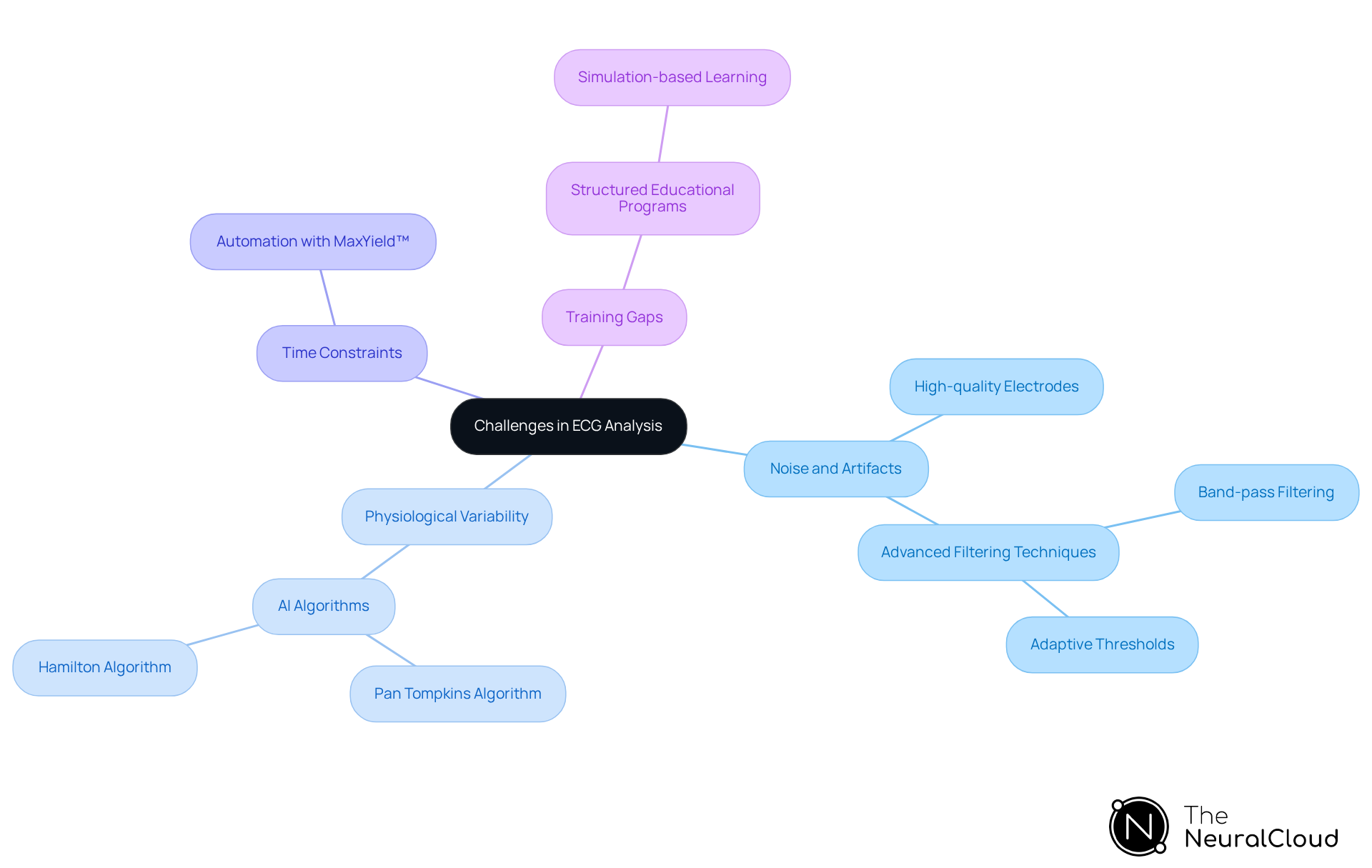
- Noise and Artifacts: To minimize noise, high-quality electrodes should be utilized alongside proper skin preparation. Techniques such as band-pass filtering and adaptive thresholds significantly enhance signal clarity by reducing interference from motion artifacts and electromagnetic noise.
Inconsistent readings, leading to inconsistencies in the interpretation of the ECG. Implementing algorithms like the Pan Tompkins and Hamilton algorithms standardizes interpretations and accommodates individual differences, thereby improving diagnostic accuracy.
- Time Constraints: Automating routine analysis tasks with platforms like ECG software allows clinicians to process over 200,000 heartbeats in under five minutes. This efficiency enables healthcare professionals to focus on complex cases that require nuanced human expertise, ultimately improving patient outcomes.
- Training Gaps: To bridge training deficiencies, targeted workshops emphasizing practical ECG interpretation skills are essential. Incorporating simulation-based learning can further enhance understanding and proficiency in ECG analysis.
By proactively addressing these challenges, healthcare professionals can significantly improve the reliability of ECG interpretations, leading to a higher standard of care and better patient management.
Conclusion
Mastering the normal heart waveform is crucial for effective ECG analysis, serving as a fundamental tool for evaluating cardiac health. Understanding the details of the P wave, QRS complex, and T wave equips healthcare professionals with the knowledge to detect potential abnormalities and enhance patient care.
In this article, we discussed critical insights into the components of the ECG waveform, emphasizing their unique characteristics and clinical significance. The P wave indicates atrial depolarization, the QRS complex reveals ventricular depolarization, and the T wave signifies ventricular repolarization. Each element plays a vital role in diagnosing various cardiac conditions. Utilizing advanced tools like MaxYield™ can streamline the interpretation process, improving diagnostic accuracy and patient outcomes.
Addressing the challenges in ECG analysis is paramount for healthcare professionals. By embracing advanced techniques, ongoing training, and collaborative reviews, clinicians can sharpen their skills in recognizing the normal heart waveform. This proactive approach enhances diagnostic precision and underscores the importance of continuous learning in the evolving field of cardiology.
MaxYield™ Features:
- Streamlined ECG interpretation
- Enhanced diagnostic accuracy
- User-friendly interface
Advantages for Healthcare Professionals:
- Improved patient outcomes
- Increased confidence in diagnoses
- Ongoing support and training
In conclusion, mastering the normal heart waveform and leveraging innovative solutions like MaxYield™ can significantly enhance ECG analysis. By focusing on continuous education and utilizing advanced tools, healthcare professionals can ensure they provide the best possible care to their patients.
Frequently Asked Questions
What are the main components of a normal ECG waveform?
The main components of a normal ECG waveform are the P wave, QRS complex, and T wave, each representing different electrical activities of the heart.
What does the P wave represent in an ECG?
The P wave signifies atrial depolarization, indicating the electrical activation of the atria. It typically lasts between 0.08 to 0.10 seconds and is essential for evaluating atrial function and rhythm stability.
What is the significance of the QRS complex in an ECG?
The QRS complex represents ventricular depolarization and is crucial for evaluating the heart's rhythm and function. It typically lasts about 0.06 to 0.10 seconds, and abnormalities can indicate various cardiac issues, such as bundle branch blocks or ventricular hypertrophy.
How long does the T wave last, and what does it signify?
The T wave signifies ventricular repolarization and typically lasts about 0.10 to 0.25 seconds. It is usually upright in most leads, and alterations can indicate electrolyte imbalances or ischemic conditions.
What are the typical QT interval values for males and females?
The typical QT interval values are under 0.450 seconds for males and under 0.460 seconds for females, which are important for understanding the clinical significance of the T segment.
How does MaxYield™ enhance ECG analysis?
MaxYield™ enhances ECG analysis through automated labeling and noise reduction, allowing for more precise evaluations and addressing common challenges in ECG analysis.
Why is understanding ECG components important for clinical decision-making?
Understanding ECG components is crucial for accurate interpretation, as they provide insights into the heart's electrical activity and overall health, aiding in the diagnosis of conditions like ventricular tachycardia and improving patient outcomes.
List of Sources
- Explore the Components of the Normal ECG Waveform
- ECG interpretation: Characteristics of the normal ECG (P-wave, QRS complex, ST segment, T-wave) – The Cardiovascular (https://ecgwaves.com/topic/ecg-normal-p-wave-qrs-complex-st-segment-t-wave-j-point)
- How to Read an Electrocardiogram (EKG/ECG) (https://nurse.org/articles/how-to-read-an-ECG-or-EKG-electrocardiogram)
- Normal Electrocardiography (ECG) Intervals: Normal Electrocardiography Intervals (https://emedicine.medscape.com/article/2172196-overview)
- Analyze the Characteristics of P-Waves, QRS Complex, and T-Waves
- Normal Electrocardiography (ECG) Intervals: Normal Electrocardiography Intervals (https://emedicine.medscape.com/article/2172196-overview)
- bookey.app (https://bookey.app/book/the-ecg-made-easy/quote)
- ECG interpretation: Characteristics of the normal ECG (P-wave, QRS complex, ST segment, T-wave) – The Cardiovascular (https://ecgwaves.com/topic/ecg-normal-p-wave-qrs-complex-st-segment-t-wave-j-point)
- ahajournals.org (https://ahajournals.org/doi/10.1161/JAHA.125.043590)
- Implement Advanced Techniques for Accurate ECG Interpretation
- AI-ECG Finds STEMI Faster, Cuts False-Positive Cath Lab Activations (https://tctmd.com/news/ai-ecg-finds-stemi-faster-cuts-false-positive-cath-lab-activations)
- AI-Based ECG Analysis Significantly Improves STEMI Detection, Reduces False Activations - American College of Cardiology (https://acc.org/latest-in-cardiology/articles/2025/10/24/16/56/tues-554pm-ai-tct-2025)
- New study finds AI model improves heart attack detection (https://health.ucdavis.edu/news/headlines/new-study-finds-ai-model-improves-heart-attack-detection/2025/11)
- AI Turns ECGs into Powerful Heart Disease Screening Tool (https://insideprecisionmedicine.com/topics/informatics/ai-turns-ecgs-into-powerful-heart-disease-screening-tool)
- Overcome Challenges in ECG Analysis with Innovative Solutions
- AI-Based ECG Analysis Significantly Improves STEMI Detection, Reduces False Activations - American College of Cardiology (https://acc.org/latest-in-cardiology/articles/2025/10/24/16/56/tues-554pm-ai-tct-2025)
- New study finds AI model improves heart attack detection (https://health.ucdavis.edu/news/headlines/new-study-finds-ai-model-improves-heart-attack-detection/2025/11)
- AI-driven ECG improves detection of severe heart attacks (https://news-medical.net/news/20251029/AI-driven-ECG-improves-detection-of-severe-heart-attacks.aspx)
- mdpi.com (https://mdpi.com/2306-5354/7/2/53)
- pmc.ncbi.nlm.nih.gov (https://pmc.ncbi.nlm.nih.gov/articles/PMC7357458)