Introduction
Ventricular tachycardia (VT) poses significant challenges in patient management due to its potential for life-threatening complications. Swift identification on an ECG is crucial for effective intervention. Healthcare professionals face the ongoing challenge of ensuring accurate diagnosis amidst the complexities of ECG analysis, which can include noise and artifacts. This article explores the intricacies of VT, highlighting its clinical significance and the advanced tools available to enhance diagnostic accuracy.
One such tool is the MaxYield™ platform, designed to improve ECG analysis. It offers features that streamline the identification of VT, allowing clinicians to focus on patient care rather than getting bogged down by technical difficulties. By leveraging cutting-edge technology, healthcare providers can enhance their diagnostic efforts, ultimately leading to better patient outcomes.
The advantages of using MaxYield™ are clear:
- It simplifies the ECG interpretation process.
- It reduces the likelihood of misdiagnosis.
- It empowers clinicians with the confidence to make informed decisions.
As we delve deeper into the features of this platform, it becomes evident how it addresses the pressing needs of healthcare professionals in the fast-paced environment of cardiac care.
Define Ventricular Tachycardia and Its Clinical Importance
Ventricular tachycardia is a condition that originates from the ventricles, defined as three or more consecutive beats exceeding 100 beats per minute. This condition is critical due to its potential to lead to serious complications:
- Syncope
- Heart failure
Notably, VT is the most common cause of sudden cardiac arrest, highlighting the urgent need for timely intervention.
Identifying ventricular tachycardia is essential because it often indicates underlying heart disease or structural abnormalities. Recent studies emphasize that prompt recognition and management of VT can significantly improve outcomes for affected individuals. Effective strategies for managing ventricular tachycardia have been shown to enhance survival rates and quality of life for those experiencing VT.
Therefore, early detection is crucial for healthcare professionals aiming to provide optimal care. By recognizing the signs and implications of VT, clinicians can better address the needs of their patients, ultimately leading to more favorable outcomes.

Identify Key ECG Features of Ventricular Tachycardia
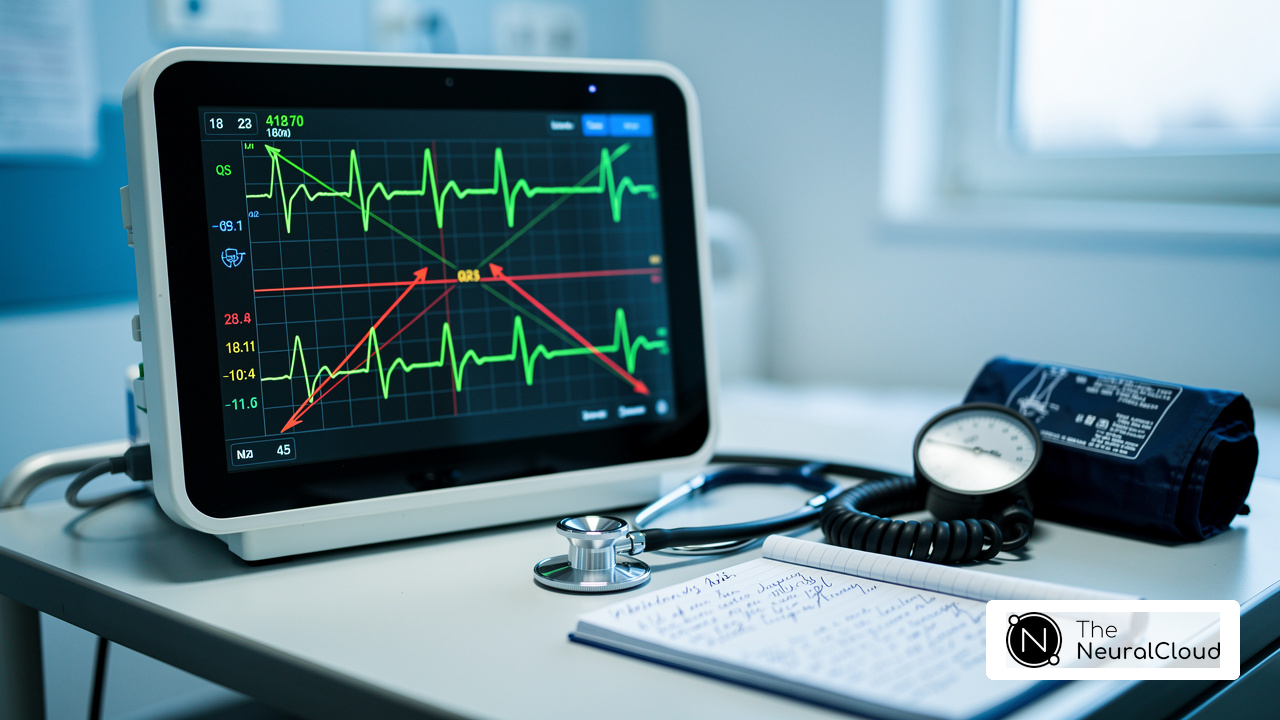
Key ECG features of ventricular tachycardia (VT) include:
- QRS duration: Typically exceeding 120 milliseconds, indicate abnormal ventricular conduction, a hallmark of VT. This characteristic is crucial for differentiating VT from other arrhythmias, particularly supraventricular tachycardia (SVT).
- P wave absence: The lack of identifiable P waves suggests that the rhythm originates from the ventricles rather than the atria, reinforcing the diagnosis of VT. In cases of VT, P waves may be dissociated or absent altogether.
- Rhythm consistency: While VT can exhibit slight irregularities, it generally presents as a consistent rhythm, essential for accurate identification during ECG analysis.
- Morphological patterns: Specific patterns, such as right bundle branch block (RBBB) morphology, can aid in distinguishing VT from other tachycardias. For instance, concordance in precordial leads, where all are either completely upright or completely downward, is indicative of VT.
Recognizing these features is vital for the accurate diagnosis and management of VT. The prevalence of ventricular arrhythmias in patients with VT is significant, as studies indicate that sustained monomorphic VT was present in a substantial number of cases. Furthermore, understanding the morphological variations of VT can enhance diagnostic accuracy, particularly in emergency settings where timely intervention is critical.
With the integration of Neural Cloud Solutions' advanced platform, healthcare professionals can leverage technology to enhance their understanding of these features. This technology maps ECG waves through interference, isolating and tagging key attributes in every heartbeat, which is crucial for analysis on ECG. By providing beat-by-beat analysis and converting noisy recordings into detailed insights, this system supports confident clinical decision-making and addresses physiological variability and signal artifacts, ultimately improving patient outcomes.

Utilize Advanced Technology for Enhanced VT Analysis
Advanced technologies, such as the platform from Neural Cloud Solutions, leverage AI algorithms to enhance the analysis of ventricular tachycardia. The challenges in ECG analysis often stem from the complexity of data interpretation and the need for accurate results. The platform addresses these challenges through several key features:
- MaxYield™: MaxYield™ rapidly processes extensive datasets, accurately identifying VT features. This automation alleviates the workload for clinicians and boosts diagnostic efficiency. Research shows that this system significantly surpasses the traditional physician reporting accuracy of 86.7%.
- Enhanced Signal Clarity: The system employs advanced filtering techniques. This ensures that ECG signals are clear and reliable, which is crucial for accurate diagnosis, particularly in cases of ambiguous readings. It also allows for the recovery of previously obscured sections of recordings.
- Wearable Devices: Wearable devices integrated with MaxYield™'s AI capabilities facilitate continuous monitoring, enabling immediate detection of VT episodes. This real-time capability is essential for timely interventions, potentially leading to significantly improved patient outcomes.
By embracing these advanced technologies, healthcare professionals can streamline clinical workflows and provide more precise, timely care to patients identified with ventricular tachycardia. The platform not only enhances the accuracy of ECG analysis but also empowers clinicians to make informed decisions swiftly.

Address Challenges in ECG Analysis: Noise and Artifacts
ECG analysis faces significant challenges due to noise that can obscure vital cardiac data. Key sources of interference include:
- Motion Artifacts: Patient movement can distort the ECG waveform, leading to potential misinterpretations. Notably, studies show that the likelihood of artifacts from motion is 50% lower with advanced technology compared to traditional methods.
- Electrical Interference: External electrical sources can introduce noise, complicating the interpretation of ECG data.
- Poor Electrode Placement: Incorrectly positioned electrodes can yield misleading readings, contributing to diagnostic errors that occur in up to 33% of ECG interpretations.
To effectively tackle these challenges, clinicians should implement the following strategies:
- Best Practices: Following best practices for electrode application minimizes artifacts and enhances signal integrity.
- Utilize Filtering Techniques: Advanced filtering techniques, such as digital filters, can significantly improve data quality, achieving a 9.7% reduction in undiagnosable data when comparing raw and denoised signals.
- Regular Calibration: Proper calibration of ECG machines is essential to prevent inaccuracies in readings, ensuring reliable results.
By proactively addressing these issues, healthcare providers can enhance the reliability of ECG interpretations, ultimately leading to improved patient management and outcomes.

Conclusion
Ventricular tachycardia (VT) is a serious cardiac condition marked by rapid heart rhythms that start in the ventricles. Identifying VT on an ECG is crucial, as prompt intervention can avert severe complications like syncope, heart failure, and sudden cardiac death. Understanding VT not only aids in diagnosis but is also essential for enhancing patient outcomes through effective treatment strategies.
Key features of VT on an ECG include:
- Wide QRS complexes
- The absence of preceding P waves
- A generally regular rhythm
These characteristics are vital for distinguishing VT from other arrhythmias, especially in emergency situations. The MaxYield™ platform from Neural Cloud Solutions addresses the challenges of ECG analysis by automating interpretation and improving signal clarity. This advanced technology empowers healthcare professionals to make informed decisions quickly, ultimately enhancing patient care.
Addressing issues such as noise and artifacts in ECG analysis is critical for reliable diagnostics. Strategies like:
- Proper electrode placement
- Advanced filtering techniques
can significantly enhance the quality of ECG readings. By adopting these insights and technologies, healthcare providers can improve their management of ventricular tachycardia, leading to better patient care and higher survival rates. Mastering VT identification and analysis is a vital component of effective cardiac care that can save lives.
Frequently Asked Questions
What is ventricular tachycardia (VT)?
Ventricular tachycardia is a rapid heart rhythm that originates from the ventricles, defined as three or more consecutive beats exceeding 100 beats per minute.
Why is ventricular tachycardia clinically important?
VT is clinically important because it can lead to severe complications, including syncope, heart failure, and sudden cardiac death. It is also the most common cause of sudden cardiac arrest.
What does identifying ventricular tachycardia on an ECG indicate?
Identifying VT on an ECG often indicates underlying heart disease or structural abnormalities.
How can prompt recognition and management of VT affect patient outcomes?
Prompt recognition and management of VT can significantly improve outcomes for affected individuals, enhancing survival rates and quality of life.
What should healthcare professionals understand about ventricular tachycardia?
Healthcare professionals should understand the nuances of VT to improve care and outcomes, recognizing its signs and implications to better address patient needs and develop effective treatment strategies.
List of Sources
- Define Ventricular Tachycardia and Its Clinical Importance
- abbott.mediaroom.com (https://abbott.mediaroom.com/2026-01-20-Abbott-receives-CE-Mark-for-the-TactiFlex-TM-Duo-Ablation-Catheter-to-treat-patients-with-abnormal-heart-rhythms)
- cedars-sinai.org (https://cedars-sinai.org/newsroom/exploring-potential-new-treatment-for-ventricular-tachycardia)
- bookey.app (https://bookey.app/book/the-ecg-made-easy/quote)
- Memorable Cardiology Quotes | TheKnowHow Blog (https://theknowhow.ae/memorable-cardiology-quotes-heart)
- newswise.com (https://newswise.com/articles/corify-care-introduces-first-whole-heart-mapping-technology-delivering-a-global-view-of-cardiac-arrhythmias-in-a-single-beat)
- Identify Key ECG Features of Ventricular Tachycardia
- healio.com (https://healio.com/cardiology/learn-the-heart/ecg-review/ecg-topic-reviews-and-criteria/ventricular-tachycardia-review)
- surefirecpr.com (https://surefirecpr.com/ekg/decoding-ecg-results-distinguishing-v-tach-from-v-fib?srsltid=AfmBOoovGI7zPxazmvveC9P6IxrWA-5ChQO7z9wyf-XTCevwuRpGrTtp)
- cedars-sinai.org (https://cedars-sinai.org/newsroom/exploring-potential-new-treatment-for-ventricular-tachycardia)
- jacc.org (https://jacc.org/doi/10.1016/j.jacep.2017.01.010)
- Utilize Advanced Technology for Enhanced VT Analysis
- Checking your browser - reCAPTCHA (https://pmc.ncbi.nlm.nih.gov/articles/PMC12419789)
- AI-powered ECG model outperforms doctors in detecting hidden heart disease (https://news-medical.net/news/20250721/AI-powered-ECG-model-outperforms-doctors-in-detecting-hidden-heart-disease.aspx)
- Checking your browser - reCAPTCHA (https://pmc.ncbi.nlm.nih.gov/articles/PMC10145690)
- Artificial Intelligence–Assisted ECG Interpretation versus Conventional Reporting in Predicting Arrhythmias in Acute Coronary Syndrome: A Diagnostic Accuracy Study (https://healthcare-bulletin.co.uk/article/artificial-intelligence-assisted-ecg-interpretation-versus-conventional-reporting-in-predicting-arrhythmias-in-acute-coronary-syndrome-a-diagnostic-accuracy-study-4252)
- AIML Hits Key Regulatory Benchmark with 510(k) Filing for MaxYield(TM) Signal Enhancement Platform (https://biospace.com/press-releases/aiml-hits-key-regulatory-benchmark-with-510k-filing-for-maxyieldtm-signal-enhancement-platform)
- Address Challenges in ECG Analysis: Noise and Artifacts
- uc.edu (https://uc.edu/news/articles/2024/10/uc-cardiologist-looks-at-the-effectiveness-of-a-portable-ekg-patch.html)
- academic.oup.com (https://academic.oup.com/ehjdh/article/5/5/601/7731843)
- nature.com (https://nature.com/articles/s41598-025-32249-7)
- ECG Noise Filtering Improves Clinical Accuracy (https://emjreviews.com/interventional-cardiology/news/ecg-noise-filtering-improves-clinical-accuracy)
- preprints.org (https://preprints.org/manuscript/202601.0739)