Introduction
Grasping the complexities of Wenckebach AV Block is essential for healthcare professionals involved in cardiac care. This tutorial explores the physiological foundations, ECG characteristics, and clinical implications of Mobitz Type I AV block, providing crucial insights for accurate diagnosis and management. Given its often benign presentation, how can clinicians identify when this condition indicates a more serious underlying issue? By examining these aspects, healthcare providers can enhance their diagnostic skills and facilitate timely interventions, ultimately improving patient outcomes.
Explain Wenckebach AV Block: Physiological Basis and Clinical Significance
is characterized by a gradual prolongation of the PR interval on the ECG, culminating in a failure of an atrial impulse to reach the ventricles, which results in a dropped beat. This occurrence is attributed to conduction delays through the AV node, often influenced by factors such as vagal tone.
Clinically, Wenckebach AV block is generally considered benign in healthy individuals, particularly during sleep or among athletes. However, it may also signal underlying heart conditions, making evaluation essential for symptomatic patients.
Identify ECG Characteristics of Wenckebach AV Block: Key Features and Patterns
A type of Wenckebach block is identified on an ECG by a gradual elongation of the PR duration, culminating in a non-conducted P wave. This pattern manifests as a series of grouped beats, where the initial beats are conducted normally, but the final P wave does not lead to a QRS complex. Key features to identify include:
- leading to a dropped beat.
- A regular atrial rhythm paired with an irregular ventricular response.
- A consistent repeating pattern, typically observed every few cycles.
Mastering these ECG patterns is essential for distinguishing the Wenckebach block from other forms of AV blocks, which enhances diagnostic accuracy and treatment planning.
Challenges in ECG Analysis
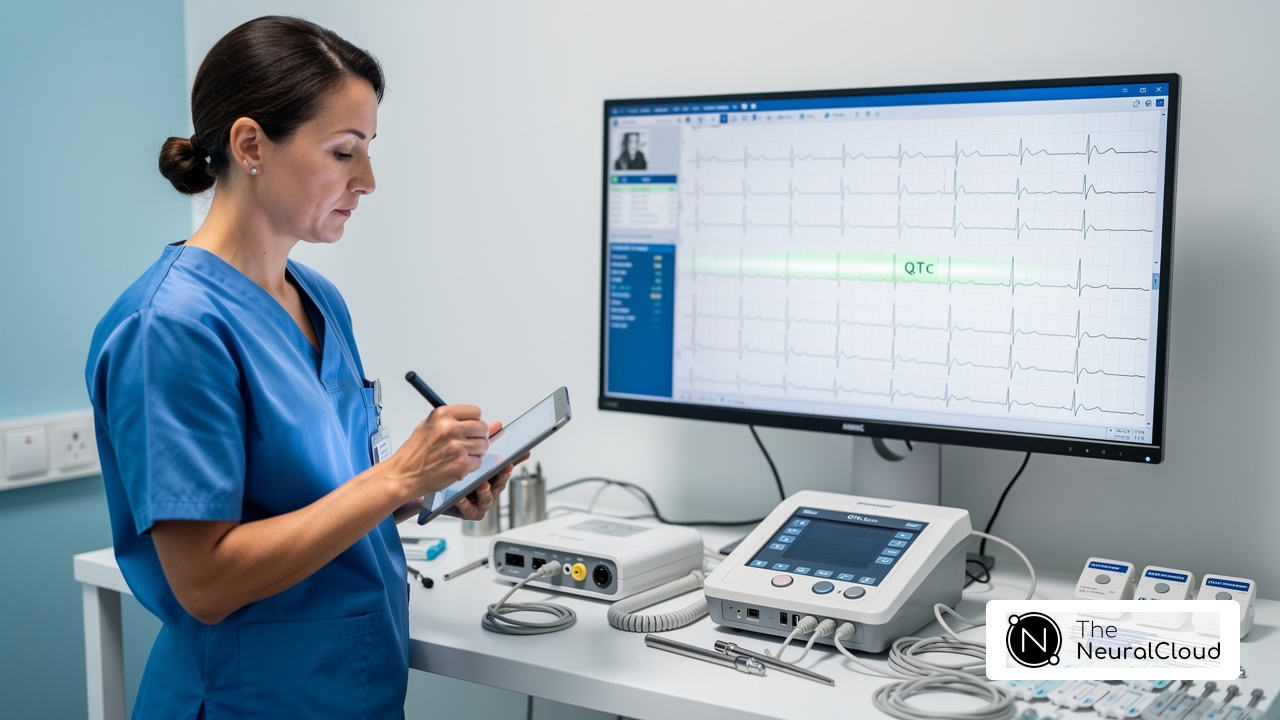
ECG interpretation can be complex, often requiring clinicians to sift through noisy recordings to extract meaningful insights. This is where the advanced technology comes into play.
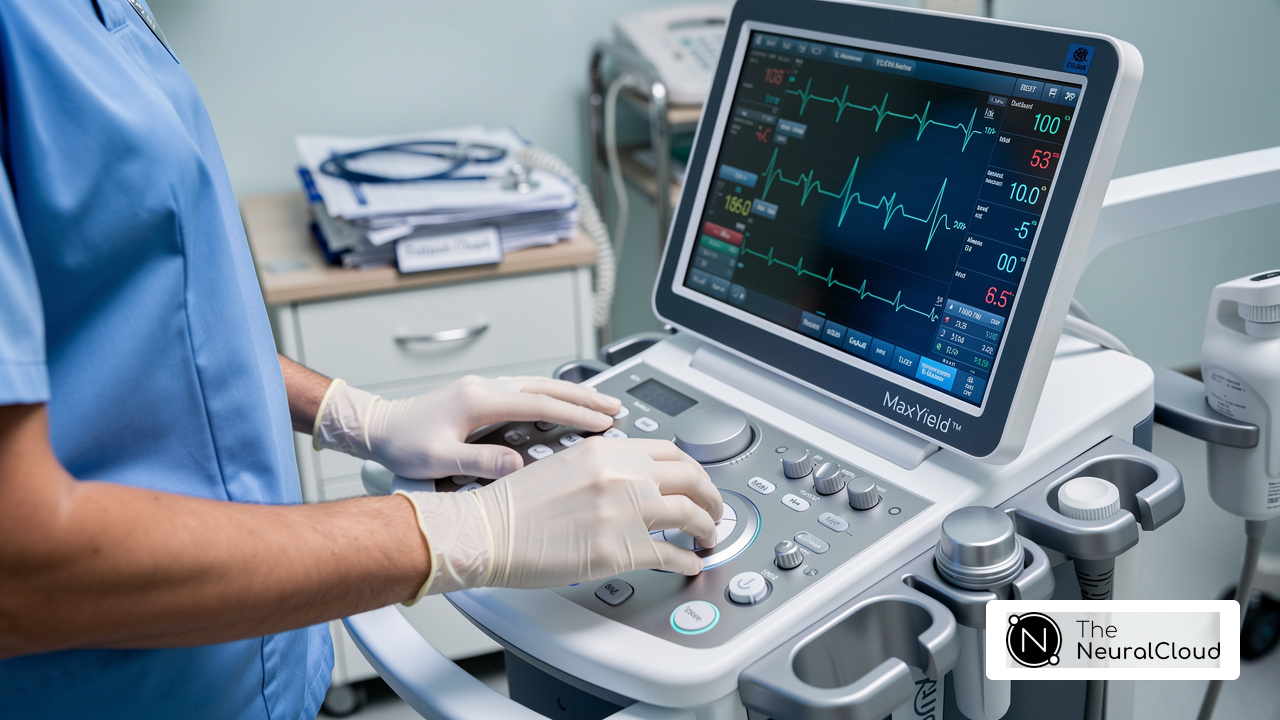
Features of MaxYield™
MaxYield™ transforms noisy recordings into detailed insights, rapidly analyzing 200,000 heartbeats in less than 5 minutes. This advanced platform isolates and labels key features in every heartbeat, providing:
- Smooth waveforms for clearer interpretation.
- Comprehensive data across the entire workflow.
Advantages for Clinicians
By leveraging MaxYield™, clinicians can make confident clinical decisions based on clear data. The platform not only improves diagnostic accuracy but also supports patient management, ultimately enhancing patient care.

Interpret ECG Readings: Step-by-Step Guide to Analyzing Wenckebach AV Block
To effectively interpret Wenckebach AV Block, follow these systematic steps:
- Obtain a clear ECG: Ensure the ECG is properly calibrated and free from artifacts that could obscure readings.
- Identify the P waves: Look for consistent P waves and document their frequency.
- Measure the PR interval: Measure from the onset of the first P wave to the start of the corresponding QRS complex. A typical PR span ranges from 120 to 200 milliseconds; any extension beyond this indicates a first-degree AV block.
- The location of the block event is at the AV node. Observe for dropped beats, as this indicates the presence of Wenckebach if the PR duration progressively lengthens with each successive beat, a characteristic feature.
- Look for dropped QRS complexes: Identify instances where a P wave fails to lead to a QRS complex, which may indicate a Wenckebach block. This typically occurs after a series of conducted beats.
- Assess the overall rhythm: Evaluate whether the atrial rhythm remains regular and how the ventricular response aligns with it.
This organized method not only aids in accurately identifying the AV block issue but also enhances the interpretation based on the ECG results. Understanding these nuances is crucial, as the presence of dropped beats and the pattern of PR interval lengthening can significantly influence management.

Discuss Clinical Implications: Management and Treatment of Wenckebach AV Block
Management of Wenckebach AV Block primarily depends on the individual's symptoms and overall clinical context. For those who are asymptomatic, especially with Mobitz Type I, specific treatment is usually unnecessary; regular monitoring may be adequate. However, if symptoms like dizziness or syncope arise, further evaluation for a potential intervention becomes essential.
In symptomatic cases, several treatment options are available:
- Medications: This can effectively increase heart rate and enhance conduction.
- Transcutaneous pacing: This may be required in acute situations where the individual is hemodynamically unstable.
- Permanent pacing: This is considered for individuals with recurrent symptoms or those who do not respond to medical management.
Understanding the management of Wenckebach AV Block is vital for patient care, ensuring that timely interventions can significantly improve outcomes.

Conclusion
Understanding Wenckebach AV Block is crucial for both diagnosis and management in clinical practice. This article has explored the physiological basis, ECG characteristics, and clinical implications associated with this form of heart block. By grasping the nuances of Mobitz Type I AV block, healthcare professionals can enhance their diagnostic accuracy and make informed decisions regarding patient care.
Key insights highlighted include the distinctive ECG patterns, such as the gradual prolongation of the PR interval leading to dropped beats, and the importance of systematic analysis in interpreting these readings. Additionally, the discussion on management strategies emphasizes that while asymptomatic patients may require only monitoring, those exhibiting symptoms necessitate timely interventions, which could range from medication to permanent pacing.
The significance of mastering Wenckebach AV Block cannot be overstated, as it not only aids in the accurate diagnosis of cardiac conditions but also enhances patient outcomes through appropriate management. Healthcare professionals are encouraged to utilize advanced tools like the MaxYield™ platform to streamline ECG analysis, ensuring that every heartbeat is accurately interpreted for optimal patient care.
Challenges in ECG Analysis
ECG analysis can be complex, often requiring meticulous attention to detail. Misinterpretations can lead to misdiagnosis and inadequate patient management, underscoring the need for reliable tools in clinical practice.
Features of the MaxYield™ Platform
- Comprehensive ECG Analysis: The MaxYield™ platform offers advanced algorithms that enhance the accuracy of ECG readings.
- User-Friendly Interface: Designed for ease of use, it allows healthcare professionals to navigate through ECG data effortlessly.
- Real-Time Feedback: Provides immediate insights, enabling timely decision-making in patient care.
Advantages for Healthcare Professionals
Utilizing the MaxYield™ platform not only improves diagnostic accuracy but also saves time, allowing healthcare professionals to focus on patient care. By streamlining ECG analysis, it enhances the overall efficiency of clinical workflows, ultimately leading to better patient outcomes.
Frequently Asked Questions
What is Mobitz Type I AV block?
Mobitz Type I AV block is characterized by a gradual prolongation of the PR interval on the ECG, leading to a failure of an atrial impulse to reach the ventricles, which results in a dropped QRS complex.
What causes Mobitz Type I AV block?
The condition is attributed to decremental conduction through the AV node, which can be influenced by factors such as vagal tone.
Is Mobitz Type I AV block serious?
Clinically, Mobitz Type I AV block is generally considered benign and can often be observed in healthy individuals, especially during sleep or among athletes.
Are there any concerns associated with Mobitz Type I AV block?
While it is typically benign, Mobitz Type I AV block may signal underlying cardiac conditions, making careful monitoring and evaluation essential for symptomatic patients.
List of Sources
- Identify ECG Characteristics of Wenckebach AV Block: Key Features and Patterns
- acls-algorithms.com (https://acls-algorithms.com/bradycardia)
- Interpret ECG Readings: Step-by-Step Guide to Analyzing Wenckebach AV Block
- Electrocardiogram Interpretation in 10 Simple Steps (https://aclscertification.org/electrocardiogram-interpretation-in-10-simple-steps)