Introduction
Hyperacute T waves are a critical yet often overlooked indicator in the early diagnosis of acute coronary occlusion, especially during ST-elevation myocardial infarction (STEMI). Their distinctive morphology and increased amplitude signal potential myocardial ischemia, presenting a unique opportunity for health tech developers to enhance diagnostic tools and algorithms. However, accurately distinguishing these T wave changes from other abnormalities poses a significant challenge. This raises an important question: how can advanced technologies, such as AI and machine learning, be utilized to improve the identification and management of hyperacute T waves in clinical settings?
The MaxYield™ platform addresses these challenges by providing advanced ECG analysis capabilities. It leverages cutting-edge algorithms to enhance the detection of hyperacute T waves, ensuring that healthcare professionals can make timely and informed decisions. By integrating AI and machine learning, the platform not only improves accuracy but also streamlines the diagnostic process, ultimately benefiting patient outcomes.
In summary, the MaxYield™ platform offers a robust solution for the complexities of ECG analysis. Its features empower healthcare professionals to identify critical indicators like hyperacute T waves more effectively, leading to improved management of acute coronary conditions. This innovative approach not only enhances diagnostic precision but also supports better patient care.
Define Hyperacute T Waves and Their Clinical Significance
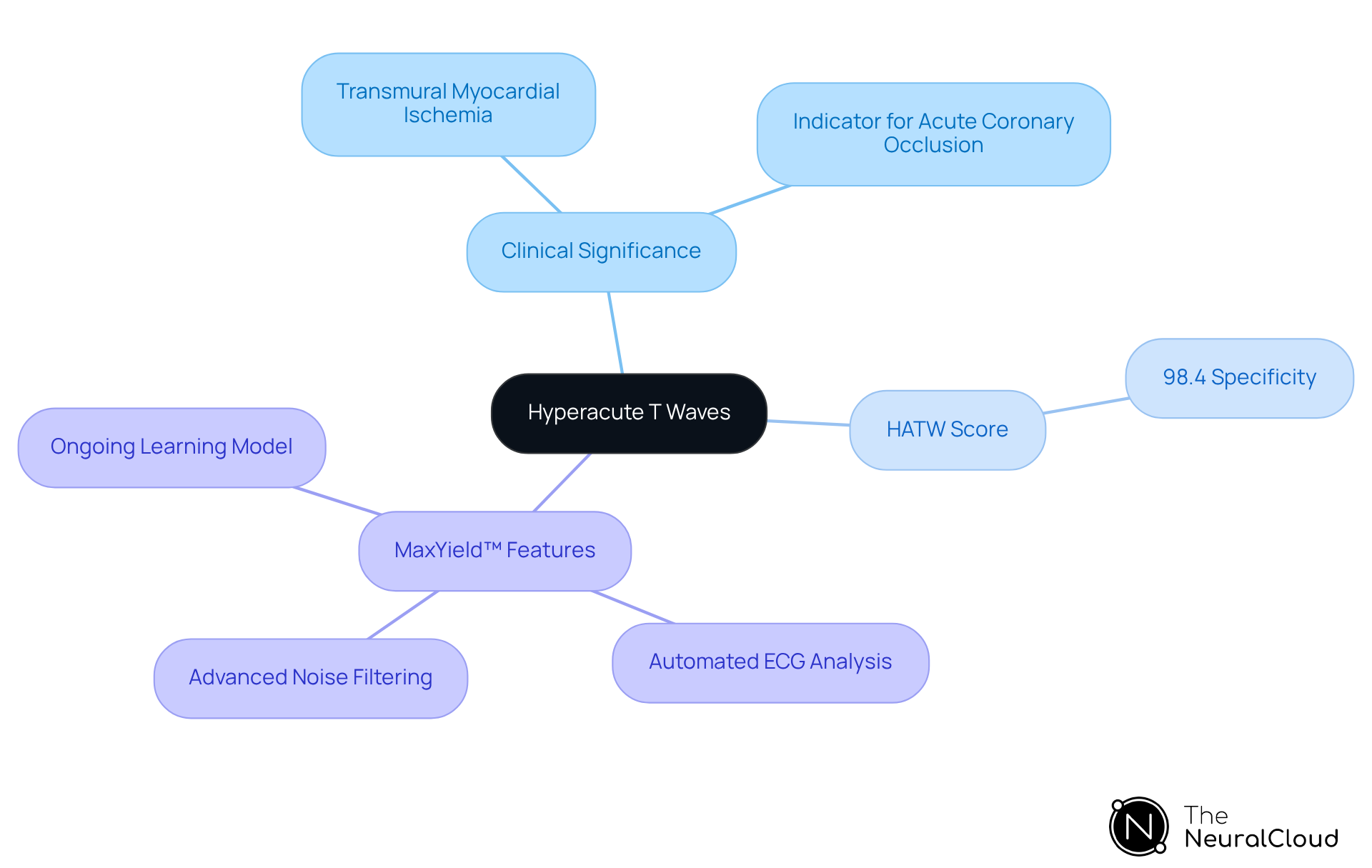
Hyperacute T wave shapes (HATTs) are characterized by their broad, asymmetrically peaked form and heightened amplitude, typically seen in the early stages of ST-elevation myocardial infarction (STEMI). The hyperacute T wave signifies transmural myocardial ischemia and acts as a crucial indicator for patient deterioration. Recognizing hyperacute T wave changes can lead to urgent clinical actions, as they often appear before more definitive ECG changes, like ST-segment elevation. Recent research shows that hyperacute T wave patterns can be present in up to 21% of individuals with occlusion myocardial infarction (OMI), underscoring their significance in emergency contexts.
The HATW score, a new assessment tool, has shown an impressive 98.4% specificity for diagnosing patients lacking classic STEMI criteria, especially when hyperacute T wave changes are present. This highlights the potential of technology to enhance diagnosis and improve patient outcomes. For health tech developers, grasping the intricacies of hyperacute T waves is vital for designing advanced algorithms and tools that ensure precise and timely diagnosis, ultimately aiding patient care.
Neural Cloud Solutions plays a pivotal role in this process. It automates ECG analysis and employs advanced noise filtering techniques to extract critical data, even from recordings with significant noise. This enhances the platform's accuracy over time, making it an indispensable resource for identifying hyperacute T wave features and improving diagnosis in patients with acute coronary syndrome.
Features of MaxYield™:
- Streamlined Interpretation: Streamlines the interpretation process, reducing the workload for healthcare professionals.
- Advanced Noise Filtering: Isolates essential data, ensuring clarity in ECG readings.
- Ongoing Learning Model: Continuously improves accuracy, adapting to new data and trends.
Advantages for Healthcare Professionals:
- Enhanced Detection: Increases the likelihood of identifying critical conditions early.
- Improved Response: Facilitates timely interventions, potentially saving lives.
- User-Friendly Interface: Accessible for both technical and non-technical users, promoting widespread adoption.
Explore Criteria and Morphological Characteristics of Hyperacute T Waves
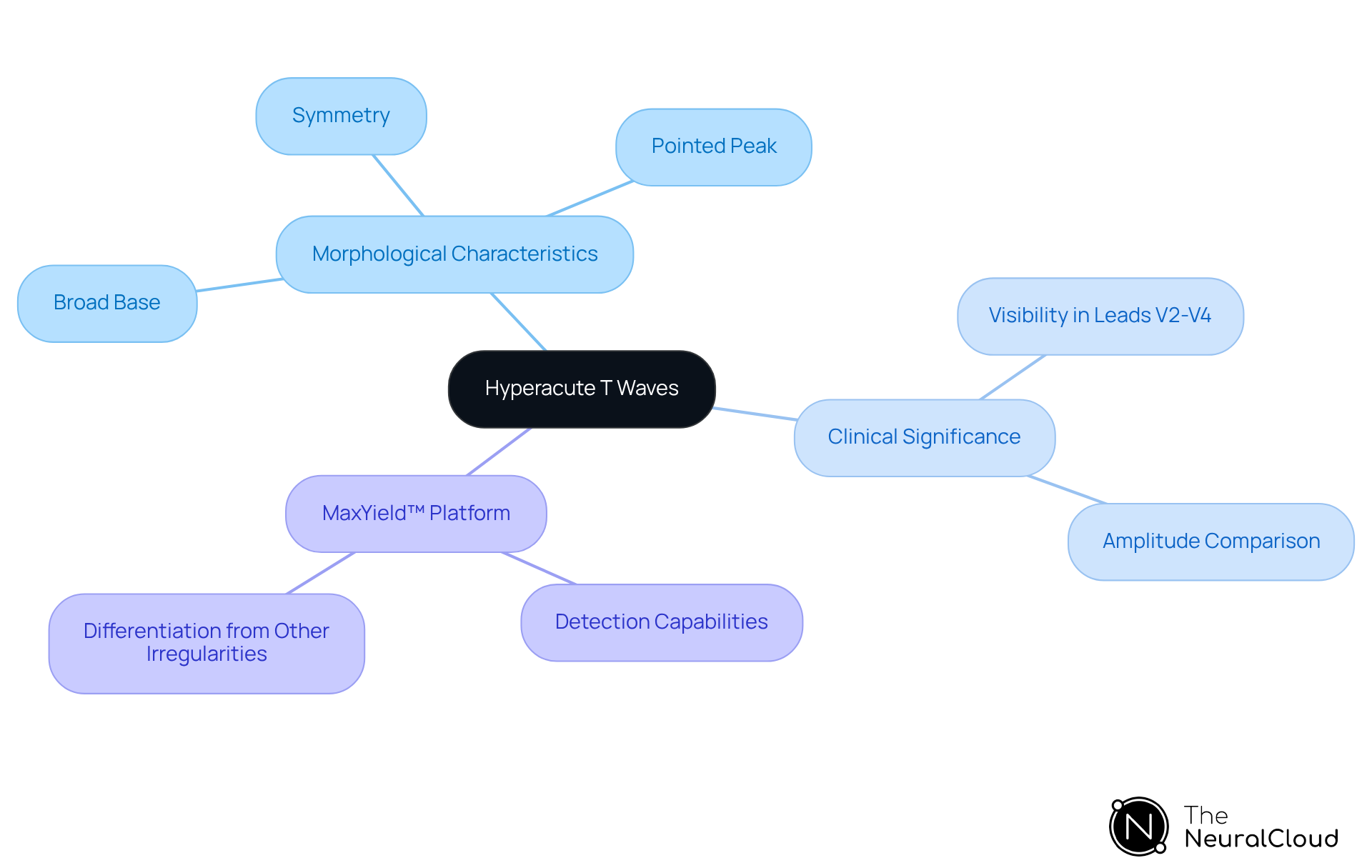
forms are easily identifiable in clinical practice due to their broad base, symmetry, and often pointed peak. These oscillations are most prominently observed in the precordial leads (V2-V4), where their visibility is enhanced. Notably, the amplitude of abnormal T waveforms, particularly the hyperacute T waves, significantly exceeds that of standard T waveforms, often surpassing the height of the QRS complex. This stark contrast in amplitude is crucial for developers to consider when creating diagnostic tools.
The technology addresses these challenges by providing advanced functionalities for ECG analysis. Its algorithms are designed to differentiate hyperacute T waves from other irregularities, such as the normal T waveforms. While these can resemble hyperacute T waves, they vary in morphology, making accurate diagnosis essential for effective management.
By focusing on these criteria, developers can enhance the accuracy and reliability of ECG interpretations, ultimately improving patient outcomes. Incorporating MaxYield™ into their systems allows healthcare professionals to leverage its capabilities, leading to better clinical decision-making. The platform not only streamlines workflows but also supports healthcare providers in delivering optimal patient care.
Analyze Diagnostic Challenges and Management Strategies for Hyperacute T Waves
Interpreting hyperacute T waves poses significant diagnostic challenges, primarily due to the risk of misclassifying them as other T deflection anomalies. These oscillations are characterized by a wide base, increased amplitude, and a balanced appearance, often accompanied by a lowered ST segment. Their transient nature complicates diagnosis further, as they may not be present on subsequent ECGs, leading to potential misdiagnosis. For instance, hypersteep T deflections can be confused with T deflections seen in conditions like myocardial infarction. This necessitates a thorough assessment to avoid critical errors in management.
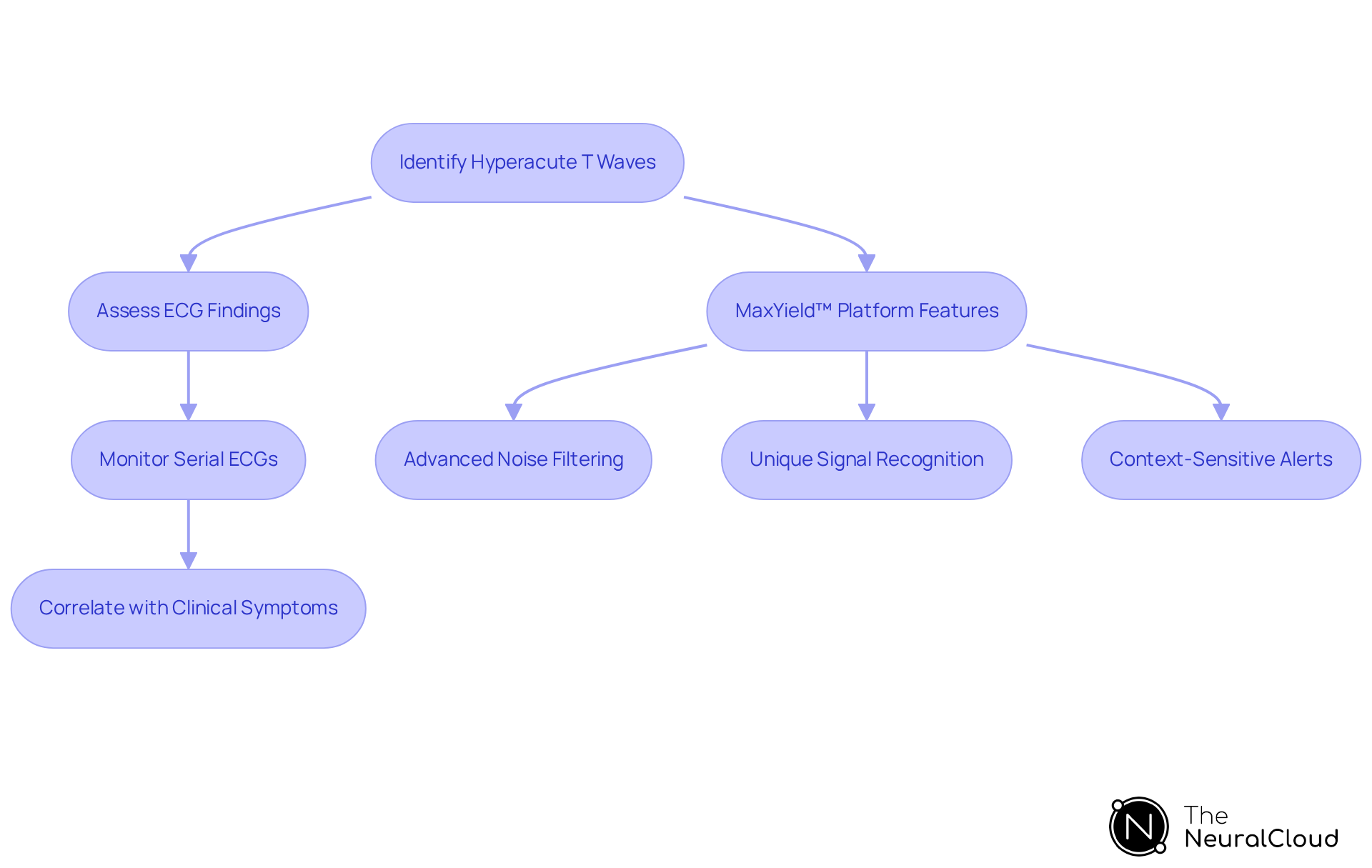
Effective management of hyperacute T waves, particularly the hyperacute T wave, requires continuous monitoring, which is vital for tracking changes over time. Regular 12-lead ECGs should be performed every 5 to 10 minutes for patients exhibiting these patterns, as timely interventions can significantly impact treatment outcomes. It's essential to correlate ECG findings with clinical symptoms; for example, a patient experiencing chest discomfort alongside hyperacute T waves may require immediate intervention to prevent myocardial injury.
The MaxYield™ platform addresses these diagnostic challenges by employing advanced algorithms and unique signal recognition capabilities. It effectively separates ECG signals from recordings affected by baseline drift, movement, and muscle noise, thereby enhancing the accuracy of detecting very early T signals, including the hyperacute T wave and its transient characteristics. Developers of ECG analysis tools should focus on integrating clinical guidelines and recommendations within their algorithms. This strategy can facilitate prompt clinical decision-making, ultimately improving outcomes in acute settings.
By leveraging the evolving algorithm of MaxYield™, health tech solutions can significantly advance cardiac care. The platform's features include:
- Noise Reduction: Reduces interference from external factors, ensuring clearer ECG readings.
- Unique Signal Recognition: Enhances the detection of subtle T signal changes, crucial for accurate diagnosis.
- Alert System: Provides timely notifications to healthcare professionals, aiding in swift decision-making.
These advantages empower healthcare professionals to make informed decisions quickly, improving patient outcomes in critical situations.
Utilize Advanced Technologies for Enhanced ECG Analysis of Hyperacute T Waves
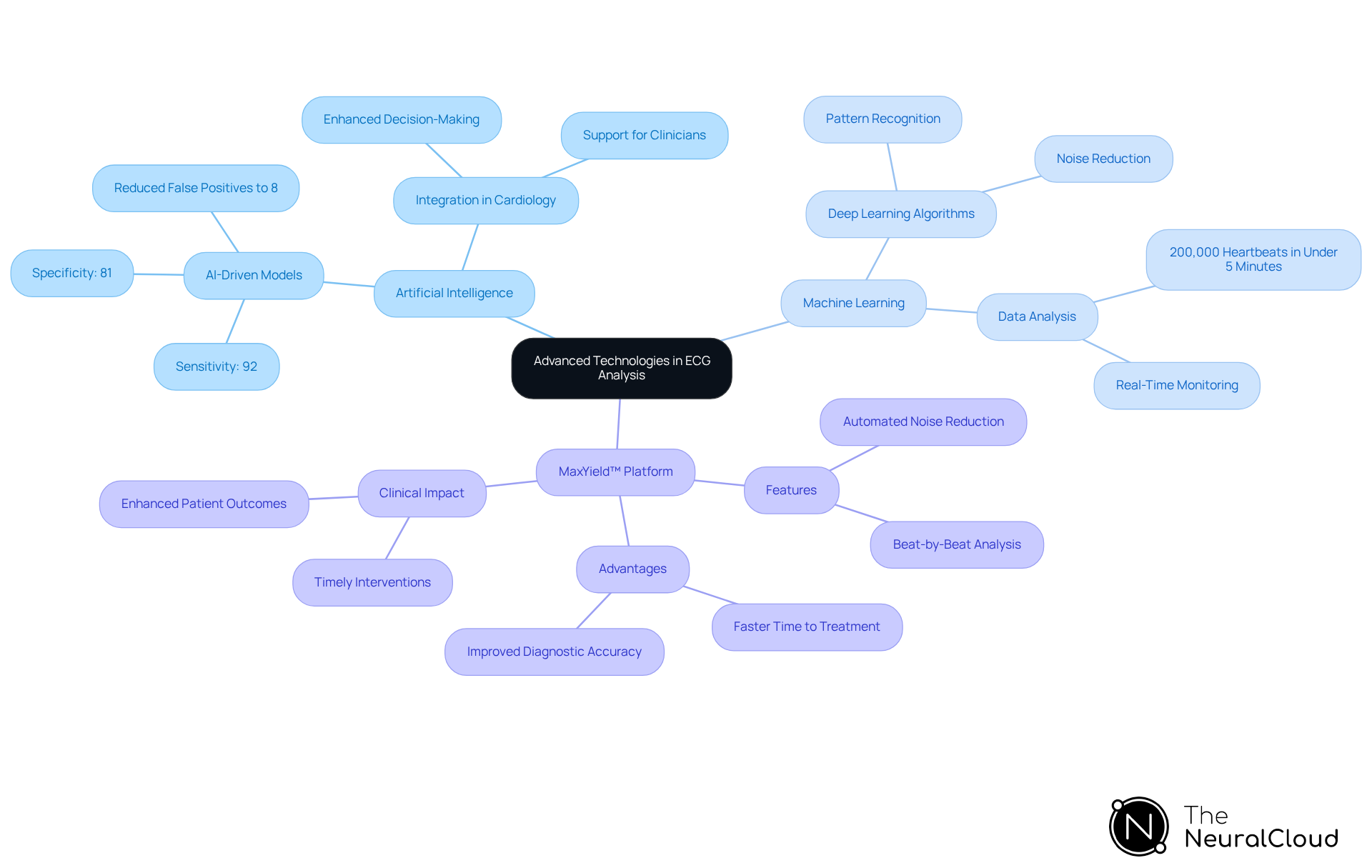
Cutting-edge technologies, particularly artificial intelligence and machine learning, are transforming ECG analysis. These advancements enable quicker and more accurate identification of elevated T wave patterns, addressing the challenges faced in traditional ECG interpretation. By analyzing vast amounts of ECG data, these technologies can uncover patterns that might be overlooked by human analysts.
One notable example is the software from Neural Cloud Solutions. This innovative tool utilizes algorithms trained on extensive datasets to recognize the subtle characteristics of sharp T wave patterns, significantly enhancing diagnostic accuracy. MaxYield™ effectively maps ECG signals through noise, isolating and labeling key features in every heartbeat. It not only detects abnormalities but also provides beat-by-beat analysis, delivering insights from 200,000 heartbeats in under five minutes.
The advantages of using MaxYield™ are substantial. As noted by Timothy D. Henry, MD, FACC, timely detection can save lives, which is critical in emergency situations. A recent study presented at TCT 2025 highlighted that MaxYield™ significantly outperformed traditional methods. By incorporating advanced tools like MaxYield™ and adaptive algorithms, healthcare professionals can enhance clinical decision-making and ultimately improve patient outcomes.
In summary, the technology not only addresses the limitations of conventional ECG analysis but also offers healthcare providers a powerful tool to improve diagnostics and patient care. By leveraging these advanced technologies, developers can create robust platforms that meet the evolving needs of the medical community.
Conclusion
Hyperacute T waves (HATTs) are essential for the early detection of acute coronary occlusion, acting as a key indicator of myocardial ischemia. However, diagnosing these waves can be challenging due to their transient nature and the risk of misclassification with other T wave abnormalities. This is where advanced technologies, like those found in the MaxYield™ platform, come into play. By leveraging these innovations, health tech developers can significantly enhance ECG interpretation, leading to improved patient outcomes in emergency settings.
The MaxYield™ platform offers several features that address the complexities of ECG analysis. It incorporates advanced noise filtering and machine learning technologies, which ensure clearer ECG readings and more accurate interpretations. These features not only help in recognizing hyperacute T wave patterns, which may appear before traditional ECG changes, but also facilitate the use of the HATW score to identify acute coronary occlusions in patients who do not meet classic STEMI criteria.
The advantages of integrating MaxYield™ into clinical practice are substantial. By refining algorithms and enhancing diagnostic capabilities, healthcare professionals are better equipped to make informed, timely decisions that can save lives. The potential for improved patient outcomes in acute scenarios becomes increasingly attainable as developers continue to innovate.
In conclusion, embracing advancements like the MaxYield™ platform can transform cardiac monitoring. It ensures that healthcare professionals have the tools necessary to navigate the complexities of ECG analysis, ultimately leading to better patient care and outcomes.
Frequently Asked Questions
What are hyperacute T waves (HATTs)?
Hyperacute T waves are characterized by their broad, asymmetrically peaked form and heightened amplitude, typically seen in the early stages of ST-elevation myocardial infarction (STEMI).
What clinical significance do hyperacute T waves hold?
Hyperacute T waves signify transmural myocardial ischemia and serve as a crucial indicator for acute coronary occlusion, often appearing before more definitive ECG changes like ST-segment elevation.
How common are hyperacute T wave patterns in occlusion myocardial infarction (OMI)?
Recent research indicates that hyperacute T wave patterns can be present in up to 21% of individuals with occlusion myocardial infarction (OMI).
What is the HATW score and its importance?
The HATW score is a new assessment tool that has shown 98.4% specificity for acute coronary occlusion in patients lacking classic STEMI criteria, particularly when hyperacute T wave changes are present, enhancing diagnostic accuracy.
How does the MaxYield™ platform assist in identifying hyperacute T waves?
MaxYield™ automates ECG analysis, employs advanced noise filtering techniques, and utilizes an ongoing learning model to enhance accuracy in identifying hyperacute T wave features and improving diagnostic capabilities in patients with acute coronary syndrome.
What features does the MaxYield™ platform offer?
MaxYield™ features automated ECG analysis, advanced noise filtering, and an ongoing learning model that continuously improves its accuracy.
What advantages does MaxYield™ provide for healthcare professionals?
It enhances diagnostic accuracy, improves clinical decision-making, and offers a user-friendly interface accessible to both technical and non-technical users, promoting widespread adoption.
List of Sources
- Define Hyperacute T Waves and Their Clinical Significance
- Hyperacute T Waves Are Specific for Occlusion Myocardial Infarction, Even Without Diagnostic ST-Segment Elevation: (https://jacc.org/doi/10.1016/j.jacadv.2025.102120)
- academic.oup.com (https://academic.oup.com/eurheartj/article/46/Supplement_1/ehaf784.2109/8308417)
- powerfulmedical.com (https://powerfulmedical.com/research/hyperacute-t-waves-are-specific-for-occlusion-myocardial-infarction-even-without-diagnostic-st-elevation)
- sciencedirect.com (https://sciencedirect.com/science/article/pii/S2772963X25005459)
- Explore Criteria and Morphological Characteristics of Hyperacute T Waves
- ECG Diagnosis: Hyperacute T Waves - PMC (https://pmc.ncbi.nlm.nih.gov/articles/PMC4500486)
- Hyperacute T-Waves: ECG Signs of Early MI (https://powerfulmedical.com/blog/hyperacute-t-waves)
- academic.oup.com (https://academic.oup.com/eurheartj/article/46/Supplement_1/ehaf784.2109/8308417)
- sciencedirect.com (https://sciencedirect.com/science/article/pii/S2772963X25005459)
- Analyze Diagnostic Challenges and Management Strategies for Hyperacute T Waves
- droracle.ai (https://droracle.ai/articles/376756/what-is-the-management-of-hyperacute-t-waves-indicative)
- pubmed.ncbi.nlm.nih.gov (https://pubmed.ncbi.nlm.nih.gov/40892623)
- sciencedirect.com (https://sciencedirect.com/science/article/pii/S2772963X25005459)
- ECG Diagnosis: Hyperacute T Waves - PMC (https://pmc.ncbi.nlm.nih.gov/articles/PMC4500486)
- theneuralcloud.com (https://theneuralcloud.com/post/master-hyperacute-t-waves-key-characteristics-and-interpretation)
- Utilize Advanced Technologies for Enhanced ECG Analysis of Hyperacute T Waves
- powerfulmedical.com (https://powerfulmedical.com/research/hyperacute-t-waves-are-specific-for-occlusion-myocardial-infarction-even-without-diagnostic-st-elevation)
- AI-ECG Finds STEMI Faster, Cuts False-Positive Cath Lab Activations (https://tctmd.com/news/ai-ecg-finds-stemi-faster-cuts-false-positive-cath-lab-activations)
- theneuralcloud.com (https://theneuralcloud.com/post/mastering-hyperacute-t-waves-for-accurate-ecg-interpretation)
- AI-Based ECG Analysis Significantly Improves STEMI Detection, Reduces False Activations - American College of Cardiology (https://acc.org/latest-in-cardiology/articles/2025/10/24/16/56/tues-554pm-ai-tct-2025)
- New study finds AI model improves heart attack detection (https://health.ucdavis.edu/news/headlines/new-study-finds-ai-model-improves-heart-attack-detection/2025/11)